
Filmmakers spend a great deal of time and effort obsessing over every last detail, so you want a TV that best translates their vision to the at-home viewing experience to help you stay immersed in your favorite films. A TV's contrast ratio is arguably the most important aspect for watching movies; if your TV doesn't have good contrast, it won't display deep blacks, making the image look washed out and flat. Now that HDR movies and shows are commonplace on streaming services and 4k Blu-rays, having a model with good HDR brightness and color volume is also crucial for an impactful experience. If you still watch DVDs, a model with solid image processing will go a long way in making that content look as good as it can. Through our testing, we can see which models offer the best movie-watching experience depending on your budget.
Below are our recommendations for the best TVs for movies you can buy. Our picks reflect the market as it stands today, so you might still see some 2025 models in this article if they're still available. If you're looking for something more specific to match your viewing environment, check out our picks for the best OLED TVs, if you're in a dark room, the best bright room TVs, or the best 4k TVs for a wider selection of TVs. You can also vote on which ones you want us to buy and test. You could also consider one of the best home theater projectors instead of a TV. To learn more about the newest TV models, check out our 2026 TV lineup page.

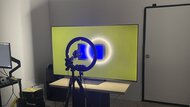
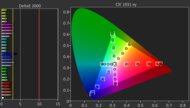
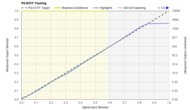
We buy and test dozens of TVs yearly, taking an objective, data-driven approach to deliver results you can trust. Our testing process is complex, with hundreds of individual tests that take over a week to complete. Most of our tests use specially designed test patterns that mimic real content, but we also use the same sources you have at home to ensure our results match the real-world experience. We use two main tools for our testing: a Colorimetry Research CR-100 colorimeter and a CR-250 spectroradiometer.
-
Best TV For Watching Movies
 Mixed UsageHome TheaterBright RoomSportsGamingBrightnessBlack LevelColorMotion HandlingGame Mode ResponsivenessProcessing (In Development)Resolution:4kNative Refresh Rate:165HzScreen Finish:GlossyPanel Type:OLEDSub-Type:WOLEDDolby Vision:YesSee all our test resultsSizes:55" 65" 77" 83" 97"
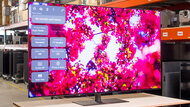
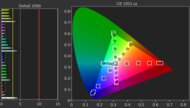
The LG G6 OLED is the best TV for movies and makes for an amazing centerpiece in home theaters. It displays inky blacks with no glow around highlights and subtitles, which gives the image amazing depth. Colors are incredibly vibrant and accurate, so you get a punchy image that also stays true to the filmmaker's intent. On top of that, bright elements really pop off the screen, so HDR movies look amazing whether you're watching a high-quality stream or a 4k Blu-ray. Its image quality doesn't degrade very much at all if you're watching the TV from an angle, making it a great option for wide seating arrangements. If you watch movies in a brighter room, the TV does an excellent job of handling glare, so reflections are barely an issue.
This TV has top-tier image processing, so it does an outstanding job upscaling low-resolution streams and normal Blu-rays. It also does a fantastic job of cleaning up artifacts in heavily compressed streams and DVDs, so it's great if you watch a wide variety of content from different sources. It utilizes LG's webOS as its smart platform, which gives you access to a ton of streaming services.
-
Best Upper Mid-Range TV For Watching Movies
Mixed UsageHome TheaterBright RoomSportsGamingBrightnessBlack LevelColorMotion HandlingGame Mode ResponsivenessProcessing (In Development)Resolution:4kNative Refresh Rate:165HzScreen Finish:GlossyPanel Type:OLEDSub-Type:WOLEDDolby Vision:YesSee all our test resultsSizes:42" 48" 55" 65"If you really want an OLED, but a flagship model like the LG G6 OLED is too pricey, go with the LG C6 OLED 2026. Colors aren't quite as punchy as they are on the G6, but the image still looks very vibrant in most content. Colors are also a bit less accurate out of the box overall, but it doesn't stray too much from the filmmaker's intent. Bright areas in HDR films are a bit dimmer than they are on the G6, but they still stand out well, which leads to an immersive viewing experience. Unfortunately, the TV doesn't have the same level of reflection handling as the G6, so glare can cause distracting reflections in a bright room, especially during darker scenes. However, it still has a very wide viewing angle, so it's a solid option for wide seating arrangements.
You also get the same level of image processing as the G6, so low-resolution content looks pretty sharp, and heavily compressed content isn't filled with distracting artifacts. It runs the same version of LG's webOS, so you have access to a ton of apps to find movies to watch. If you're looking at the 77- and 83-inch sizes of this TV, you actually get the LG C6H OLED. These larger sizes have more vibrant colors and higher peak brightness than the smaller versions of the C6, so you're not only getting a larger TV, but also one with even better image quality.
-
Best Mid-Range TV For Watching Movies
Mixed UsageHome TheaterBright RoomSportsGamingBrightnessBlack LevelColorMotion HandlingGame Mode ResponsivenessProcessing (In Development)Resolution:4kNative Refresh Rate:120HzScreen Finish:GlossyPanel Type:LCDSub-Type:VADolby Vision:YesSee all our test resultsSizes:50" 55" 65" 75" 85" 98"If you're not necessarily watching movies in a completely dark room or just want something brighter, the Sony BRAVIA 7 II is the best mid-range TV for watching movies that we've tested. It's a great TV overall, with deep blacks and a very effective local dimming feature; it's just not as good in the dark as the two OLEDs above. You'll see some haloing around bright details and subtitles on a dark background, which can be distracting. Other than that, though, it's an excellent TV for watching movies. It delivers an incredibly accurate image that stays true to the director's intent. Its impressive processing and accuracy come at a cost, though, as it's actually more expensive than the LG C6 OLED 2026 above.
Like the two LGs above, it supports Dolby Vision video playback, but unlike those models, it also supports DTS audio passthrough, making it an even better choice for physical media collectors, as 4k UHD Blu-rays often use DTS for their main audio track. It runs the Google TV smart platform, which has a huge selection of streaming apps available, so you can quickly find your favorite movies from just about anywhere. It also supports multiple user profiles to keep viewing habits and movie recommendations separate between kids and adults.
-
Best Lower Mid-Range TV For Watching Movies
Mixed UsageHome TheaterBright RoomSportsGamingBrightnessBlack LevelColorMotion HandlingGame Mode ResponsivenessProcessing (In Development)Resolution:4kNative Refresh Rate:165HzScreen Finish:MattePanel Type:LCDSub-Type:VADolby Vision:YesSee all our test resultsSizes:55" 65" 75" 85" 100"If you're not in a completely dark room, you can step down to the Hisense U7SG instead of the Sony BRAVIA 7 II. This lower mid-range TV offers a great movie-watching experience, but its local dimming feature isn't quite as polished, and there's more noticeable haloing around bright details or subtitles on a dark background. The good news is that if you never watch TV in a completely dark room, you're unlikely to even notice it. If you're watching TV during the day, it's even slightly better than the Sony, as it has a better anti-reflective coating. This makes it easier to see dim details that will appear a bit washed out on the Sony.
Other than that, it runs the same Google TV 14 smart platform as the Sony, and it supports both Dolby Vision and HDR10+ video, so you don't have to worry about which formats your streaming platforms support. Physical media collectors will also appreciate its broad audio format support, including DTS audio formats, so you can get the most out of your 4k UHD Blu-ray collection. It's available in a wide range of sizes, so there's something for just about any home theater room.
-
Best Budget TV For Watching Movies
Mixed UsageHome TheaterBright RoomSportsGamingBrightnessBlack LevelColorMotion HandlingGame Mode ResponsivenessProcessing (In Development)Resolution:4kNative Refresh Rate:144HzScreen Finish:GlossyPanel Type:LCDSub-Type:VADolby Vision:YesSee all our test resultsSizes:55" 65" 75" 85" 98"If you're shopping on a tight budget, check out the TCL QM7L instead. It's a great TV for watching movies, but going with a cheaper model comes with some compromises. It's nowhere near as accurate as any of the other picks on this list, with a very warm color temperature out of the box and a slight red tint. It also overbrightens most content, especially in mid-tones and brighter shades, so movies don't look the way the director intended. Finally, it has worse processing than the Hisense U7SG, so it can't clean up low-quality content like streaming services as well. If you're mainly watching movies from high-quality sources like Blu-rays, then this doesn't matter, but you're more likely to notice compression artifacts when watching streaming services.
Other than that, it offers a very similar feature set to both the U7SG and the Sony BRAVIA 7 II. It runs the same Google TV 14 smart interface, it supports both Dolby Vision and HDR 10+ video formats, and its audio passthrough feature supports all common audio formats. It's even available in pretty much the same sizes as the U7SG, so you can find something that fits in just about any size of home theater room.
Notable Mentions
-
Samsung S95H OLED:
The Samsung S95H OLED competes with the LG G6 OLED. The Samsung is a great option if you mostly watch movies in a bright room, since it has a matte coating that essentially eliminates glare. However, the LG is the better option for most movie fans due to its superior processing and Dolby Vision support.
See our review -
Samsung S90H OLED:
The Samsung S90H OLED is a great alternative to the LG C6 OLED 2026 if you mostly watch movies in a bright room, since its matte coating does an amazing job handling glare. However, the LG is brighter, has superior processing, and supports Dolby Vision, making it the better choice for most movie fans.
See our review
Recent Updates
Sep 23, 2026:
We replaced the mid-range pick with the Sony BRAVIA 7 II, as it offers a far more accurate image that better respects creative intent. We also replaced the lower mid-range and budget picks with the Hisense U7SG and TCL QM7L, respectively, as they offer better performance overall and are more widely available.
Jun 25, 2026:
We replaced the Samsung S95F OLED with the LG G6 OLED and the LG C5 OLED with the LG C6 OLED 2026, since the newer models are better options for movie fans and are more widely available. We also updated the Notable Mentions section with more relevant alternatives to our current picks.
Mar 20, 2026:
We moved the Sony BRAVIA 9 to the Notable Mentions and replaced the Sony A95L OLED with the LG G5 OLED in that section. We also rewrote the Introduction and revised text throughout the article for clarity.
Nov 19, 2025:
We confirmed the accuracy of our current picks and ensured all products are in stock.
Aug 28, 2025:
Replaced the Sony A95L OLED with the Samsung S95F OLED, the LG C4 OLED with the LG C5 OLED, the LG B4 OLED with the TCL QM8K, the Hisense U7N with the TCL QM7K, and the Hisense U6N with the TCL QM6K. We also renamed the 'Best Bright Room' category to 'Best LED' since it's more fitting to the article. Finally, we updated the Notable Mentions section.
All Reviews
Our recommendations above are what we think are currently the best TVs for movies for most people in each price range. We factor in the price (a cheaper TV wins over a pricier one if the difference isn't worth it), feedback from our visitors, and availability (no TVs that are difficult to find or almost out of stock everywhere).
If you would like to do the work of choosing yourself, here is a list of all our recent TV reviews. Be careful not to get too caught up in the details. While no TV is perfect, most TVs are great enough to please almost everyone, and the differences are often not noticeable unless you really look for them.


