
Sony TVs are frequently among the best TVs on the market. Best-known for their industry-leading image processing, Sony TVs are almost always a safe bet. They tend to offer great overall picture quality, a good selection of extra features, and very good color accuracy. Their high-end and mid-range models compete well with other brands, but they tend to be a bit more expensive. Sony releases fewer models than most of the other big brands, with just a few models coming out each year, and most of their lineup follows an 18-24 month lifecycle instead of the usual 12 for most TVs. Sony recently spun off their TV business into a separate joint venture with TCL, so it's unclear what the future holds for Sony TVs.
Below are our picks for the best Sony televisions you can currently purchase. You can also vote on which Sony TVs you want us to buy and test, or check out our 2026 TV lineup page to learn about Sony's upcoming models. You can also learn about the Google TV OS that Sony utilizes on most of their TVs.
Updates
- 08/06/2026Sony BRAVIA 3 II reviewed
- 07/16/2026Sony BRAVIA 9 II reviewed
- 07/07/2026Sony BRAVIA 7 II reviewed
- 11/05/2025Sony BRAVIA 5 98 reviewed
- 10/22/2025Sony BRAVIA 2 II reviewed

We buy and test dozens of TVs yearly, taking an objective, data-driven approach to deliver results you can trust. Our testing process is complex, with hundreds of individual tests that take over a week to complete. Most of our tests use specially designed test patterns that mimic real content, but we also use the same sources you have at home to ensure our results match the real-world experience. We use two main tools for our testing: a Colorimetry Research CR-100 colorimeter and a CR-250 spectroradiometer.
-
Best Sony TV
 Mixed UsageHome TheaterBright RoomSportsGamingBrightnessBlack LevelColorMotion HandlingGame Mode ResponsivenessProcessing (In Development)Resolution:4kNative Refresh Rate:120HzScreen Finish:MattePanel Type:LCDSub-Type:VADolby Vision:YesSee all our test resultsSizes:65" 75" 85" 115"
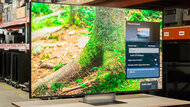
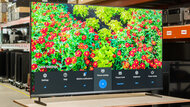
The best Sony TV that we've tested is the Sony BRAVIA 9 II. This TV delivers truly stellar picture quality thanks to its RGB Mini LED backlight system, which Sony calls True RGB. This new backlight technology allows the TV to deliver brighter, more vibrant colors than previous generations, so movies and shows look better than ever. Bright details stand out incredibly well, giving the image an almost 3D-like appearance. It's also an incredibly versatile TV. Its matte anti-reflective coating gives you incredible visibility during the day, even in dark scenes. Its high contrast ratio also helps it deliver a fantastic dark room experience, although it's not quite as good there as the step-down Sony BRAVIA 8 II OLED below, and there's some haloing around bright details and subtitles.
It's available in a wide range of sizes, from 65-inch up to a massive 115-inch model, so there's something for just about everyone. As great as its picture quality is, though, it's a bit dated in some other ways. It only supports HDMI 2.1 bandwidth on two inputs, and its maximum refresh rate is only 120Hz. This is just fine if you're a console gamer or only watch movies and shows, but it's a bit limiting if you were planning on hooking it up to your PC.
-
Best Upper Mid-Range Sony TV
Mixed UsageHome TheaterBright RoomSportsGamingBrightnessBlack LevelColorMotion HandlingGame Mode ResponsivenessProcessing (In Development)Resolution:4kNative Refresh Rate:120HzScreen Finish:GlossyPanel Type:OLEDSub-Type:QD-OLEDDolby Vision:YesSee all our test resultsSizes:55" 65"The best upper mid-range Sony TV we've tested is the Sony BRAVIA 8 II OLED. It utilizes a top-of-the-line QD-OLED panel, which offers very impressive image quality overall. The TV looks amazing in a dark room, with deep, inky blacks, and unlike the Sony BRAVIA 9 II above, there's also no haloing around bright details or subtitles on a dark background. The TV is also incredibly bright, with punchy, vibrant colors, so movies and shows look truly stunning. It's not nearly as bright as the BRAVIA 9 II, though, especially when more of the scene is bright at once, like in bright outdoor shots or when you're watching sports. This makes it a slight step down from the B9II overall.
You also get Sony's excellent processing capabilities, so it does a great job upscaling and cleaning up low-quality content from streaming services or cable TV. Unfortunately, the TV is a bit too dim to overcome glare if you have a lot of windows or overhead lights, so the more expensive model is the better choice for those rooms. The TV's wide viewing angle makes it an excellent choice for a wide living room, as everyone sees the same high-quality image even from the sides. Unfortunately, the TV is only available in 55-inch and 65-inch sizes, so go with the older Sony A95L OLED if you're looking for something very similar in a 77-inch size.
-
Best Mid-Range Sony TV
Mixed UsageHome TheaterBright RoomSportsGamingBrightnessBlack LevelColorMotion HandlingGame Mode ResponsivenessProcessing (In Development)Resolution:4kNative Refresh Rate:120HzScreen Finish:GlossyPanel Type:LCDSub-Type:VADolby Vision:YesSee all our test resultsSizes:50" 55" 65" 75" 85" 98"If you want something a bit cheaper than the two options above, the Sony BRAVIA 7 II is the best upper mid-range Sony TV we've tested. This TV features a very similar RGB Mini LED backlight system to the Sony BRAVIA 9 II, but with fewer dimming zones and a few other changes. It delivers stunning picture quality with deep blacks, vivid colors, and very high peak brightness, but small highlight details in movies, like a beam of sunlight glinting off the surface of a car, don't stand out quite as well as they do on the more expensive model. It also lacks the incredible anti-reflective coating of the more expensive model, so it's not as well-suited for a bright room.
On the other hand, this model has the exact same great selection of features found on the top two models. It runs the Google TV 14 smart interface, which has a massive selection of streaming apps. It also has two HDMI 2.1 bandwidth ports, so you can get the most out of the latest gaming consoles. It's not as well-suited for PC gamers, though, as it's limited to a 120Hz refresh rate. It's also available in a much wider range of sizes than the Sony BRAVIA 8 II OLED, including a smaller 50-inch option. Overall, it's a fantastic TV that doesn't compromise on much despite the cheaper price tag.
-
Best Budget Sony TV
Mixed UsageHome TheaterBright RoomSportsGamingBrightnessBlack LevelColorMotion HandlingGame Mode ResponsivenessProcessing (In Development)Resolution:4kNative Refresh Rate:120HzScreen Finish:MattePanel Type:LCDSub-Type:IPSDolby Vision:YesSee all our test resultsSizes:43" 50" 55" 65" 75" 85" 100"The best budget Sony TV we've tested is the Sony BRAVIA 3 II. This entry-level model offers similar processing capabilities to the more expensive models, with great upscaling and very good low-quality content smoothing, but it lacks many of the more advanced picture-enhancing features found on the higher-end lineup. It's a mediocre TV overall, though, with low contrast and limited peak brightness, but it has decent colors, and it's surprisingly accurate out of the box, so it's not all bad.
It also has a great selection of extra features, and it's actually better in some ways than the rest of Sony's lineup. It features four HDMI 2.1 ports instead of just two on the others, so you can take full advantage of multiple gaming devices. It also supports a high refresh rate for console gaming, and it has low input lag for a responsive feel. It also runs the same great Google TV smart interface as the other models, so you get the same amazing app selection.



Compared To Other Brands
-
Great processing.
Sony TVs, even most of the cheaper models, do better than the competition at upscaling lower-resolution content and cleaning up low-quality content. This is especially important if you watch a lot of streaming content.
-
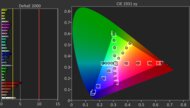
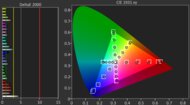
Great color accuracy.Sony TVs are known for their excellent out-of-the-box accuracy, especially the high-end models. You likely won't need to calibrate your Sony TV to enjoy the best viewing experience.
-
High price.
Sony TVs are often priced above the competition in their category, meaning you can usually find better value elsewhere. Furthermore, their budget models don't perform well, and they tend to be significantly more expensive than the competition.
-
Limited lineup.
Sony only releases a few models each year, and they operate on an 18-24 month cycle instead of yearly updates, so there's less to choose from.
Sony vs Samsung
Samsung TVs have comparable picture quality to Sony TVs, and in general, they're pretty competitive. A big difference is that Samsung TVs generally have lower input lag for competitive gamers, but if you don't need that, either brand is a good choice. On the other hand, Sony TVs usually support Dolby Vision, whereas no Samsung TV supports that format.
Sony vs LG
Sony and LG each make OLED and LED TVs. LG is the dominant OLED brand for OLEDs because they have better overall gaming performance and cost less. However, Sony's LED models are far better than LG's because they get brighter, have better uniformity, and usually have better contrast.
Sony vs TCL
Although typically more well-known as a budget brand, TCL has been gaining popularity in the TV world for a few years. TCL TVs are packed with extra features, and they're usually more on the cutting-edge than Sony. TCL doesn't focus on accuracy or processing, though, so Sony TVs tend to deliver a less punchy image but a far more accurate, clean one instead.
As a rule of thumb, it's pretty hard to go wrong when buying a Sony TV. They tend to be a bit slower to adopt new technologies than other brands, especially when it comes to gaming. Their more entry-level offerings aren't great, but any high-end LED and OLED models are a safe bet. Their Google TV smart platform offers many apps to download with an easy-to-use interface. You might pay a slight premium over competing models, but you'll usually have a good TV.
2026 TV Lineup
Sony finally lifted the veil on the rest of their 2026 lineup through a YouTube video. As expected, their flagship lineup leans heavily on RGB Mini LED technology, which Sony calls True RGB. The new Sony BRAVIA 9 II and Sony BRAVIA 7 II both feature RGB Mini LED backlight and are powered by Sony's proprietary XR Processor. They both feature ATSC 3.0 tuners in North America, but, somewhat surprisingly, HDMI 2.1 bandwidth is only supported on two ports. For more detailed information about the new models coming from every major brand this year, check out our 2026 TV lineup page.
| Model | Sizes | Panel Type | Refresh Rate |
|---|---|---|---|
| BRAVIA 9 II | 65", 75", 85", 115" | RGB LED | 120Hz |
| BRAVIA 7 II | 50", 55", 65", 75", 85", 98" | RGB LED | 120Hz |
| BRAVIA 3 II | 43", 50", 55", 65", 75", 85", 100" | LED | 120Hz |
| BRAVIA 2 II | 43", 50", 55", 65", 75" | LED | 60Hz |
Recent Updates
Sep 16, 2026:
We replaced the Sony BRAVIA 3 with the 2026 model, the Sony BRAVIA 3 II, as it's a noticeable improvement over the original.
Jul 17, 2026:
We replaced the Sony BRAVIA 7 and Sony BRAVIA 9 with the 2026 Mark 2 versions, as the newer models are a noticeable improvement. We reordered our picks, placing the Sony BRAVIA 9 II as the best overall and moving the Sony BRAVIA 8 II down to a home theater category.
Jun 08, 2026:
Restructured the article to remove redundant sections and refreshed the text throughout. Added more information about Sony's 2026 TV lineup.
Mar 31, 2026:
We updated the TV Lineup section and confirmed the availability of our picks.
Jan 14, 2026:
Replaced the Sony A95L OLED with the Sony BRAVIA 8 II OLED in the 'Best Sony TV' category, since the A95L is very hard to find in stock. We also updated some text throughout the article.
Conclusion
While Sony products tend not to be the cheapest, this brand produces great TVs. Their models will generally be versatile, helping to make them suitable for most people. The smart features can take some time to learn for some people, but the overall package offered by their TVs is still better than average. At this point, it's safe to say that the brand's overall reputation holds, and people who will find themselves disappointed by purchasing one of their TVs are rare. Below is a list of every Sony TV we've reviewed, but keep in mind that most models tested before 2024 are on an older test bench, so they score higher than they would today.