
If you're dealing with dry air in your home, it's a good idea to consider a humidifier. However, the right kind for you depends on your environment and habits. Steam-misting units are great for dry winter days, while cool-misting models are better for warm, dry environments. Cool-misting humidifiers come in a few flavors, but the most popular options use either evaporative technology, in which a fan blows air across a moistened wick, or ultrasonic technology, where water is aerosolized with a vibrating metal or ceramic plate.
When aerosolizing this water, ultrasonic units release whatever contaminants are also present within their tanks, ranging from minerals to bacteria, which typically settle in the form of a powdery white dust. This white dust from humidifier systems poses a serious respiratory health risk in the long term. As a result, regularly cleaning your ultrasonic humidifier and using distilled water is very important to control bacterial and mold growth and avoid the spread of other airborne contaminants.
Choosing a cool-misting humidifier ultimately comes down to your own usage habits and tolerance for regular upkeep.
Pick an ultrasonic cool-mist humidifier if:
- You can easily source distilled water.
- Are willing and able to clean and disinfect its tank on a regular basis.
- Value low operating noise above all else.
Pick an evaporative humidifier if:
- You can't easily source distilled water and plan on refilling your humidifier with tap water.
- You don't want to worry about white dust deposits.
- Are willing to trade a higher operating noise for less frequent necessary upkeep.
If you're interested in learning more about the impact of water type on your home's air quality and how to deal with that pesky white dust, read on: we measured particle concentration levels when refilling an ultrasonic humidifier with distilled water, tap water, and hardened water.
The Harder The Water You Use, The Dustier Your Environment Will Get
All tap water contains dissolved minerals, mainly calcium and magnesium. Water's "hardness" is determined by measuring its concentration of calcium carbonate. Typically, the hardness of tap water is 200 parts per million (ppm) or less. With that in mind, we sought to answer: Can you use tap water in a humidifier?
| Calcium carbonate concentration (ppm) | <60 | >60 and <120 | >120 and <180 | >180 |
|---|---|---|---|---|
| Hardness | Soft | Moderately hard | Hard | Very hard |
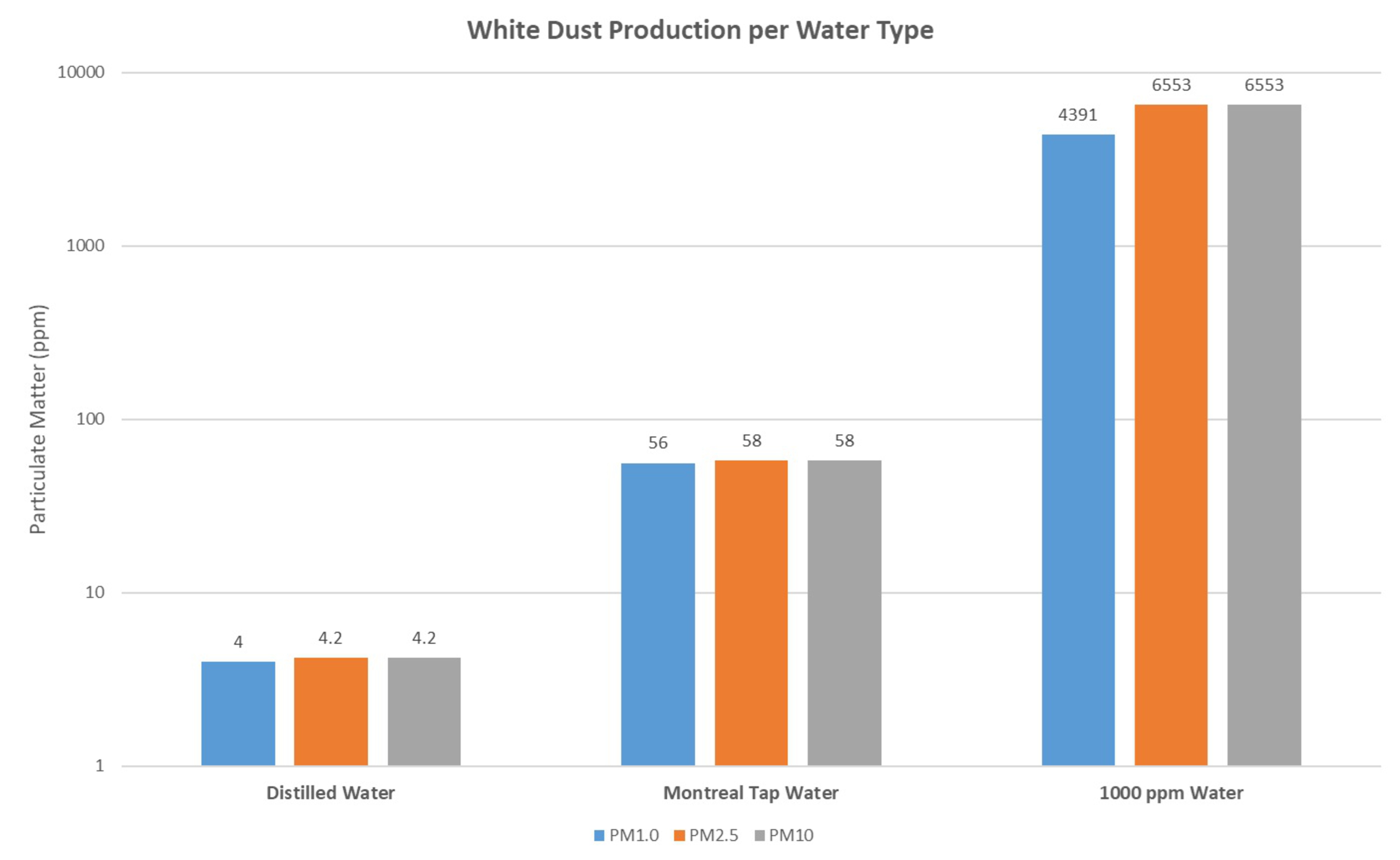
RTINGS is based out of Montreal, which has tap water with an approximate hardness of 120 ppm. This is considered moderately hard. However, this might vary significantly based on where you live. The United States has several natural water sources with water hardness reported to exceed 1000 ppm. That's almost ten times the hardness of Montreal tap water. Intrigued, we decided to see what would happen if we used water with that degree of hardness in an ultrasonic humidifier. We dissolved calcium chloride into our tap water until we measured a hardness of around 1000 ppm. Note that we used calcium chloride instead of calcium carbonate because the latter is very difficult to dissolve in water, whereas calcium chloride is much more water-soluble.
We ran the same ultrasonic humidifier (Levoit OasisMist 450S) in the same conditions, only varying the type of water used in the unit. Then, we monitored quantities of the following particle sizes during each run:
- PM1.0: Particles smaller than 1 micrometer (µm) in size
- PM2.5: Particles smaller than 2.5 µm in size
- PM10: Particles smaller than 10 µm in size
We used the Sensirion SEN55 PM sensor to monitor the particle concentrations at a distance of approximately four feet from the humidifier.
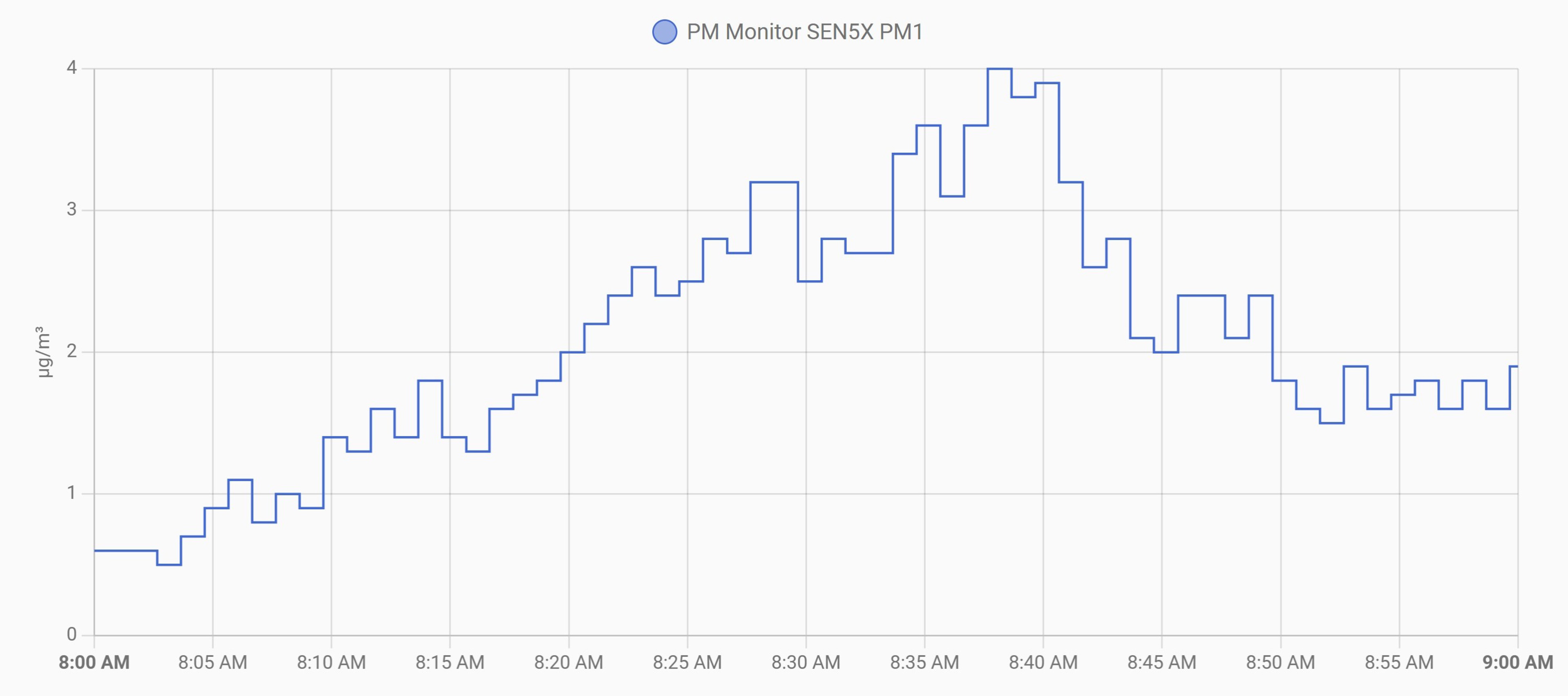
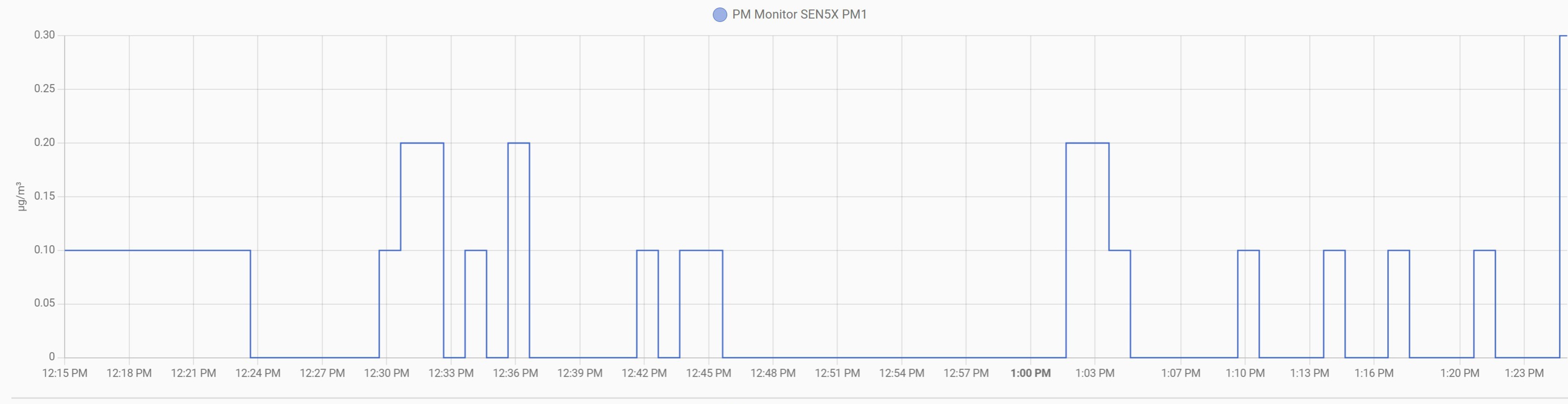
When we used distilled water, the PM readings went up slightly, peaking at around 4 microgram per cubic meter (µg/m3) after 35 minutes. This isn't a significant increase and wouldn't be noticeable in everyday life.

However, when we used our tap water, the PM readings exceeded 50 µg/m3 after 35 minutes. This is a noticeable and significant increase in PM numbers. 50 µg/m3 is almost twice as much as measured in a Canadian home with smokers. However, the results of this test aren't as severe as those obtained from our final test, which used water with a sufficient concentration of calcium chloride to obtain a hardness of around 1000 ppm, or the highest water hardness reported in the USA.
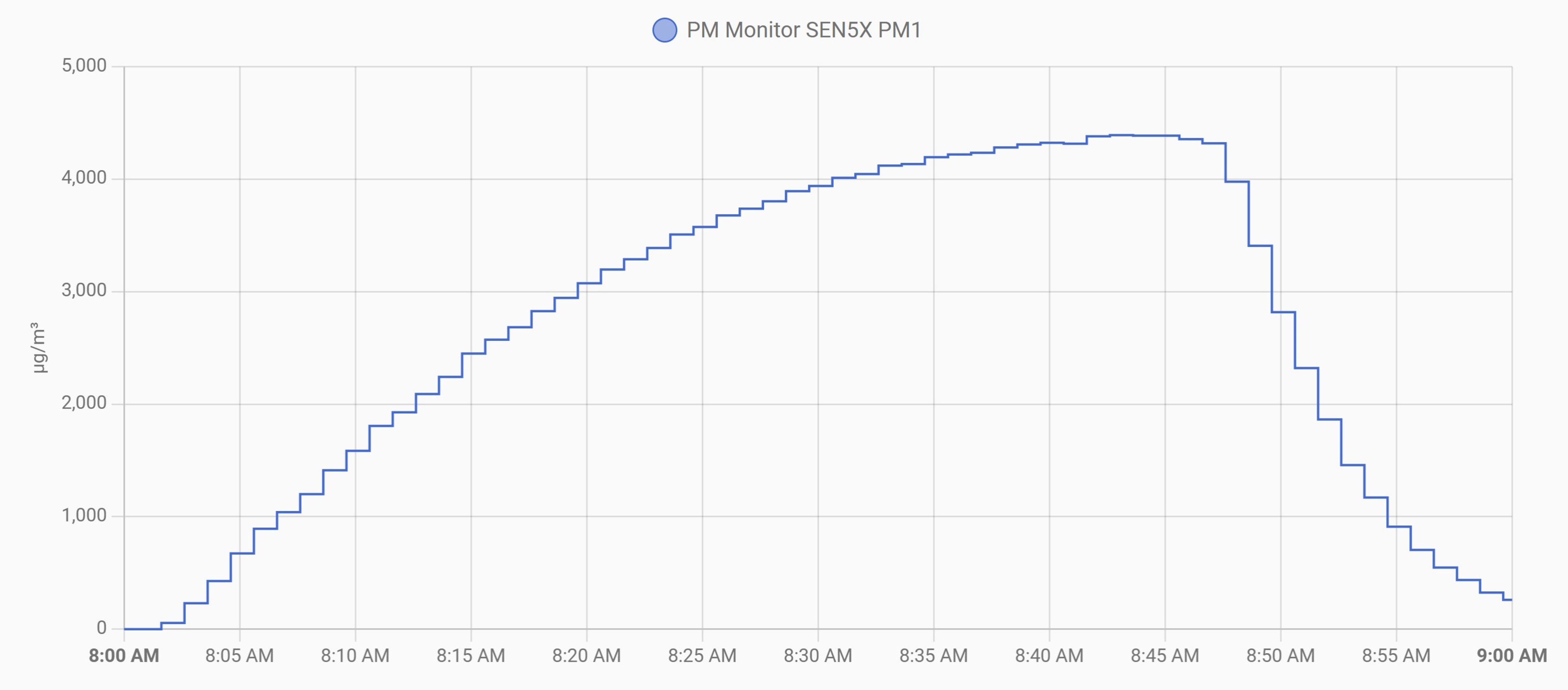
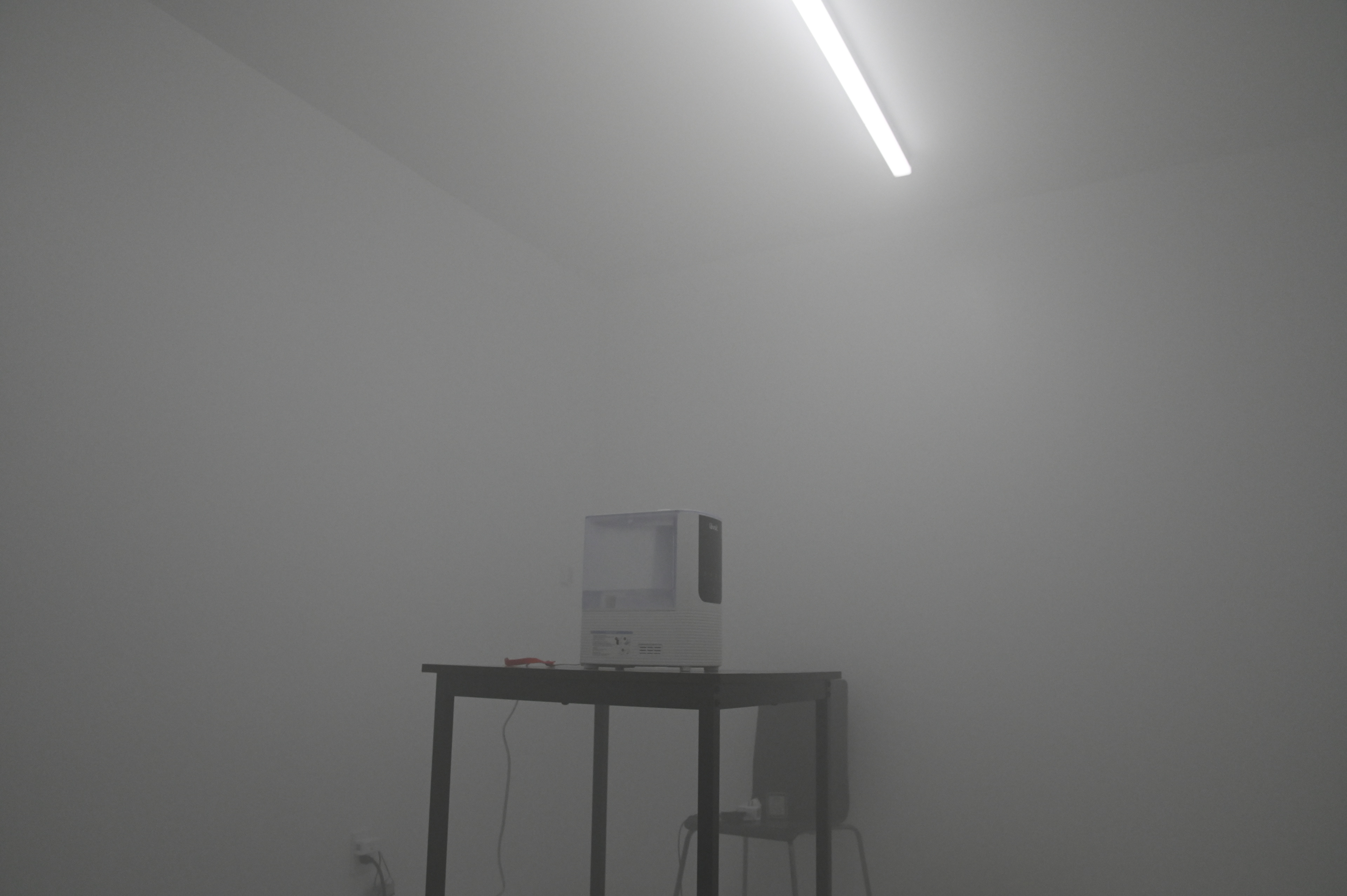
The graph shows that after 35 minutes, our PM sensor was saturated and couldn't report any higher readings. The white dust production was so high that after only one minute, the PM readings exceeded 50 µg/m3, which is close to the number we got after 35 minutes of runtime using our tap water. This amount of dust in the air is simply hazardous and should be avoided at all costs.
Evaporative And Steam Humidifiers Are Inherently Safer
Tap water contains much more than just dissolved minerals. It contains bacteria, viruses, and mold. These substances are usually harmless when ingested, which is why most of us don't get sick when we drink potable water. However, they could become pathogenic if inhaled.
If you leave the water in your humidifier long enough without cleaning, mold and bacteria will start forming inside the tank. The pink slime you might see is typically the result of colonies of bacteria multiplying in the damp and warm confines of your humidifier. This is why it's very important to clean your humidifier regularly, in accordance with the manufacturer's recommendations.
We tried to measure the amount of bacteria that could be emitted into the air when using ultrasonic humidifiers. However, this requires very specialized equipment, first to incubate the bacteria in Petri dishes and then to analyze whether it's actually the same bacteria that was in the tank. As such, we decided not to perform this test.
Steam humidifiers usually don't suffer from that effect thanks to their design, which boils and sterilizes water.
Evaporative humidifiers, which use a moistened wick to propagate water vapor, also have the advantage of emitting almost nothing but said water vapor. When we ran several of the evaporative humidifiers we tested using tap water, we observed no noticeable increase in PM numbers. This means that even if bacteria were to multiply significantly in your humidifier, they aren't likely to be blown into the air. Nonetheless, if you have an evaporative humidifier, you should still clean its tank and change the wick regularly.
Some manufacturers seem to be actively trying to find a way to keep bacterial and fungal growth under control in cool-mist humidifiers. The Dyson AM10, the Sejoy ASN-13, and the Vicks V3900 use Ultraviolet C (UVC) rays to sterilize or neutralize bacteria, viruses, and fungi. The Objecto H4, on the other hand, uses a small heating element to heat the water up to 60°C (140°F) to sterilize it, making it more power-hungry and less efficient than other ultrasonic humidifiers.
Conclusion And Recommendations
If you want to avoid white dust from humidifier systems and aren't able to keep buying a constant supply of distilled water, an evaporative unit is a safer, more health-conscious option than an ultrasonic unit. Just note that evaporative humidifiers are usually noisier than their ultrasonic counterparts, as they incorporate a motorized fan.
