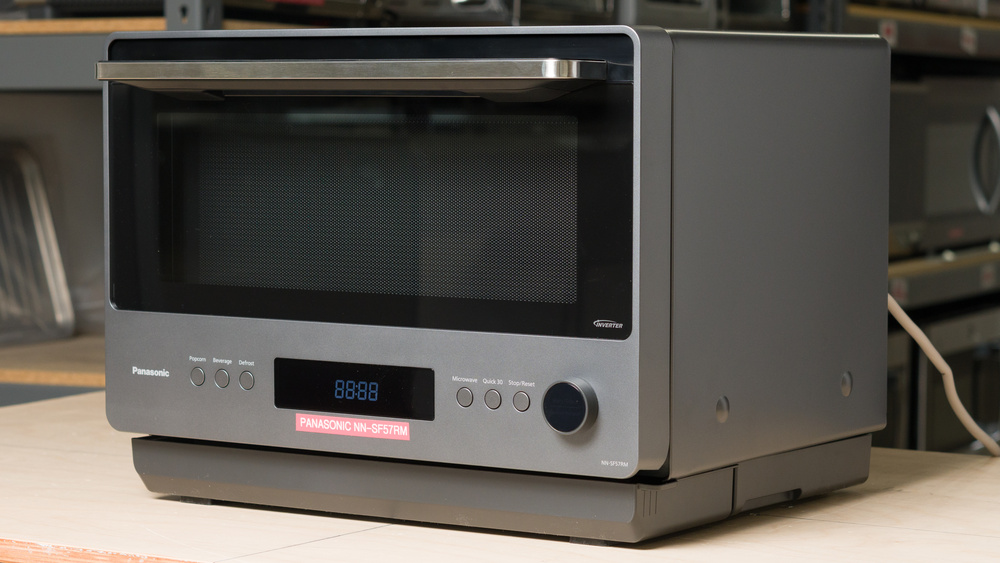
The Panasonic NN-SF57RM is a high-end 1200W inverter countertop microwave oven. It features a unique pull-down door, similar to a full-size kitchen oven, along with a flatbed cooking surface inside the cooking cabinet for easier cleaning. Beyond that, its Genius Sensor 2.0 system monitors food temperature and automatically selects cooking time and power level. Its controls are also lockable and mutable.
Our Verdict
The Panasonic NN-SF57RM is decent for everyday use. The relatively minimalistic control system can take some time to get used to. Its sensor-based modes let you start heating with the press of a single button, but it's a little finicky to manually adjust the cooking time in small increments or the power level. Its cooking chamber is also a little on the small side, and it might struggle to accommodate things like larger casserole dishes. This microwave also runs a little louder than some other alternatives, particularly its cooling fan. That being said, it's narrower and shallower than units with comparable internal capacity, and the flatbed cabinet design also makes interior cleanup relatively easy. It also heats food quickly.
High output allows for quick heating.
Flatbed cooking chamber facilitates cleanup.
One-touch operation is well-suited for quick heating.
Physical controls can take some time to get used to.
Internal capacity is somewhat limited.
Runs louder while heating than many alternatives.
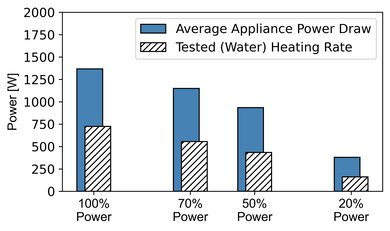
The Panasonic NN-SF57RM can heat food remarkably quickly at maximum power, though some other units with the same advertised 1200W output will do so even faster.
High output allows for quick heating.
Check Price
Differences Between Sizes And Variants
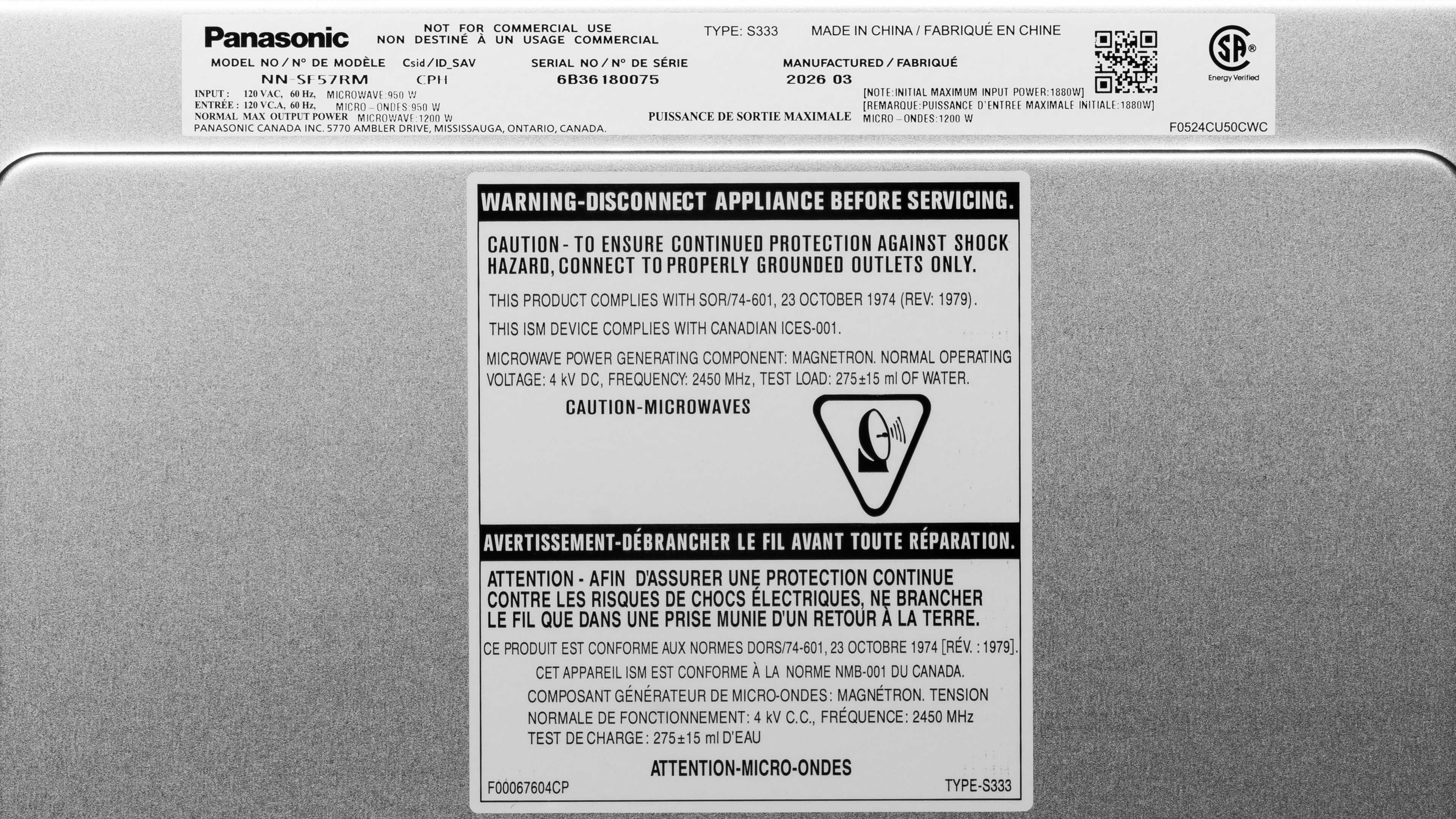
This microwave comes in only one color: 'Grey.' For those interested, here's the product label for our unit.
If you come across another variant, tell us about it in the comments, and we'll update this review.
Popular Microwave Comparisons
The Panasonic NN-SF57RM is a high-end countertop microwave with a somewhat unique design, featuring a pull-down oven-style door. Its flatbed cooking cabinet is another distinct feature, and makes it easier to clean than alternatives with a conventional turntable. It's also relatively compact for a powerful unit, though that's reflected in its small cooking chamber: if you have the room in your kitchen, the more traditionally designed LG NeoChef MSER2090S has twice the interior volume. The Panasonic model's minimalistic interface can take some time to get used to; the Breville the Smooth Wave features a more intuitive control scheme. It's also a little on the louder end of the scale, particularly for a unit with a premium price tag; the comparably high-end Samsung MS19DG8500SR is noticeably quieter while in use.
If you're looking for alternatives, see our recommendations for the best microwaves, the best countertop microwaves, and the best small microwaves.
The Breville the Smooth Wave is a marginally better overall countertop microwave than the Panasonic NN-SF57RM. The Breville features a more comprehensive suite of physical controls, which makes it easier to manually input settings. It also runs a little quieter, and its cooking chamber is a little taller. That said, the Panasonic model's flatbed cooking chamber is wider and easier to clean.
The Panasonic NN-SF57RM and Toshiba ML-EC42P(SS) each have their own advantages. The Panasonic has a noticeably narrower, shallower footprint, making it an easier fit in kitchens where space is at a premium. It also heats food slightly faster at maximum power. That said, the Toshiba has a slightly more spacious cooking chamber and runs a little quieter while in use.
The Samsung MS19DG8500SR and Panasonic NN-SF57RM suit different usages. The Panasonic is the more convenient option for space-limited kitchens, with a significantly narrower and shallower footprint. While the Samsung boasts a higher advertised output, both units will heat food at maximum power in effectively the same amount of time, with a slight edge to the Panasonic. While the Panasonic model's minimalistic control scheme is far from the most intuitive on the market, it is at least slightly easier to come to grips with than the Samsung's membrane touch panel. With all that said, the Samsung is the better option for heating large containers: despite the Panasonic's flatbed design, its heating chamber is less than half the size of the Samsung's.
The LG NeoChef MSER2090S and Panasonic NN-SF57RM suit different uses. The LG's cooking chamber is twice the size, all the better for accommodating larger dishes, and can heat food slightly faster at its maximum power setting, though in the real world, this difference isn't especially relevant. Meanwhile, the Panasonic model's far more compact design makes it a better option for space-limited kitchens, and its flatbed cooking chamber is easier to clean.
Test Results
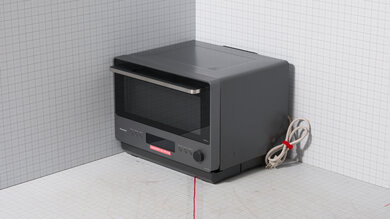
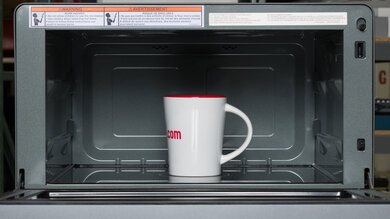
The Panasonic NN-SF57RM has a medium-sized cooking chamber. Its flat-bottomed cooking chamber doesn't have a conventional turntable; instead, it uses a hidden antenna to heat food evenly without physically turning it. This is meant to maximize space and facilitate cleanup if something spills or overflows.
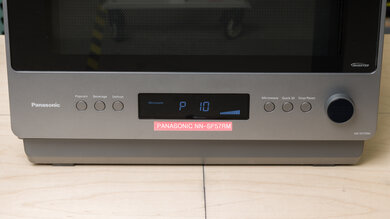
This unit's Genius Sensor 2.0 system is designed to provide a hands-off operating experience: simply place your food in the cooking chamber and start the heating process without selecting a power level or cook time. That said, you can still manually set the settings using the control dial.
You can only mute this microwave's buttons during initial setup or after unplugging it and re-plugging it back into a wall socket. Locking the controls simply requires briefly holding down the 'Stop/Reset' button.
This microwave's control scheme can take some time to get used to. Its sensor-based heating programs allow you to heat food without manually inputting time or power level, but making small increment changes to those settings requires repeated presses of the 'Microwave' button and several twists of its control dial.

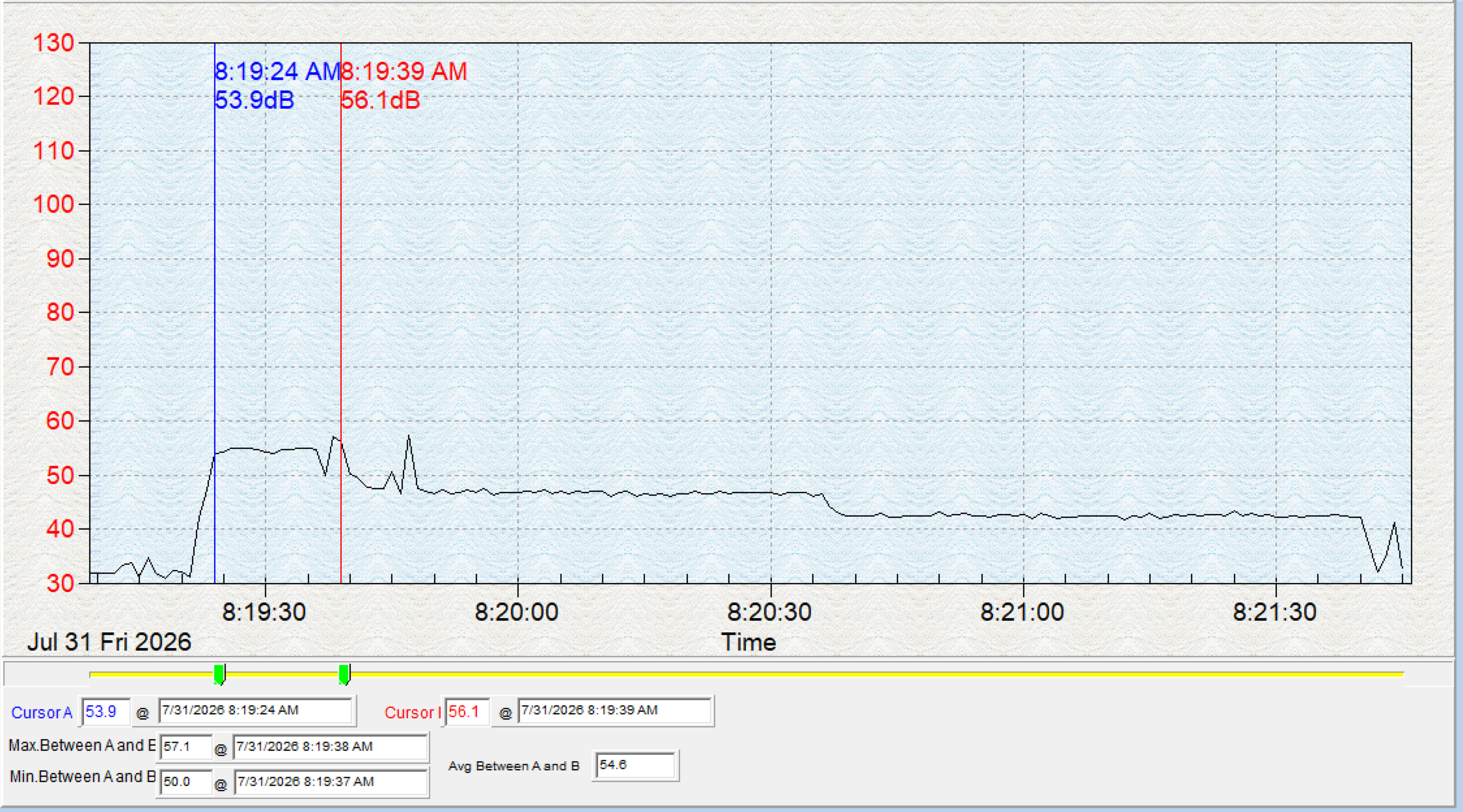
This unit's cooling fan runs for a fairly prolonged period after the heating cycle has completed. The fan noise after heating averages out to 47 dBA in the first 45 seconds after the cycle has completed, before dropping down to 42 dBA for another minute.
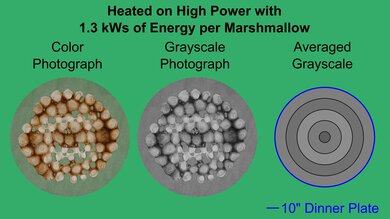
Microwaves all perform similarly when heating food in shallow dishes. Heating evenness depends on the consistency of what you're warming up (liquids heat more evenly), its placement in the cooking chamber, and the amount of steam in the microwave.
As is the case for shallow dishes, all microwaves perform similarly when heating food in deep containers. Heating uniformity depends on the consistency, amount, and density of what you're heating, as well as where you place it. You can read more about our investigations into microwave performance in our R&D article.