
The GE APYR50LC is a 50-pint dehumidifier intended for use in larger rooms. Its Smart Dry function automatically adjusts fan speed based on ambient humidity. It has a 1.7-gal (6.6 L) water tank, along with a built-in pump and included hose for continuous drainage into faraway or elevated containers, eliminating the need to empty the bucket manually. You can control the fan speed and monitor humidity levels using the integrated display panel and adjustable humidistat, but there's no Wi-Fi connectivity or smart home integration for remote control.
Our Verdict
The GE APYR50LC is great for basement use. This model's impressive overall dehumidification capacity makes it suitable for dealing with larger, open-concept basements. The integrated drain pump allows for continuous emptying into a faraway floor drain or elevated container, which eliminates the need for you to manually monitor and empty the bucket during very humid periods requiring all-day use. If you don't use continuous drainage, the unit collects water in its internal tank and requires manual emptying, and it stops once the bucket fills.
Removes moisture quickly in large or damp spaces.
Offers flexible airflow depending on how quickly you want to dehumidify.
Includes a built-in pump for continuous drainage, removing the need for manual emptying.
Loud operation competes with conversations or TV audio.
The GE APYR50LC is good for use in bathrooms. It might be a little too large for tighter bathrooms, but it offers excellent dehumidification capacity, enough for big, humid bathrooms. It features a drain pump and supports continuous drainage, so you can have it pour out any accumulated moisture into a sink or any high-walled tub without manually emptying the tank. The one major downside is noise: this unit is loud enough to disturb you regardless of the fan speed you choose.
Removes moisture quickly in large or damp spaces.
Includes a built-in pump for continuous drainage, removing the need for manual emptying.
Loud operating noise can be disturbing.
The GE APYR50LC is very good for use in large rooms. At its highest fan speed, it's more than capable of circulating the air in wide-open spaces and offers excellent dehumidification capacity to boot. It's also impressively energy-efficient, so it won't be too big a hit on your power bill. Unfortunately, it's rather noisy and is distracting if you leave it running while watching TV or if you have guests over.
Removes moisture quickly in large or damp spaces.
Offers flexible airflow depending on how quickly you want to dehumidify.
Loud operation competes with conversations or TV audio.
The GE APYR50LC is sub-par for use in most bedrooms. It's noisy-enough to disturb most sleepers and emits a lot of heat when running, so smaller bedrooms will quickly become stuffy and uncomfortable. On the upside, it offers excellent dehumidification capacity, so it can still work in very large bedrooms if you keep it far enough from the bed to limit the impact of noise and heat.
Removes moisture quickly in large or damp spaces.
Loud operation can disturb your sleep.
The GE APYR50LC's dehumidification capacity is excellent. It easily draws moisture out of large rooms and keeps up well in very humid conditions. It has no trouble handling spaces like basements or open-concept areas, even during longer run times.
Removes moisture quickly in large or damp spaces.
The GE APYR50LC is a noisy device. It produces enough noise to distract from sleep or conversation, even at its lowest fan speed, and it gets noticeably louder at higher settings.
Loud operation competes with conversations or TV audio.
The GE APYR50LC produces quite a lot of heat. It makes smaller rooms feel hot and stuffy during long periods of use.
Performance Usages
Changelog
-
Updated Jul 29, 2026:
We've included a link to the Midea MAD50PS1AWT-C in the Display and Control section to provide an alternative with Wi-Fi connectivity and a companion smartphone app.
-
Updated Apr 13, 2026:
We've updated our review to provide more context for our testing and include more product comparisons.
- Updated Jul 03, 2024: Review published.
Check Price
Differences Between Sizes And Variants
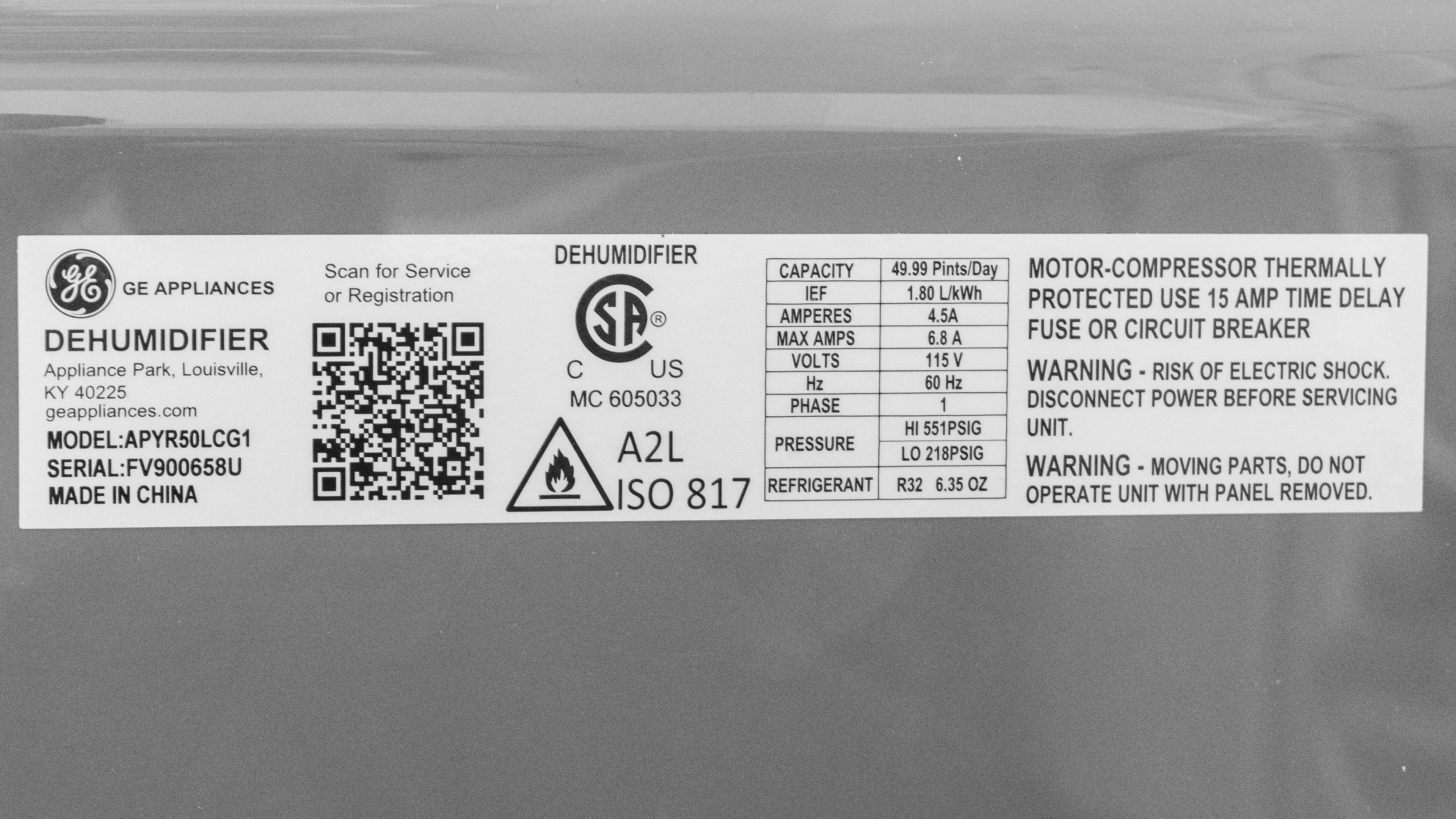
The GE APYR50LC is only available in one colorway: 'Gray.' See this photo of our unit's label.
If you encounter another variant of this dehumidifier, please let us know in the comments, and we'll update our review.
Popular Dehumidifier Comparisons
The GE APYR50LC is a high-capacity 50-pint dehumidifier best suited to bigger rooms. This is thanks to its high maximum airflow and excellent dehumidification capacity, allowing it to efficiently draw moisture out of the air. It also provides users with a fairly hands-off experience thanks to its drain pump, making it great for basements with a floor drain, and its Smart Dry function enables it to adjust its fan speeds based on humidity levels. That said, it's much noisier at all fan speeds and emits more heat than other high-capacity models, like the 50-pint Midea MAD50PS1WS. The Midea runs quieter and produces slightly less heat during operation, making it a better choice for use in a large living room or on a main floor.
However, both models are quite large, limiting their relevance for smaller spaces like bedrooms or bathrooms. If you need a dehumidifier for smaller spaces, consider the Waykar PD160B. It's a step down in size, runs quietly enough not to interrupt conversations, and keeps the room at a comfortable temperature. Still, if you prioritize a hands-off experience and don't need to worry about noise and heat, then the GE will serve you well.
If you're interested in alternatives, check out our recommendations for the best dehumidifiers, the best basement dehumidifiers, and the best dehumidifiers for bedrooms.
The Midea MAD50PS1AWT-C is the better choice for most people over the GE APYR50LC, though the GE is worth considering if you need even higher airflow. The GE moves more air throughout a room, which can help circulate dry air more quickly in large or open spaces, but it also runs noticeably louder and produces more heat during operation. The Midea is quieter, stays a little cooler, and has a more compact design, all while still offering excellent overall dehumidification performance.
The Midea MAD35S1QWT and the GE APYR50LC are built for different use cases, mainly due to their capacity. The Midea suits smaller to medium-sized spaces, where it runs quieter and has less of an impact on room temperature, making it easier to live with day to day. The GE, on the other hand, has a higher 50-pint capacity, so it removes moisture more quickly and handles larger, more humid areas like basements with less effort. It also includes a built-in pump, which makes continuous drainage easier to set up. If you're dealing with heavier humidity or larger spaces, the GE makes more sense, while the Midea is a more comfortable fit for everyday use in smaller rooms.
The GE APYR50LC and the Waykar PD160B are two dehumidifiers with different capacities, making them ideal for different uses. Get the Waykar if you're looking to dehumidify smaller spaces. It's quieter, more compact, and doesn't give off nearly as much heat as the GE, making a noticeable difference in places like bedrooms or living rooms where the GE is a nuisance during operation. Just note that the Waykar has a much smaller dehumidification capacity than the GE, so it won't pull moisture from the air as quickly and can't handle larger, very damp areas effectively. Therefore, get the GE if you need to dehumidify large spaces like a basement, as it also features a built-in drain pump, allowing for a fairly hands-off user experience.
Overall, the Midea MAD50PS1WS is a better high-capacity dehumidifier than the GE APYR50LC. Its advertised 50-pint capacity mirrors that of the GE, but it's quieter and gives off less heat, so it feels less intrusive in living spaces. The Midea also has smart features like Wi-Fi connectivity, giving you more control without needing to interact with the unit directly, something the GE lacks entirely. Both models include a built-in drain pump, so they're equally flexible for drainage. Unfortunately, the Midea is discontinued, making it very difficult to find one new.
Test Results
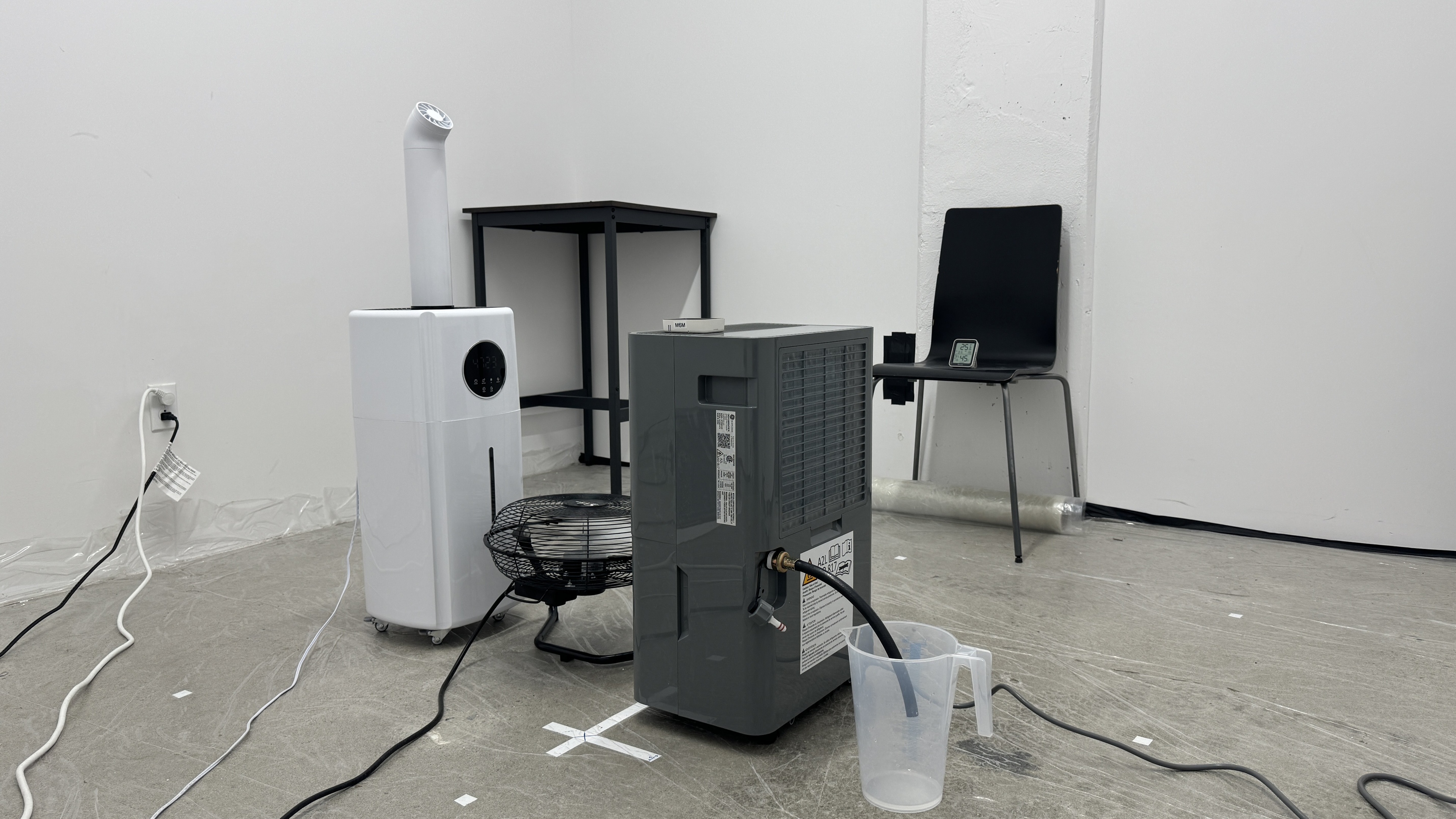
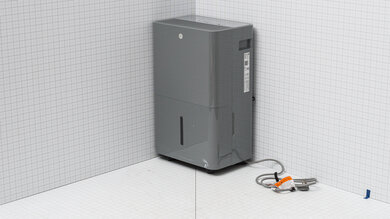
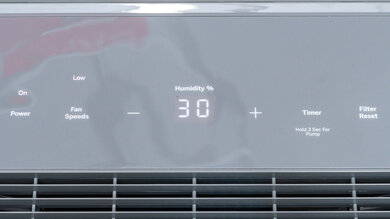
The unit doesn't include Wi-Fi connectivity, so it doesn't support smart home integrations or remote control. If Wi-Fi connectivity and smartphone app control are important to you, consider the Midea MAD50PS1AWT-C, which offers both in a similar 50-pint package.
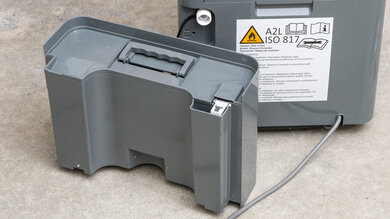
This dehumidifier lacks a manually selectable defrost setting. That said, it does include an automatic defrost function that turns off the compressor and runs the fan when the evaporator coils frost over. This is essentially the same process used in units with dedicated defrost buttons, just handled automatically instead of manually.
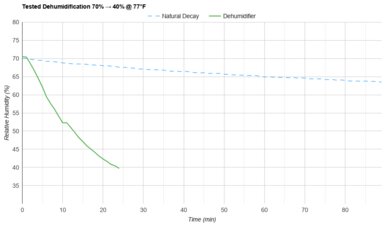
This dehumidifier has excellent overall dehumidification capacity. It can quickly pull significant amounts of water from the air. As a result, it works especially well in larger spaces, where it can quickly transform the room from feeling muggy to comfortable and keep humidity levels in check.
This model delivers strong dehumidification performance relative to its power consumption, making it well-suited for use in larger spaces. While its tested efficiency is lower than its Energy Star rating, it still provides effective moisture removal without excessive energy use.
This dehumidifier is fairly noisy, which can be expected given its larger size and higher capacity design. Even at its lowest fan speed, it produces a noticeable amount of sound, and it becomes quite loud at higher settings. At its loudest, it reaches around 60 dBA, roughly the volume of a normal conversation, meaning it can start to overlap with and disrupt conversations in the same room. This makes it less ideal for use in quieter environments like bedrooms or living spaces.
This dehumidifier offers good overall airflow performance. It moves a high volume of air, especially at higher settings, which helps it remove moisture more quickly in larger or very damp spaces, like basements. However, that same airflow also brings more noise, circulates more heat, and can feel a bit strong in smaller or enclosed areas. Even at its lowest setting, it still moves a noticeable amount of air, so it doesn’t really offer a low-impact option for more sensitive spaces, like a bedroom or living room.
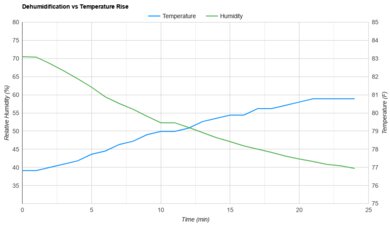
The dehumidifier has poor temperature stability. It puts out a noticeable amount of heat while running, which can raise the temperature in smaller or enclosed spaces. This makes it less ideal if you're trying to keep a room at a consistent temperature. It's better suited for spaces like basements or garages where temperature fluctuation is less noticeable.