
The Midea MAD35S1QWT is a 35-pint dehumidifier meant for mid-sized spaces. It has a collapsible design that allows the unit to be expanded during use and folded down for storage when not in use. It has a built-in water tank and supports continuous drainage via the included hose, directing accumulated moisture to a nearby sink or floor drain. Thanks to the onboard humidistat, this dehumidifier can automatically adjust its fan speed setting in real time to match changes in relative humidity. It also offers Wi-Fi connectivity through Midea's SmartHome app, with support for remote control and voice commands via Amazon Alexa and Google Assistant.
Our Verdict
The Midea MAD35S1QWT is good for basement use. Its overall dehumidification capacity is enough to manage typical humidity levels in enclosed or moderately sized basements, though it isn't as well-suited for larger, open areas. It's also fairly energy efficient for its size, so it won't add too much to your power bill during extended use. While it lacks a built-in drain pump, it can be set up for continuous drainage using the included hose, allowing water to be directed into a nearby floor drain. Otherwise, it collects moisture in its internal tank and requires manual emptying once the bucket fills. Due to the tank's substantial capacity, this can be a challenge if you have mobility issues.
Supports continuous drainage, reducing the need for manual emptying.
High airflow helps with continuous moisture removal.
Energy efficient operation.
Struggles to keep up in large or open-concept spaces.
No drain pump, requiring manual emptying or gravity drainage.
The Midea MAD35S1QWT is alright for use in bathrooms and handles humidity without much trouble. It's rather bulky when fully deployed, making it a challenge for smaller bathrooms. It supports continuous drainage using the included hose, and as a result, you don't have to empty the tank during frequent use. That said, it doesn't include a built-in pump, so it can't drain water into a sink or high-walled tub. Its cube design does make it a bit easier to manage, though, since you can separate the tank and place the main unit on a counter instead of lifting the entire unit to drain it.
Removes moisture effectively in small to medium-sized spaces.
Supports continuous drainage, reducing the need for manual emptying.
Raises room temperature in small spaces.
No drain pump, requiring manual emptying or gravity drainage.
The Midea MAD35S1QWT is decent for large rooms, but its 35-pint capacity limits how quickly it can pull moisture from bigger, open spaces like basements or open-concept living areas. Its strong airflow at higher settings helps circulate air across these wider spaces, which supports overall moisture removal, but it still struggles to keep up with heavy humidity compared to higher-capacity units. It keeps humidity under control in lighter conditions and does so fairly efficiently for its size. Operating noise in larger spaces fades into the background and can be mostly drowned out by a TV playing at a normal volume or nearby conversation.
Doesn't overpower nearby conversation during operation.
Struggles to keep up in large or open-concept spaces.
The Midea MAD35S1QWT is satisfactory for use in bedrooms. Its 35-pint capacity is well-suited to all but the biggest of bedrooms. It produces a moderate level of noise, which some sleepers may tune out over time, but can still be noticeable if you're a light sleeper. It doesn't give off as much heat as some higher-capacity units, which helps keep the room more comfortable overnight, and its relatively efficient operation makes it less intrusive for longer runtimes.
Removes moisture effectively in small to medium-sized spaces.
Doesn't overpower nearby conversation during operation.
Raises room temperature in small spaces.
Operating noise can disturb light-sleepers.
The Midea MAD35S1QWT's dehumidification capacity is satisfactory. It's effective in reducing humidity in medium-sized rooms, like larger bedrooms or offices, but it isn't as well-suited for larger, open-concept spaces. In those cases, it takes longer to reach and maintain the set humidity level, especially during long periods of high humidity.
Removes moisture effectively in small to medium-sized spaces.
Struggles to keep up in large or open-concept spaces.
The Midea MAD35S1QWT is a fairly quiet device. It produces a steady background noise during operation, but it doesn't interfere with nearby conversation and is less distracting than louder units.
Doesn't overpower nearby conversation during operation.
Operating noise can disturb light-sleepers.
The Midea MAD35S1QWT does a decent job of maintaining a stable temperature. It can make smaller spaces, like bathrooms or home offices, feel a bit stuffy after a few hours of use, but it has a less noticeable impact in larger areas like living rooms or basements.
Raises room temperature in small spaces.
Performance Usages
Changelog
-
Updated Jul 29, 2026:
We've included a link to the Midea MAD50PS1AWT-C in the Capacity section to provide an alternative with a higher capacity that can tackle larger rooms.
-
Updated Apr 17, 2026:
We've updated our review to provide more context for our testing and include more product comparisons.
- Updated Jul 03, 2024: Review published.
Check Price
Differences Between Sizes And Variants
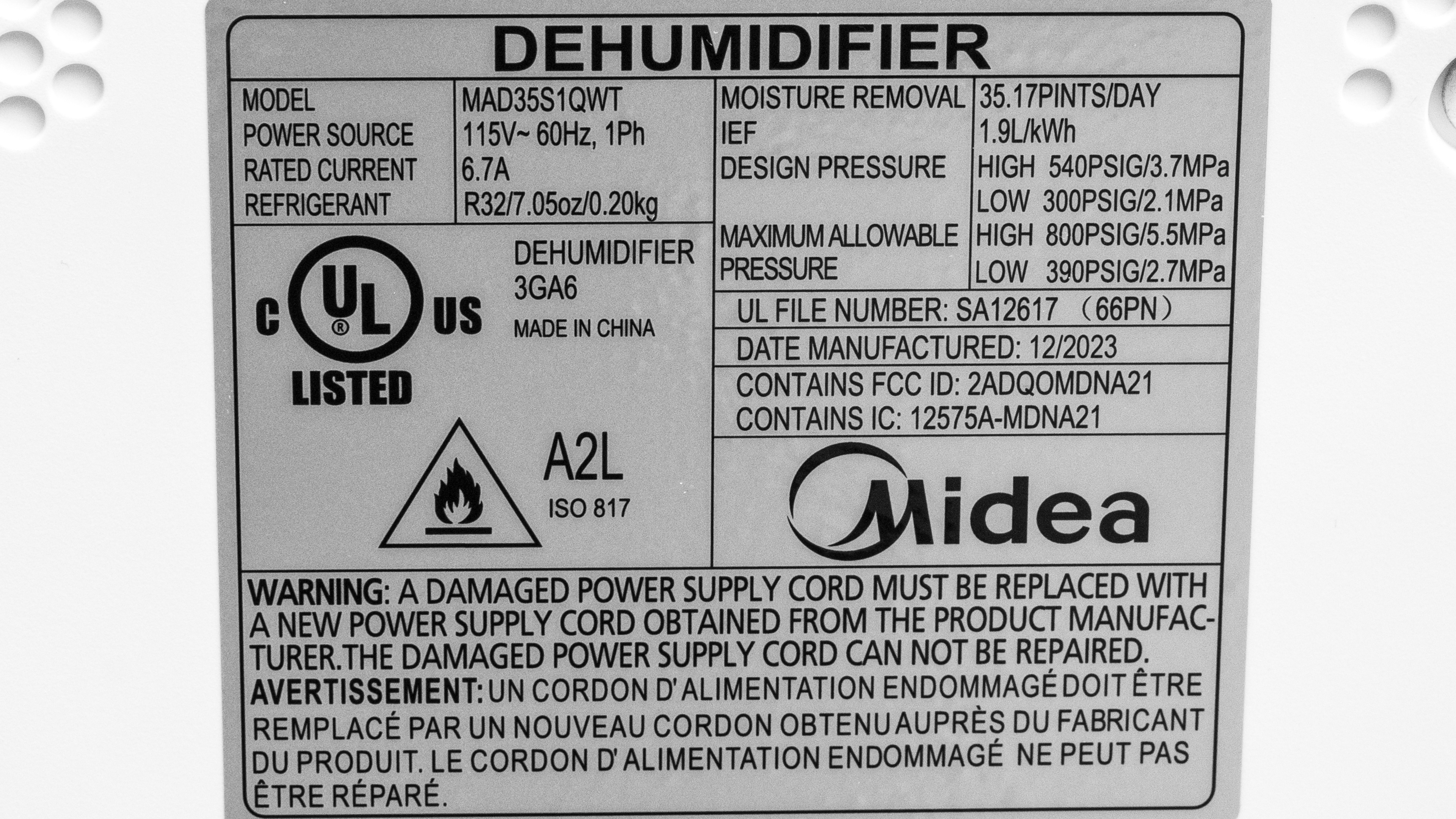
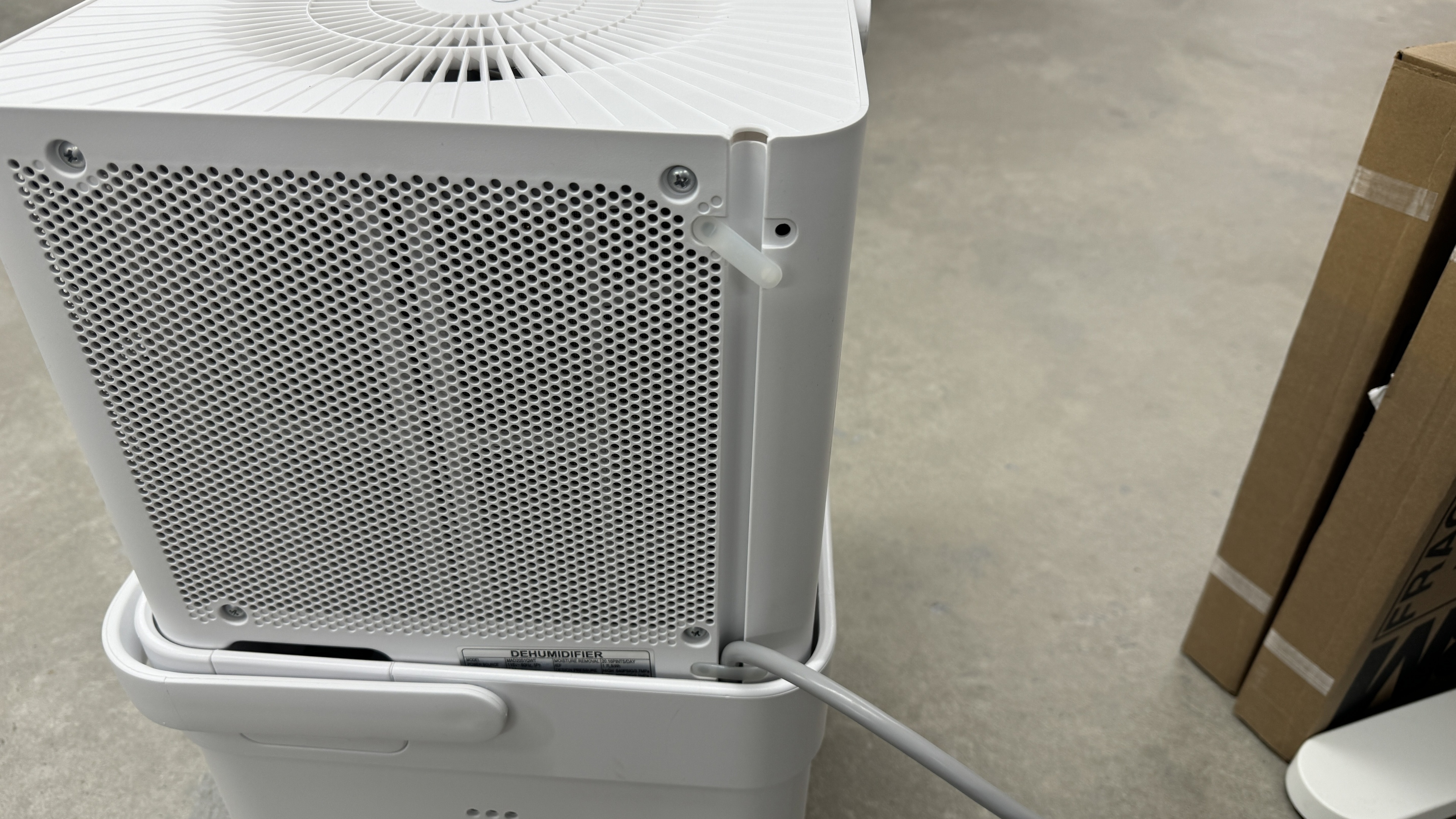
The Midea MAD35S1QWT is only available in a 'White' colorway. See this photo of our unit's label.
Let us know in the comments if you come across another variant of this dehumidifier.
Popular Dehumidifier Comparisons
The Midea MAD35S1QWT is a 35-pint dehumidifier that delivers solid overall performance for its size, handling everyday humidity in small to medium spaces without much trouble. It also adds useful convenience features such as Wi-Fi connectivity for remote control and continuous drainage support, which reduces how often you need to manually empty the bucket. That said, unlike its similar capacity sibling, the Midea MAD35PS1QGR, it lacks a built-in pump; if your only drainage option is elevated, like a utility sink, the MAD35S1QWT isn't ideal. Nevertheless, the MAD35S1QWT is a solid all-around 35-pint dehumidifier, offering similar moisture removal to competitors like the GE ADHL35LA while running quieter and cooler. This makes it a good fit for moderate-sized living spaces, but you'll want to size up to a 50-pint unit like the GE APYR50LC or the Midea MAD50PS1QWT if you need to tackle larger basements or open-concept areas.
If you're interested in alternatives, check out our recommendations for the best dehumidifiers, the best dehumidifiers for bedrooms, and the best basement dehumidifiers.
The Midea MAD35PS1QGR is a more versatile 35-pint dehumidifier than the Midea MAD35S1QWT, though both models are very similar overall. The key difference is the built-in drain pump on the MAD35PS1QGR, which allows for easier continuous drainage into elevated sinks or drains, while the MAD35S1QWT relies on gravity. Otherwise, they share the same 35-pint capacity and collapsible design, and perform essentially the same in practice.
The Midea MAD50PS1AWT-C is the better choice over the Midea MAD35S1QWT if you need to control humidity in large or consistently damp spaces. It has a higher moisture removal capacity and includes a built-in drain pump that can move water to an elevated sink or drain for continuous operation. The MAD35S1QWT is a better fit if you only need to dehumidify occasionally and plan to store the unit between uses, as its collapsible design takes up less space. However, it doesn't include a built-in drain pump, and the MAD50PS1AWT-C actually has the smaller footprint while both units are in use.
The Midea MAD35S1QWT and the GE APYR50LC are built for different use cases, mainly due to their capacity. The Midea suits smaller to medium-sized spaces, where it runs quieter and has less of an impact on room temperature, making it easier to live with day to day. The GE, on the other hand, has a higher 50-pint capacity, so it removes moisture more quickly and handles larger, more humid areas like basements with less effort. It also includes a built-in pump, which makes continuous drainage easier to set up. If you're dealing with heavier humidity or larger spaces, the GE makes more sense, while the Midea is a more comfortable fit for everyday use in smaller rooms.
The Midea MAD35S1QWT is the more versatile 35-pint dehumidifier compared to the GE ADHL35LA. While the GE has a smaller, more condensed footprint, it sticks to a fixed design. The Midea, on the other hand, can collapse down for storage, and when using continuous drainage, you can remove the water bucket to reduce its size. It also runs quieter and doesn’t put out as much heat, which makes it easier to live with in smaller spaces. In terms of performance, both units handle humidity at a similar level and rely on gravity for drainage, so there isn’t much separating them there.
Test Results
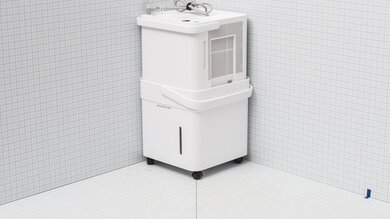
The power cord comes clipped in place out of the box, which makes it a bit shorter. You can unclip it to gain a few extra inches. The length listed in this review reflects the cord fully extended, while the clipped length is about 4.9 ft (150.5 cm).
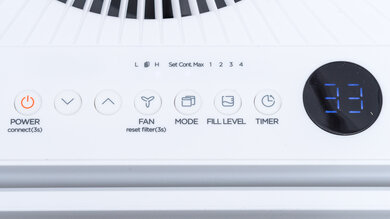
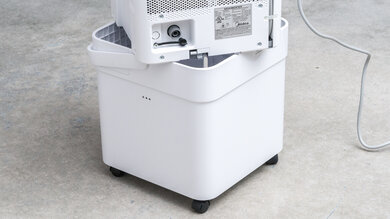
Like other similar Midea bucket-style models, separating the top unit from the bucket isn't too difficult, but it does require a bit of strength. You need to lift the dehumidifier off the bucket, set it aside, and then move the bucket to empty it. Both parts include handles to help with lifting and carrying.
The dehumidifier connects to Midea's SmartHome app, which lets you monitor humidity levels, adjust settings, and control the unit remotely without using the onboard controls.
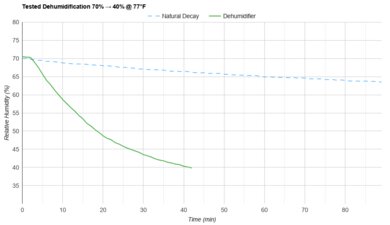
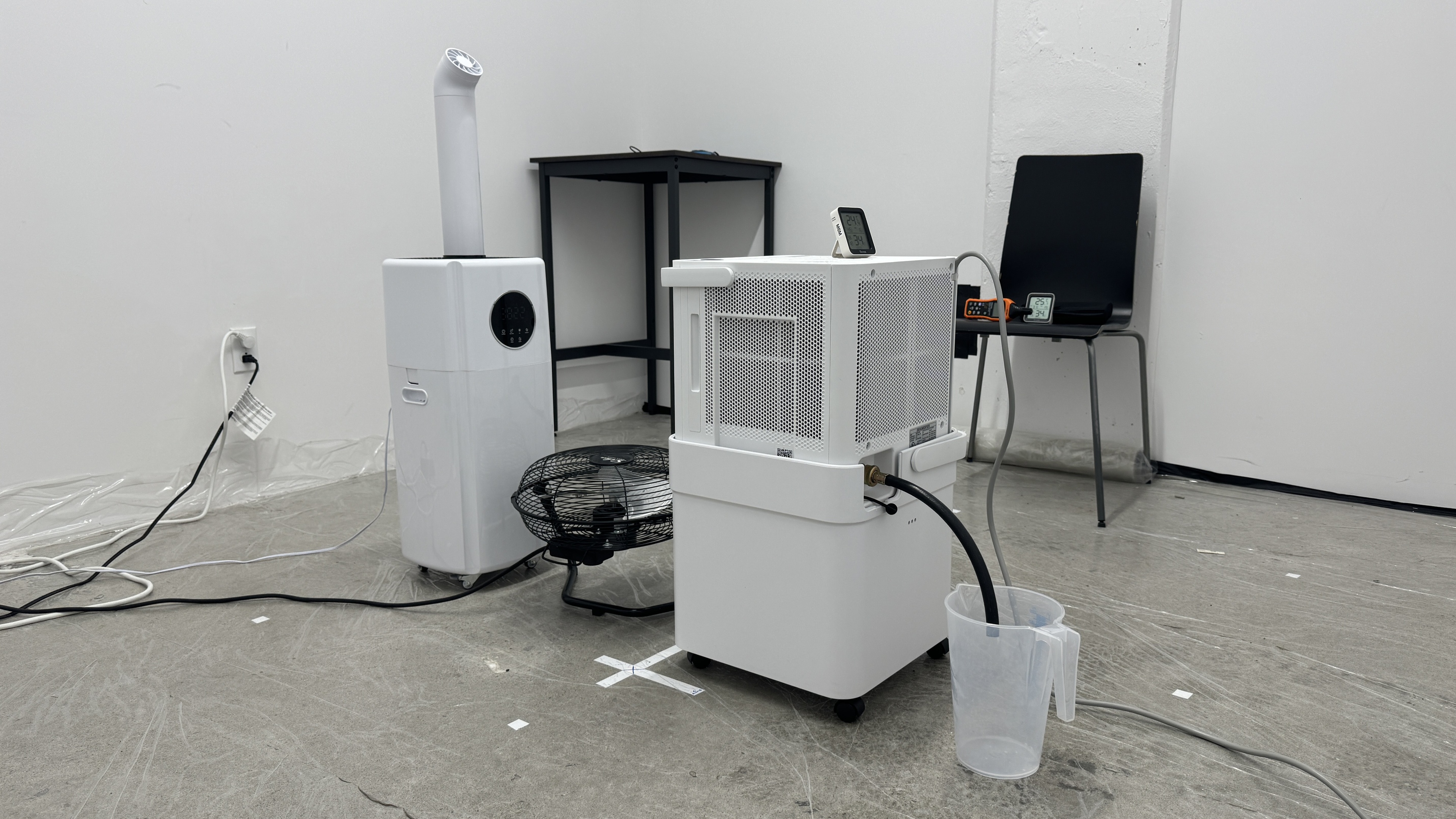
This dehumidifier has satisfactory overall dehumidification capacity. It works best in small to medium-sized spaces, but takes longer to bring humidity down in larger rooms or during more humid conditions, requiring longer operation times to keep up. If you need a higher-capacity dehumidifier for larger or more consistently damp spaces, consider the 50-pint Midea MAD50PS1AWT-C.
This model offers strong dehumidification efficiency, pulling moisture from the air effectively without using much energy. While its tested efficiency falls short of its Energy Star rating, it still provides effective moisture removal without excessive energy use.
This dehumidifier's noise levels are reasonable overall. It produces a noticeable amount of sound during operation and, at its loudest, reaches a level roughly comparable to a running dishwasher, making it easy to notice in the background. In busier spaces like a living room, it blends in more with other ambient noise, but in quieter environments like a bedroom, it can still be distracting, especially for lighter sleepers.
This dehumidifier offers decent overall airflow performance. It moves a good amount of air at higher settings, which helps with steady moisture removal in small to medium spaces. However, even at its lowest fan speed, it produces a fairly strong stream of air, which can feel a bit excessive in smaller or more enclosed rooms.
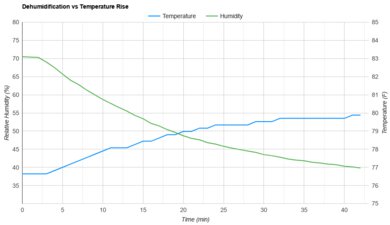
This dehumidifier's temperature stability is satisfactory. It generates some heat during operation, which can make smaller or enclosed spaces feel slightly warmer over time, but the overall impact isn't too strong. In larger or better-ventilated areas, the temperature change is less noticeable, so it remains comfortable for longer periods of use.