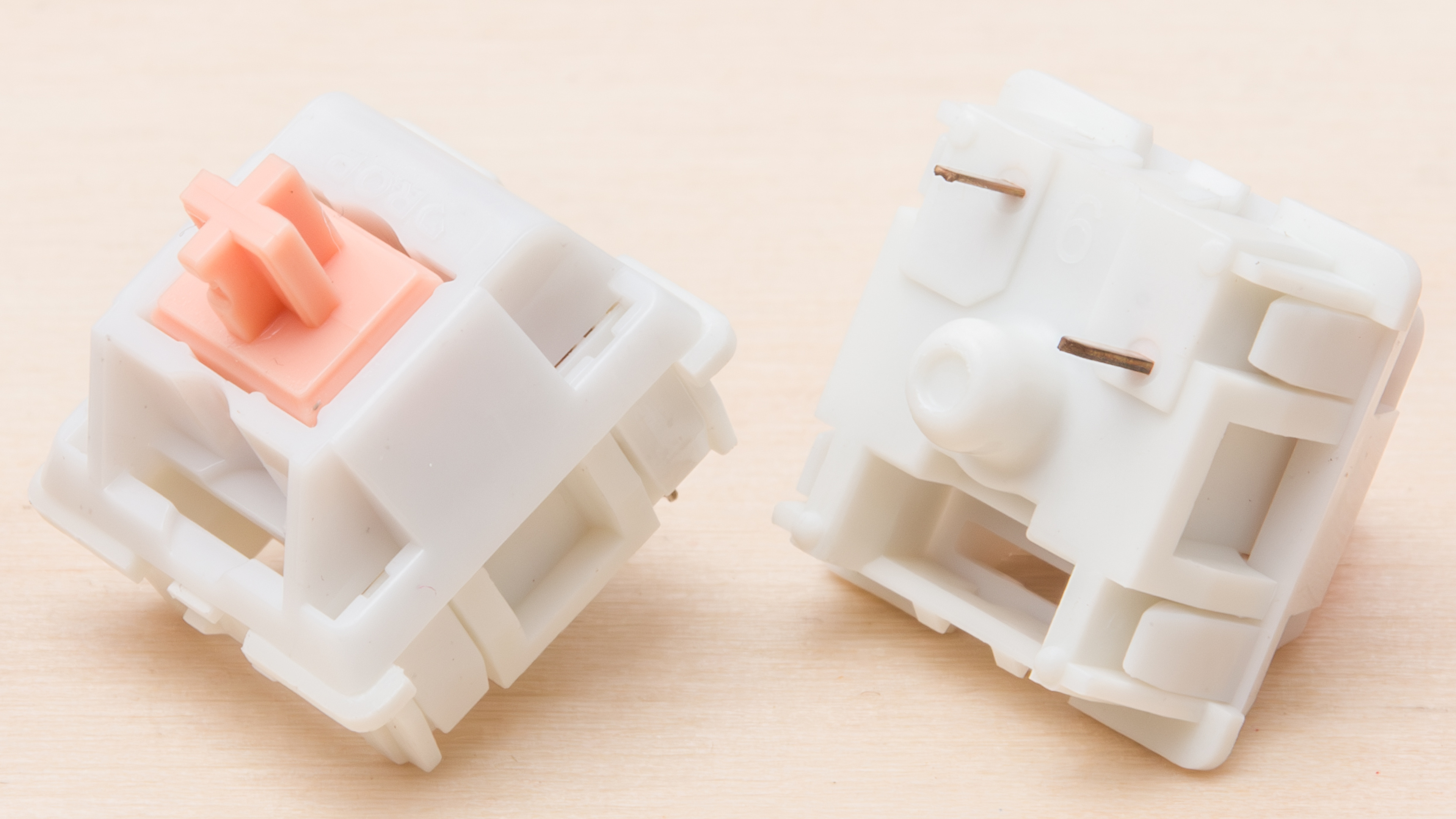
We've tested over a hundred keyboard switches, and to maintain our independence, we buy them all ourselves. We don't just rely on subjective testing. Instead, we rigorously test each switch on the same standardized test bench so you can compare them on equal ground.
Our review pipeline is a team effort involving photographers, inventory managers, testers, test developers, and editors, with multiple validation rounds along the way. In this article, we'll show you how we choose and test keyboard switches, and how we present our results so you can trust them.
 |
 |
 |
Product Selection
A huge number of new switches are released every year, and as much as we may want to, we can't test them all. We aim to maintain a good cross-section of the market that runs the gamut between older classics, currently popular switches, and even some more unusual choices. We try to purchase and test switches that will be the most interesting and useful for beginners and enthusiasts alike.
For most other product categories we test, we conduct user polls where you can vote on what you'd like to see reviewed. We don't currently hold regular polls for keyboard switches as we've found it more efficient to test in batches. But if there's a switch you'd like to see us buy and review, we encourage you to let us know in our forums.
How We Buy Products
We buy switches the same way you do, and we don't accept review samples from brands. This ensures we aren't getting cherry-picked switches that could affect our results and give you a false impression of what to expect if you buy them yourself. The trade-off is that we don't get access to products as readily or as early as reviewers who receive brand-supplied samples.
Standardized Tests
Our standardized keyboard switch test bench is what makes our reviews helpful when you're trying to make a buying decision. By testing in the same way, you can use our side-by-side tool to compare switches on an even playing field and determine which one best meets your needs.
We also have a powerful table tool that lets you explore our entire database. You can create your own custom table with basic filters like price, switch feel, or actuation force, as well as even more in-depth options like pin count, housing color, or press latency average, just to name a few.
Testing
Our keyboard switch testing is split into two sections: Design and Performance. The following is a quick overview of each.
Design
This section has two test boxes that provide some basic physical information.
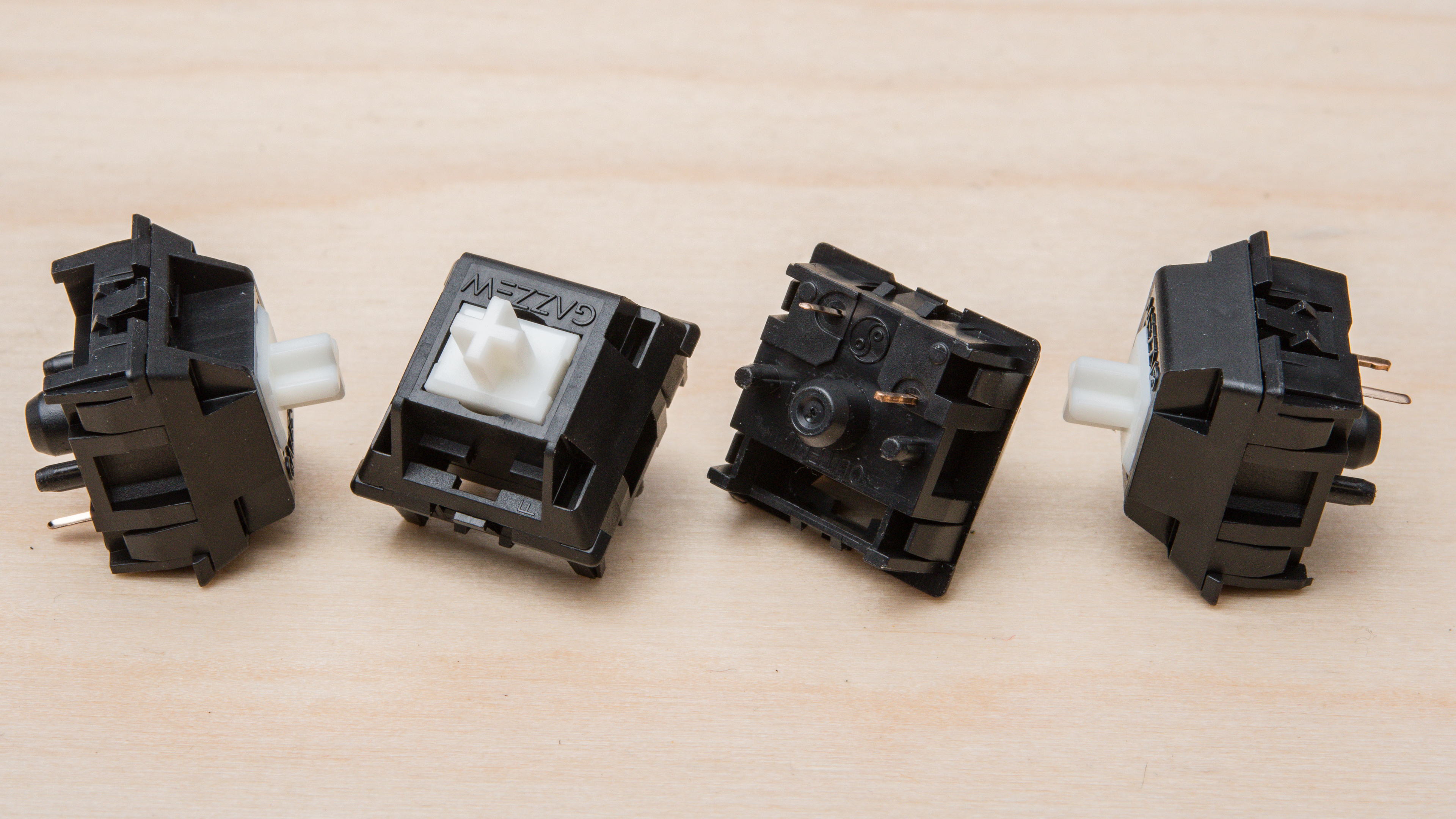
The first box covers compatibility with information like pinout count and keycap stem type. The second box is focused on LED illumination, listing the color and finish of the switch housing.
Performance
The performance section of our reviews is larger and uses comparative measurements and several specialized measurement tools. One of the most important tools on our test bench is a Mecmesin MultiTest 2.5-I force tester.
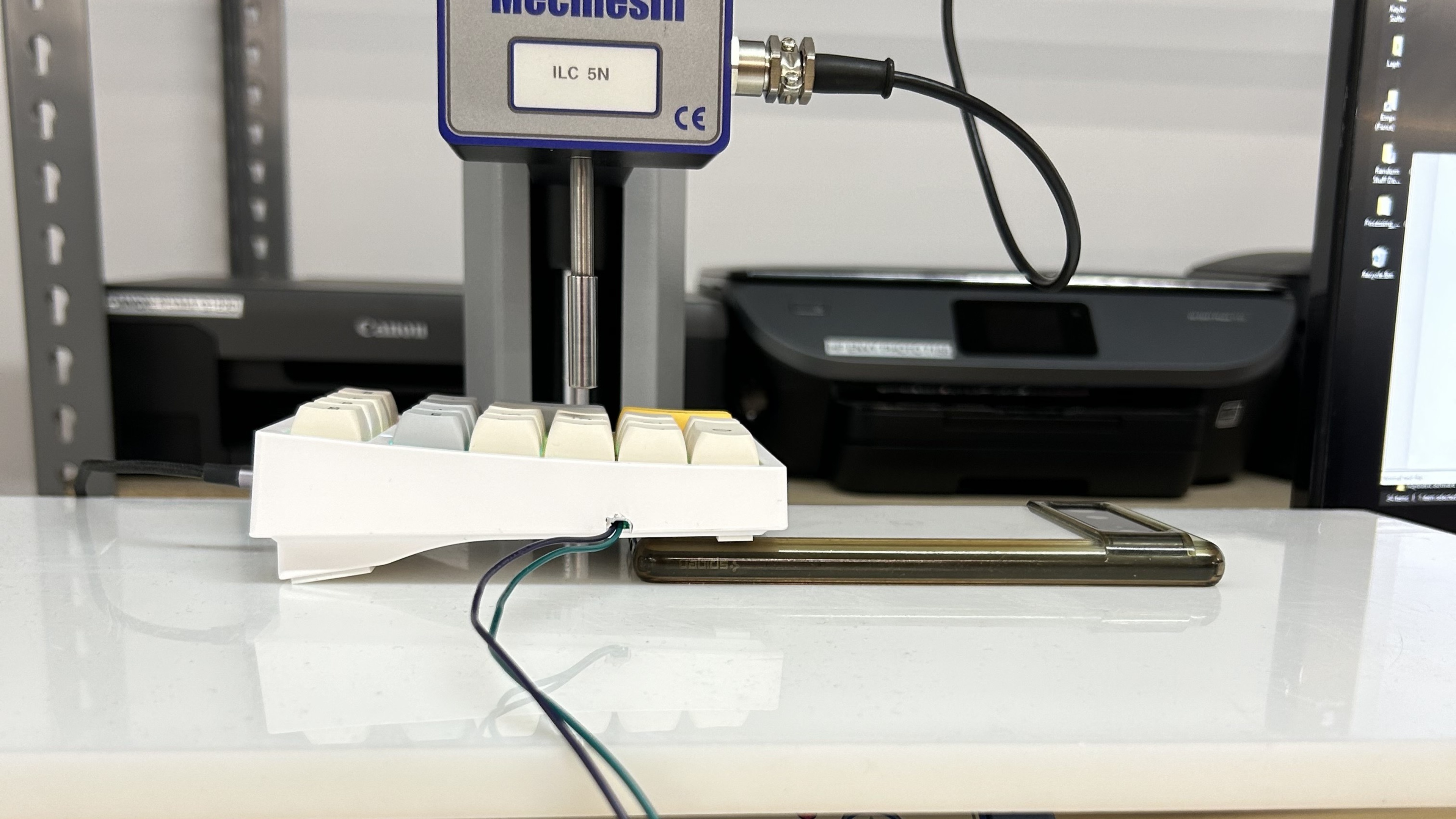
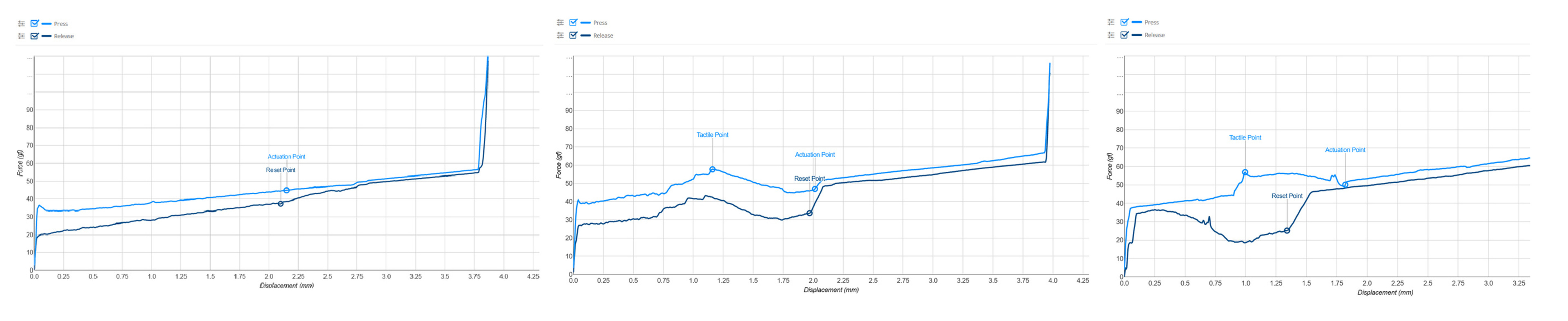
This machine allows us to evaluate fundamental aspects of a switch, including switch feel, actuation force, and total travel distance. We also use it to produce standardized force curve graphs that are widely used by switch enthusiasts to compare and visually understand the differences between switches.
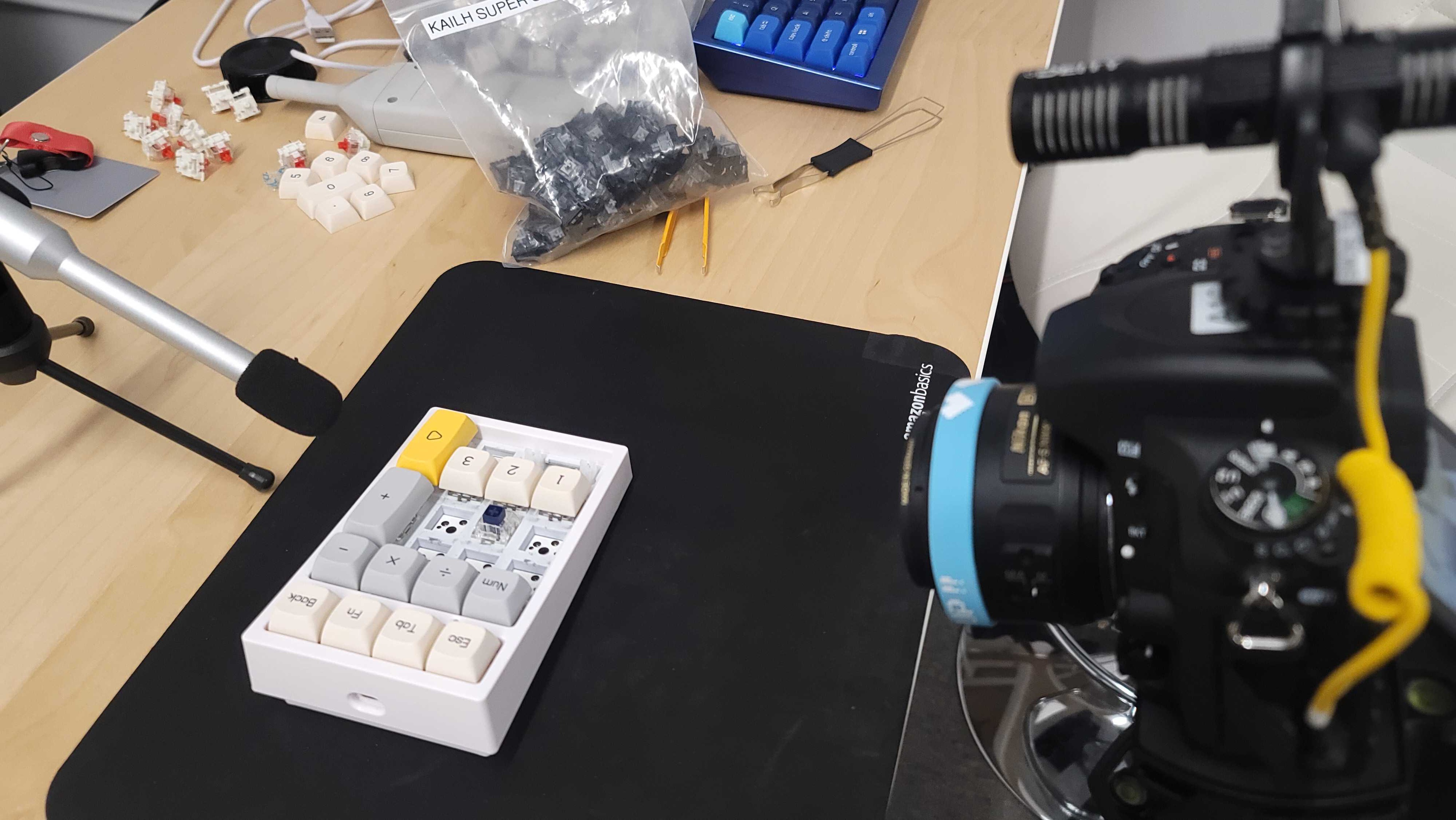
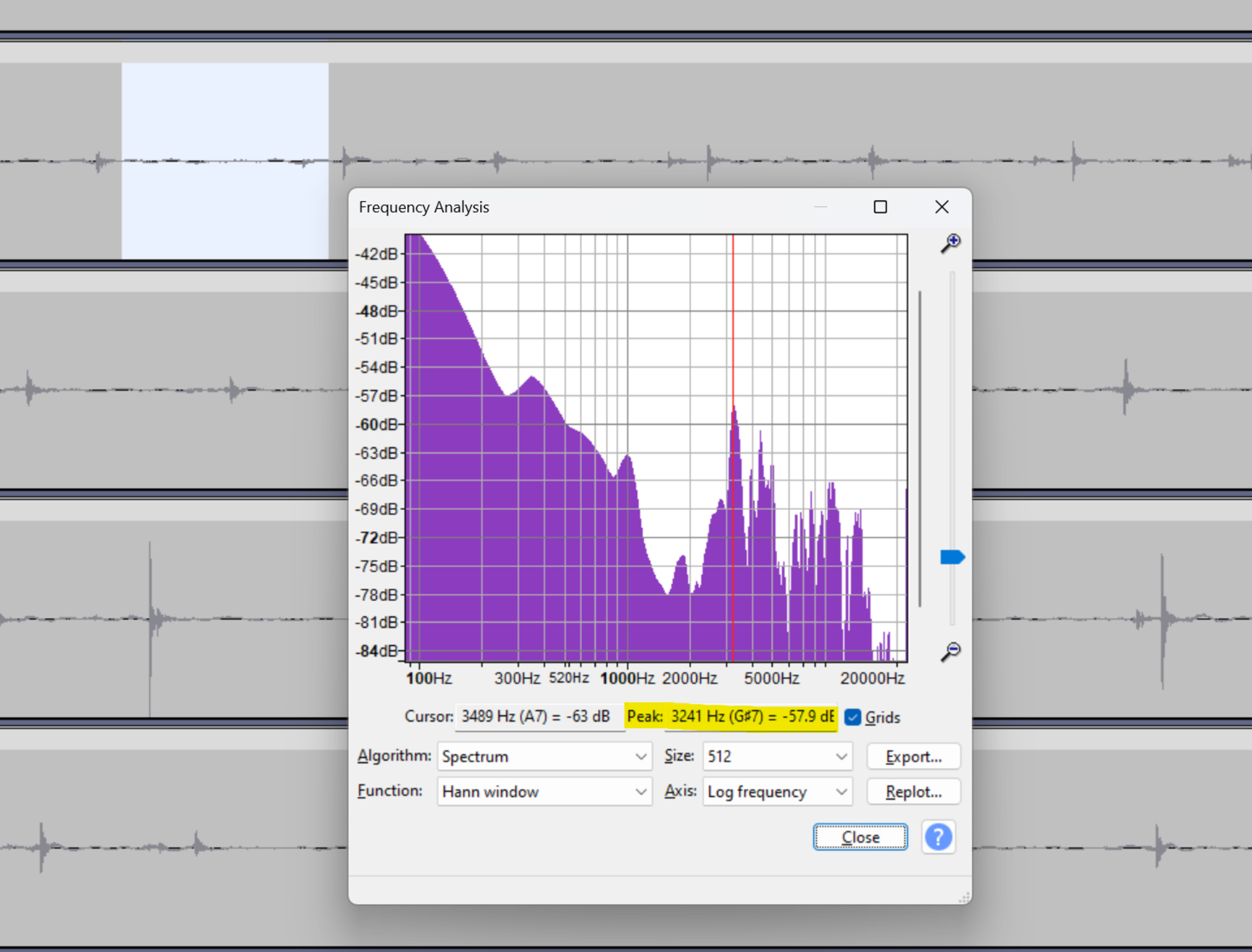
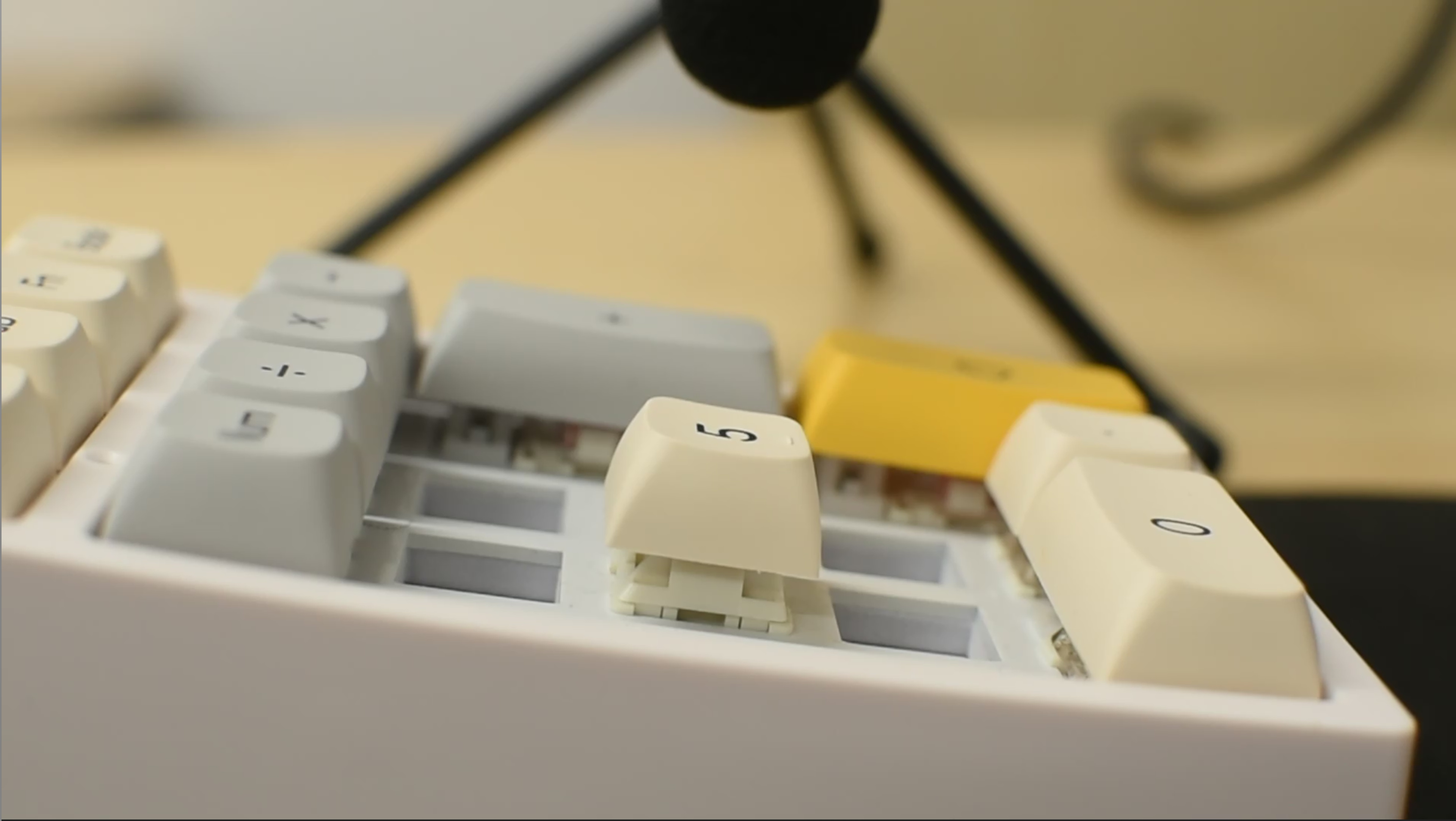
We don't currently evaluate switch acoustics directly because it's so heavily dependent on other factors that make comparability challenging, including keyboard case material, plate material, mounting style, foam layers, and more. That said, we do still use a microphone for evaluating a switch's factory smoothness.
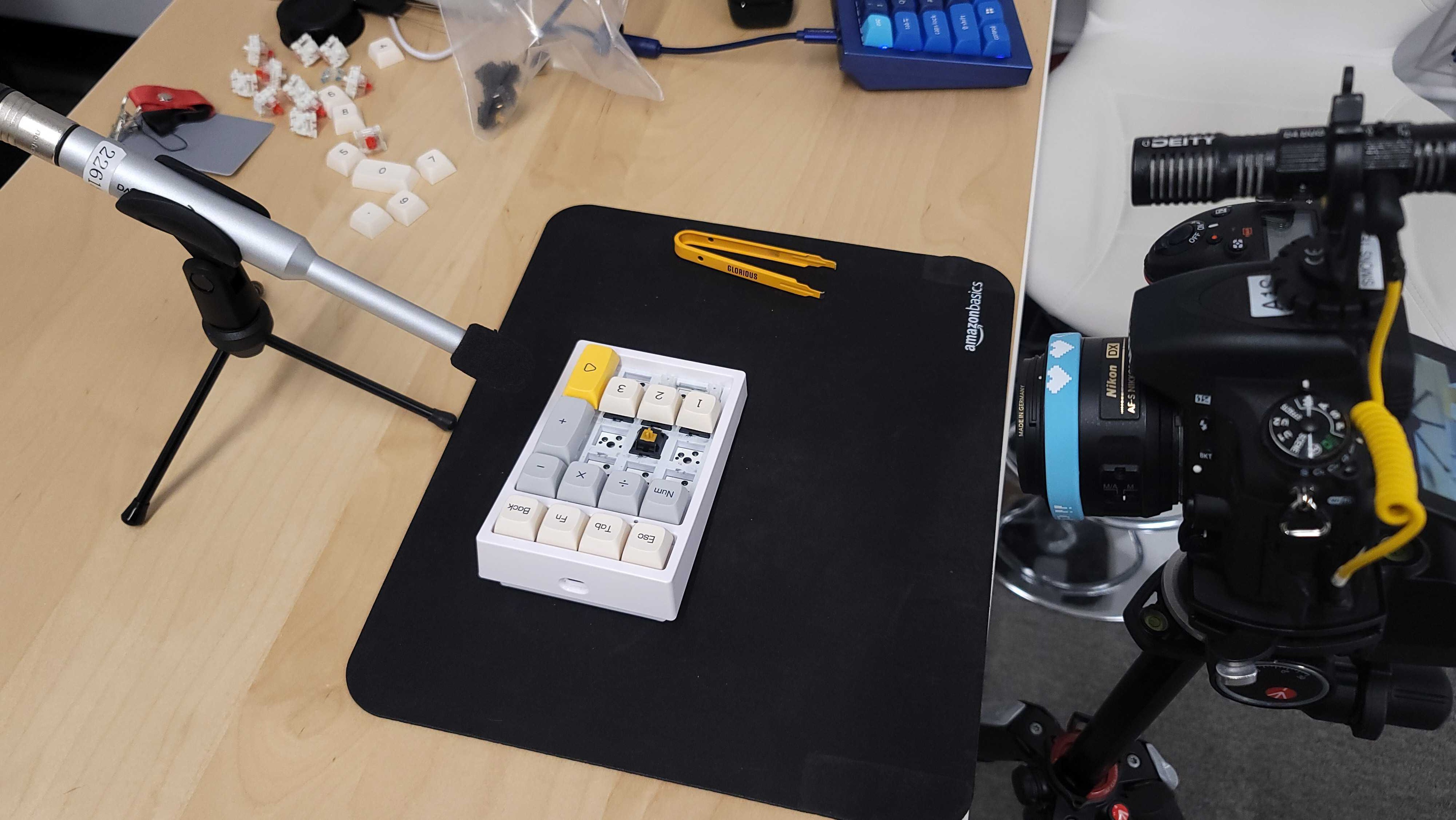
Lastly, for our Latency test, we use a variety of equipment, including a Beagle 480 USB analyzer, a custom microcontroller setup, copper tape, a solenoid, and even a small desk fan to keep the solenoid from overheating during sampling.
We mount the switches into basic keypads with generic keycaps. For conventional mechanical switches, we use several modified Epomaker TH21 numpads, but these only serve as standardized bases and aren't part of the measurement itself. In fact, for latency testing, the keypad remains unpowered.

This setup is different from our keyboard latency methodology, which intentionally includes all inherent delay added by the keyboard itself, including scan rate, firmware processing, and debounce. Instead, our goal in testing switch latency is to only measure the pre-travel latency of the switches themselves, independent of any keyboard-level factors.
We aren't going to dive into our methodology for our performance tests within this article, but if you're curious or have more questions, we encourage you to check out our R&D article. It meticulously documents our methodology and rationale for both our switch latency testing and our attempt to objectively evaluate switch smoothness.
Videos
Below is a dedicated video investigation that documents the development and execution of our factory smoothness testing.
We also produce in-depth video reviews and recommendations for a wide variety of product categories. For keyboard, mouse, and other computer-related videos, see our RTINGS.com Computer YouTube channel.
Recommendations
Separate from our reviews, we publish a collection of curated switch recommendation articles. They're designed to help you decide which switches to buy. When preparing and maintaining these recommendations, we factor in elements like pricing and availability in addition to our test results. At the end of the day, our recommendations are just that: recommendations. They aren't intended as definitive tier rankings for longtime hobbyists. Instead, our primary goal is to make them most useful for non-experts or those who haven't purchased a keyboard in a while and need an approachable starting point.
For test bench version changelogs, R&D articles, and any other future content, you can browse all our keyboard switch articles.
How To Contact Us
Constant improvement is key to our continued success, and we rely on feedback to help us. We encourage you to send us any questions, criticisms, or suggestions. You can reach us in the comments section of this article, anywhere on our forums, on Discord, or by emailing feedback@rtings.com.
