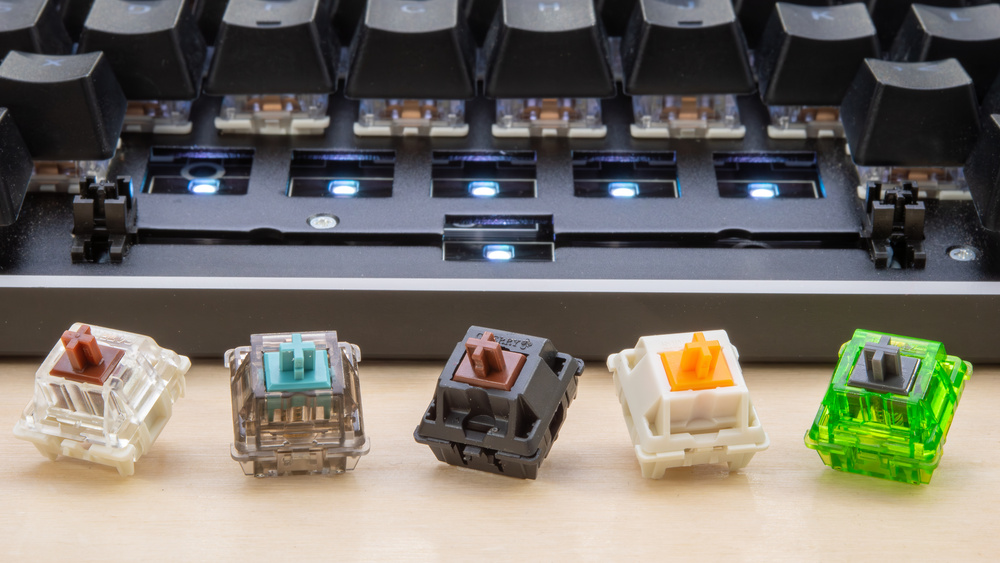
Tactile switches are defined by the small bump you feel when using them. When you press one, you'll feel resistance until you apply enough force to overcome the bump and actuate the key. The strength of that resistance and where the bump occurs in the keystroke vary between models and have a major impact on how they feel. Tactile switches are especially popular with typists, as the bump isn't just satisfying, it provides physical feedback that signals when a key has actuated, which can improve consistency and speed.
There's also a strong contingent of gamers who prefer tactile switches, especially for games with complex keybinds. RTS, rhythm games, and MMOs are good examples where tactile feedback can help confirm inputs and maintain timing. We don't focus on gaming here, but we have a dedicated article on the best mechanical switches for gaming instead.
We've tested over 150 switches, including over 50 tactile models. Below are our recommendations for the best tactile switches available. Note that the pricing of keyboard switches can vary quite a bit depending on the quantity you purchase and the website you buy them from. It might be worth shopping around a little!
For more options, also see our recommendations for the best keyboard switches, the best linear switches, and the best clicky switches.
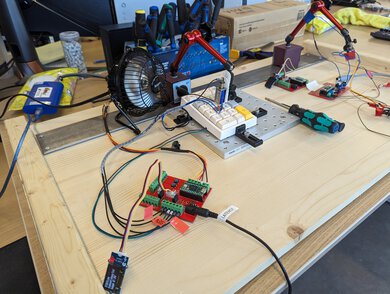
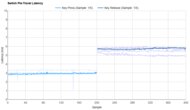
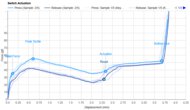
We've tested over a hundred keyboard switches, and to maintain our independence, we buy them all ourselves. We don't just rely on subjective testing. Instead, we rigorously test each switch on the same standardized test bench so you can compare them on equal ground. We use specialized tools, including a Mecmesin force tester for force curves and a Beagle 480 USB analyzer for latency. Multiple teams contribute to each review in a process that can take days or weeks.
-
Best Tactile Switch
 Initial Force:44gfPeak Tactile Force:59gfActuation Force:42gfBottom-Out Force:57gfSee all our test resultsPin Count:5
Personal preference plays a huge role in choosing a keyboard switch, but we recommend the Gazzew Boba U4T (62g) as the best tactile switch for most people. Note that they can be difficult to find in stock from major online retailers, but you'll typically have more success checking specialist distributors like MechMods, RNDKBD, Ringer Keys, or CustomKBD. These switches have somewhat unusual characteristics, with a very short pre-travel distance before the start of the tactile bump that develops in a very rounded, drawn-out way that you ride almost to the bottom of the keystroke. Altogether, these switches are remarkably stable, and light lube from the factory makes them reasonably smooth-traveling for a tactile switch option out of the box. Maybe most importantly, these switches are known for producing that elusive, deep, and rich 'thocky' sound that so many tactile lovers are hunting for.
Depending on the retailer, you can also buy these switches in several spring weight options, including a slightly lighter 62g spring, which is the model we tested, and more mid-weight 65g or 68g spring versions. Ultimately, this comes down to preference, with lighter spring weights preserving and emphasizing tactile quality. In comparison, higher spring weights add a bit more stiffness and can help cushion out the end of the keypress to avoid an unpleasant bottoming-out sensation for heavier typists. Altogether, these switches come close to delivering what many identify as an ideal tactile experience and sound profile at a surprisingly affordable price compared to comparatively higher-end picks like the Gateron Zealio V2 (67g) below.
-
Best High-End Tactile Switch
Initial Force:36gfPeak Tactile Force:69gfActuation Force:48gfBottom-Out Force:67gfSee all our test resultsPin Count:5If you're ready to splurge on a high-end tactile option, we recommend the Gateron Zealio V2 (67g) switches. While the comparatively less expensive Gazzew Boba U4T (62g) switches above are still our recommendation as the best pick for most people, the Zealio V2s offer a different experience with a much snappier and unmistakable tactile bump. These switches also have a longer, more noticeable pre-travel, which is great if you appreciate the feeling of depressing a key a bit deeper into the keystroke before ramping up into the tactile point. Like the Boba U4Ts above, these switches are available in different switch weights, including 62g, 65g, 67g, and 78g variants. Lower spring weights tend to feel lighter and preserve as much tactility as possible, while heavier weight options add more resistance and cushion to the end of travel.
Ultimately, these are among the most tactile-feeling switches and are ideal if you're put off by the mushy quality that even most good-quality tactile switches exhibit. However, this unmatched tactility also comes at a pretty extreme price point, as these typically cost around $1 per switch. Additionally, while they're quite smooth and reasonably stable right out of the box, to make these switches feel like the premium-priced switches they are, they benefit a great deal if you take the time to film and lube them before rolling them out in your build.
-
Best Mid-Range Tactile Switch
Initial Force:36gfPeak Tactile Force:68gfActuation Force:46gfBottom-Out Force:66gfSee all our test resultsPin Count:5At a mid-range price point, we recommend the Durock Sunflower/POM T1 switches. These switches mix up some of the standout aspects of our top two picks with a relatively immediate pre-travel leading into the bump and a sharp, satisfying tactile action that isn't too heavy-feeling. They also have a widely liked sound profile that most people find is a bit more energetic and high-pitched, with a 'clacky' signature compared to the deeper 'thocky' Gazzew Boba U4T (62g) switches above.
The only downside for these switches is that while they generally have very little stem wobble, some people find they can be slightly wobbly in switch sockets, and there's a slight metallic spring ping aspect to the overall sound profile. That said, the upper housing is made of POM plastic, which does tend to get a bit smoother over time, but the prevailing wisdom is that these switches need a bit of lube to come into their own.
-
Best Budget Tactile Switch
Initial Force:44gfPeak Tactile Force:52gfActuation Force:39gfBottom-Out Force:50gfSee all our test resultsPin Count:5We recommend the Akko V3 Cream Blue Pro as a budget pick. These are medium-weight tactile switches with a very early rise into a satisfying tactile bump. They're more expensive than the previous-generation Akko V3 Cream Blue switches, but we think the small jump in price is worth it. Improvements with this version include a new dustproof stem cover that adds a bit of overall stem stability. These switches are also newly lubed from the factory, making a considerable difference in how smooth these feel right out of the box.
Generally speaking, you can always improve on factory lube jobs yourself, but in this case, we'd suggest it isn't necessary, making this switch a great choice for a laid-back build. Just note that these switches are on the louder side and have a slightly higher-pitched, tappy sound signature than many tactile options, which typically aim for a deeper, more resonant sound.
-
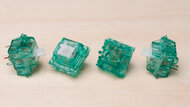
Best Silent Tactile Switch
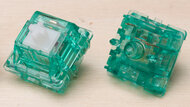
Initial Force:64gfPeak Tactile Force:67gfActuation Force:41gfBottom-Out Force:67gfSee all our test resultsPin Count:5If you're a noise-sensitive tactile fan, the Durock T1 Silent Shrimp switches are the best silent tactile option for most people. Silencing tactile switches can be tricky because noise-reduction techniques often dull the feedback that makes them satisfying to use. Manufacturers have been refining these designs for years, and recent options are impressively quiet while still offering excellent tactility. However, it's worth keeping in mind that silenced tactile switches aren't as quiet as their silent linear counterparts.
The Durock T1 Silent Shrimp switches have a comfortable, medium-sized bump that appears very early in the key travel. It feels crisp and tactile, with a padded bottom-out that keeps noise low without feeling mushy, which is a common issue with older silent designs. These switches come factory-lubed and feel smooth right out of the box, though many users report that hand-lubing can improve them further. They also feature a striking transparent turquoise housing that provides great LED diffusion, though it can slightly cool the color temperature.
-
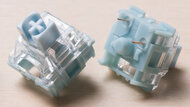
Best Budget Silent Tactile
Initial Force:40gfPeak Tactile Force:54gfActuation Force:38gfBottom-Out Force:53gfSee all our test resultsPin Count:3For a less expensive alternative, we recommend the TTC Silent Blueish White V2 switches, a longstanding community favorite. These switches have a powder-blue stem and bottom housing with a clear top housing that provides good RGB visibility. Their double-stage springs give them a surprisingly reactive feel, combining a lightweight actuation, relatively short pre-travel, a soft bottom-out, and a snappy rebound. They also have slightly shallower total travel, so they're best suited to a lighter touch to avoid an abrupt bottom-out sensation.
Like the Durock T1 Silent Shrimp switches above, the Blueish White V2s aren't completely silent, but they're still very quiet and work well in shared workspaces or home offices. They offer a comfortable, easy typing feel with excellent noise control while maintaining their satisfying tactile character.









Notable Mentions
-
KTT Matcha:
Typically a bit less expensive than Durock Sunflower T1 switches, the KTT Matcha switches are a great alternative if you prefer a lighter switch with a snappier, stepped tactile bump and a clackier bottom-out. The Durocks, on the other hand, have a more rounded bump and a deeper, fuller sound thanks in part to their POM upper and lower housings.
See our review
Recent Updates
Jul 24, 2026:
We haven't changed our primary recommendations, as they remain the best options and continue to have good pricing and availability. However, we've removed the Drop + Invyr Holy Panda switches from our Notable Mentions because they're no longer widely available.
Apr 29, 2026:
After reviewing current pricing, our recommendations remain unchanged. We've removed the 'Best Tactile Mechanical Gaming Switch' category to streamline this article. We've also updated our list of non-affiliated vendors that may have the Gazzew Boba U4T switches in stock, as availability can vary.
Oct 27, 2025:
We added a new 'Best Silent Tactile' category with the Durock T1 Silent Shrimp switches as our pick. We also replaced the TTC Silent Bluish White switches with their updated V2 version, and they now hold the spot for our 'Best Budget Silent Tactile' category. Lastly, we've added the KTT Matcha switches to the Notable Mentions section.
Apr 28, 2025:
We aren't changing our picks at the moment, but we're keeping a close eye as trade conditions evolve. If you notice unusual pricing or availability issues, we'd appreciate you letting us know so we can keep our recommendations as accurate and helpful as possible.
Jan 24, 2025:
We've reviewed our recommendations to ensure their relevance, pricing, and availability remain up to date, but our lineup remains unchanged.
All Reviews
Our recommendations above are what we think are currently the best tactile switches for most people. While no switch is perfect for every person and every use, most will perform adequately in any role.
When choosing our recommendations, we factor in the price, feedback from our visitors, and availability. If you'd like to do the work of choosing yourself, here's the list of all the tactile keyboard switches we've tested below.