
Changelog
- Updated Oct 03, 2025: Our 1.0.1 Test Bench Update adds clearer terminology and new measurements to our Keystrokes test with minor refinements to our Compatibility and Illumination tests. See the full changelog.
- Updated Nov 06, 2023: Review published.
Check Price
70 Pcs
SEE PRICE
Amazon
90 Pcs
SEE PRICE
Amazon
Test Results
Sort:
RATINGS
Category:
All
Design
Performance
Keystrokes
Preview Graph
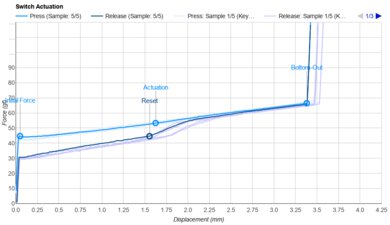
Feel
Linear
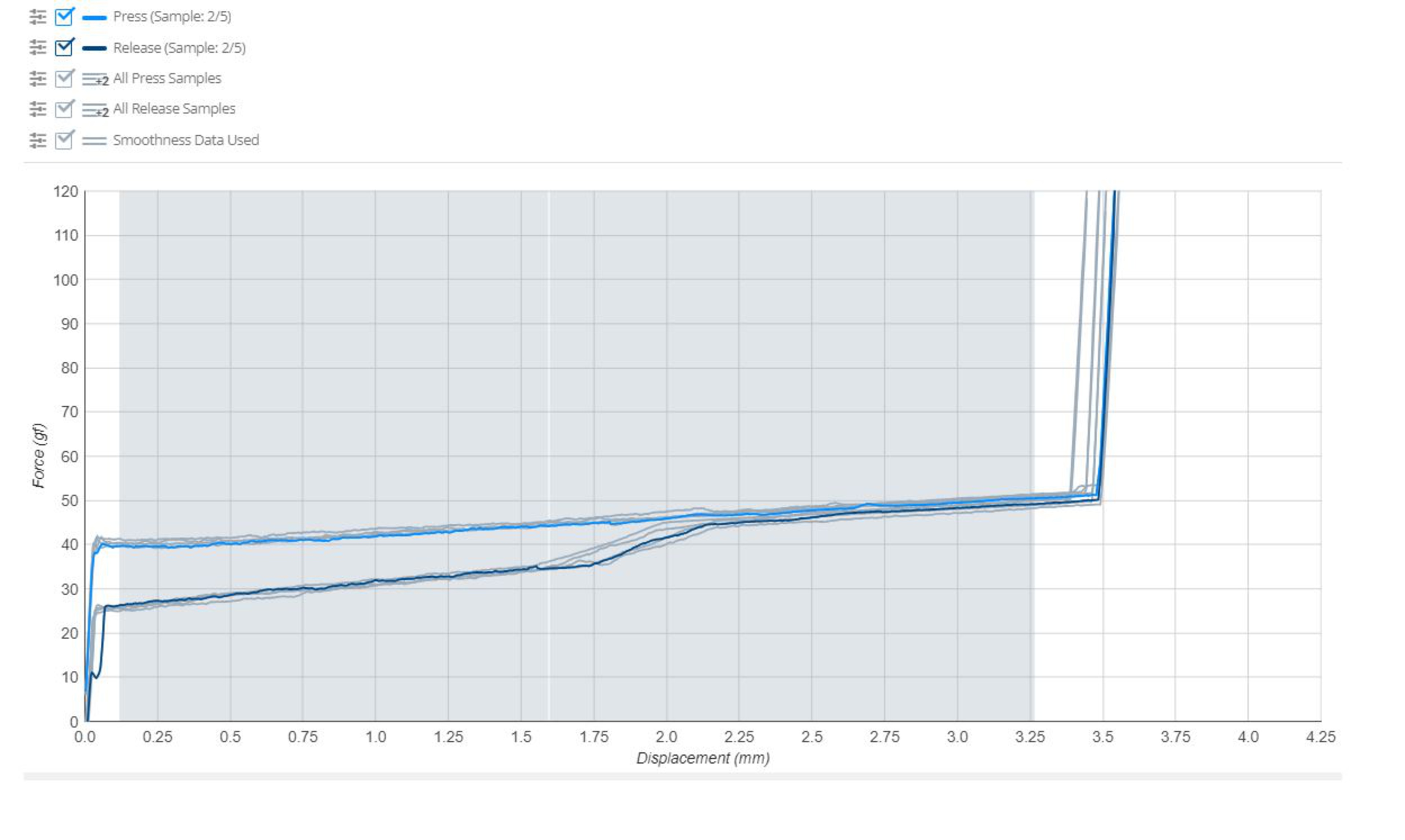
Initial Force
44gf
Peak Tactile Force
N/A
Actuation Force
53gf
Bottom-Out Force
67gf
Actuation Distance (Pre-Travel)
1.7 mm
Bottom-Out Distance
3.5 mm
8.1
Factory Smoothness
Preview Graph
Scratchy Factor
10.7
Mid Actuation Peak Noise
-69.4 dB
Mid Actuation Peak Frequency
1,052 Hz
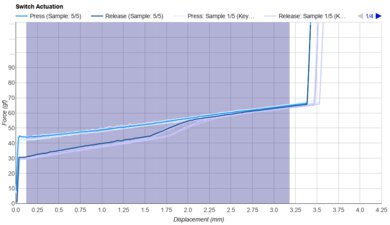
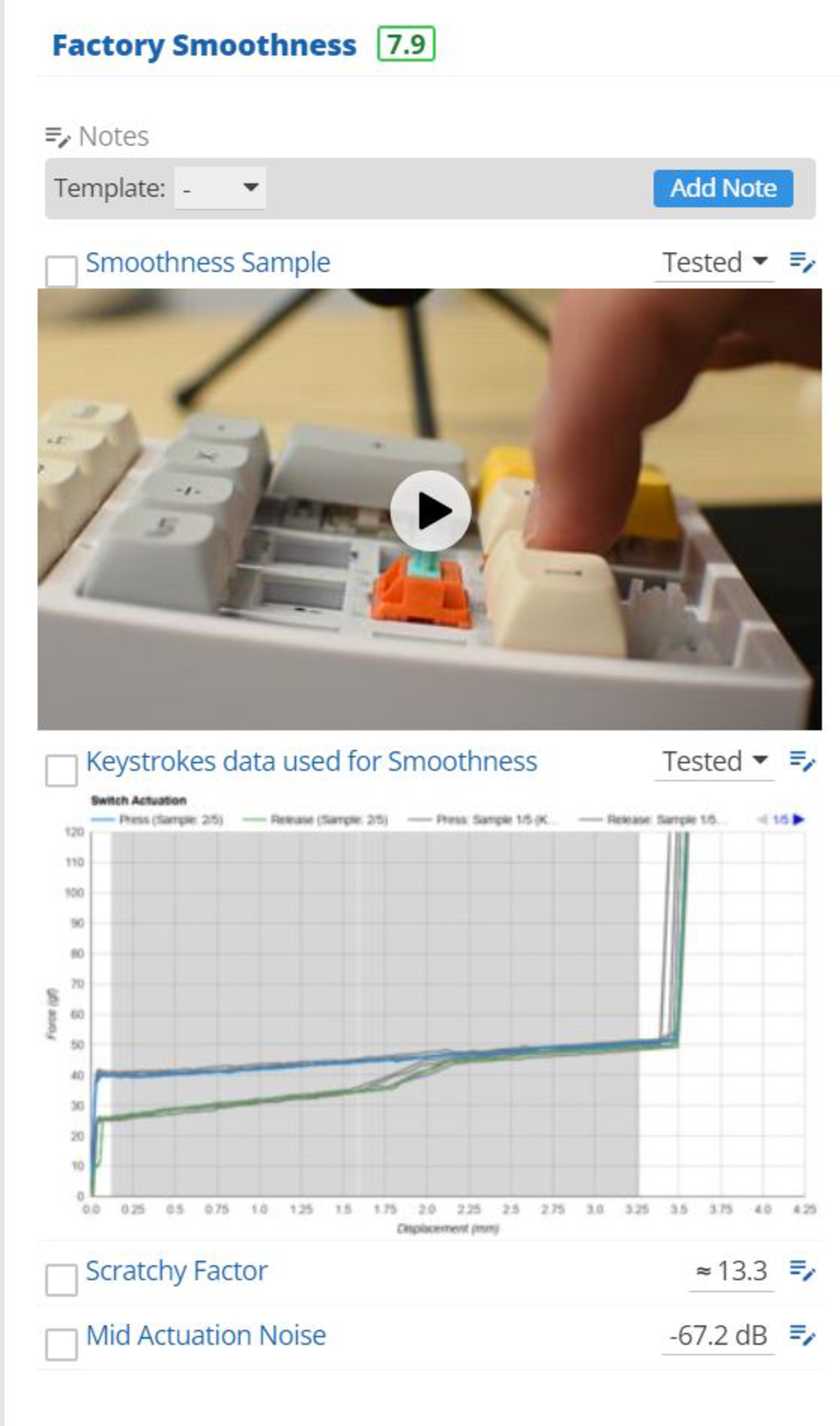
These switches have impressive factory smoothness in their stock configuration out of the box.
If you choose to install the alternate 58g two-stage springs, it reduces the factory smoothness to a small degree. For reference, you can see the results of this switch using the alternate 58g switches here and a video with the 58g switches for sound comparison here.
8.7
Latency
Preview Graph
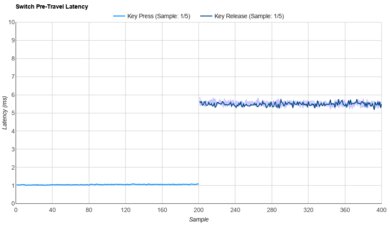
Press Average
1.1 ms
Press Std Dev
±0.01 ms
Release Average
5.5 ms
Release Std Dev
±0.10 ms
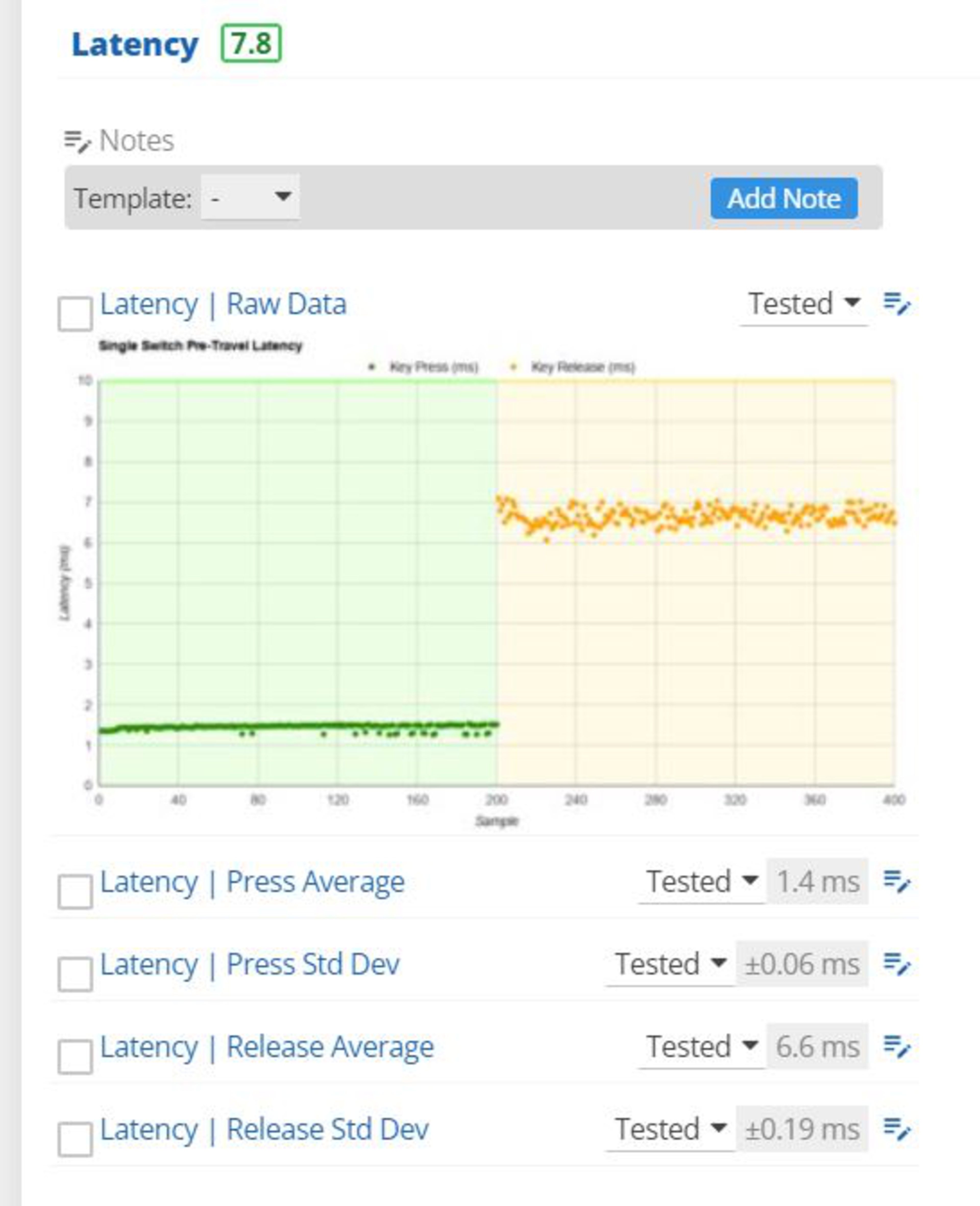
These switches offer excellent latency performance in their stock configuration out of the box.
If you choose to install the alternate 58g two-stage springs, it reduces the latency performance somewhat. For comparison, you can see the latency results using the alternate 58g switches here.
Missing something for your decision? Tell us!