Our 1.0.1 keyboard switch test bench makes several improvements to our Keystrokes test group and minor changes to the Compatibility and Illumination groups. We've also added 53 new switch reviews, including low-profile switches, which are a new addition to our database.
What's Changed?
| Test Group | Changes |
|---|---|
| Keystrokes |
|
| Compatibility |
|
| Illumination |
|
Keystrokes
Our goal with these changes is to align our terminology closer to community usage and expand our measurements so they better capture how a keystroke feels at different points throughout its travel.
Renamed Measurements
We recognized that the terms we used to describe two of our comparison measurements, Actuation Force and Operating Force, were often used interchangeably by manufacturers and the wider community. This overlap made our results harder to interpret and complicated comparisons with manufacturer specifications or other reviewers' force-curve databases. To address this, we've renamed our Operating Force comparison to Peak Tactile Force.
Peak Tactile Force
This measurement represents the highest amount of force required for the tactile bump before actuation. This measurement only applies to Tactile and Clicky switches and is reported as the average value from all samples.
Initial Force
This is the amount of force required to overcome the switch's preload and start the keypress. Reported as the average value from all samples.
Bottom-Out Force
This is the force measured at the end of the key's travel when fully pressed down. Reported as the average value from all samples.
| OLD | NEW |
|---|---|
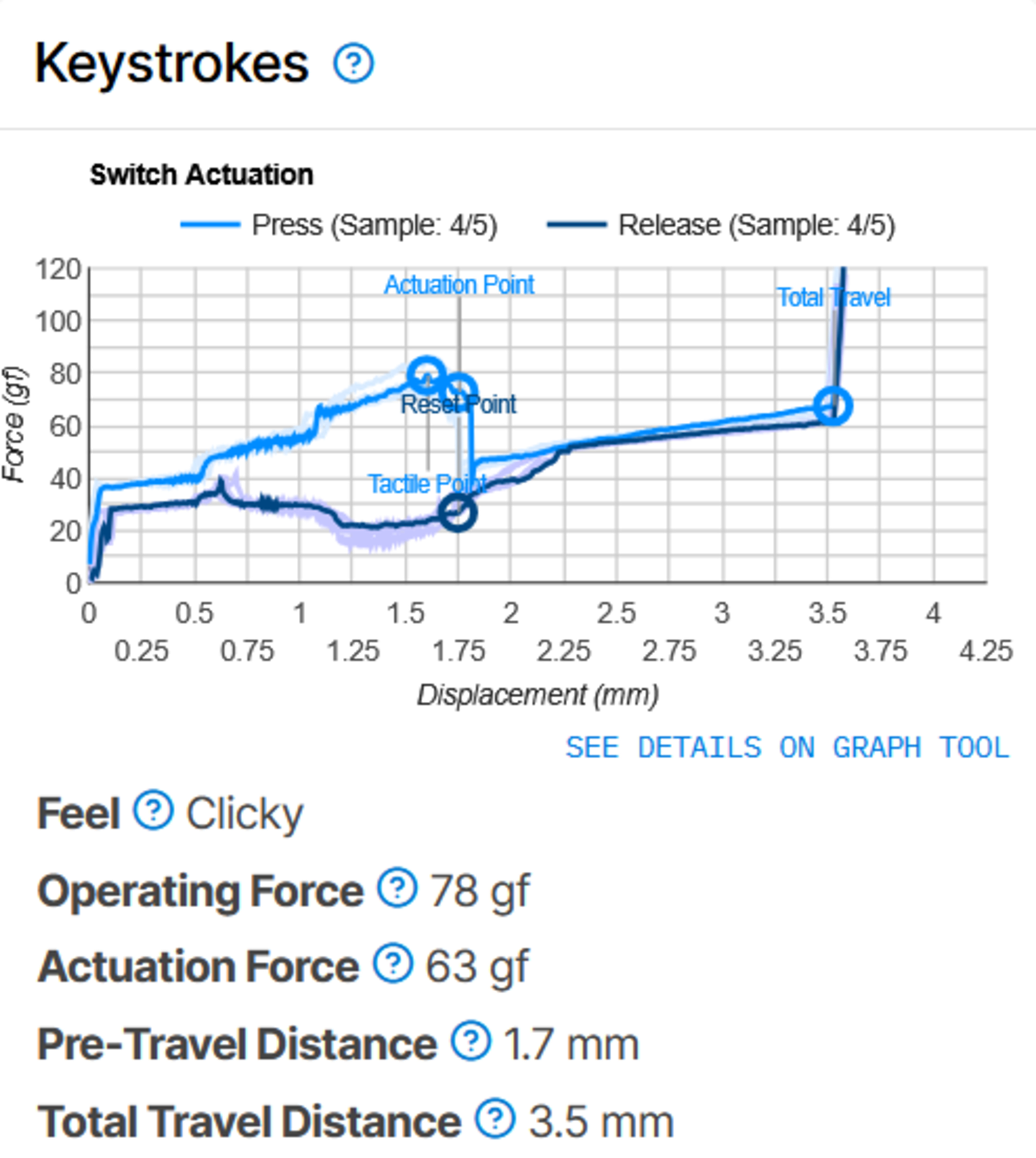 |
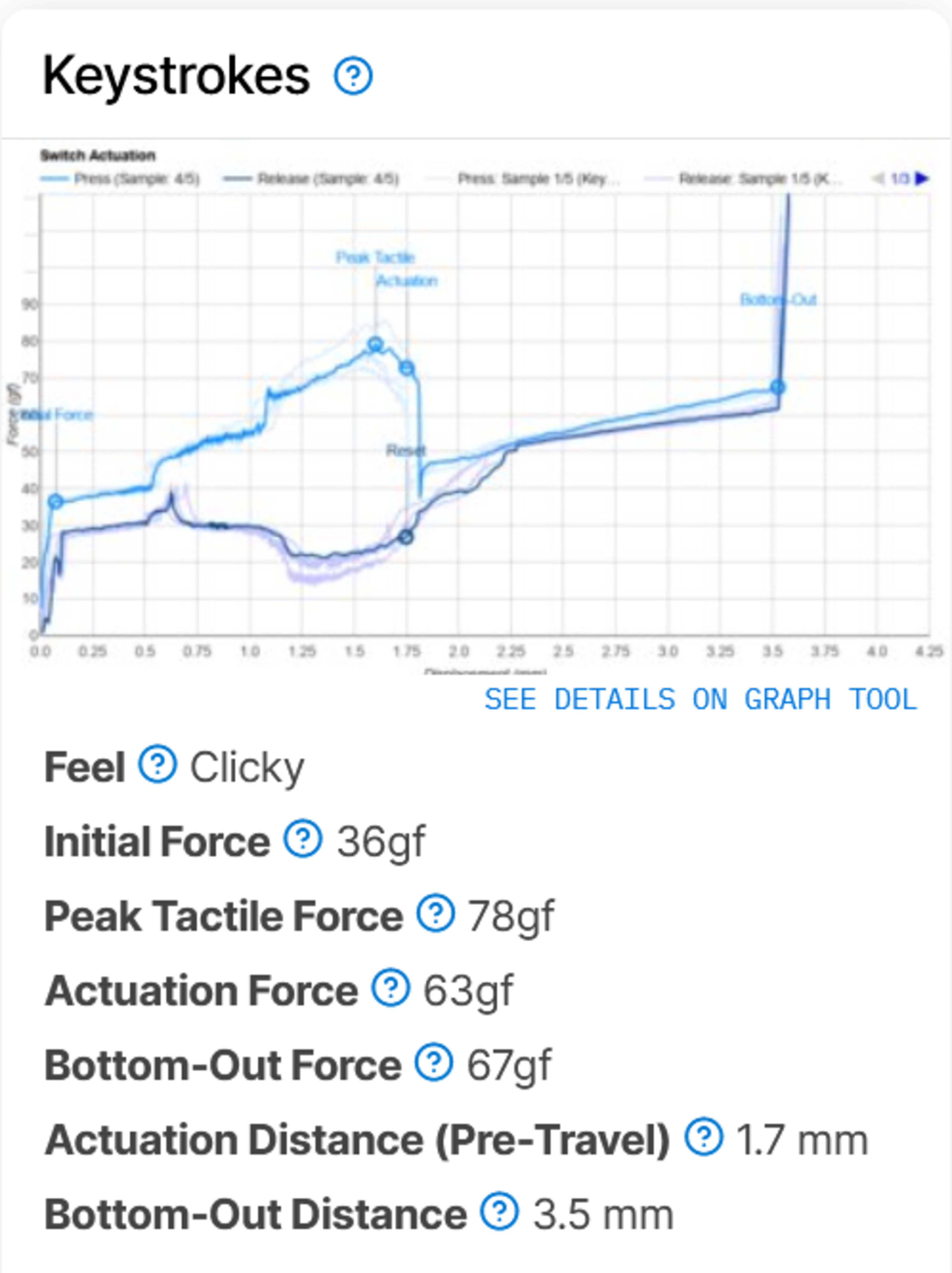 |
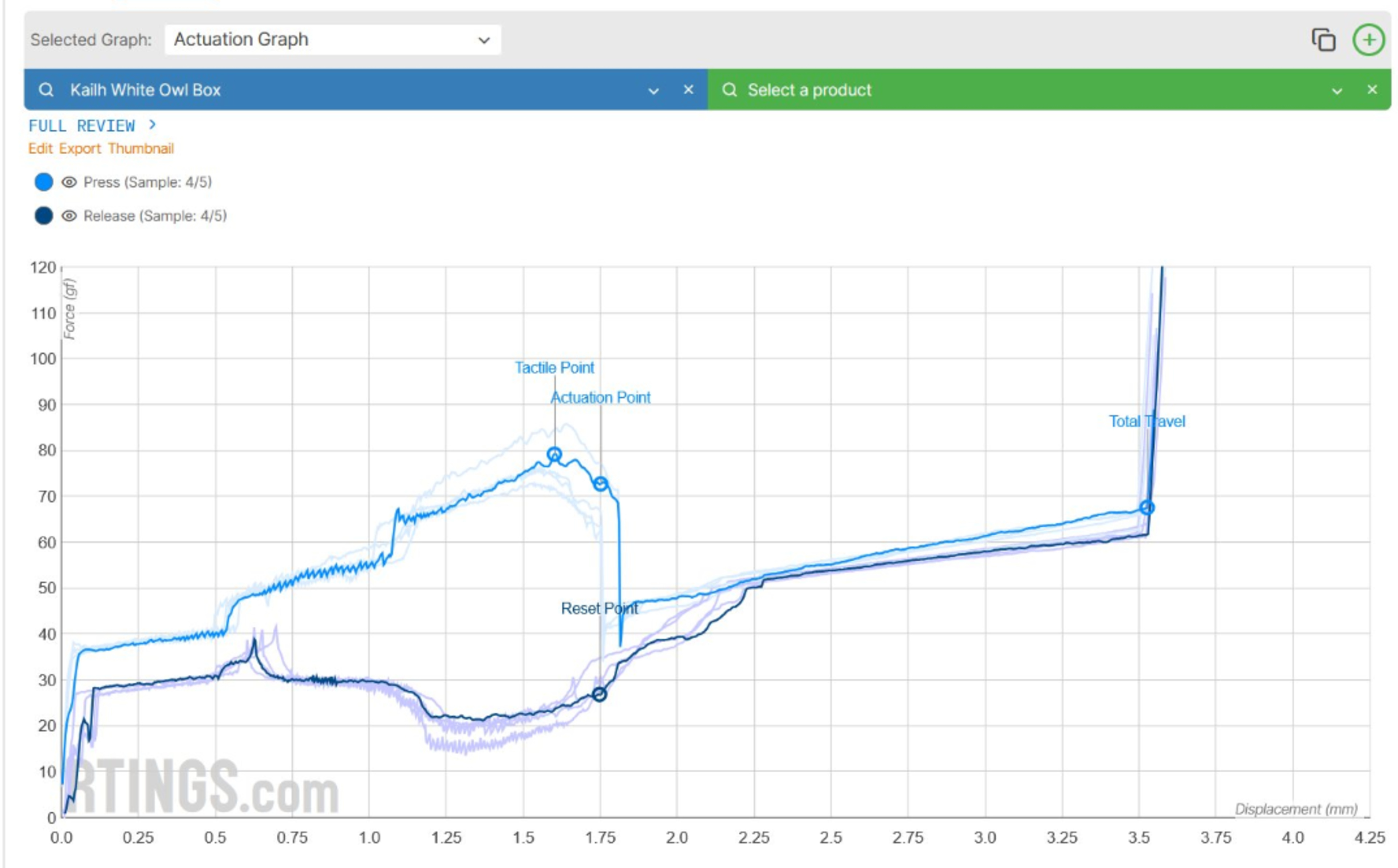 |
 |
Compatibility
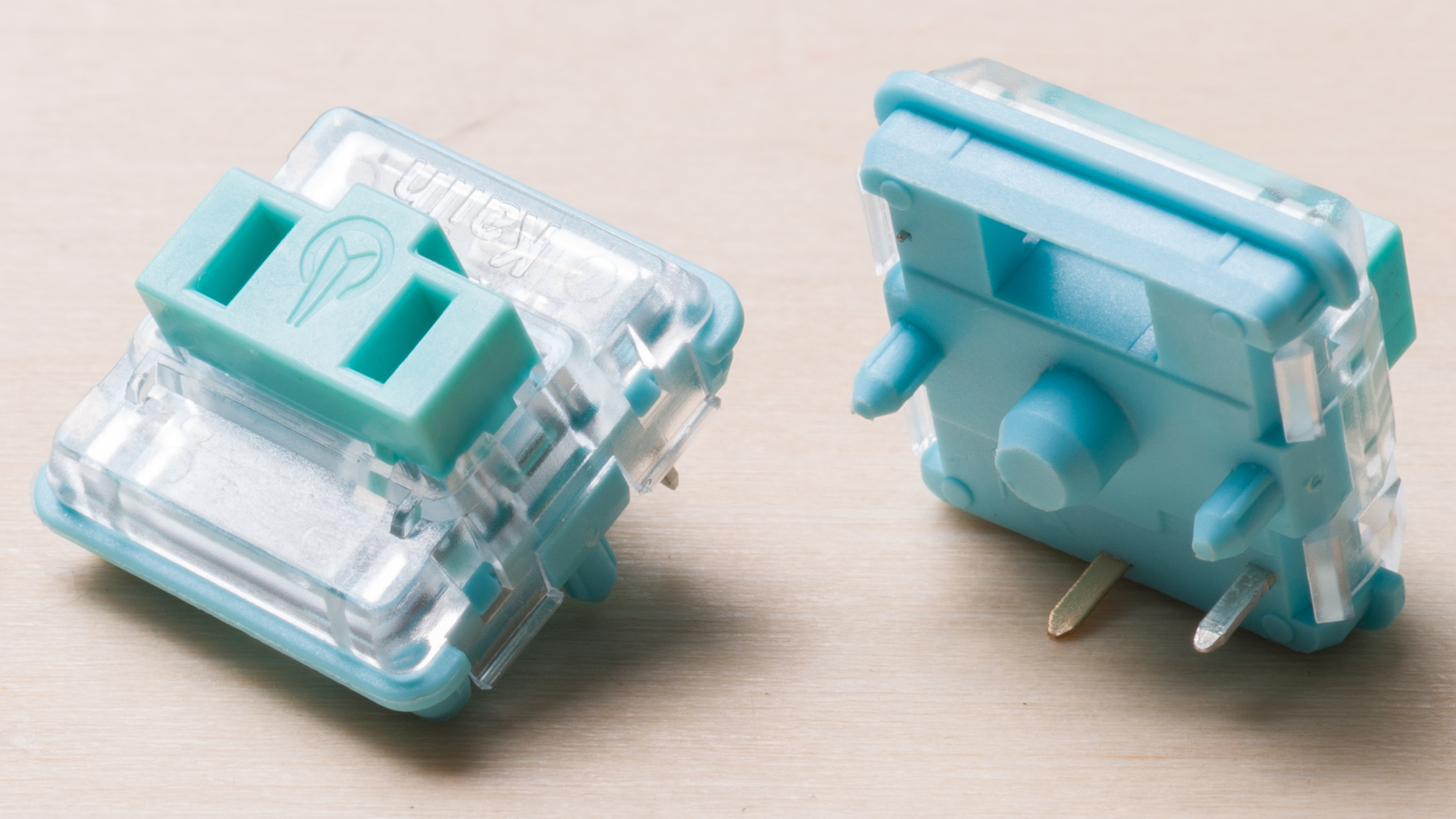
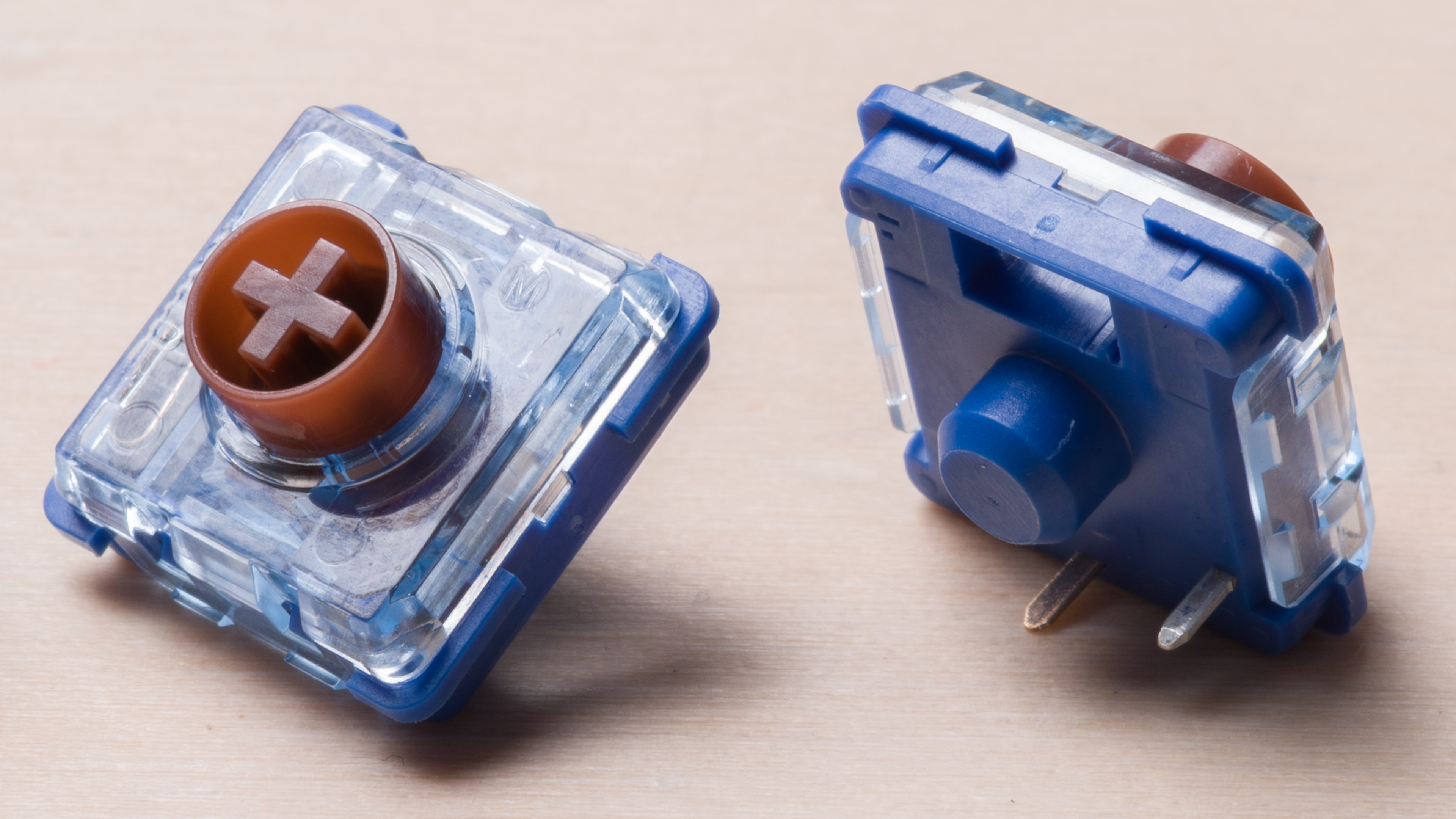
We've added a new Keycap Mount result for Kailh Choc V1 stems.
For now, our PCB Pinout test remains a simple binary that indicates only whether a switch uses a standard MX-style footprint. This creates some ambiguity, as we've recently added a small number of Kailh Choc V1, Kailh Choc V2, and Gateron Low Profile 2.0 switches to the database, none of which have an MX-style pinout. Let us know if more detailed pinout compatibility data is something you'd like us to include in future updates.
 |
 |
Illumination
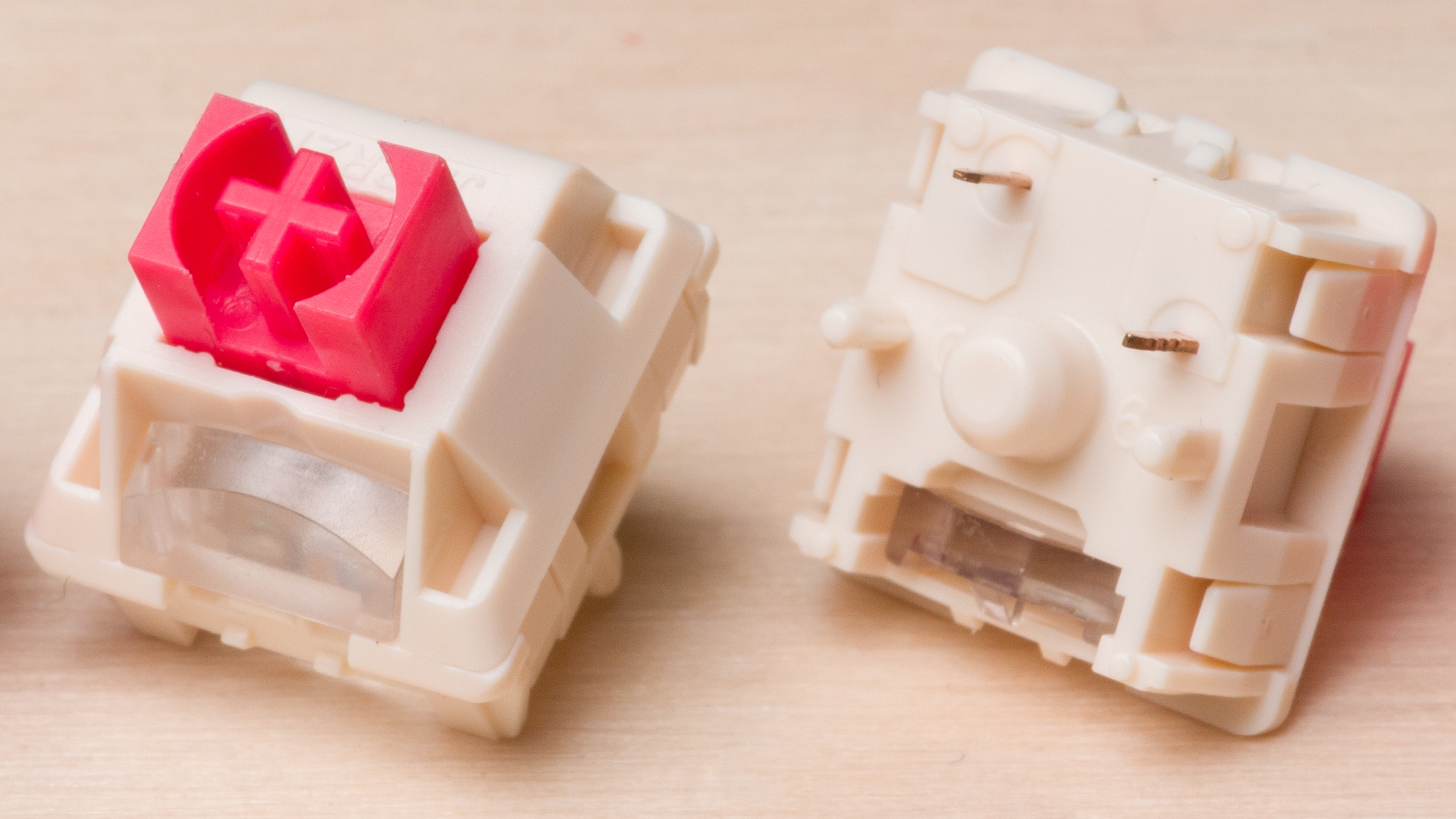
We've added a new comparison result for the Upper Housing Finish test to identify switches with an opaque housing and a light guide.
53 New Switch Reviews
Alongside these changes, we've tested a new batch of 53 switches. This set features a wider range of enthusiast-oriented MX-style products and, for the first time, introduces low-profile switches to our test bench.
Standard Profile
- Aflion Blue Sky
- Akko Dracula
- Akko Penguin
- Akko V3 Creamy Purple Pro
- Akko V3 Lavender Purple Pro
- Bsun Apple
- Cherry MX Black Clear-Top
- Durock T1 Silent Shrimp
- Gateron Baby Kangaroo 2.0
- Gateron Beer
- Gateron CM
- Gateron Green Apple
- Gateron Melodic
- Gateron Quinn
- HMX Cheese
- HMX Macchiato
- HMX Sonja
- HMX Xinhai
- Huano Sakura
- Jerrzi Honey Bean
- Keygeek Blue Cheese V2
- KTT Matcha
- Outemu Silent Lime V3
- Outemu Silent Ocean
- Outemu Silent Peach V3
- TTC Brother
- TTC Frozen Silent V2
- TTC Neptune
- TTC Silent Bluish White V2
- TTC Venus
- Wuque Studio Brown
- Wuque Studio Morandi
- Wuque Studio Silent Linear
- Wuque Studio Silent Tactile
Low-Profile
- Gateron KS-33 Low Profile 2.0 Banana
- Gateron KS-33 Low Profile 2.0 Blue
- Gateron KS-33 Low Profile 2.0 Brown
- Gateron KS-33 Low Profile 2.0 Chocolate
- Gateron KS-33 Low Profile 2.0 Red
- Kailh Autumn Mini
- Kailh Black Cloud
- Kailh Choc V1 Purpz
- Kailh Choc V1 Robin
- Kailh Deep Sea Silent Mini Brown
- Kailh Deep Sea Silent Mini White
- Kailh Hide Mountain
- Kailh Spring Mini
- Kailh Summer Mini
- Kailh White Rain
- Kailh Winter Mini
- NuPhy Cowberry
- NuPhy Moss
- NuPhy Wisteria
Let Us Know What You Think
Your feedback is instrumental in improving our testing. If you have comments, questions, or suggestions about this or any future updates, reach out to us below in the comments, on our Discord server, or email us at feedback@rtings.com.
101 Keyboard Switches Updated
We have retested popular models. The test results for the following models have been converted to the new testing methodology. However, the text might be inconsistent with the new results.
- Ajazz Diced Fruit Banana
- Ajazz Diced Fruit Peach
- Akko CS Crystal
- Akko CS Jelly Black
- Akko CS Matcha Green
- Akko CS Ocean Blue
- Akko CS Rose Red
- Akko CS Silver
- Akko V3 Cream Blue Pro
- Akko V3 Creamy Yellow Pro
- C³Equalz X TKC Banana Split
- C³Equalz X TKC Kiwi
- Cherry MX Black
- Cherry MX Blue
- Cherry MX Brown
- Cherry MX Clear
- Cherry MX Ergo Clear
- Cherry MX Green
- Cherry MX Red
- Cherry MX Silent Black
- Cherry MX Silent Red
- Cherry MX Speed Silver
- Drop + Invyr Holy Panda
- Durock Dolphin
- Durock L2
- Durock L3
- Durock Piano/POM Linear
- Durock Sunflower/POM T1
- Durock T1
- Epomaker Budgerigar
- Epomaker Flamingo
- Epomaker Sea Salt
- Epomaker Wisteria Linear
- Everglide Aqua King (55g)
- Gateron CJ Light Blue
- Gateron Clear
- Gateron G Pro 2.0 Blue
- Gateron G Pro 3.0 Brown
- Gateron G Pro 3.0 Red
- Gateron G Pro 3.0 Yellow
- Gateron G Pro Black
- Gateron G Pro Brown
- Gateron G Pro Green
- Gateron G Pro Red
- Gateron G Pro Yellow
- Gateron Ink Black V2
- Gateron North Pole 2.0 Yellow
- Gateron Oil King
- Gateron Silent Brown
- Gateron Silent Red
- Gateron Zealio V2 (67g)
- Gazzew Boba U4 (62g)
- Gazzew Boba U4T (62g)
- GLORIOUS Lynx
- GLORIOUS Panda
- GLORIOUS Raptor
- HyperX Red
- JWK Alpaca
- Kailh Box Black
- Kailh Box Brown V2
- Kailh Box Jade
- Kailh Box Red V2
- Kailh Box Silent Brown
- Kailh Box Silent Pink
- Kailh Box Thick Clicky Navy
- Kailh Box White
- Kailh Box White V2
- Kailh Jellyfish Box Y
- Kailh Pro Purple
- Kailh Speed Bronze
- Kailh Speed Copper
- Kailh Speed Silver
- Kailh Super Speed Silver
- Kailh White Owl Box
- KTT Mint
- KTT Rose
- KTT Strawberry
- MK Holy Llama
- MK Purple Slush
- NovelKeys X Kailh Blueberry
- NovelKeys x Kailh Cream
- NuPhy Night Breeze
- NuPhy Polaris
- Outemu Blue
- Outemu Brown
- Outemu Red
- Prevail Epsilon
- Prevail Nebula
- Razer Green Gen 3
- Razer Orange Gen 3
- Razer Yellow Gen 3
- SP-Star Meteor White
- Techno Violet
- Tecsee Carrot
- Tecsee Coffee Chip Ice Cream
- Tecsee Neapolitan Ice Cream
- TTC Ace V2
- TTC Bluish White
- TTC Gold Pink
- TTC Heart
- TTC Silent Bluish White
