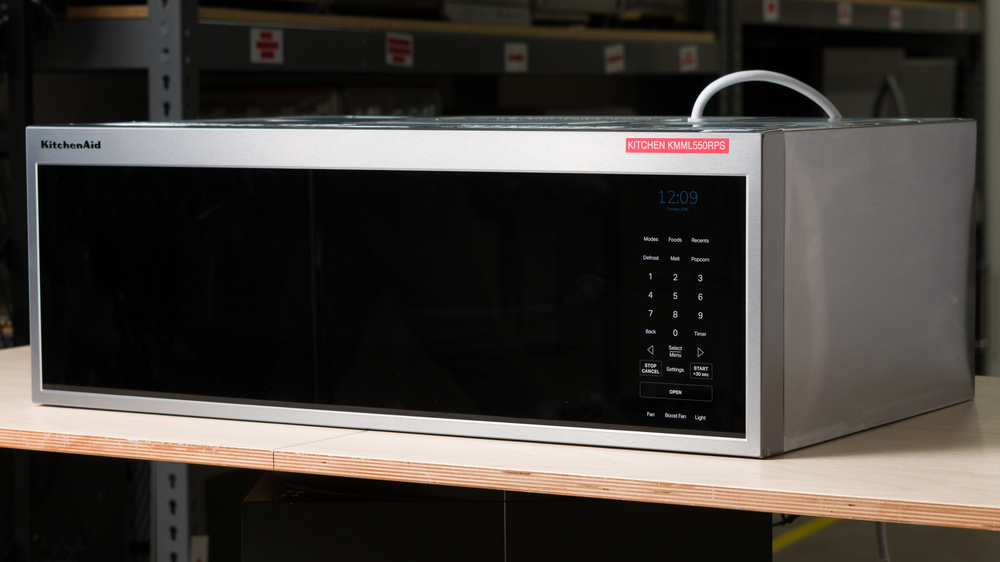
The KitchenAid KMML550RPS is a high-end 1000-watt over-the-range microwave. It features a 1.1 cu. ft. (31.1 L) cooking chamber and a variety of sensor heating modes. As an over-the-range unit, it features two separate exhaust fans, LED strip lights with adjustable color temperature, and Wi-Fi, Amazon Alexa, and Google Home integration, so you can turn the fans and lights off with voice commands.
Our Verdict
The KitchenAid KMML550RPS is decent for everyday use. It can heat food quickly and offers a wide variety of cooking modes, plus Wi-Fi integration, so you can operate the unit without touching its controls. That said, its cooking chamber is somewhat small, and you'll find it difficult to heat especially wide or tall casserole dishes. Its touch-sensitive control panel is also slow to respond and requires many button presses to make fine-grained adjustments to settings. It's also a little on the noisier end of the scale for a microwave, though it isn't necessarily an active disturbance while in use.
Wide variety of cooking presets and modes.
High maximum power output.
Wi-Fi integration for remote operation.
Unresponsive, somewhat unintuitive controls.
Cooking chamber is relatively small.
Louder than some other alternatives.
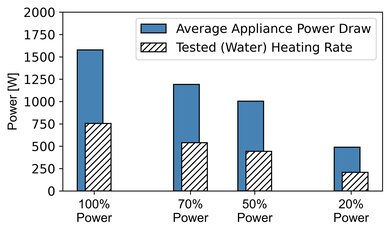
The KitchenAid KMML550RPS is a remarkably powerful microwave. Its advertised 1000-watt output isn't the highest on the market, but it delivers real-world performance comparable to units with higher advertised outputs and can heat food very quickly.
High maximum power output.
Check Price
Differences Between Sizes And Variants
This microwave is available in several color variants, each with a slightly different model name, though we expect all units to deliver identical overall performance.
| Model Name | Color |
|---|---|
| KMML550RBE | Black Ore |
| KMML550RPS | Fingerprint Resistant Stainless Steel |
| KMML550RJP | Juniper |
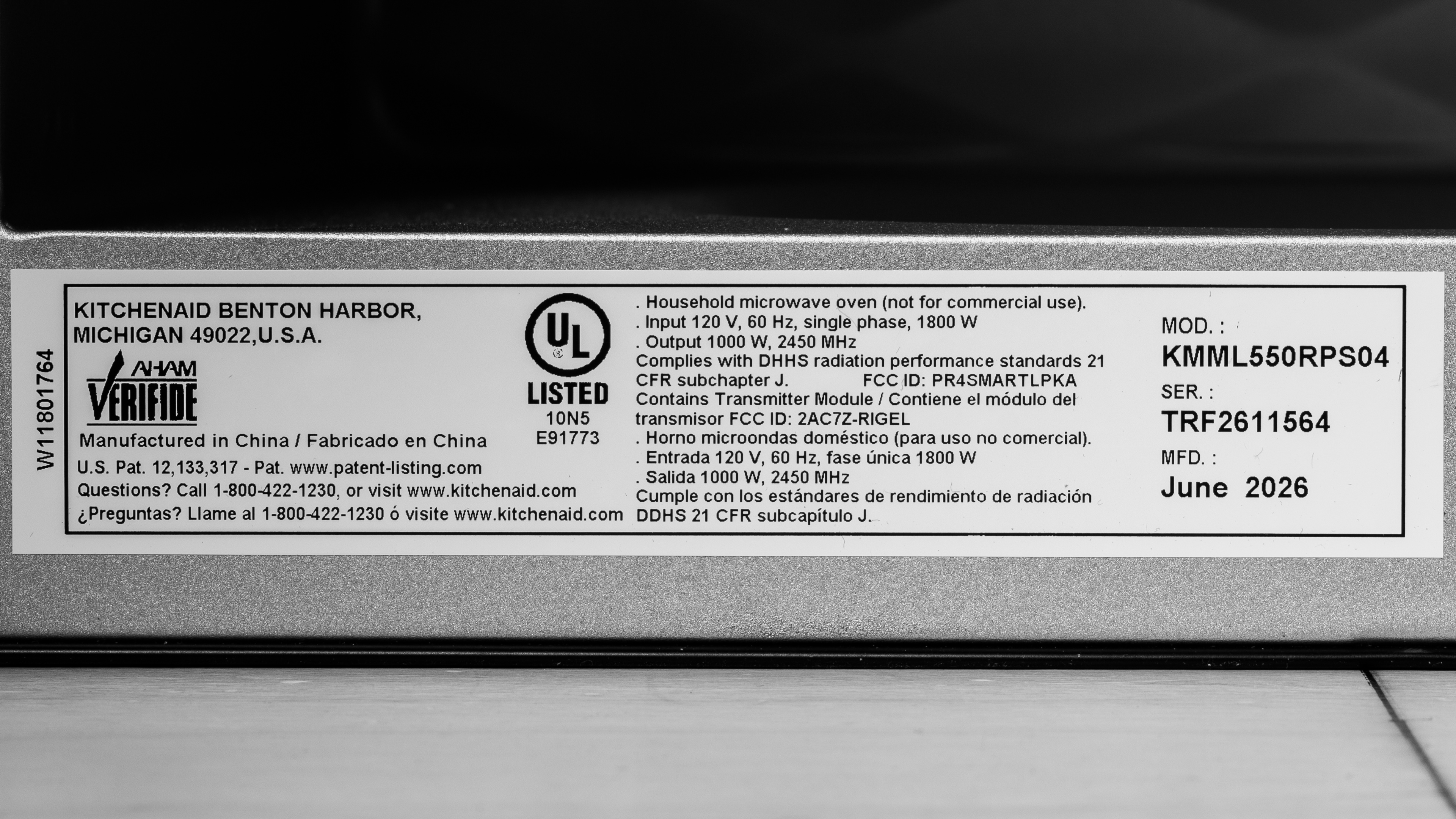
We bought and tested the KMML550RPS variant, and for those interested, here's its product label.
Let us know in the comments if you come across another variant of this microwave so that we can update our review.
Popular Microwave Comparisons
The KitchenAid KMML550RPS is a high-end over-the-range microwave. It features a plethora of cooking modes and functions, which can help streamline cooking a variety of dishes compared to more basic models like the GE JVM3160RFSS. It's also capable of heating food very quickly, with superior real-world heating performance to alternatives with similar advertised outputs, such as the LG MVEL2033F. That said, it does have a few weaknesses, the biggest of which is its modest capacity. Alternatives like the LG MVEM1825F have a much taller cooking chamber that can better accommodate taller items like a whole rotisserie chicken.
If you're looking for direct alternatives, see our recommendations for the best over-the-range microwaves. Conversely, if you're looking to save some space on your counters, take a look at our best small microwaves. If you just want a broad overview of the microwave market, see our recommendations for the best microwaves.
The GE JVM3160RFSS suits a wider variety of uses than the KitchenAid KMML550RPS. The GE is a much taller appliance, which also results in a considerably larger cooking chamber that can accommodate larger dishes. Its membrane touch panel doesn't offer the same range of functionality as the KitchenAid, but it's also more intuitive in day-to-day use. The GE runs more quietly than the KitchenAid, too. However, it's worth noting that the KitchenAid can heat food faster at its highest setting. Its dual-fan system also provides a considerably higher max airflow than the GE's venting system.
The LG MVEM1825F is a better over-the-range microwave than the KitchenAid KMML550RPS. The LG is a considerably larger appliance, which might not fit in every kitchen, but it also has a much larger cooking chamber. Its control panel is also snappier, requires fewer repeated button presses, and runs quieter. The KitchenAid's main advantage is its higher maximum heating output, which enables it to heat dishes faster.
The LG MVEL2033F is better for everyday use than the KitchenAid KMML550RPS. The KitchenAid has a noticeably higher real-world max heating output and a plethora of preset heating modes, though the LG isn't lacking in the latter either. The LG has a much bigger cooking chamber with almost twice the internal capacity, not to mention an easier-to-use control panel.
The GE JVM6175SKSS performs better than the KitchenAid KMML550RPS in day-to-day use. The GE is a much bulkier appliance, but it also has a much larger cooking chamber and an interface that's easier to get used to. Beyond that, the GE runs quieter while in use. That said, the KitchenAid can heat food faster thanks to its higher real-world output.
Test Results
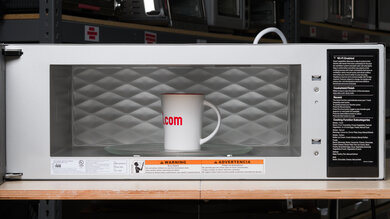
The KitchenAid KMML550RPS' cooking chamber is relatively small. Despite this unit's bulky exterior dimensions, its cooking chamber is shallow, short, and narrow, and its turntable has a diameter too small to accommodate large casserole dishes.
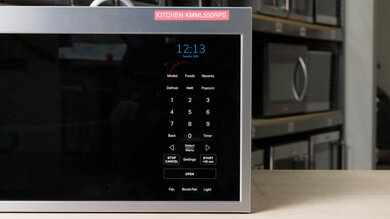
This is a very feature-rich microwave. The headlining feature is integrated Wi-Fi, which allows you to remote-start the microwave, set your desired cooking time, start or stop the turntable, and adjust the speed of your over-the-range fan, all via a smartphone app or voice commands through Amazon Alexa or Google Home devices.
There's also a wide variety of assisted cooking modes, with presets for foods like bacon strips, scrambled eggs, and canned, fresh, or frozen veggies. There's also a more conventional assortment of defrosting, reheating, melting, and keeping-warm modes. If you want a full rundown of all the microwave's modes and functions, you can read the user manual online.
The KitchenAid KMML550RPS' user interface isn't particularly intuitive. You can quickly heat a dish at max power, but if you want to select a specific power level, it'll take multiple presses of the button. This is also compounded by the noticeable input lag from the controls, with the control panel sometimes failing to register multiple quick presses.
You can open the microwave's door with the recessed handle on the right side of the unit or by tapping the touch-sensitive 'OPEN' button.
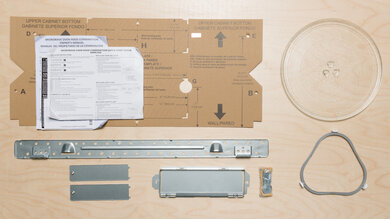
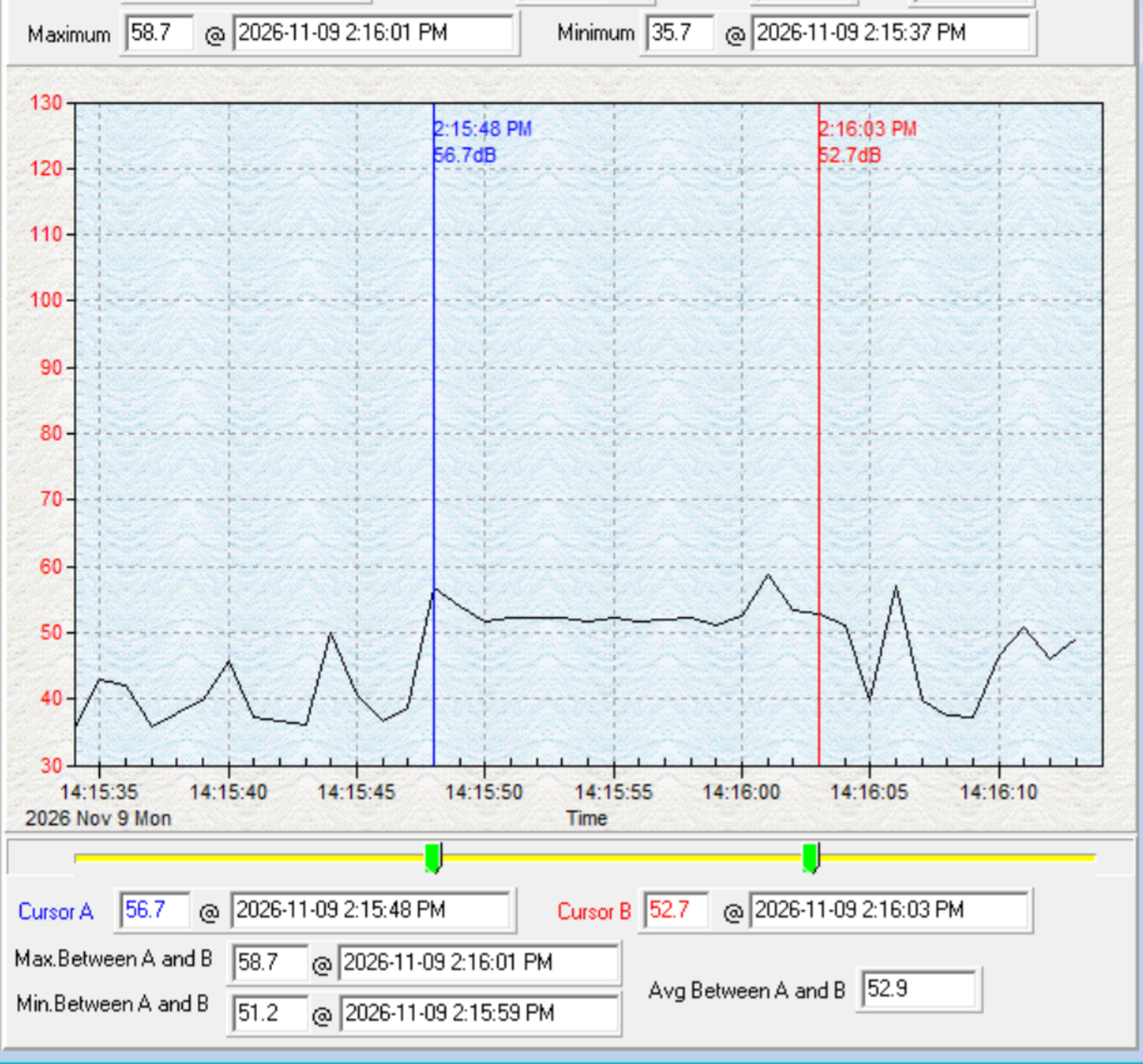
This microwave is a little quieter in real-world use than the data suggests. Noise ramps up briefly at the start and near the end of the heating cycle, slightly increasing its average operating volume. Overall, it isn't the quietest appliance on the market, but it won't completely drown out nearby conversation or music from a speaker.
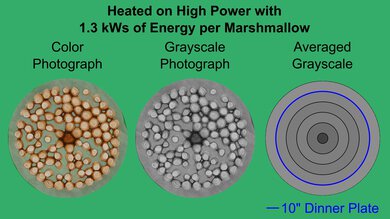
All microwaves deliver similar shallow-dish heating performance. Heating evenness depends on steam buildup, where you place your dish in the cooking chamber, and the consistency of the food you're heating: liquids heat more evenly than solids.
There's no difference in microwave performance when heating food in deeper dishes. As is the case when heating food in shallow dishes, deep dish heating uniformity depends more on the food's consistency, where it's placed, and how much steam it produces. You can read more about this topic in our investigative R&D article about microwave performance.