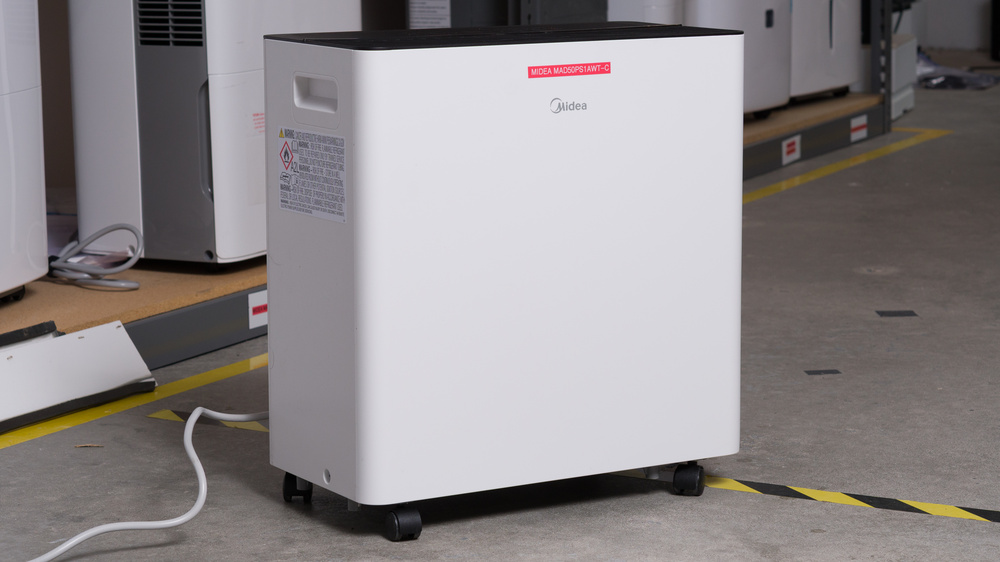
The Midea MAD50PS1AWT-C is a Costco-exclusive dehumidifier with a 50-pint daily capacity, designed for large, humid spaces. It comes equipped with a built-in drain pump, continuous drainage support, a built-in humidistat, Wi-Fi connectivity for its companion smartphone app, and a removable side-mounted water tank.
Our Verdict
The Midea MAD50PS1AWT-C is excellent for basement use. It has enough capacity to control humidity across large basements, including finished living spaces, storage rooms, and utility areas where excess moisture can lead to musty odors or damp conditions. The built-in drain pump enables continuous operation even without a nearby floor drain, as it can pump water up to an elevated drain or sink. If you prefer to empty your dehumidifier manually, the removable water tank is easy to drain, thanks to a raised lip that helps minimize spills.
Removes moisture quickly in large or damp spaces.
Built-in drain pump supports continuous drainage.
Offers flexible fan speeds to balance noise and drying performance.
Built-in humidistat automatically maintains your target humidity.
Loud operation can compete with conversations or TV audio.
The Midea MAD50PS1AWT-C is a good choice for bathrooms, especially larger ones or those that stay humid after showers. It has enough capacity to quickly reduce moisture and help prevent condensation on mirrors or walls, while its built-in humidistat automatically maintains your desired humidity level. If there's no floor drain nearby, the built-in drain pump can send water to a sink or other elevated drain for continuous operation. That said, its wide footprint may feel a bit bulky in tighter bathrooms, and it runs fairly loudly, so it might not be your first choice if you're hoping to soak in a peaceful bath while it works in the background.
Built-in drain pump supports continuous drainage.
Built-in humidistat automatically maintains your target humidity.
Will quickly reduce humidity in damp bathrooms.
Loud operating noise can be distracting.
Wide footprint may feel bulky in smaller spaces.
The Midea MAD50PS1AWT-C is a good fit for large rooms. It can handle humidity in larger living areas, finished basements, garages, or open-concept spaces, while its airflow helps circulate dry air throughout the room for more even moisture removal. That said, it runs fairly loud, so it may not be the best choice if the room doubles as a space for watching TV, working, or other quiet activities.
Removes moisture quickly in large or damp spaces.
Offers flexible fan speeds to balance noise and drying performance.
Built-in humidistat automatically maintains your target humidity.
Loud operation can compete with conversations or TV audio.
The Midea MAD50PS1AWT-C isn't the best choice for bedrooms, but it's adequate if moisture removal is your top priority. It has more than enough capacity to keep a bedroom dry, but its fan stays fairly loud even on the lowest setting, and it generates a noticeable amount of heat while running. If you're a light sleeper or prefer a cool, quiet room at night, you may find it distracting.
Offers flexible fan speeds to balance noise and drying performance.
Built-in humidistat automatically maintains your target humidity.
Enough capacity to keep bedrooms dry.
Wide footprint may feel bulky in smaller spaces.
Loud operating noise will disturb noise-sensitive sleepers.
The Midea MAD50PS1AWT-C has excellent dehumidification capacity, well-suited for large, damp spaces. It can rapidly lower humidity levels after heavy rainfall, flooding, or a stretch of muggy weather, and it's powerful enough to keep up with regular moisture sources, like a load of laundry drying indoors.
Removes moisture quickly in large or damp spaces.
The Midea MAD50PS1AWT-C has sub-par noise performance. It produces a steady fan noise that's hard to ignore, even at lower fan speeds. If you plan to spend a lot of time in the same room while it's running, you may find it distracting, though it's much less of a concern in spaces like basements, laundry rooms, or storage areas.
Loud operation can compete with conversations or TV audio.
The Midea MAD50PS1AWT-C has mediocre temperature stability. It gradually warms the surrounding area as it runs, making it a better fit for cooler spaces like basements or garages than for rooms where you're trying to keep the temperature consistent.
Gradually warms the surrounding room during operation.
Performance Usages
Check Price
Differences Between Sizes And Variants
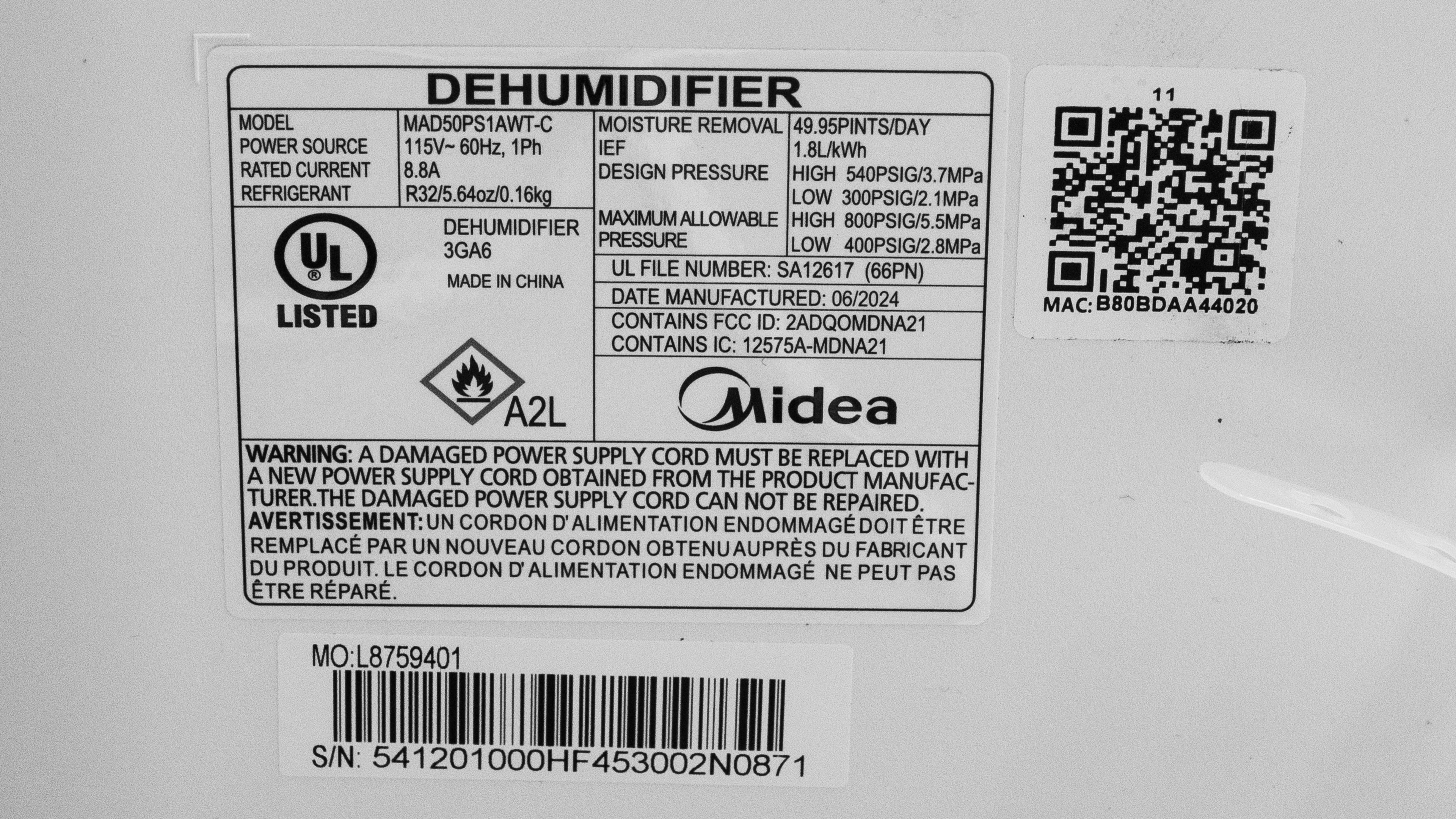
The Midea MAD50PS1AWT-C is available only in white. See this photo of our unit's label.
If you encounter another variant of this dehumidifier, please let us know in the comments, and we'll update our review.
Popular Dehumidifier Comparisons
The Midea MAD50PS1AWT-C is well-suited to large rooms, basements, and other damp spaces, with strong dehumidification performance and a built-in drain pump that allows continuous drainage into an elevated sink or drain. It offers nearly identical dehumidification performance to the Midea MAD50PS1WS, but this Costco-exclusive model has a more compact footprint and Midea's newer side-access bucket design, making it easier to position and less messy to empty. It also delivers enough airflow to circulate effectively throughout large spaces, but if you need more, the GE APYR50LC is worth a look, though it runs noticeably louder and produces more heat during operation. If you only need to dehumidify occasionally and plan to store the unit between uses, the Midea MAD35S1QWT is worth considering for its collapsible design, though it doesn't include a built-in drain pump for continuous drainage, and the MAD50PS1AWT-C actually has a smaller footprint while in use.
If you're interested in alternatives, check out our recommendations for the best dehumidifiers, the best basement dehumidifiers, and the best dehumidifiers for bedrooms.
The Midea MAD50PS1AWT-C is the better choice for most people over the GE APYR50LC, though the GE is worth considering if you need even higher airflow. The GE moves more air throughout a room, which can help circulate dry air more quickly in large or open spaces, but it also runs noticeably louder and produces more heat during operation. The Midea is quieter, stays a little cooler, and has a more compact design, all while still offering excellent overall dehumidification performance.
The Midea MAD50PS1AWT-C is the better choice over the Midea MAD35S1QWT if you need to control humidity in large or consistently damp spaces. It has a higher moisture removal capacity and includes a built-in drain pump that can move water to an elevated sink or drain for continuous operation. The MAD35S1QWT is a better fit if you only need to dehumidify occasionally and plan to store the unit between uses, as its collapsible design takes up less space. However, it doesn't include a built-in drain pump, and the MAD50PS1AWT-C actually has the smaller footprint while both units are in use.
The Midea MAD50PS1AWT-C is a better dehumidifier than the Frigidaire FFAP5034W1. Both are well-suited to large basements and other damp spaces, with excellent dehumidification capacity, built-in drain pumps, and support for continuous drainage into an elevated sink or drain. That said, the Midea runs noticeably quieter, generates less heat during operation, and has a more compact design with a newer side-access bucket that's easier to empty. The Frigidaire is still worth a look if maximum airflow is your priority, since it moves more air throughout large or open spaces.
The Midea MAD50PS1AWT-C is the better choice over the Midea MAD50PS1WS. Both models deliver nearly identical dehumidification performance, with similar moisture removal, efficiency, and feature sets. However, the Costco-exclusive MAD50PS1AWT-C has a more compact footprint and Midea's newer side-access bucket design, making it easier to position in tighter spaces and more convenient to empty, without sacrificing performance.
Test Results
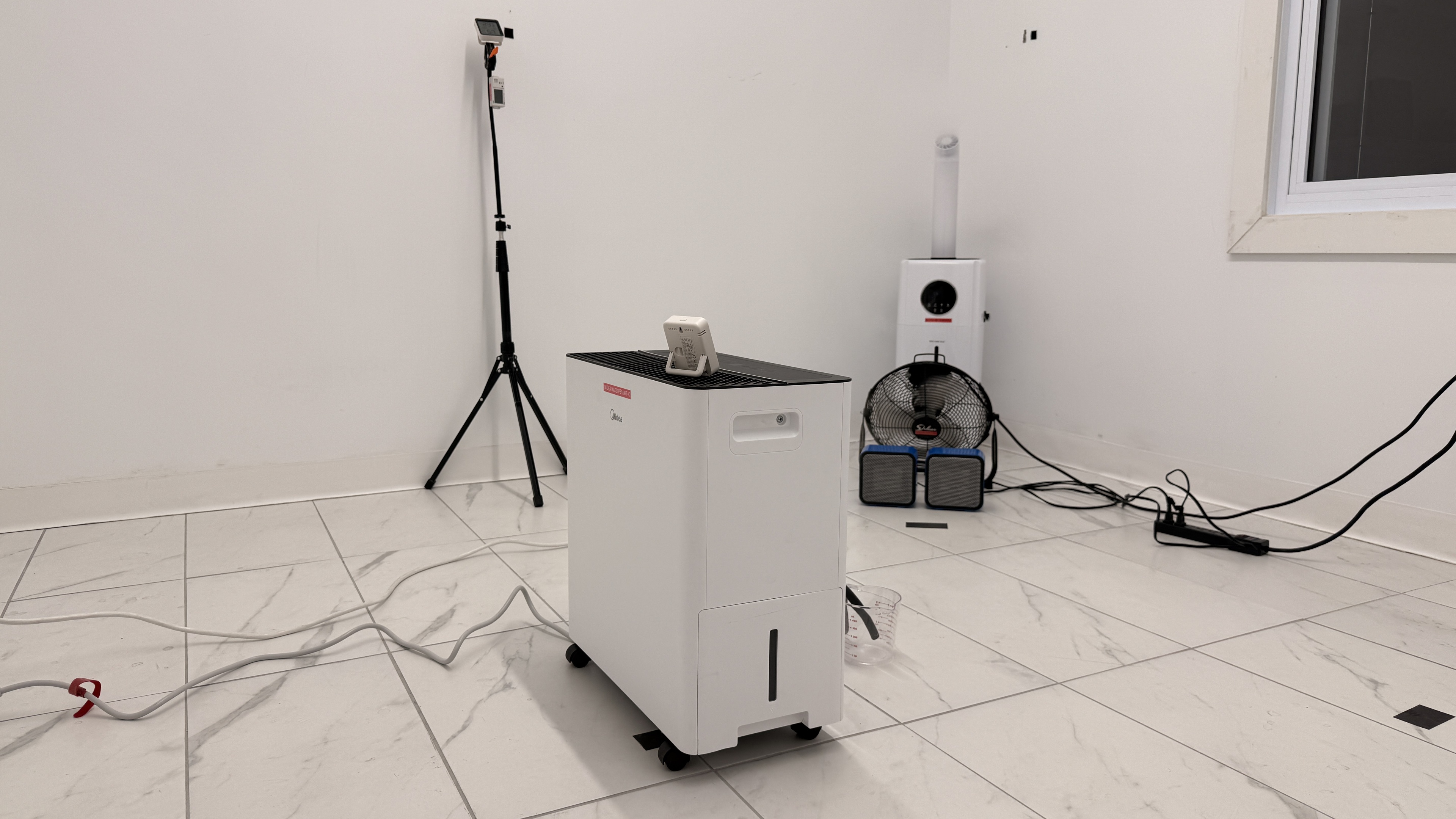
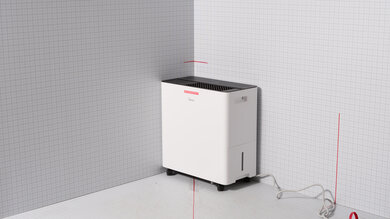
This unit is reasonably easy to fit into most spaces. Its shallow design lets it sit close to a wall, though its wider body means you'll need a bit more side-to-side clearance than narrower models require.
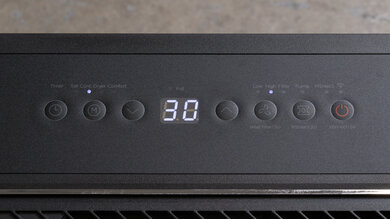
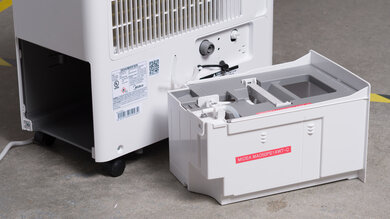
This dehumidifier features a variety of drainage options with some nice quality-of-life design elements. Its water tank features a raised lip that makes it easier to carry to a sink with less risk of spilling, and it slides in and out smoothly for easy emptying. If you'd rather skip emptying the bucket altogether, it also supports continuous drainage with a built-in drain pump that automatically moves water to a nearby drain or sink.
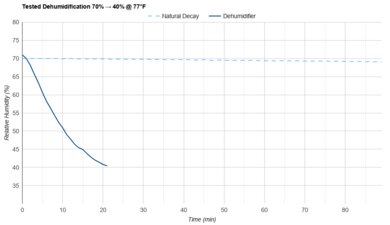
It has excellent dehumidification capacity. It pulls moisture from the air quickly, making it well-suited for large, damp spaces like basements, garages, and other areas that stay consistently humid. It also bounces back quickly after a door or window is left open, so the room doesn't take long to reach your desired humidity level.
One thing to note is that we've updated our HVAC testing room since we first tested dehumidifiers. The new room is better sealed and insulated, which minimizes temperature and humidity loss to the surrounding environment, and this is the new "Natural Decay" baseline going forward.
This unit has excellent dehumidification efficiency, removing a lot of moisture without using an excessive amount of electricity. That helps keep energy costs down if you run it for long periods during humid weather.
This is a loud dehumidifier. While operating noise may not be an issue in a crawl space or laundry room, it's loud enough to be distracting in quieter spaces like a bedroom, home office, or living room. Even at its lowest fan speed, it sounds about as loud as a box fan running nearby.
At its highest fan speed, this dehumidifier moves a considerable amount of air, making it a good choice for large unfinished basements or open spaces. However, there's very little difference at its lowest settings, which reduces its versatility for use in smaller rooms, where the sensation and noise from the high airflow may feel disruptive.
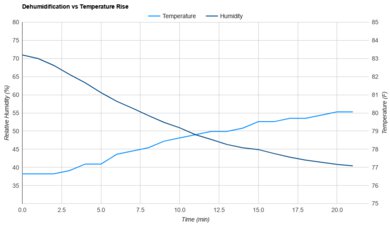
This unit has mediocre temperature stability, releasing a noticeable amount of heat during operation that can gradually warm smaller or enclosed spaces. This makes it a poor fit for temperature-sensitive rooms, though the added warmth is less of a concern in a basement or garage.