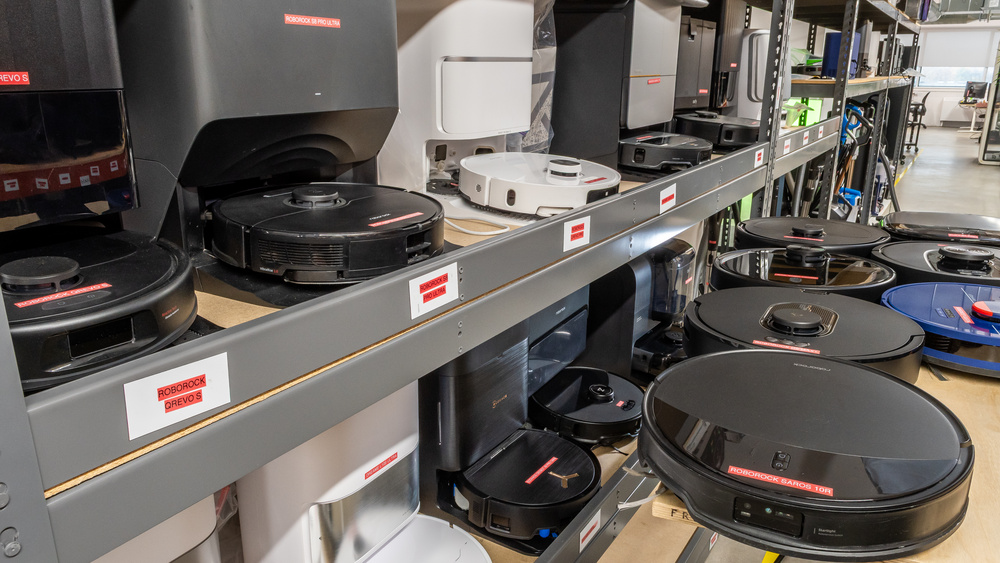
If you don't have time to sweep or vacuum regularly, robot vacuums are an easy way to keep your home clean without doing all the work yourself. The best models deliver excellent cleaning performance across bare floors and carpets, feature multifunction docking stations, on-board mopping systems, and sophisticated hazard avoidance and mapping sensor suites. Lower-priced options have become increasingly feature-packed, with many offering features only found on high-end models from years past, like self-emptying docking stations and LiDAR-based mapping. That said, these cheaper models often lack mopping systems and tend to feature less powerful suction motors than pricier options. Check out our FAQ below to learn more about the intricacies of robot vacuums.
We've tested over 95 robot vacuums, and below are our recommendations for the best robot vacuums you can buy. These picks are selected based on performance, feature set, design, and price. For more recommendations, look at our list of the best robot vacuum cleaners for hardwood floors, the best robot vacuum cleaners for carpet, and the best budget robot vacuum cleaners.
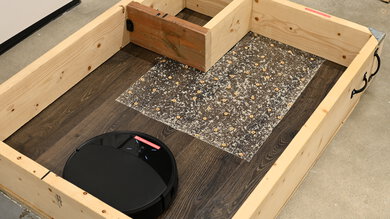
Our robot vacuum recommendations come from our independent testing of more than 80 different models. We purchase every robot vacuum we test, with no cherry-picked units or data. Every robot vacuum goes through the same suite of tests, covering everything from user maintenance to obstacle avoidance. Our testers and writers validate the results to ensure you can easily compare each model side by side, and we keep the products in our lab so we can continuously retest them against the latest models.
Check out our How We Test Robot Vacuums article to learn more about our purchasing, testing, and writing procedures.
-
Best Robot Vacuum
 Multi-Surface HouseholdDebris Pickup: Hard FloorDebris Pickup: CarpetDebris Pickup: Pet HairObstacle HandlingBuild QualityUser MaintenanceSee all our test resultsRecurring Cost
The Roborock Saros 10R is the best robot vacuum cleaner we've tested, particularly if you want a premium robot vacuum/mop combo that you can actually trust to run unsupervised. This vacuum uses a sophisticated LiDAR-based navigation and hazard recognition system called Starsight, which eliminates the need for a tall LiDAR turret while still providing consistent performance in spotting and avoiding things like cables and pet toys, so you don't need to pre-clean before each run. Hard floor cleaning is excellent, and the mopping capability is also impressive, actually lifting dried stains rather than just pushing water around like budget models. For homes with primarily hard floors, this model is hard to beat.
The dock handles most everyday maintenance on its own; you'll mostly just have to refill water and empty the dustbin occasionally. It even automatically heats water to sanitize mop pads, so you're not spreading dirty water around. The device's slim design allows it to fit under low furniture, preventing dust buildup in those hard-to-reach spots. The main limitation is disappointing pet hair pickup on carpet. While excelling on hard floors, it struggles to pull embedded fur from deep carpet fibers. If you have shedding pets and your home includes carpets or rugs, you'll need to break out your regular vacuum periodically.
-
Best Upper Mid-Range Robot Vacuum Cleaner
Multi-Surface HouseholdDebris Pickup: Hard FloorDebris Pickup: CarpetDebris Pickup: Pet HairObstacle HandlingBuild QualityUser MaintenanceSee all our test resultsRecurring CostIf you're looking to spend slightly less and don't mind a less sophisticated hazard avoidance system, the Roborock Qrevo Curv is worth considering. It's far from the newest model in Roborock's lineup, having been supplanted by the Roborock Qrevo Curv 2 Flow, but this older model still provides good overall performance. It delivers exceptional debris pickup performance on hard floors, and performs reasonably well overall on both low and high-pile carpeting. That said, it shares a common downside with the Saros 10R, in that its split brushroll design struggles with pet hair. The Curv's twin-pad mopping system is highly effective at removing stuck-on stains, though it smudges them around before clearing them and leaves behind a fair amount of water. As you'd expect from a higher-end robot vacuum, this unit's multifunction dock handles most routine maintenance by emptying the vacuum's dustbin, washing its mop pads with heated water, and drying them with warmed air.
The main downside of this vacuum in comparison to the Saros 10R is its mediocre obstacle avoidance performance: despite featuring a sophisticated suite of camera and light sensors, it struggles with identifying hazards like pet waste, power cords, or loose shoes and socks, especially on carpeting. While it has the same chassis lifting system as the Saros to easily climb over bumps, the Curv's tall LIDAR sensor is an impediment when maneuvering under low furniture.
-
Best Mid-Range Robot Vacuum Cleaner
Multi-Surface HouseholdDebris Pickup: Hard FloorDebris Pickup: CarpetDebris Pickup: Pet HairObstacle HandlingBuild QualityUser MaintenanceSee all our test resultsRecurring CostThe MOVA P50 Pro Ultra is the best robot vacuum cleaner at a mid-range price point that we've tested. Compared to the Roborock Qrevo Curv, the MOVA's mopping system isn't quite as capable when it comes to scrubbing away stains. That said, it's got a lot to offer beyond its lower price tag. Its hazard avoidance system is generally more reliable than that of the Roborock Qrevo Curv, though it still struggles recognizing and avoiding pet waste, so it's best to run the vacuum while you're home and able to keep an eye on things if you have pets. Debris pickup performance is a strong point: this model delivers exceptional debris pickup on hard floors and does quite well on carpets, easily clearing away stubborn debris like embedded pet hair, making it a versatile option for most homes.
Beyond cleaning performance, it has some useful features that reduce maintenance work. The Tri-Cut brushroll improves pet hair pickup by featuring rotating blades that cut through hair to prevent tangling. The multifunction dock handles nearly all the day-to-day maintenance by emptying the dustbin, refilling the water tank, and washing the mop pads with hot water and air. One drawback is the disappointingly small onboard dustbin. If you have a larger home or go a few days between cleaning sessions, the MOVA will need to return to the dock frequently to self-empty.
-
Best Budget Robot Vacuum Cleaner
Multi-Surface HouseholdDebris Pickup: Hard FloorDebris Pickup: CarpetDebris Pickup: Pet HairObstacle HandlingBuild QualityUser MaintenanceSee all our test resultsRecurring CostThe MOVA P10 Pro Ultra is a good choice if you aren't a pet owner and don't require the same level of pet hair pickup performance as the pricier MOVA P50 Pro Ultra. This unit's one-piece rubber brushroll doesn't provide the same level of surface agitation as the pricier P50's bristled brush, and it struggles a little more with lifting away embedded pet hair or fine debris from carpeted floors. That said, in most other respects, the P10 delivers similar overall performance, making it a strong value proposition. It has a twin-pad mopping system that's very effective in scrubbing away stains, without major smearing or water deposits, and comes with a multifunction self-empty dock with hot water mop washing and warm air drying, so day-to-day maintenance is a breeze.
The P10's hazard detection system is also quite reliable, particularly for a robot vacuum in this price bracket: it cleans in an organized, efficient manner, and is consistently able to recognize and avoid major hazards like pet waste even on carpeted floors.
-
Best Cheap Robot Vacuum Cleaner
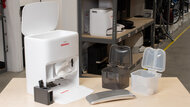
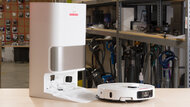
Multi-Surface HouseholdDebris Pickup: Hard FloorDebris Pickup: CarpetDebris Pickup: Pet HairObstacle HandlingBuild QualityUser MaintenanceSee all our test resultsRecurring CostIf you only require a basic robot vacuum for maintenance cleaning, then the Rovorock Q7 M5 is worth a look, and the best cheap robot vacuum we've tested. Despite its low price point, it delivers very strong debris pickup performance, clearing most debris on hard floors in a single pass and doing a better job on carpets than the pricier MOVA P10 Pro Ultra, thanks to its bristled roller brush. The main sacrifices come in the form of a lack of extra features and a slightly more hands-on user experience. The cheapest variant of the Q7 M5 comes without a self-empty dock, only a simple charging station, and has a rudimentary vibrating mop plate that doesn't do as good a job of scrubbing away stains.
Its LIDAR-based navigational system is also simpler than pricier units and isn't particularly reliable at detecting and avoiding obstacles, so it's best to make sure your floors are clear of any potential obstructions before letting it run. At the very least, the Roborock companion app is very full-featured: after the Q7 M5 has generated a map of your home, you can schedule cleaning times, draw boundary lines to keep it out of certain areas, and manually control the vacuum if you want to bring it to a certain spot.



Notable Mentions
-
Roborock Saros Z70:
The Roborock Saros Z70 is essentially a Roborock Saros 10R with a mechanical arm for obstacle removal rather than merely obstacle avoidance. It performs almost as well as the Saros 10R, but the mechanical arm reduces dustbin capacity and battery life. The mechanical arm itself doesn't perform very well and doesn't justify the enormous price increase.
See our review -
Roborock Saros 20:
The Roborock Saros 20 is the successor to the Roborock Saros 10R, and is a good alternative if you prioritize debris pickup on carpets. That said, the older model is more consistent in avoiding obstacles and delivers better stain-clearing performance, all at a considerably lower price.
See our review -
Roborock Qrevo Curv 2 Flow:
The Roborock Qrevo Curv 2 Flow is the follow-up to the Roborock Qrevo Curv with a roller mop system that does an even better job of scrubbing away stains. That said, it fails to improve on its predecessor in most other ways, and in some areas represents a downgrade, with still-mediocre obstacle avoidance, inferior debris pickup, and no chassis lifting system.
See our review -
Dreame Aqua10 Ultra Roller:
The Dreame Aqua10 Ultra Roller is a great alternative to the Roborock Saros 10R with a continuously rinsed mop roller brush. It offers similar debris pickup performance to the Saros, but its more conventional LiDAR turret puts it at a disadvantage when cleaning under low furniture, and its fancy mopping system actually isn't as effective as the Roborock's more conventional setup.
See our review -
Dyson Spot+Scrub Ai:
The Dyson Spot+Scrub Ai is a high-end robot vacuum with a bagless self-empty dock. It's a substantial improvement over previous Dyson robot vacuums, but the similarly positioned Roborock Saros 10R delivers better overall debris pickup on most surfaces, along with a handful of navigational aids that allow it to maneuver more easily in cluttered areas.
See our review
Recent Updates
Aug 07, 2026:
We added the Roborock Qrevo Curv as the 'Best Upper Mid-Range Robot Vacuum Cleaner' pick, replaced the eufy E20 with the MOVA P10 Pro Ultra as the 'Best Budget Robot Vacuum Cleaner' due to current availability, and replaced the eufy Auto-Empty C10 with the Roborock Q7 M5 as the 'Best Cheap Robot Vacuum Cleaner' pick due to current pricing. We also added the Roborock Saros 20 and Roborock Qrevo Curv 2 Flow to the Notable Mentions section of the article.
May 05, 2026:
We replaced the Wyze Robot Vacuum with the eufy Auto-Empty C10 as the 'Best Cheap Robot Vacuum Cleaner' pick due to current product availability. We added the Dyson Spot+Scrub Ai, Dreame Aqua10 Ultra Roller, and Wyze Robot Vacuum to the Notable Mentions section.
Feb 05, 2026:
We added the MOVA P50 as the 'Best Mid-Range' and the eufy E20 as the 'Best Budget' pick.
Nov 07, 2025:
We replaced the discontinued Roborock Qrevo with the Roborock Qrevo Curv, and the discontinued Roborock Q5 Max+ with the MOVA P10 Pro Ultra. We removed the Dreame L10s Ultra from our Notable Mentions since it's so similar to the MOVA P10 Pro Ultra, and we also removed the iRobot Roomba j7+ as a Notable Mention due to concerns about the long-term viability of the company.
Jul 03, 2025:
We replaced the Roborock S8 Pro Ultra with the Roborock Saros 10R as our pick for the 'Best Robot Vacuum' due to availability and better overall performance. We removed the aging iRobot Roomba S9 from the Notable Mentions and added the Roborock Saros Z70, Dreame X50 Ultra, and Roborock Qrevo Curv as alternatives to the Roborock Saros 10R.
FAQ
Can a robot vacuum fully replace a conventional vacuum?
Generally speaking, robot vacuums aren't a wholesale replacement for a full-size, manually operated machine. Most models on the market aren't powerful enough to deal with heavy debris or large piles of material, so you'll want to keep a conventional model on standby for bigger cleaning jobs. That said, robot vacuums have their niche for "maintenance" cleaning: frequent, low-intensity sessions that prevent a buildup of dust or lightweight dirt.
Are robot vacuums worth it?
Honestly, that'll depend entirely on your expectations and budget. You don't necessarily need to spend a fortune on something that offers reasonable overall performance. Spending around $200-$300 USD can get you a robot vacuum with LiDAR mapping and decent overall debris pickup performance, though you're likely to miss out on extra features like obstacle avoidance, multifunction docking stations, and mopping functionality.
Those latter features are generally nice to have, with obstacle avoidance sensors being a particularly great addition if you often leave your vacuum to run while you're away from home, since these systems minimize the likelihood of your vacuum getting stuck. The upside is that as technology matures, it becomes increasingly cheaper for manufacturers to implement across their model range: mid-range options like the MOVA P50 Pro Ultra now include many of the features found on flagships from only a few years ago.
If you want to spend less than $200 USD, you're likely looking at a robot vacuum with a rudimentary random-pathing bump navigation system. These systems don't generate a coverage map of your home and aren't especially time-efficient. While they might achieve good overall room coverage, they're pretty slow to do so and are far more likely to get stuck on obstacles and clean the same area more than once.
How often should you perform maintenance on a robot vacuum?
Most manufacturers aren't shy about specifying how and how often you should maintain your robot vacuum, and it's worth noting that these maintenance intervals can vary pretty drastically from model to model. That said, there are a few things you can look out for, even outside of scheduled maintenance. You'll want to check the robot vacuum's brushroll once or twice a week to ensure no hair gets tangled in the mechanism; models with bristle rollers, as opposed to smoother rubber rollers, tend to collect a lot of pet hair. The same goes for side brushes and wheels; stuck-on debris can jam up their mechanisms, compromising overall performance. You'll also want to dispose of any material in the vacuum's dirt compartment.
However, it's worth noting that there are plenty of models on the market that come with docking stations that suck debris from the vacuum's dustbin into an external dirt compartment or dirtbag, so you won't have to go through the process of emptying a dustbin yourself.
Can I run my robot vacuum every day?
Absolutely! This is what most robot vacuums are designed for. Most models allow you to schedule cleaning sessions beforehand, so the vacuum will run while you're out and about.
How do I prepare my house for a robot vacuum?
You'll want to remove small obstacles like socks, slippers, or thicker power cords. While an increasing number of higher-end models, like the MOVA P10 Pro Ultra, boast additional sensors that allow them to spot, identify, and, if necessary, avoid obstacles, these systems are still far from foolproof. You'll also want to remove any super-thick shag pile rugs because many robot vacuums can get bogged down in really plush carpet fibers.
If you have a robot vacuum with a LiDAR sensor, you'll also want to cover up any floor-to-ceiling mirrors before it maps out your home for the first time. The laser emitted from the vacuum will bounce off reflective surfaces, effectively causing the vacuum to 'perceive' a nonexistent room and even bump into the mirror itself. You can also get around this by setting up a 'no-go' zone around mirrors, at least on models that support this kind of function.
Conversely, if you have a robot vacuum that uses an optical sensor to navigate, like the Wyze Robot Vacuum, leave the light on in areas you want the vacuum to clean. Unlike LiDAR systems, optical sensor-based systems need a certain level of ambient light to navigate.
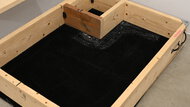
It's worth noting that many robot vacuums will also struggle with navigating on really dark-colored floors. Most models on the market have cliff sensors that rely on infrared radiation to work, and since dark surfaces absorb infrared radiation, this will trigger the cliff sensors and cause the vacuum to stop.
All Reviews
Our recommendations above are what we think are currently the best robot vacuum cleaners for most people. We factor in the price, feedback from our visitors, and availability.
If you would like to do the work of choosing yourself, here's the list of all our robot vacuum reviews. Be careful not to get too caught up in the details. While there's no single best option that's perfect for every use, most are good enough to please almost everyone, and the differences are often not noticeable unless you really look for them.