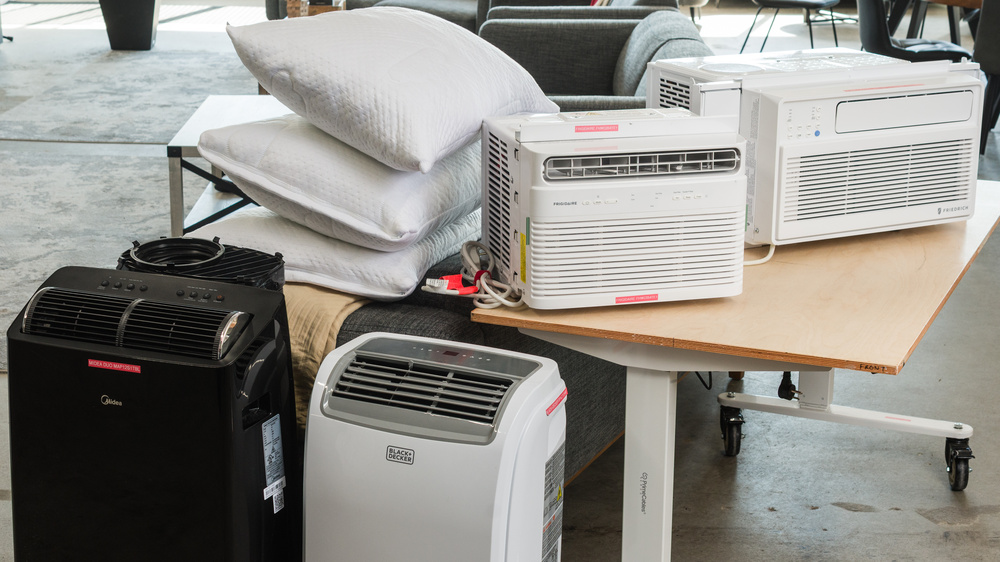
If you're tired of waking up cranky and sweaty throughout the night, it's time to invest in an air conditioner for your bedroom. The best air conditioners for bedrooms provide enough cooling capacity for your bedroom's size, run quietly enough to avoid disturbing your sleep, and maintain a consistently cool, dry environment without making the room feel damp overnight.
We've tested over 20 air conditioners, and below are our recommendations for the best window and best portable air conditioners for bedrooms based on performance, noise, and efficiency. Using our lab testing and scoring, here's a quick guide to what matters most:
- Cooling Capacity: A tested cooling capacity of around 5,000 BTU/hr is enough for bedrooms measuring 150 ft² or less, and 8,000 BTU/hr is sufficient for very large bedrooms measuring up to 350 ft². The right size is key; too small will struggle to cool your space, and too large can leave the room feeling cold and clammy.
- A/C Type: Window units cool more efficiently and quietly since the compressor sits outside. Portable units are easier to install but less efficient overall. Dual-hose models outperform single-hose designs and are the better choice if you need a portable model for regular overnight use.
- Compressor Type: Inverter compressors are quieter and maintain more stable temperatures. For bedrooms, quiet operation and good temperature consistency matter just as much as maximum cooling power.
For more details, check out our full buying guide below. If you're shopping for alternatives, see our recommendations for the best portable air conditioners, the best window air conditioners, and the best air conditioners.

Behind all of our air conditioner recommendations are our product reviews. We buy our own air conditioners directly from major retailers and have our team rigorously test them in our lab. The result? Robust data on features you care about, like cooling capacity and inside noise, which you can then compare across the over 20 models we've tested.
If this sounds cool to you, you'll definitely want to read more in our About Us.
-
Best Bedroom Air Conditioner
 Bedroom/Small Room8.6Inside Noise9.3Stability9.7TypeWindow A/CAdvertised Coverage350 ft² (33 m²)Advertised Capacity (DOE)8,000 BTU/hrSee all our test resultsCompressor TechnologyInverter
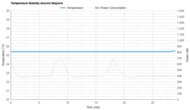
The Friedrich Chill Premier Inverter CCV08A10A is the best air conditioner for bedroom use that we've tested. Its tested cooling capacity of just 5,000 BTU/hr isn't necessarily the highest on the market, but it's still more than sufficient to cool the overwhelming majority of bedrooms. Its inverter compressor also helps keep your bedroom consistently cool and dry overnight while consuming less power than cheaper alternatives with fixed-speed compressors, since this model won't have to cycle its compressor on and off inefficiently to maintain your desired temperature. It's quiet and impressively efficient, so you won't notice a big hit to your utility bill in warmer months.
Nearby neighbors who leave their own windows open at night might be unimpressed by the outdoor operating noise: the compressor outside your window produces a high-pitched chatter when the A/C enters a cooling cycle, which is typical for inverter units. This unit also features Wi-Fi connectivity and a remote control, so you can adjust the temperature to your desired setting without rolling out of bed. Installation can unfortunately be a bit of a challenge. At over 50 lbs, this unit weighs more than comparable models, so you'll likely find it helpful to enlist a friend to help lift it up and mount it in place.
-
Best Mid-Range Bedroom Air Conditioner
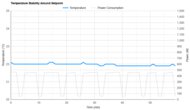
Bedroom/Small Room7.6Inside Noise7.5Stability7.3TypeWindow A/CAdvertised Coverage150 ft² (14 m²)Advertised Capacity (DOE)5,000 BTU/hrSee all our test resultsCompressor TechnologyNon-InverterIf you want to spend less on an A/C for your bedroom and don't mind a drop in cooling performance, the Frigidaire FHWC054TE1 is worth a look. This unit has a cooling capacity of just over 3,500 BTU/hr, a little over two-thirds the capacity of the pricier Friedrich Chill Premier Inverter CCV08A10A, making it best suited for average home and apartment bedrooms rather than larger suites, especially if you only need to cool the room before bed or while you sleep. The other main disadvantage of the Frigidaire unit compared to the pricier window unit is its fixed-speed compressor: it'll have a slightly greater impact on your monthly energy bill than the higher-powered, faster-cooling Friedrich. That simpler compressor also produces more distracting operating noise, as it constantly cycles on and off to maintain your desired temperature, though actual operating noise remains low enough to keep you from waking up overnight unless you're a particularly sensitive sleeper.
With all that said, the Frigidaire does a good job of keeping smaller bedrooms consistently cool through the night, but the compressor cycling on and off to maintain your desired temperature can make the air feel a smidge damp at times. Unlike the Friedrich, there's no Wi-Fi connectivity, so you can't run the appliance from your smartphone, but you can keep the included remote control on your nightstand to change settings without walking over to your window in the dead of night. This unit is also compatible with a MERV-14 filter to remove airborne particulates from the cold air entering your room, which can be useful if allergies tend to bother you while sleeping.
-
Best Budget Bedroom Air Conditioner
Bedroom/Small Room7.3Inside Noise6.9Oversizing Tolerance7.2TypeWindow A/CAdvertised Coverage250 ft² (23 m²)Advertised Capacity (DOE)5,000 BTU/hrSee all our test resultsCompressor TechnologyNon-InverterConsider the Frigidaire FFRA051WAE if you're shopping for a bedroom A/C on a really tight budget, and don't mind giving up a few quality-of-life features in exchange for comparable performance. Unlike the pricier Frigidaire FHWC054TE1, this unit has a mechanical thermostat, so you can't select a specific temperature for the A/C to maintain. Instead, you can simply adjust its output using the cooling and fan speed knobs. There's no remote control either, so you'll need to roll out of bed to make any adjustments. Its fan is also noisier, and it could be a minor disturbance for more sensitive sleepers if you were to run it at full speed overnight.
That said, in most other respects, the FFRA051WAE delivers similar performance to its pricier stablemate, making it a good option for smaller bedrooms. Its fixed-speed compressor incurs a pretty low power draw, so it won't have too big a hit on your utility costs either. Its compact size and relatively lightweight construction make seasonal installation and removal pretty easy, too.
-
Best Portable Bedroom Air Conditioner
Bedroom/Small Room8.0Inside Noise8.6Stability9.5TypeDual-Hose Portable A/CAdvertised Coverage550 ft² (51 m²)Advertised Capacity (DOE)10,000 BTU/hrSee all our test resultsCompressor TechnologyInverterIf your living situation doesn't permit a window-mounted A/C unit, but you still need to cool a larger sleeping space, the Midea Duo MAP12S1TBL is the best portable air conditioner for bedroom use that we've tested. In terms of raw cooling output, it outguns even the Friedrich Chill Premier Inverter CCV08A10A, and it'll cool the largest of bedrooms with ease. Its inverter compressor also helps keep the air consistently cool and dry, so you won't wake up feeling unpleasantly clammy and damp. You can also operate the Midea from your bed via your smartphone or with voice commands made through Amazon Alexa and Google Home devices. It's also amazingly quiet while in operation and is unlikely to wake you in the middle of the night, which is especially important if you're using it in a primary bedroom or other sleeping space. That said, you'll occasionally hear the faint chatter from the Midea's inverter compressor, which is likely to be a distraction for light sleepers.
What you give up versus a comparable window A/C like the Friedrich is efficiency: with a portable A/C, the hot compressor is located inside the same room it's cooling. This forces the unit to work harder, decreasing overall efficiency and resulting in a bigger hit to your monthly energy bill. Its bulky footprint also occupies a lot of floor space, though at least it features a two-in-one hose design to facilitate installation.
-
Best Mid-Range Portable Bedroom Air Conditioner
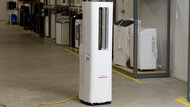
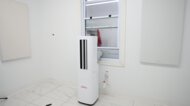
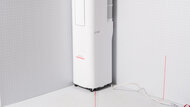
Bedroom/Small Room7.3Inside Noise8.5Stability7.7TypeDual-Hose Portable A/CAdvertised Coverage350 ft² (33 m²)Advertised Capacity (DOE)8,000 BTU/hrSee all our test resultsCompressor TechnologyInverterIf you're looking to spend slightly less on a portable A/C for your bedroom, the Hisense Tower HIAP0825TWD is worth considering. It has a lower cooling capacity than the Midea Duo MAP12S1TBL, so it won't cool an equivalently-sized bedroom quite as fast, though it's still more than capable of handling all but the biggest of primary suites. Its dual-hose design and inverter-controlled compressor make it quite efficient overall, though a window A/C with comparable capacity will still have less of an impact on your utility bill. Availability is also somewhat limited, and prices can vary somewhat drastically. Its MSRP tends to hover upwards of $300 USD, though it can be found for substantially less from a few retailers.
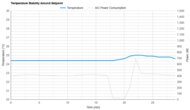
That said, the Hisense has a few advantages over the Midea, beyond just its lower price tag. Its slim tower-style design gives it a much smaller footprint, which makes it easier to place beside a bed, dresser, or window without taking up as much floor space as many boxier portable models. It's also very quiet for a portable A/C, and its inverter compressor helps maintain steady temperature and humidity levels, so your bedroom is less likely to feel cold and clammy while you sleep. You can also adjust settings from bed using the included remote or companion smartphone app.
-
Best Budget Portable Bedroom Air Conditioner
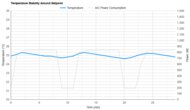
Bedroom/Small Room6.3Inside Noise4.4Stability7.8TypeSingle-Hose Portable A/CAdvertised Coverage215 ft² (20 m²)Advertised Capacity (DOE)4,000 BTU/hrSee all our test resultsCompressor TechnologyNon-InverterThe SereneLife SLPAC8 is the best portable air conditioner for bedrooms at a budget-friendly price, and is worth a look if you have a small bedroom. Compared to a pricier portable unit like the Hisense Tower HIAP0825TWD, there are a few big compromises: its cooling capacity is far lower, and it'll take just under twice as long to cool an equivalently sized bedroom. It also consumes just as much energy as pricier models with a higher cooling capacity, as a result of its inefficient single-hose design and fixed-speed compressor. It's also rather noisy: its compressor cycling on and off can be disruptive, and it occasionally produces brief bursts of noise exceeding 78 dBA. Depending on how sensitive you are as a sleeper, that could be loud enough to wake you in the middle of the night.
On the upside, for a unit this basic, it's relatively feature-rich for a budget-friendly model: there's a remote control so you can adjust settings without getting out of bed, along with a dedicated dehumidification mode for humid days when you don't necessarily need full cooling. That said, there's no Wi-Fi or an associated companion app.













Notable Mentions
-
Midea MAW12HV1CWT:
The Midea MAW12HV1CWT is a high-end window A/C with an inverter compressor. It can cool an equivalently sized space faster than the Friedrich Chill Premier Inverter CCV08A10A due to its higher cooling capacity, but it also consumes more power and makes more noise.
See our review -
Midea U-Shaped MAW12V1QWT:
The Midea U-Shaped MAW12V1QWT is another high-end window A/C with an inverter compressor. Compared to the Friedrich Chill Premier Inverter CCV08A10A, it has a higher cooling capacity but is also louder and less efficient. It delivers near-identical performance to the Midea MAW12HV1CWT above, but with a U-shaped body that lets you open your bedroom window while it's installed.
See our review -
Whynter NEX ARC-1230WN:
The Whynter NEX ARC-1230WN is a high-end dual-hose portable A/C. It's a rebranded, slightly modified variant of the Midea Duo MAP12S1TBL with a higher capacity of 12,000 BTU/hr. It's a good alternative for large bedrooms, but it also does a worse job of maintaining consistently cool, dry conditions.
See our review
Recent Updates
Sep 16, 2026:
We recategorized the Midea Duo MAP12S1TBL as the 'Best Portable Bedroom Air Conditioner,' the Hisense Tower HIAP0825TWD as the 'Best Mid-Range Portable Bedroom Air Conditioner,' and the Frigidaire FHWC054TE1 as the 'Best Mid-Range Bedroom Air Conditioner' picks due to current product pricing. We've also added the Frigidaire FFRA051WAE as the new 'Best Budget Bedroom Air Conditioner' pick and the SereneLife SLPAC8 as the new 'Best Budget Portable Bedroom Air Conditioner' pick.
Aug 12, 2026:
We've made minor text adjustments to further clarify product details. We've also made sure all our main picks are still available.
Jun 22, 2026:
We expanded the buying guide with more bedroom-specific guidance and added the Hisense Tower HIAP0825TWD to the portable A/C section as an option for smaller bedrooms.
What To Consider When Choosing An A/C For Bedrooms
There are a few main factors to consider when shopping for a bedroom A/C. Beyond cooling power, you'll want a unit that runs quietly, uses energy efficiently, and keeps the room feeling cool and dry throughout the night.
Cooling Capacity
While these guidelines aren't set in stone, they can help you determine whether an A/C unit is appropriately sized for your bedroom:
| Cooling Capacity | Recommended Room Size |
|---|---|
| 5,000 BTU/hr | Generally suitable for bedrooms up to 150 ft² (13.9 m²) |
| 8,000 BTU/hr | Generally suitable for bedrooms up to 350 ft² (32.5 m²) |
| 10,000 BTU/hr | Generally suitable for bedrooms up to 450 ft² (41.8 m²) |
| 12,000 BTU/hr | Generally suitable for bedrooms up to 550 ft² (51.1 m²) |
Buying an A/C that's too small for your room will force it to run almost constantly, increasing wear and tear, and it will struggle to cool the space before bedtime. On the other hand, an oversized unit can raise your energy costs and may cool the room faster than it removes moisture, leaving your bedroom feeling cold and clammy instead of cool and dry.
Noise Level
Noise is one of the most important considerations for a bedroom A/C, especially if you're a light sleeper. Even a powerful unit can be frustrating if it repeatedly wakes you at night.
- Window-mounted units are often quieter indoors because the compressor sits outside.
- Portable units keep the compressor inside the room, so they're generally more noticeable in operation.
- Inverter-equipped models are also worth considering, as they can adjust cooling output gradually rather than cycling on and off loudly overnight.
If you're particularly sensitive to noise, pay close attention to measured indoor operating noise rather than relying solely on manufacturer claims.
Energy Efficiency
Bedroom air conditioners are often used for long periods, especially overnight during the summer, so energy efficiency can have a meaningful impact on operating costs.
- Window units also tend to be more efficient than portable models because the hot compressor sits outside the room being cooled.
- Portable units are easier to install, but they generally use more energy since the compressor remains inside the room.
If you expect to run your A/C every night, investing in a more efficient model can help reduce electricity costs over time.
Temperature And Humidity Consistency
Cooling speed isn't the only factor that affects comfort while sleeping. A good bedroom A/C should also maintain stable temperatures and remove enough moisture from the air to keep the room comfortable throughout the night.
- Fixed-speed compressors can produce more noticeable temperature swings because they repeatedly cycle on and off.
- Oversized units may cool the room quickly but fail to remove enough moisture, leaving the space feeling damp or clammy.
A/C Design
We buy and test both window-mounted and portable units, which each have their own strengths and weaknesses. For bedroom use, the biggest differences usually come down to installation, efficiency, and indoor noise.
-
Portable Units
- Can be moved and installed relatively easily.
- The hot compressor is inside the room that it's cooling, increasing energy consumption and reducing cooling performance.
- Single-hose models are less efficient and less effective than dual-hose models.
- Single-hose models suck in indoor air to cool the compressor, which then draws in warm air from outside, forcing the machine to work harder.
- Dual-hose models have a secondary intake hose for cooling the compressor that leads outside, allowing them to cool the compressor without generating this negative air pressure effect, resulting in faster, more power-efficient cooling.
-
Window Units
- The hot compressor is outside the room that it's cooling, lowering energy consumption and improving performance even compared to higher-end dual-hose portable units.
- Seasonal installation and removal can be a hassle, especially for larger, heavier high-capacity units.
- Not permitted in all apartments and might not fit all windows.
Compressor Design
In most household air conditioners, you'll encounter one of two compressor styles: fixed-speed and inverter-controlled.
Fixed-Speed Compressors
- Typically found on cheaper units.
- Relatively inefficient, since this style of compressor cycles on and off to maintain your desired temperature.
- Can result in less consistent temperature and humidity levels.
- May be more noticeable overnight, as the compressor repeatedly starts and stops.
- Can leave your bedroom feeling cool but slightly damp or clammy, especially if the unit is oversized for the space.
Inverter Compressors
- Generally found on more expensive models.
- Can run consistently at a lower speed to maintain your desired temperature instead of cycling on and off.
- Consumes less power, produces less distracting operating noise, and keeps the air in your bedroom cool and dry rather than cold and damp.
- Usually a better fit for overnight use, since it maintains steadier temperature and humidity levels.
- Introduces a higher number of potential failure points.
All Reviews
The recommendations above are among the best air conditioning units for bedrooms for most people. We factor in price, visitor feedback, and availability.
That said, there's no single best option that'll suit everybody; your needs will depend on your budget, the size of the space you're trying to cool, your tolerance for operating noise, and whether you like having a device with convenience features like Wi-Fi connectivity. If you'd like to choose for yourself, here's the list of all our A/C reviews.