- 28.0%Bare Floor: Avoidance Rate
- 28.0%Bare Floor: Intervention Rate
- 20.0%Carpet: Avoidance Rate
- 20.0%Carpet: Intervention Rate
- 4.0%Always Avoided Pet Waste
In our robot vacuum Test Bench 1.0 update, we added an Obstacle Avoidance test. As robot vacuums become increasingly sophisticated with more autonomous controls, they're getting better and better at detecting, recognizing, and avoiding obstacles. Manufacturers are offering solutions to users who've grown tired of cleaning up before their robot vacuum cleans up, rescuing a robot vacuum that's sucked up an extension cord, or cleaning pet waste out of their expensive robot vacuum's internals. Robot vacuums have advanced enough that these issues are reduced or minimized, and it's not just flagship robot vacuums that can handle household obstacles either.
Test results
When It Matters
Early robot vacuums were notorious for getting stuck or running over obstacles, the worst being pet waste. Robot vacuums like these may need constant supervision and can't operate at night or when you're at work, which is arguably the whole point of a robot vacuum. With robot vacuums such as these, you need to either declutter every room or be prepared to rescue the robot vacuum when it gets into trouble, putting up with incomplete cleaning jobs if it gets stuck while you're away.
As robot vacuums developed, manufacturers started introducing more advanced sensors, first to detect and avoid obstacles, then not only to detect but to recognize obstacles and treat them differently. For example, a robot vacuum should give pet waste plenty of clearance—don't even touch it!—but it doesn't have to be quite as careful around shoes. If it did give less critical obstacles more space, it would end up missing large areas of the floor surface. Manufacturers introduced obstacle avoidance systems that encompass sensors dedicated entirely to obstacle avoidance rather than navigation, increased computing power, advanced software, and trained AI models for obstacle recognition.
If you'd rather not declutter before every robot vacuum cleaning session, or if you're tired of receiving a notification that your robot vacuum is stuck when you're at work, then these obstacle avoidance systems were designed with you in mind. You will also benefit from a well-functioning obstacle avoidance system if you've had enough of untangling your robot vacuum from the same extension cord it sucks up every other day, or if you've ever had to clean pet waste out of a robot vacuum.
Our Tests
We document the type of technology the robot vacuum uses to detect obstacles and whether it has obstacle recognition capabilities. We then place the robot vacuum in its dock at the center of the far wall in our testing room. We put a carpet over half of the room.
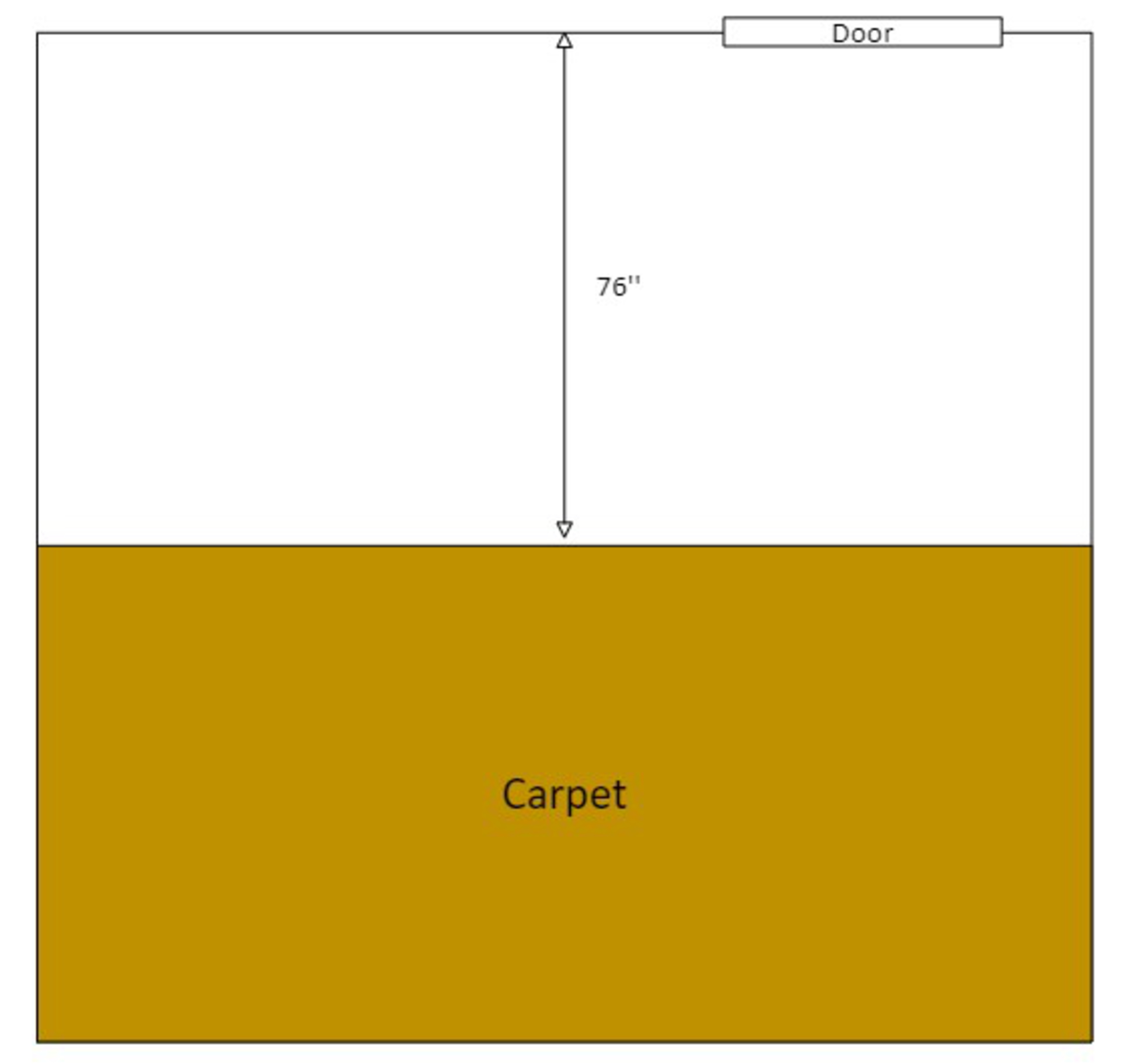
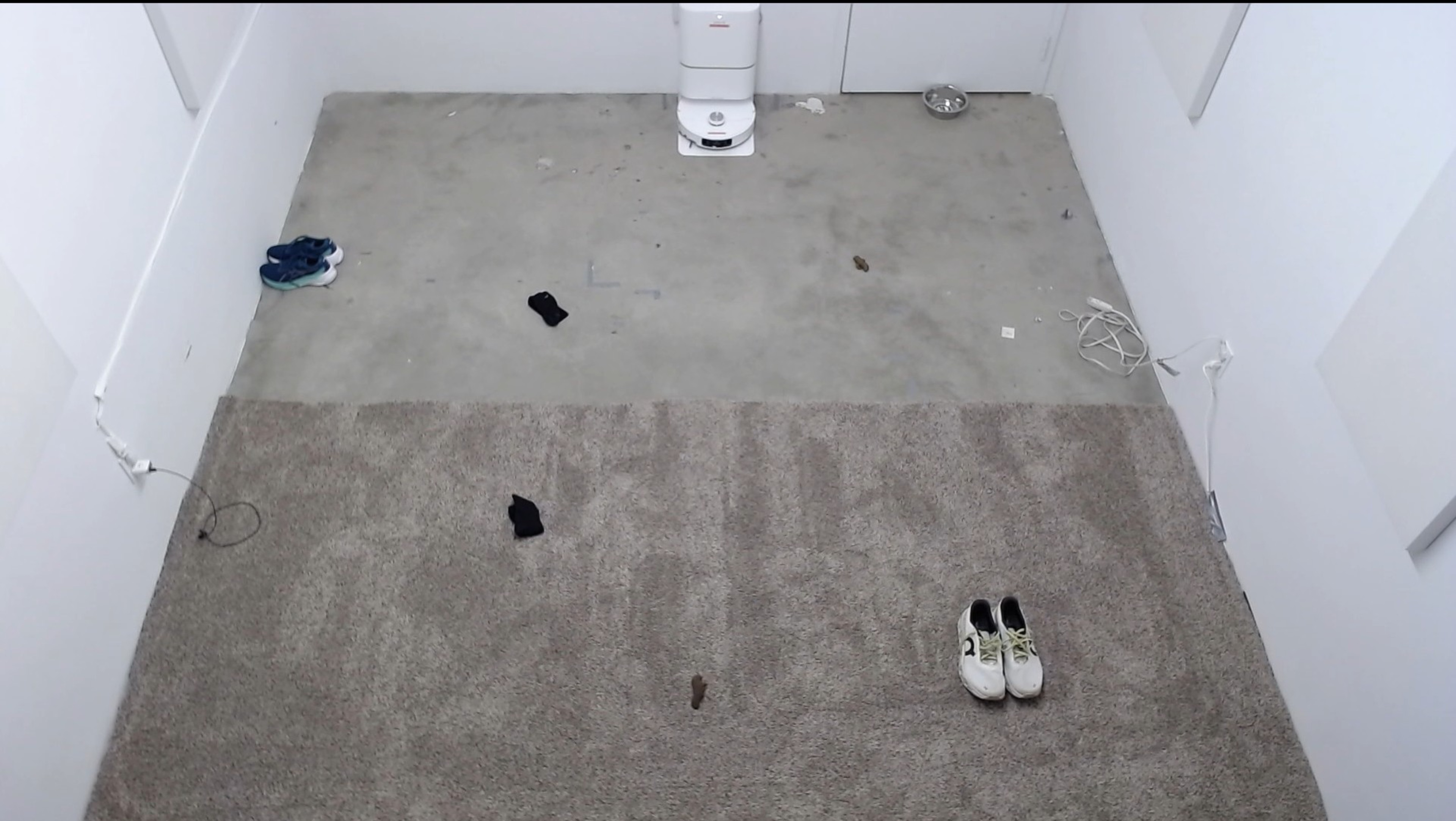
Next, we place common household obstacles on the bare floor and carpeted sections in predetermined locations. These obstacles are in the same locations for every test to ensure consistency and comparability between tests, and we've chosen typical problematic objects, arranging them to depict a realistic scenario.
- A pair of shoes positioned on the bare floor section against the left wall
- A pair of shoes on the right side of the carpeted section
- A sock on the left side of the bare floor, lying flat. This object presents a very low profile and can be sucked up into the robot vacuum's brushroll if the robot vacuum runs it over.
- A sock on the left side of the carpet, lying flat. The small amount of fabric may be harder to detect when upright carpet fibers surround it.
- A USB cord and charger plugged into a socket on the left wall, with the cord dangling and loosely coiled on the carpeted section. This common object is thin, hard to detect, and easily sucked up into the brushroll.
- An extension cord plugged into a socket on the right wall, loosely coiled on the bare floor. This obstacle is a common trap for robot vacuums.
- A stainless steel pet bowl along the right of the far wall, against the door. This object is reflective, and its sides are angled, making it difficult to detect and having a high impact if it's full of water and pushed around.
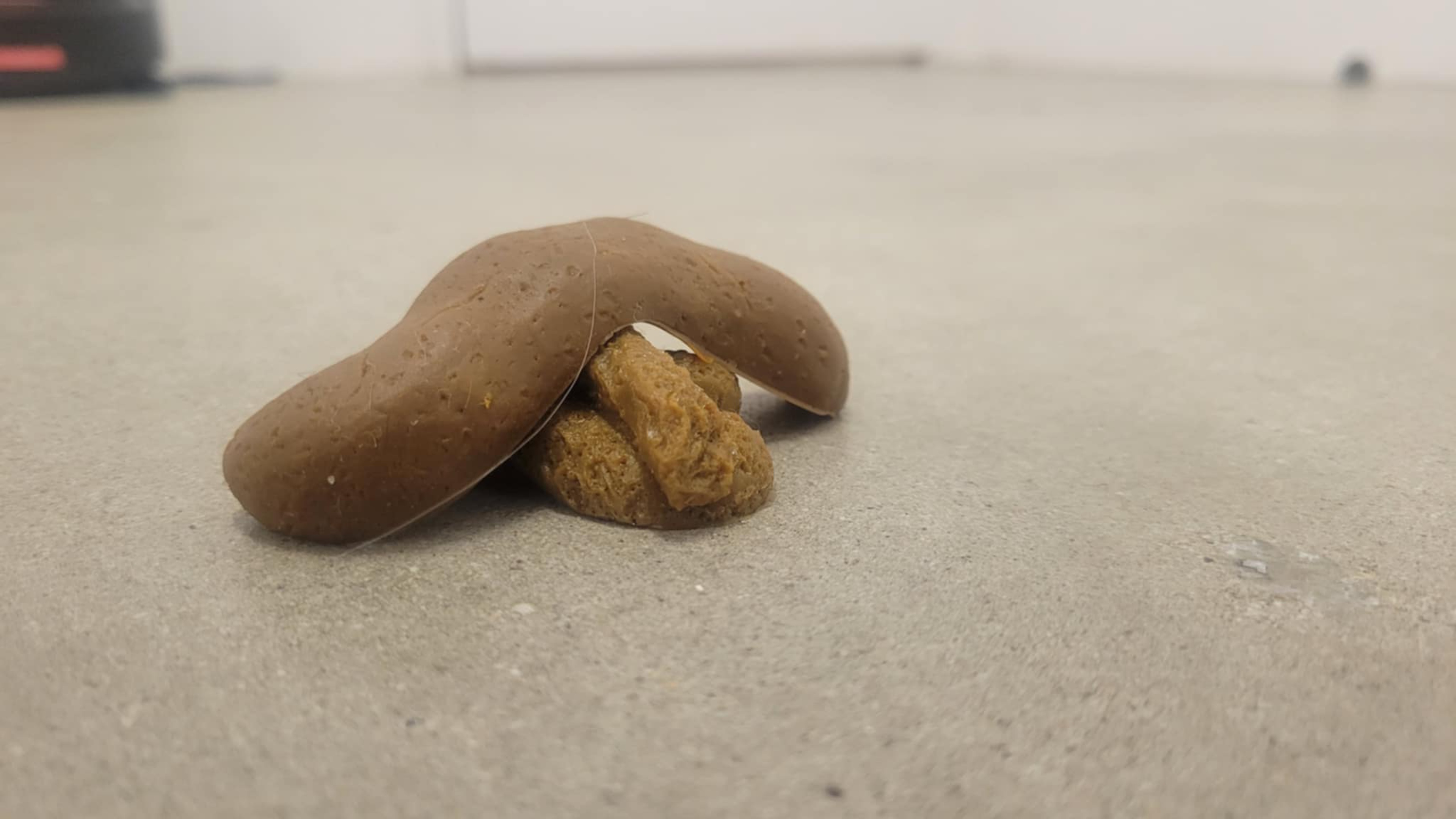
- Pet waste. Fake pet waste—while we ask a lot of our testers, we could never ask them to handle the real stuff! We stack it in small piles. One deposit is on the right of the bare floor, and the other is along the center of the carpeted floor.
The same objects are placed in the same locations in the same room for every test.
Technology
We list the technology the robot vacuum uses to detect and avoid obstacles.
- Bump sensor. This usually consists of the entire front section of the robot vacuum being a movable bumper, and physical contact with a heavy object pushing the bumper in and triggering the sensor. This is the oldest and most basic method of obstacle avoidance, often used as a backup failsafe sensor. Although is it really avoidance once you've already hit something?
- Light-based. This could be visible light or infrared. It's usually very low resolution and very short range, and could be considered a proximity sensor, detecting large objects at close range. It could also be a more sophisticated time-of-flight optical sensor, where the robot vacuum times the emission and reflection of a light pulse to measure the distance to the obstacle.
- LIDAR. This uses an infrared laser light source, usually emitted using a spinning reflector, but also using solid-state arrays of transmitters and receivers. The receiver times the reflection of the laser pulse off an object very accurately, permitting precise distance calculations. The system could be low resolution and only capable of detecting large objects, but high-resolution LIDAR sensors are making their appearance and can detect much smaller objects.
- 3D structured light. A light source, usually infrared, illuminates the entire area in front of the robot vacuum, and a sensor reads all reflections. This is very high resolution and can read obstacle profiles and surface textures.
- Camera-based. This could be a simple monocular camera capable of detecting a large object directly ahead of the robot vacuum, or two more sophisticated binocular cameras creating 3D images from multiple angles. These sensors won't work well in the dark, so some robot vacuums have lights to illuminate the room ahead of them for the sensors. Obstacle recognition systems use AI with a monocular camera.
High-end robot vacuums will often use multiple sensors in combination.
Recognition
This is a robot vacuum's ability to recognize obstacles, not merely detect them. The robot vacuum usually uses AI to interpret camera or 3D structured light images and will react to certain objects differently.
Performance Score
- 28.0%Bare Floor: Avoidance Rate
- 28.0%Bare Floor: Intervention Rate
- 20.0%Carpet: Avoidance Rate
- 20.0%Carpet: Intervention Rate
- 4.0%Always Avoided Pet Waste
For each object on the bare floor and carpeted sections of the room, we record whether the robot vacuum avoided it or required intervention after encountering the object. If the robot vacuum notified the tester that it needed assistance, we mark this as an intervention.
We enter these results as avoidance or intervention percentage rates on bare floor or carpet and calculate the score based on these percentages. We add a bonus to the score if the robot vacuum always avoids pet waste.
Video
The tester places the objects in the prepared room and records a video of the robot vacuum navigating around the room on a cleaning task. If the robot vacuum gets stuck, the tester will give it a chance to recover; sometimes it can recover on its own. You may see the tester intervene only when it's apparent that the robot vacuum can't detect that it's stuck or that it's sucked something up into its brushroll.
Once the tester intervenes, they remove the object from the testing area. Any contact with pet waste is considered an intervention since even the briefest touch might require a disagreeable cleanup on your part, and the tester will immediately remove any pet waste that the robot vacuum touches.
We record three test runs and edit them into a condensed video. We use the test results from the worst run to calculate the score.
Obstacle avoidance is becoming increasingly important to robot vacuum manufacturers as they showcase their advanced technology in their flagship robot vacuums and use it to get ahead of their competitors. Flagship robot vacuums have very advanced obstacle recognition technology, and the results improve with each generation. This technology is filtering down to mid-range and even budget robot vacuums, so everyone can benefit from these better-performing robot vacuums.
We at RTINGS.com want to show you how effective obstacle avoidance is in a robot vacuum by using realistic tests documented with complete transparency. These tests will help you choose the best robot vacuum for your needs; see our dedicated article to learn more about how we test robot vacuums. Whether your new robot vacuum will encounter extension cables, USB cables, socks, shoes, pet bowls, or a pet accident, we want to show you how a particular robot vacuum will handle such obstacles in your living space.
We'd love to hear about how you find these tests, whether you think they need improvement, and whether you're looking for more information on this or any other test. You can reach us at feedback@rtings.com, on our forums, or on Discord.