Products
JBL PartyBox 300
JBL PartyBox 310
Tested using Methodology v0.8
Updated Sep 05, 2024 07:05 PM
SEE PRICE
Amazon.com
Tested using Methodology v0.8
Updated Mar 04, 2026 01:39 PM
SEE PRICE
Amazon.com


Bluetooth
Yes
Wi-Fi
No
Speakerphone
No
Voice Assistant
No
Battery Powered
Yes
Bluetooth
Yes
Wi-Fi
No
Speakerphone
No
Voice Assistant
No
Battery Powered
Yes
Our Verdict
JBL PartyBox 300
JBL PartyBox 310
The JBL PartyBox 310 is a better speaker for music than the JBL PartyBox 300. The 310 has an IPX4 rating for water resistance that certifies it to withstand small splashes of water, and it has more sound enhancement features for mic audio. Its sound profile is better balanced and boomy, too, and it's compatible with the JBL PartyBox app, which is nice if you like to customize features like its RGB lighting. It also has wheels to make it easier to move around. However, the 300 has fewer compression artifacts at max volume.
Variants
- PartyBox 300
- PartyBox 310 (Black)
Check Price
Standard
PartyBox 300
SEE PRICE
Amazon.com
Black
PartyBox 310
SEE PRICE
Amazon.com
Standard
PartyBox 300
SEE PRICE
Walmart.com
Black
PartyBox 310
SEE PRICE
BestBuy.com
Standard
PartyBox 300
SEARCH
B&H
Black
PartyBox 310
SEE PRICE
JBL
Standard
PartyBox 300
SEARCH
BestBuy.com
Black
PartyBox 310
SEE PRICE
Walmart.com
Standard
PartyBox 300
SEARCH
JBL
Black
PartyBox 310
SEARCH
B&H
Main Differences for
Music
Music
Threshold
Music
Full Comparison
Design
Style
Style Photo

RGB Lights
Portability
Dimensions Photo

Volume
Weight
Power Source
One-Hand Carry
Build Quality
Build Quality Photo

Material Quality
Water Resistance
Dust Resistance
Impact Resistance
Floats In Water
Controls
Controls Photo

Controls Photo 2

Ease Of Use
Feedback
Music Play/Pause
Call Answer/End
Volume Up/Down
Track Next/Previous
Microphone On/Off
Additional Controls
In The Box
In The Box Photo

Sound
Frequency Response Accuracy
Frequency Response Graph

Slope
Std. Err.
Low-Frequency Extension
High-Frequency Extension
Raw Frequency Response
Raw Frequency Response Graph

Binaural Recording @ 1m
Binaural Recording @ 2m
Soundstage
Directivity Graph

Directivity Index
Stereo
Dynamics
Dynamic Range Compression
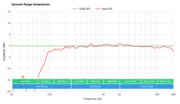
SPL @ Max Volume
DRC @ Max Volume
Active Features
Battery
Battery Life
Charge Time
Power Saving
Charging Port
Battery Powered
Voice Assistant
Alexa
Google Assistant
Speakerphone
Siri
Voice Assistant
Voice Activation
Microphone Mute
Far-Field Performance
Ambient Noise Performance
App
App Picture


App Name
iOS
Android
EQ
Stereo Pair Mode
Party Mode
Multi-Room
Connectivity
Wired
Aux Input
USB Audio
Other Ports
Bluetooth
Bluetooth
Bluetooth Version
Bluetooth iOS Latency
Bluetooth Android Latency
Bluetooth Range
Multi-Device Pairing
Wi-Fi
Wi-Fi Version
Wi-Fi Frequency Band
Wi-Fi
Apple AirPlay
AirPlay Latency
Google Chromecast
Chromecast Latency
Check Price
Standard
PartyBox 300
SEE PRICE
Amazon.com
Black
PartyBox 310
SEE PRICE
Amazon.com
Standard
PartyBox 300
SEE PRICE
Walmart.com
Black
PartyBox 310
SEE PRICE
BestBuy.com
Standard
PartyBox 300
SEARCH
B&H
Black
PartyBox 310
SEE PRICE
JBL
Standard
PartyBox 300
SEARCH
BestBuy.com
Black
PartyBox 310
SEE PRICE
Walmart.com
Standard
PartyBox 300
SEARCH
JBL
Black
PartyBox 310
SEARCH
B&H
JBL PartyBox 300
JBL PartyBox 310
Comments
JBL PartyBox 300 vs JBL PartyBox 310: Main Discussion
What do you think of these products? Let us know below.
Looking for a personalized buying advice from the RTINGS.com experts? Members have direct access to buying advice on our member forum.
You’ve asked a deceptively deep question, haha. tldr; We measured that the PartyBox 310 has more volume relative to the normalized frequency response at deeper bass frequencies than the PartyBox 300, so you can hear lower frequencies without them getting masked by louder ones. We also don’t know how JBL performs tests, or if both speakers were measured by the brand consistently the same way.
Basically, both speakers can, and do, reproduce frequencies below the LFE figures (as seen in the graphs), but because of their different tunings and auditory masking, you effectively can’t perceive the frequencies below the LFE figures we measured. The PartyBox 300’s more conservative bass means that the other, louder frequencies coming from the speaker overwhelm the quieter ones in a higher bass register, rendering your perception of the bass extension as not as deep. On the PartyBox 300, 45Hz was measured as about 13.5 to 14dB quieter than the normalized frequency response, which is well below the -6dB cutoff for LFE. In contrast, the PartyBox 310 plays back 45Hz only ~1dB quieter than the normalized frequency response, meaning you can still perceive that frequency, and it’s not overwhelmed by other relatively loud frequencies coming out of the speaker.
We also don’t know the conditions under which JBL measures their speakers, or if these models were tested consistently the same way as each other by the manufacturer. One hint is in the PartyBox 310’s specs, where it states that the range is ‘45Hz to 20kHz (-6dB),’ which I interpret as being loosely similar to our method. But I don’t know if that’s a correct interpretation, what the speaker settings are when they test, or how their testing otherwise differs from our method. I didn’t see if JBL provides that detail for the PartyBox 300, besides the same frequency range, which makes it a little more difficult to make a direct comparison using JBL’s specs between the speakers or between our methodology and the brand’s.
If I can offer some help here, we tested both PartyBoxes the same way for a direct comparison, even if our results don’t perfectly match the brand’s specs.
Interesting that the Low-Frequency Extension on the 310 is a lot lower than the 300 when they are both advertised as having the same range of 45 Hz - 20 KHz. Why is this?