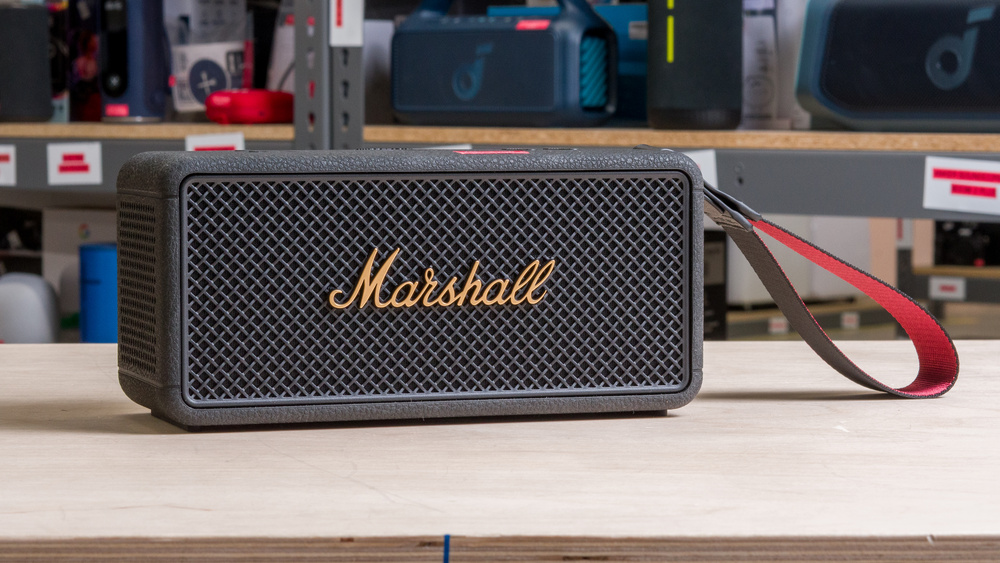
The Marshall Middleton II is the 2025 update to the original Marshall Middleton speaker in a similar form factor, with the addition of a microphone to handle calls. Advertised to have a longer battery life while retaining the same stereophonic design as the first generation, it seems positioned to be your go-to Bluetooth speaker for a home office, kitchen, or a studio apartment.
Our Verdict
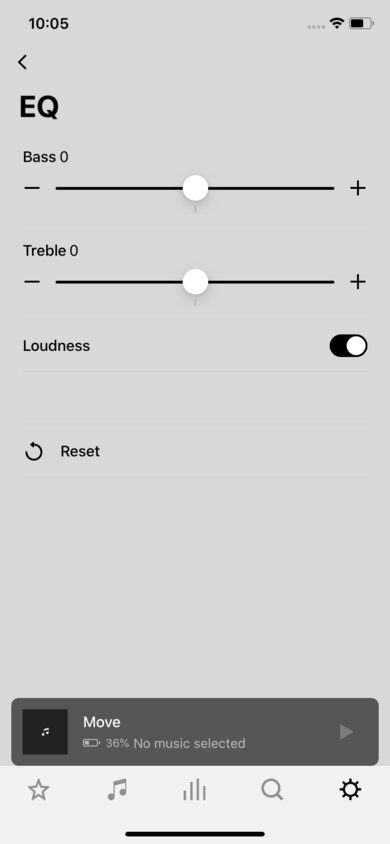
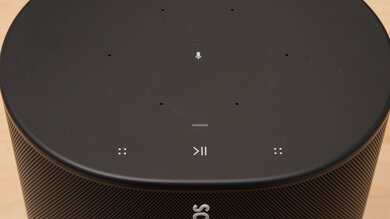
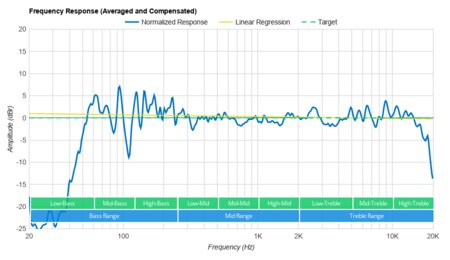
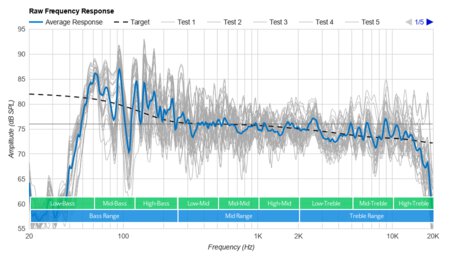
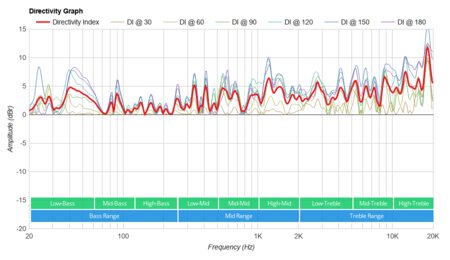
The Marshall Middleton II is good for music. Its tuning is fairly balanced, though a few peaks can make some voices and lead instruments sound uneven depending on their pitch. The speaker has Bass and Treble buttons on the top for immediate changes to the sound, or you can choose EQ presets and create your own in the app. It's a stereo speaker with impressively consistent sound across listening angles. It gets decently loud, but this is a small speaker, so don't expect party-starting dynamics. You can also use Auracast to add additional supported speakers for Party mode.
Lots of tuning options like EQ and Bass/Treble buttons.
Remarkable soundstage performance.
Battery preservation features.
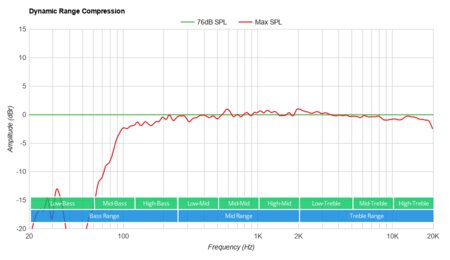
Bass compresses at max volume.
Not loud enough to fill large spaces with sound.
The Marshall Middleton II is okay for videos and movies. Its Bluetooth latency is slightly elevated, so you might notice voices out of sync, but it depends on the app and OS, which may compensate. That said, you can always connect via the AUX wired input to ensure A/V sync. At high volumes, there's some compression in the bass range, but the frequency response is well-tuned, so voices sound fairly natural, even if action flicks lack immersive, deep rumbling. Its sound is remarkably consistent across different listening angles.
Lots of tuning options like EQ and Bass/Treble buttons.
Remarkable soundstage performance.
Battery preservation features.
Bass compresses at max volume.
Somewhat elevated Bluetooth latency.
Not loud enough to fill large spaces with sound.
The Marshall Middleton II is great for podcasts. Its tuning is well-suited to reproducing voices that sound clear, though some voices can sound a bit forward, uneven, or sharp depending on their pitch. Its consistent directivity ensures that your audio remains similar across listening angles, so you can listen to your favorite hosts while moving around your room. That said, it's not an especially loud speaker, so if you crank it, it'll be harder to hear from down the hall in larger living spaces. Otherwise, the compact size makes it an easy podcast companion, and the 10.8 hours of battery life make it worthy of binge listening.
Remarkable soundstage performance.
Battery preservation features.
Not loud enough to fill large spaces with sound.
Despite having a built-in microphone, the Marshall Middleton 2 isn't compatible with voice assistants, and the mic only works for phone calls.
The Marshall Middleton II is great for the outdoors. It's a compact, well-built speaker with an IP67 rating. Plus, the speaker floats. The small size limits how loud it gets, but for a picnic or a personal speaker while on a hike, it has sufficient headroom. It also has a superbly consistent sound from all listening angles, so you don't need to worry about ideal placement outside. The battery has preservation modes to extend its length, but we measured 10.8 hours of playback, which falls short of the 30-hour battery quoted by the brand. Still, that'll get you through most backyard and park hangs. You can use Auracast to enter party mode with multiple compatible speakers. Its sound is fairly balanced without exaggerated bass, so it suits a variety of genres. Still, if you want to change the tuning, you can choose from EQ and Bass/Treble buttons.
Speakerphone capability.
Remarkable soundstage performance.
IP67-rated and floats.
Battery preservation features.
Bass compresses at max volume.
Not loud enough to fill large spaces with sound.
Changelog
- Updated Jul 28, 2026: This review has been updated to Test Bench 1.0.1. This includes the Test Bench 1.0 updates to all of our Sound tests: Frequency Response Accuracy, Raw Frequency Response, Directivity, and Loudness, as well as the revised Low-Frequency Extension calculation and related DRC updates introduced in Test Bench 1.0.1. There have also been text changes throughout the review, including to the usages and product comparisons, where applicable, to match these results. You can read more about these changes in our Test Bench 1.0 changelog and Test Bench 1.0.1 changelog.
- Updated Jul 13, 2026: This review has been updated to Test Bench 1.0, which includes new results for all of our Sound tests: Frequency Response Accuracy, Raw Frequency Response, Directivity, and Loudness. There have also been text changes made throughout the review, including to the usages and product comparisons, to match these results. You can read more about these changes in our changelog.
- Updated Oct 23, 2025: Review published.
- Updated Oct 10, 2025: Early access published.
Check Price
Differences Between Sizes And Variants
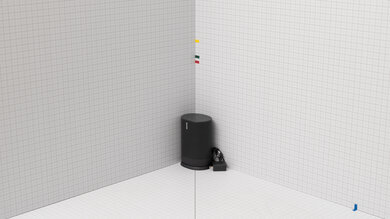
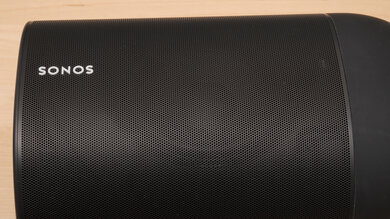
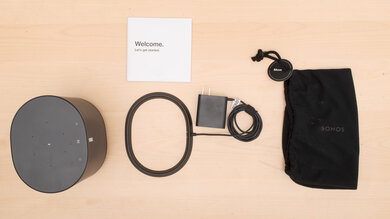
The Marshall Middleton 2 only comes in two colors, 'Cream' and (like our unit), 'Black and Brass.' You can see our unit's label.
If you encounter any other variants of this speaker, let us know in the comments, and we'll update the review.
Popular Speaker Comparisons
The original Marshall Middleton has a shorter battery life and lacks a microphone for handling phone calls, but the look and size are more or less identical to the Marshall Middleton II, which sounds more balanced than its bright-sounding predecessor. You could also check out the Bose SoundLink Max, which gets louder and has a battery that lasts longer. Still, the Marshall's speaker configuration ensures that your audio sounds more consistent across listening angles, and the Bose lacks a mic. Another speaker with similarly consistent directivity is the Ultimate Ears EPICBOOM. But it lacks the Marshall speaker's intuitive physical controls and wired connectivity. Still, the Ultimate Ears' battery life outlasts the Marshall's, but again, there's no mic for calls.
Take a look at the best-sounding Bluetooth speakers, the best home Bluetooth speakers, and the best portable Bluetooth speakers.
The Marshall Middleton II is an incremental upgrade to the Marshall Middleton. They share the same basic design and layout, but the 2nd generation has a longer battery life and adds a mic for handling phone calls. It also floats in water, while the first-generation model doesn't. The first generation has slightly lower Bluetooth latency and uses the brand's Stack feature for Party mode, so if you already own compatible speakers, you might prefer the original Middleton. The 2nd generation model uses Auracast for Party mode with newer Marshall speakers.
Whether you should choose the Marshall Kilburn III or the Marshall Middleton II depends on your primary usage. The Kilburn III has a longer battery life and offers room correction in addition to EQ tools. Although well built, it's not as portable as the Middleton II, which is smaller with a higher IP67 rating. The Middleton II also has a mic for taking phone calls. You can EQ it to taste, but keep in mind that it has a slightly lower max output. Still, it fits more easily into a backpack for on-the-go.
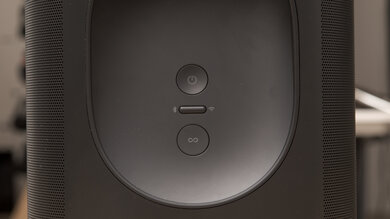
Depending on your core usage, you might prefer the JBL Charge 6 or Marshall Middleton II. The JBL has a slightly longer battery life and supports USB-C audio. Its app is a little more complete with a seven-band EQ, but its physical controls are more limited. As far as portability, it weighs nearly half of the Marshall and has a little better IP68 rating (though both float). That said, the Marshall has nicer physical controls and sounds much more consistent from all angles. It also offers a 3.5mm AUX port and has slightly lower Bluetooth latency, as well as a frequency response that matches our target slightly better. You can EQ it too.
The Bose SoundLink Max is slightly better for most people than the Marshall Middleton II. The Bose has a longer continuous battery life, and it can get considerably louder at max than the Marshall. Many of the Marshall's features are also matched or bested by the Bose, such as build quality (though it's a bit susceptible to scratches), and wired and Bluetooth connectivity. Plus, you can add a second for a stereo pair, which the Marshall can't do. Still, the Marshall offers better directivity, meaning it sounds pretty consistent regardless of your listening angle, and it weighs about one pound less with a more compact frame. Like the Bose, you can EQ it and use it for phone calls.
Test Results
for pictures & test results
for pictures & test results


for pictures & test results