JBL Charge 6  Speaker Review

Reviewed May 20, 2025 at 02:37pm
Writing modified Oct 23, 2025 at 09:33am
Tested using Methodology v0.8 
JBL Charge 6
6.7
Music 
5.8
Videos/Movies 
7.7
Podcasts 
2.9
Voice Assistant 
7.8
Outdoors 
 0

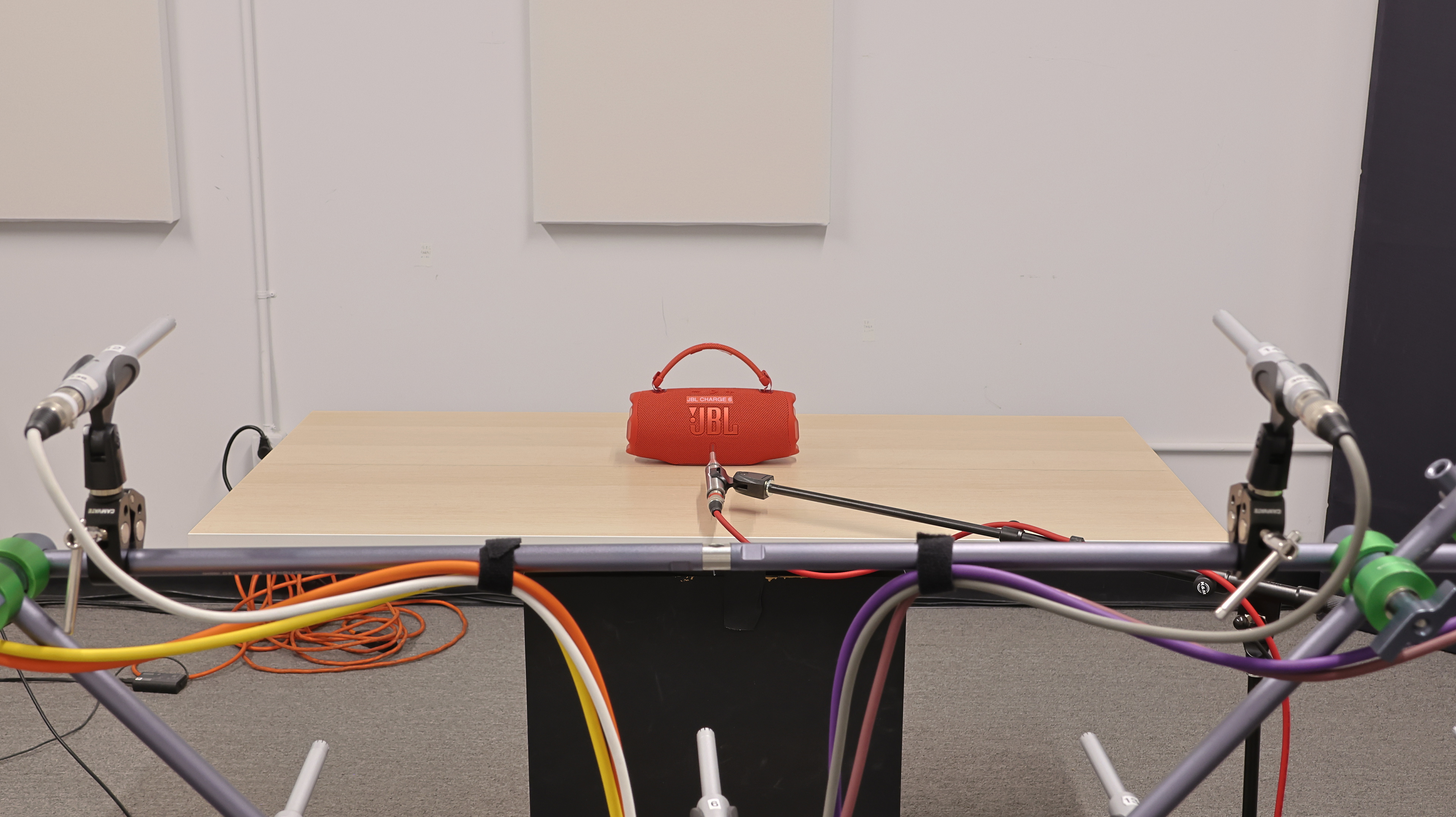
Released in 2025, the JBL Charge 6 is another installment in JBL's popular Charge lineup of portable speakers. It builds on the JBL Charge 5 with features like AI Sound Boost, Auracast multi-speaker pairing, and an improved IP68 dust and water resistance rating. You can also use the Charge 6 as a battery pack to charge your other devices via USB-C, and it comes with a handy carrying strap that can be easily attached to straps or poles. You can buy the Charge 6 in a variety of colors to suit your style.

Our Verdict

6.7
Music 

The JBL Charge 6 is okay for listening to music. Its well-balanced mid-range and treble mean instruments and voices sound accurate and detailed, but it's a small speaker, so don't expect to shake the room with low-bass thump. That said, there's enough mid-bass punch to keep kick drums and basslines sounding warm and punchy, although if you listen at max volume, a fair amount of compression kicks in, reducing that punch somewhat. Still, the speaker gets loud enough for personal use or to fill an average-sized room with sound, and you can always customize its sound profile to your liking using its companion app's graphic EQ. It can't playback stereo audio without downmixing to mono, and it doesn't have a true 360-degree design, so you'll want to keep it facing you to experience the best sound quality.

Pros
  • Can connect to two devices simultaneously.

  • Companion app has a 7-band EQ to customize the speaker's sound.

Cons
  • Downmixes stereo audio to mono.

  • Compresses your audio at max volume.

5.8
Videos/Movies 

The JBL Charge 6 is sub-par for watching videos. As a small device, it doesn't get loud enough to fill large rooms with sound, and it's incapable of accurately reproducing rumbly explosion effects. It also downmixes stereo audio to mono, so cinematic soundtracks don't sound very immersive. Perhaps more importantly, it has fairly high latency via Bluetooth. That said, different apps and devices do compensate for latency in different ways, and you can always use the wired USB mode to reduce latency further if you notice lip-sync issues.

Pros
  • Companion app has a 7-band EQ to customize the speaker's sound.

Cons
  • Downmixes stereo audio to mono.

  • Compresses your audio at max volume.

7.7
Podcasts 

The JBL Charge 6 is good for listening to podcasts. It's small enough to carry with you from room to room, and its well-balanced mid-range ensures voices are reproduced accurately and with plenty of clarity. You can also pair up to two devices with the speaker at a time, making it easy to switch between your phone and laptop. That said, the speaker's sound does noticeably change depending on your listening angle, so most of the time you'll want to keep it facing you.

Pros
  • Can connect to two devices simultaneously.

  • Highly portable.

Cons
  • Compresses your audio at max volume.

2.9
Voice Assistant 

The JBL Charge 6 doesn't have a built-in microphone.

7.8
Outdoors 

The JBL Charge 6 is very good for use outdoors. It's easy to carry, built to withstand dust and water with its IP68 rating, and has an excellent battery life of around 14 hours (or 19 hours with Playtime Boost activated). Since it's a small speaker, it doesn't get loud enough to fill a garden with sound, and it lacks low-bass rumble, but there's enough warmth to keep basslines feeling immersive, and it's not really intended to be a party-starter. Regardless, you can tweak its sound to your liking using the 7-band EQ in its companion app. Unfortunately, it downmixes stereo audio to mono (unless paired with another device), and audio in the treble range does sound different depending on your listening angle. However, with those small drawbacks aside, this speaker serves its intended purpose well.

Pros
  • Can connect to two devices simultaneously.

  • IP68 rating means it'll survive a drop in the pool.

  • Highly portable.

  • Speaker can act as a battery pack.

Cons
  • Downmixes stereo audio to mono.

  • Compresses your audio at max volume.

  • 6.7
    Music
  • 5.8
    Videos/Movies
  • 7.7
    Podcasts
  • 2.9
    Voice Assistant
  • 7.8
    Outdoors
  • Changelog

    1.  Updated Oct 23, 2025: 

      The Controls box was updated to mention the Marshall Middleton II.

    2.  Updated Aug 26, 2025: 

      The Battery box was updated to discuss the Bose SoundLink Plus.

    3.  Updated May 29, 2025: 

      The Portability section was updated to compare the JBL Flip 7 for size.

    4.  Updated May 21, 2025: 

      In the Introduction, we clarified that the JBL Charge 6 now supports USB-C when being used as a battery pack.

    Differences Between Sizes And Variants

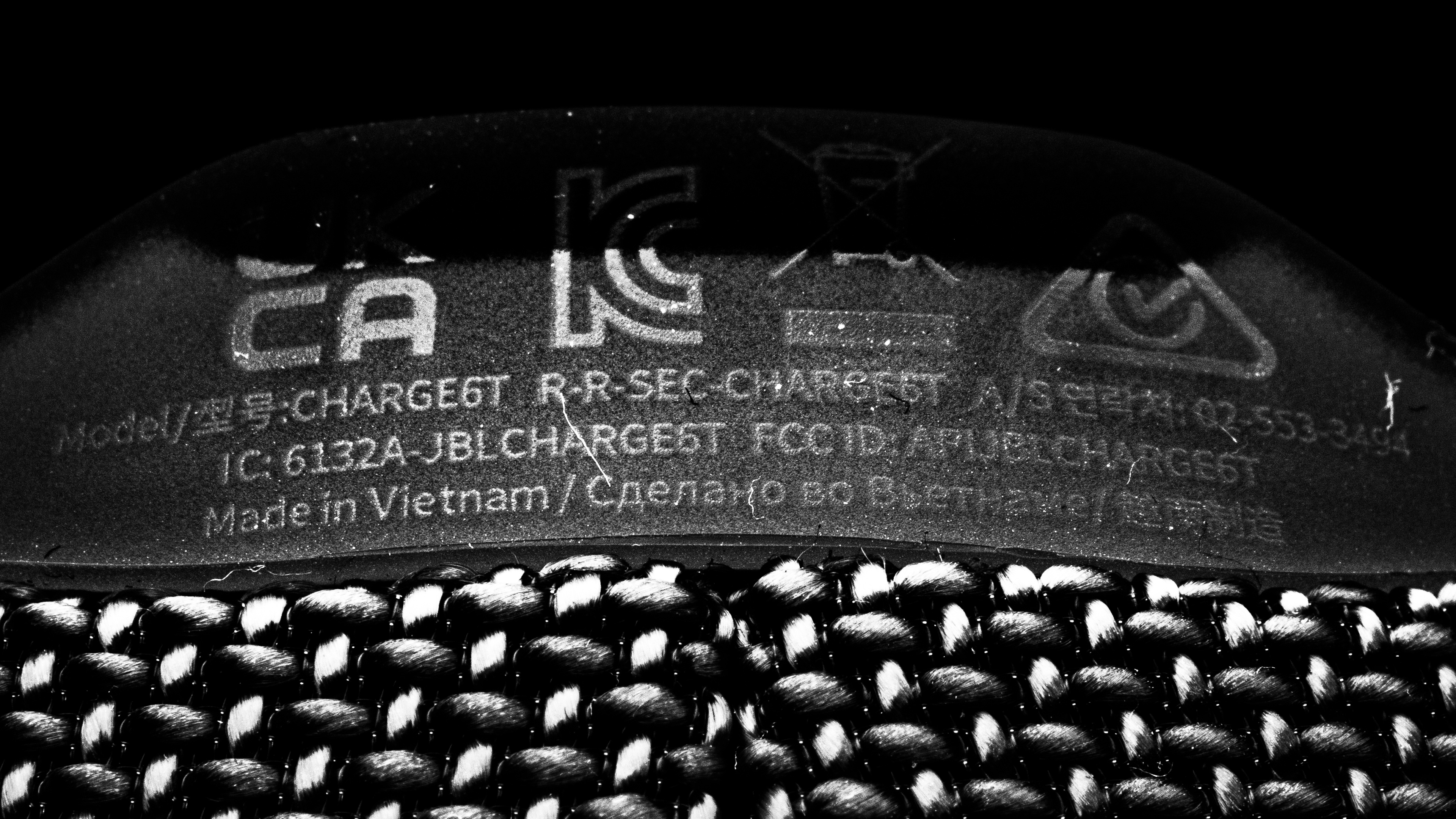
    The JBL Charge 6 comes in nine colorways: 'White,' 'Blue,' 'Black,' 'Red,' 'Purple,' 'Funky,' 'Pink, 'Sand,' and 'Squad' (a camouflage-style colorway). We tested the 'Red' variant, and this is its label.

    If you encounter any other variants of this speaker, let us know in the comments, and we'll update the review accordingly.

    Popular Speaker Comparisons

    Unsurprisingly, the JBL Charge 6 is the successor to the JBL Charge 5 in JBL's popular series of portable speakers. The Charge 6 offers several worthwhile improvements on its predecessor, including Auracast support for multi-speaker pairing, an improved IP68 rating for better dust and water resistance, and a more consistent bass output. However, it isn't backward compatible with the Charge 5 for party or stereo pairing modes, meaning you'll need other Auracast-compatible JBL models (such as the JBL Flip 7) to expand your setup. The Flip series models are smaller and more portable than the Charge series and, as a result, don't get quite as loud or put out quite as much bass.

    Against competitors like the Ultimate Ears MEGABOOM 4, the Charge 6 gets louder and offers a more even bass, but the Ultimate Ears' 360-degree design means it sounds more or less the same regardless of your listening position, which is nice if you're using the speaker at a park hangout. Similarly, the Charge 6 gets louder than the Bose SoundLink Flex (2nd Gen) and can be paired with multiple other Auracast-enabled JBL speakers to spread sound through larger areas. By contrast, the Bose has a more balanced default sound, but only offers pairing with other SoundLink Flex (2nd Gen) units.

    See also our recommendations for the best JBL speakers, the best Bluetooth speakers, and the best outdoor speakers.

    JBL Charge 5

    The JBL Charge 6 is a worthwhile improvement on the popular JBL Charge 5. The Charge 6 offers improved waterproofing, a handy carrying strap, and extra silicone feet around the passive radiators at each end of the speaker. It also supports Auracast, so you can link it with other Auracast-enabled JBL speakers for parties or larger gatherings. The Charge 6 also has a more even and punchy bass performance. That said, the differences in sound and battery life are minor, so if you have a Charge 5 already, the upgrade might not be worth it, and if you can find a Charge 5 on a great deal, it's well worth considering. Still, the Charge 6 is the better speaker, all things considered.

    JBL Flip 7

    The JBL Charge 6 is the step up model from the JBL Flip 7, and despite the number difference, they're from the same generation of speakers. They share similar tech specs: Auracast for pairing with other compatible JBL speakers, graphic EQ, and Play Time Boost (to extend the battery life). The Charge 6 weighs about double the Flip 7, though it's still portable. Due to its larger size, it reproduces more low-end. The Charge 6 also has more than twice the battery life. The central reason to buy the Flip 7 is that it's smaller and offers similar tech in a smaller package, but it's hampered by a little more compression at max volume, not as much bass extension, and a lower battery life.

    JBL Flip 6

    The JBL Charge 6 and the JBL Flip 6 are both portable Bluetooth speakers, but they serve slightly different needs. The Charge 6 is the larger and more powerful of the two, with slightly deeper bass and a slightly higher maximum volume, making it better suited for bigger spaces or outdoor gatherings. On the, ahem, 'Flip' side, the Flip 6 is easier to carry around, and its sound quality is surprisingly close to its larger cousin. That said, the Charge 6 is the newer speaker, and comes with features like Auracast, which lets you link multiple Auracast-enabled JBL speakers together to spread sound across larger areas. If battery life is important to you, the Charge 6 is the obvious choice, as it lasts over twice as long as the Flip 6, though battery life varies with usage.

    Sony ULT FIELD 3

    The Sony ULT FIELD 3 and the JBL Charge 6 are both portable and well-built mono speakers. They each have their strengths, but ultimately, either would be a solid choice if you need a lightweight speaker for outdoor or around-the-house use. Both speakers downmix stereo audio to mono, and their front-facing designs mean that their directivity isn't the best. That said, the Sony's frequency response extends a little lower with the 'ULT' button engaged, which will please bassheads. If it's volume you're after, the JBL can output a bit more at max volume, and it won't compress as much as the Sony either. They're neck and neck on battery life, too, and either will get you through an all-day BBQ at a minimum. The deciding factor might come in the form of the Sony's voice assistant integration and better latency performance—a real boon if you plan on using the hands-free commands or pairing the speaker for movie use. 

    Show more 

    Video

    Test Results

    perceptual testing image
    Sort:
    RATINGS
    Category:
    All
    Design
    Style
    RGB LightsNo

    The JBL Charge 6 has a cylindrical design that will be familiar to fans of its predecessor, the JBL Charge 5. It comes in nine color options—'White,' 'Blue,' 'Black,' 'Red,' 'Purple,' 'Funky,' 'Pink, 'Sand,' and 'Squad' (a camo-like colorway)—each with a matching embossed JBL logo on the front. It's designed to sit horizontally on flat silicone strips that run along its base, keeping it stable on most surfaces, and it has two passive bass radiators located at either end of the cylinder. The power and Bluetooth buttons light up when the speaker is on, making them easy to locate. The Charge 6 also comes with dedicated metal loops and a strap, which can be attached to either one or both loops, depending on how you want to carry or hang the speaker.

    9.1
    Portability
    Volume
    113 in³ (1,848 cm³)
    Weight
    2.2 lbs (1.0 kg)
    Power Source
    Battery & USB
    One-Hand Carry
    Yes

    This speaker is remarkably portable. It's compact, lightweight, and easy to carry with one hand, making it ideal for on-the-go use. The built-in battery lets you enjoy music outdoors without needing a power source. While the Charge 6 isn't too big, if you're tight on space in your bag or want to lighten your bag, the JBL Flip 7 weighs roughly half as much and isn't as large.

    9.2
    Build Quality
    Material Quality
    Great
    Water Resistance
    Submersible (IPx8)
    Dust Resistance
    Dust-Proof (IP6x)
    Impact Resistance
    Yes (IK rating unspecified)
    Floats In Water
    Yes

    This speaker has a fantastic build quality. Its body is made of hard plastic with a tightly woven, durable-feeling mesh fabric covering. It has a flat bottom with two silicone strips acting as a stand, which help it stay stable when placed horizontally. There are four small silicone feet around each bass radiator, which is an improvement over the three found on the previous JBL Charge 5. Those feet mean you can place the speaker vertically if you wish. The control buttons sit on top of the speaker (when placed horizontally), and the USB-C charging port is located on the back, though it isn't sealed. The included strap feels sturdy and secure when attached to the speaker's metal loops. The speaker is also rated IP68, so it'll survive an accidental drop in a shallow pool. JBL also claims it can withstand drops from up to one meter onto concrete, though it doesn't have an official impact protection rating.

    6.9
    Controls
    Ease Of Use
    Great
    Feedback
    Good
    Music Play/Pause
    Yes (Physical)
    Call Answer/End
    No
    Volume Up/Down
    Yes (Physical)
    Track Next/Previous
    Yes (Physical)
    Microphone On/Off
    No
    Additional Controls
    Yes

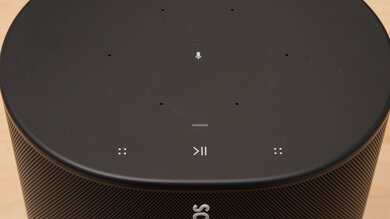
    This speaker has okay controls. The buttons are located on top and are easy to use. They give a satisfying click when pressed and are clearly labelled. The Play and Volume Up and Down buttons are slightly raised in an embossed style, while the Auracast, Bluetooth, and Power buttons are located on a small, smooth strip. In addition to the obvious controls each button performs, you can skip tracks using button combinations, as outlined in the manual.

    You can use the Auracast button to link the Charge 6 to other JBL Auracast-compatible speakers, either by pressing the button on each speaker in turn or by using the app. This won't work with the JBL Charge 5, which isn't Auracast compatible.

    The speaker provides helpful chimes when entering pairing mode, connecting to a new device, reaching max volume, and when stereo or party mode is enabled via Auracast. However, there are no chimes for device disconnection, minimum volume, or auto-shutdown, and there's no visible volume level indicator on the speaker itself. A small LED bar below the logo shows battery status and flashes red when low and white when charging. For a more complete and visually intuitive control layout, try the Marshall Middleton II.

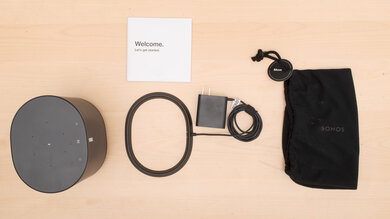
    In The Box

    • JBL Charge 6
    • Carrying strap
    • Quick start guide
    • Warranty and safety information
    Sound
    7.1
    Frequency Response Accuracy
    See details on graph tool
    Slope
    0.45
    Std. Err.
    2.72 dB
    Low-Frequency Extension
    55.8 Hz
    High-Frequency Extension
    18.2 kHz

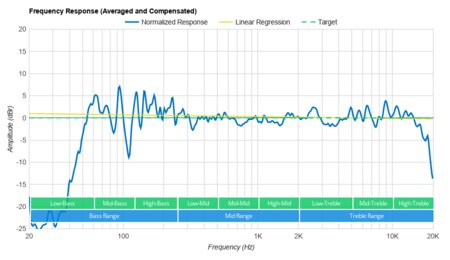
    This speaker has decent frequency response accuracy. We tested it using its Signature preset and in a horizontal position with the JBL logo facing our measurement rig. Given its small size, the speaker's low-frequency extension of 56Hz is impressive: while it won't reproduce the rumble of an 808, kick drums still have plenty of punch and body. The mid-range and treble are well-balanced, so instruments and voices sound true-to-life, without an unnatural ringing or harshness. The companion app has a 7-band graphic EQ for you to tailor its sound to your liking.

    It's worth noting that the speaker comes with JBL's 'AI Sound Boost' technology, but that isn't a room correction feature, as the Charge 6 lacks a built-in microphone. Instead, the brand claims the speaker analyzes the audio signal in real time and adjusts the drivers for improved performance. This feature cannot be disabled, so we can't measure its effect on the speaker's sound.

    Raw Frequency Response
    See details on graph tool
    Binaural Recording @ 1m
    Binaural Recording @ 2m
    5.8
    Soundstage
    See details on graph tool
    Directivity Index
    4.17 dB
    Stereo
    No (mono)

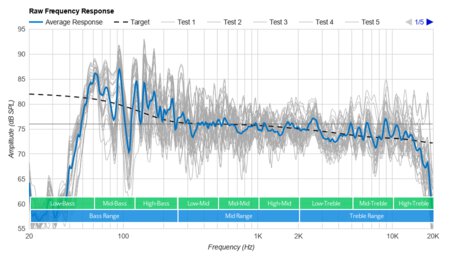
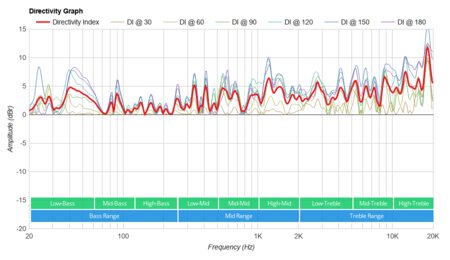
    This speaker has a middling soundstage performance largely because, on its own, it can't play stereo audio without downmixing to mono. If you want stereo playback, you'll need to pair it with another unit. The speaker's cylindrical design means audio in the bass and lower parts of the mid-range sound fairly similar, regardless of your listening angle. On the other hand, audio from the high-mids up through the treble region is fairly directional, so you'll want to point the JBL logo towards you to ensure the best sound quality.

    6.3
    Dynamics
    See details on graph tool
    SPL @ Max Volume
    89.1 dB SPL
    DRC @ Max Volume
    3.50 dB

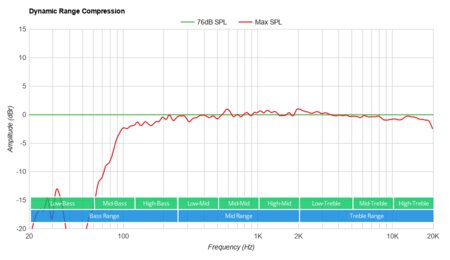
    This speaker has an alright dynamics performance. It can fill an average apartment room with sound, but it doesn't get loud enough to fill larger spaces like lofts or halls. At its maximum volume, there's also a fair amount of compression, so kick drums lose punch.

    Active Features
    8.9
    Battery
    Battery Life
    13.7 hrs
    Charge Time
    2.5 hrs
    Power Saving
    Yes
    Charging Port
    USB-C
    Battery Powered
    Yes

    This speaker has an amazing battery performance. The manufacturer advertises it to last for up to 24 hours of play time (with an extra four hours if Playtime Boost is activated). However, we measured just under 14 hours of continuous playback and just under 19 hours with Playtime Boost activated. While the boosted battery life is still shy of the Bose SoundLink Plus's regular battery life, those figures will get you through a full day at the park or even a weekend camping trip. Of course, battery use varies with usage. It's also worth noting that Playtime Boost extends the battery by reducing the level of the bass and lower-mids, so you'll have to decide whether the tradeoff is worth it.

    The speaker fully charges in about 2.5 hours, and we don't expect you to see significantly faster results since it pulls around 12V/2A while charging. You can also use the speaker's USB-C port to charge other devices like your phone, which makes it handy to have on hand during a trip.

    0.0
    Voice Assistant
    Alexa
    No
    Google Assistant
    No
    Speakerphone
    No
    Siri
    No
    Voice Assistant
    No
    Voice Activation
    No
    Microphone Mute
    No
    Far-Field Performance
    No Microphone
    Ambient Noise Performance
    No Microphone

    This speaker doesn't have a microphone.

    7.9
    App
    App Name
    JBL Portable
    iOS
    Yes
    Android
    Yes
    EQ
    Graphic + Presets
    Stereo Pair Mode
    Yes
    Party Mode
    Yes
    Multi-Room
    No

    The JBL Portable App is very good. It works on both Android and iOS and adds useful functionality to your speaker. The app also lets you perform the usual functions, such as software updates and factory resets. Here's a video of the app. There's a 7-band graphic EQ that lets you tailor its sound to your liking and save your settings as a Custom preset, along with four factory presets (Signature, Chill, Energetic, and Vocal). You can also enable Playtime Boost, which extends the battery by reducing the level of the bass frequencies, as this graph of the various sound presets shows.

    This speaker supports Auracast, letting you link multiple Auracast-enabled JBL speakers together. You can access this mode via the app or the dedicated Auracast button, which disables any presets while Auracast is in use. However, these modes aren't backward-compatible with previous Charge models, since they don't use Auracast.

    Connectivity
    Wired
    Aux Input
    No
    USB Audio
    Yes
    Other Ports
    No

    The USB-C port on this speaker serves three purposes. First, you can use it to charge the speaker. Second, it allows you to use the speaker as a battery pack to charge another device. Finally, you can use it to play audio via USB. To access the USB audio mode, simultaneously hold the Play button while connecting the USB-C cable from the device to the speaker. Unlike the Bluetooth connection, the wired connection also lets you play lossless audio formats. We measured the USB audio connection to have a latency of about 100 ms.

    Despite supporting audio via USB, this speaker doesn't come with a USB cable.

    7.8
    Bluetooth
    Bluetooth
    Yes
    Bluetooth Version
    5.4
    Bluetooth iOS Latency
    204 ms
    Bluetooth Android Latency
    195 ms
    Bluetooth Range
    328.1 ft (100.0 m)
    Multi-Device Pairing
    2 Devices

    This speaker has very good Bluetooth performance. The Bluetooth range is fantastic, so you can walk away from the speaker while at a picnic in the park without the music cutting off. You can also connect it to two devices at once, and it will automatically stop playing from the first device when you hit play on the second. That said, the latency with both iOS and Android is high, which could lead to lip-sync issues when watching videos, although different devices and apps compensate for latency in different ways. If you're after low-latency performance, using the USB connection is your best bet.

    0.0
    Wi-Fi
    Wi-Fi Version
    No Wi-Fi
    Wi-Fi Frequency Band
    No Wi-Fi
    Wi-Fi
    No
    Apple AirPlay
    No
    AirPlay Latency
    N/A
    Google Chromecast
    No
    Chromecast Latency
    N/A