Toaster Test Bench 1.2 expands our testing coverage and performance usages to reveal not just how a toaster performs overall, but also how it performs for specific kinds of baked goods, how much of a mess it leaves behind after toasting, and how much counter space it takes up. With two new tests and four new performance usages, this update enables users to evaluate each toaster based on their specific needs and priorities.
What's Changed
New Usages
- Toast
- Bagels
- Crumb Management
- Size
New Tests
- One-Sided Toasting
- Moisture Retention
Removed Tests
- Repeated Toasting
Why Are We Making These Changes?
While our previous testing methodology only included the Everyday Use verdict, which aims to show how easy and convenient a toaster is to use on a daily basis across a range of toasting scenarios, our new tests and performance usages offer more detailed information based on the specific type of baked goods you're toasting. We've also included usages that can help you understand whether a particular toaster is a good fit for your kitchen, based on its size and whether it creates a mess while toasting. Finally, we removed the Repeated Toasting test to better align with most users' buying decisions.
Toast
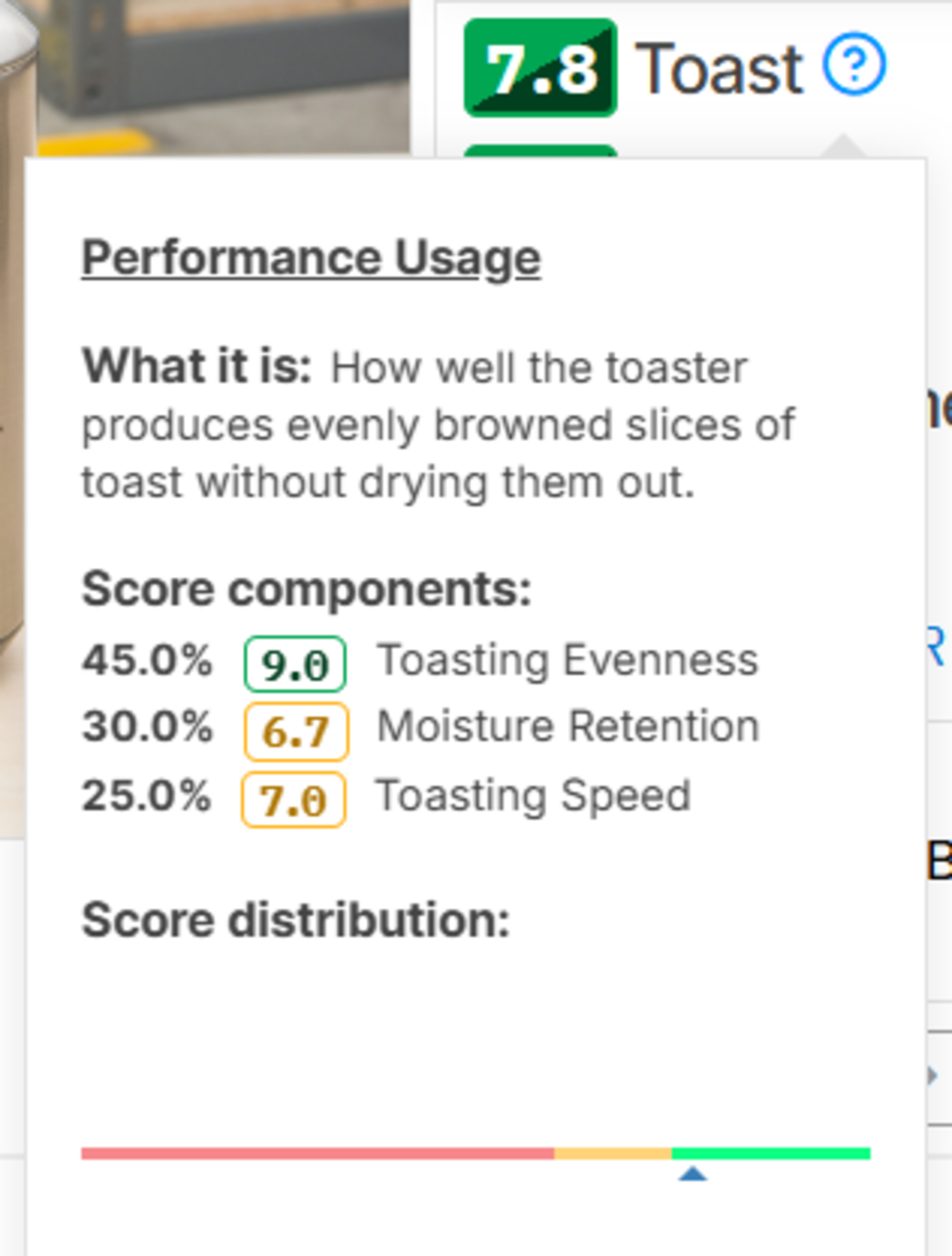
The new 'Toast' usage lets users see how well each model toasts standard slices of white bread. It incorporates scores for Toasting Evenness and Speed, with our new Moisture Retention score to demonstrate the overall quality of each slice of toast.
Bagels
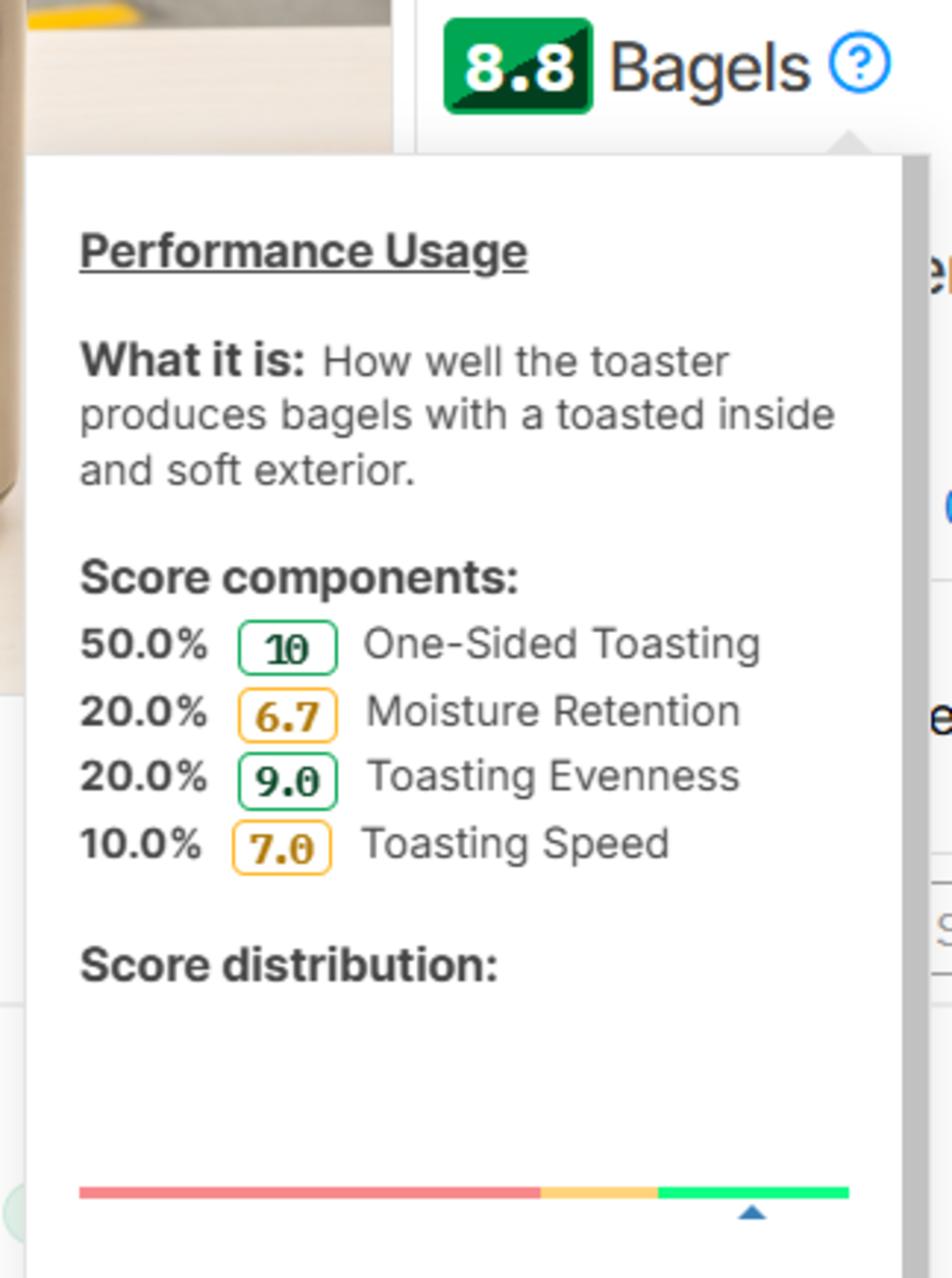
The 'Bagels' usage takes into account the same components we consider when toasting bread; however, the bulk of the score depends on whether a toaster can brown a bagel on one side only. We consider whether each toaster offers one-sided toasting and how effectively it toasts one side while leaving the other soft.
Crumb Management
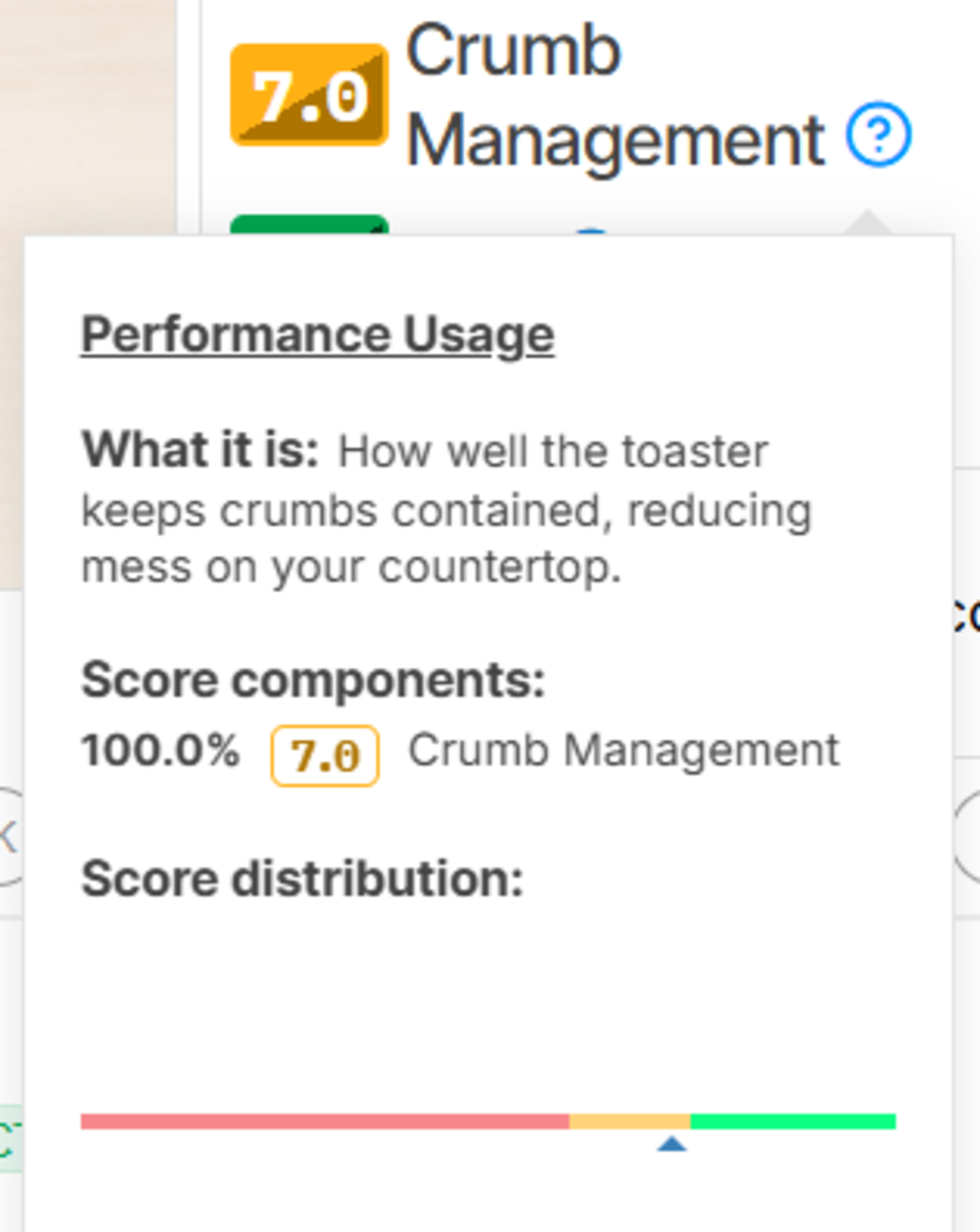
The 'Crumb Management' usage indicates how well a toaster catches crumbs, seeds, and loose grains that dislodge from your baked goods during toasting. While this test isn't new, in this update, we've also included it as a performance usage, so you can easily see whether a toaster will leave a pile of crumbs on your counter or not.
Size
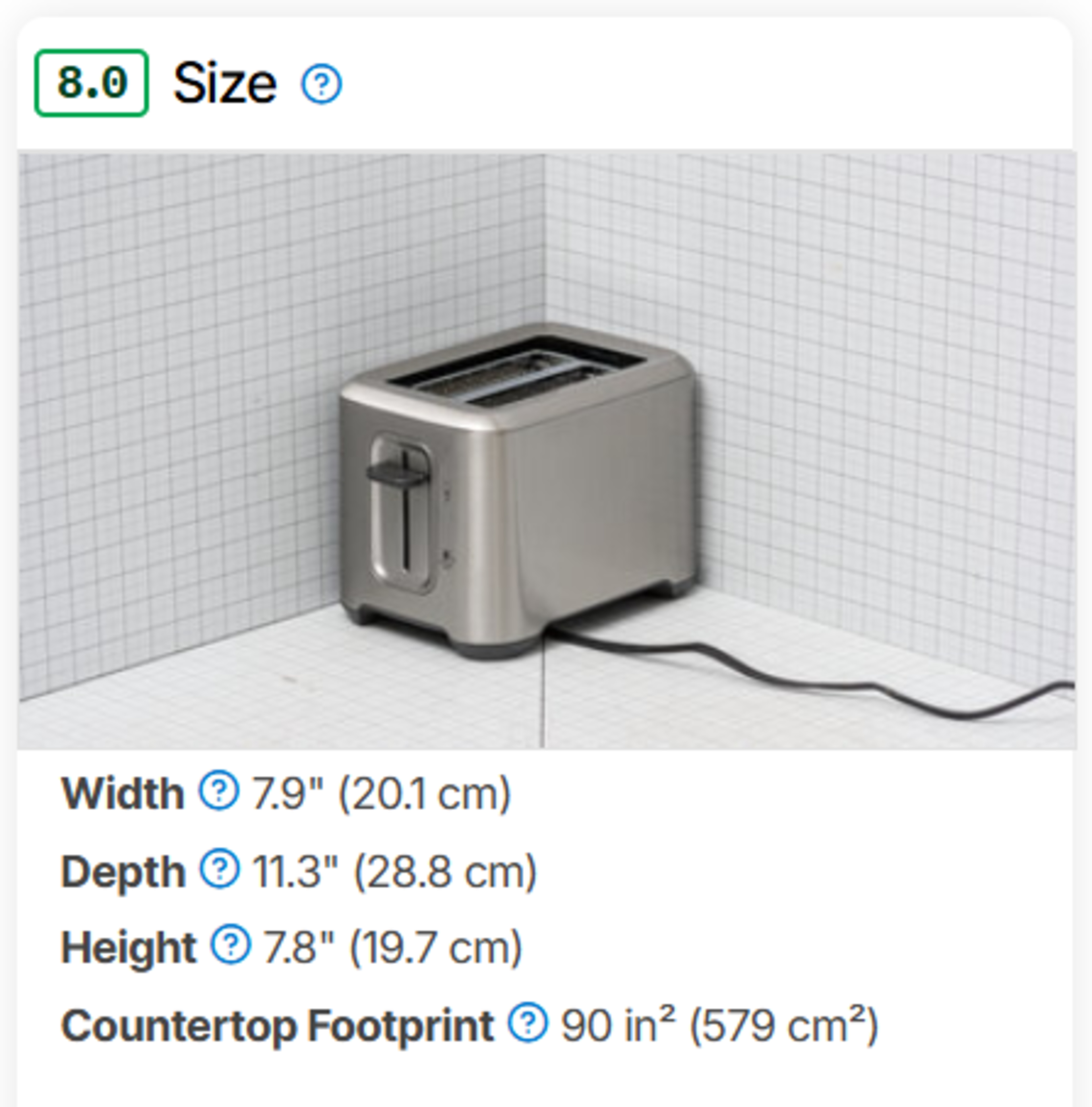
In previous iterations of our Toaster Test Bench, we've included the height, width, and depth of each toaster in the Body box. In this update, we've moved this information to a new Size box and added the overall countertop footprint and a score. This allows you to quickly gauge whether a toaster is likely to fit comfortably in the space you have available.
One-Sided Toasting
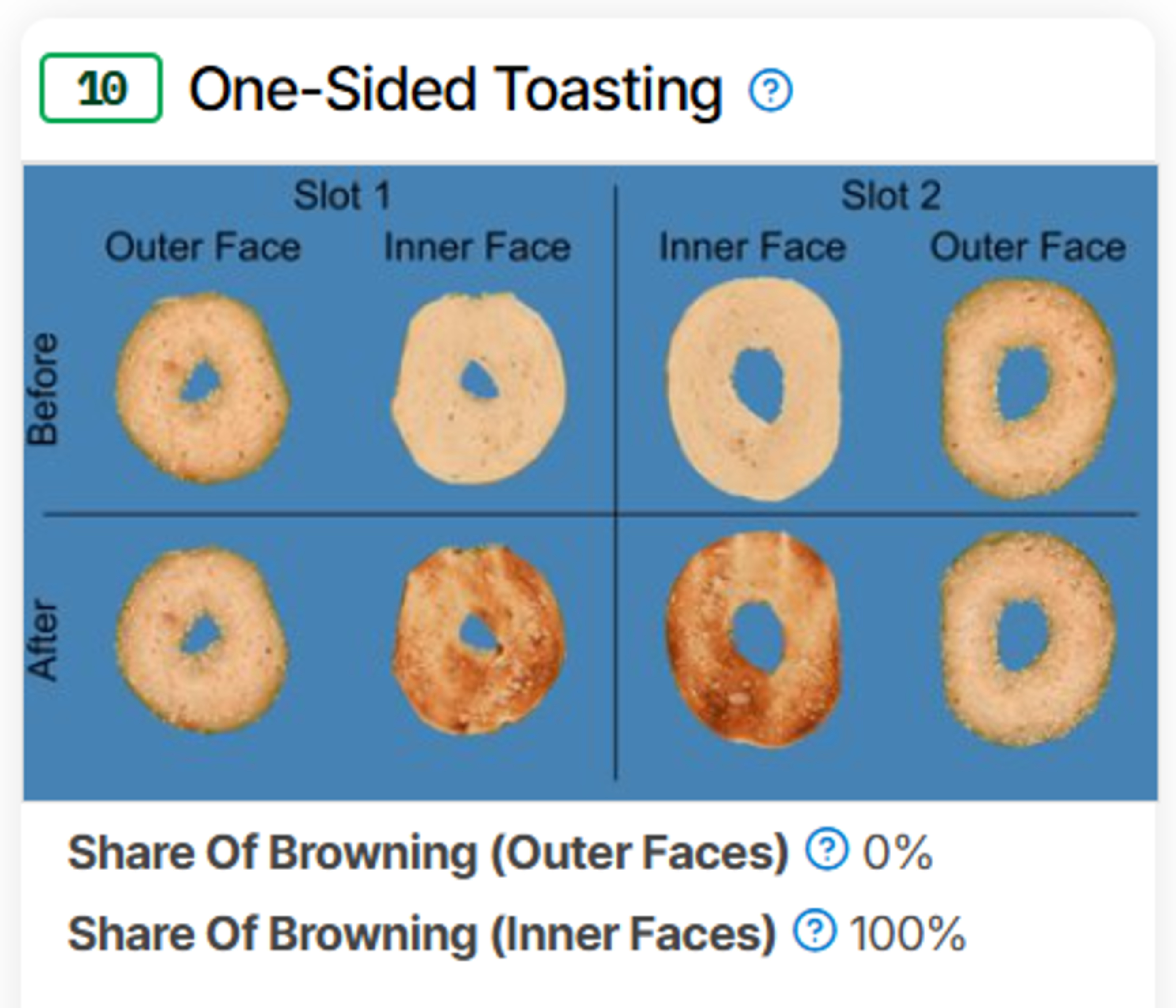
Although one-sided toasting is the main component of our 'Bagels' performance usage, this test provides useful info for a variety of baked goods that are best toasted on one side only, like buns, English muffins, or crumpets. We test each toaster's one-sided toasting performance by toasting a bagel until golden brown, then comparing the inner and outer faces to determine how well the toaster can preferentially toast just the inside.
Moisture Retention
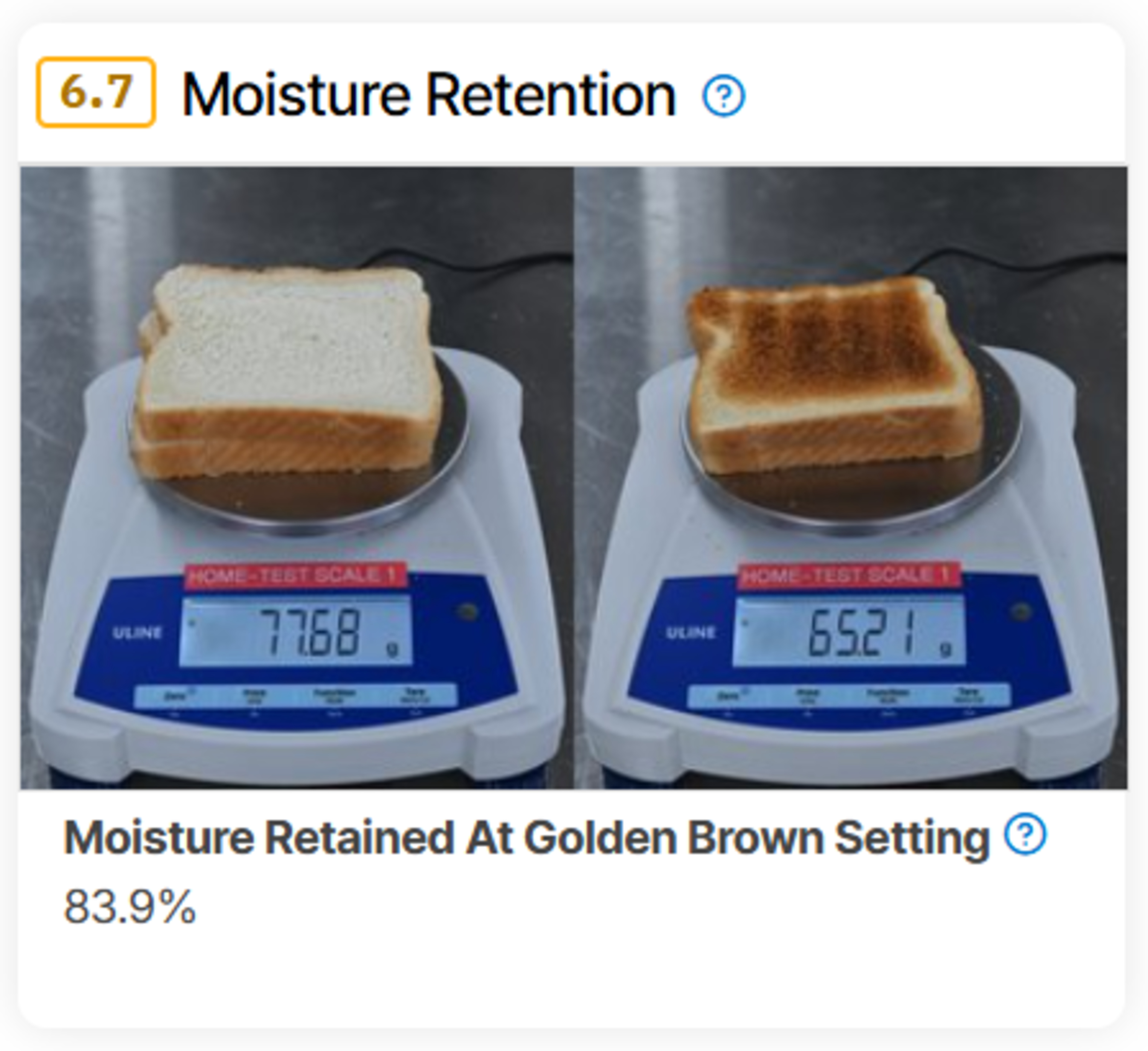
Along with toasting evenness, moisture retention is one of the most important determiners of toast quality. Moisture retention is strongly correlated with toasting speed; bread that spends longer in the toaster dries out over time. Conversely, toasters that brown bread quickly leave slices of toast soft and fluffy in the middle. We test moisture retention by weighing bread, toasting it to a golden-brown shade, and then weighing it again to see how much moisture was lost.
Repeated Toasting
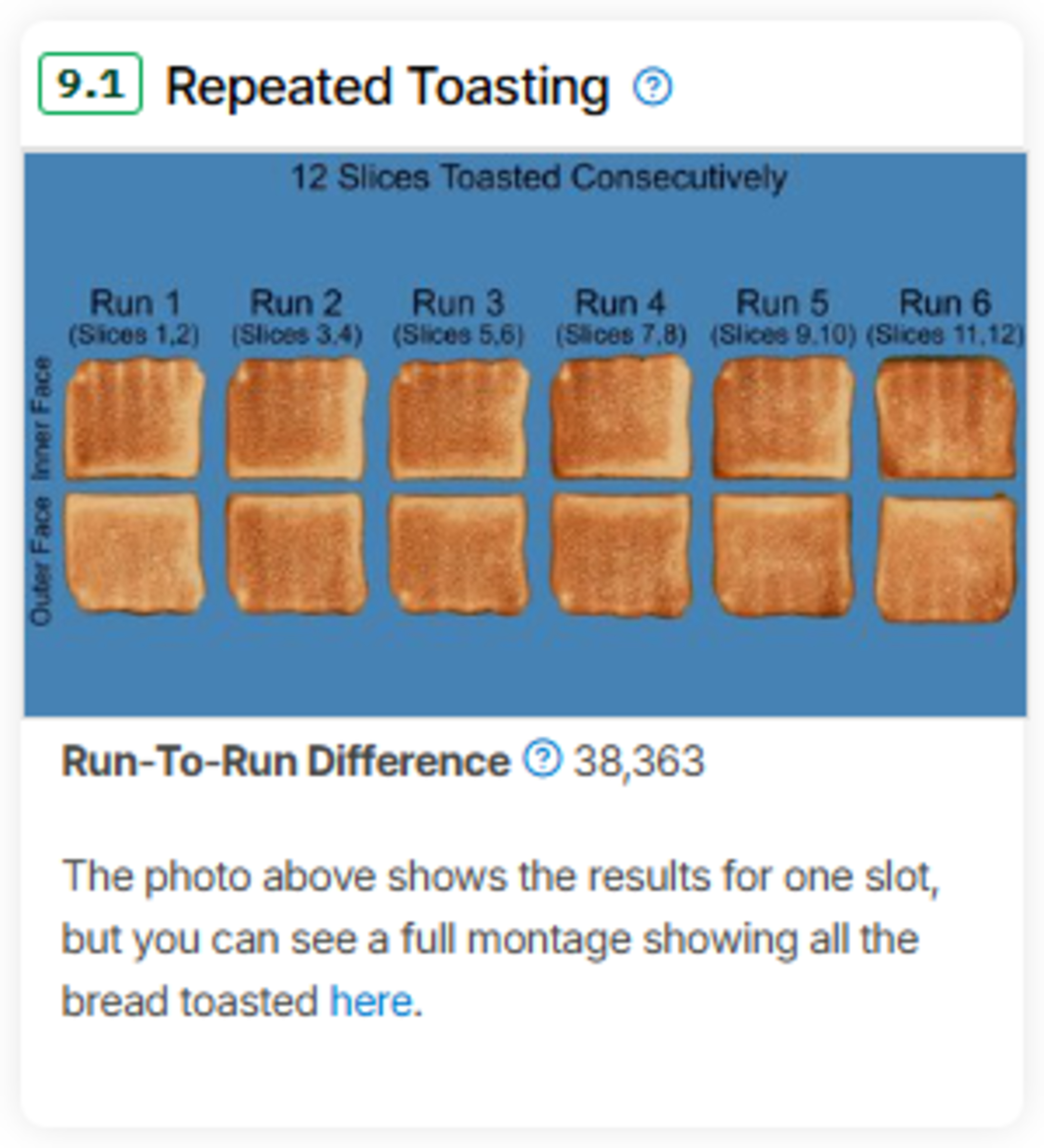
In Test Bench 1.2, we've removed the Repeated Toasting test. This test measured how well a toaster could deliver consistent results when toasting batches back-to-back. Since most users don't regularly make multiple batches of toast, we've removed this test to streamline our results and clarify what's most important to consider when shopping for a new toaster.
Let Us Know What You Think
As always, your feedback is vital to our testing! If you have questions, comments, or suggestions about this update, you can reach out in the comments or email feedback@rtings.com.
26 Toasters Updated
We have retested popular models. The test results for the following models have been converted to the new testing methodology. However, the text might be inconsistent with the new results.
- Beautiful 4-Slice Toaster with Touch-Activated Display
- bella 2 Slice KT-3127
- bella 2-Slice Slim
- bella 4-Slice Slim
- Black+Decker 2-Slice T2569B
- Black+Decker 4-Slice TR4900SSD
- Breville Die-Cast 4-Slice Smart Toaster
- Breville Die-Cast Smart Toaster
- Breville the 'A Bit More' 2 Slice
- Breville the 'A Bit More' 4 Slice
- Cuisinart 4 Slice Compact CPT-142
- Cuisinart 4 Slice Custom Select CPT-640
- Cuisinart Custom Select 4-Slice RBT-1350PC
- Cuisinart Long Slot CPT-2500
- Dash Clear View Long Slot
- Dualit 2 Slice NewGen Classic
- Dualit Design Series 4 Slice
- GE 4-Slice G9TMA4S
- Hamilton Beach 2 Slice Toaster with Extra-Wide Slots 22217
- KitchenAid 2-Slice Toaster with manual lift lever
- Oster 2-Slice Toaster with Quick-Check Lever
- Revolution InstaGLO R180
- Smeg 2-Slice TSF01
- Smeg 4-Slice TSF02
- Sur La Table Touchscreen 2-Slice
- Wolf Gourmet Four Slice WGTR154S
