Air fryers have quickly become a must-have kitchen gadget. Fans rave about how they can prepare food that's crispy on the outside and juicy on the inside, all with very little oil. But if you're just hopping on the air fryer bandwagon, or are ready to upgrade your current model, how do you choose the best one?
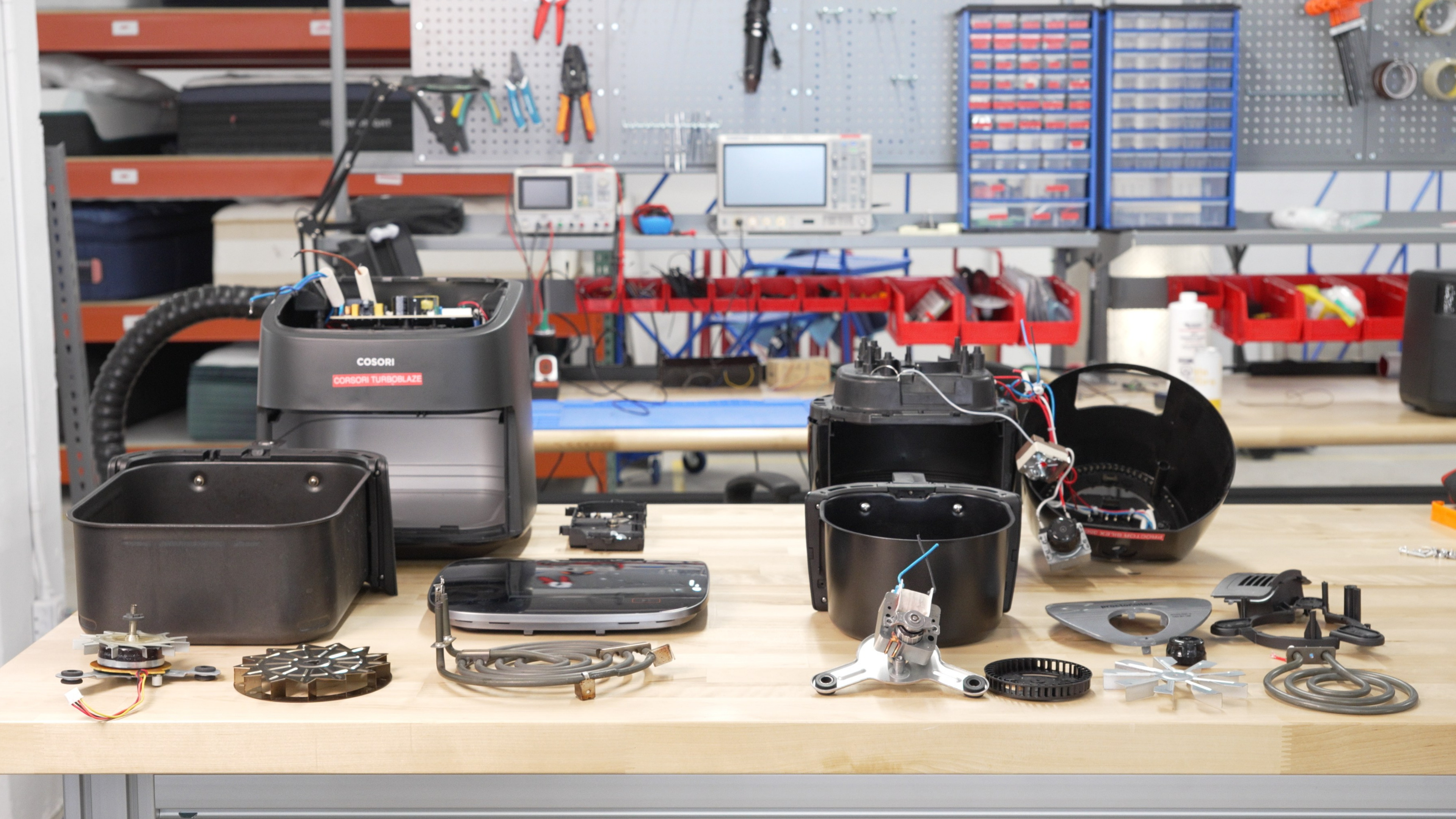
At RTINGS, we recently tested over 30 air fryers to answer that question. Our test bench objectively evaluates everything you need to know when making a purchase, from design features like size and cooking modes to performance factors like cooking speed and overall air-frying quality. We even tore down several units to understand what separates a great air fryer from a mediocre one.
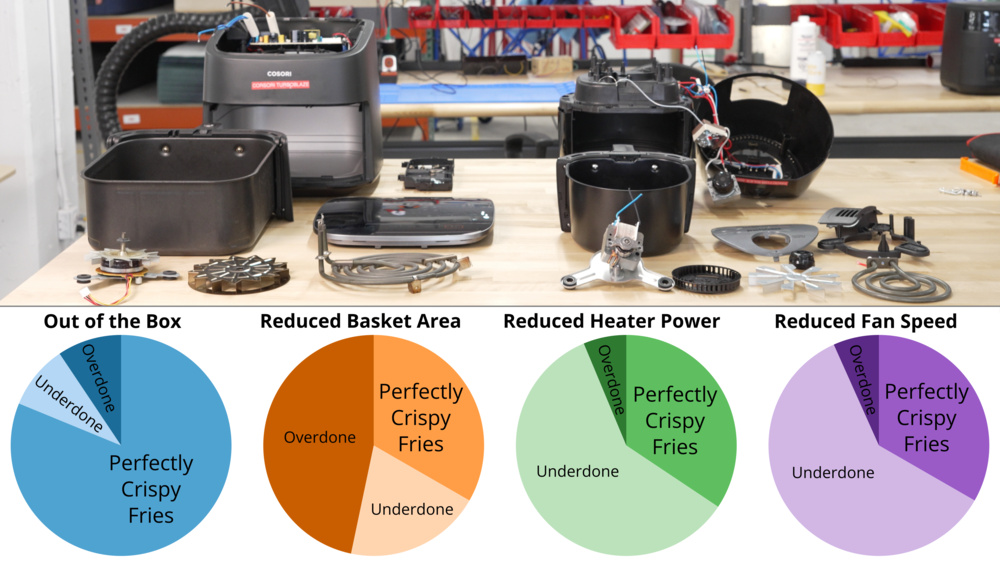
Through this testing, we found that three key factors make the biggest difference in the performance of basket-style air fryers:
- Basket Size: A larger basket lets food spread in a single, even layer.
- Power Draw: A powerful heating element is essential for maintaining the cooking temperature and crisping the food's surface.
- Fan Speed: Strong airflow improves convective heat transfer & carries moisture out of the basket for that signature crunch.
In this article, we'll explain what makes air fryers unique, show how we intentionally "hobbled" a top performer to prove the importance of these three factors, and share our advice for choosing the right basket air fryer for you.
Test results
The Anatomy Of An Air Fryer
Through our standardized testing and teardowns, we found that nearly all basket-style air fryers share the same core design, one that makes them more than just miniature convection ovens. While a convection oven's fan mainly works to even out the temperature in the cooking chamber, an air fryer's fan is designed to drive a high-speed, highly directed airflow that actively crisps food.
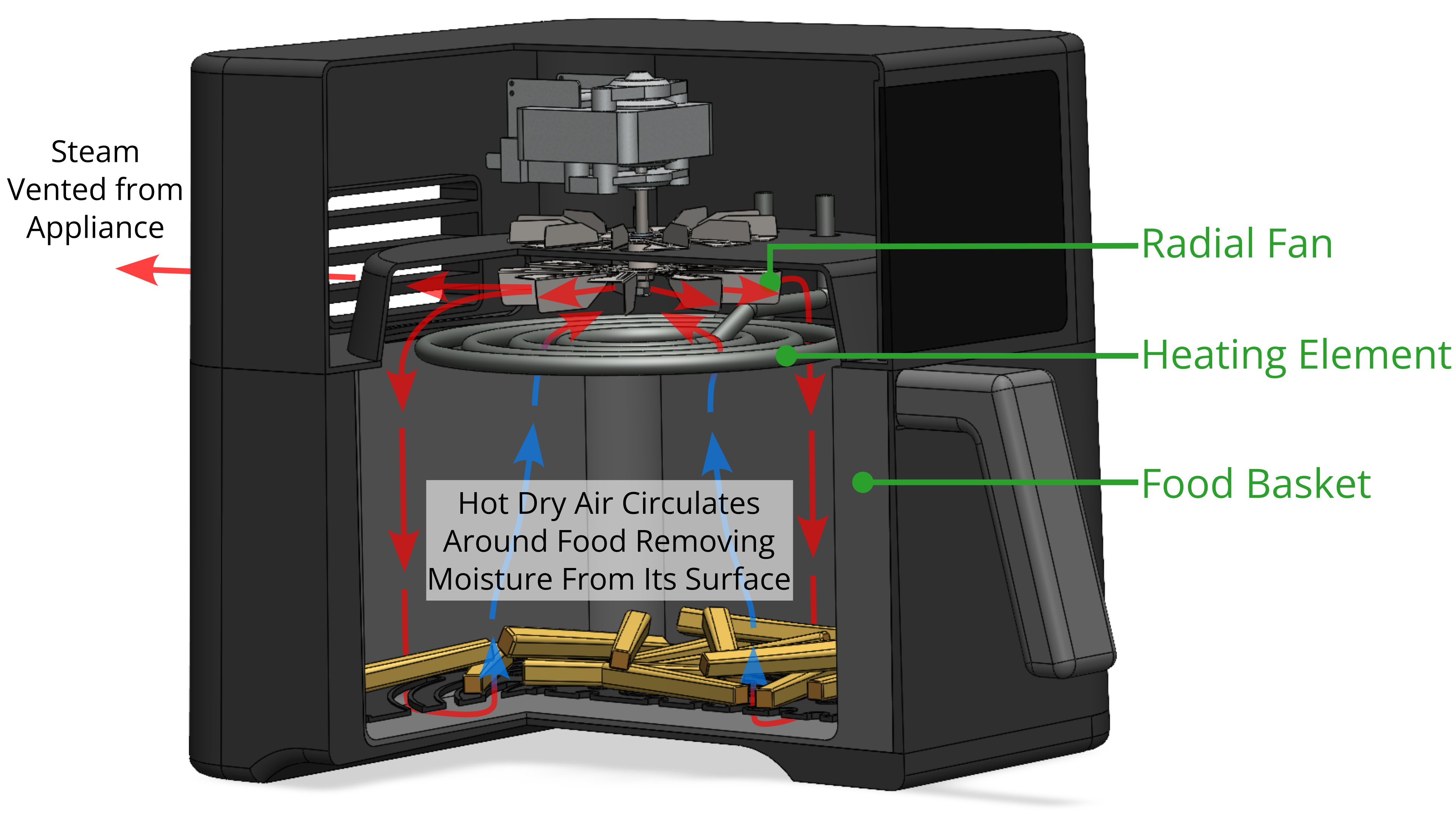
In a basket air fryer, food sits in a slide-out basket ranging in volume from 2 to 8 quarts (1.9–7.5 L). The basket makes it easy to shake food mid-cook for even results, and its perforated tray serves to channel hot air around the food. Directly above the basket is a resistive heating element that draws 800–1800 W, and above that sits a radial fan spinning at 2500–3600 RPM. Together, these components create the powerful airflow that defines air frying.
As shown in the rendering below, the fan pulls air up through the heating element and pushes it radially outward. The hot air then travels down the walls of the cooking chamber, circulates under the basket's false bottom, and rises back through the perforations to envelop the food. This airflow carries surface moisture upward, with most of the air recirculating and some venting out the back to remove steam.
Air fryers that deviate from this general design tend to perform poorly. The Ninja DoubleStack, which mounts its heating element and fan vertically at the end of its baskets, struggles to circulate air evenly, resulting in subpar cooking. The Instant Vortex Plus shows a similar flaw: its recessed fan saves space but severely restricts airflow. When this design is optimized, however, it enables intense localized convective heat transfer and rapid moisture removal from the food's surface, producing crispy exteriors and juicy interiors.
Our Air Fryer Performance Test
Every air fryer we review is evaluated using our standardized test bench, which includes a scored test for overall air-frying performance. To ensure results are consistent and comparable, we standardize four key factors:
- Test Food
- Supply Voltage
- Cooking Procedure
- Food Evaluation
Standardized Test Food
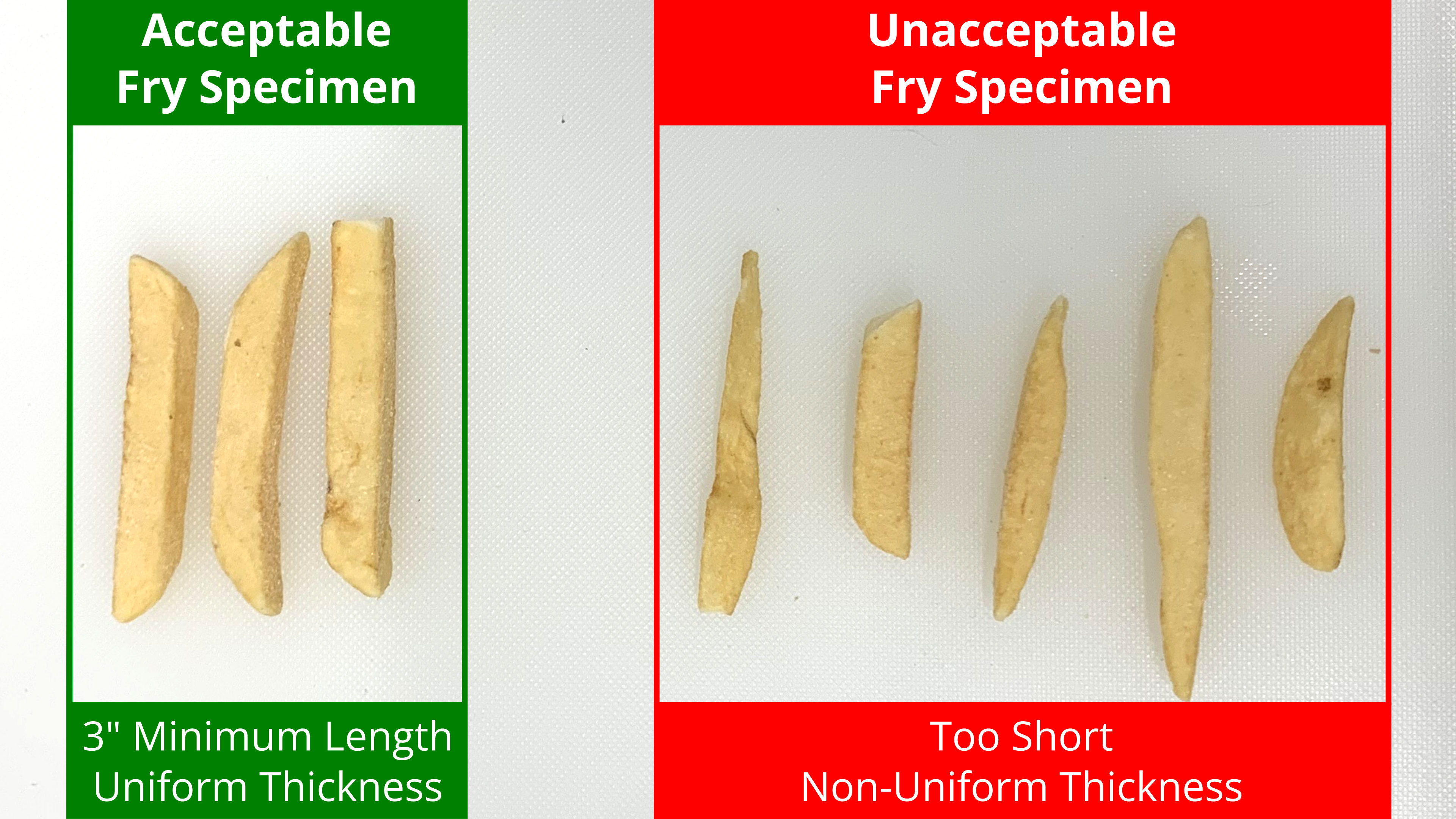
We use a 250±2 g portion of frozen French fries for every test. Because very short or skinny fries tend to overcook, our testers hand-pick each fry specimen to ensure acceptable length, uniformity, and lack of discoloration.
The results from our French fry test reveal more than just how well an air fryer cooks fries; they're a strong indicator of how it will air fry almost any food. If it nails fries, you can trust it to sear a steak or crisp up a batch of wings just as effortlessly. That all-around performance is a big part of what makes a good air fryer such a must-have in the kitchen.
Standardized Supply Voltage
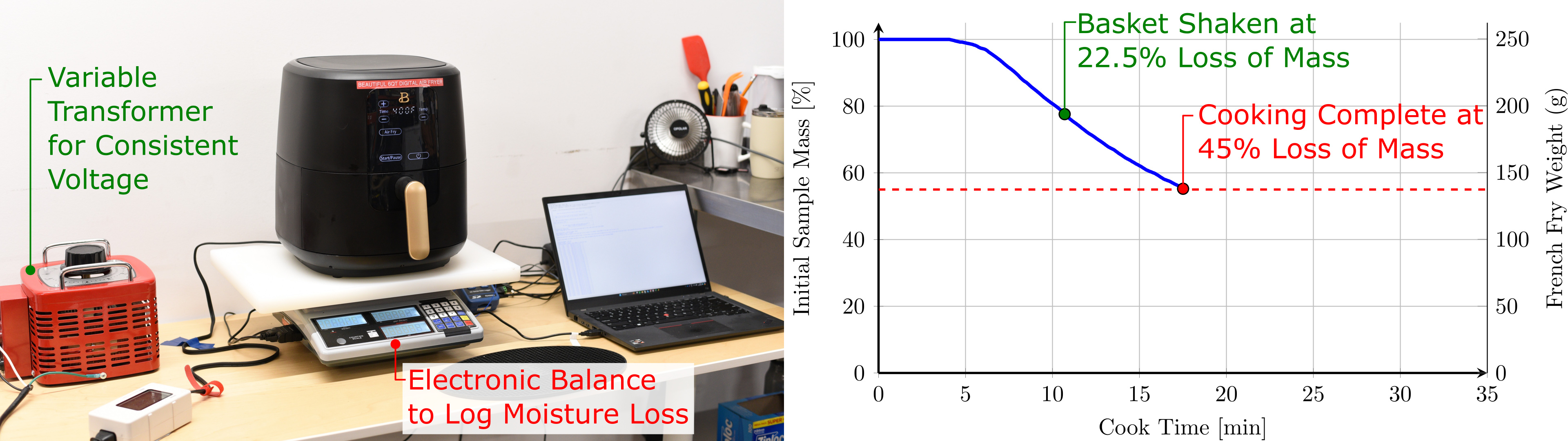
As air fryers rely on resistive heating elements, their performance can vary with line voltage (something we observed in our toaster tests). To eliminate this variable, we supply a consistent 120 V using a variable transformer and monitor power with a power meter.
Standardized Cooking Procedure
Our test procedure follows four steps:
- Preheat the air fryer to 400 °F (204 °C) and add the 250 g frozen fry sample.
- Continuously log the sample's mass with an electronic balance during cooking to measure moisture loss over time.
- Once the fries have lost 22.5% of their initial mass, shake the basket for 10 seconds, then reinsert it.
- Remove the fries from the air fryer once they have lost 45% of their initial mass - the level of moisture loss we determined to yield the optimal fry.
Standardized Food Evaluation
After cooking, each fry is "Goldilocks" sorted into three categories:
- Undercooked: Bends instead of snapping, with a dense interior texture.
- Crispy: Snaps with little force, crackles audibly, and has a fluffy interior.
- Overcooked: Breaks with moderate force, has a hard snap, and a dry interior.
The distribution of fries across these three categories determines the air fryer's Air Frying Quality score. We also film the sorting process, and each air fryer review includes this footage. An example from our review of the Cosori TurboBlaze is shown below:
Which Factors Most Affect Performance Results?
After testing over 30 basket air fryers on our standardized test bench, we had a clear picture of what makes one air fryer perform better than another. But numbers alone don't always tell the whole story, so we decided to put our findings to the test.
We took one of our best performers, the Cosori TurboBlaze, and deliberately "hobbled" it, dialing back each of the three key factors one at a time. By sabotaging a top-tier air fryer, we could see exactly how each factor affects crispiness and cooking performance.
Basket Size
The overall volume of an air fryer's basket determines how much food you can cook in a single batch, but its surface area plays a more subtle, yet critical, role. Our testing shows that the larger the basket's bottom surface area, the higher the proportion of fries that achieve that "just right" crispy texture:
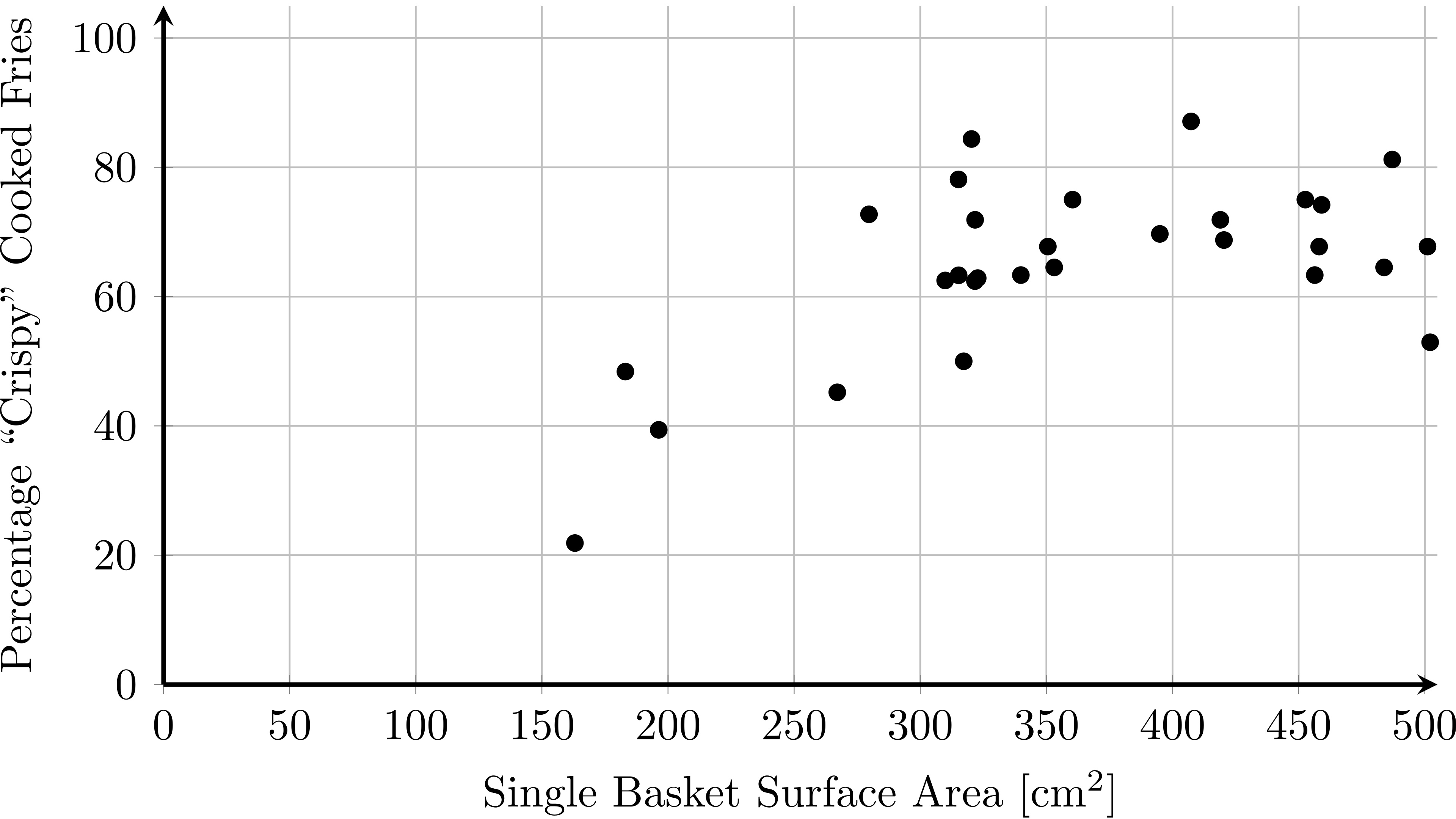
A larger basket surface area allows food to spread out in a single layer. With less stacking, more of each fry's surface is exposed to the hot air flowing up through the perforations in the basket's false bottom. This promotes even moisture removal and consistent surface crisping. In contrast, when food is piled high, steam is trapped and exposed fry surface area is minimized, leading to soggy spots and uneven crisping.
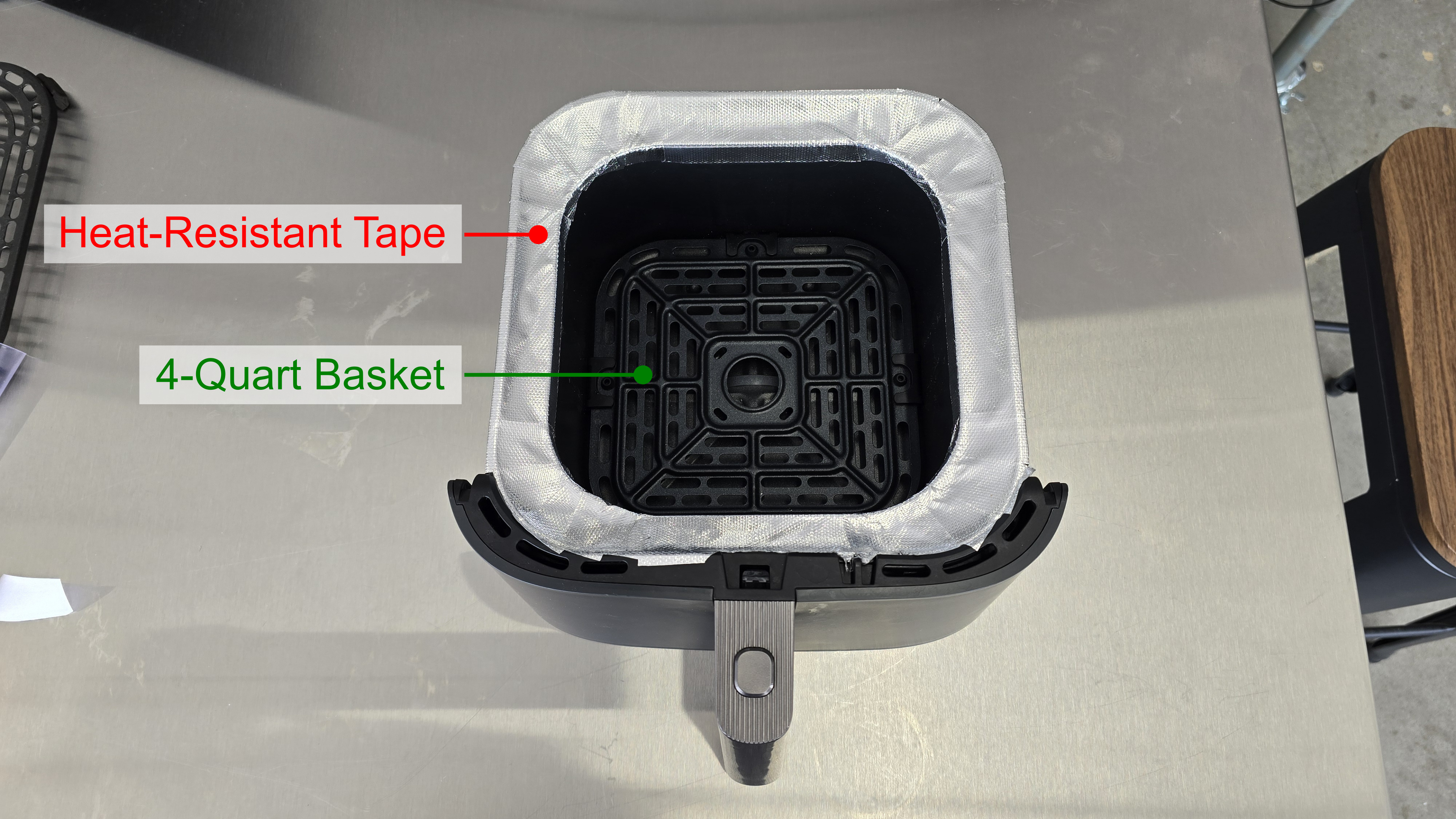
To illustrate this effect, we placed a smaller, similarly shaped 323 cm² (50 in²) basket inside the Cosori TurboBlaze, securing it with heat-resistant tape. This reduced the basket's surface area by 33%.
The smaller basket's reduced volume shortened the length of time that the hot air spent inside the cooking chamber and concentrated the heat, allowing the air fryer to recover to its 400 °F setpoint more quickly after adding the frozen fries. As a result, the fries reached their 45% target moisture loss 1 minute 20 seconds faster than full-sized Cosori TurboBlaze:
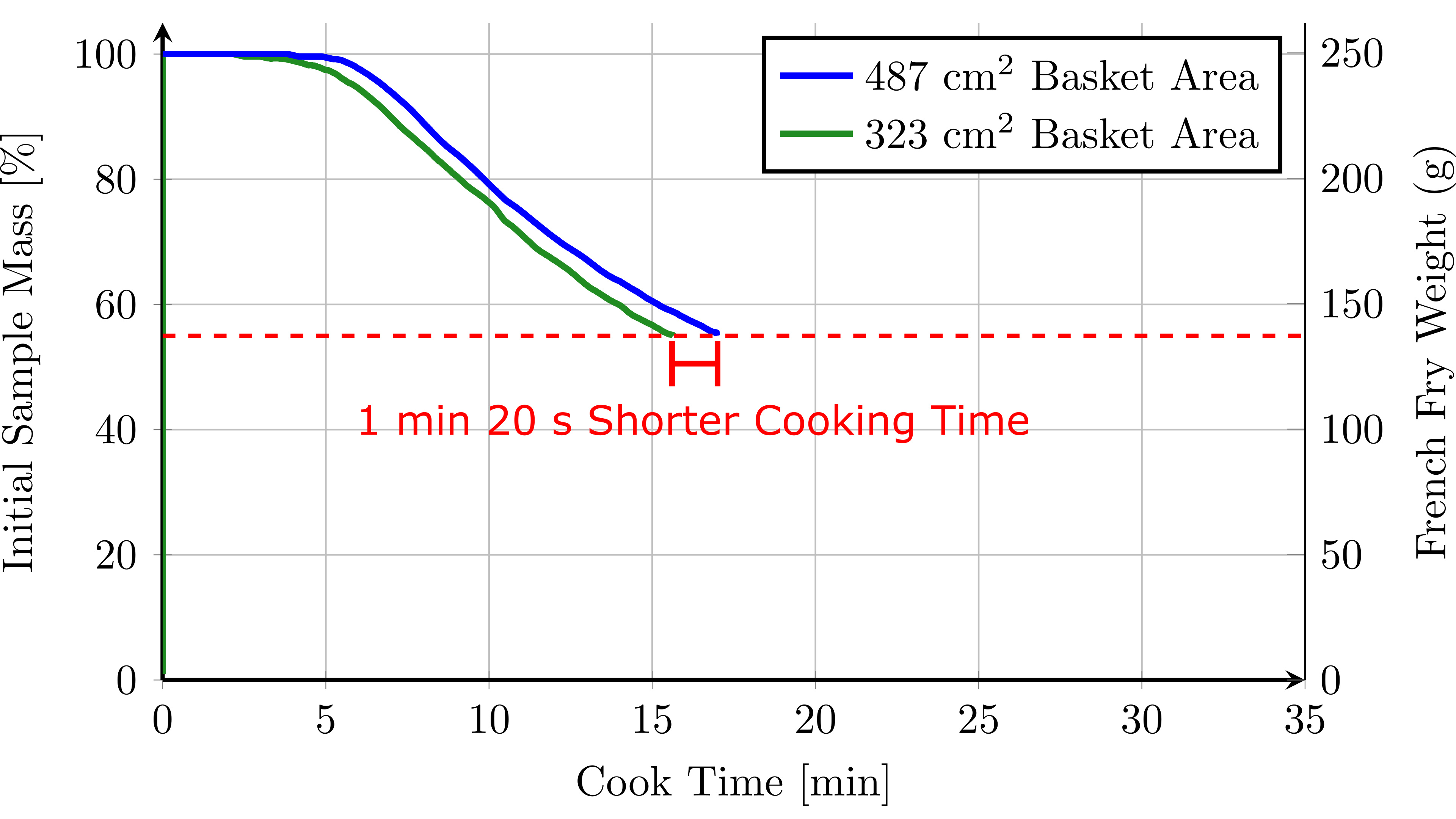
Paradoxically, the smaller basket produced a much higher proportion of overcooked fries. With less bottom surface area in the basket, fries were stacked, limiting airflow to those in the middle of the pile. By the time the pile as a whole reached 45% moisture loss, fries on top were overcooked, while those buried inside were undercooked.
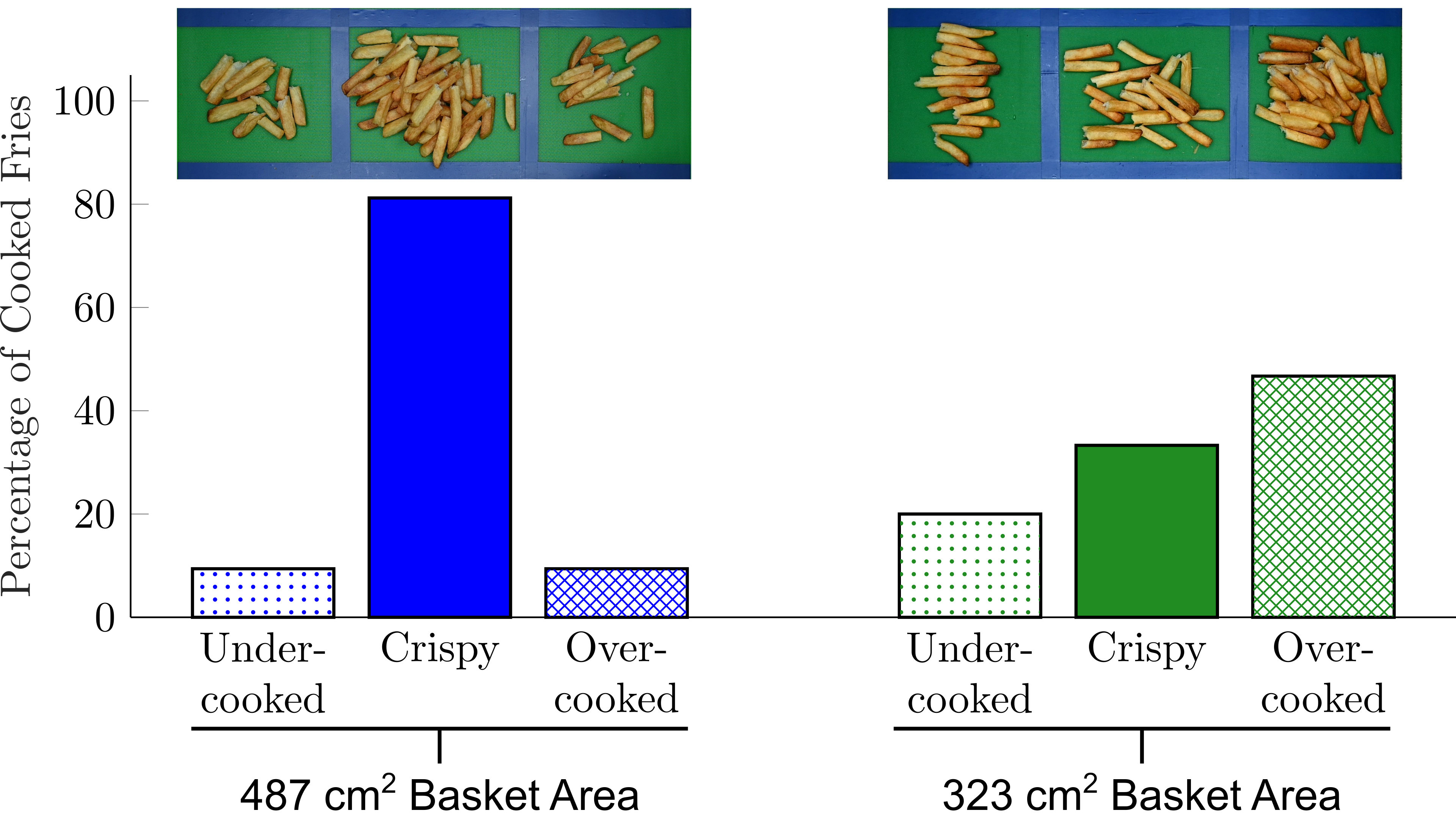
In the end, a large food basket isn't just about cooking more at once; it's the key to evenly crisping every bite!
Heating Element Power
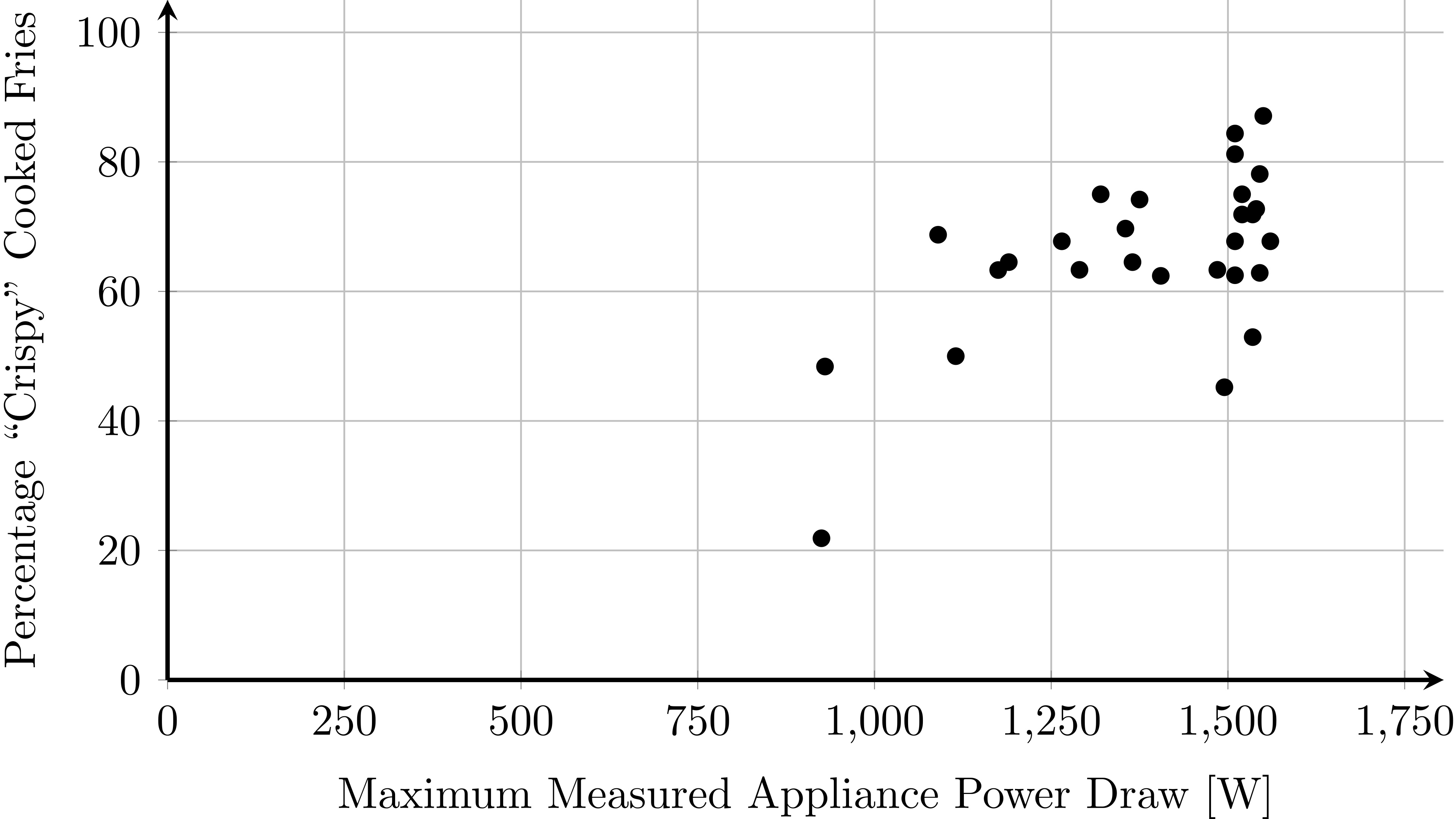
In an air fryer, the rate of convective heat transfer to the food depends on two things: how effectively the air moves and how much power the heating element delivers. Indeed, in our air-frying quality test, models with higher power draw consistently produced a higher percentage of perfectly "crispy" fries:
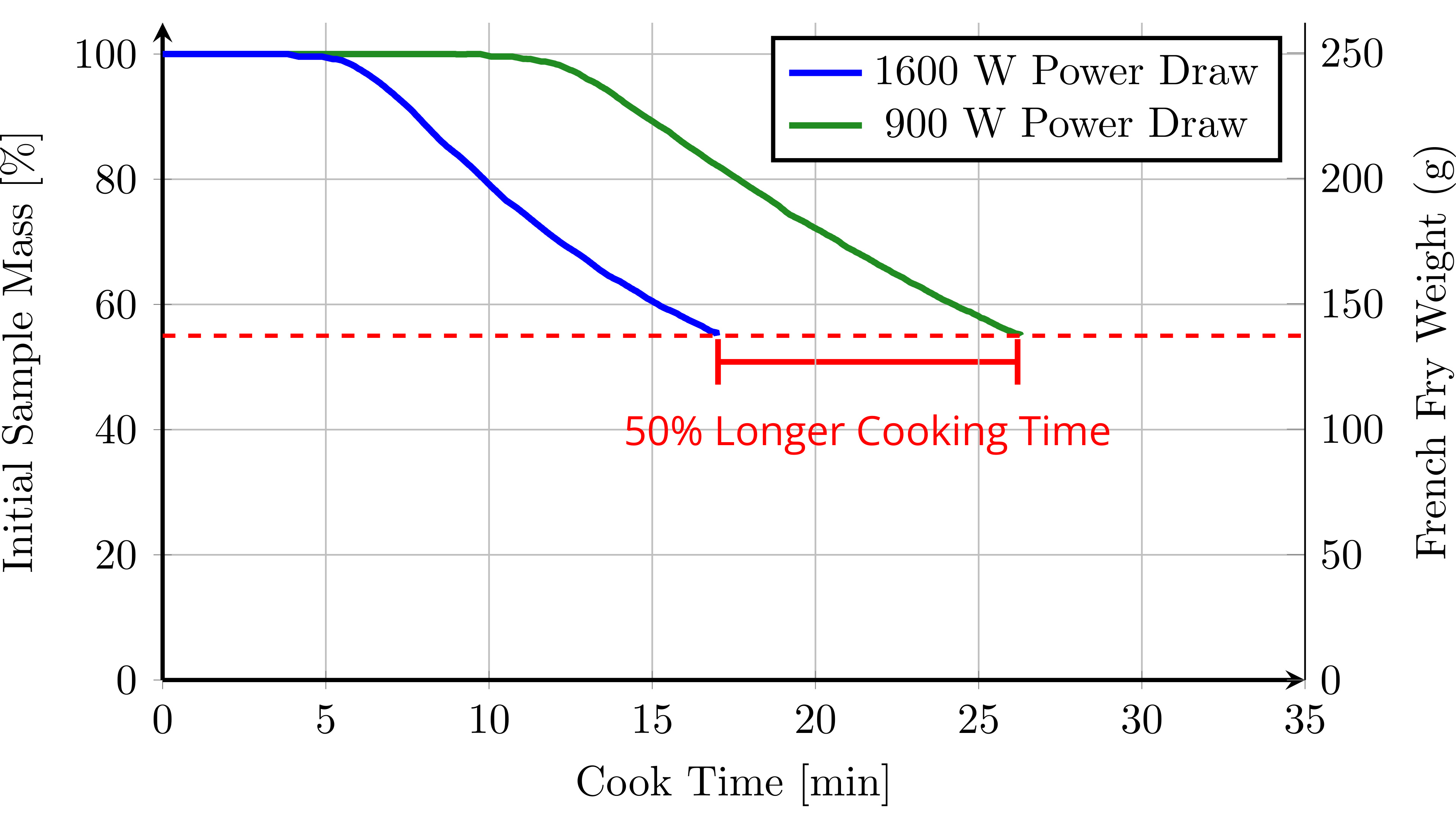
To directly demonstrate the effect of heating element power, we used a variable transformer to reduce the Cosori TurboBlaze's power from 1600 W to 900 W. This lower power meant the preheated TurboBlaze took much longer to recover to its 400°F setpoint after adding frozen fries. As a result, the low-power TurboBlaze required 10 extra minutes to reach the target 45% moisture loss, over 50% longer than at full power:
Interestingly, the lower-power run with its extended cooking time actually produced a larger proportion of undercooked fries. Because the cooking chamber spent so much time below the ideal 400 °F air-frying temperature, most fries never crisped and remained chewy.
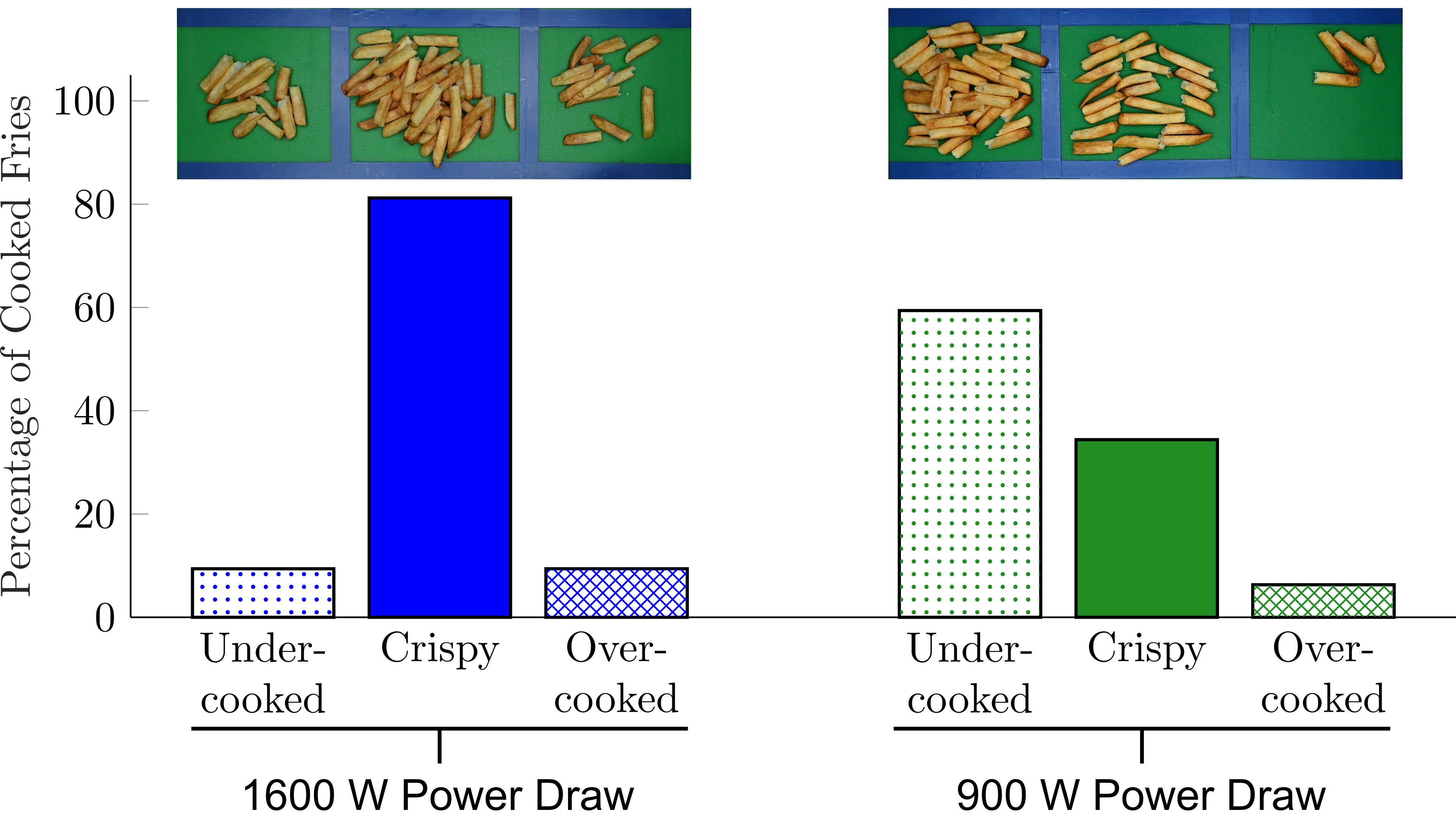
This experiment clearly shows that adequate heating element power is critical for crisp, evenly cooked results.
Fan Speed
The second key factor affecting the rate of convective heat transfer is how effectively hot air circulates through the food basket. This airflow is largely controlled by the rotational speed of the air fryer's fan. For best results, the fan speed must be properly matched to the heating element's power and the volume of the cooking chamber:
- Too slow: Air isn't driven intensely over the food, and it isn't expelled from the cooking chamber quickly, which leads to high humidity that hinders crisping.
- Too fast: Air moves over the heating element too quickly to heat fully, and its very quick exhaustion from the chamber keeps the temperature below the setpoint.
Because fan speed must be optimized for each model, there's no simple correlation between the maximum fan speed we measured for each air fryer and the percentage of perfectly crispy fries it produced:
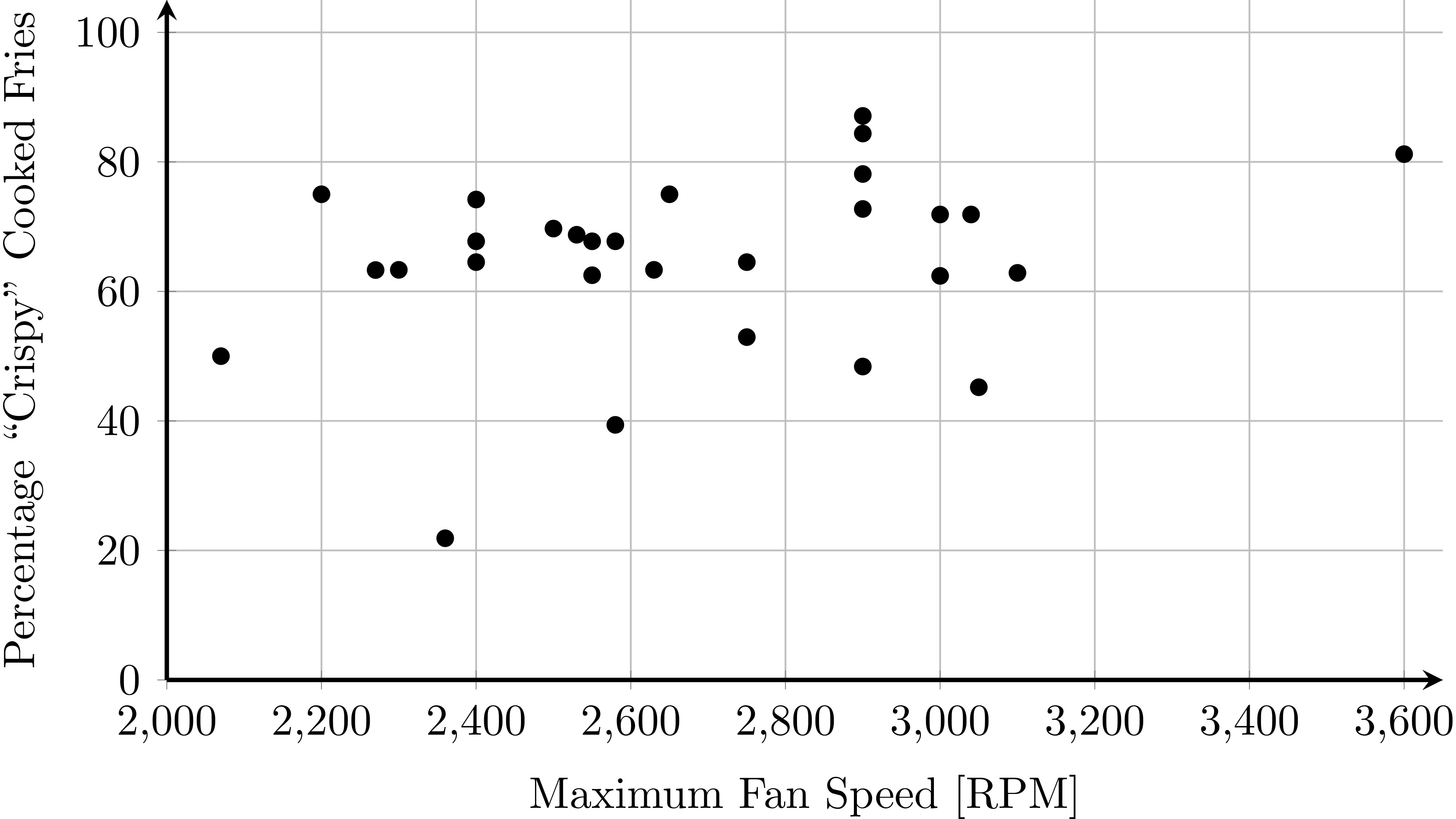
To show the effect of airflow directly, we lowered the Cosori TurboBlaze fan from its typical 3600 RPM to 2100 RPM using pulse-width modulation on its DC motor. While the slower fan only added about 1 extra minute to reach 45% moisture loss, the resulting fries were dramatically worse in quality:
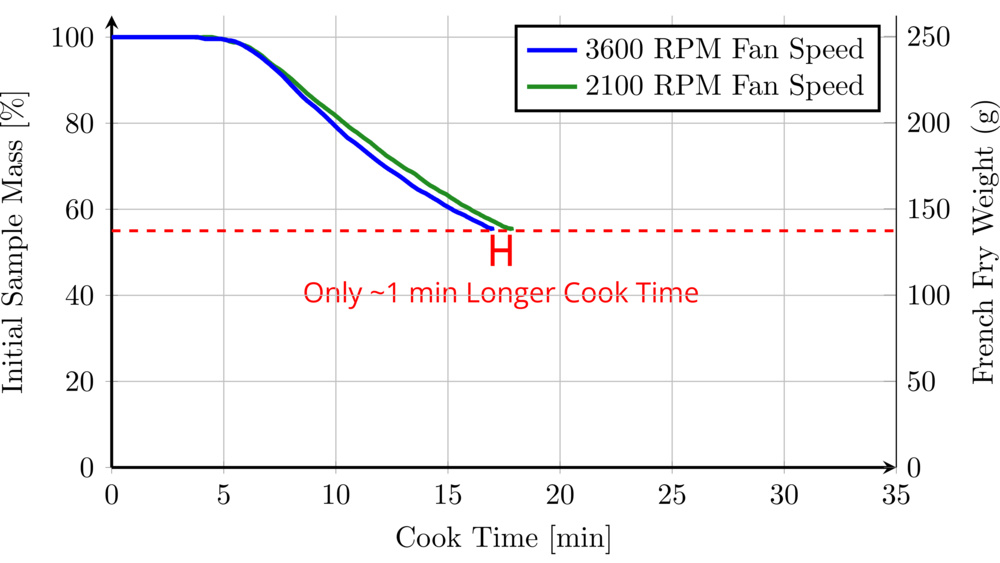
Lowering the fan speed produced results similar to using a weaker heating element. A large proportion of the fries ended up undercooked as the slower-moving air lingered in the basket, allowing humidity to build up. Instead of crisping quickly, the fries were effectively steamed.
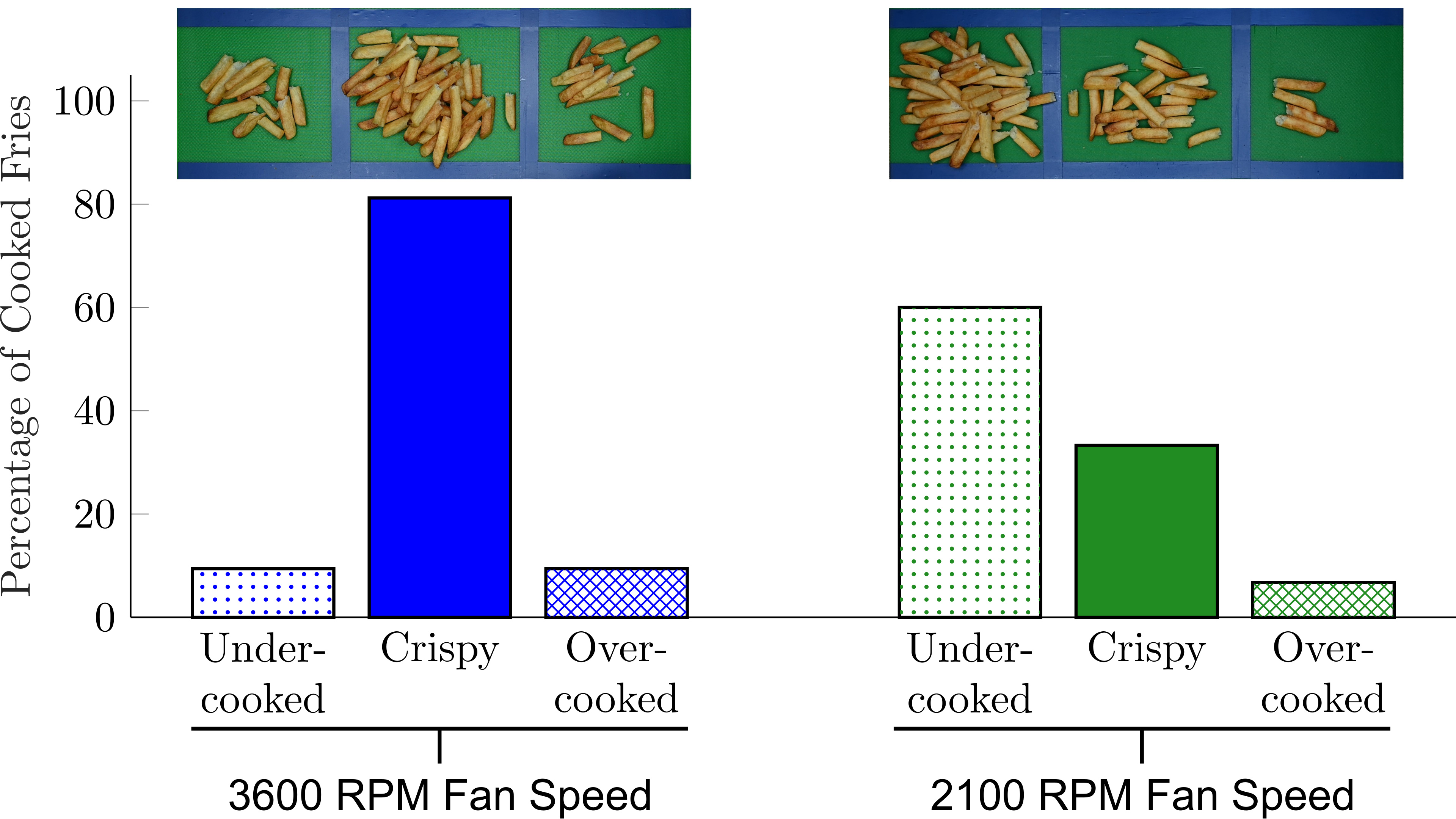
Interestingly, the Cosori TurboBlaze's fan may spin a bit too fast at 3600 RPM; lowering its speed to better match the heating element could produce even better air-fried food from this already top-performing model.
How To Buy An Air Fryer
After all our R&D and testing of 30+ basket air fryers, our advice is simple: look for a model with the right combination of capacity, power, and airflow control. Here's what to prioritize:
-
Large Basket with a High Surface Area (at least 50 in2)
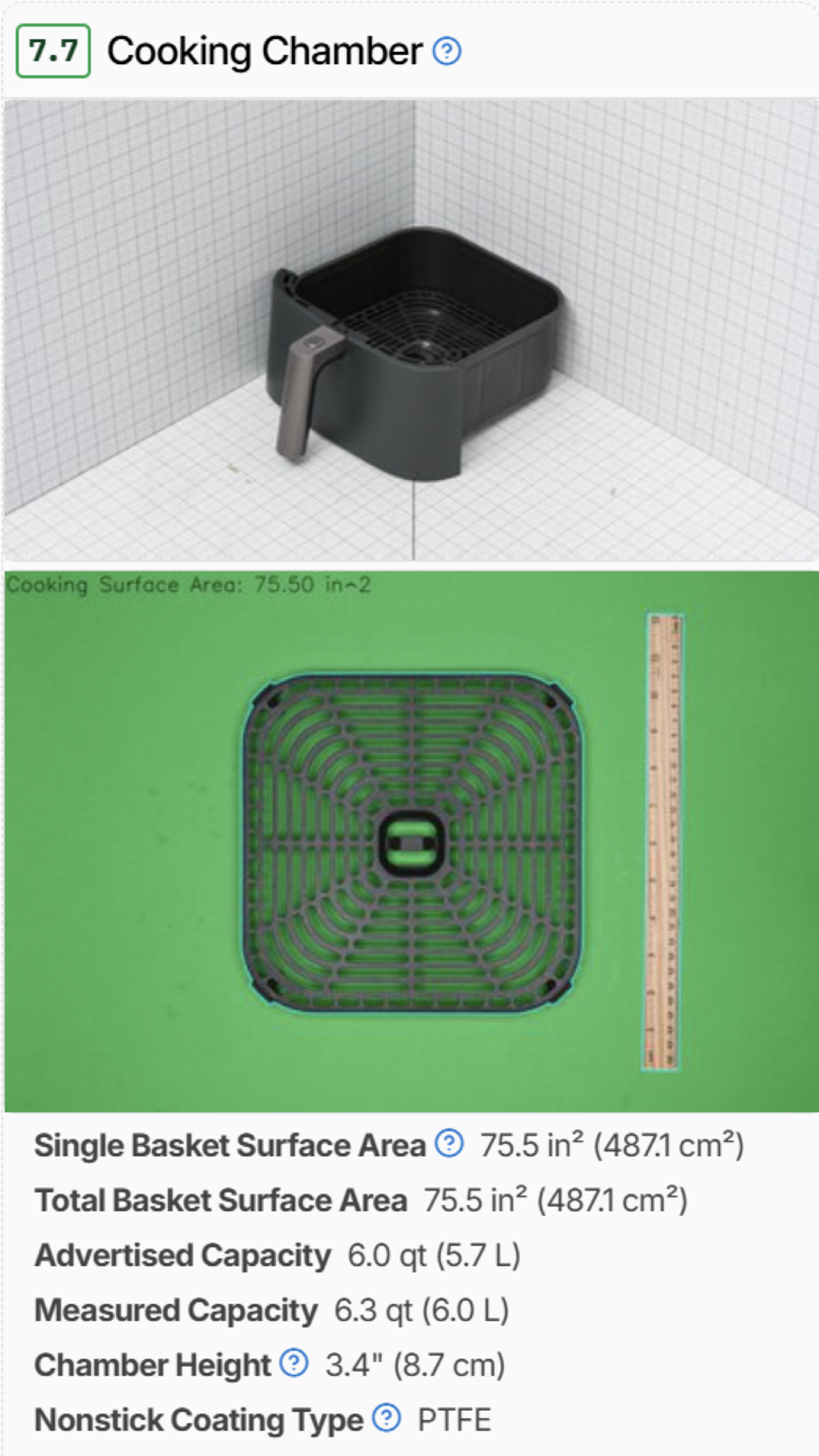
Pick an air fryer that's bigger than you think you'll need. A large basket, especially one with a large surface area, lets you spread food in a single layer. Look for air fryers with baskets of at least 50 in2 (325 cm2) to expose more food surface to the hot air for better crisping.
In our reviews, check the Cooking Chamber box for Single Basket Surface Area: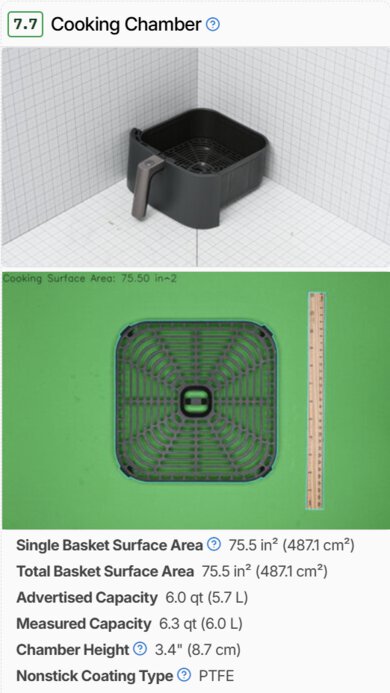
The "Cooking Chamber" box of our air fryer reviews gives information about a model's basket surface area. -
High Wattage (at least 1400 W)
A powerful heating element is essential for fast, effective convective heat transfer. Look for air fryers rated at 1400 W or more to ensure they can quickly recover heat after adding food.
In our reviews, see the Cooking Versatility box for Maximum Power Draw: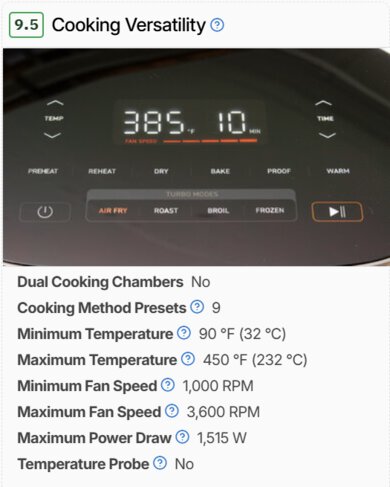
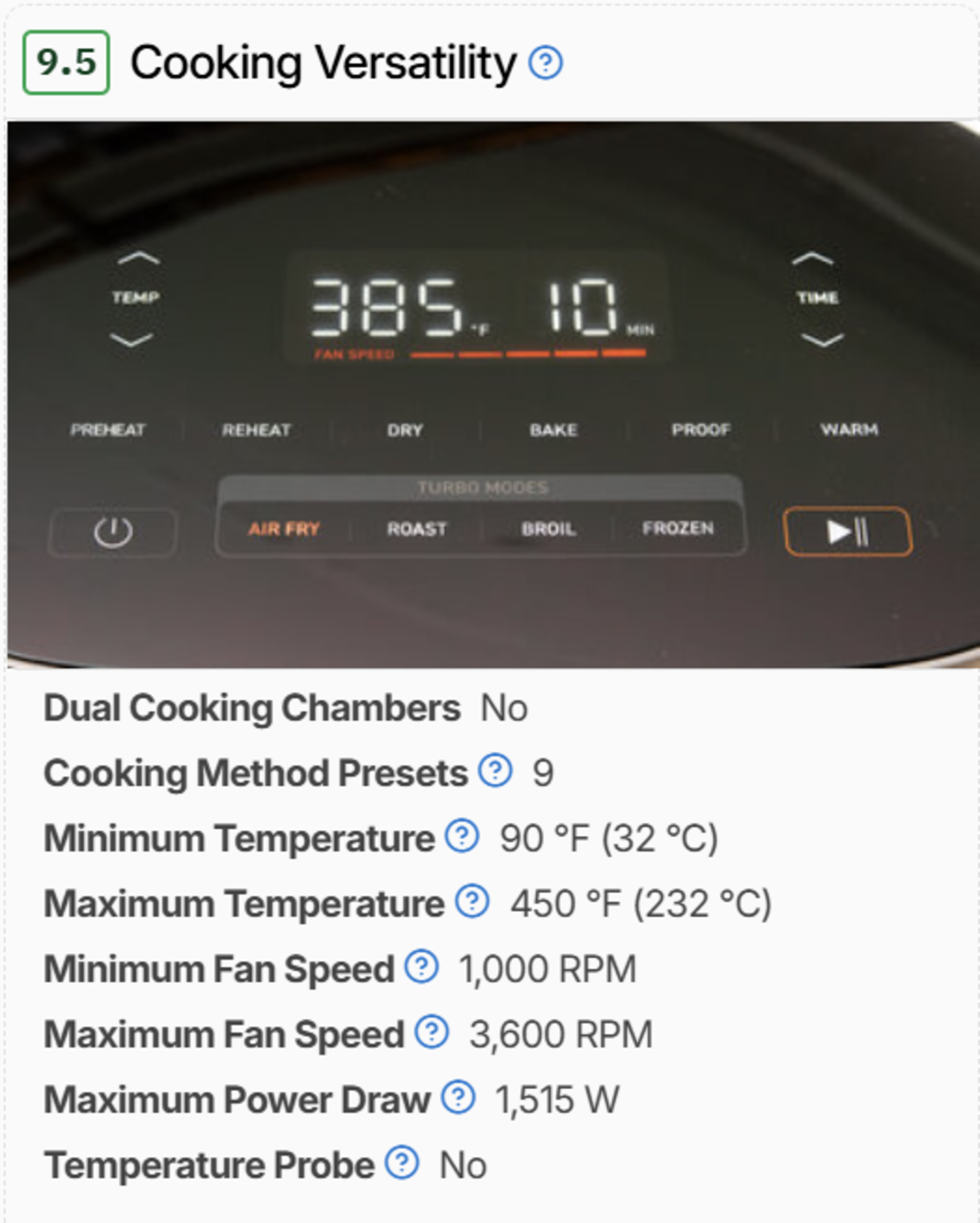
The "Cooking Versatility" box of our air fryer reviews gives information about a model's maximum power draw and its range of fan speeds. -
Wide Range of Fan Speeds
Air fryers perform best when they can match airflow to the cooking task: high speeds for air frying, lower speeds for baking or delicate items. Models with a wide fan speed range are the most versatile.
In our reviews, check the Cooking Versatility box for Minimum and Maximum Fan Speeds.
Choosing a basket air fryer that excels in all three areas gives you the best chance at crispy, evenly cooked food every time. For a quick shortcut, our pre-sorted Table Tool highlights the top performers and is always updated with our latest reviews.