The following is the methodology we developed to test for particle shedding from PTFE nonstick cookware coatings.
You can read our full results and discussion for this project here.
We Compared Uncoated, Lower-Cost PTFE, And Higher-Cost PTFE Cookware In Triplicate
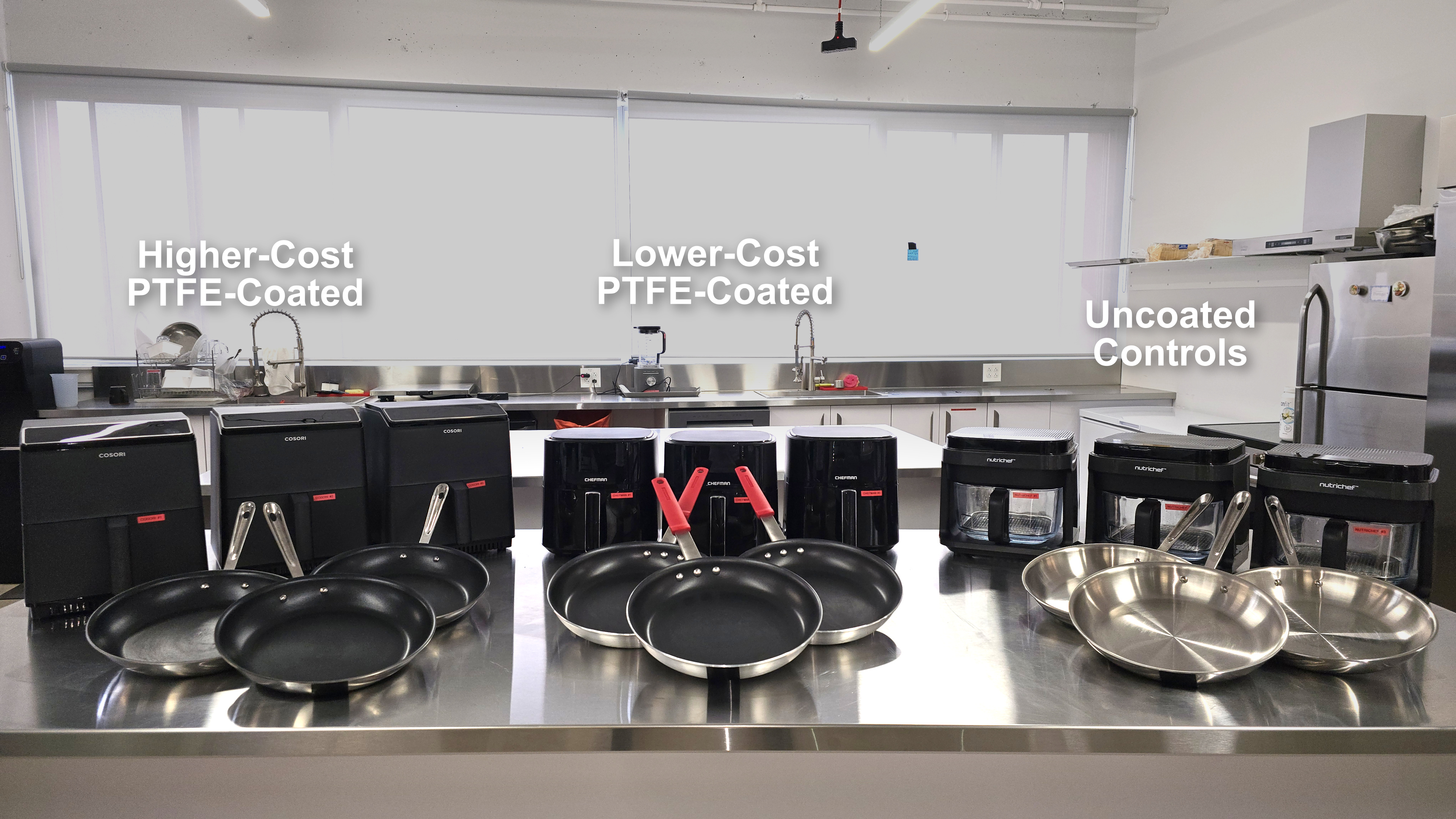
We tested two cookware categories: skillets and air fryer baskets. Within each category, we selected one uncoated control product, one lower-cost PTFE-coated product, and one higher-cost PTFE-coated product. We purchased three separate units of every product and tested each unit independently. In total, our test included six products and 18 individual pieces of cookware.
| Uncoated Control | Lower-Cost PTFE | Higher-Cost PTFE | |
|---|---|---|---|
| Skillets |
All-Clad D3 Stainless, 12-inch ($159.99 USD) |
($39.95 USD) |
All-Clad D3 Nonstick PTFE, 12-inch ($179.99 USD) |
| Air Fryer Baskets / Inserts |
($121.41 USD) |
($99.99 USD) |
($199.92 USD) |
We Stirred Cooking Oil, Then Filtered It For Particles
Each piece of cookware was tested using the same oil-filtration protocol. Before the new-condition test, every item was washed three times with dish soap, warm water, and the soft side of a sponge, then rinsed with isopropyl alcohol.
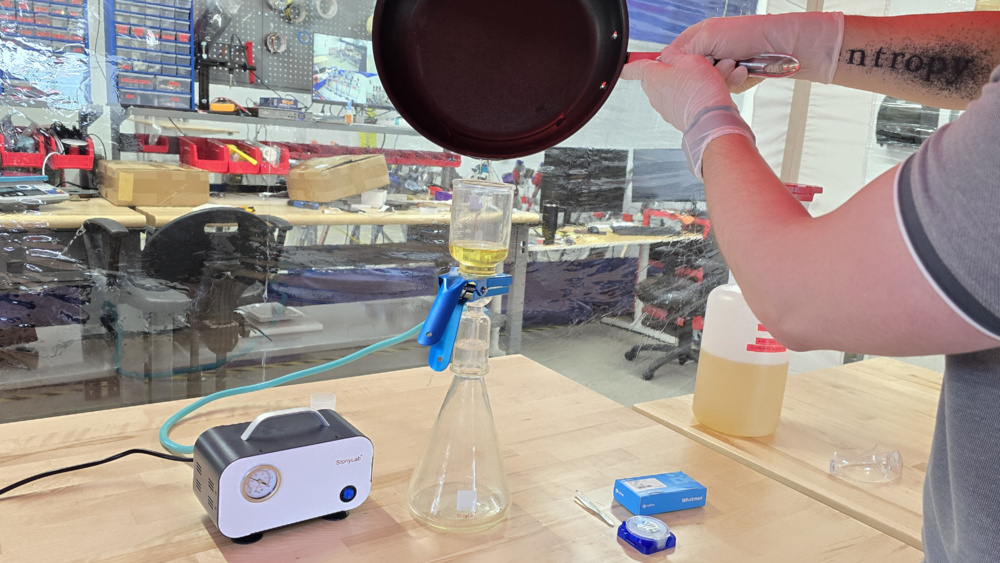
For each test, we added 100 mL of avocado oil to the cookware and stirred it for 45 seconds with a white plastic spoon using the same hand-stirring procedure. We then poured the oil into a Buchner funnel fitted with a 5 µm pore-size Isopore polycarbonate membrane filter and Whatman filter paper backing. Any remaining oil was rinsed into the funnel with isopropyl alcohol, and light vacuum was used to assist filtration.
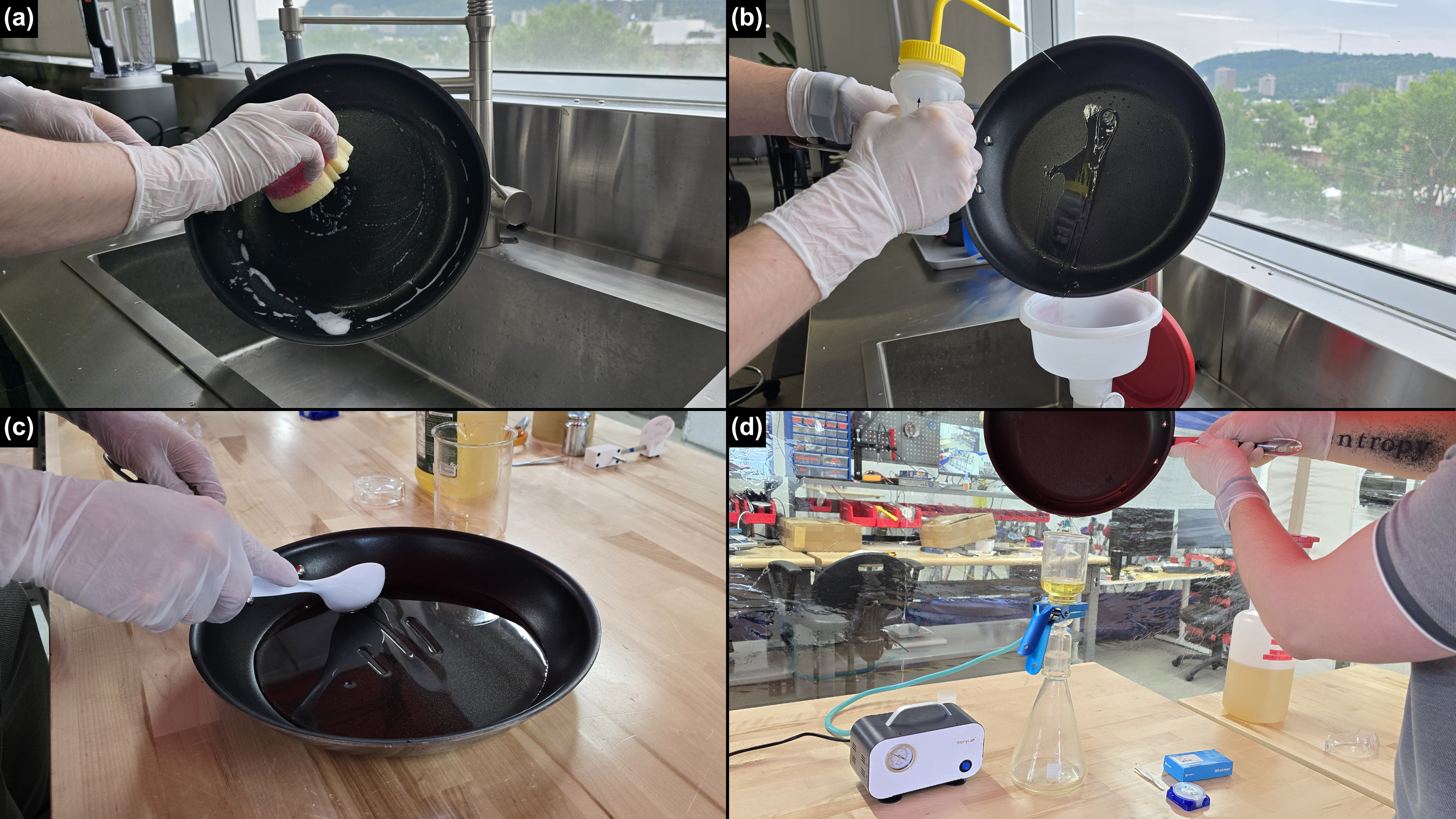
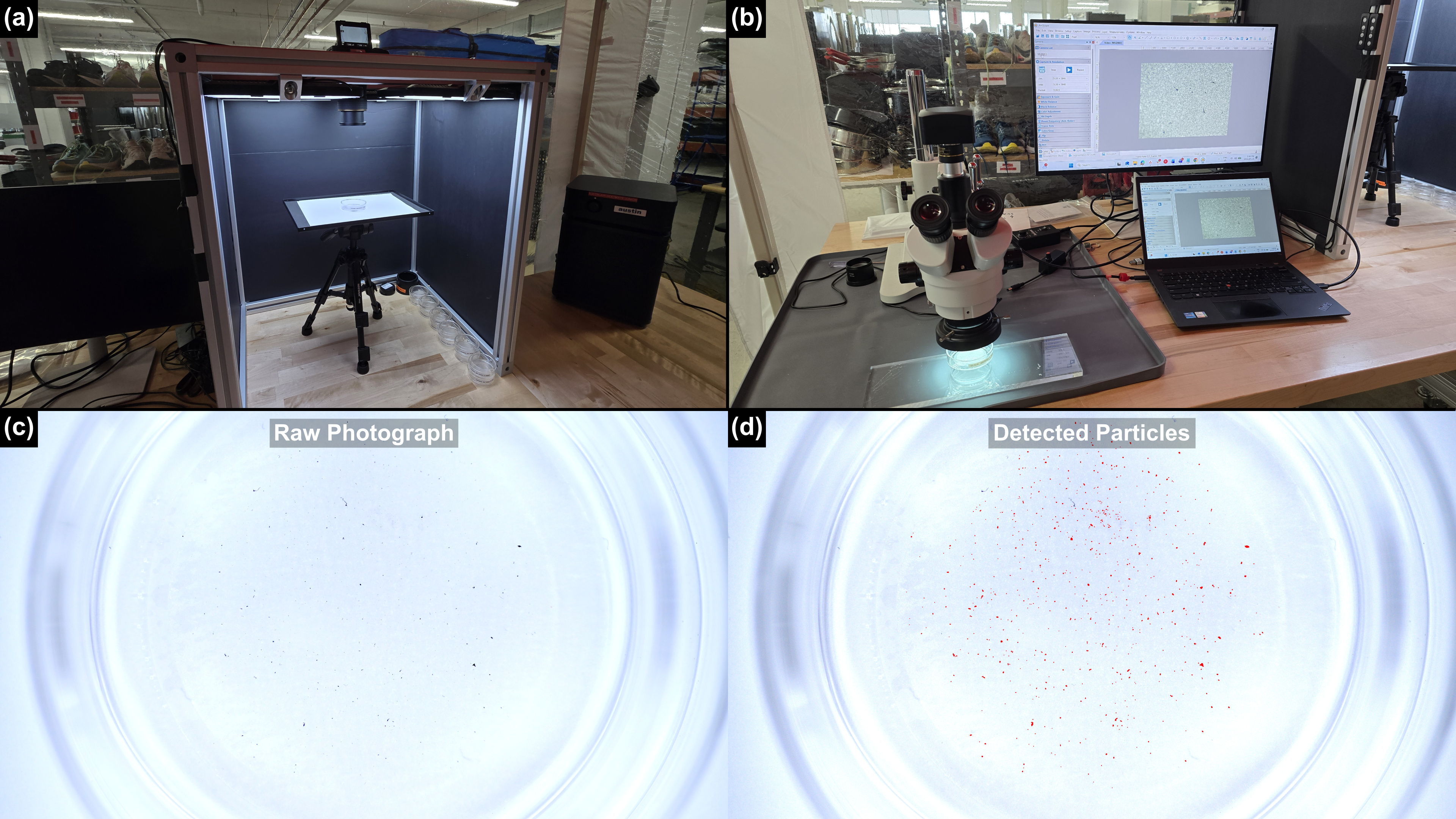
After filtration, each membrane filter was placed in a clean glass Petri dish and photographed under controlled lighting using a Nikon D780 camera fitted with a Tokina AT-X M100 Pro macro lens. Selected areas of the membrane were also imaged using an AMScope SM-4T trinocular stereo microscope.
We then processed the filter photographs with a Python script to estimate particle counts and sizes. The images were converted to grayscale and segmented into dark particles and light membrane background based on pixel value. Fibers and other obvious airborne contaminants were manually excluded from the detected-particle dataset using consistent exclusion criteria.
Because this method detects visually contrasting particles rather than chemically identifying their composition, the resulting values should be interpreted as "filter-visible particle counts" rather than confirmation that every detected particle was PTFE. This method is also likely undercounting the number of particles, since particles below the image-resolution limit or with too little contrast against the membrane background would not be counted.
We Mechanically Wore The Cookware Coatings
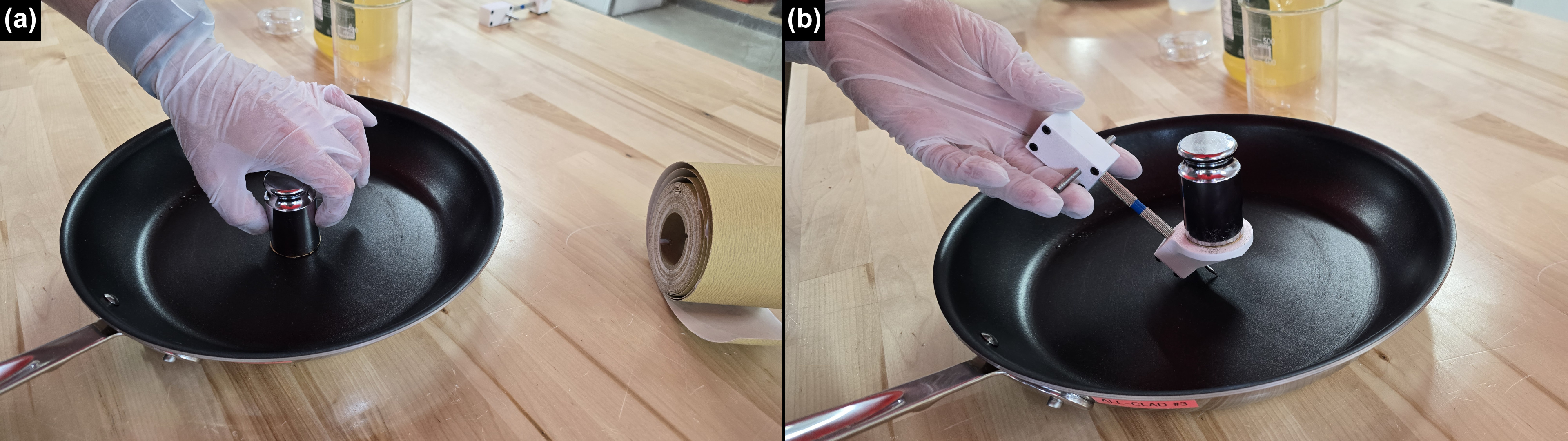
After the new-condition test, each piece of cookware was tested again after a standardized mechanical wear procedure. The surfaces were first roughened with 220-grit sandpaper under a 500 g load in a circular pattern. They were then scratched with six edge-to-edge lines using a #9 Mohs hardness test pen under a 500 g load.
After this wear step, the cookware was washed and rinsed three times before avocado oil was reintroduced for the worn-condition test.
How We Checked For Background Particles
Because this experiment involved counting small particles on membrane filters, background contamination was a major concern. We reduced and checked for particles from sources other than the cookware coatings in three ways.
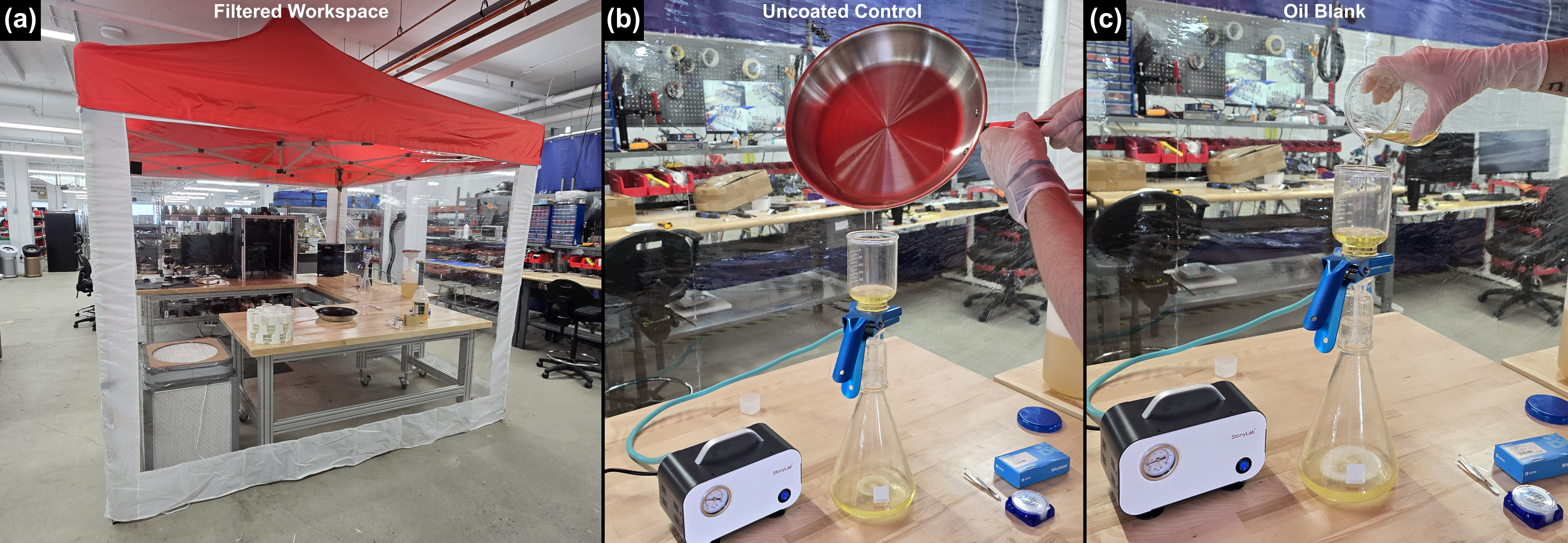
First, we performed testing inside a temporary lab tent with air filters running. While this was not a clean room, it did help reduce airborne particle contamination during testing.
Second, we included uncoated cookware controls in the test matrix for each cookware category. These helped check whether particles were coming from the oil, spoon, handling, filtration process, or cookware surface, generally, rather than from a PTFE coating.
Third, we filtered and photographed avocado oil blanks directly from the bottle in triplicate. These helped estimate particles present in the oil, bottle, filtration setup, and imaging workflow independent of cookware contact.
