Version 1.2 of our air purifier testing methodology expands our test coverage by measuring particle filtration performance when an air purifier is in a low-noise configuration.
Why Are We Making These Changes?
Our current testing methodology only measures an air purifier's performance at its highest fan speed, which isn't aligned with how most people actually use these appliances. Our new methodology now measures particle filtration performance when the air purifier is configured to run at a normalized volume that falls at or below a threshold of 45 dBA, which we defined as being non-disruptive for most environments.
Measuring clean air delivery rate (CADR) in a low-noise configuration provides a more thorough overview of what sort of performance you can expect from an air purifier, especially if you plan to set up the appliance in either a quiet area like a bedroom or somewhere that sees a lot of foot traffic, like a living room or den.
Low-Noise Particle Filtration Rate
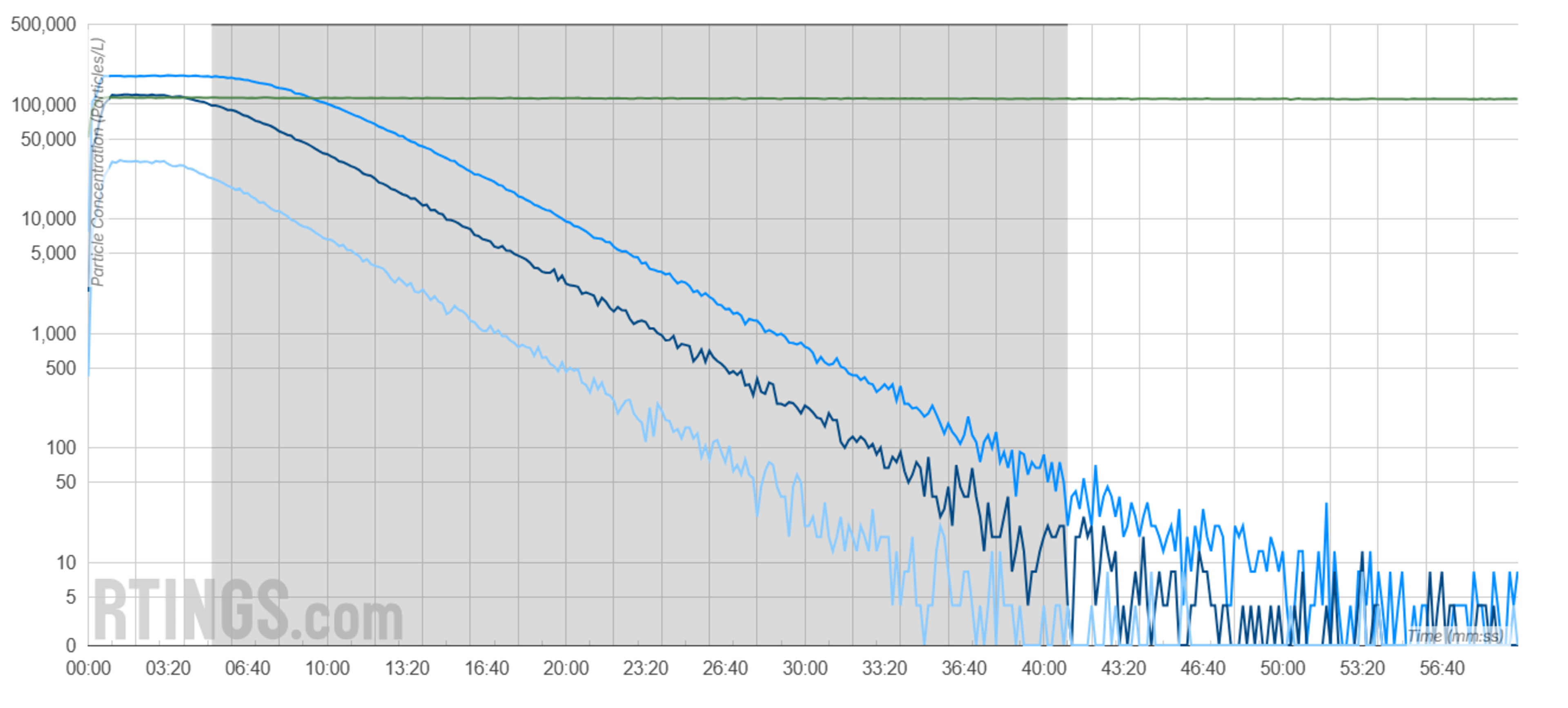
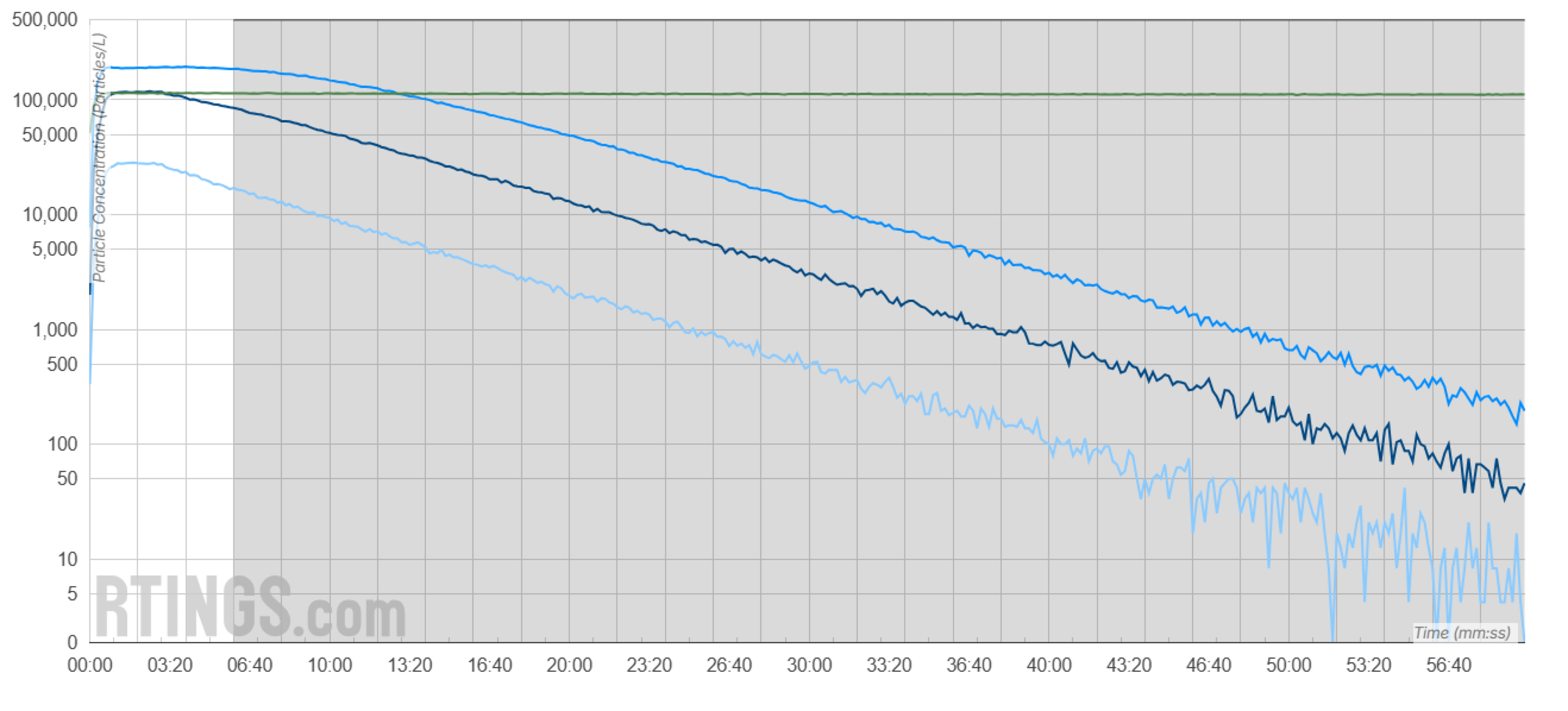
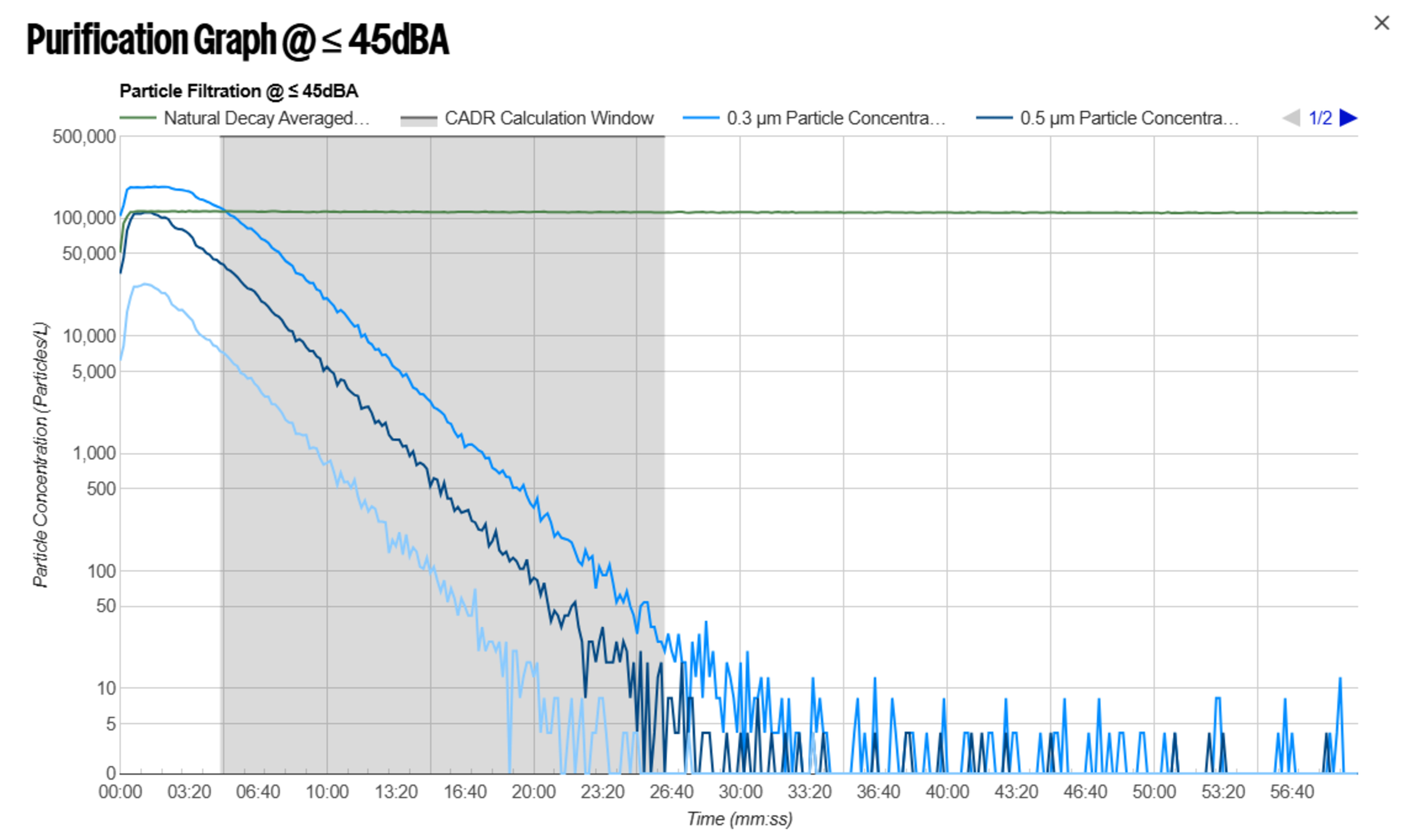
To conduct this test, we place a decibel meter at a height of 3.5ft and 6ft away from the air purifier. We then run the air purifier at all available fan speeds and select the highest speed that still produces an operating noise below 45 dBA. From there, we effectively repeat the standard 'Particle Filtration Rate' test by atomizing an aqueous saline solution into our testing room and recording the results.
 |
 |
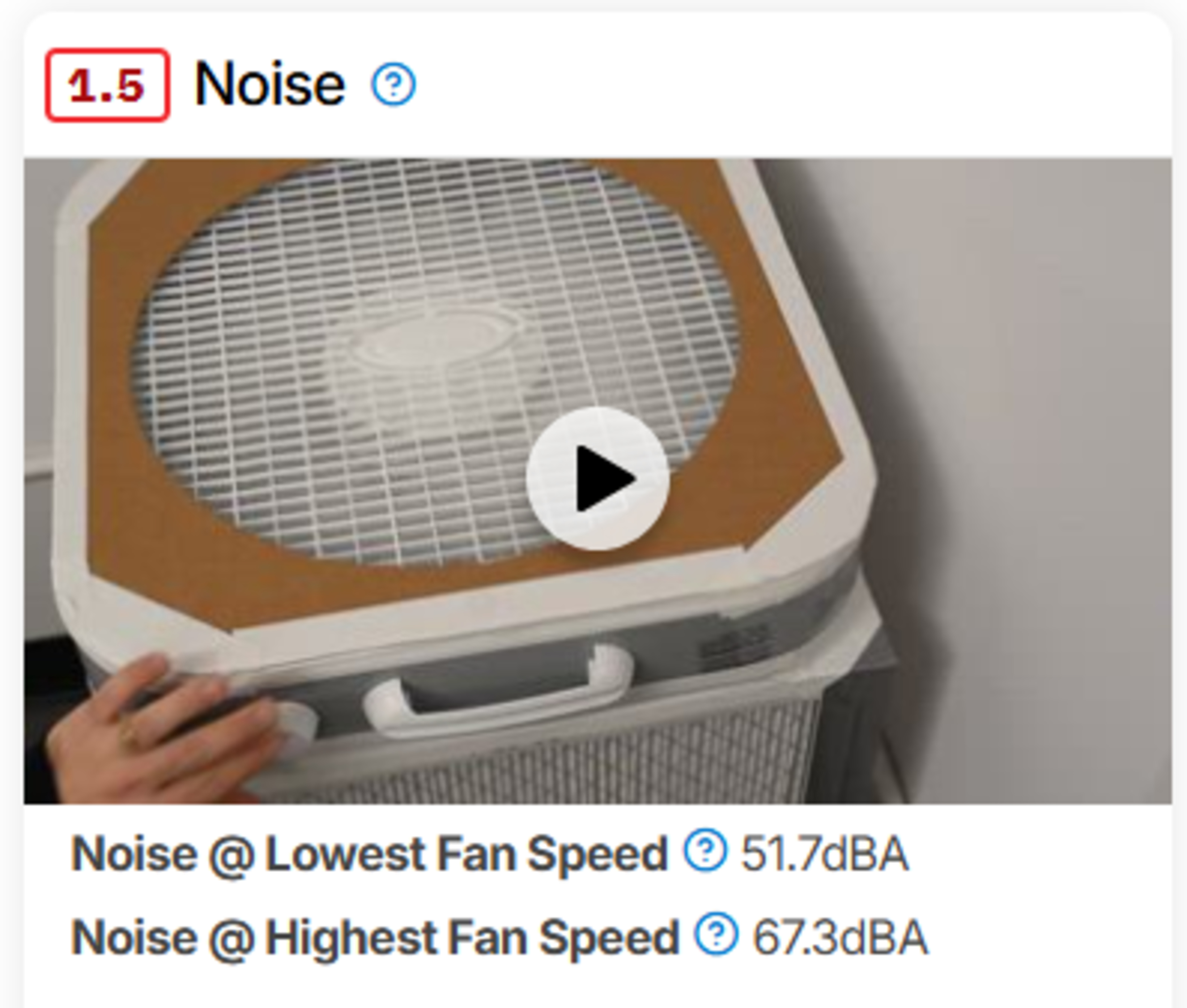
Note that the operating noise measurements for the 'Low-Noise Particle Filtration Rate' differ from those in the 'Noise' test. In some cases, air purifiers will have a minimum noise output in the 'Noise' test that is higher than the predefined 45 dBA threshold.
 |
 |
This discrepancy is due to differences in measurement and recording methodologies. The 'Noise' test is conducted with the decibel meter positioned on a tripod located 25" from the air purifier, a much shorter distance than the 'Low-Noise Particle Filtration Rate' test, which results in a higher decibel reading. The new, longer distance of 6.0 ft was selected to more accurately mimic the placement of an air purifier in most people's living areas and, consequently, users' actual perception of the unit's noise output. In future iterations of this test bench, we aim to harmonize our testing procedures across these two tests to provide more consistent, comparable data.
Let Us Know What You Think
Your feedback is instrumental in helping us further improve our testing in every aspect. If you have comments, questions, criticisms, or suggestions about this update or any future updates, reach out to us in the comments or email us at feedback@rtings.com.
29 Air Purifiers Updated
We have retested popular models. The test results for the following models have been converted to the new testing methodology. However, the text might be inconsistent with the new results.
- Austin Air HealthMate Junior
- Corsi-Rosenthal Box
- Corsi-Rosenthal Box with Single Filter
- Coway Airmega 200M
- Coway Airmega Mighty AP-1512HH
- Dyson HEPA Big+Quiet Formaldehyde BP06
- Dyson Pure Cool TP01
- Dyson Pure Hot+Cool Link HP02
- Dyson Purifier Big+Quiet Formaldehyde BP04
- Dyson Purifier Cool TP07
- Dyson Purifier Hot+Cool Formaldehyde HP09
- Dyson Purifier Hot+Cool HP07
- Dyson Purifier Hot+Cool HP1
- Dyson Purifier Hot+Cool Purifying Heating Fan HP4B
- Honeywell HPA300
- Levoit Core 200S
- Levoit Core 300
- Levoit Core 300S
- Levoit Core 400S
- Levoit Core 600S
- Levoit Vital 200S
- Mila Air 3
- NuWave OxyPure
- Shark Air Purifier 4 HE402
- Shark Air Purifier HP102PET
- Shark Air Purifier MAX HP202
- Shark NeverChange Air Purifier MAX HP302
- Winix 5500-2
- Winix C545