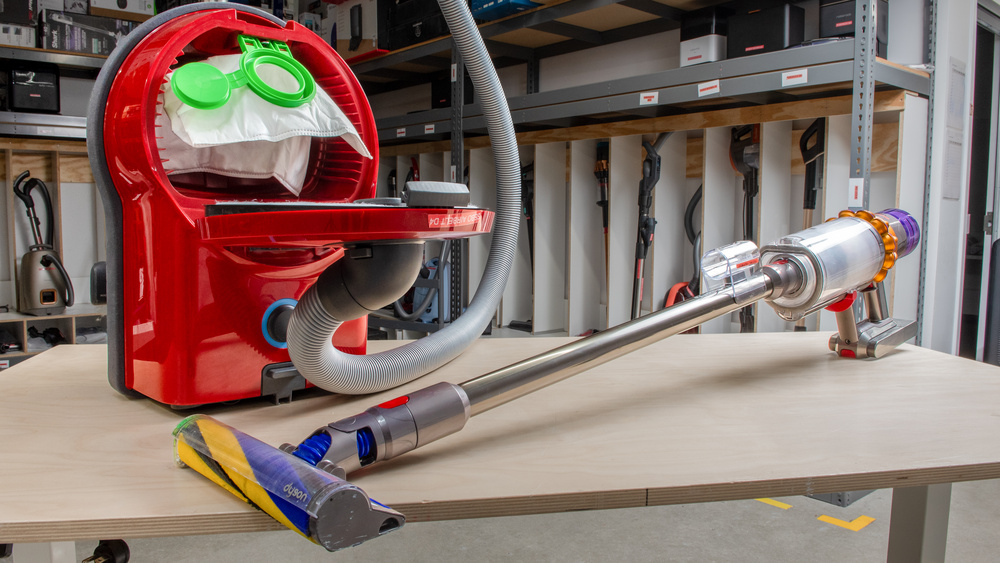
With so many vacuum options on the market, it can be tricky to decide between a bagged and a bagless option. You might assume that bagged vacuums have a performance advantage over their bagless counterparts; actually, we found that comes down to floorhead design. Really, the main difference between bagged and bagless vacuums is how they affect air quality. Bagged vacuums with HEPA-certified filter bags can be fantastic for air quality as you vacuum, and emptying them is usually very clean. If a bagless vacuum has a good post-motor HEPA filter, it won't affect air quality as you vacuum, but unless you have a self-cleaning docking station, you'll have to be careful when you empty it to avoid creating a dust cloud. In deciding between a bagged vs bagless vacuum, the air quality advantage goes to the bagged vacuum. We'll show you why.
Test results
Bagged vs Bagless Vacuums: Pros and Cons
Bagged Pros
- Infrequent emptying, often many months between emptying
- In combination with good pre- and post-motor filters, bags can filter very well, even up to HEPA standards
- Emptying doesn't release much dust, even with a poor bag design
Bagged Cons
- Need to buy compatible bags
- Inadequate bag design can lead to poor filtration and a lot of dust in the air when you vacuum
Bagless Pros
- Zero recurring cost unless you need to replace filters
- Clear indication of dirt compartment fill level
- Convenient, no bags required
Bagless Cons
- Frequent emptying due to the small dirt compartment
- Air quality during operation depends heavily on the post-motor filter
- Messy emptying unless you have a self-emptying docking station
Bagged Vacuums
The idea's simple: blow air out of a sealed canister (creating a vacuum), and let air in through the vacuum hose. Fit a bag over the end of the vacuum hose inside the canister; it catches the dust, acting as a filter to keep it out of the exhaust air and the blower motor. Simple.
Your first experience with vacuums was probably with a bagged vacuum, and you might've encountered the downsides of older models. Expensive bags filled to the brim with months or even a year's worth of household dust and hair. Pulling the soiled dirtbag out of the vacuum and trying to put it in a garbage bag without releasing all this crud into your face. Trying to find a new bag, realizing you have none available, and trying to buy a new compatible one. Finding that they haven't made bags like this in years, or that your vacuum has one letter in the model name that differs from the compatibility tables of bags you can find.
With bagged vacuums, the bag fills with dust the more you vacuum, which clogs the pores and channels of the bag material, thereby restricting air flow. This might improve filtering performance at first, but eventually the motor struggles to move air, consumes more power, runs hotter, and the cleaning effectiveness drops as airflow declines. You have to change the dirtbag at some point, or you risk the bag bursting. If the bag bursts, you'll have a big mess to clean up, not only inside the vacuum but all over your house, since all this dust will get blown right out of the exhaust. You could also permanently damage your motor if you get too much dust in it, effectively destroying the vacuum.
Every manufacturer has their own dirtbag design, and sometimes every model has its own design. So finding compatible dirtbags for an older vacuum might be quite hard. And you can't operate a bagged vacuum without a bag, so you have to have them on hand. If you can't find a replacement bag, the vacuum is useless.
But most of those drawbacks were with old bagged vacuums, and bagged vacuums have changed. Plus, on the positive side, vacuum bags can hold a lot of material, so you can fill a bag over many months without having to empty it frequently.
Air Quality When Operating A Bagged Vacuum
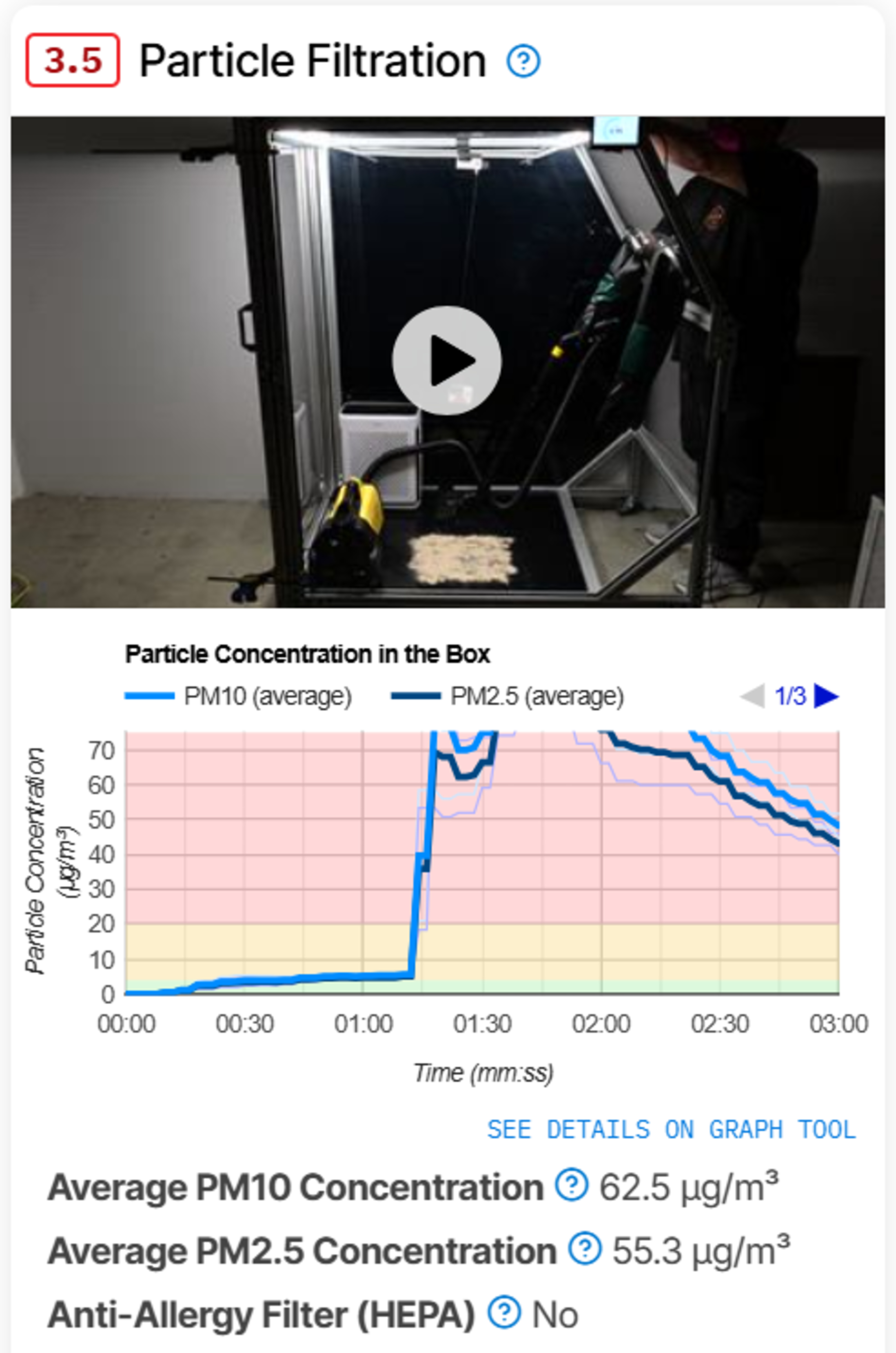
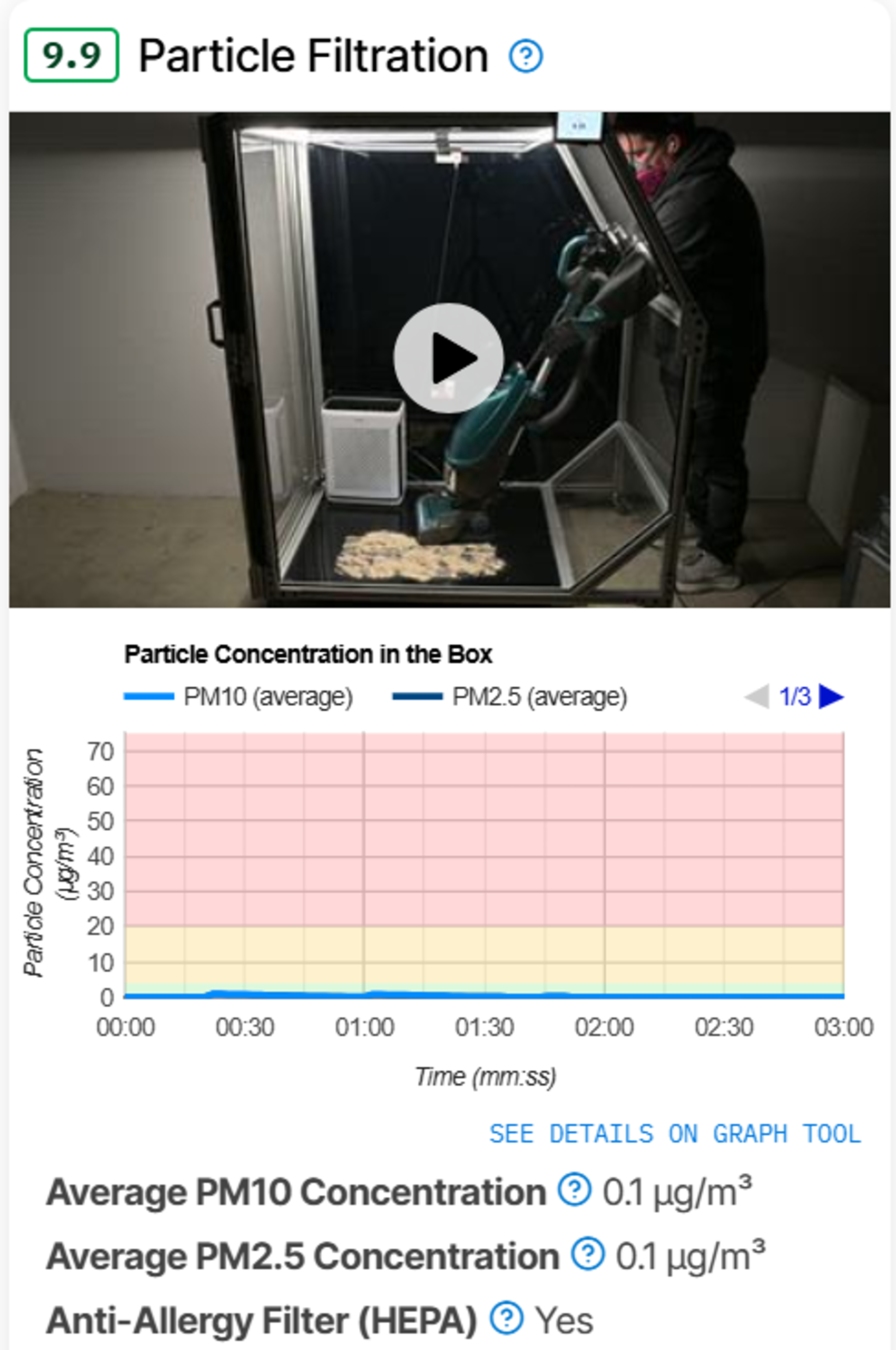
The bag itself is an important part of a bagged vacuum's filter system, so filtering performance depends heavily on the bag material the manufacturer uses. Originally, bagged vacuums had cloth bag filters, then paper bag filters. Filtering performance was generally quite poor. Now, you're more likely to find nonwoven polymer fabric bags. Some bagged vacuums claim HEPA certification, a standard that requires the filter to remove 99.97% of particles 0.3 µm in diameter or larger. These vacuums usually include good pre- and post-motor filters in addition to the bag. We found that if a vacuum doesn't claim HEPA certification, it's not very effective at containing fine material. Let's compare the Eureka Mighty Mite to the Kenmore Intuition Bagged.
| Eureka Mighty Mite Air Quality | Kenmore Intuition Bagged Air Quality |
|---|---|
 |
 |
The Eureka Mighty Mite delivers an awful result. This vacuum relies entirely on a poorly constructed bag as its filter and lacks a pre- or post-motor filter, so most of the fine dust passes right through the bag and out of the exhaust.
Since nonwoven polymer fabric is an engineered material manufactured to exact specifications, manufacturers can control porosity very well. They can construct a filter bag that filters fine particles quite effectively in combination with pre- and post-motor filters, even meeting HEPA-level filtering requirements. You can see this with the Kenmore Intuition Bagged. This result shows virtually non-detectable levels of dust. This level of performance will be a welcome relief for allergy sufferers, and we can definitely say that this vacuum meets the HEPA standard. We have yet to encounter a HEPA-certified vacuum that scores poorly in this test.
Air Quality When Emptying A Bagged Vacuum
Emptying a bagged vacuum is quite simple: you open the canister, lift the bag out of its retaining bracket, and dispose of the bag. The worst-case scenario for air quality is a bag with a wide-open inlet hole, where you disturb the bag and expel a puff of dust-laden air out of the hole as you lift it from the canister. But even the worst bags, like the Eureka Mighty Mite bags, have inlet seals.
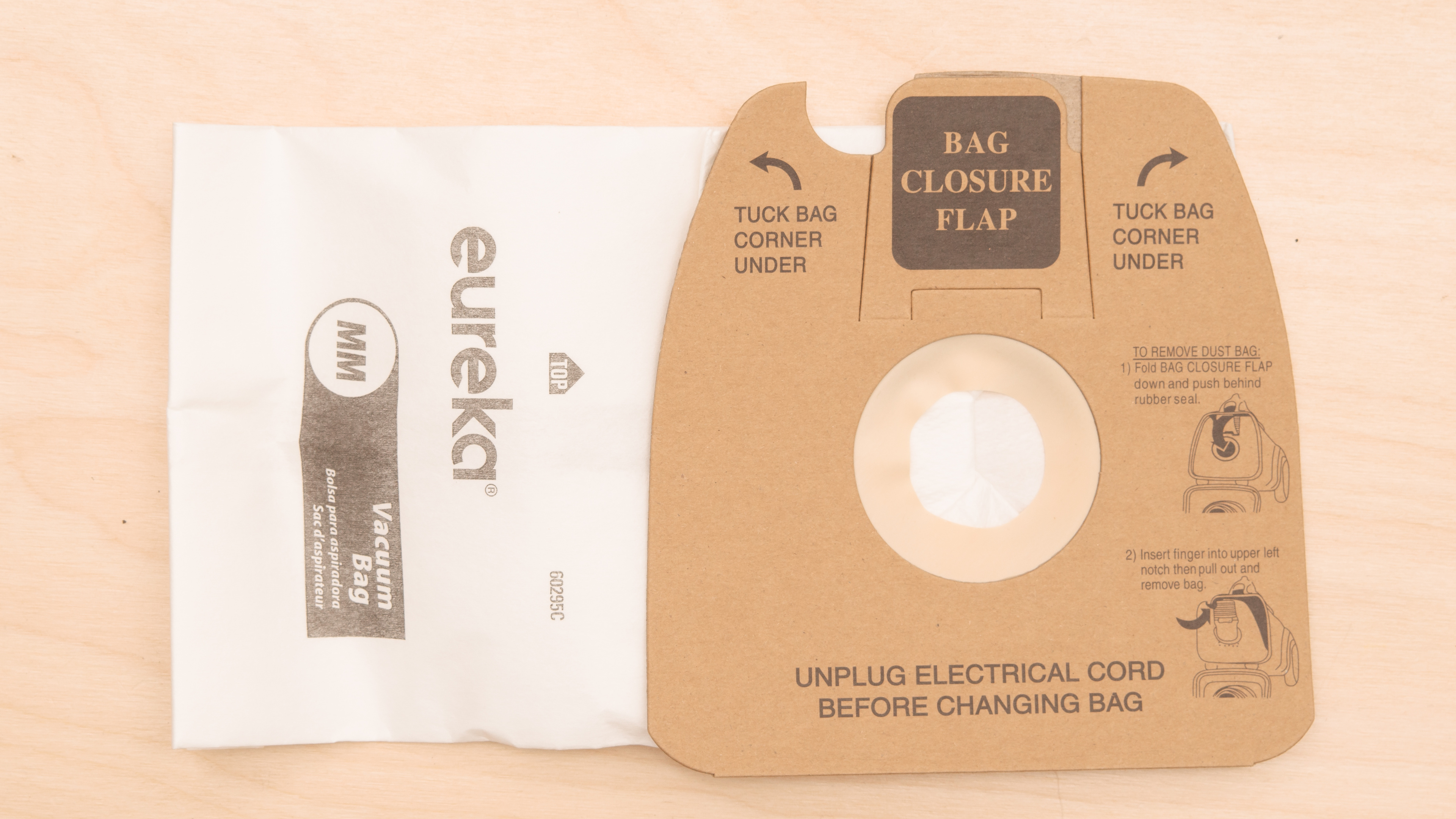
SEBO uses a more sophisticated design with the bags for the SEBO Airbelt D4, which have a hinged plastic flap that you fold back to press a tight-fitting plug into the inlet.
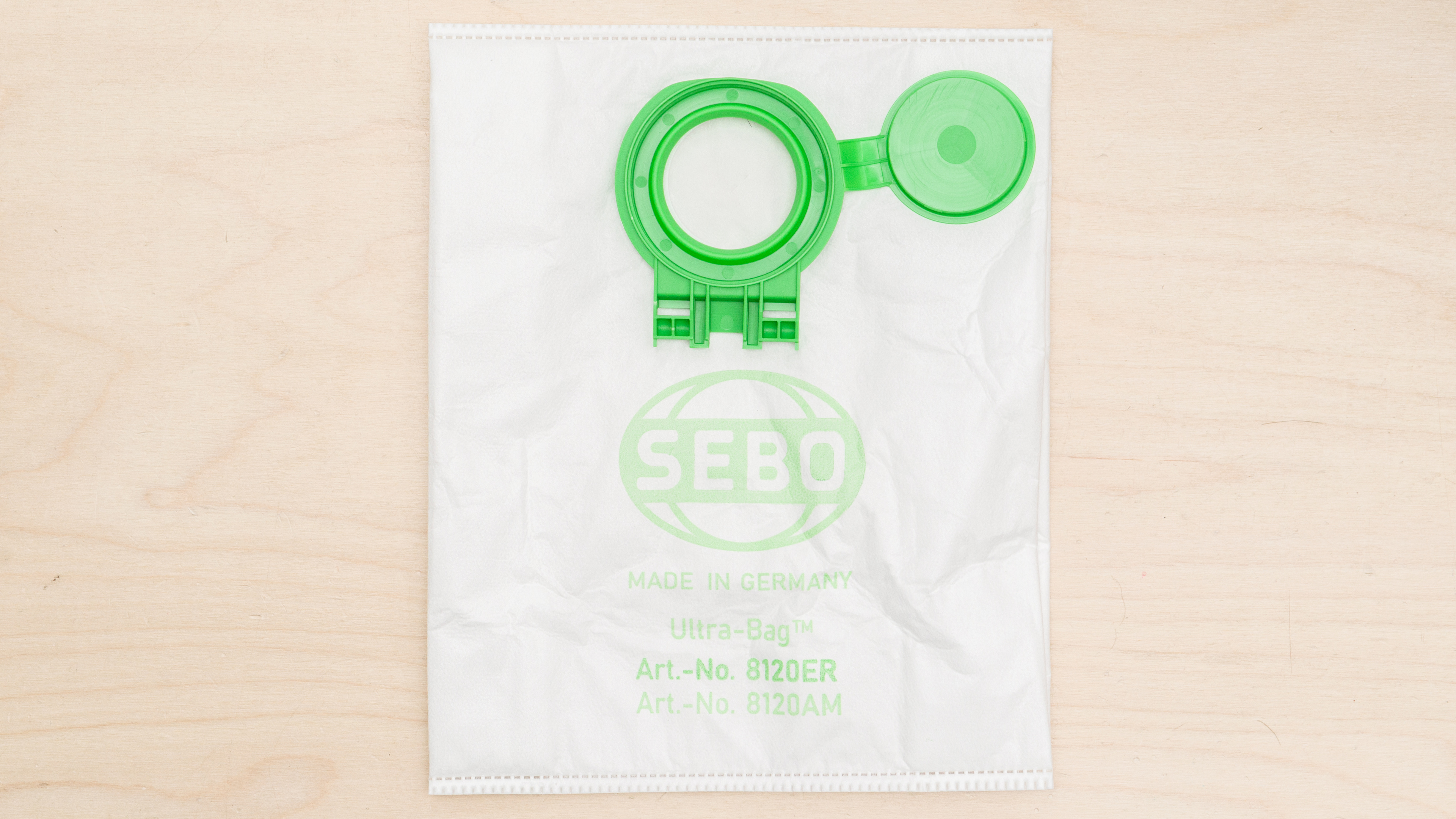
These bags release only a small amount of dust when you lift them out of the canister and seal the bag.
Miele goes even further with the Complete C3 and uses bags with a spring-loaded cover that snaps shut when removed. The vacuum's bag mounting bracket forces it open, so that it shuts automatically as soon as you pull the bag from its mount.
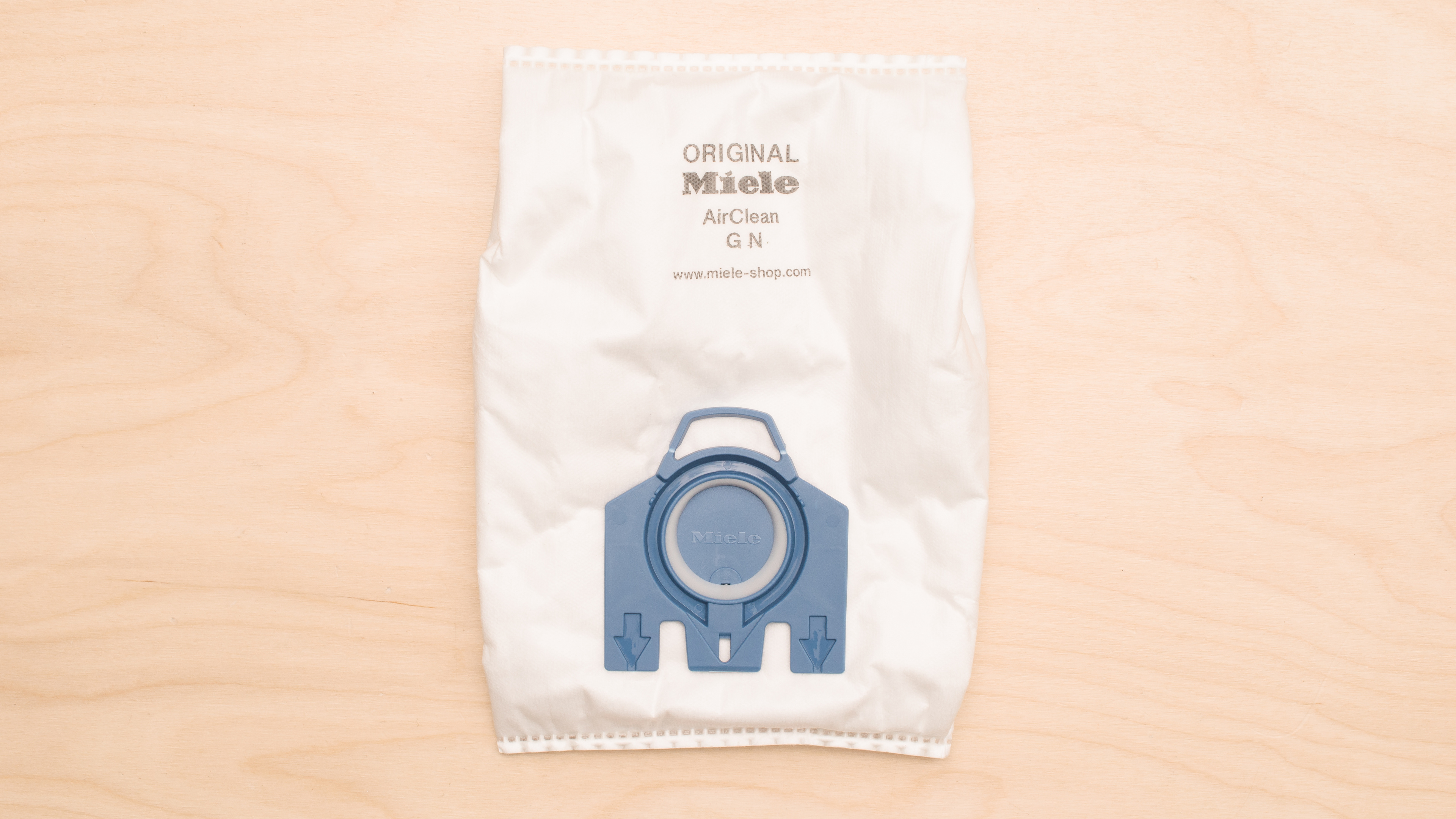
This bag design releases even less dust when you empty it, just a tiny amount that escapes around the bag sealing bracket.
Bagless Vacuums
A bagless vacuum is just that: a vacuum that filters without a bag. It's based on an old industrial technology known as a cyclone separator. This well-established device uses a blower to push in fast-moving air on the side of a cylindrical chamber. The air hits the side of the chamber and starts to spin like a cyclone or tornado. Any solid particles in this air stream get flung outward, hitting the sides of the chamber, and slow down due to friction. Eventually, gravity takes over, and these solid particles drop towards the bottom of the chamber, collecting in a conical hopper. The air, now free of dust and still spinning, bounces off the conical walls of the hopper, and the spinning air stream forms a narrow vortex spinning up the center of the chamber. It goes up and out of the exhaust on the top.
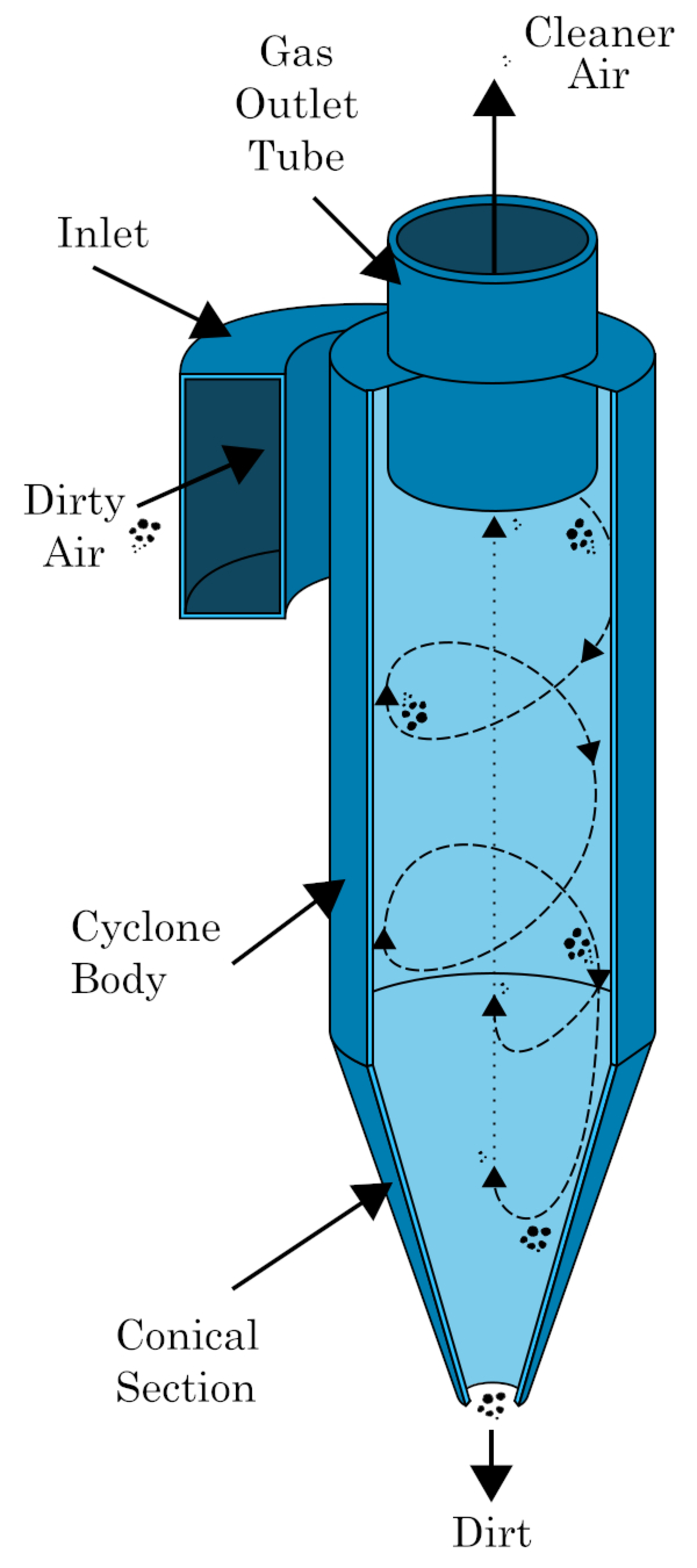

This separation is based on the difference in mass between the dirt particles and the air, so cyclonic separation works well for heavy particles but not so well for light ones. Because of this, bagless vacuums use conventional post-motor filters to filter out light particles like PM10 and PM2.5. These particles are around 10 µm and 2.5 µm in diameter.
Therefore, the best bagless vacuums use a conventional post-motor filter to keep fine particles out of the exhaust. Some bagless vacuums use a pre-motor filter as well to keep dust out of the motor. Note that these filters must be replaced regularly in some bagless vacuums (like the Miele Boost CX1), so although you won't have to buy bags, you'll have to buy filters. If you have to replace these filters, the recurring cost won't be zero, unlike with bagless vacuums with permanent filters.
The cyclone filters take up space in the dirt compartment, leaving less room for dirt collection, so bagless vacuum dirt capacities are lower than in bagged vacuums. This is especially true for smaller vacuums, like Dyson handheld stick models.
Most bagless vacuums have clear dirt compartments so you can see the fill level and know when to empty them.
Air Quality When Operating A Bagless Vacuum
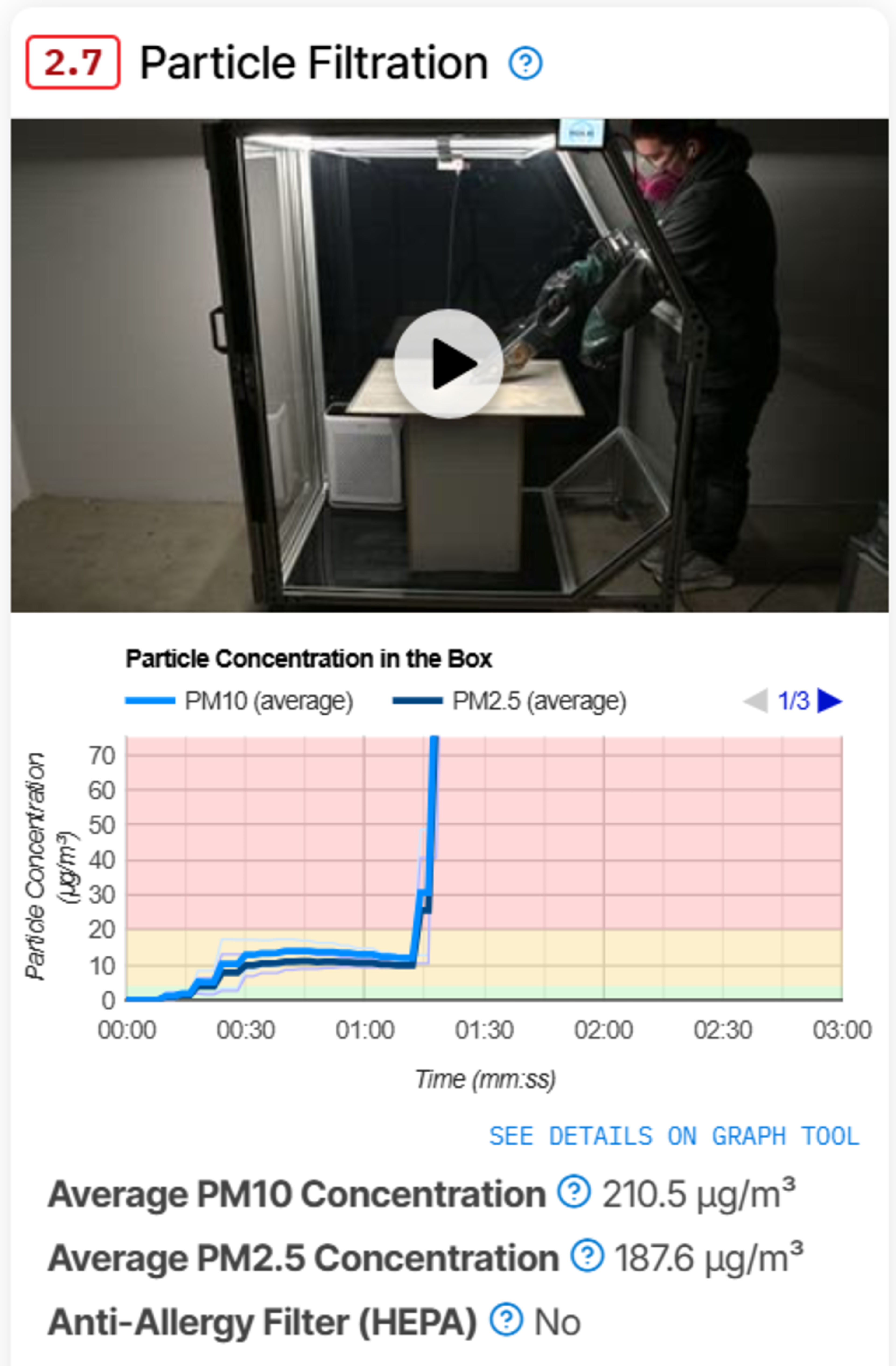
Without a pre- or post-motor filter, a bagless vacuum does a very poor job filtering out fine particles, as shown with the Shark UltraCyclone Pet Pro+. Compare to the Dyson V15 Detect.
| Shark UltraCyclone Pet Pro+ Air Quality | Dyson V15 Detect Air Quality |
|---|---|
 |
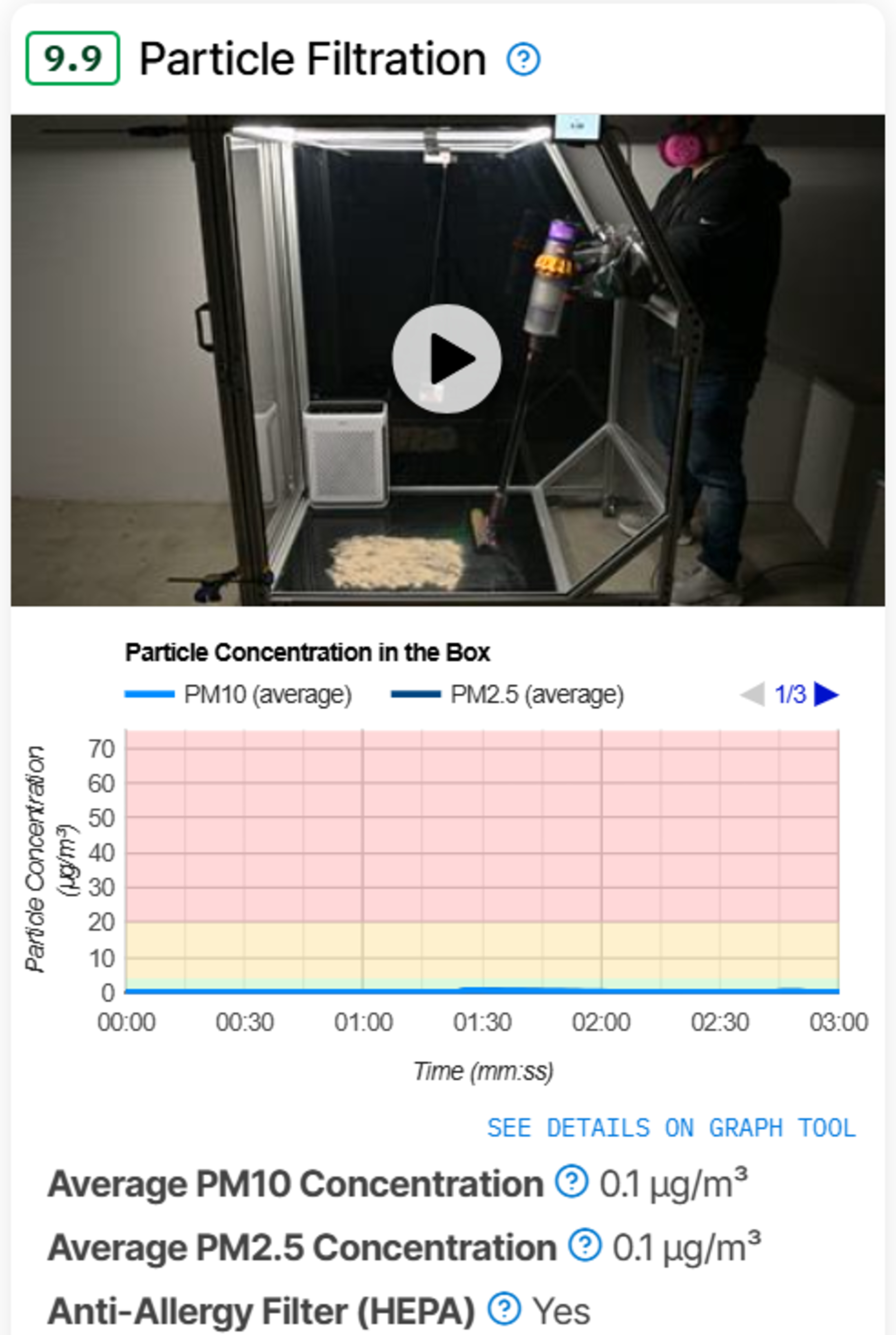 |
The Shark's filter doesn't really hold back any fine particles at all and expels them right out into the air. But when the manufacturer installs a well-performing post-motor HEPA filter, this problem is eliminated. Dyson has excellent post-motor HEPA filters, and it shows.
Air Quality When Emptying A Bagless Vacuum
The dust and debris a bagless vacuum collects are collected in a compartment. This compartment usually has a flap you can open to empty the vacuum. When you activate the flap trigger, the flap falls open, and the dust falls out of the compartment. This whole activity usually takes place in the open air above a container, so the light dust catches the air as it falls, floating out and bouncing off the walls of the receptacle. You could open the flap while the dirt compartment is entirely in a garbage bag, but it'll still be difficult to contain all this fine dust. These particles are tiny and extremely light. They float up and linger in the air for quite some time. Eventually, they settle back down all over your room.
Emptying the Dyson V15 Detect.
The only way a manufacturer can offer clean, hygienic emptying of a bagless vacuum is by supplying it with a self-emptying dock that empties the dirt compartment into a dirtbag similar to a bagged vacuum's dirtbag. Docks like these are very rare. Notably, Dyson doesn't offer such a dock, but Samsung does, in their Bespoke AI Jet Ultra and as an optional 'Cleaning Station' with their Jet 75 and Jet 90 Complete models.
Emptying the Samsung Bespoke AI Jet Ultra.
You can see only a few motes of dust when our tester moves the dirtbag to the garbage bin. This dust release is even less pronounced than it is when you dispose of Miele's self-sealing dirtbags.
Conclusion
As far as air quality goes, bagged vacuums have the most advantages. Even if you have a model that does a poor job filtering particles during operation, emptying a bagged vacuum is always cleaner than emptying a bagless vacuum without a self-cleaning dock. Your best assurance of excellent air quality is a HEPA-rated bagged vacuum. The choice is yours, and our air quality tests will help you make your decision.
If air quality isn't a concern, our testing shows that performance depends more on floorhead design than whether a vacuum is bagged or bagless, so you should consider other factors.
We always value your feedback! If you have any questions, please let us know in the comments or at feedback@rtings.com. If you have suggestions for improving our testing, we'd love to hear from you. We're constantly making improvements based on your suggestions.