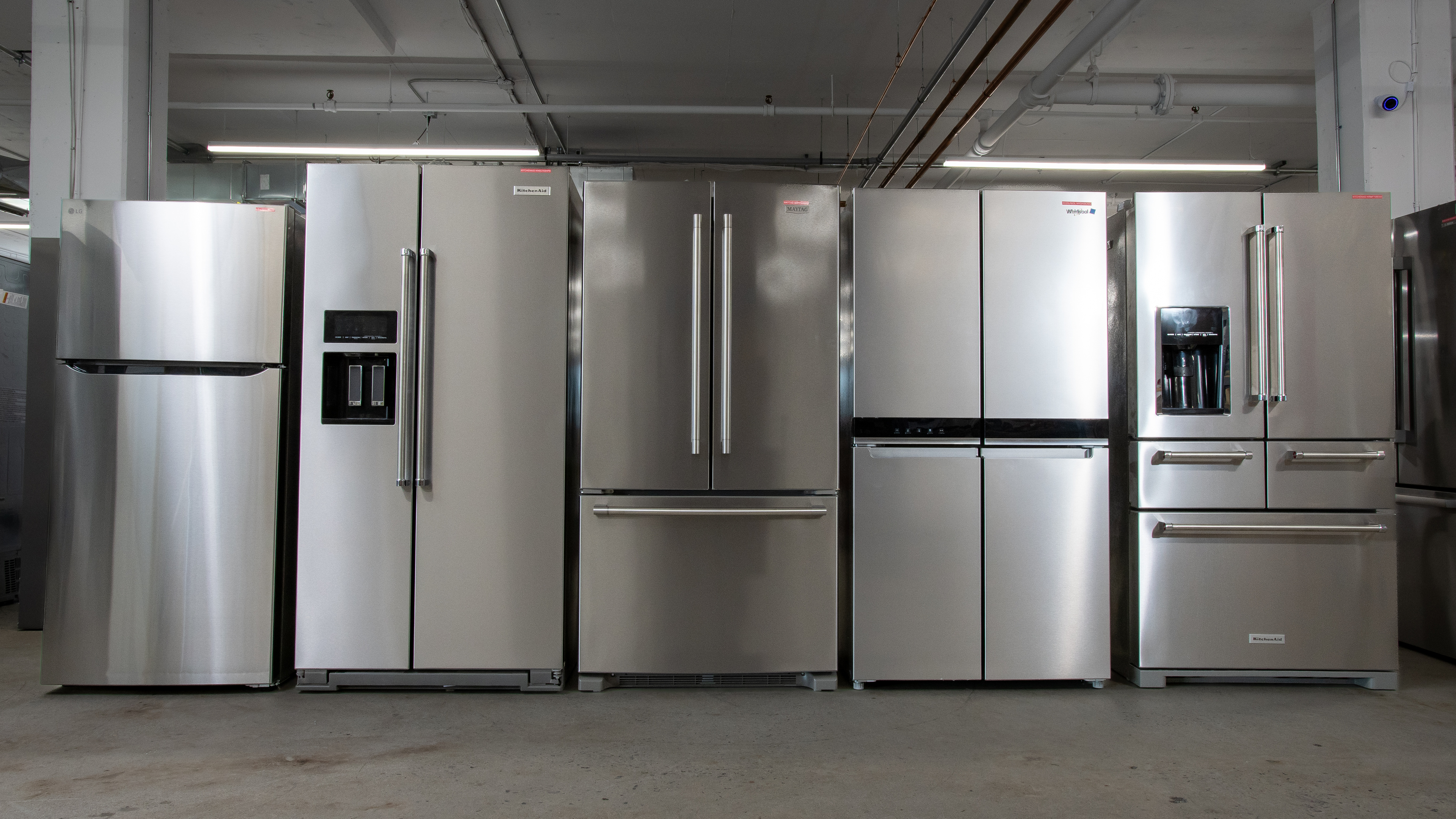
Everyone has grown up with a refrigerator, and everyone has one in their home. These always used to be traditional two-door fridges with a freezer on top and the refrigerated section below, each accessible using big swing-out doors. This design has its shortcomings, and manufacturers responded by designing fridges with increased accessibility, convenience, storage space, and storage flexibility. When you're shopping for a new fridge, you'll see many designs. What are your options? What advantages does one design have over another? Let us help sort out the selection into several fridge types, and help you find which type of fridge will meet your needs.
Test results
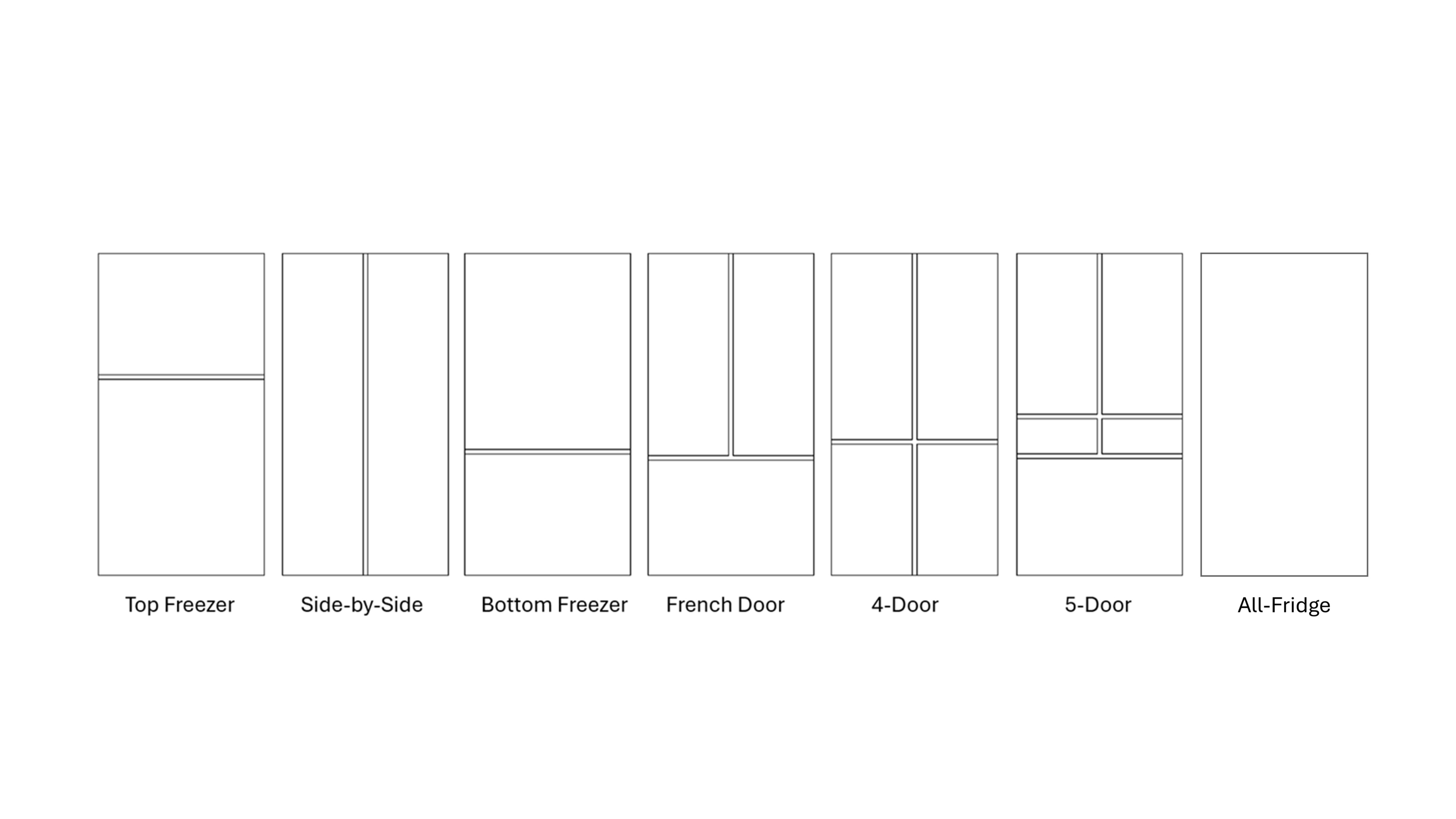
Top Freezer
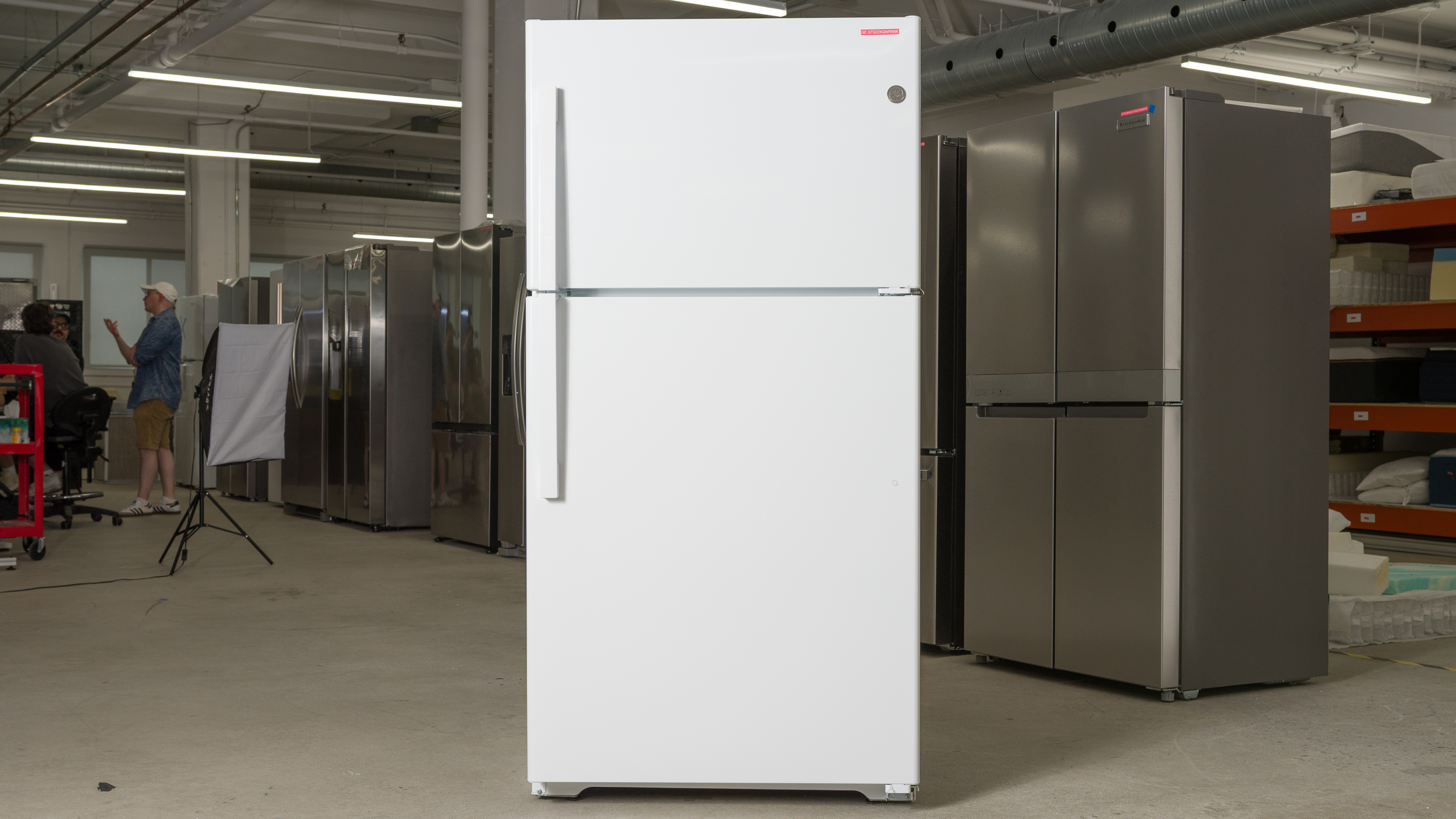
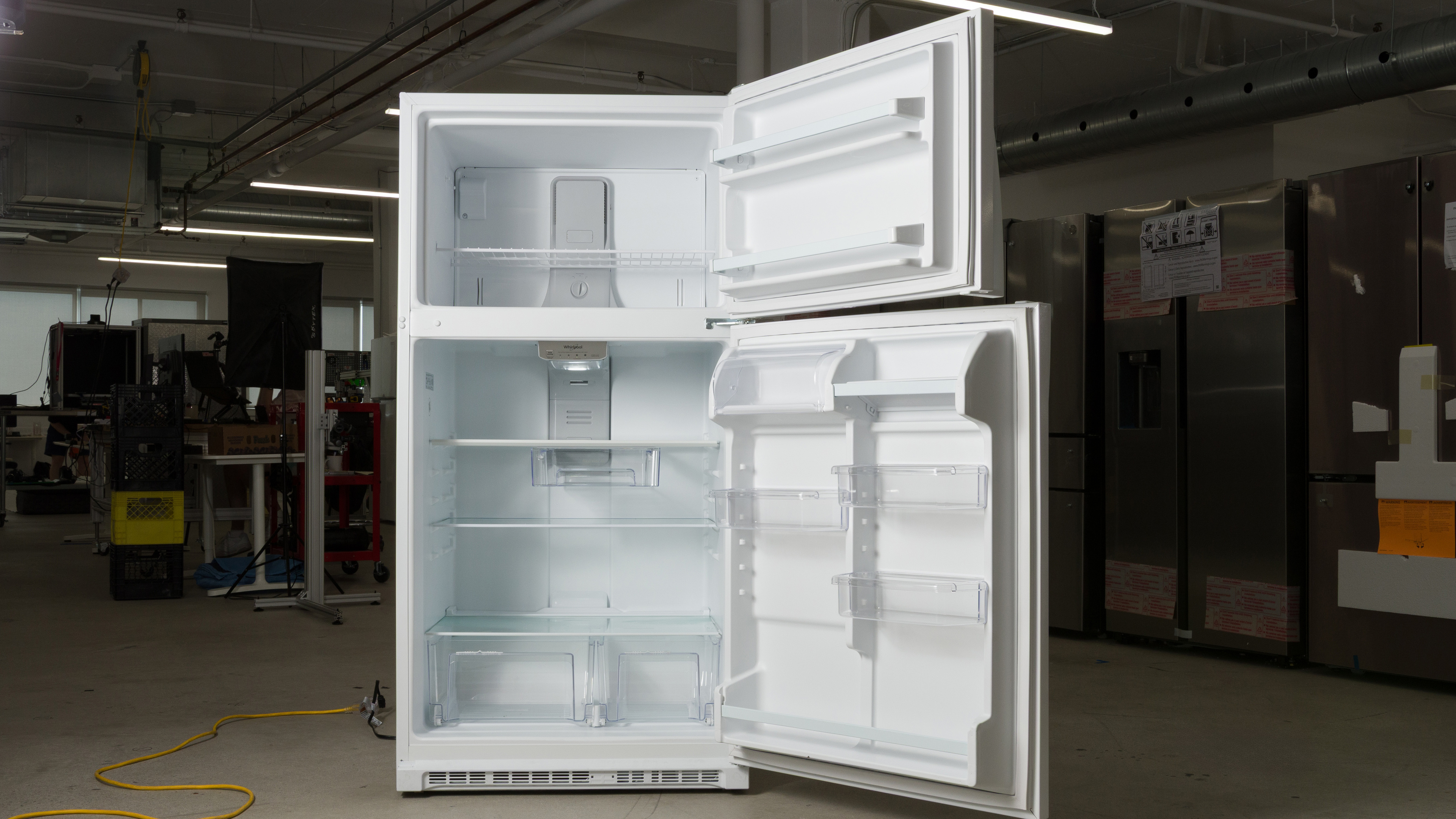
You probably imagine top freezer designs when you think of the word "fridge." They've been around for a very long time, and they're the default design that led to all the other refrigerator types below. There's a freezer section on top and a refrigerator section underneath. These are now budget fridges and come with few features. There are handles on the doors, although there are fridges of this type without handles and with finger recesses in between the fridge and freezer doors for a sleeker look, like the Frigidaire FFTR1425VW or the LG LTCS20020S. There are usually shelves inside the freezer and fridge, and pull-out crisper drawers on the bottom of the refrigerator, so you don't have to bend down and reach far into the back.
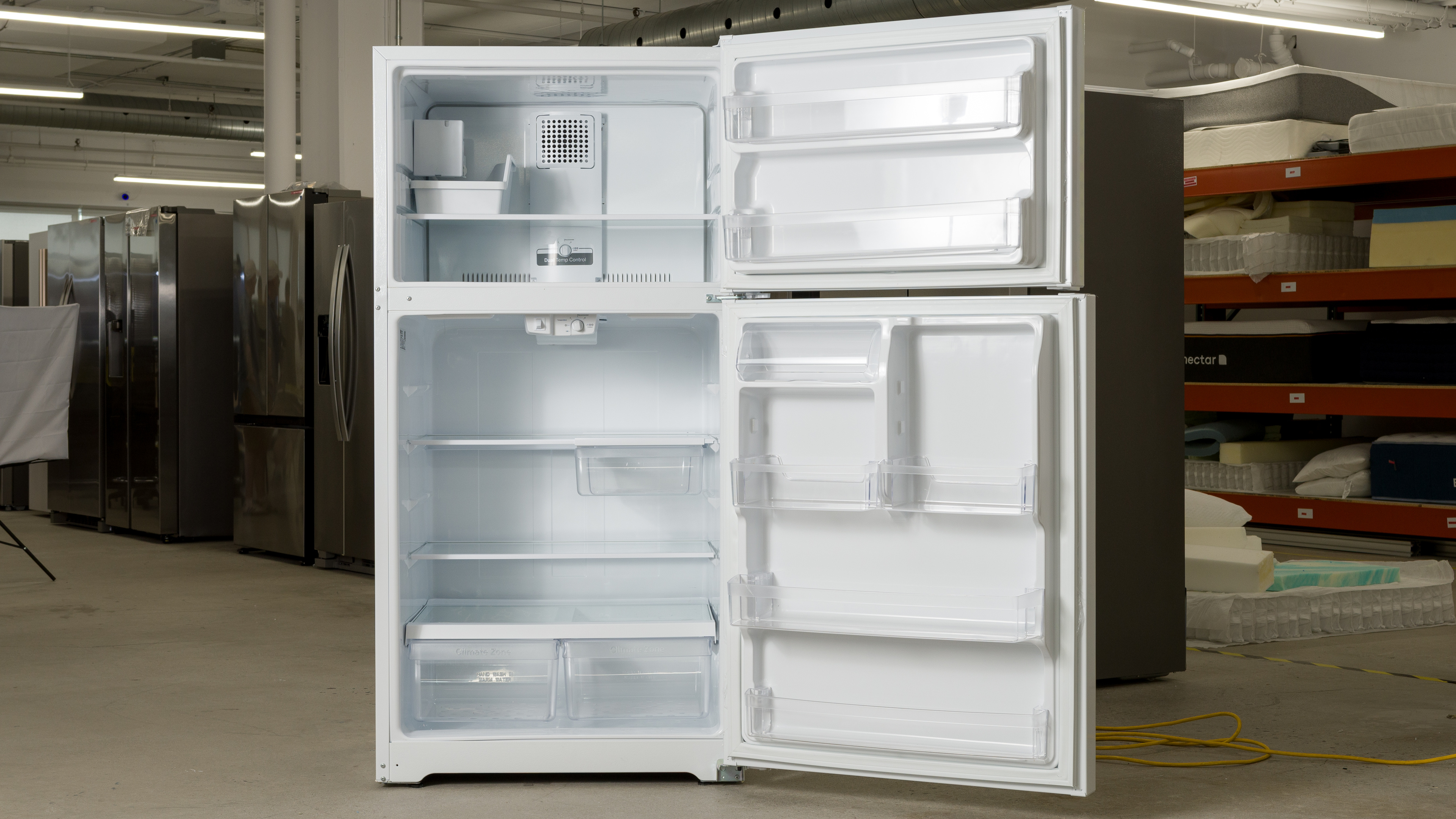
These fridges are available in a variety of widths up to 33 inches. A swing-out door wider than 33 inches would be very heavy, putting strain on the hinges. It would require a large amount of clearance in front, and the weight of a very wide door with fully loaded door bins might cause a poorly-leveled fridge to become unstable and tip forward if the door were fully opened.
With this fridge type, shorter users might find it hard to reach items at the back of the freezer. People with mobility issues might also have trouble bending down low to access items in the crisper drawers at the bottom of the fridge. However, the pull-out crisper drawers make things a bit easier by moving items out of the compartment.
These designs aren't suitable for ice makers with in-door water and ice dispensers. The ice maker is often optional. Some of these fridges come with mounting points, water, and electrical connections for an ice maker you can purchase and install yourself at a later date. These ice makers tend to have a modest daily production rate, but usually have large ice trays.
| Refrigerator | Daily Ice Production, g | Ice Production Score | Ice Tray Capacity, g | Ice Capacity Score |
|---|---|---|---|---|
| Whirlpool WRT311FZDW | 1092 | 6.8 | 3038 | 8.1 |
| GE GTS22KGNRWW | 1565 | 7.7 | 3110 | 8.1 |
| LG LTCS20020S | 2457 | 9 | 3405 | 8.3 |
| Frigidaire FFTR1835VW | 937 | 6.4 | 3630 | 8.5 |
| Frigidaire FFTR1425VW | 876 | 6.2 | 3676 | 8.5 |
Top freezer refrigerator ice makers, ranked by ice capacity.
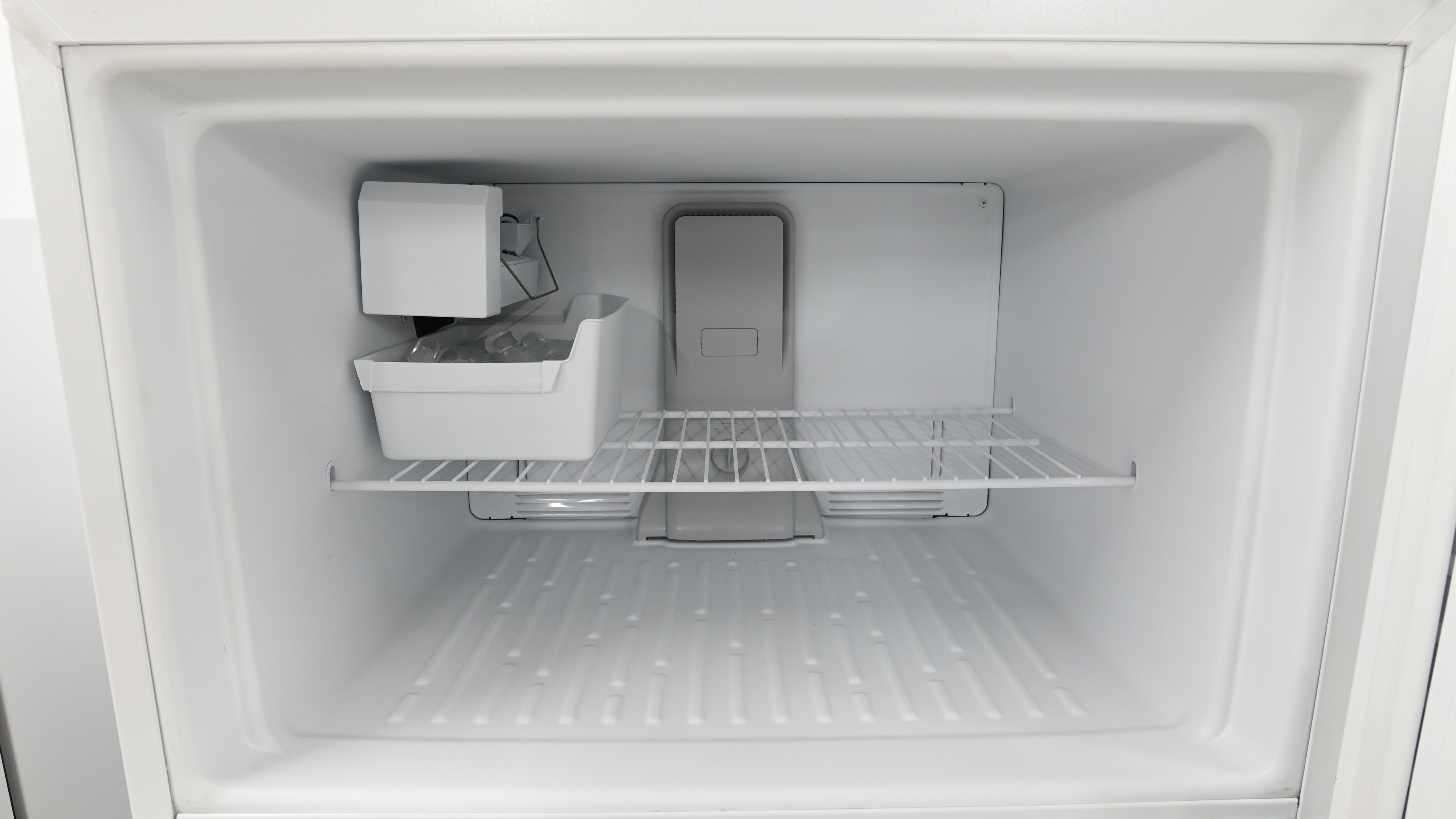
The ice maker is always located in the freezer. This is the best location for an ice maker, and these basic ice makers are usually ejector designs, which are more reliable than twist-tray alternatives. Ejector-style ice makers create ice in a cast metal mold and heat the mold when the ice is solid, detaching the ice cubes, while an arm with fingers rotates and ejects the ice out of the mold into the tray below. Twist-tray ice makers cast the ice in a plastic ice cube tray, and a motor twists the tray to detach the ice, though the plastic tray can degrade from a mix of thermal shock and mechanical stress over time.
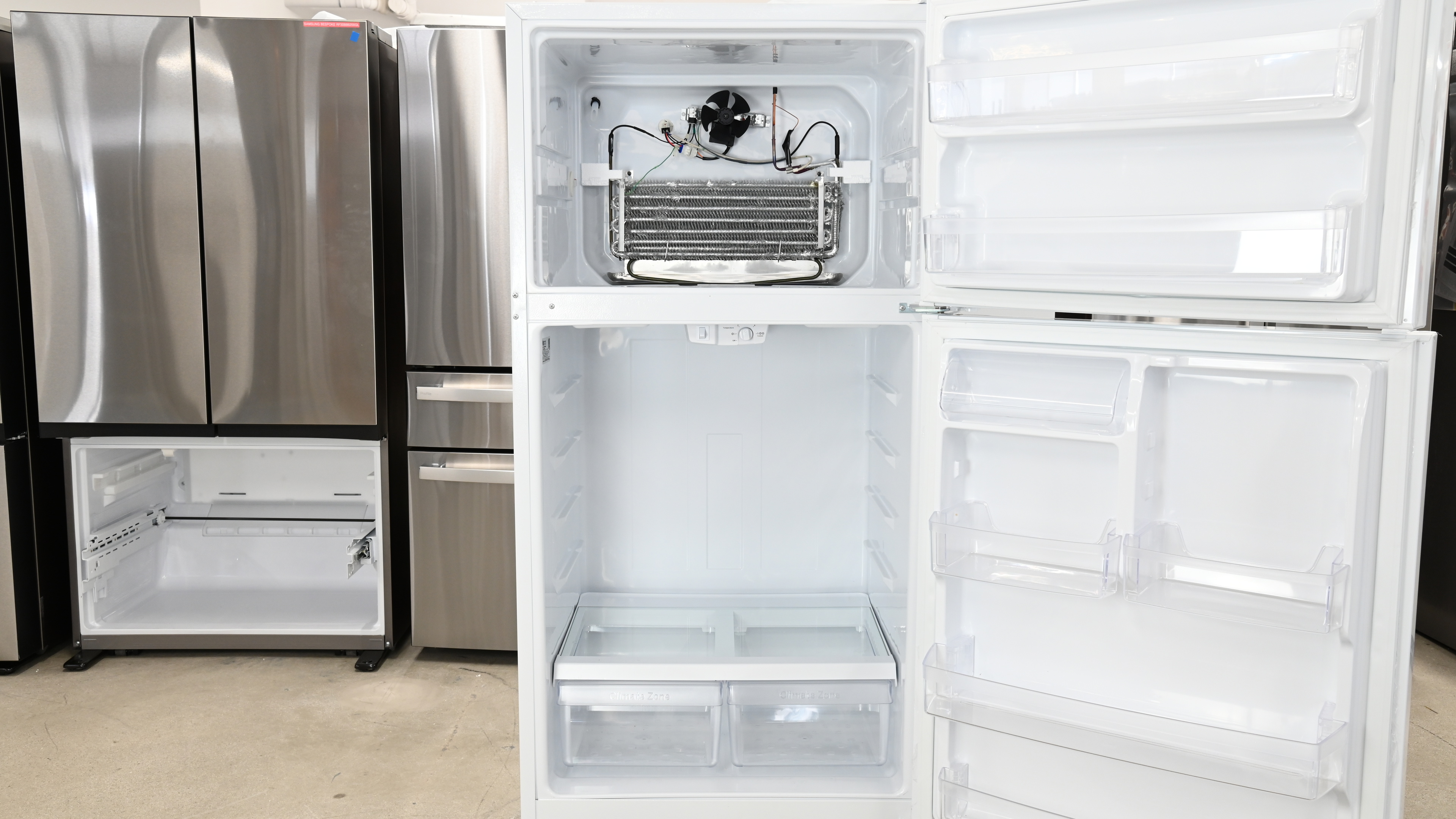
This design almost always has a single evaporator in the freezer, with a recirculation fan moving air over the evaporator. Cold, dry air from the evaporator descends down ducts leading to the refrigerator section, while warm, moist air from the fridge rises into the evaporator using a return duct.
Choose a top freezer refrigerator if:
- You want to save money. Fridges of this design are the most basic and the lowest cost.
- You need a more reliable fridge. Since they lack features, there's less to go wrong.
- You don't need a water dispenser. These fridges hardly ever have water dispensers.
- You don't need an ice maker. Many of these fridges don't come with ice makers, or the ice maker is optional.
- You don't need an ice dispenser. If you do get an ice maker with a fridge like this, it's difficult for manufacturers to put an external ice dispenser in the freezer door.
- You want greater capacity. Many top freezer refrigerators use the bare minimum complement of interior hardware, leaving most of the interior wide open for storing food items.
Skip it if:
- You want more features. Since top freezer-type fridges are usually budget models, you won't find many features.
- You need an in-door, externally accessible water and ice dispenser.
- You need a fridge wider than 33 inches.
Here are the top freezer fridges we've tested, sorted by advertised refrigerator compartment capacity. We test the actual usable capacity for both the fridge and freezer, and we note the percentage of the advertised capacity that's actually usable. Manufacturers may overstate the capacity, and usable capacity drops as manufacturers add hardware like pull-out drawers, ice makers, and ice buckets. While these features add convenience, they render some internal volume unavailable for storing food items.
| Refrigerator | Advertised Refrigerator Capacity, cubic feet | Usable Refrigerator Capacity, cubic feet | Percentage Usable Refrigerator Capacity | Advertised Freezer Capacity, cubic feet | Usable Freezer Capacity, cubic feet | Percentage Usable Freezer Capacity |
|---|---|---|---|---|---|---|
| Frigidaire FFTR1425VW | 10.0 | 8.9 | 89% | 3.9 | 2.5 | 65% |
| Frigidaire FFTR1835VW | 13.4 | 11.0 | 82% | 4.9 | 4.0 | 81% |
| Whirlpool WRT311FZDW | 14.4 | 11.5 | 80% | 6.1 | 5.2 | 86% |
| LG LTCS20020S | 14.7 | 10.8 | 74% | 5.5 | 3.8 | 69% |
| GE GTS22KGNRWW | 15.3 | 11.3 | 74% | 6.7 | 5.3 | 79% |
Top freezer refrigerators
Side-by-side
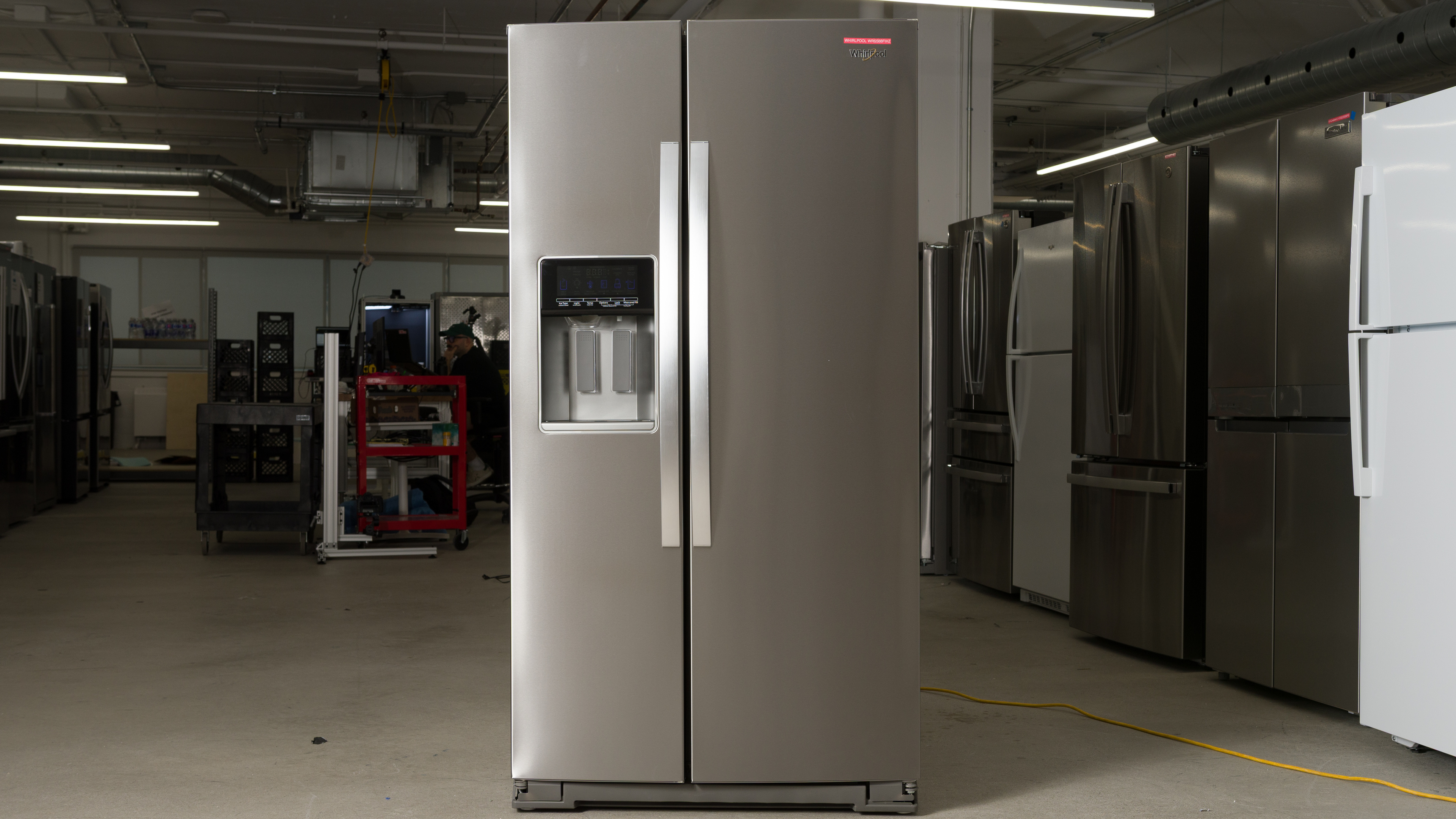
What if you were able to use the entire height of a refrigerator? A Side-by-Side refrigerator divides the fridge vertically rather than horizontally into the fridge and freezer, so you can use the full height of the refrigerator. Some narrow side-by-side refrigerators split the fridge and freezer compartments evenly down the middle, but most have a narrower freezer section on the left and a wider fridge section on the right since the freezer is usually smaller than the fridge. Because the doors aren't as wide, they don't put as much strain on the hinges, and a very wide fridge won't be as unstable with the doors open. The narrower doors also minimize the space required for the door swing in front of the fridge, which will give more aisle clearance for fridges installed across from a kitchen island. These designs almost always use door handles, although some 36-inch side-by-side fridges have enough width for a finger recess in between the doors.
It's easy for manufacturers to add external ice and water dispensers in the freezer door with this design since the ice maker is located inside the freezer. An ice maker in the freezer is better from a reliability perspective as well, since the ice maker doesn't need extra ducting, insulation, and seals to keep it at freezing temperatures like it would in a fridge. However, the ice maker and the chute leading to the ice dispenser take up a lot of space inside the already narrow freezer. Ice production rate and ice capacity may be limited on some side-by-side models.
| Refrigerator | Daily Ice Production, g | Ice Production Score | Ice Tray Capacity, g | Ice Capacity Score |
|---|---|---|---|---|
| Samsung RS27T5200SR | 1034 | 6.6 | 1568 | 6.9 |
| Whirlpool WRS321SDHZ | 1342 | 7.3 | 3456 | 8.4 |
| Frigidaire FRSS2623AS | 1499 | 7.6 | 3775 | 8.6 |
| Whirlpool WRS588FIHZ | 1675 | 7.9 | 2286 | 7.5 |
| KitchenAid KRSC703HPS | 1780 | 8.1 | 2376 | 7.6 |
Side-by-side refrigerator ice makers, ranked by ice production.
This design leads to tall, narrow fridge and freezer compartments with many narrow shelves.
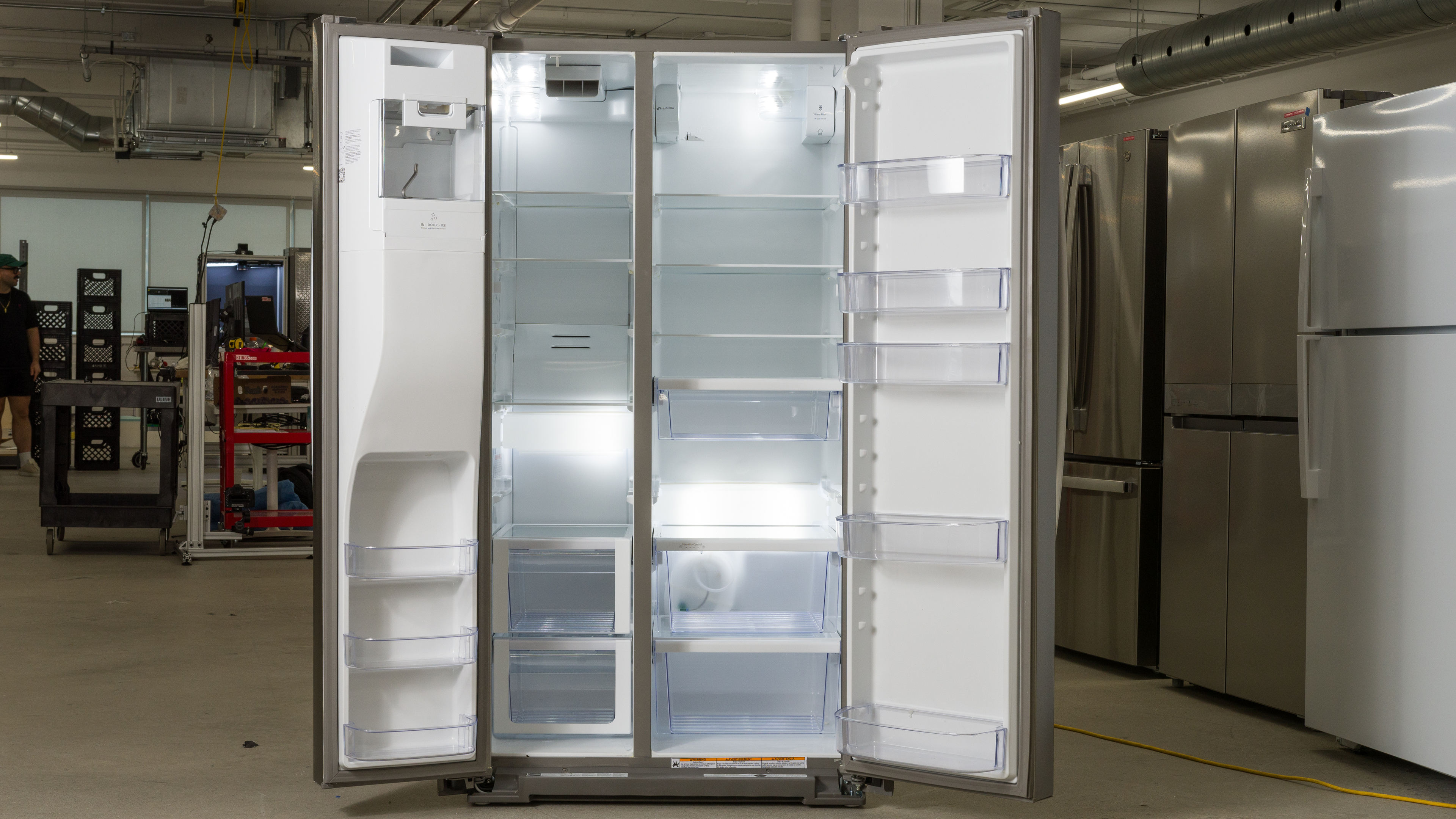
Inside, you can easily accommodate tall items in both the fridge and freezer, but wide items will be a problem, especially in the narrow freezer compartment. This design may be of some benefit to those with mobility issues since the pull-out drawers in both the fridge and freezer are vertically stacked, with the top drawer higher and easier to access. However, shorter people may find items at the top of both the fridge and the freezer hard to reach.
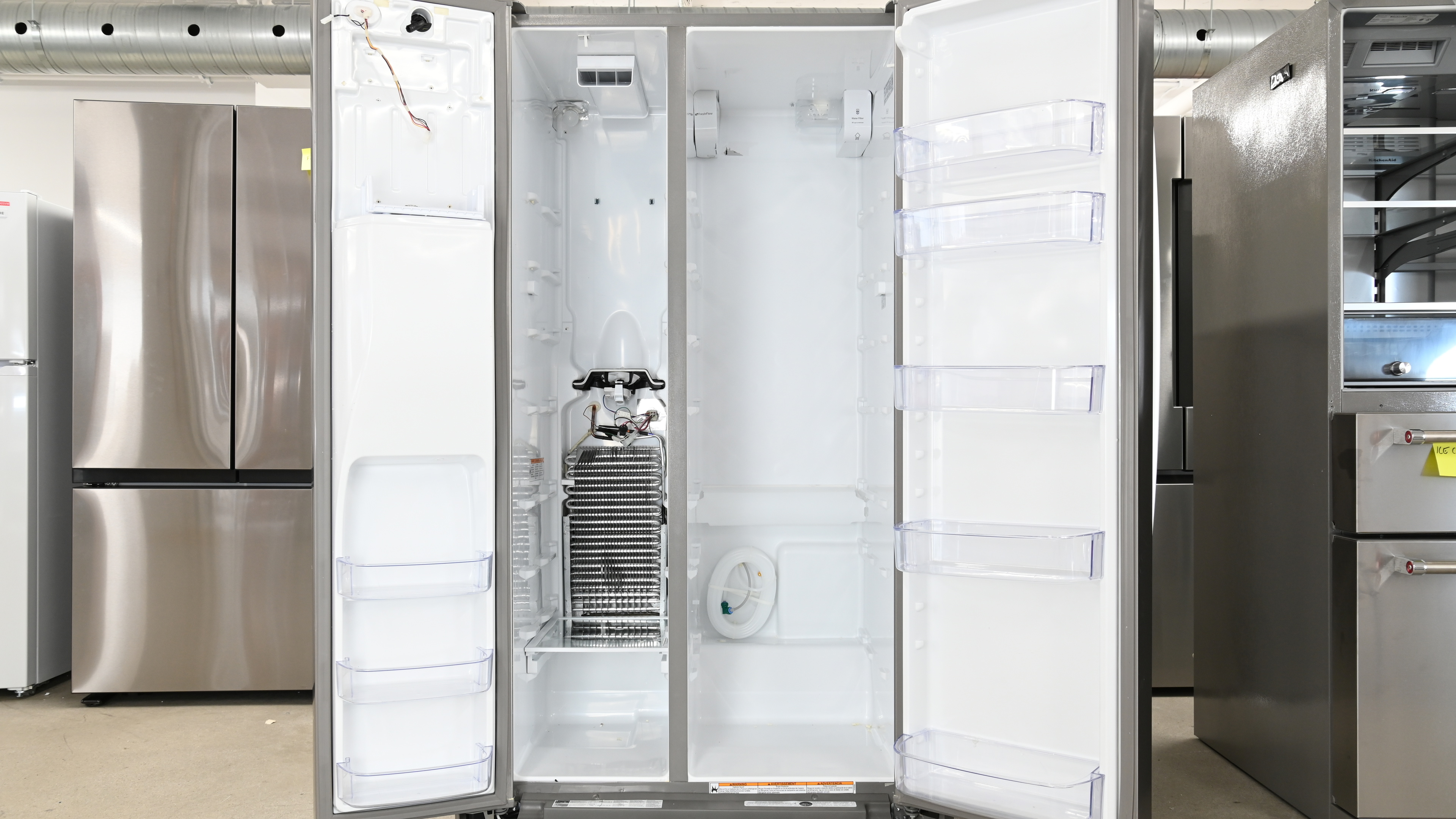
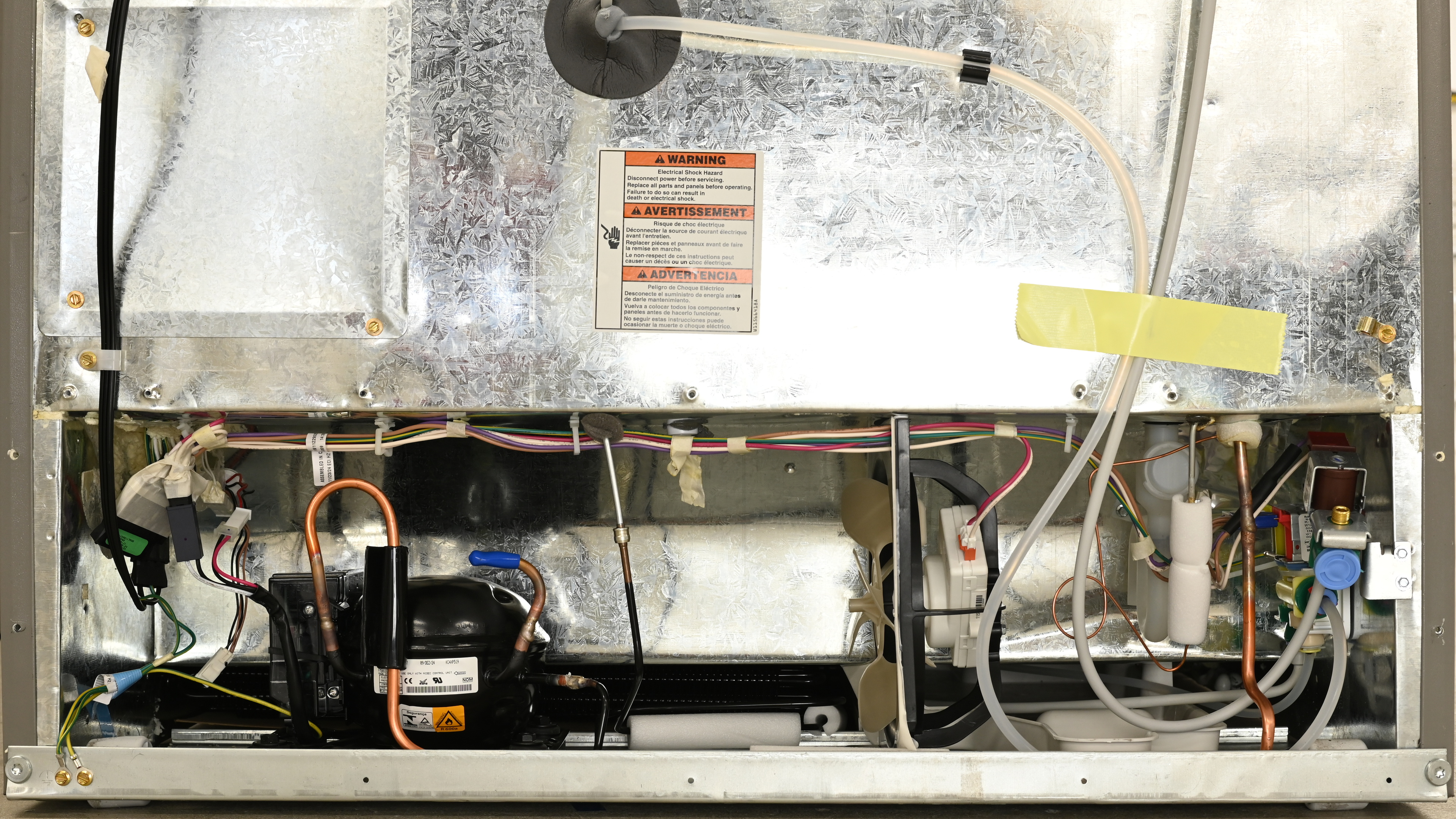
These fridges can be somewhat difficult to service since the evaporator, which cools both the fridge and the freezer, is in the narrow freezer section and will be much harder for a service technician to access.
Choose a side-by-side refrigerator if:
- You need a wide fridge. Side-by-side designs are usually 33 inches and wider; the freezer would be too narrow in a narrow side-by-side fridge.
- You need to minimize the front clearance space required for the swing-out doors.
- You need an in-door, externally-accessible water and ice dispenser. This feature is widely available for this fridge type.
- You need to store tall items. These fridges have a lot of vertical space, which is ideal for tall, narrow items like bottles.
Skip it if:
- You want to save money. Side-by-side designs are more expensive than top freezer designs and are more expensive to service since the mechanical components are more difficult for a technician to access.
- You need to store wide items. It may be difficult to store pizza boxes and family-sized lasagna trays in narrow side-by-side compartments.
Here are the side-by-side fridges we've tested, sorted by advertised refrigerator compartment capacity. We test the actual usable capacity for both the fridge and freezer, and we note the percentage of the advertised capacity that's actually usable. Manufacturers may overstate the capacity, and usable capacity drops as manufacturers add hardware like pull-out drawers, ice makers, and ice buckets. While these features add convenience, they render some internal volume unavailable for storing food items.
| Refrigerator | Advertised Refrigerator Capacity, cubic feet | Usable Refrigerator Capacity, cubic feet | Percentage Usable Refrigerator Capacity | Advertised Freezer Capacity, cubic feet | Usable Freezer Capacity, cubic feet | Percentage Usable Freezer Capacity |
|---|---|---|---|---|---|---|
| KitchenAid KRSC703HPS | 13.6 | 9.2 | 68% | 9.0 | 5.4 | 60% |
| Whirlpool WRS321SDHZ | 14.6 | 10.6 | 72% | 6.8 | 3.6 | 53% |
| Frigidaire FRSS2623AS | 16.6 | 12.9 | 77% | 9.0 | 5.2 | 57% |
| Whirlpool WRS588FIHZ | 17.6 | 12.8 | 73% | 11.1 | 8.3 | 74% |
| Samsung RS27T5200SR | 17.9 | 14.6 | 81% | 9.5 | 7.1 | 74% |
Side-by-side refrigerators
Bottom Freezer
A tall top freezer refrigerator makes items placed at the back of the freezer inaccessible for shorter people, especially in deeper fridges. If you find yourself reaching for the step stool to get to items in the back of the freezer, take a look at Bottom Freezer fridges. With this type, the freezer is on the bottom, as the name implies. The freezer itself can be a pull-out drawer with more pull-out drawers inside, or it can be a swing-out door with pull-out drawers inside. This is a great design for narrow (24 inches or less), deep, tall spaces in apartments because it maximizes the interior space available for a narrow fridge without compromising accessibility of items at the back. This design sells at a premium over top freezer refrigerators, so they're available in high-end colors and finishes. Some include ice makers in the freezer, but they aren't equipped with in-door water or ice dispensers.
This design is often taller than other types, moving the accessibility problem for shorter people to the top of the fridge. However, people with mobility issues might benefit from the bottom freezer, which consists entirely of pull-out drawers.
We haven't tested any bottom freezer refrigerators to date, so we can't comment on their performance or provide any examples at the moment.
Choose a bottom freezer refrigerator if:
- You have trouble reaching items in the freezer at the back of a top freezer-type refrigerator and need better access.
- You're looking for a tall, deep, narrow apartment fridge that maximizes internal space by increasing height and depth.
- You want more choices for surface finish and color.
- You don't need a water dispenser.
- You don't need an ice dispenser.
Skip it if:
- You want to save money. Bottom freezer designs are more expensive than top freezer designs.
- You want to maximize freezer space. The freezer drawers take up space on all sides that could otherwise be used for food items.
French Door
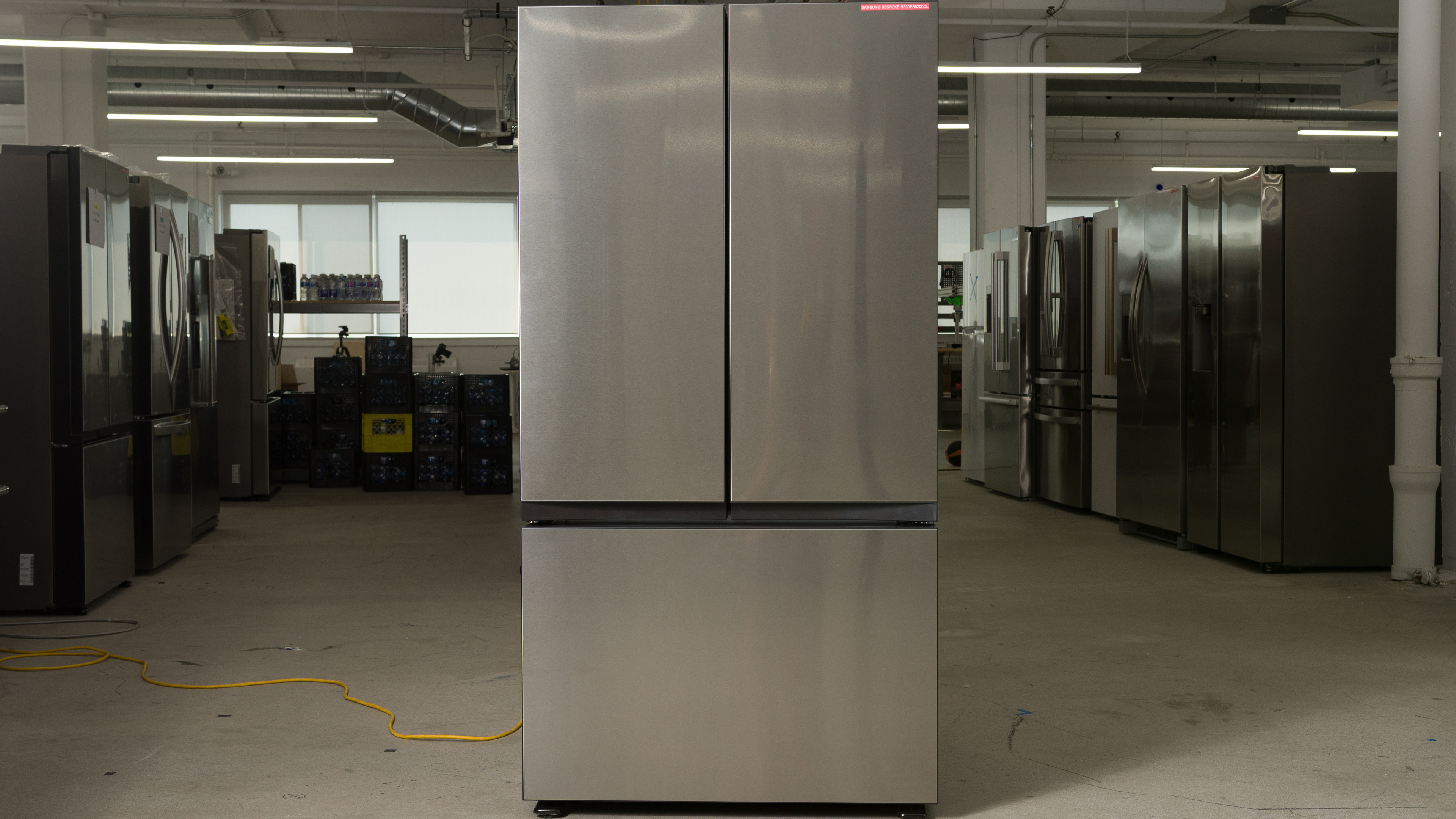
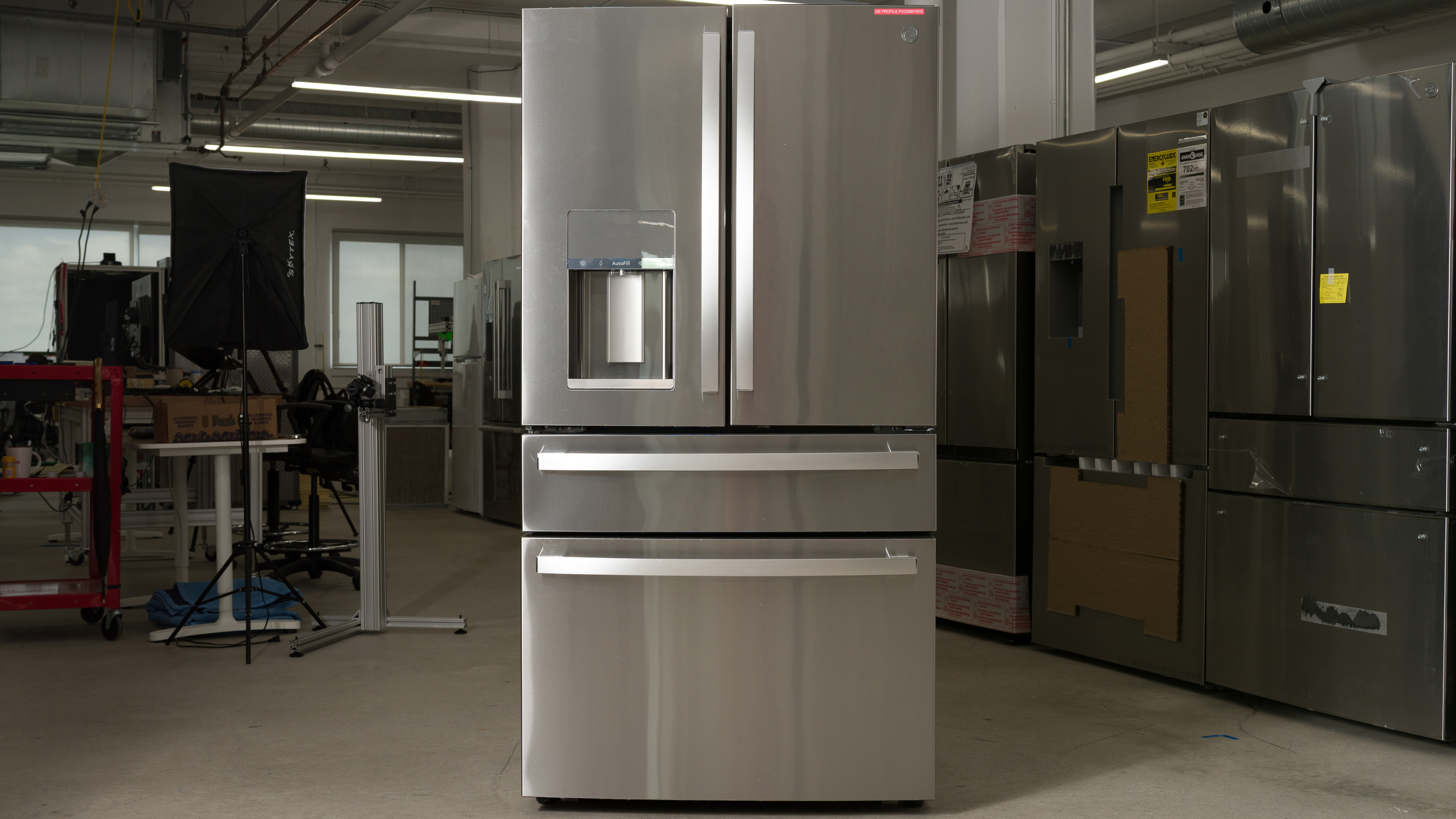
One complaint about side-by-side fridges, even wider ones, is the logistical problems with how narrow each compartment is. The solution is to go back to using the full width of the cabinet for the fridge and freezer, but to use double doors for the fridge section, like French doors used for wide entryways on homes. French Door refrigerators split the fridge door in the center. These fridges have all the advantages of the side-by-side design, with its narrower doors that don't require as much clearance to open out, but you can access the full width of the fridge cabinet, and you don't have to deal with narrow compartments. The doors can have handles like the LG LRFLC2706S; they can have finger recesses underneath for a sleeker look and to further minimize the space required, like the Samsung Bespoke RF30BB6200QL pictured above, or they can have a mix of the two, like the Samsung RF32CG5400SR. The freezer section is below, like a bottom freezer-type refrigerator, and it's usually a pull-out drawer arrangement. This makes freezer access easier, especially for people with mobility issues.
The left door usually has an internal bar that pivots out when you close the door, providing a base for the right door to seal against as it closes. This bar stays in place if you open the right door and flips back if you open the left door. The door arrangement gives up a bit of space compared to a wide swing-out door due to the door seam in the center. You can have an internal ice maker in the freezer and a water dispenser in the fridge, like the Samsung Bespoke RF30BB6200QL pictured above, or there can be an external water and ice dispenser in the door, like the Samsung RF32CG5400SR. However, an ice dispenser in the door with this design means that there has to be an ice maker in the refrigerator section, which isn't the best environment for an ice maker since the ice maker needs extra ducting, seals, and insulation to keep it at a freezing temperature inside the fridge.
Ice maker production and capacity can vary widely. There's plenty of space for an ice maker and ice tray, but it depends on the manufacturer's priorities: use space for the ice maker or ice storage, or use the space for providing extra capacity for food items. The Samsung RF32CG5400SR has three ice makers that make three types of ice; it's the best we've tested in terms of ice production and ice capacity.
| Refrigerator | Daily Ice Production, g | Ice Production Score | Ice Tray Capacity, g | Ice Capacity Score |
|---|---|---|---|---|
| GE Profile PVD28BYNFS | 1131 | 6.9 | 1219 | 6.5 |
| Bosch 500 Series B36FD52SNS | 1213 | 7 | 1796 | 7.2 |
| Bosch 100 Series B36FD10ENS | 1290 | 7.2 | 1815 | 7.2 |
| Samsung Bespoke RF30BB6200QL | 1637 | 7.8 | 3655 | 8.5 |
| GE Profile PGE29BYTFS | 1917 | 8.3 | 3772 | 8.6 |
| LG LRFLC2706S | 1467 | 7.5 | 3950 | 8.7 |
| Bosch 800 Series B36CT80SNS | 1472 | 7.5 | 4328 | 8.9 |
| Samsung RF32CG5400SR | 3090 | 9.6 | 5805 | 9.3 |
French door refrigerator ice makers, ranked by ice capacity.
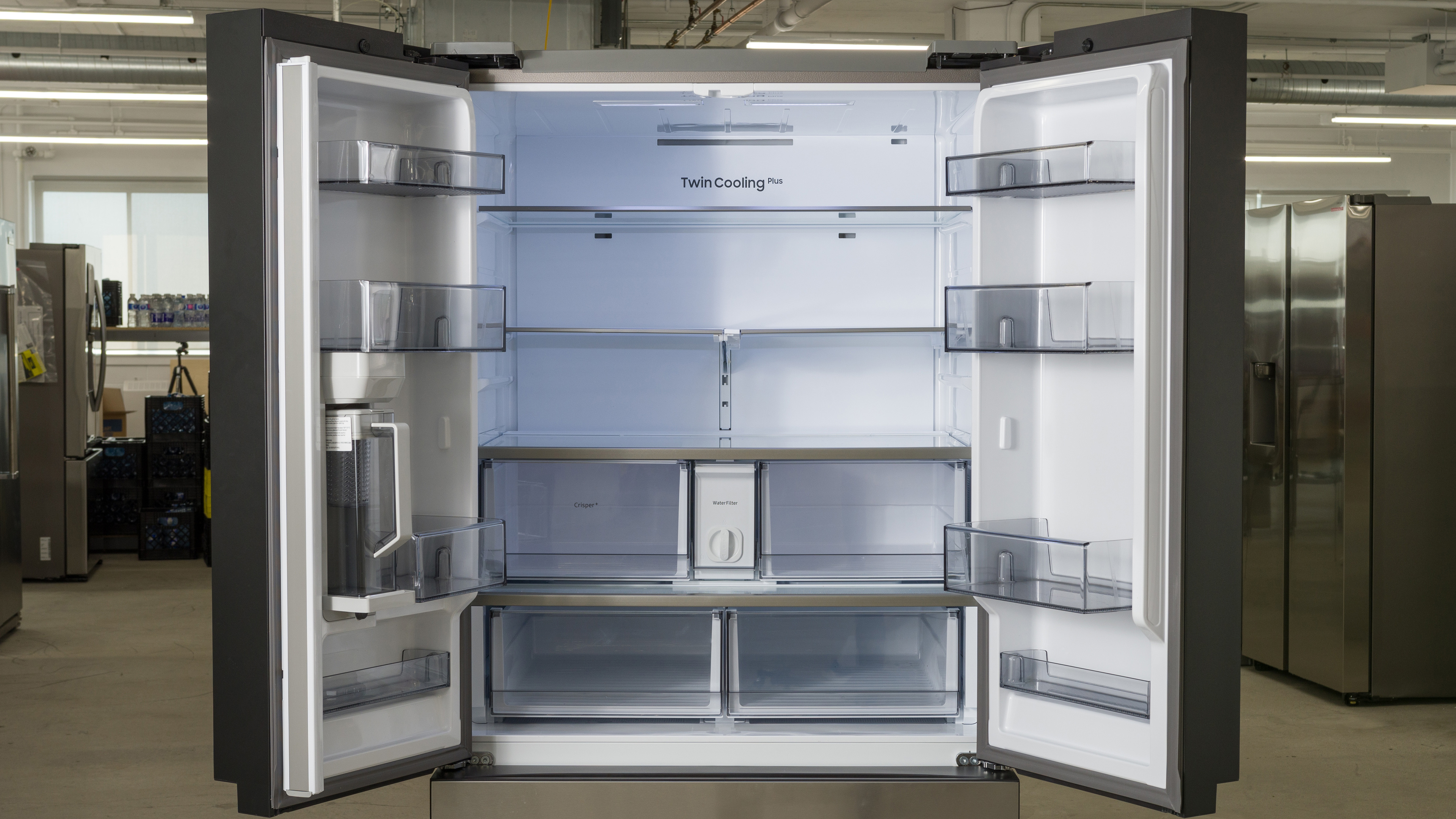
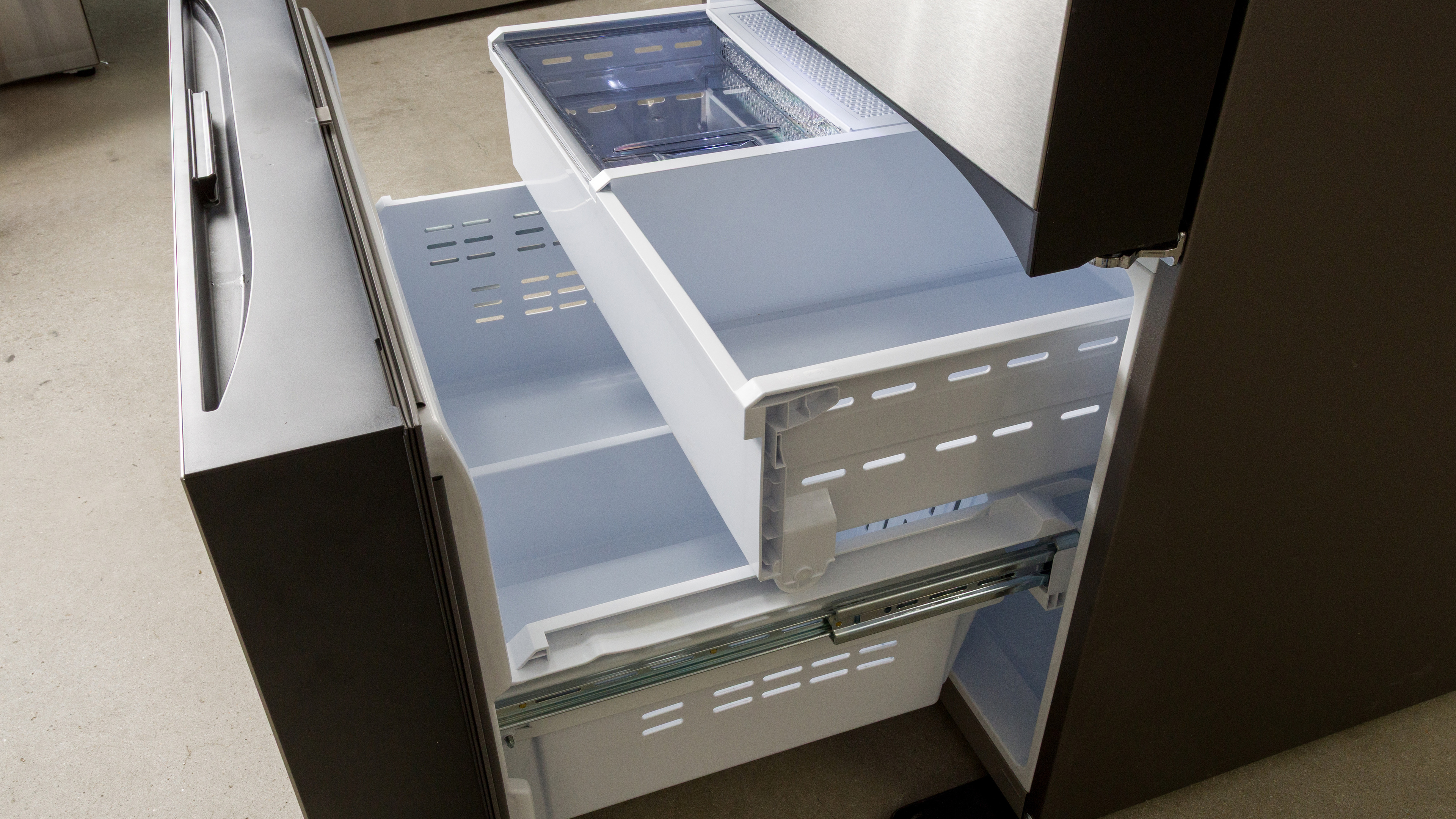
This design works well with wide, shallow counter-depth fridges because the high width makes up for the lower depth and doesn't compromise interior space too much. The French door arrangement makes doors on 36-inch-wide refrigerators much easier to handle.
Choose a French door refrigerator if:
- You need a wide fridge. Fridges 34 inches and wider are usually French door designs.
- You need to minimize the space required for the swing-out doors.
Skip it if:
- You want to save money. French door designs are more expensive than top freezer designs.
- You need greater reliability. French door designs use more door hinges and more sealing surfaces, all potential failure points.
Here are the French door fridges we've tested, sorted by advertised refrigerator compartment capacity. We test the actual usable capacity for both the fridge and freezer, and we note the percentage of the advertised capacity that's actually usable. Manufacturers may overstate the capacity, and usable capacity drops as manufacturers add hardware like pull-out drawers, ice makers, and ice buckets. While these features add convenience, they render some internal volume unavailable for storing food items.
| Refrigerator | Advertised Refrigerator Capacity, cubic feet | Usable Refrigerator Capacity, cubic feet | Percentage Refrigerator Usable Capacity | Advertised Freezer Capacity, cubic feet | Usable Freezer Capacity, cubic feet | Percentage Freezer Usable Capacity |
|---|---|---|---|---|---|---|
| Bosch 800 Series B36CT80SNS | 14.8 | 10.3 | 70% | 6.0 | 3.2 | 53% |
| LG LRFLC2706S | 17.9 | 11.6 | 65% | 8.6 | 4.6 | 54% |
| Bosch 100 Series B36FD10ENS | 18.0 | 13.2 | 73% | 8.0 | 4.6 | 57% |
| Bosch 500 Series B36FD52SNS | 18.0 | 13.2 | 73% | 8.0 | 4.6 | 57% |
| GE Profile PVD28BYNFS | 19.3 | 12.2 | 63% | 8.6 | 4.4 | 51% |
| GE Profile PGE29BYTFS | 20.1 | 13.0 | 65% | 8.6 | 3.8 | 45% |
| Samsung Bespoke RF30BB6200QL | 21.1 | 14.0 | 66% | 9.0 | 3.5 | 39% |
| Samsung RF32CG5400SR | 21.3 | 15.1 | 71% | 9.2 | 4.3 | 47% |
French door refrigerators
4-door
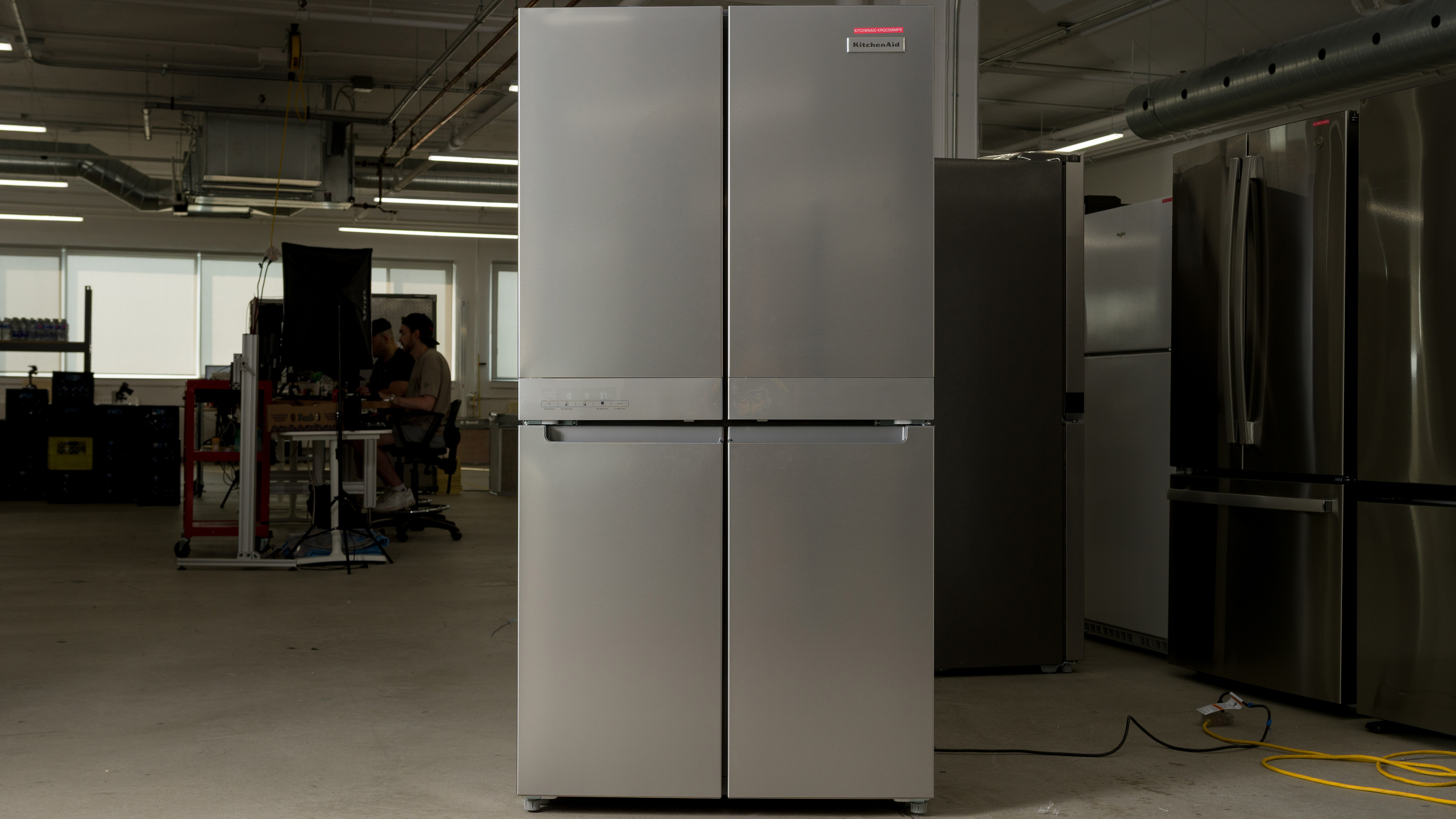
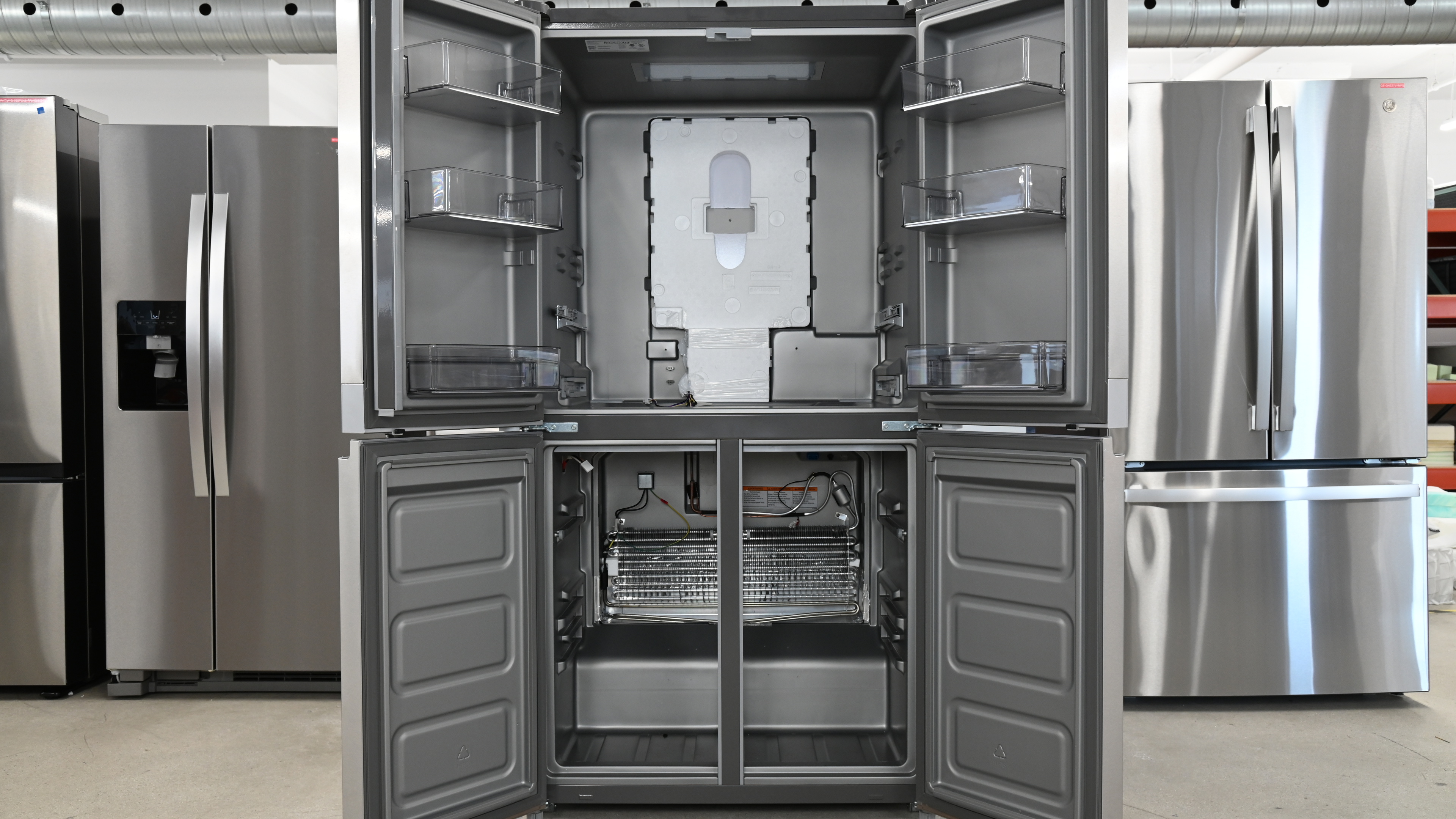
The 4-Door design concept extends the French door arrangement to the bottom freezer section. It has all the advantages of the French door design with its narrow half-width doors, and eliminates the wide, heavy freezer door or drawer below. The freezer consists of two compartments divided by a central pillar that the doors seal against, with drawer tracks mounted along the divider. There are sets of pull-out drawers on either side of the divider to allow easy access, like the bottom freezer design. Since this gives up some space, the freezer section is usually taller on such designs to make up for the lost capacity. With pull-out drawers in both the fridge and the freezer positioned high, this design is the best for people with mobility issues.
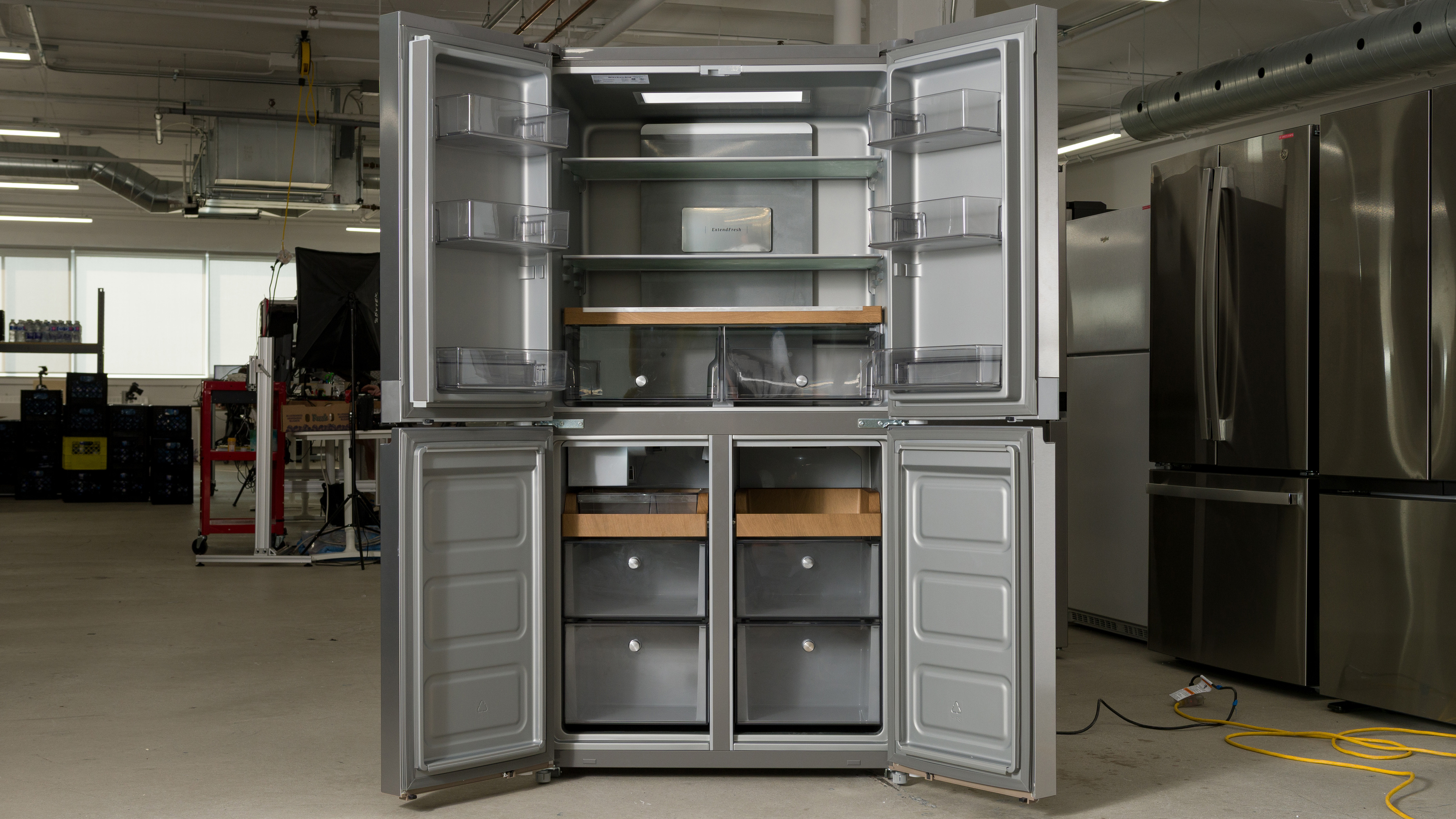
These fridges don't come with water or ice dispensers in the door. Instead, there's an ice maker at the top of the left freezer compartment, with the ice falling into a pull-out tray for convenience. Since the freezer section is taller, this tray is higher and easier to access.
Most retailers classify 4-door refrigerators as French door refrigerators.
Choose a 4-door refrigerator if:
- You need a wide fridge. 4-door fridges are only available in 33-inch and 36-inch sizes.
- You need to minimize the space required for the swing-out doors in the fridge section and the pull-out drawers in the freezer section.
Skip it if:
- You want to save money. 4-door designs are much more expensive than top freezer designs.
- You need a water and ice dispenser.
- You need greater fridge capacity. The fridge section is usually shorter than it would be with other designs.
- You need greater freezer capacity. Since the freezer is divided into two narrow compartments, you give up some freezer space compared to a French door design.
- You need greater reliability. 4-door designs use more door hinges and more sealing surfaces than the French door design, all of which are potential failure points.
Here are the 4-door fridges we've tested, sorted by advertised refrigerator compartment capacity. We test the actual usable capacity for both the fridge and freezer, and we note the percentage of the advertised capacity that's actually usable. Manufacturers may overstate the capacity, and usable capacity drops as manufacturers add hardware like pull-out drawers, ice makers, and ice buckets. While these features add convenience, they render some internal volume unavailable for storing food items.
| Refrigerator | Advertised Refrigerator Capacity, cubic feet | Usable Refrigerator Capacity, cubic feet | Percentage Refrigerator Usable Capacity | Advertised Freezer Capacity, cubic feet | Usable Freezer Capacity, cubic feet | Percentage Freezer Usable Capacity |
|---|---|---|---|---|---|---|
| KitchenAid KRQC506MPS | 12.0 | 9.7 | 81% | 7.4 | 4.1 | 55% |
4-door refrigerators
5-Door
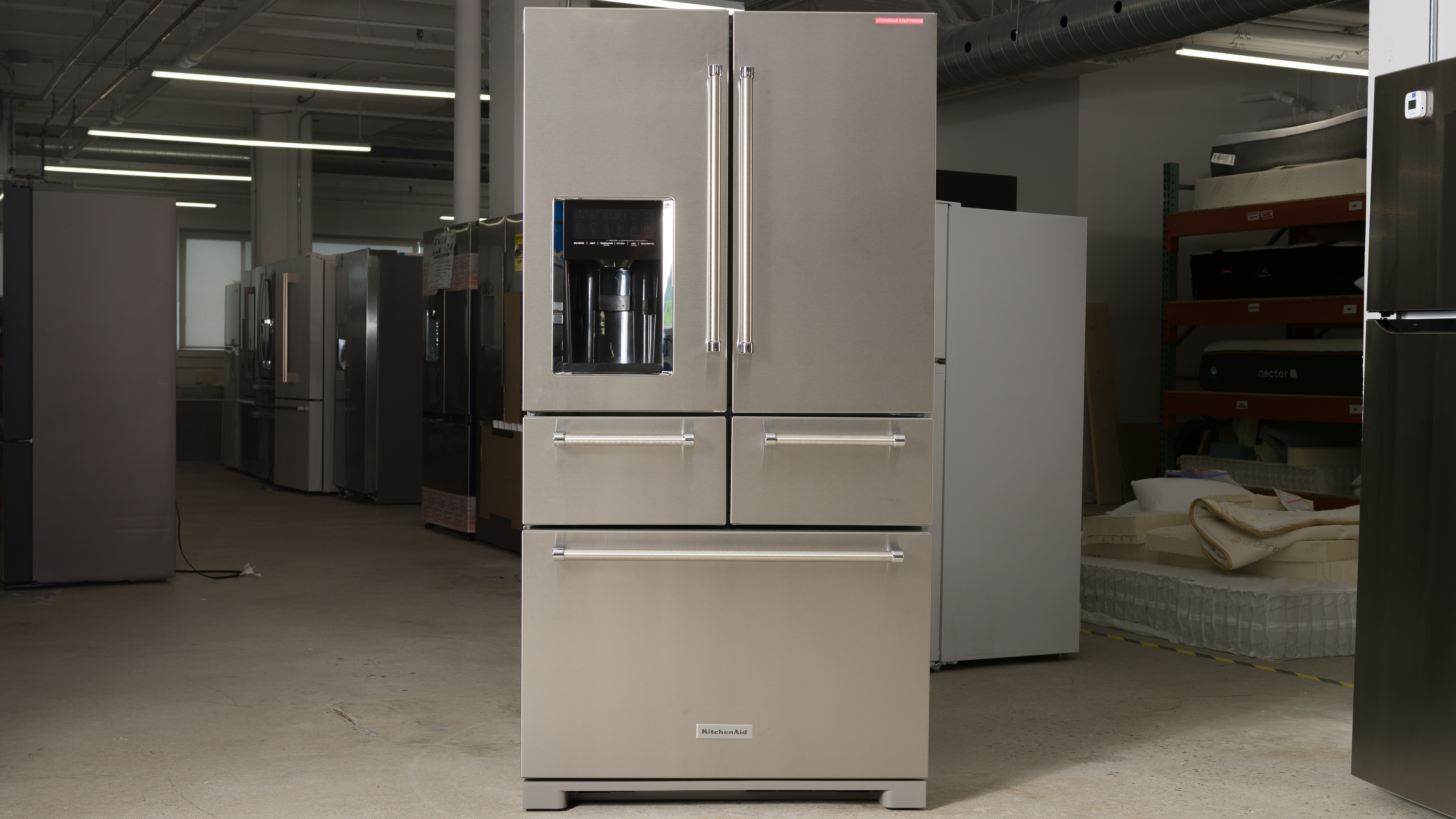
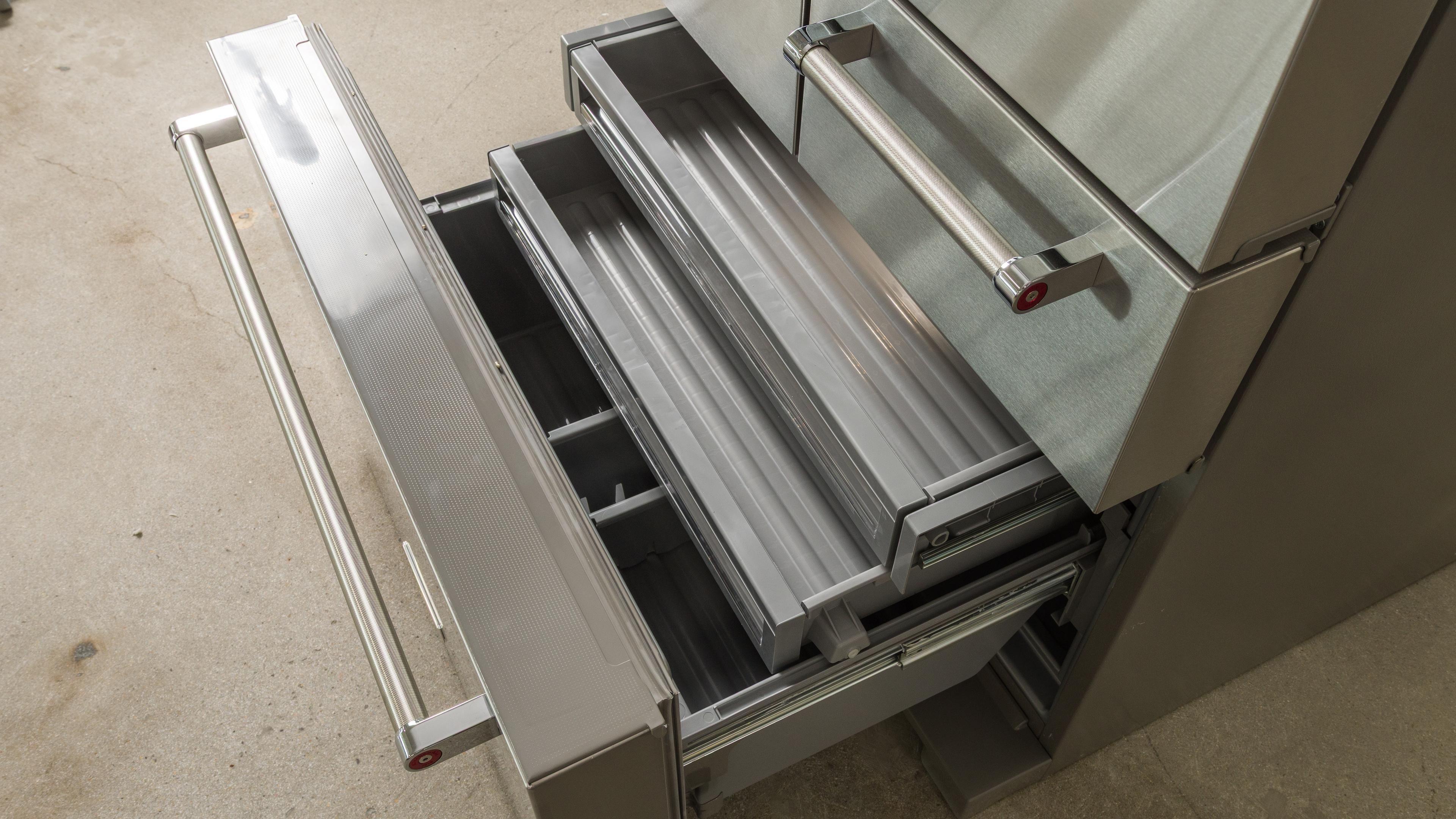
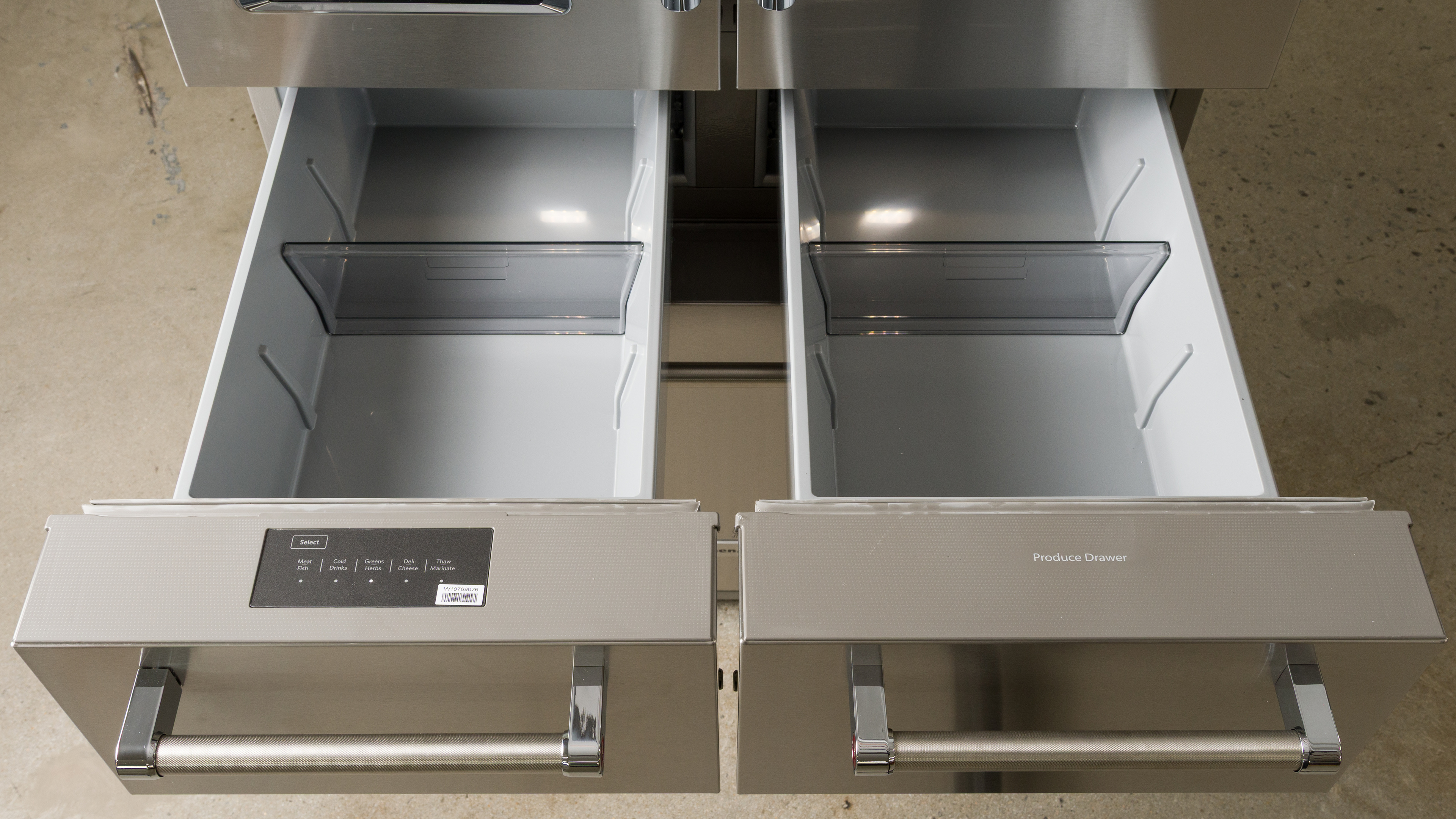
5-Door refrigerator designs add separate, sealed pull-out drawers to a French door refrigerator. There can be two drawers like the KitchenAid KRMF706ESS pictured above, but it's more common to see a single full-width pull-out drawer like the GE Profile PGE29BYTFS.
This drawer is cooled separately from the refrigerator compartment using a variable-position damper to admit cold air, so you can have the drawer at a different temperature than the fridge. You can set the temperature in the leftmost drawer in the KitchenAid above for meat/fish, cold drinks, greens/herbs, deli/cheese, or thaw/marinade, while the drawer on the right acts as a separate produce drawer. The single drawer on the GE Profile PGE29BYTFS can be used as a refrigerated drawer for meat or beverages, or as a chiller for snacks or wine. The drawers add flexibility and versatility for particular items.
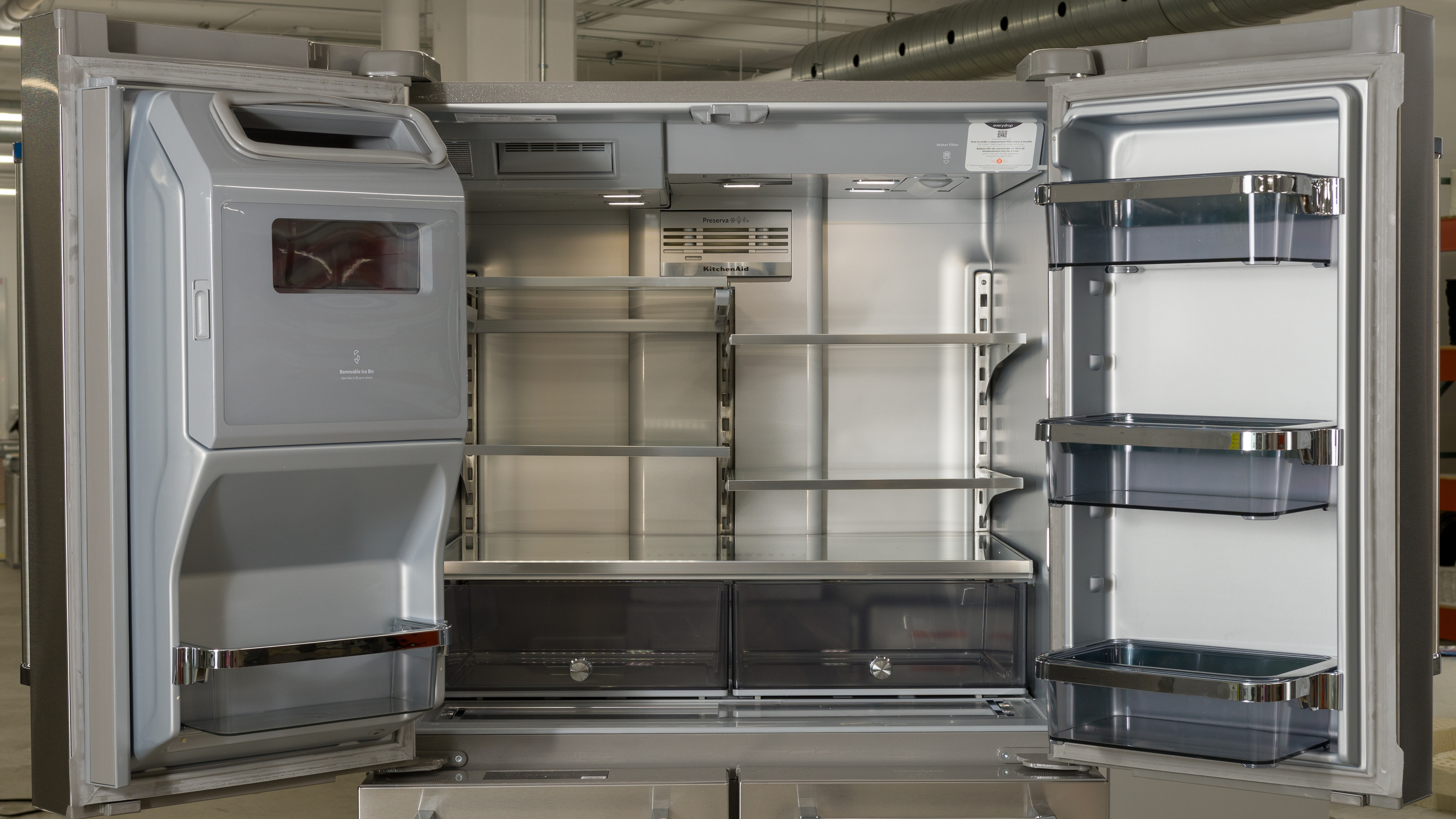
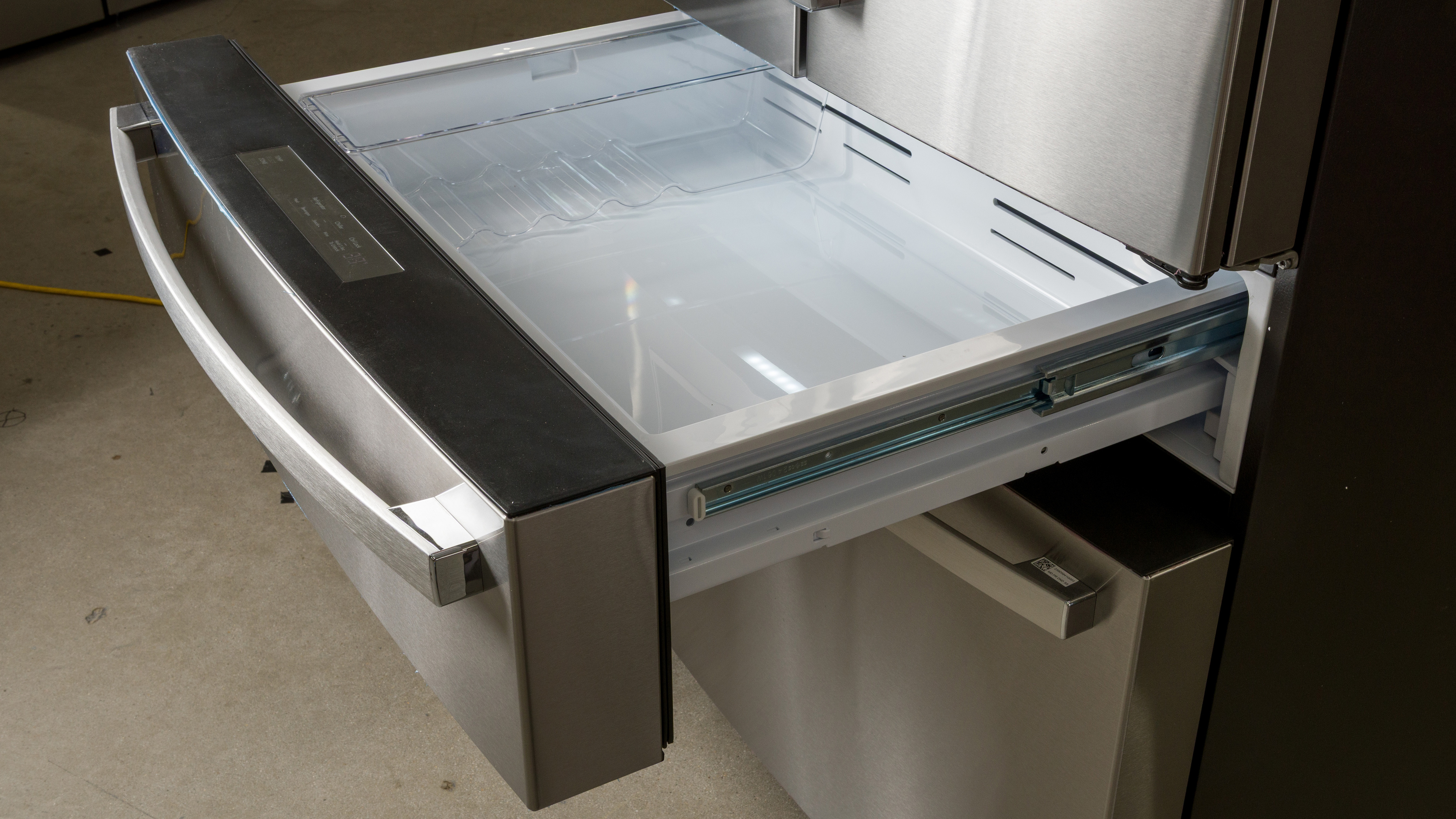
Like the French door design, there's often an in-door externally accessible water and ice dispenser, though this still places an ice maker in the refrigerator section. This type positions the fridge section even higher than in 4-door fridges, potentially making the fridge crisper drawers a little too high for wheelchair users to access properly, though the separate pull-out drawers should be at the ideal height.
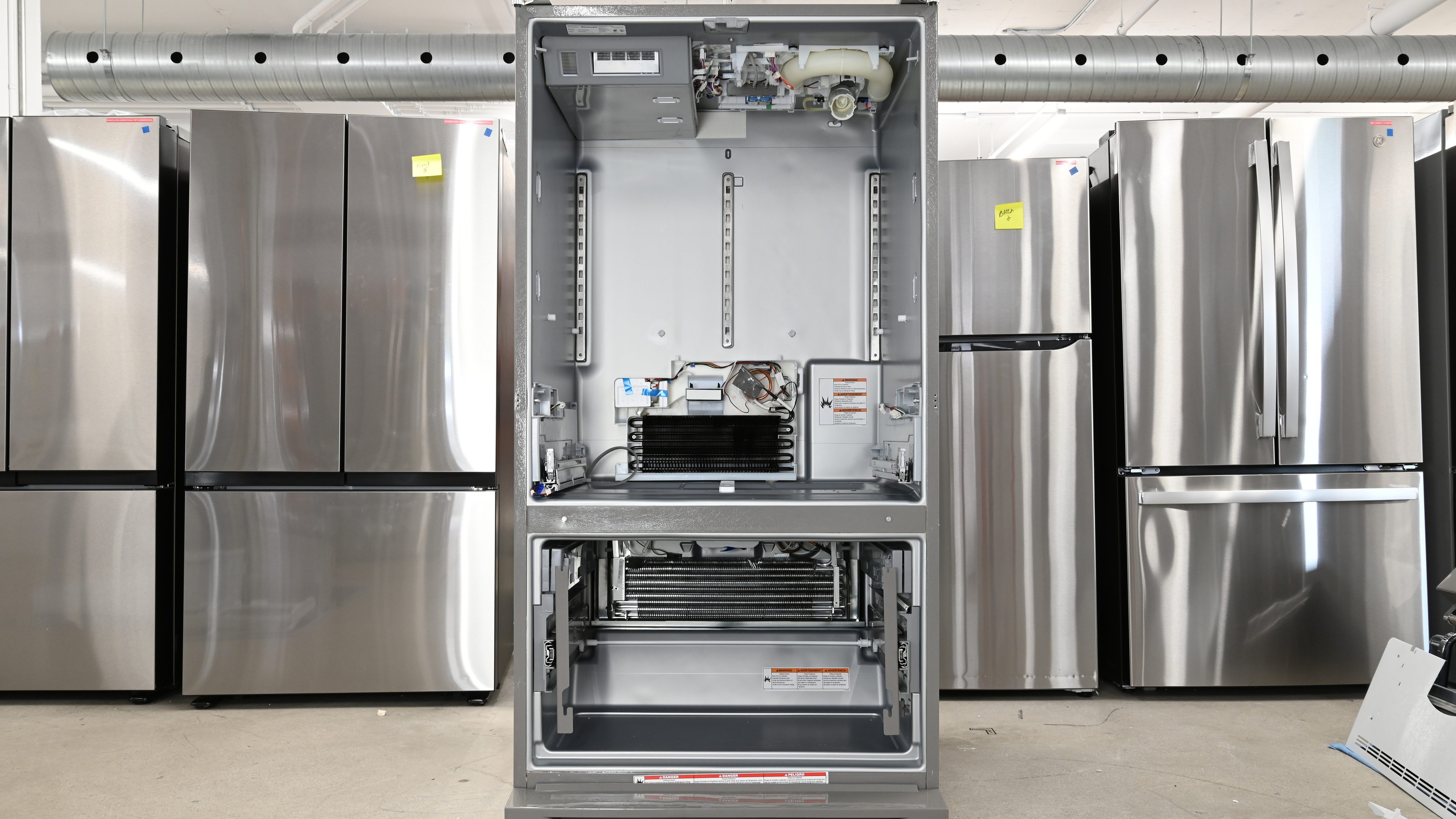
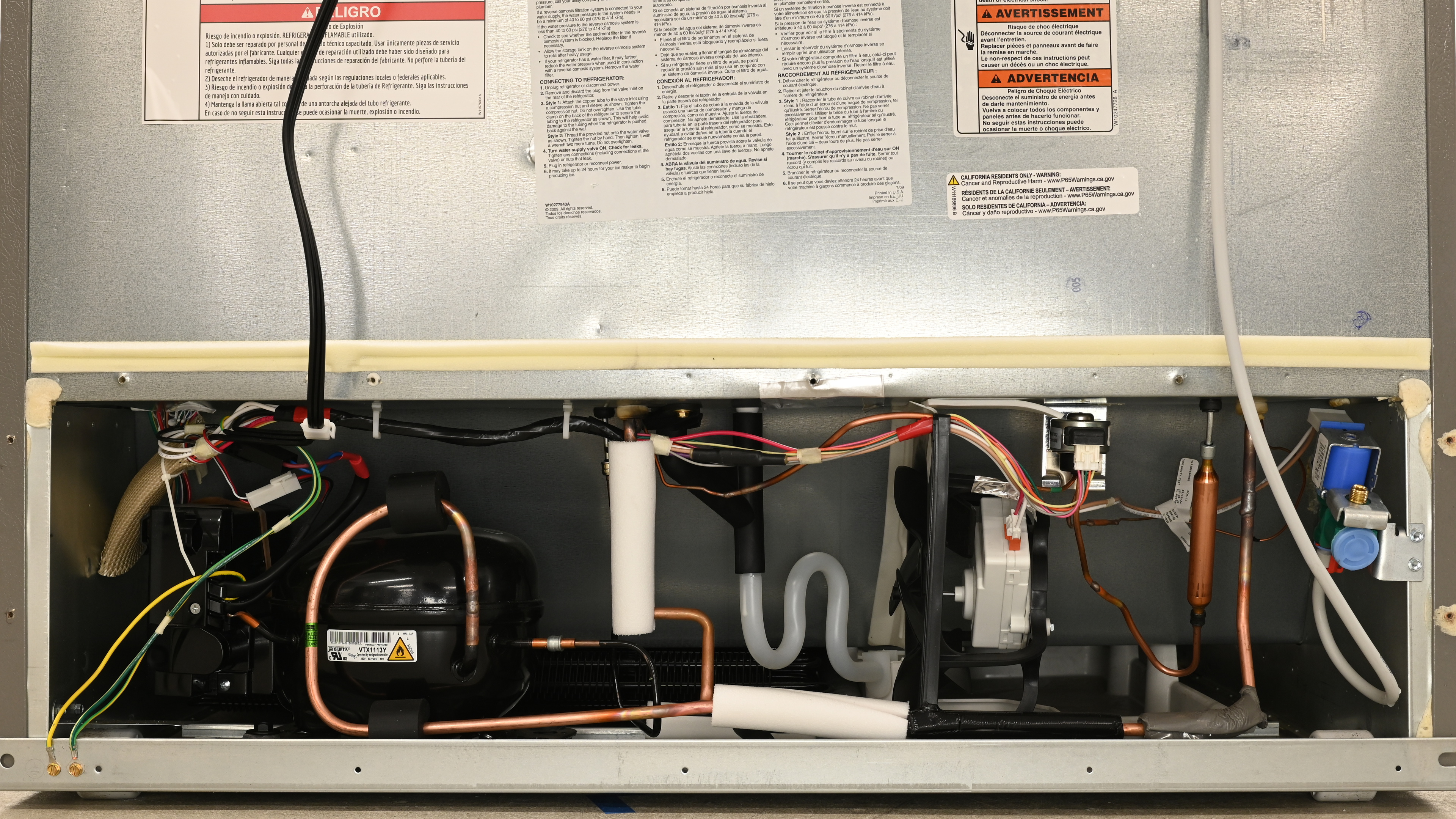
These high-end designs sometimes have dual evaporators to improve temperature and humidity control in the fridge and freezer.
Most retailers classify 5-door refrigerators as French door refrigerators.
Choose a 5-door refrigerator if:
- You need sealed, separately-cooled drawers for particular items.
- You need to minimize the space required for the swing-out doors.
Skip it if:
- You want to save money. 5-door designs are more expensive than any other design.
- You need greater fridge and freezer capacity. The separate drawers and the extra compartment dividers take away space from the fridge and freezer compartments, since these fridges aren't any taller than their French door counterparts.
- You need greater reliability. 5-door designs have more drawer hardware components, more sealing surfaces, and controllable dampers, all of which are potential failure points.
Here are the 5-door fridges we've tested, sorted by advertised refrigerator compartment capacity. We test the actual usable capacity for both the fridge and freezer, and we note the percentage of the advertised capacity that's actually usable. Manufacturers may overstate the capacity, and usable capacity drops as manufacturers add hardware like pull-out drawers, ice makers, and ice buckets. While these features add convenience, they render some internal volume unavailable for storing food items.
| Refrigerator | Advertised Refrigerator Capacity, cubic feet | Usable Refrigerator Capacity, cubic feet | Percentage Refrigerator Usable Capacity | Advertised Freezer Capacity, cubic feet | Usable Freezer Capacity, cubic feet | Percentage Freezer Usable Capacity |
|---|---|---|---|---|---|---|
| KitchenAid KRMF706ESS | 18.2 | 11.7 | 65% | 7.6 | 4.0 | 52% |
5-door refrigerators
All-Fridge
What if you have a separate deep freezer and don't need a small one in the fridge? What if you could dedicate the entire refrigerator cabinet to refrigeration? This is the idea behind the All-Fridge design. This arrangement delivers an immense interior refrigeration capacity for its width, because you don't need a separate freezer compartment. There's plenty of space for everything with this type: you could have dual rows of produce crispers, four full-width shelves, and five full-width door bins. This type doesn't have ice makers or ice and water dispensers and dedicates the entire interior space to refrigeration. Some versatile models can even be converted to an upright freezer with the push of a button.
This type has a single swing-out door and is available in widths up to 33 inches.
We haven't tested any all-fridge refrigerators to date, so we can't comment on their performance or provide any examples at the moment.
Choose an all-fridge refrigerator if:
- You want to maximize interior volume.
- You have a separate freezer in a convenient location.
- You need high reliability. Because an all-fridge design has so few features, very little can go wrong with an all-fridge design because they have so few features. The sealing surface is minimized, and there's a bare minimum of mechanical components.
Skip it if:
- You want to save money. All-fridge refrigerators are more expensive than top freezer models at any given width because manufacturers sell far fewer of them.
- You need a freezer and don't already have one.
- You need a very wide refrigerator. Thirty-three inches is the maximum width for an all-fridge model.
- You need an ice maker.
- You need a water and ice dispenser.
Conclusion
You should now be well-informed of the wide variety of refrigerator types that you'll see as you look for your next fridge. More importantly, you're now aware of the benefits and trade-offs of each design. It all depends on what's more important for you.
For in-depth information about the inner workings of this appliance, look at our article about how a refrigerator works. To demystify defrosting, see Understanding Your Refrigerator's Defrost Cycle (And How It Works). If you want buying advice about the many different fridge sizes available, check out Refrigerator Sizes: How to Find the Perfect Fit.