Our Robot Vacuum 1.1 Test Bench introduces a more comprehensive approach to evaluating mopping performance. Rather than treating mopping as a single capability, we now assess it as a system comprising distinct components: scrubbing, smearing, and water use. This update adds four new tests that evaluate each component separately, giving you a clearer picture of what to expect when a robot vacuum mops your floors.
See the previous 1.0 changelog.
Why Are We Making These Changes?
Prior to this Test Bench Update, our robot vacuum reviews only included a Stains test that provided a general idea of a robot's ability to remove stains. While it provided a broad overview of a robot vacuum's mopping capabilities, it didn't break down the factors that contribute to mopping performance or explain why one robot might outperform another. It also didn't capture whether it spreads messes before cleaning them up or how wet it leaves your floors afterward.
With Test Bench 1.1, we've broken mopping performance down into its key components so you can see exactly what a robot vacuum's mopping system is and isn't good at.
We think of mopping performance as a product of four variables: scrubbing, smearing, water left behind, and navigation. This update covers the first three. Navigation, which determines how many times a robot actually passes over a given area of your floor, will be addressed in a future testing methodology update.
Mop Scrubbing
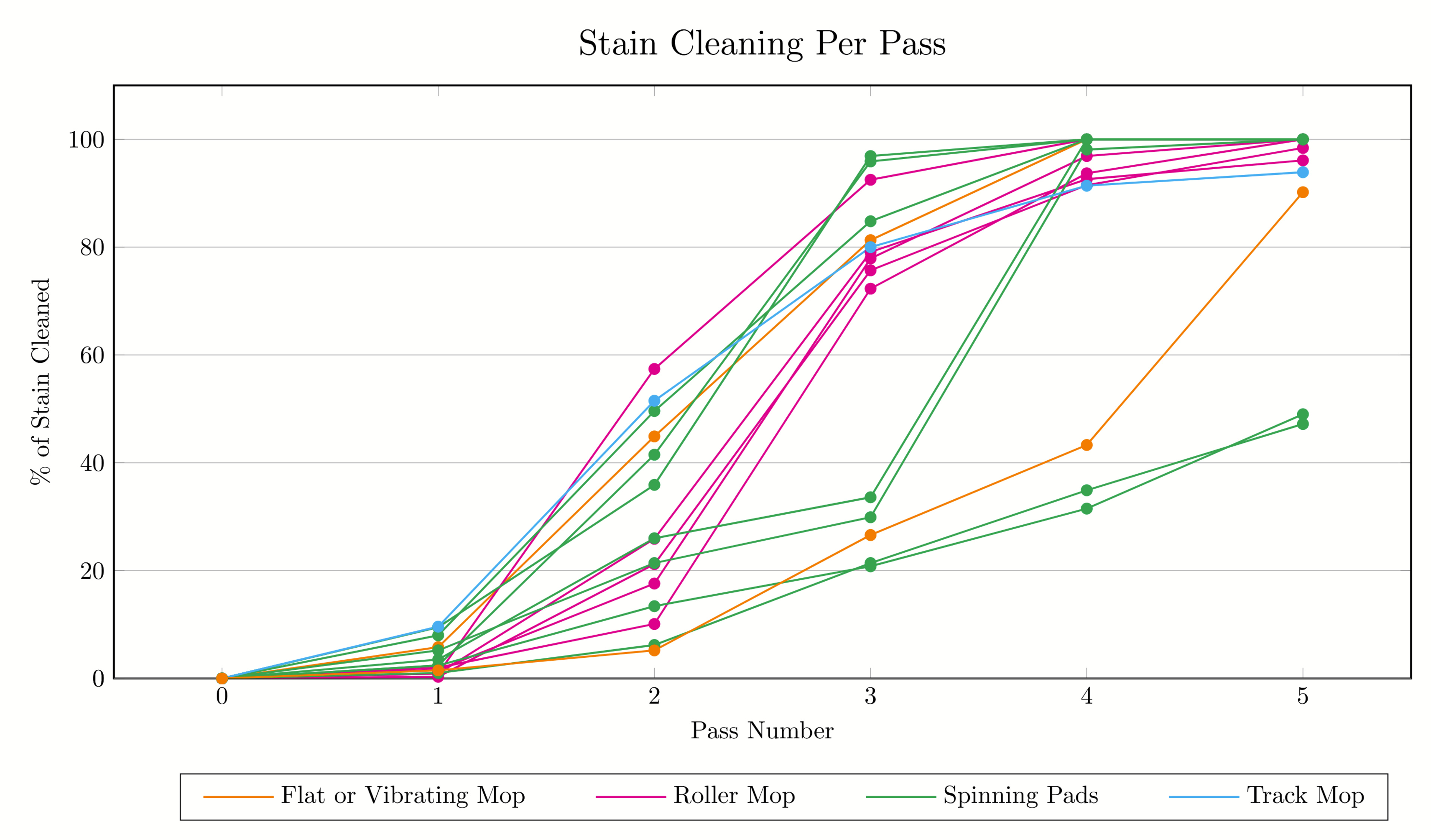
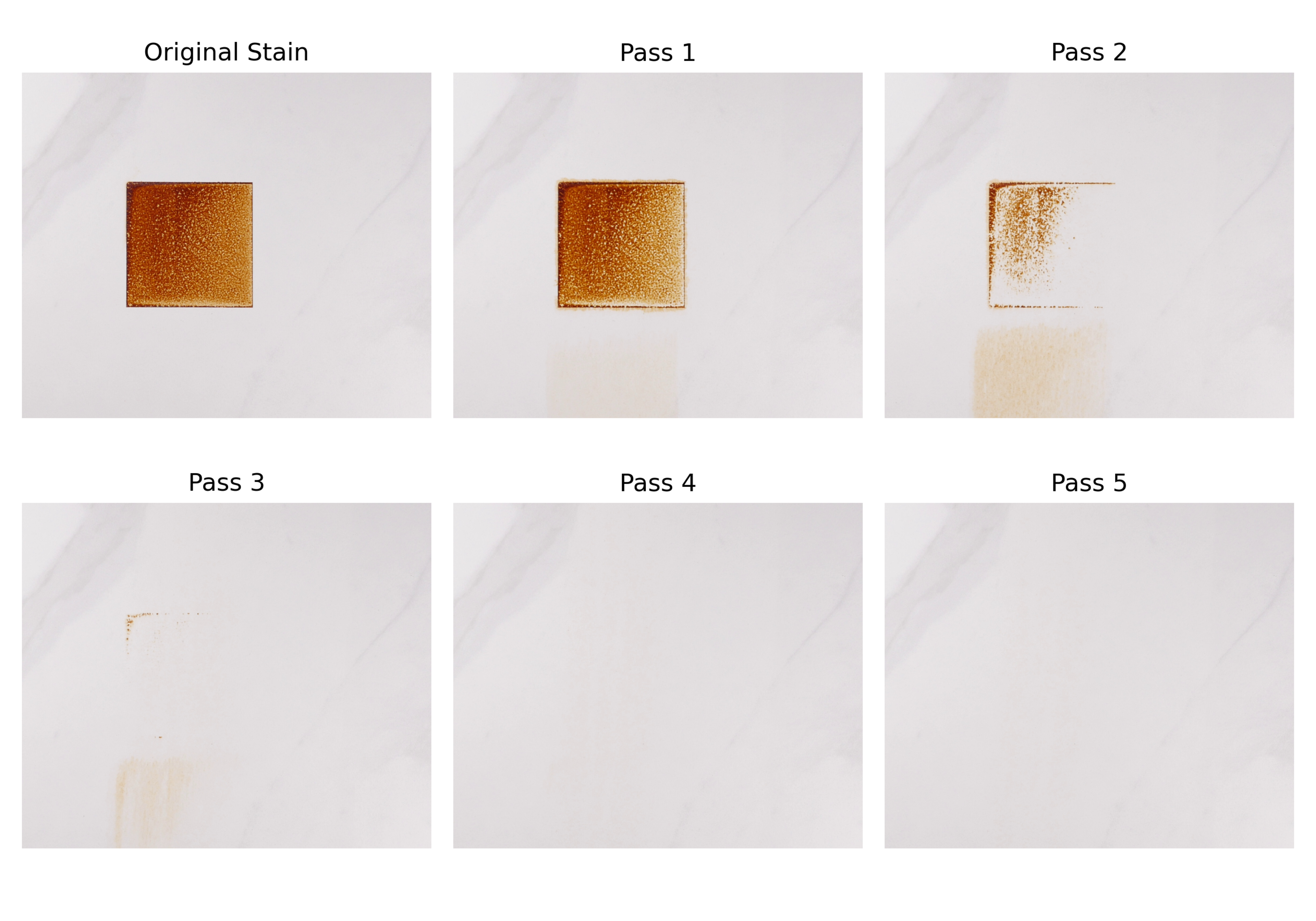
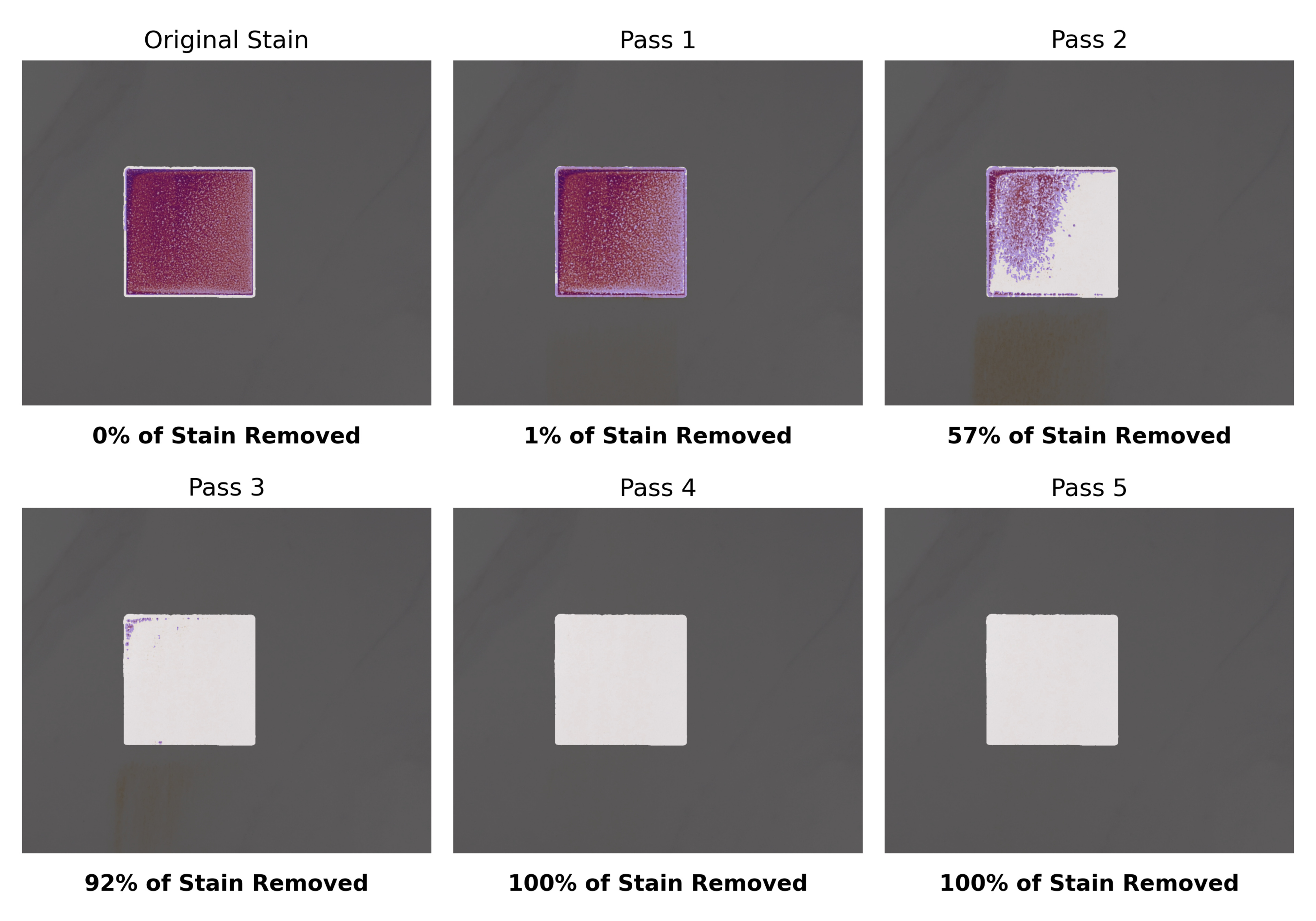
This test measures how effectively the mop removes a dried stain with each pass. We create a stain on the floor, let it dry, then run the robot at its highest water output, photographing the stain between each pass to measure how much has been removed.
Most mops will eventually remove a stain if they go over a spot enough times, but a more effective mop removes more dirt with each pass. This matters because a robot vacuum doesn't loop over the same spot indefinitely, so a mop that clears most of a stain in two passes is meaningfully more practical than one that needs five.
What to know about this test:
- Early passes wet and loosen the residue rather than lifting it. Each pass is more effective once the stain has been softened.
- Passes 2 and 3 provide the most revealing data points. By the third pass, differences between mops become clear: stronger mops have already cleared a significant portion of the stain, while weaker ones have made only minimal progress.
- A higher score means fewer passes are needed to clear a tough mess, which is a meaningful real-world advantage when the robot may not revisit the same spot many times on its own.
Mop smearing
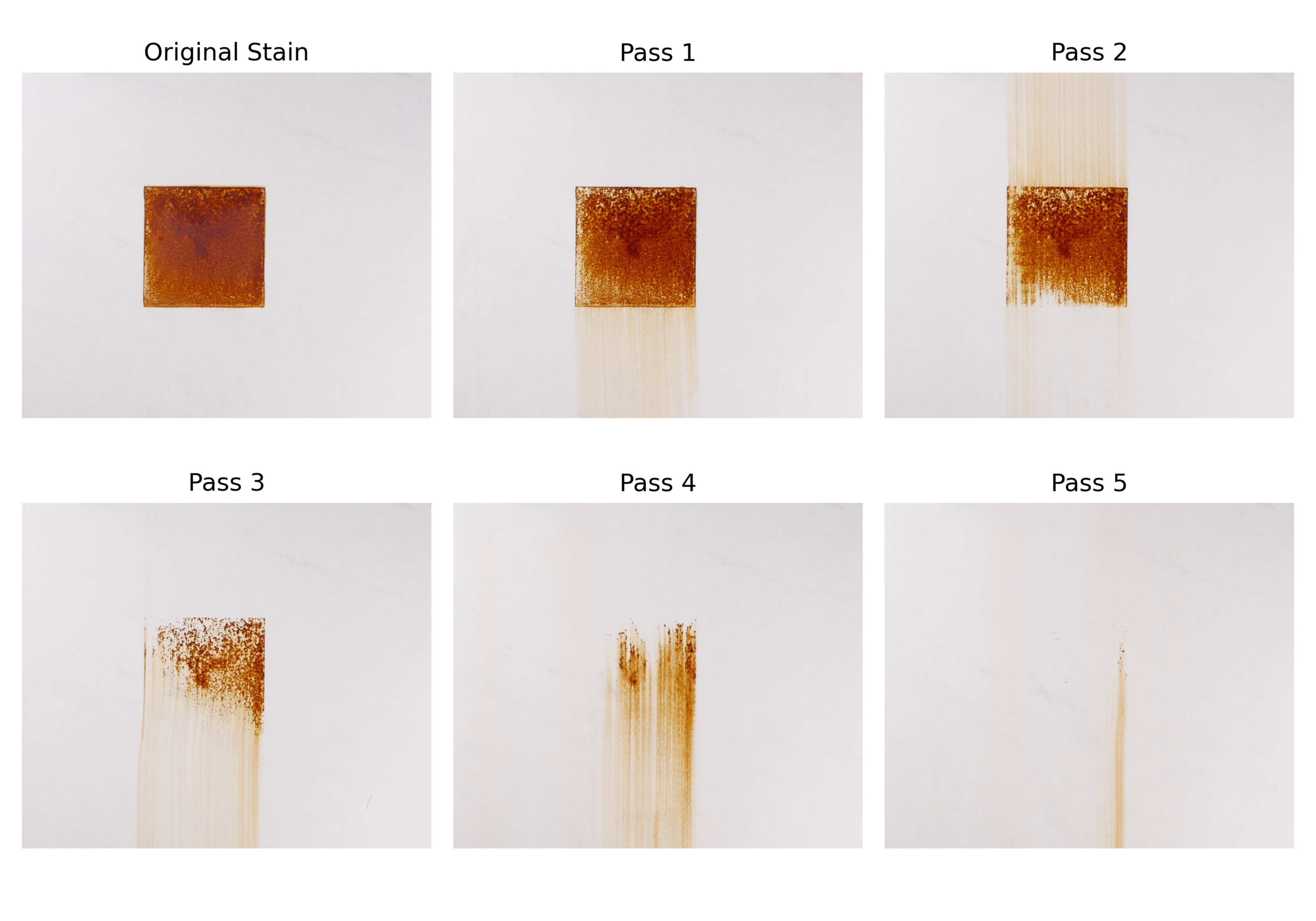
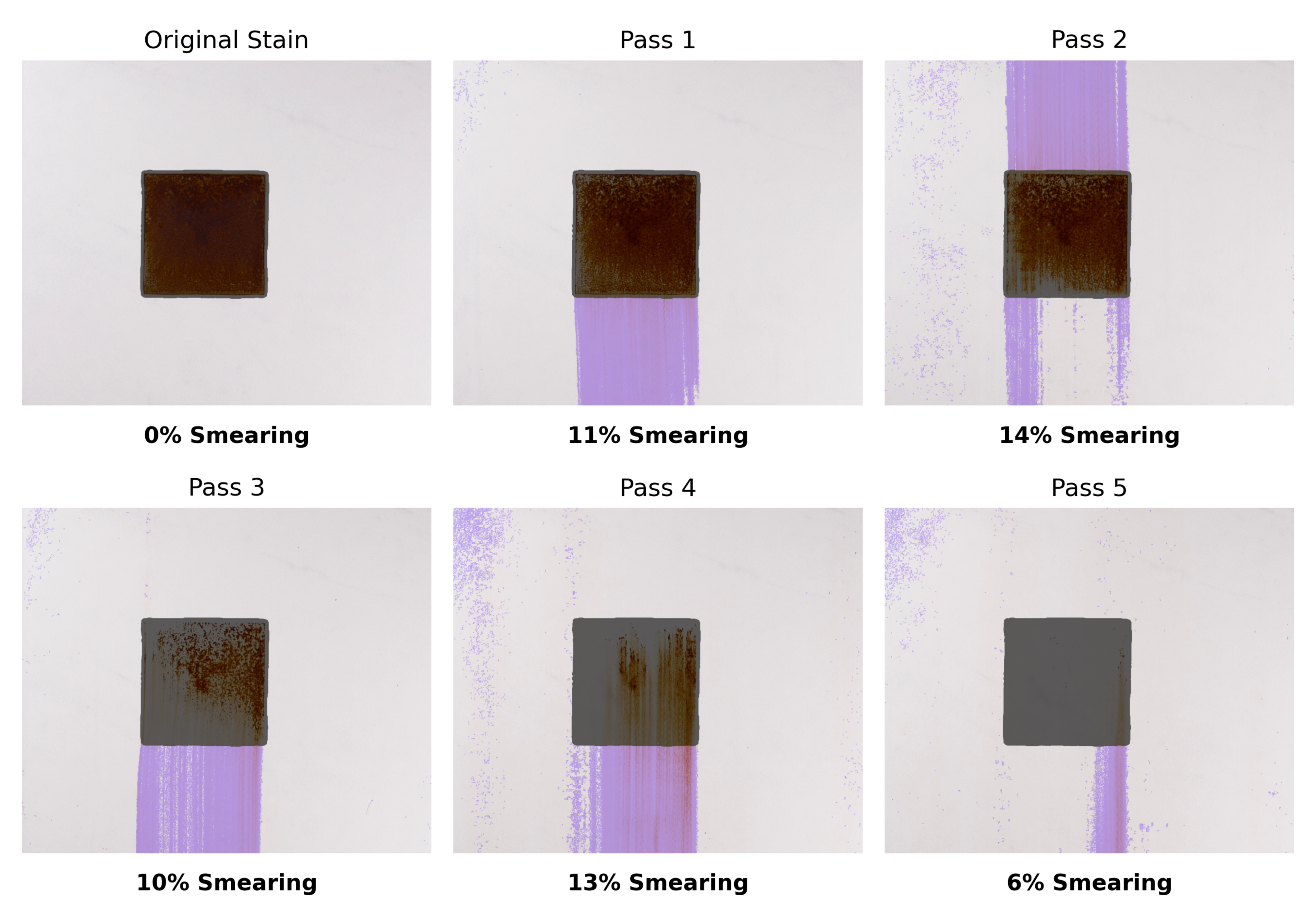
A mop that spreads a mess before cleaning it up can leave you with a larger problem than you started with. If a robot doesn't make enough passes over an area to clean up what it spread, a small spill can become a wide smear across your floor.
This test measures how much residue the mop spreads onto the surrounding clean floor as it works through a stain. We place a stain on the floor, let it dry, then run the robot at maximum water output and photograph the area between each pass to track how far the residue has spread. The score is based on average contamination across all passes, which reflects how well a mop contains a mess throughout the full cleaning process.
Residual Moisture
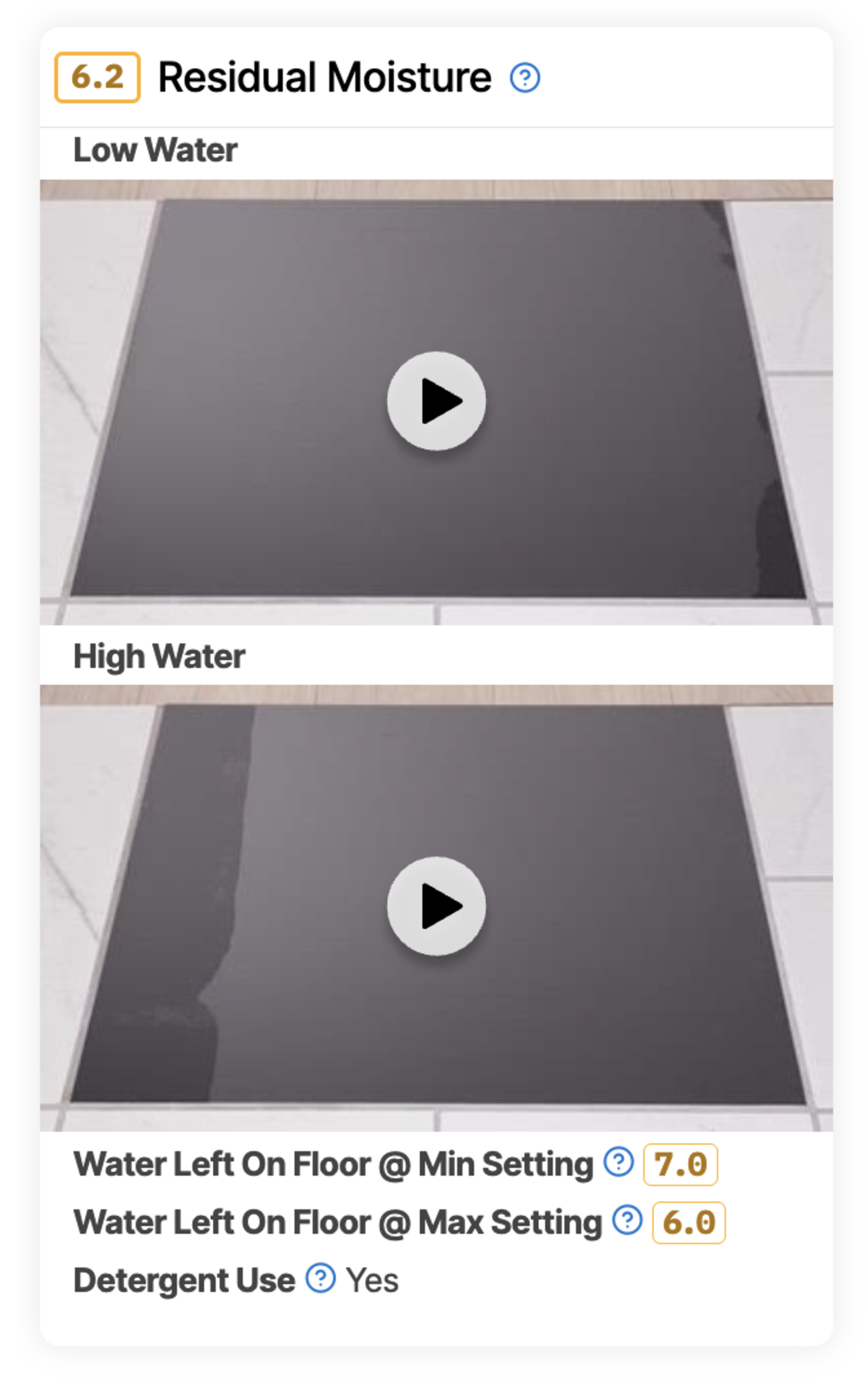
The Residual Moisture test captures how much water the robot leaves behind on the floor at both the lowest and highest water-usage settings.
Why residual moisture matters:
- Floors that stay wet for a long time are a concern for households with pets that walk through freshly mopped areas.
- Moisture-sensitive surfaces, like hardwood and engineered wood, can warp or swell when exposed to excess moisture.
- Glossy tile shows water marks once the standing water dries.
- In humid environments, floors take longer to dry naturally, leaving surfaces damp for extended periods.
The relationship between water output and residual water isn't always straightforward. Some roller mops actively recover water as they clean by wringing it back into a separate tank, leaving less water on the floor than their output alone would suggest. That said, not all roller mops recover water, and this varies by model. Spinning pads and vibrating pads have no equivalent water recovery system, so whatever they put down is either absorbed by the pads or stays on the floor.
We also note whether a robot vacuum can dispense detergent during mopping, since this adds cleaning power beyond what water alone can provide on greasier or stickier messes.
Let Us Know What You Think!
We'll continue to improve our robot mopping tests over time, and we'd love to know what you'd like to see. Let us know in the comments, or email us at feedback@rtings.com.
15 Robot Vacuums Updated So Far
We are retesting popular models first. So far, the test results for the following models have been converted to the new testing methodology. However, the text might be inconsistent with the new results.
- Dreame Aqua10 Ultra Roller
- Dreame L10s Ultra
- Dreame X50 Ultra
- Dyson Spot+Scrub Ai
- Ecovacs DEEBOT X8 PRO OMNI
- eufy S1 Pro
- eufy X10 Pro Omni
- Matic Robot
- MOVA P10 Pro Ultra
- MOVA P50 Pro Ultra
- Narwal Flow
- Roborock Qrevo Curv
- Roborock S8 MaxV Ultra
- Roborock S8 Pro Ultra
- Roborock Saros 10R
24 Robot Vacuums Planned To Be Updated
We are also planning to retest the following products over the course of the next few weeks:
- Dreame L40 Ultra
- Dreame L50 Ultra
- Dreame X60 Max Ultra Complete
- Dyson 360 Vis Nav
- Ecovacs DEEBOT T80 OMNI
- Ecovacs DEEBOT X11 OmniCyclone
- Ecovacs DEEBOT X9 PRO OMNI
- eufy Auto-Empty C10
- eufy E20
- eufy Omni C20
- eufy Omni E28
- iRobot Roomba 105
- iRobot Roomba Max 705
- Roborock Q7 M5
- Roborock Q7 Max+
- Roborock Qrevo
- Roborock Qrevo Curv 2 Flow
- Roborock Qrevo Pro
- Roborock Qrevo S
- Roborock Saros 20
- Roborock Saros Z70
- Shark AI Ultra Robot AV2501S
- Shark Matrix Plus UR2360S
- Shark Matrix Robot RV2310AE