- 100.0%Overall Attenuation
Sometimes, the outside world can be too much to hear. Sounds like traffic outside your window, coworkers talking, and airplane engines make it challenging to focus on your audio and create a distracting, ever-present soundscape that music alone can't hide. If you want to lessen these annoying sounds, you'll want to consider your (prospective) headphones' noise isolation performance, which represents their ability to block ambient noise passively and actively.
Not all headphones are created equal in this regard, though. While most headphones provide some level of passive isolation through physical design choices such as dense ear cup padding or memory foam ear tips, this may not be enough for true peace and quiet. More and more headphones are implementing active noise cancelling (ANC) systems, which enhance isolation by nullifying sounds that penetrate passive isolation. Not all noise is created equal, either. Our noise isolation tests cover a range of scenarios, from pink noise to give you a better picture of overall performance to dynamic real-life scenarios. We also take recordings for wind noise and voice handling, though neither aspect is scored.
If you're shopping around for headphones with noise isolation in mind, you'll want to check out our recommendations for the best noise cancelling headphones and the best noise cancelling earbuds.
Test results
When It Matters
If you often find yourself in noisy environments like a busy office, a good, isolating pair of headphones will keep distracting ambient noise from interrupting your listening experience or concentration. Poor noise isolation can also pose health issues, depending on the loudness of your environment. Although listening at higher volumes naturally overpowers ambient noise of lesser amplitudes due to auditory masking, cranking up the volume of your music to overcome already loud background noise isn't a healthy long-term solution. Better performing active cancelling and passive isolation is a better solution at higher ambient volumes.
That said, some headphones aren't designed for noise isolation, and depending on your needs, you may even prefer little to no isolation. Open-back audiophile headphones like the Sennheiser HD 800 S are designed to be open, contributing to the listener's sense of immersion, while sports headphones like the Shokz OpenRun Pro 2 Bone Conduction don't block your ears (or ear canal) at all, so you can stay aware of your surroundings when exercising outdoors.
Active Noise Cancelling: How Does It Work?
In short, noise cancelling technology utilizes microphones placed in various locations on the headphones (or earbuds) to pick up background noise sound waves. Then, an ANC processor generates phase-shifted sound called 'anti-noise,' which is then played via the headphones' speakers, cancelling out that noise through destructive interference.
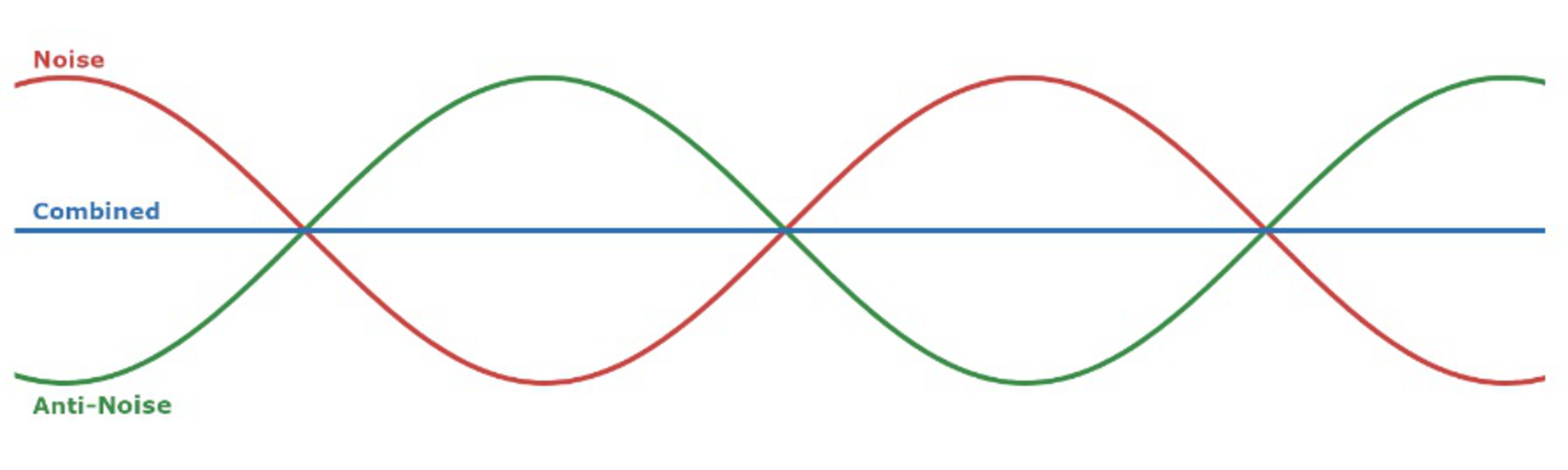
However, in reality, not all ANC systems have the same design, and their capacities are dependent on their hardware and mic placement. There are a few ANC systems out there:
- Feedforward uses ANC microphone(s) placed outside the ear cups (or ear canal for earbuds); the microphones can quickly capture and react to noise.
- Feedback uses ANC microphones placed inside the headphones (or eartip for earbuds); the microphones pick up sound in a way that's similar to how you hear it, but there's the added filtering required to prevent any media you're listening from being considered noise.
- Hybrid combines both implementations, giving you the best of both worlds. It's also typically found on higher-end products.
Noise and Frequency Ranges
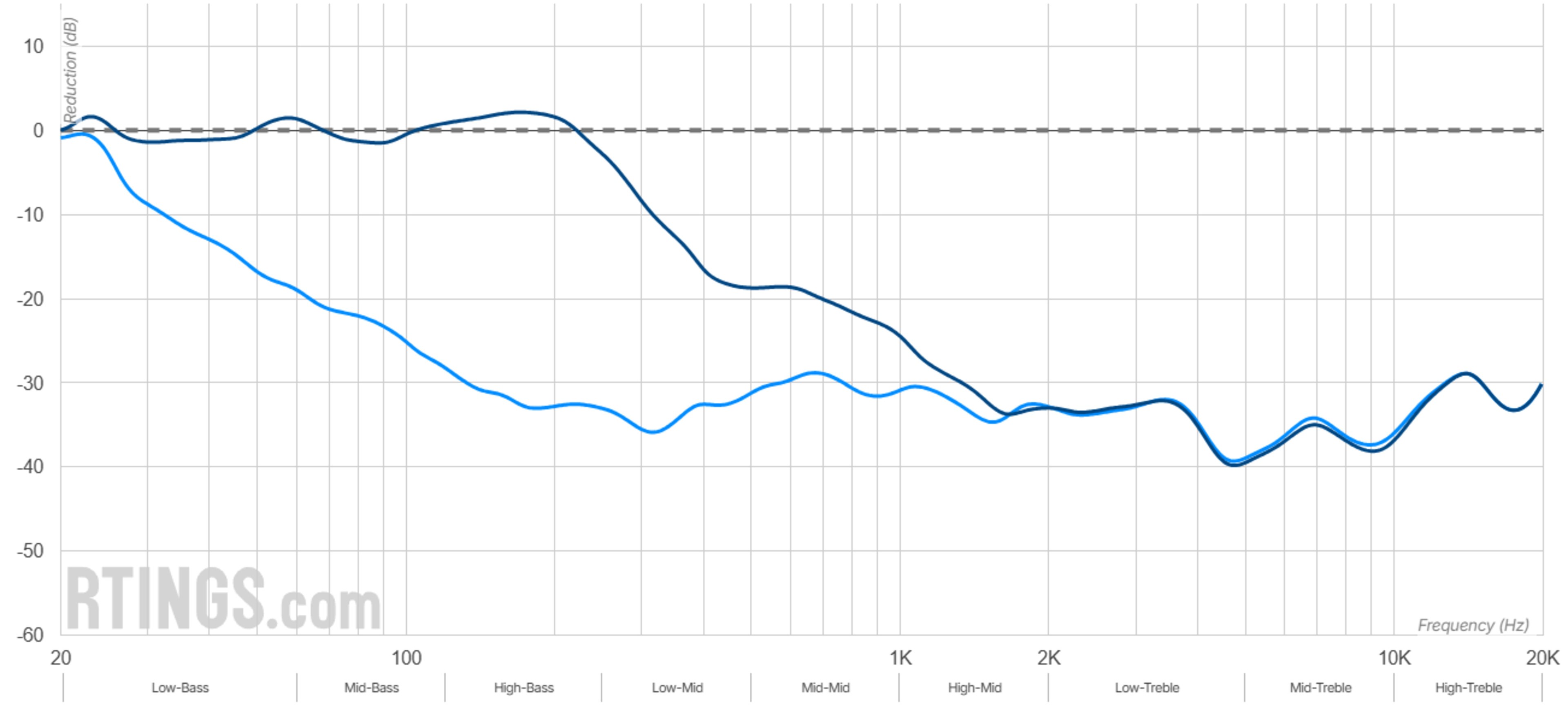
Not all sounds have the same frequencies. It's unlikely that you'll only encounter single-frequency tones or pink noise in isolation. In everyday life, you'll likely hear a wide array of noise from many different, and near-simultaneous, frequency bands and at different volumes. However, knowing where on the spectrum they reproduce can help you better understand what's at stake in each range.
Bass-Range Noise
The bass range is where you'll find rumbly bus and plane engines, traffic, and construction. However, these low sounds are some of the hardest to block out passively. Longer waves can pass through material more easily than shorter waves and are harder to absorb. As a result, most headphones have difficulty with passive isolation in this range. However, this is where ANC tends to shine. Some of the best noise cancelling headphones can attenuate noise by over 15 dB in this range.
Mid-Range Noise
When it comes to mid-range sounds like ambient speech, some headphones can provide adequate passive isolation in this range alone. However, ANC can still offer a worthwhile gain here. Noise cancelling can continue its full-force tackling of sounds in the low-mids, but you may not notice quite as much of a difference between ANC on and off, the higher frequency you go.
Treble-Range Noise
Whiny computer fans, dishware clinking together, and even some A/C units are examples of treble-range noise. Most headphones with a closed-back design can block out a significant amount of these sounds passively. Earbuds especially perform well in this range, too. However, ANC implementation in this range can be more difficult due to how short the wavelengths are in this frequency; this makes generating 'anti-noise' that's appropriately timed to cancel out sound more difficult.
Our Tests
Testing Procedure
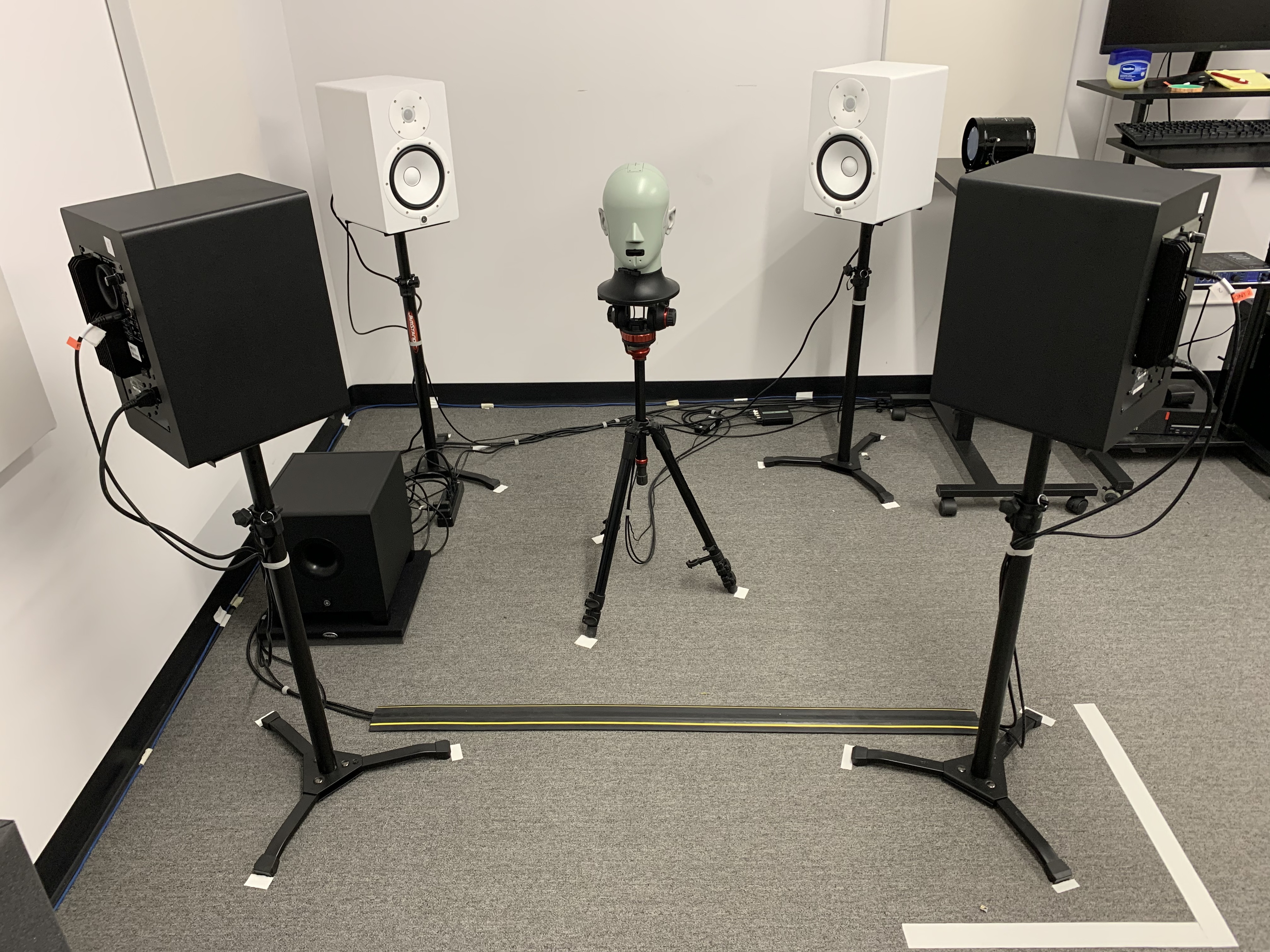
We start in a treated room (carpet and noise-dampening materials on the walls) with a low noise floor. Our setup uses a B&K 5128 head and torso simulator (HATS) centered between four speakers and one subwoofer. The height of these speakers is level to the rig's ears. For Full Range, Common Scenarios, and Voice Handling tests, we play audio from all speakers simultaneously. This multi-point sound field setup aims to imitate the reference sound field of the original recordings and is based on the setup outlined in European Telecommunications Standards Institute (ETSI) Technical Specification 103 224 (TS 103 224 v1.6.1).
Noise Isolation - Full Range
- 100.0%Overall Attenuation
This noise cancellation test uses pink noise as our test signal. We used a sine sweep in the past, but it didn't always give us true-to-life results; ANC systems that take time to adapt to noise are now more common, and sine sweeps don't provide enough of a window for adaptation. This adaptive approach causes ANC systems to attenuate less noise in the first few seconds of encountering sound, but improve their performance once they have time to respond. We give the headphones a 'head start' by playing the noise for a few seconds before measuring their performance, allowing us to account for this response time and more effectively measure their performance.
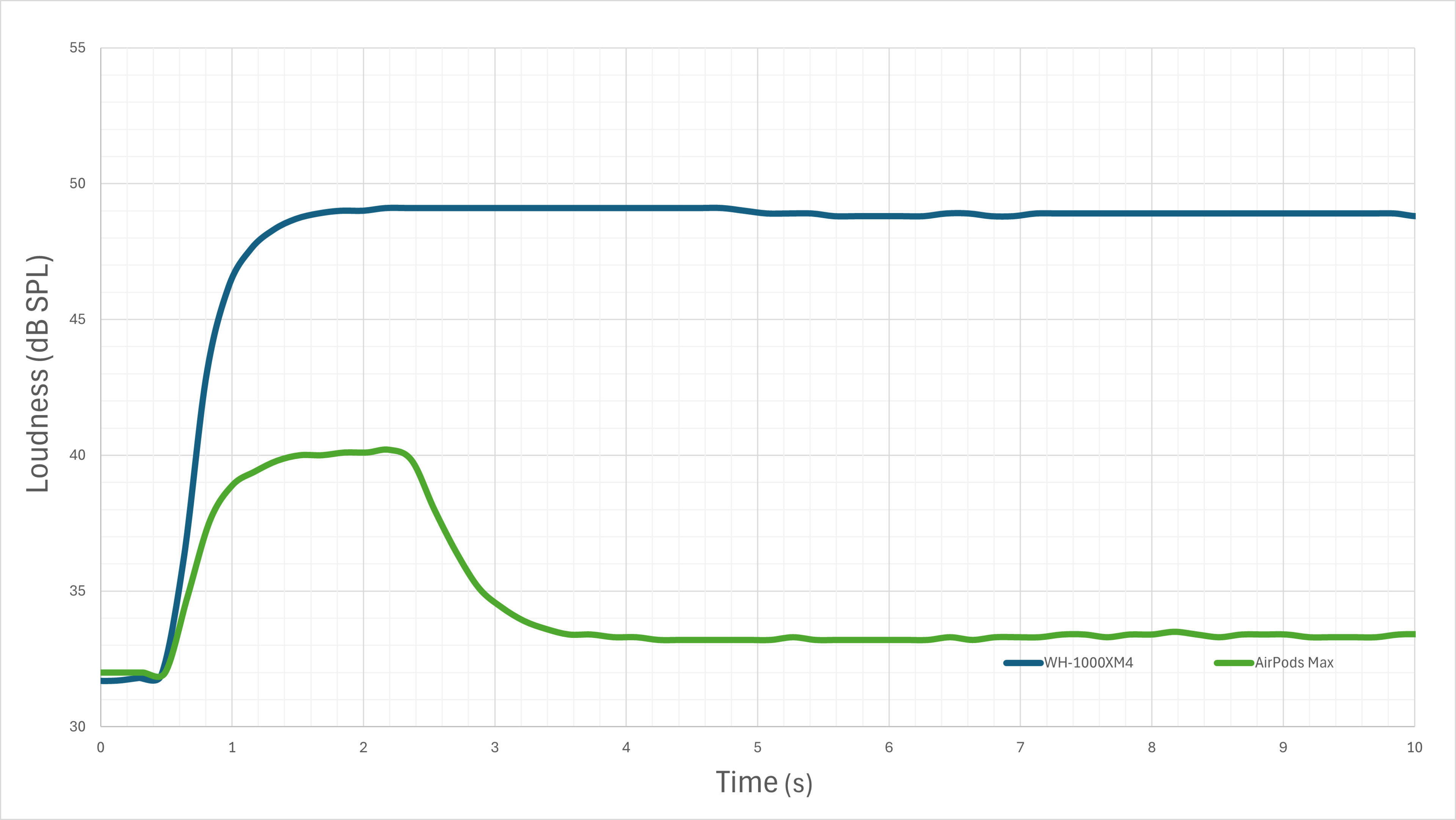
We record with the following setup: no headphones, headphones on but ANC off, and with ANC enabled (if available). If there's ANC, we run this test at three different volumes (pink noise output stimulus calibrated to 60 dBA, 70 dBA, and 80 dBA on the B&K 5128 without headphones). It's also worth mentioning that we reseat the headphones between each sample we take, and that our resulting measurements are unweighted.
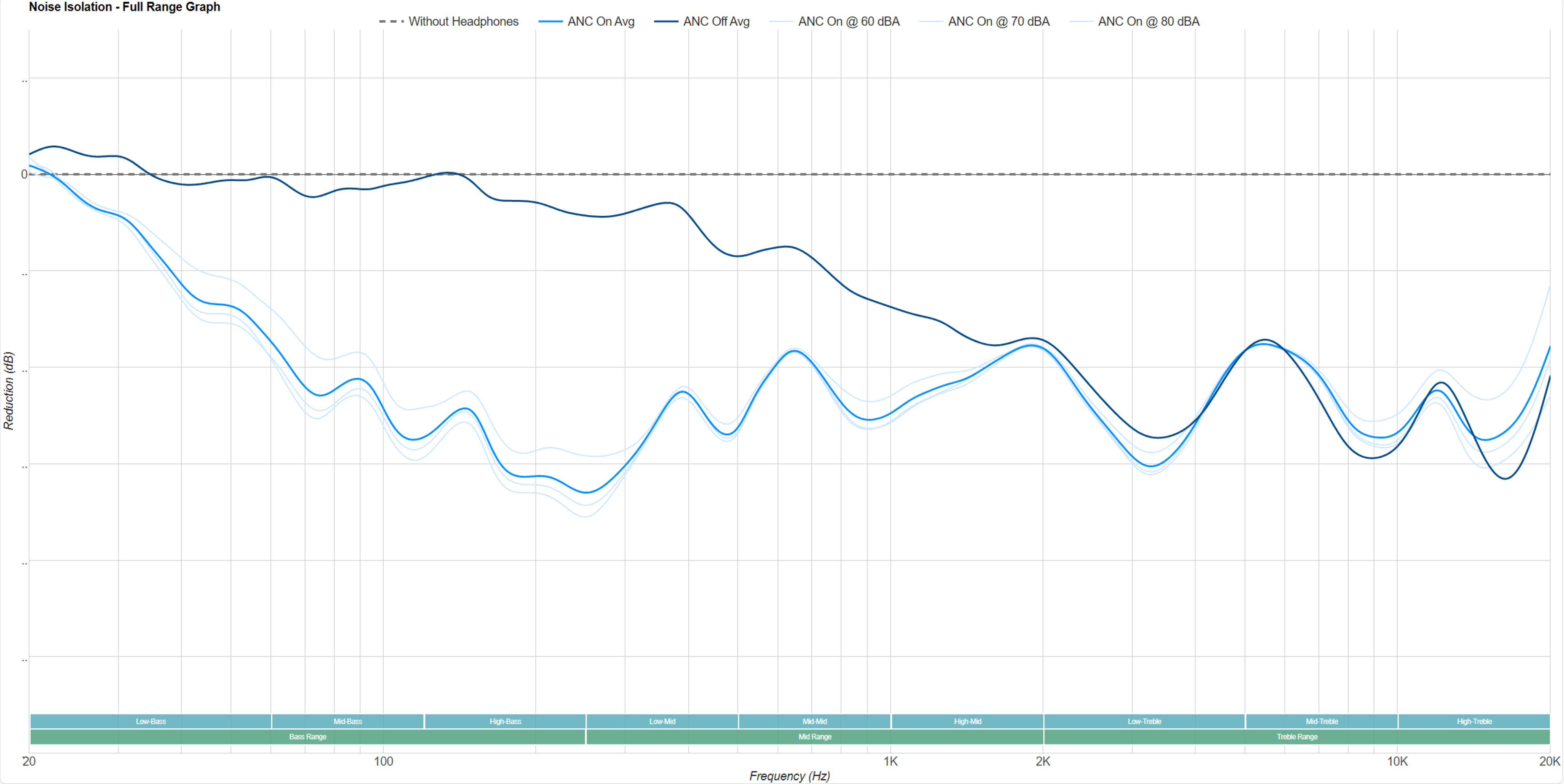
This test is useful if you want to see the difference in isolation between each range. That said, if you want to see how the headphones we've tested on this test bench perform, you'll want to look at this table, which lists all products on this iteration of Noise Isolation testing in order of their noise attenuation.
Noise Isolation - Common Scenarios
- 10.0%Airplane Noise Attenuation
- 10.0%Office Noise Attenuation
- 10.0%Street Noise Attenuation
In the real world, you'll unlikely encounter pink noise or sounds isolated to single-frequency test tones. If you want to know what to expect in everyday scenarios, this is the test for you. It complements our Full Range results by presenting three dynamic scenarios you'll likely want to block out: airplane noise, office noise, and street noise. Additionally, it puts the adaptive nature of some ANC systems to the test, as the noise in these tests isn't constant and contains transient sounds like phones ringing and large vehicles accelerating.
We use three sample recordings for this test, also sourced from ETSI, which you can find within their background noise database. You may need to raise your device's volume to distinguish additional details since our output recordings aren't very loud.
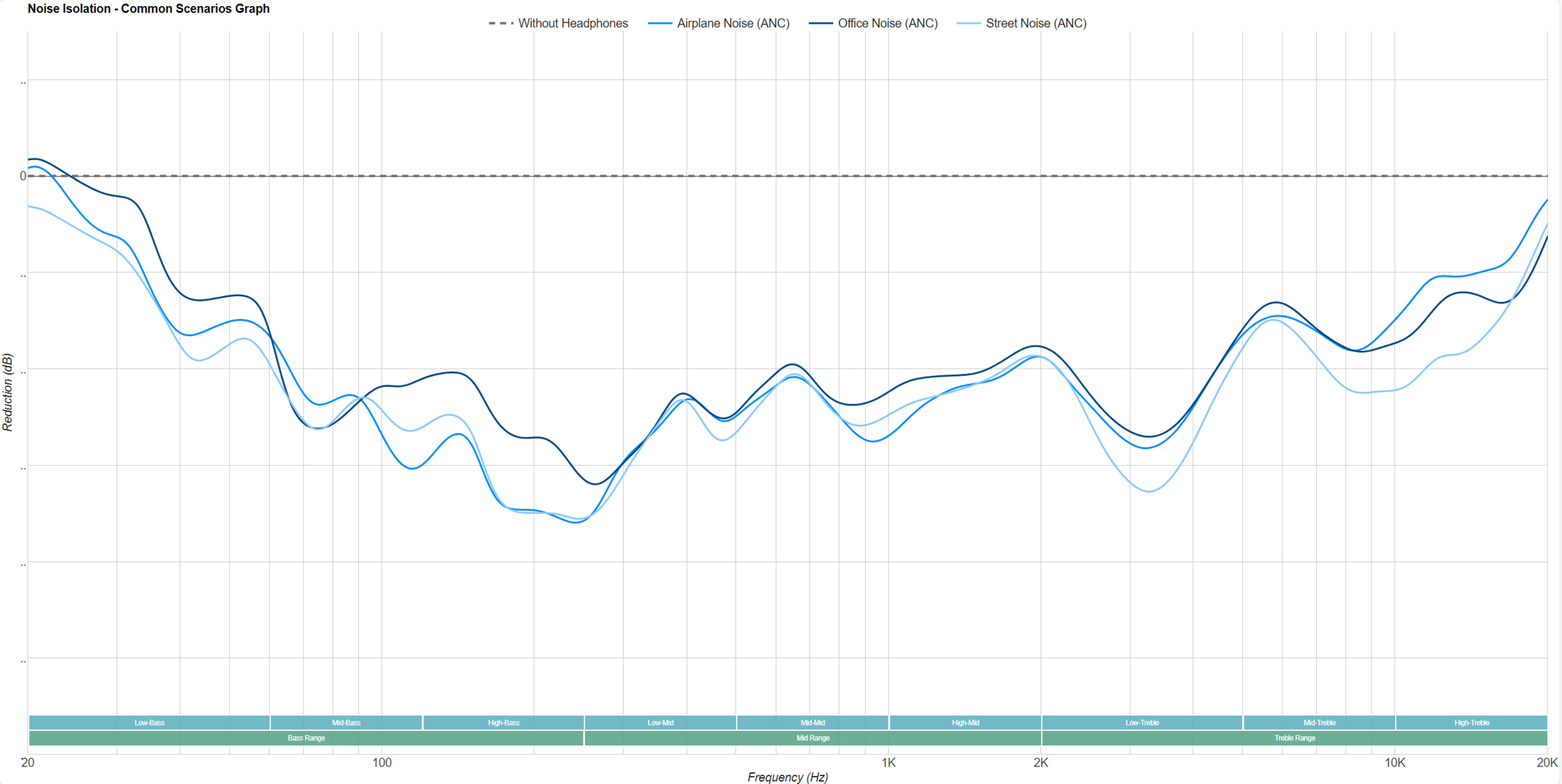
Since this test is scored, you can use our table tool to search for headphones that perform the best in a particular scenario. We've already done the heavy lifting, so you can check the tables for airplane noise, office noise, and street noise, with the products sorted by noise attenuation.
Noise Isolation - Voice Handling
If you work at a busy office or like to wear headphones when you're out and about at a cafe or supermarket, you'll hear voices all around you. This test puts together four different voice recordings (two male and two female) from Peter Kabal's Telecommunications & Signal Processing Laboratory Speech Database at McGill University. You can hear the difference in noise isolation for yourself. Keep in mind that although the bulk of speech falls within the mid-range, deeper voices tend to produce some bass, while higher-pitched voices tend to produce some treble.
You can hear the audio samples used below. You may need to raise your device's volume to distinguish additional details during playback.
Unlike the previous tests, this test isn't scored. It acts as a reference point; you can compare recordings between products to better understand what works for you.
ANC Wind Handling
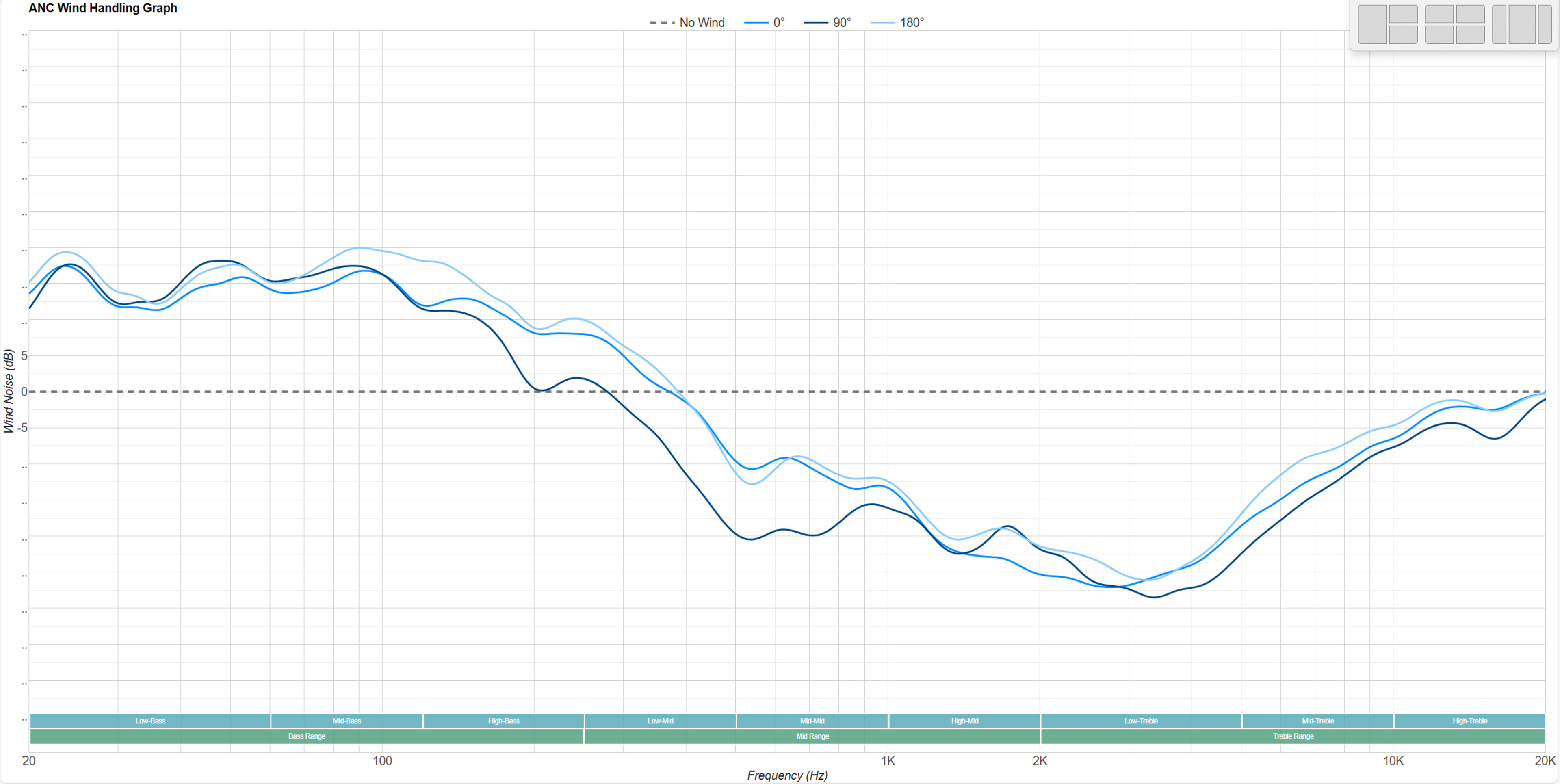
If you've ever had ANC headphones on while outdoors, you probably know that wind noise can be annoying. Unlike other ambient sounds that come from an external source, like voices or engine rumbles, wind noise originates from physical interactions between wind and your headphones. In brief terms, these interactions create a pressure differential that's interpreted by external ANC mics as noise. As a result, the ANC system plays back anti-noise to cancel out sound that wouldn't have made it to your ear, generating more noise than if ANC were simply turned off.
This test is only performed if the headphones have an ANC system, with any wind noise reduction features enabled (when applicable).
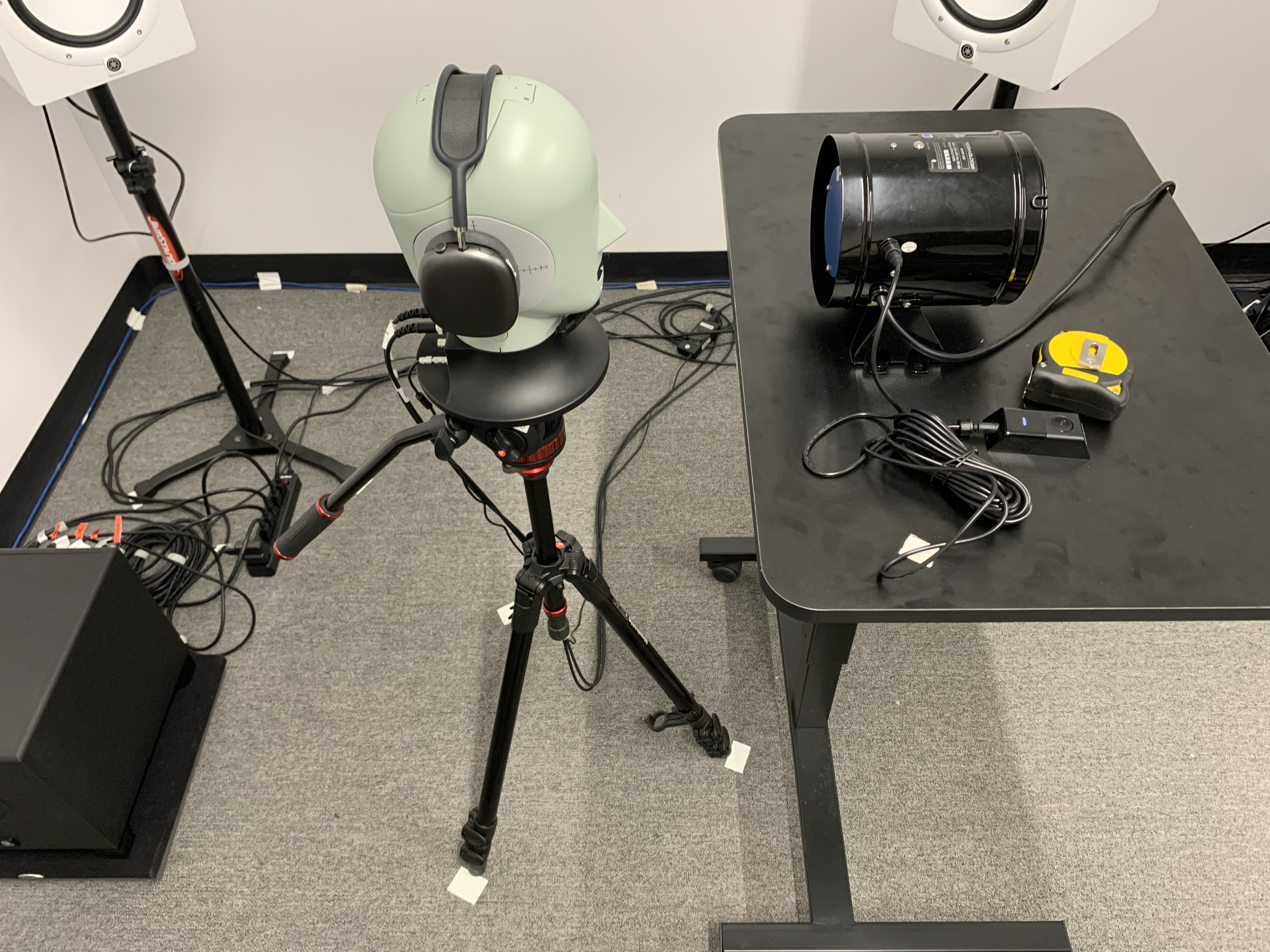
Unlike our other noise cancellation tests, which use reference audio clips, our test setup uses an electrical fan placed 30 cm away from the HATS. We take measurements at three different angles (0°, 90°, and 180°) and upload a recording (where we slowly rotate the HATS from 0° to 180°). Wind noise typically has a flat response below 300 Hz (low mid-range) and tapers off around the same frequency band.
 |
| Wind Noise Recording |
This test isn't scored either. If reducing wind noise is your top priority, you'll definitely want headphones that have a wind reduction feature.
Conclusion
With this comprehensive breakdown of how we go about testing noise cancelling headphones, you have the tools to find a product that has the performance you need; keep in mind that the best implementations of ANC often come with a hefty price tag, though. If you crave a more in-depth explanation of the phenomenon described above, or our philosophy behind the methodologies, you'll want to check out our R&D article.
We love hearing from you! Do you have any questions or suggestions concerning our methodology? Are you interested in knowing specific details about our setup, process, or the philosophy behind our tests? We'd love to hear from you in the comments below or via email at feedback@rtings.com.
Recent Updates
10/06/2025: We've updated the Noise Isolation - Full Range section to be more precise when referring to our testing procedures.
08/11/2025: We've updated the article with additional details about testing and brief concept introductions for context.