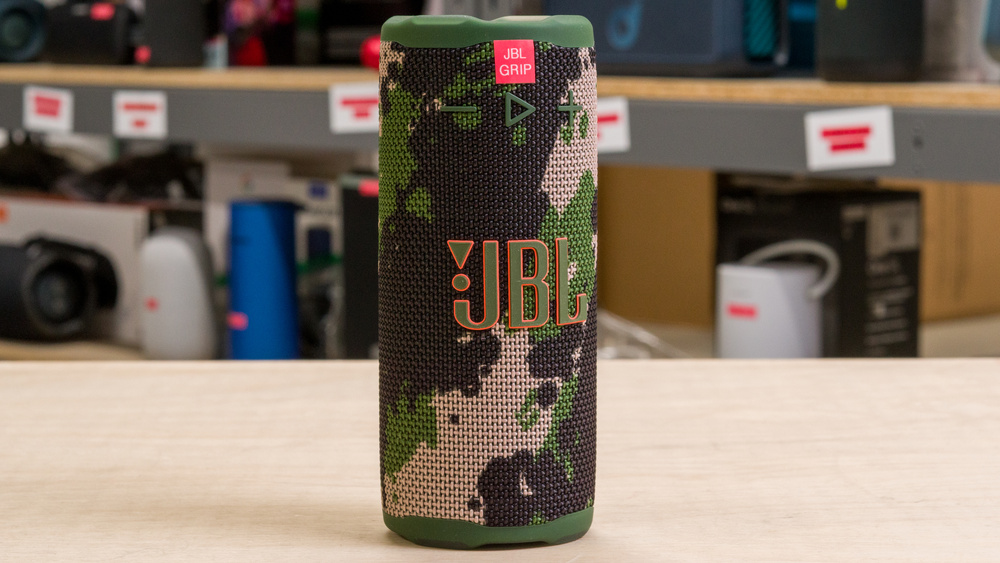
The JBL Grip is a small tube-shaped Bluetooth speaker that neatly fits into JBL's lineup between the likes of the JBL Clip 5 and the bigger JBL Flip 7. Kitted out with a little light show and only a bit bulkier than an energy drink can, while weighing under one pound, this speaker lets you take your party with you in a cupholder.
Our Verdict
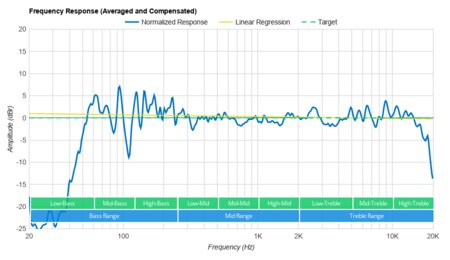
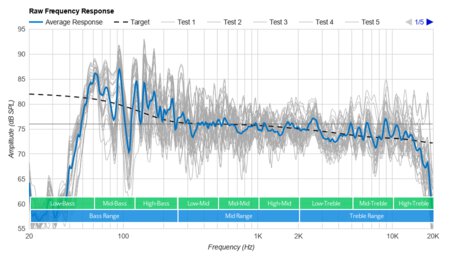
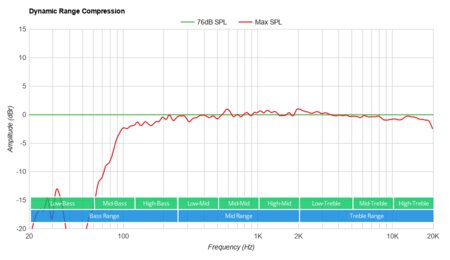
The JBL Grip is adequate for music. Due to its small, portable size, it can't reproduce deep bass, so your music sounds relatively bright overall. It's also a mono speaker that doesn't get very loud, so your music won't sound very enveloping. That said, it has a seven-band equalizer and Q presets to dial in a better sound for your tastes.
Graphic equalizer and EQ presets.
Quite light and small.
Lacks deep bass.
Not very loud.
The JBL Grip is poor for videos and movies. It's a mono speaker with fairly high Bluetooth latency, and you can't get a low-latency wired connection either. It also doesn't get loud enough to fill a moderately sized room with immersive sound. However, if you don't experience notable latency with your devices, the tuning suits dialogue well, but won't feel immersive with action flicks.
Graphic equalizer and EQ presets.
High Bluetooth latency.
Lacks deep bass.
Not very loud.
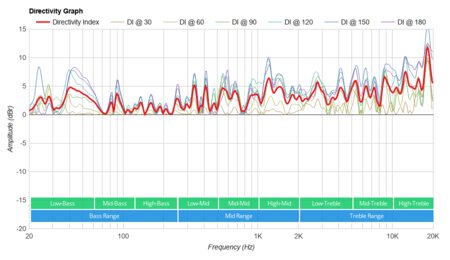
The JBL Grip is decent for podcasts. While it doesn't have the most balanced frequency response, lacking some thump in the bass range, it's rather balanced in the mids and treble, so it renders speech naturally. Its small size also makes it a great candidate for carrying from room to room or onto the balcony. That said, how it sounds to you depends on the direction it points. It also doesn't reach high output volumes, which may be important, depending on where you're listening to your shows.
Graphic equalizer and EQ presets.
Quite light and small.
Lacks deep bass.
Not very loud.
The JBL Grip doesn't support any voice assistant features.
The JBL Grip is decent for outdoor use. It's quite lightweight, pocketable, IP68-rated for dust and water resistance, and has a high build quality. Its app includes EQ, stereo pairing, and party mode. That said, it won't deliver a deep bass, even though the mids and treble are balanced. How it sounds is sensitive to listening angles, so if you watch the lighting on the back, the treble will sound quite different compared to head-on. And, its battery life lasts a little more than six hours, which is adequate for a picnic, though it's not the longest we've seen. It also doesn't get very loud, so it won't project far in a noisy or wide-open space.
Quite light and small.
IP68 rating.
Lacks deep bass.
Not very loud.
Check Price
Differences Between Sizes And Variants
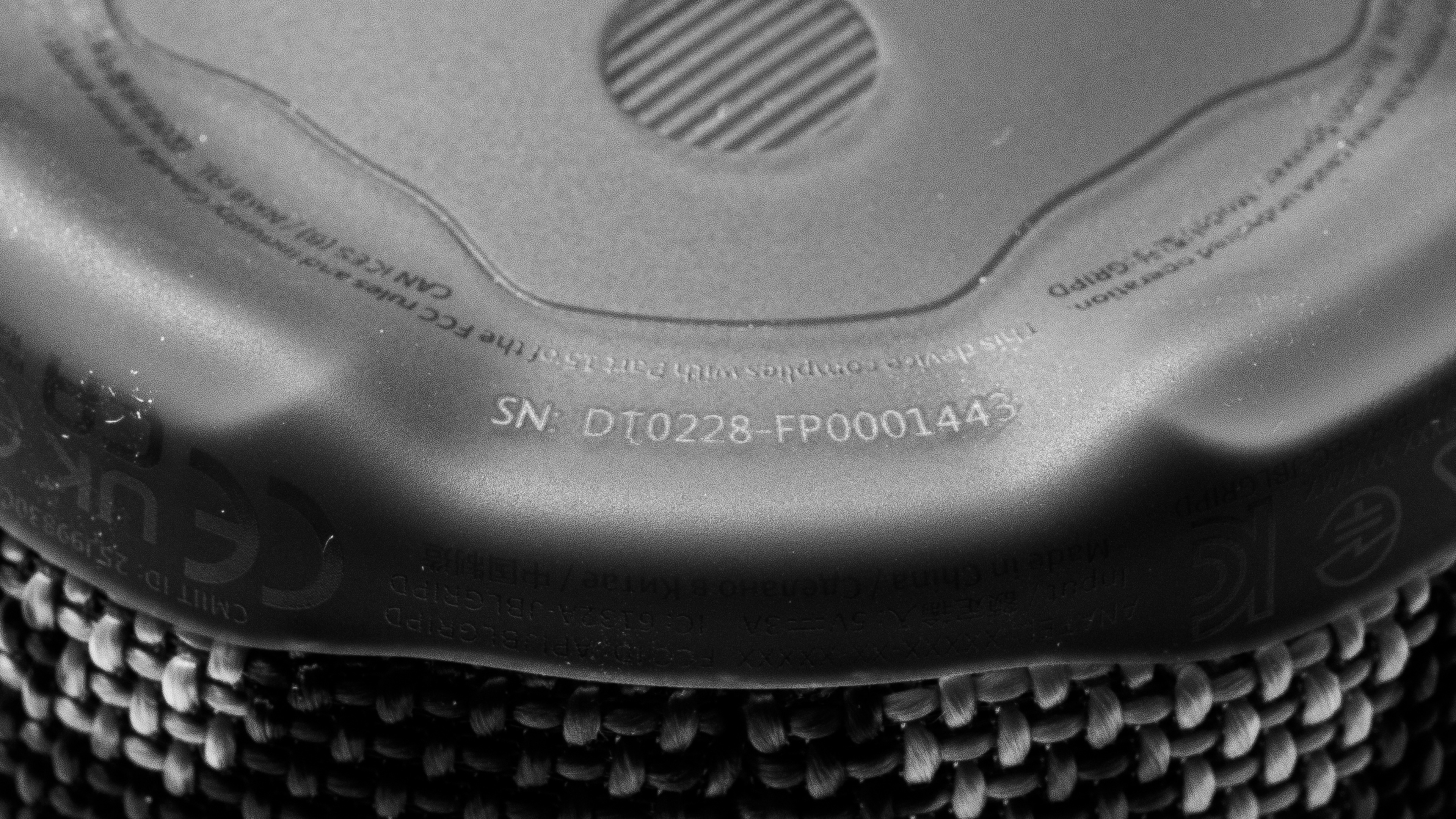
The JBL Grip comes in a variety of colors: 'Red,' 'White,' 'Orange,' 'Blue,' 'Purple,' 'Pink,' 'Yellow,' 'Black,' and (a photo of our unit's label) 'Squad.' Apart from color differences, we expect these to perform similarly.
If you come across another version of this speaker, let us know in the comments, and we'll update our review.
Popular Speaker Comparisons
The JBL Grip falls into the category of lightweight portable speakers, sharing a similar shape with the big brother JBL Flip 7 and JBL Charge 6, though it stands upright like the Ultimate Ears WONDERBOOM 4. It's smaller and lighter than all of these speakers, and because of its size, it can't reproduce as much low-end as those speakers. That said, the even lighter Sony SRS-XB100 (which also has a much longer battery) delivers more boom and growl on basslines, but it lacks JBL's EQ functions and Auracast-enabled party mode.
For more speakers, check out the best outdoor speakers, the best portable speakers, and the best small Bluetooth speakers.
The JBL Flip 7 is better than the JBL Grip for most people, unless your priority is picking the smallest speaker. The Flip 7 sounds a bit better, gets louder, and supports wired USB-C audio for lossless and low-latency audio for viewing videos. It also shares the same app as the Grip, so you get a graphic EQ, optional stereo pairing, and party mode in both. The Grip has the advantage of being smaller, but that means it also puts out a touch less bass.
The JBL Grip is slightly better than the JBL Flip 6 for most people, but it depends on your criteria. As far as tuning is concerned, the Flip 6 sounds a touch brighter and puts out a bit more bass. That said, the Grip is more portable with a similar battery life. It also has a slightly greater IP68 rating and floats in water, making it a bit more rugged outdoors.
If you prioritize portability and battery life, the Sony SRS-XB100 is better than the JBL Grip. However, the JBL has a much better app, complete with EQ and light show controls. Still, the Sony has double the battery life, but you can't change its tuning.
The JBL Go 4 is a lighter and smaller speaker than the JBL Grip, which you may prefer. It has slightly longer battery life, but it also delivers a brighter sound with a more upward tilt. The Grip gets louder, likely due to its larger size. Neither can reproduce stereo content without downmixing, though.
Test Results
for pictures & test results
for pictures & test results
for pictures & test results