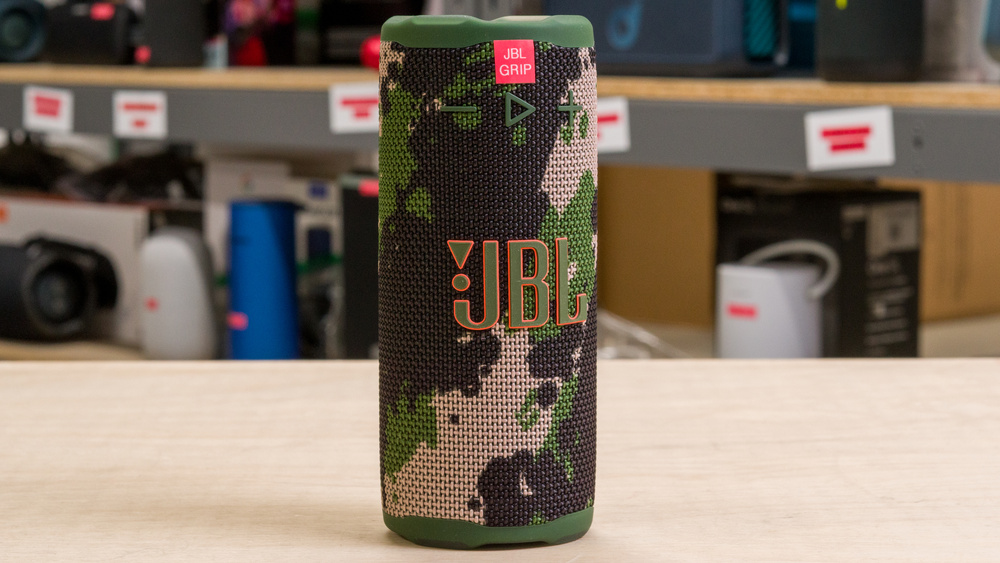
The JBL Grip is a small tube-shaped Bluetooth speaker that neatly fits into JBL's lineup between the likes of the JBL Clip 5 and the bigger JBL Flip 7. Kitted out with a little light show and only a bit bulkier than an energy drink can, while weighing under one pound, this speaker lets you take your party with you in a cupholder.
Our Verdict
The JBL Grip is adequate for music. Due to its small, portable size, it can't reproduce deep bass, so your music sounds relatively bright overall. It's also a mono speaker that doesn't get very loud, so your music won't sound very enveloping. That said, it has a seven-band equalizer and Q presets to dial in a better sound for your tastes.
Graphic equalizer and EQ presets.
Quite light and small.
Lacks deep bass.
Not very loud.
The JBL Grip is poor for videos and movies. It's a mono speaker with fairly high Bluetooth latency, and you can't get a low-latency wired connection either. It also doesn't get loud enough to fill a moderately sized room with immersive sound. However, if you don't experience notable latency with your devices, the tuning suits dialogue well, but won't feel immersive with action flicks.
Graphic equalizer and EQ presets.
High Bluetooth latency.
Lacks deep bass.
Not very loud.
The JBL Grip is decent for podcasts. While it doesn't have the most balanced frequency response, lacking some thump in the bass range, it's rather balanced in the mids and treble, so it renders speech naturally. Its small size also makes it a great candidate for carrying from room to room or onto the balcony. That said, how it sounds to you depends on the direction it points. It also doesn't reach high output volumes, which may be important, depending on where you're listening to your shows.
Graphic equalizer and EQ presets.
Quite light and small.
Lacks deep bass.
Not very loud.
The JBL Grip doesn't support any voice assistant features.
The JBL Grip is decent for outdoor use. It's quite lightweight, pocketable, IP68-rated for dust and water resistance, and has a high build quality. Its app includes EQ, stereo pairing, and party mode. That said, it won't deliver a deep bass, even though the mids and treble are balanced. How it sounds is sensitive to listening angles, so if you watch the lighting on the back, the treble will sound quite different compared to head-on. And, its battery life lasts a little more than six hours, which is adequate for a picnic, though it's not the longest we've seen. It also doesn't get very loud, so it won't project far in a noisy or wide-open space.
Quite light and small.
IP68 rating.
Lacks deep bass.
Not very loud.
Check Price
Differences Between Sizes And Variants
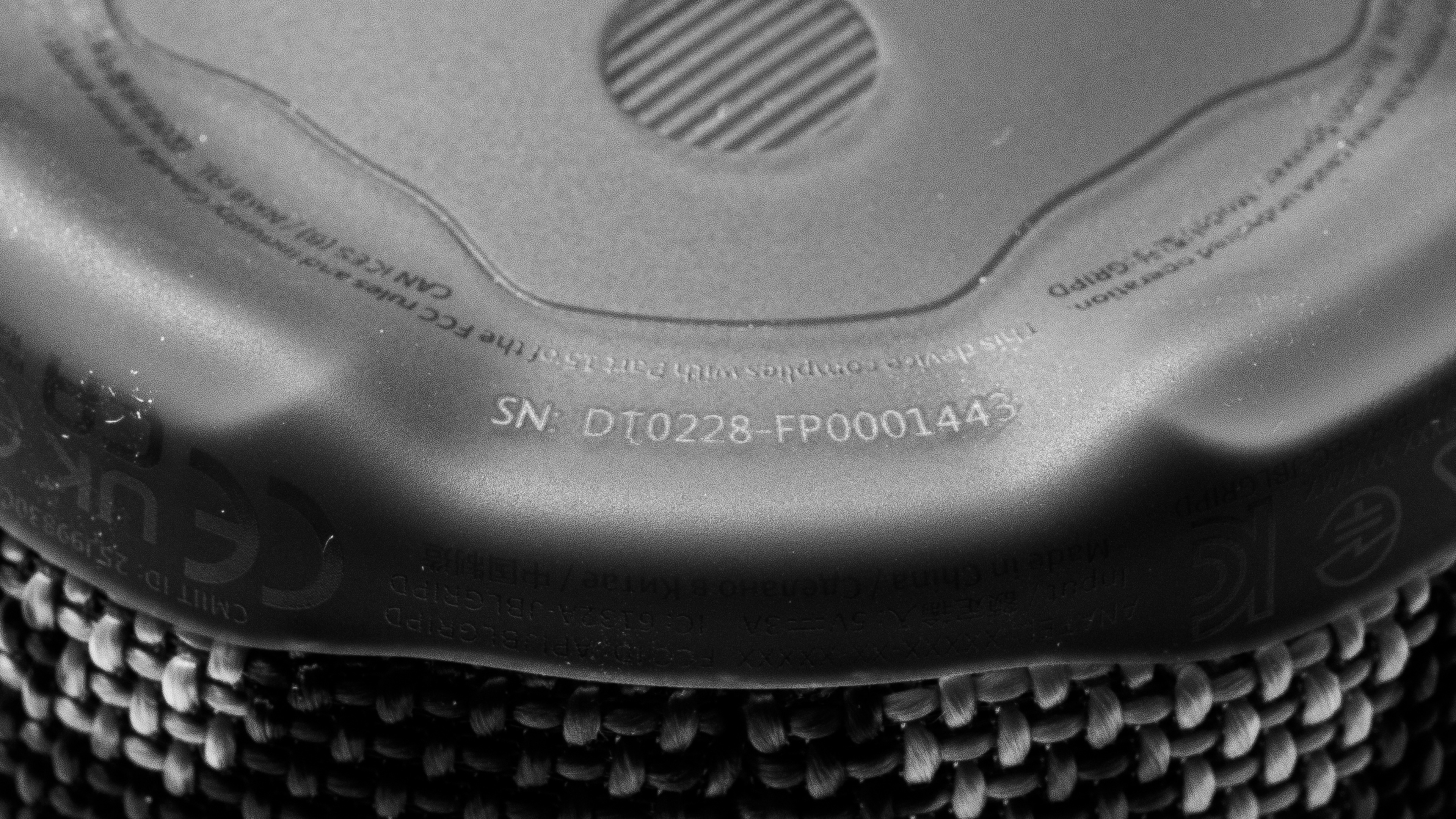
The JBL Grip comes in a variety of colors: 'Red,' 'White,' 'Orange,' 'Blue,' 'Purple,' 'Pink,' 'Yellow,' 'Black,' and (a photo of our unit's label) 'Squad.' Apart from color differences, we expect these to perform similarly.
If you come across another version of this speaker, let us know in the comments, and we'll update our review.
Popular Speaker Comparisons
The JBL Grip falls into the category of lightweight portable speakers, sharing a similar shape with the big brother JBL Flip 7 and JBL Charge 6, though it stands upright like the Ultimate Ears WONDERBOOM 4. It's smaller and lighter than all of these speakers, and because of its size, it can't reproduce as much low-end as those speakers. That said, the even lighter Sony SRS-XB100 (which also has a much longer battery) delivers more boom and growl on basslines, but it lacks JBL's EQ functions and Auracast-enabled party mode.
For more speakers, check out the best outdoor speakers, the best portable speakers, and the best small Bluetooth speakers.
The JBL Flip 7 is better than the JBL Grip for most people, unless your priority is to pick the smallest speaker. The Flip 7 sounds a bit better, gets louder, supports wired USB-C audio for lossless and low-latency audio for viewing videos. It also shares the same app as the Grip, so you get a graphic EQ, optional stereo pairing, and party mode in both. The Grip has the advantage of being smaller and fairly neutral-sounding, but it lacks bass.
The JBL Flip 6 may be slightly better than the JBL Grip for most people, but it depends on your criteria. As far as tuning is concerned, the Flip 6 sounds more neutral with EQ available in-app. That said, the Grip is more portable with a similar battery life. It also has a slightly greater IP68 rating and floats in water, making it a bit more rugged outdoors.
The JBL Go 4 is a lighter and smaller speaker than the JBL Grip, which you may prefer. It has a slightly longer battery life, but it also compromises on sound with weaker bass, and it's much more sensitive to listening angles. The Grip offers a little more low-end extension (but its bass isn't massive), and its sound changes less with different listening angles. For some people, it might come down to whether they like the light feature on the Grip.
If you prioritize portability and battery life, the Sony SRS-XB100 is better than the JBL Grip. However, the JBL gets louder, which you may want, as the Sony lacks headroom. The JBL also has a much better app, complete with EQ and light show controls. Still, the Sony has double the battery life and a boomier bass, but you can't change its tuning.
Test Results
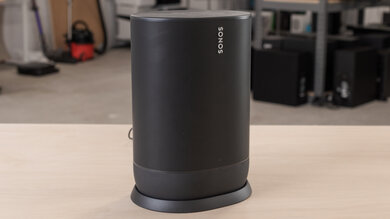
The JBL Grip is a small cylindrical speaker designed to stand upright, unlike its larger sibling, the JBL Flip 7, which is meant to sit horizontally, and with which it shares a similar look. It's wrapped in a sturdy plastic mesh, bookended by rubbery silicone, and a strip around the back has a small RGB light feature. Not at all shy to boast, the logo takes up more space than the controls across the front of the speaker. It's available in 10 shades to match your vibe, nine of which ('Red,' 'White,' 'Orange,' 'Blue,' 'Purple,' 'Pink,' 'Yellow,' and 'Black,') are solid colors with tonal or color-matched logos and controls, besides a safety orange outline around 'JBL.' Our camouflage-inspired 'Squad' unit is the exception, with a green, beige, and brown pattern.
This speaker is outstandingly portable. It's about a third lighter than the JBL Flip 7 and easily fits into a backpack, tote, or large coat pocket. Although it lacks a proper handle, just a finger-sized loop of cord, you can easily grip it in one hand like a soda pop.
The JBL Grip is remarkably well built. Its IP68 rating ensures that a short dip in the pool (even though it won't float) or an extended stay in a workshed full of sawdust won't kill the speaker. Wrapped in the same rigid plastic mesh as its brethren, the JBL Go 4 and JBL Flip 7, and capped with silicone feet and a matching top, according to the manufacturer, it can withstand a one-meter drop on concrete. The USB-C port is left exposed, and the fabric cord loop isn't removable, but the buttons are all well-protected by the enclosure.
The speaker's controls are alright and clearly labelled. They're spread out around the entire housing: power, pairing, and Auracast controls are on the top, while the front is dedicated to playback, and the back has the RGB light control. You can refer to the control scheme in greater detail. Pressing the Bluetooth button once initiates pairing, and you can add a second compatible speaker using the Auracast button (or the app). If you need to perform a factory reset, press the Play/Pause and '+' buttons simultaneously for two seconds.
Outside the lightshow, a small light indicator at the top shows the pairing status (white flashing or solid) and warns of low battery power with a red flicker. Plus, there are chimes for pairing mode, successful connection, Auracast pairing, and when you reach max volume. That said, there aren't additional chimes for when the speaker disconnects, minimum volume, or to indicate auto-off. Volume changes don't have dedicated chimes, which might be preferable for some who don't want their audio interrupted.
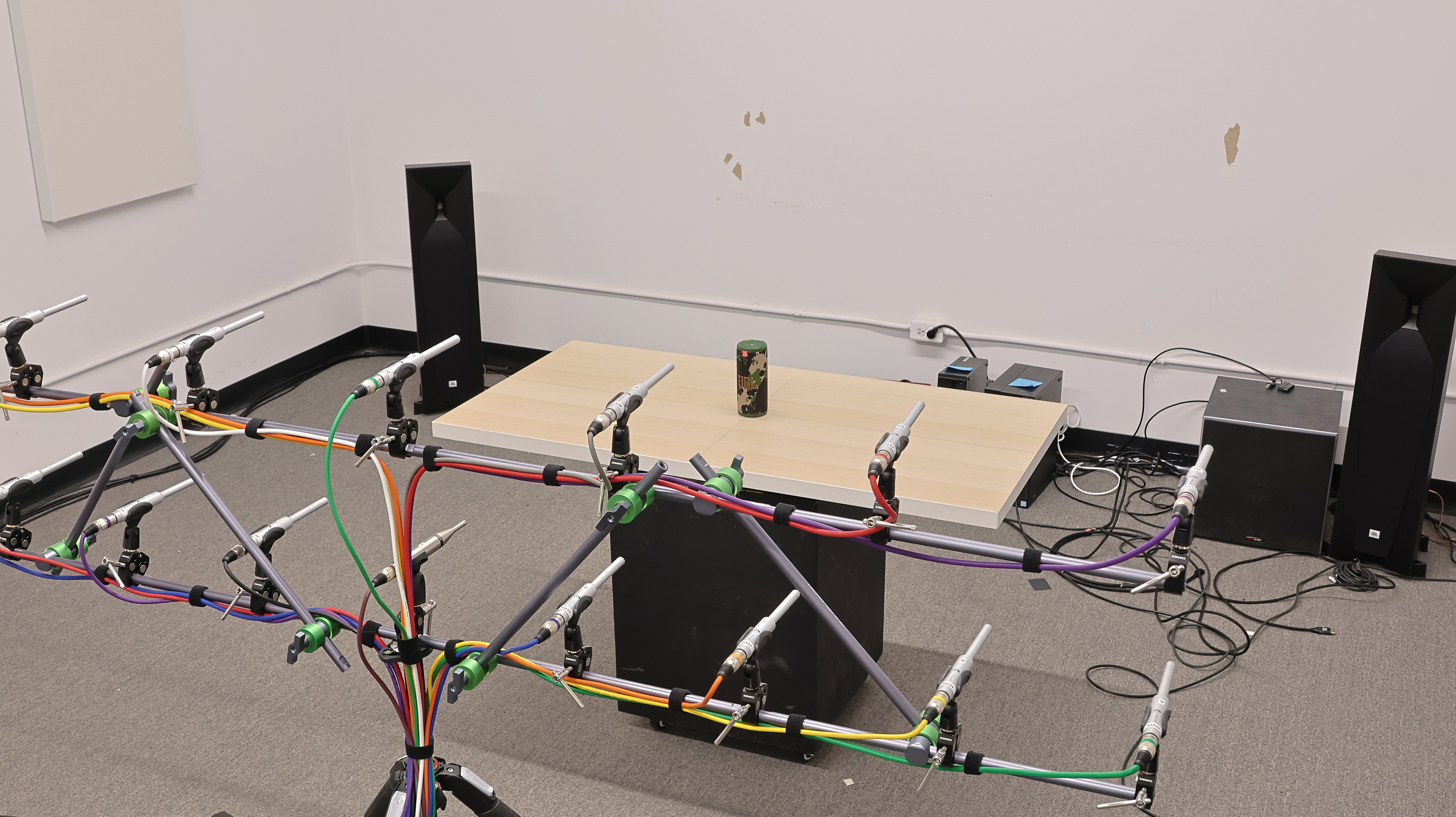
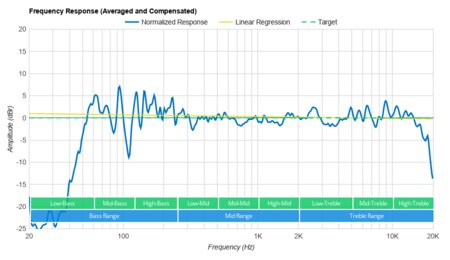
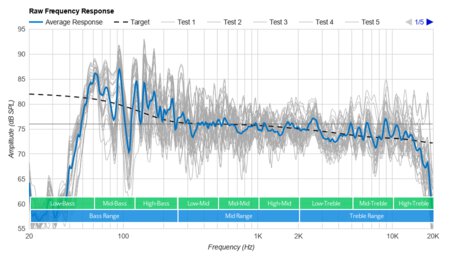
The JBL Grip has mediocre frequency response accuracy. Limited by its small size, the speaker doesn't have a full low-end, and emphasizes the mids and treble, resulting in a brighter overall tuning. We measured the default JBL 'Signature' EQ with the speaker upright, and the response works well for podcasts, audiobooks, and genres that aren't very bass-focused, like folk, ballads, and older pop music. There's still some low-end boom and punch to punctuate the beat, but you might miss the thump on 808 kicks in genres like hip-hop and EDM. The mids and treble are relatively balanced for clear vocals and acoustic guitar in songs like Grass by XTC. You can also select one of the EQ presets via the app to get an even more excited or laid-back sound.
While the speaker was designed for vertical placement, we measured it on its side, and the treble doesn't sound as clear. The manufacturer claims the speaker uses AI Soundboost to adjust playback based on the content, but since we can't disable the feature, we can't test how it affects the sound.
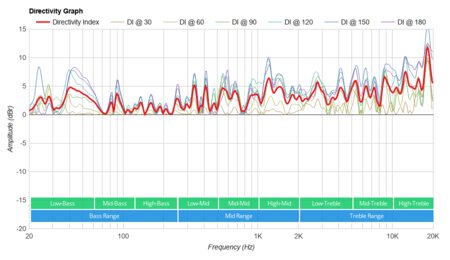
The JBL Grip's sound is sensitive to placement. Its front-facing driver can't deliver the same degree of consistency, particularly in the treble, across listening angles as the even smaller Sony SRS-XB100. It's also a mono speaker, so it necessarily downmixes your audio, which is expected at this size.
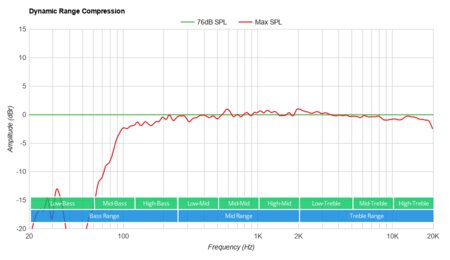
The speaker is loud enough for bedroom listening or while sitting on the patio. However, if you need more volume, the JBL Flip 7 or the Minirig 4 is a better pick. At top volume, the speaker compresses a bit in the bass, which can make the lows sound weak.
The battery performance is mediocre. In our standard test, it drained in just over six hours, compared to the advertised 12-hour battery life. PlayTime Boost is a battery-saving function that extends battery life by two hours, and this aligns with our testing: the speaker lasted eight hours and 24 minutes with PlayTime Boost enabled. In exchange for stretching out the battery, the PlayTime Boost disables all EQ settings and reduces the bass output compared to the default Signature EQ. After 20 minutes of no audio playback, the speaker automatically shuts off, too.
Interestingly, we weren't able to verify a fast charge function. The speaker doesn't include a USB-C charger, but with a 100W charger and hub, it charges at a steady 7W. On the upside, it reached a full charge in 2.2 hours, as opposed to the three hours outlined by the manufacturer.
The JBL Portable app is great. It's fully featured, as you can see in this video. There's a seven-band graphic equalizer and EQ presets ('Signature,' 'Chill,' 'Energetic,' 'Vocal,' and 'Custom') at your disposal. The 'Custom' preset is one you create, while 'PlayTime Boost' reduces the low-end's emphasis to extend the speaker's battery life.
You can also access stereo pairing mode with a second JBL Grip, or use Auracast with compatible JBL speakers for Party Mode. Besides these functions, you can select lighting presets and control the brightness. It's worth noting that the lighting is on the back of the speaker. So if you want to see the lights in their full glory, the driver faces away from you, changing the sound you hear, as we outline in the soundstage box.
The JBL Grip's USB-C port is for charging the speaker, and can't be used for a wired audio connection. If you want a USB-C audio connection, check out the JBL Flip 7.
The speaker's Bluetooth performance is very good. You can pair it with up to two devices at the same time, and it'll seamlessly switch between them when you use one device or the other for playback. Latency is a bit elevated, so you might experience out-of-sync video and audio. However, some apps and devices can compensate for that in different ways.