JBL PartyBox 520  Speaker Review

Reviewed Aug 14, 2025 at 08:56am
Tested using Methodology v0.8 
JBL PartyBox 520
7.9
Music 
6.7
Videos/Movies 
7.5
Podcasts 
3.1
Voice Assistant 
7.7
Outdoors 
 21

The JBL PartyBox 520 is a large tower-style speaker on wheels with a telescopic handle to take with you and soundtrack your events. In the crowded PartyBox line, it's the step up from the lighter JBL PartyBox Stage 320 and the larger, battery-free JBL PartyBox 710. It runs on battery or AC power, offering flexibility with where you set it up. Plus, it's chock-full of connectivity, lighting, and sound effects. Bolstered by a competent companion app with EQ settings, it might strike the sweet spot for your next outdoor shindig.

Our Verdict

7.9
Music 

The JBL PartyBox 520 is very good for music. Its frequency response accuracy is excellent, meaning your tunes have a solid bass depth, clear melodies, and vocals that cut through the mix without sounding harsh. Even at high output volumes, there's not too much compression either. You can add a second identical model for a stereo pair, or group compatible JBL models for party mode. Connectivity is fantastic: you get Bluetooth, AUX in (and you can daisy chain it with other speakers), USB-C audio, and two inputs for mics (one of which can be used as an instrument input). You can use either the custom EQ or the EQ presets in the app to adjust the sound to your space, too. That said, its front-facing design means that your music sounds different if you're offset from the speaker's front.

Pros
  • Excellent frequency response accuracy.

  • Plenty of EQ and sound sculpting tools.

  • Gets loud.

Cons
  • Front-facing design means it's sensitive to listening angles.

6.7
Videos/Movies 

The JBL PartyBox 520 is alright for videos and movies. Its balanced sound ensures that dialogue, music, and rumbly effects sound lively and clear. The stereo soundstage is decent, and you notice when sounds move side to side in the mix. However, how the speaker sounds is sensitive to listening angles because it's a front-facing design. That said, Bluetooth latency is elevated, which can lead to annoying lip-sync issues, but if you connect to an analog or USB-C sound source, you can work around that.

Pros
  • Excellent frequency response accuracy.

  • Plenty of EQ and sound sculpting tools.

  • Gets loud.

Cons
  • Heavy and large.

  • Front-facing design means it's sensitive to listening angles.

  • Elevated Bluetooth latency.

7.5
Podcasts 

The JBL PartyBox 520 is good for listening to podcasts. While it's probably more than what most people need, given its size and high output, the speaker reproduces a balanced sound, making speech clear and detailed. You can pair more than one device to it at the same time, too. Still, it's sensitive to listening angles and needs to be wheeled around.

Pros
  • Excellent frequency response accuracy.

  • Plenty of EQ and sound sculpting tools.

  • Gets loud.

Cons
  • Heavy and large.

  • Front-facing design means it's sensitive to listening angles.

3.1
Voice Assistant 

The JBL PartyBox 520 doesn't have a built-in voice assistant mic.

7.7
Outdoors 

The JBL PartyBox 520 is good for outdoor use. The sturdy speaker has an IPX4 rating to protect it from light water splashes and has rubber feet and grippy wheels to move it around. It's not meant to go off-roading, though, and it's quite large and heavy, so that can limit you to more remote areas. You can power the speaker with its built-in battery or with an extension cord and an AC power outlet in a backyard. The balanced sound profile plays back your music clearly with lighting effects and two mic inputs (one that can be used for a line-in), so you can host an event while DJing. Plus, you can tune the sound with the app's EQ and connect a second device to control the playlist.

Pros
  • Excellent frequency response accuracy.

  • Plenty of EQ and sound sculpting tools.

  • Gets loud.

Cons
  • Heavy and large.

  • Front-facing design means it's sensitive to listening angles.

  • 7.9
    Music
  • 6.7
    Videos/Movies
  • 7.5
    Podcasts
  • 3.1
    Voice Assistant
  • 7.7
    Outdoors
  • Changelog

    1.  Updated Aug 14, 2025: Review published.
    2.  Updated Aug 04, 2025: Early access published.
    3.  Updated Jul 25, 2025: Our testers have started testing this product.
    4.  Updated Jul 07, 2025: The product has arrived in our lab, and our testers will start evaluating it soon.

    Check Price

    BlackPartyBox 520
    SEE PRICE
    Amazon.com
    BlackPartyBox 520
    SEE PRICE
    BestBuy.com
    BlackPartyBox 520
    SEE PRICE
    B&H
    BlackPartyBox 520
    SEE PRICE
    Walmart.com

    Differences Between Sizes And Variants

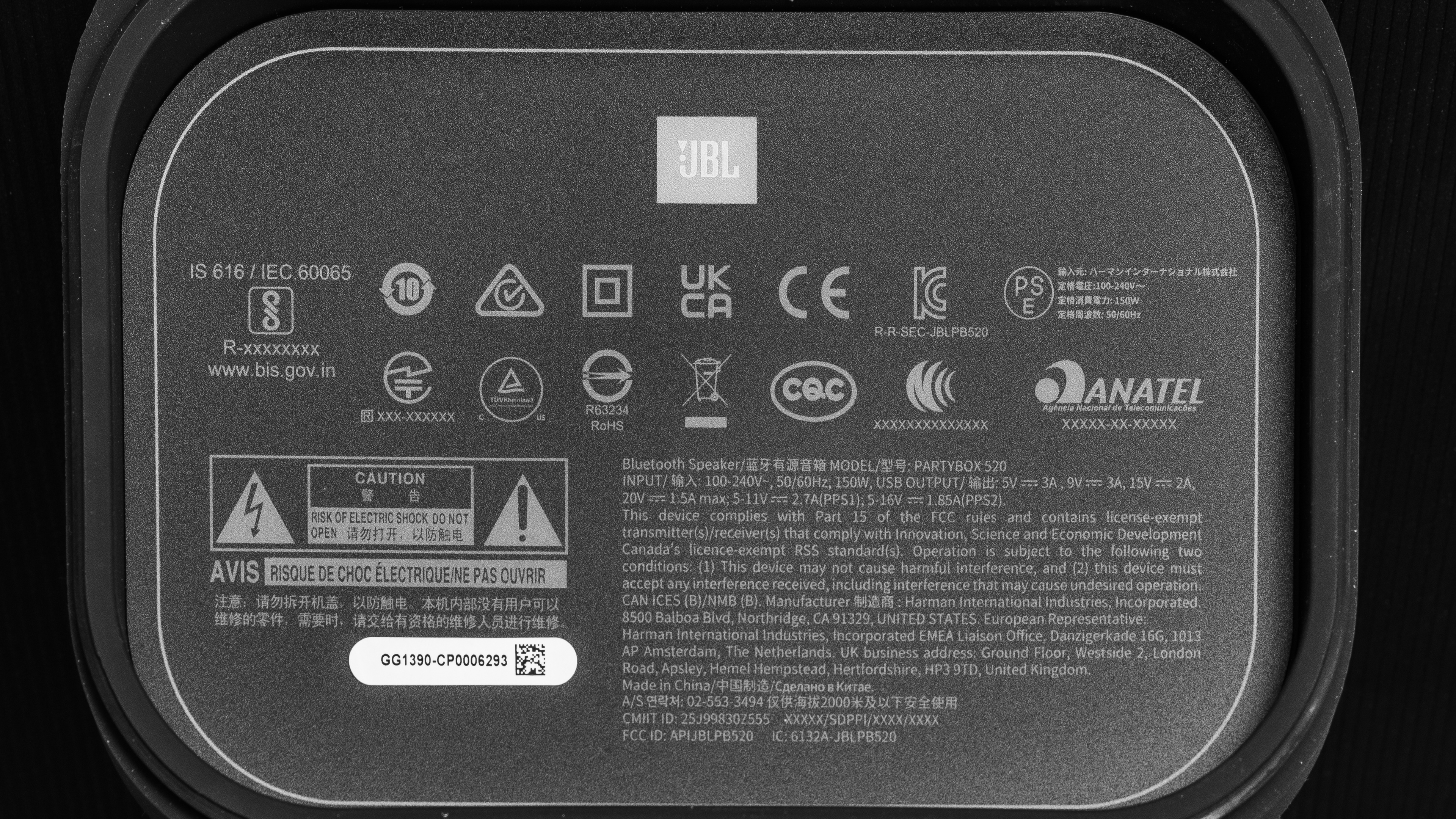
    This JBL PartyBox 520 only comes in 'Black,' and you can view its label. If you come across another variant or colorway, let us know in the comments, and we'll update the review.

    Popular Speaker Comparisons

    The JBL PartyBox 520 is a mid-to-large-sized speaker in a line with a speaker sized for every venue. That said, it has different trade-offs and benefits compared to larger and smaller models. It can run on battery power, offering a cord-free music experience wherever you decide to place it, but that comes at the cost of not quite outputting the heftier bass afforded by the king-sized JBL PartyBox 1000, which needs a power outlet, for instance. Meanwhile, the convenience of an even smaller form factor and longer-lasting battery available on the JBL PartyBox Stage 320 has the compromise of a bit quieter max output than the larger JBL PartyBox 520.

    If you're looking to inject more bass rather than a balanced sound profile, the Sony ULT TOWER 9AC is a possible alternative to the PartyBox 520. The Sony is a bit larger, though not by much, and offers similar wired connectivity (such as two mic inputs) and reaches slightly higher max output levels. On the other hand, the JBL weighs a bit less, and the IPX4 rating and battery power let you take it more places (though you can find the Sony in a battery-powered variant). For a much smaller party speaker option you can carry single-handedly, the LG xboom Stage 301 provides a very similar selection of wired inputs with a removable battery like the PartyBox 520. Of course, the convenience of the LG's light weight (at about 30% of the PartyBox 520) comes with the trade-offs of a quieter max output and a narrower soundstage that's sensitive to listening angles compared to the JBL.

    If your head is spinning with option paralysis, we've got some lists to help. Check out the best speakers for parties, the best speakers for karaoke, and the loudest Bluetooth speakers.

    Bose S1 Pro System

    The Bose S1 Pro System and the JBL PartyBox 520 are both capable speakers with different strengths and compromises. The Bose is much smaller, and you can carry it single-handedly with professional XLR inputs and software that's more akin to a digital mixer. Meanwhile, the JBL is designed as more of an all-in-one party speaker, bringing lighting and sound effects to the fore, with 1/4" mic inputs, and software geared at music playback, rather than live sound mixing. For most people, the JBL sounds better, thanks to a considerably deeper bass and a stereo soundstage (whereas the Bose is mono, and the expectation is most people own two). While you can run both models on batteries or via a power outlet, the JBL has roughly three times the battery life.

    JBL PartyBox Stage 320

    Whether the JBL PartyBox Stage 320 or the JBL PartyBox 520 is better depends on your needs. Both speakers get loud and use the same app, with similar styles. The PartyBox Stage 320 boasts a much longer battery life in a smaller design. While both speakers offer balanced sound, the PartyBox 520 has a slightly fuller low-end and more connectivity, like USB-C audio. However, it's also notably heavier to move around. If portability is important, the PartyBox Stage 320 is easier to move around, and it's likely a reasonable compromise, depending on your uses.

    JBL PartyBox 710

    The JBL PartyBox 520 and the JBL PartyBox 710 are both large speakers. The main difference from the perspective of how you use the speaker is that the PartyBox 520 can run on a battery, while the PartyBox 710 can't. The PartyBox 520 is also a bit smaller, making it easier to move around, and it boasts a similar control and input layout. Both speakers deliver mostly accurate frequency responses, with the PartyBox 520 being more balanced, while the PartyBox 710 is bassier. You can EQ either speaker in the app. You can also place the PartyBox 710 on its side, offering more versatile placement, and its soundstage isn't as affected by listening angles. If volume is important, it gets a bit louder than the PartyBox 520, though they're both capable of high volumes.

    JBL PartyBox 310

    The JBL PartyBox 520 is a better speaker than the JBL PartyBox 310. The PartyBox 520's sound is more balanced, so your audio sounds more accurate, and the soundstage is slightly better with a higher max output volume. Plus, you can connect to USB-C audio, which is handy. Its telescopic handle makes it easier to move around for people of different heights. That said, the PartyBox 310 is considerably lighter with a bit longer battery life. It shares many similar features, like two mic inputs for karaoke, and EQ in the app at a lower price point.

    Test Results

    perceptual testing image
    Sort:
    RATINGS
    Category:
    All
    Design
    Style
    RGB LightsYes

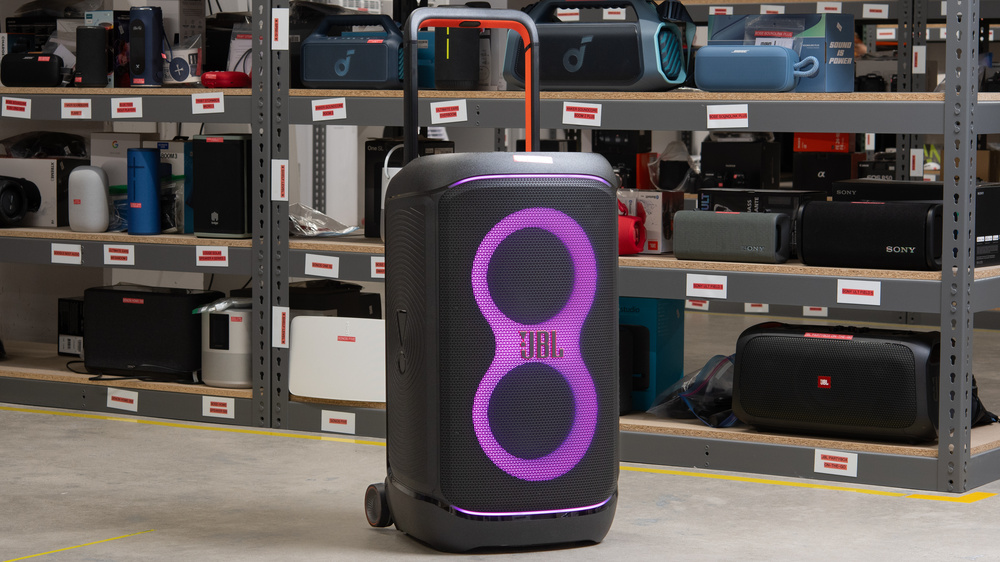
    The JBL PartyBox 520 follows the same rounded, bulbous tower design as most of the PartyBox line, with bright-colored LED rings outlining the drivers. It has a matte black plastic body with orange accents, and the metal grille includes a prominent badge in the center. The speaker features a collapsible telescopic handle with two rubber wheels. Around the back, you'll find its bass port and a flap protecting the input jacks, while the rest of the control array is on the top of the speaker. It only comes in 'Black,' and it's designed only to be used upright (unlike the JBL PartyBox 310, which can sit on its side).

    5.0
    Portability
    Volume
    7,339 in³ (120,266 cm³)
    Weight
    56.7 lbs (25.7 kg)
    Power Source
    AC & Battery
    One-Hand Carry
    Yes

    This speaker isn't very portable. Tipping the scales at just over 25 kg (56.7 lbs), it's far too heavy (and tall) to comfortably carry single-handedly. That said, you can wheel it with one hand, so long as you don't go on rugged trails (because the wheels lack clearance to manage stones and uneven ground). Once you get to the party location, it can run on the internal battery, which lends the speaker some versatility in more remote locations away from power outlets.

    7.0
    Build Quality
    Material Quality
    Good
    Water Resistance
    Water-resistant (IPx4)
    Dust Resistance
    No
    Impact Resistance
    No
    Floats In Water
    No

    The JBL PartyBox 520 has a decent build quality. The shell is made of a sturdy plastic without much give and a perforated metal grill that protects the drivers. It's certified as IPX4 against water splashes, and the seals over the ports and the removable battery's door support this. The handle feels solid and collapses. On the bottom, the rubber feet help preserve the speaker's underside for the long term. The wheels are grippy and unlikely to easily scratch, but the plastic hubs could crack if the speaker were to land hard or be dropped.

    8.0
    Controls
    Ease Of Use
    Great
    Feedback
    Great
    Music Play/Pause
    Yes (Physical)
    Call Answer/End
    No
    Volume Up/Down
    Yes (Physical)
    Track Next/Previous
    Yes (Physical)
    Microphone On/Off
    Yes (Physical)
    Additional Controls
    Yes

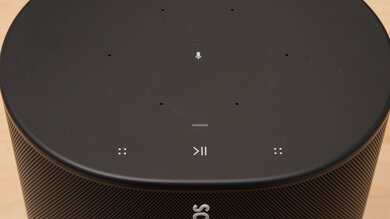
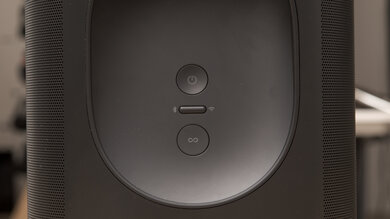
    The JBL PartyBox 520 has a great array of controls. There aren't many multi-function buttons, and they're all labeled clearly, so it's easy to get the hang of it. The top panel addresses playback and sound or lighting effects (with 'Party Buttons,' you can assign in the app), as shown here. This includes immediate control over bass and treble. Meanwhile, as you can see, the back panel handles microphone and line-in gain. There aren't chimes for playback controls, but there are chimes and visual light cues for Bluetooth and Auracast pairing, and if Bass Boost is activated.

    In The Box

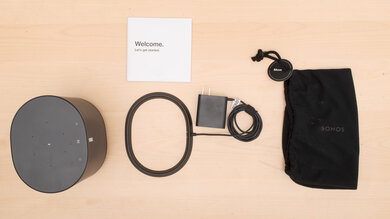
    • JBL PartyBox 520
    • AC cable (2 m/78 in)
    • JBL Battery 600
    • Safety and Warranty Guide
    Sound
    8.3
    Frequency Response Accuracy
    See details on graph tool
    Slope
    -0.31
    Std. Err.
    2.37 dB
    Low-Frequency Extension
    29.5 Hz
    High-Frequency Extension
    17.2 kHz

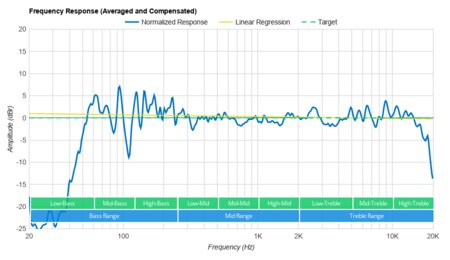
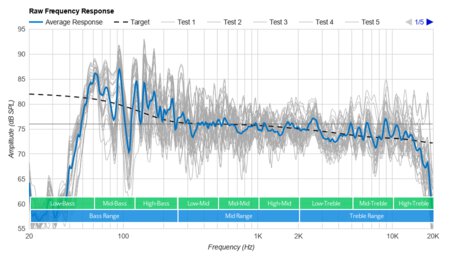
    The JBL PartyBox 520 has an impressive frequency response accuracy. Our test settings include the default 'JBL Signature EQ' with Bass Boost on 'Deep.' The speaker is capable of giving bass-heavy genres like house and hip hop a full-sounding, rumbly bass. Compared to the smaller JBL PartyBox Stage 320, the PartyBox 520 offers a slightly deeper LFE and a weightier bass. As a result, this tuning is rather versatile and works well for virtually any media, given the neutral mid-range that plays back voices and lead melodies evenly and without harshness. The treble range sounds detailed and slightly warm, so hi-hat and tambourine harmonics don't cause fatigue or overwhelm the bass' thump, rhythm guitar, or vocals in the mix for tracks like Lost in Music by Sister Sledge.

    In addition to the 'JBL Signature EQ,' you get several distinctly different sounding EQ presets, or you can use the app's graphic EQ. AI Sound Boost is always on, so we can't A/B test its efficacy, and since it doesn't use a mic to compensate for the room's sound, what it adds isn't easy to determine. The measurements were performed with the speaker running on its battery and connected via Bluetooth. However, we found that when plugged in, the speaker has a higher max output than on battery power, but the frequency response doesn't change when you use the battery instead. Lastly, if you choose to elevate the speaker on a table, rather than placing it on the floor, it alters the sound profile.

    Raw Frequency Response
    See details on graph tool
    Binaural Recording @ 1m
    Binaural Recording @ 2m
    7.1
    Soundstage
    See details on graph tool
    Directivity Index
    5.52 dB
    Stereo
    Yes

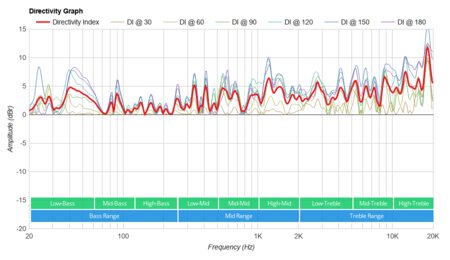
    The JBL PartyBox 520's soundstage performance is decent. With two vertically stacked woofers and two side-by-side tweeters at the top, it plays back your audio in stereo without downmixing. The soundstage is sufficiently wide that when elements pan from one side to the other, it's noticeable (which you won't notice with mono speakers like the JBL PartyBox 1000). However, as with most front-facing designs, directivity isn't its strength, so the sound profile differs depending on your listening angle.

    7.6
    Dynamics
    See details on graph tool
    SPL @ Max Volume
    109.0 dB SPL
    DRC @ Max Volume
    4.71 dB

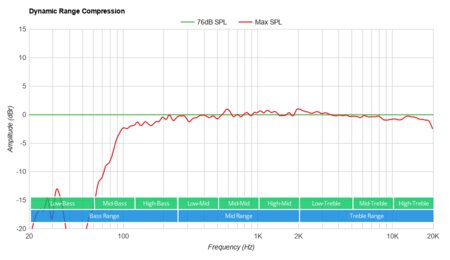
    The JBL PartyBox 520 has good dynamics and reaches high output levels. At max, there's some compression present in the lower frequencies, which can make the treble seem relatively bright at higher levels. If you plan to run your speaker at maximum volume, the JBL PartyBox 710 offers a bit more volume headroom and a little less compression. Worth noting is that the speaker is 2 to 3 dB/SPL louder (regardless of Bluetooth and wired connection) when maxed out and connected to AC power compared to when it's running on the battery.

    Active Features
    8.8
    Battery
    Battery Life
    12.2 hrs
    Charge Time
    2.5 hrs
    Power Saving
    Yes
    Charging Port
    AC
    Battery Powered
    Yes

    The JBL PartyBox 520 has excellent battery performance. Advertised as having a 15-hour battery life, the speaker lasted just over 12 hours on a single charge in testing. It also charged in 2.5 hours (as opposed to the three hours cited by the brand). The manufacturer also states that a 10-minute charge supplies you with two hours of playback. For nearly a full day of playback, the smaller JBL PartyBox Stage 320 is worth a look.

    If left idle for 20 minutes, the speaker will enter standby mode to conserve the battery. Speaking of conservation, you can replace the battery yourself with a JBL Battery 600 if the one it comes with exhibits degrading performance. You can also run the speaker via AC power, even if the battery isn't installed. If you connect to the speaker's PartyBox app with your device, you can turn the speaker on/off from your device, but only while the speaker is plugged into the AC power. If the speaker enters standby mode because it was left idle (while plugged into the AC power), you can wake it from your device by playing audio from your device.

    0.0
    Voice Assistant
    Alexa
    No
    Google Assistant
    No
    Speakerphone
    No
    Siri
    No
    Voice Assistant
    No
    Voice Activation
    No
    Microphone Mute
    No Microphone
    Far-Field Performance
    No Microphone
    Ambient Noise Performance
    No Microphone
    7.9
    App
    App Name
    JBL PartyBox
    iOS
    Yes
    Android
    Yes
    EQ
    Graphic + Presets
    Stereo Pair Mode
    Yes
    Party Mode
    Yes
    Multi-Room
    No

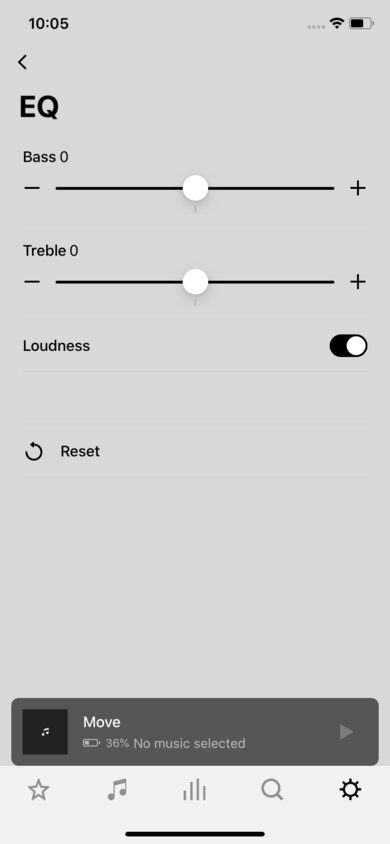
    The JBL PartyBox companion app (iOS/Android) comprehensively provides basic controls like input selection and playback, alongside more advanced and niche settings (as you can preview), geared towards karaoke and DJing. There are EQ presets, a graphic EQ, and a separate Bassboost control, giving you some leeway to tailor the tuning. You can also allocate specific functions to the three 'Party Buttons,' such as sound effects like airhorns and record scratches. For karaoke singers needing a boost of confidence, the app provides effects like echo. Plus, you get several light show effects to choose from.

    Meanwhile, you can add other JBL speakers, either a second identical unit in a stereo pair or use party mode to group together other compatible JBL speakers via Auracast. Generally, JBL doesn't let you mix and match speakers from previous generations with latter-day models for party mode, but this one is compatible with select speakers from the recent past. (And, failing that, you can daisy-chain a speaker.)

    Connectivity
    Wired
    Aux Input
    Yes
    USB Audio
    Yes
    Other Ports
    Yes

    This speaker offers an array of wired connections, so you can hook up nearly any music source. There are the standard 3.5 mm (1/8") AUX in and out ports, so you can daisy chain multiple speakers or plug in a laptop. The 3.5 mm (1/8") output sends your audio in stereo to whichever speaker or device you connect. You can also use the USB-C port for audio playback to establish an unflappable audio connection to devices like your smartphone without fussing with Bluetooth. Plus, there are two inputs, and the second one is switchable for use as a line-level input, and each has a gain knob.

    7.7
    Bluetooth
    Bluetooth
    Yes
    Bluetooth Version
    5.4
    Bluetooth iOS Latency
    179 ms
    Bluetooth Android Latency
    247 ms
    Bluetooth Range
    341.2 ft (104.0 m)
    Multi-Device Pairing
    2 Devices

    The speaker has good Bluetooth connectivity. It uses Bluetooth 5.4 for a stable connection with up to two devices paired simultaneously. Latency is a bit elevated compared to the JBL PartyBox Stage 320, so you might experience lag between video and audio (particularly with Android devices). However, various devices and apps compensate for latency differently, so you may experience different results.

    0.0
    Wi-Fi
    Wi-Fi Version
    No Wi-Fi
    Wi-Fi Frequency Band
    No Wi-Fi
    Wi-Fi
    No
    Apple AirPlay
    No
    AirPlay Latency
    N/A
    Google Chromecast
    No
    Chromecast Latency
    N/A