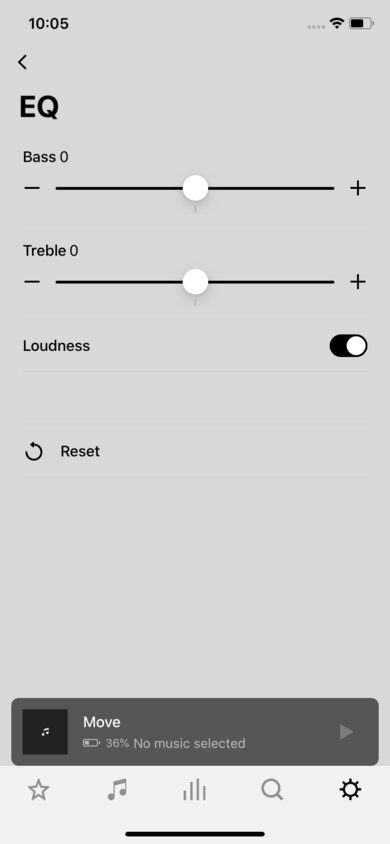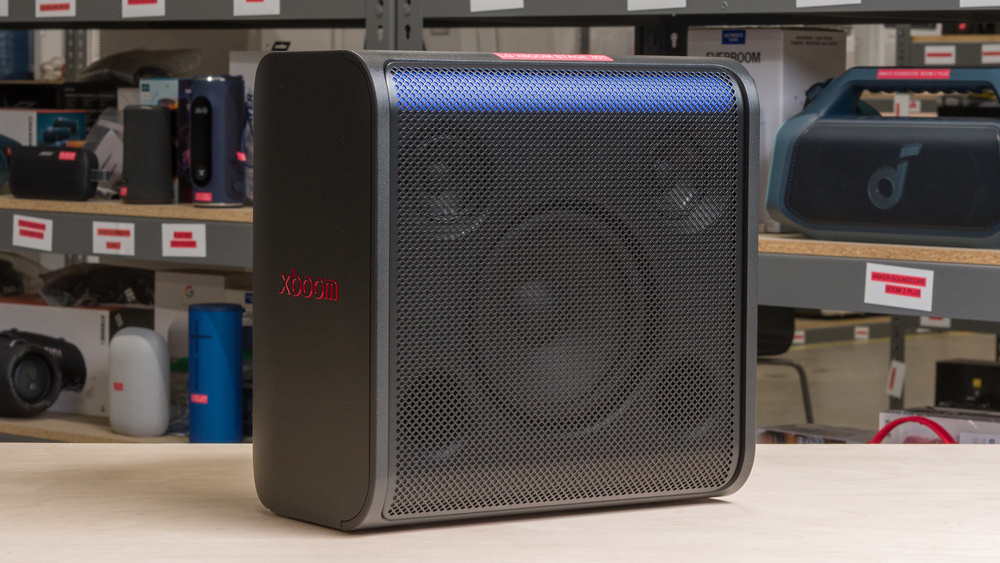
The LG xboom Stage 301 is a fairly lightweight and medium-sized party speaker made in collaboration with music producer, will.i.am. It's packed with oodles of AI technology, a well-appointed app with EQ and quality-of-life functions like battery-saving settings. The speaker's connectivity and design offer versatility for all sorts of uses and placements, from wired to multi-speaker party mode. You can place it upright, mount it on a PA stand, or tilt it back like a wedge stage monitor. It even includes a mic/guitar input, and the app can remove vocal tracks for sing-alongs for karaoke, alongside thoughtful additions like a removable battery.
Our Verdict
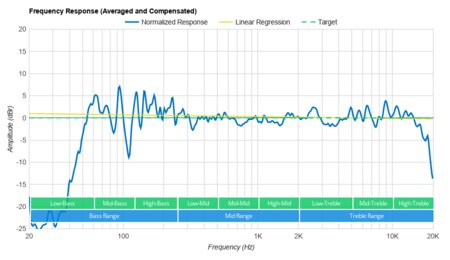
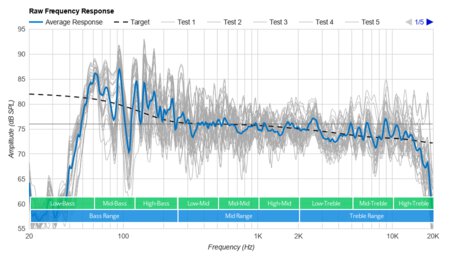
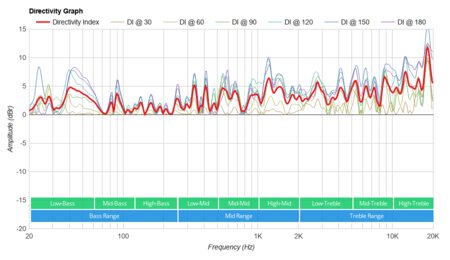
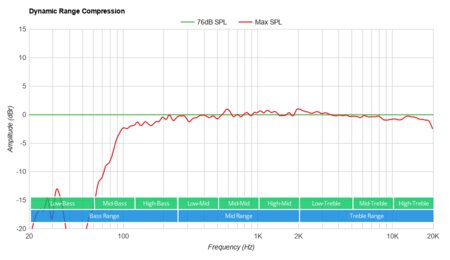
The LG xboom Stage 301 is decent for music. It boasts several EQ presets alongside a three-band graphic EQ to tailor the sound to your preferences. Its tuning is balanced overall, though it lacks deep low-bass thump. It also gets impressively loud, especially when connected to AC power. At max volume, compression is mainly in the low bass, which the speaker rolls off anyway, so it retains the dynamics of your music well. It's pretty versatile: you can plug in a guitar to play along, or a mic and use the app to remove vocals for karaoke, complete with DJ sound effects. It can connect through Bluetooth or via AUX in, and you can wirelessly pair two devices at once to switch between audio sources. You can also create a stereo pair with a second identical speaker or another compatible LG speaker using Party Link. Plus, you can mount the speaker or angle it, depending on your needs. However, you'll get the most out of the speaker if it's well placed in the space, because clarity is strongly hampered if it faces away from the crowd.
Plenty of EQ presets and graphic EQ to adjust tuning.
Minimal audible compression.
Front-facing design limits the clarity of audio at off-axis angles.
IPX4-rated but not especially rugged.
The LG xboom Stage 301 is passable for videos and movies. Its balanced tuning is well-suited to playing back voices and effects, and there isn't much compression at max volume. However, the bass isn't especially rumbly, which can weaken how immersive the movie's audio feels. Plus, it's a stereo speaker, so it won't downmix movies to mono. That said, unless you use the AUX input for low-latency audio, the speaker has fairly elevated Bluetooth latency, which can result in lip sync mismatch. It's also sensitive to placement within the room, so you'll need to ensure it's directed toward you and not offset.
Plenty of EQ presets and graphic EQ to adjust tuning.
Minimal audible compression.
Elevated Bluetooth latency.
Front-facing design limits the clarity of audio at off-axis angles.
The LG xboom Stage 301 is good for podcasts. It reproduces voices clearly with plenty of volume on tap. The app provides plenty of customizable tools for EQ, but by default, it has a generally balanced mid-range, so voices sound fairly natural. It can pair with a second device to control it from, which is handy for switching between a laptop and your smartphone, for example. However, it's pretty large, albeit light, and its front-facing design means its sound changes noticeably depending on your listening angle, so it's not the most convenient speaker if you're moving around a space.
Plenty of EQ presets and graphic EQ to adjust tuning.
Front-facing design limits the clarity of audio at off-axis angles.
LG xboom Stage 301 doesn't have a built-in microphone and isn't compatible with voice assistants.
The LG xboom Stage 301 is good for outdoor use. It has an IPX4 rating, so it's resistant to water splashes, and it's relatively lightweight for its size, which makes it easy to tote single-handedly. It can run off its internal battery, which is swappable, for over 14 hours with the lights disabled, or about 10 hours with the lightshow. It gets loud enough for backyard use, though it performs more consistently and gets louder when connected to AC power. You can connect two devices to the speaker simultaneously, which is useful for sharing the party's playlist. Its app has EQ presets and a three-band graphic EQ, alongside karaoke features, which makes it a flexible choice for different kinds of gatherings outside. It also offers versatile placement with a tilt-back and PA stand mountable design. But it's not an especially rugged speaker, so while it's well suited to a backyard, it's not a prime choice for the beach, for instance.
Plenty of EQ presets and graphic EQ to adjust tuning.
Swappable battery is user-friendly.
Minimal audible compression.
Front-facing design limits the clarity of audio at off-axis angles.
IPX4-rated but not especially rugged.
Changelog
- Updated Jul 28, 2026: This review has been updated to Test Bench 1.0.1. This includes the Test Bench 1.0 updates to all of our Sound tests: Frequency Response Accuracy, Raw Frequency Response, Directivity, and Loudness, as well as the revised Low-Frequency Extension calculation and related DRC updates introduced in Test Bench 1.0.1. There have also been text changes throughout the review, including to the usages and product comparisons, where applicable, to match these results. You can read more about these changes in our Test Bench 1.0 changelog and Test Bench 1.0.1 changelog.
- Updated Jul 13, 2026: This review has been updated to Test Bench 1.0, which includes new results for all of our Sound tests: Frequency Response Accuracy, Raw Frequency Response, Directivity, and Loudness. There have also been text changes made throughout the review, including to the usages and product comparisons, to match these results. You can read more about these changes in our changelog.
- Updated Jul 15, 2025: Review published.
- Updated Jul 08, 2025: Early access published.
Check Price
Differences Between Sizes And Variants
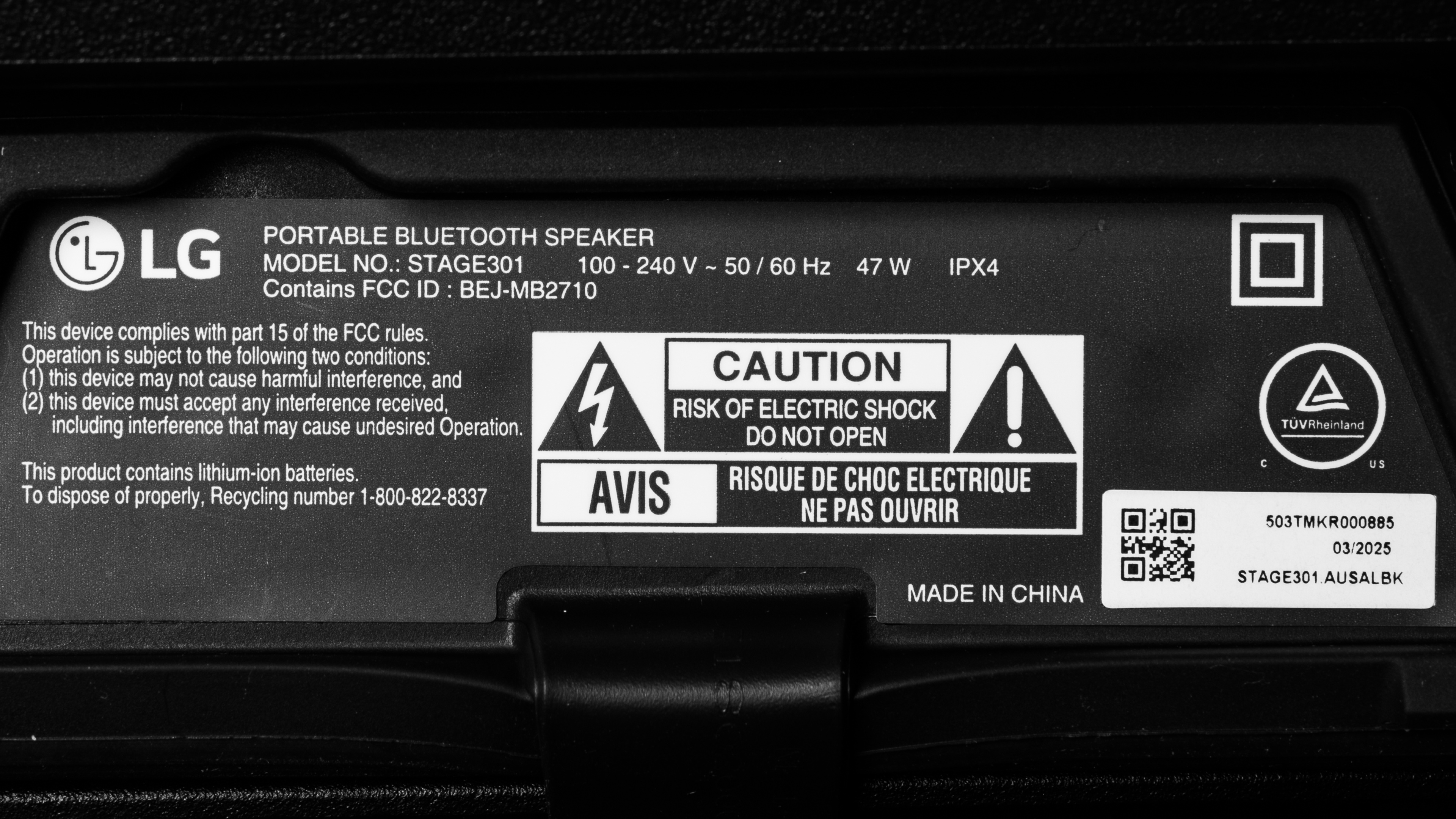
The LG xboom Stage 301 comes in one color, 'Black,' and here's its label. If you encounter another variant of this speaker, please let us know in the comments.
Popular Speaker Comparisons
LG's xboom line includes speakers of varying sizes designed in collaboration with will.i.am. Despite its name, 'xboom,' the LG xboom Stage 301 and the much smaller and portable LG xboom Grab aren't exceptionally bass-heavy and offer generally balanced sound profiles. The advantage of the xboom Stage 301 is its versatility when it comes to connectivity, app support, and price point, like a jack-of-all-trades. While the Bose S1 Pro+ weighs roughly the same as the LG and can also run on a battery or via A/C with more professional XLR mic inputs, it's limited in other regards. You can't filter out vocal tracks with the app like with the LG, and the Bose's companion app works more like a mixer, so you can't control playback, but you can adjust audio input channel mixes.
A boombox-style speaker like the Sony ULT FIELD 7 is worth a look, given the slightly more portable design, paired with comparable mic/guitar inputs, lighting effects, and party mode compatibility. The Sony sounds a bit more excited with greater bass and treble emphasis, compared to the slightly more balanced LG. The LG's battery lasts the longest when the lights are disabled, and you can swap out the battery, too. On the other hand, the Sony is better suited to rough-and-tumble outdoor locations due to its better IP67 rating.
Check out our picks for the best Bluetooth speakers, the best speakers for karaoke, and the best outdoor speakers.
The LG xboom Stage 301 is a bit better for outdoor use than the JBL PartyBox Encore Essential 2. The LG has an extra two hours of playtime and doesn't compress as much at max volume, retaining your music's dynamics. It also has a flatter frequency response. On the other hand, the JBL puts out more low-bass. It's also a little lighter and smaller. Otherwise, both speakers offer similar mic/guitar and wired options.
Whether the JBL Boombox 3 or the LG xboom Stage 301 is better will depend on how you plan to use the speaker. Both speakers weigh roughly the same, though the JBL is smaller. The JBL also boasts a more rugged IP67-rated build and a much longer battery life. On the other hand, the LG offers far more comprehensive physical controls and optional karaoke connectivity, and you can tilt it back or place it on a PA stand.
The LG xboom Stage 301 and JBL PartyBox Club 120 both have replaceable batteries, app EQs, and party-link modes. The LG is much smaller and lighter, lasts a bit longer, and offers more flexible placement options since it can tilt back or be mounted on a stand. It also has a flatter frequency response. However, the JBL is louder and has two mic inputs for duets, while the LG has only one mic/guitar input.
The LG xboom Stage 301 is a bit better than the JBL PartyBox Encore Essential for outdoor use, but which is best for other usages depends on your needs. The LG boasts a more comprehensive set of physical controls, a handful of more flexible app features, and a longer battery life. It also doesn't compress as much at max volume. However, the JBL is a bit lighter, so it's a little easier to carry around. It also has a lower Bluetooth latency, which means it's better for watching movies and videos, too.
Test Results
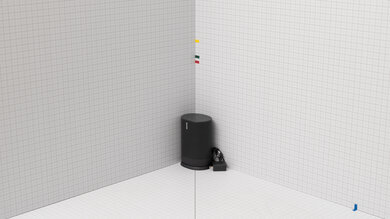
for pictures & test results
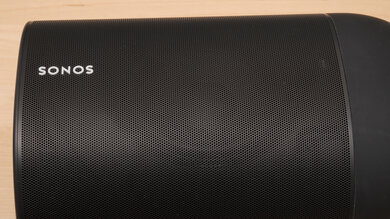
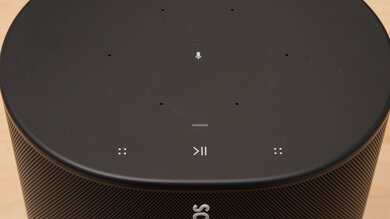
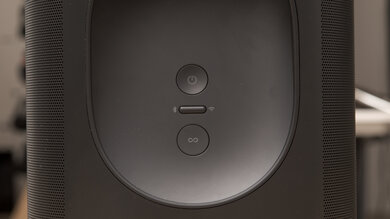
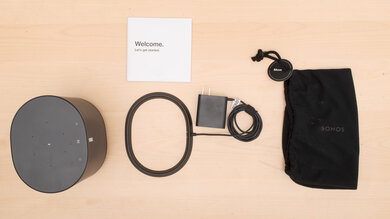
for pictures & test results

for pictures & test results