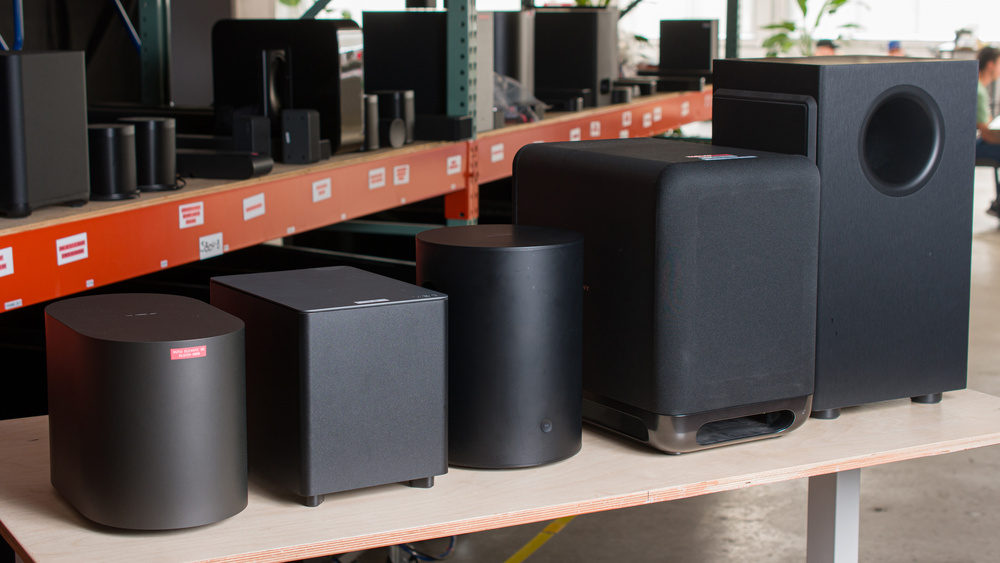
A subwoofer is a special kind of speaker that handles the lowest, bassiest audio in your music and movies: the sounds that shake your body in a movie theater or club. That added rumble and thump can help create a more immersive listening experience on its own, so that explosions feel more real and exciting techno kicks get you up off the couch and dancing around your living room. But subwoofers can also help the rest of your soundbar system perform better by relieving the bar and satellites of low-bass production duties. By taking on that heavy workload, the sub lets the smaller speakers focus on mids and highs, which often means cleaner dialogue, sharper detail, and less distortion overall. In this article, we break down what a subwoofer is, why a large, dedicated box is important for bass reproduction, and a few common subwoofer-related myths.
Test results
What Is a Subwoofer and What Does a Subwoofer Do?
A subwoofer is a type of loudspeaker built specifically to handle the lowest part of the audible spectrum, typically ranging from about 20Hz to 200Hz. These are the deep bass notes you don't just hear with your ears but also feel in your chest or through your couch, like the rumble of an explosion or thump of a kick drum. Standard speakers and soundbars try to cover everything from the high bass up through the treble range, which is where most sounds live. But their small drivers (the part of a speaker that converts electrical energy to sound waves) and slim enclosures mean they can't move enough air to produce very deep bass tones. As a result, a standalone soundbar typically rolls off the low end of the spectrum: you might get some bass, but not the floor-shaking rumble that a larger speaker can create.
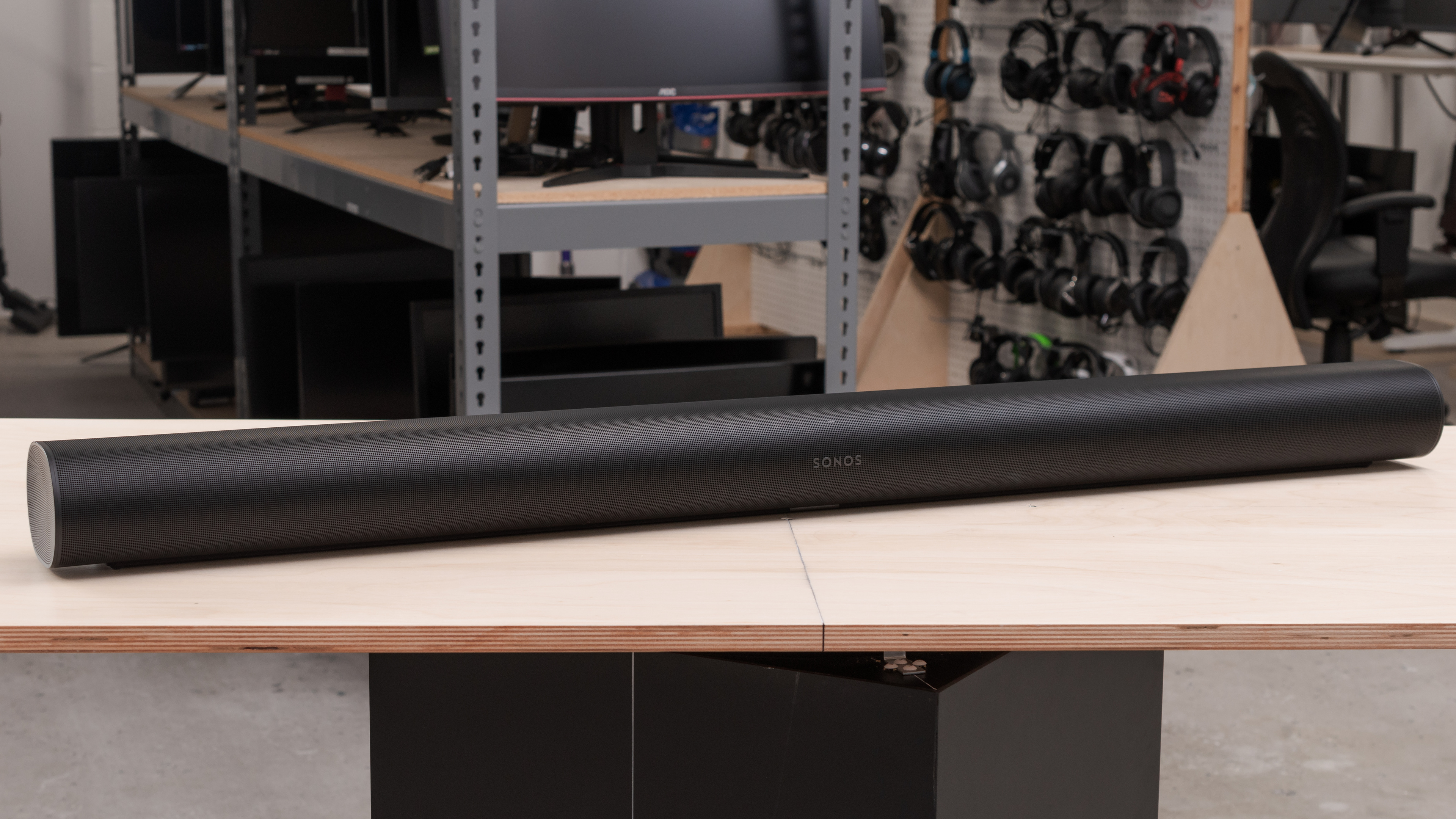
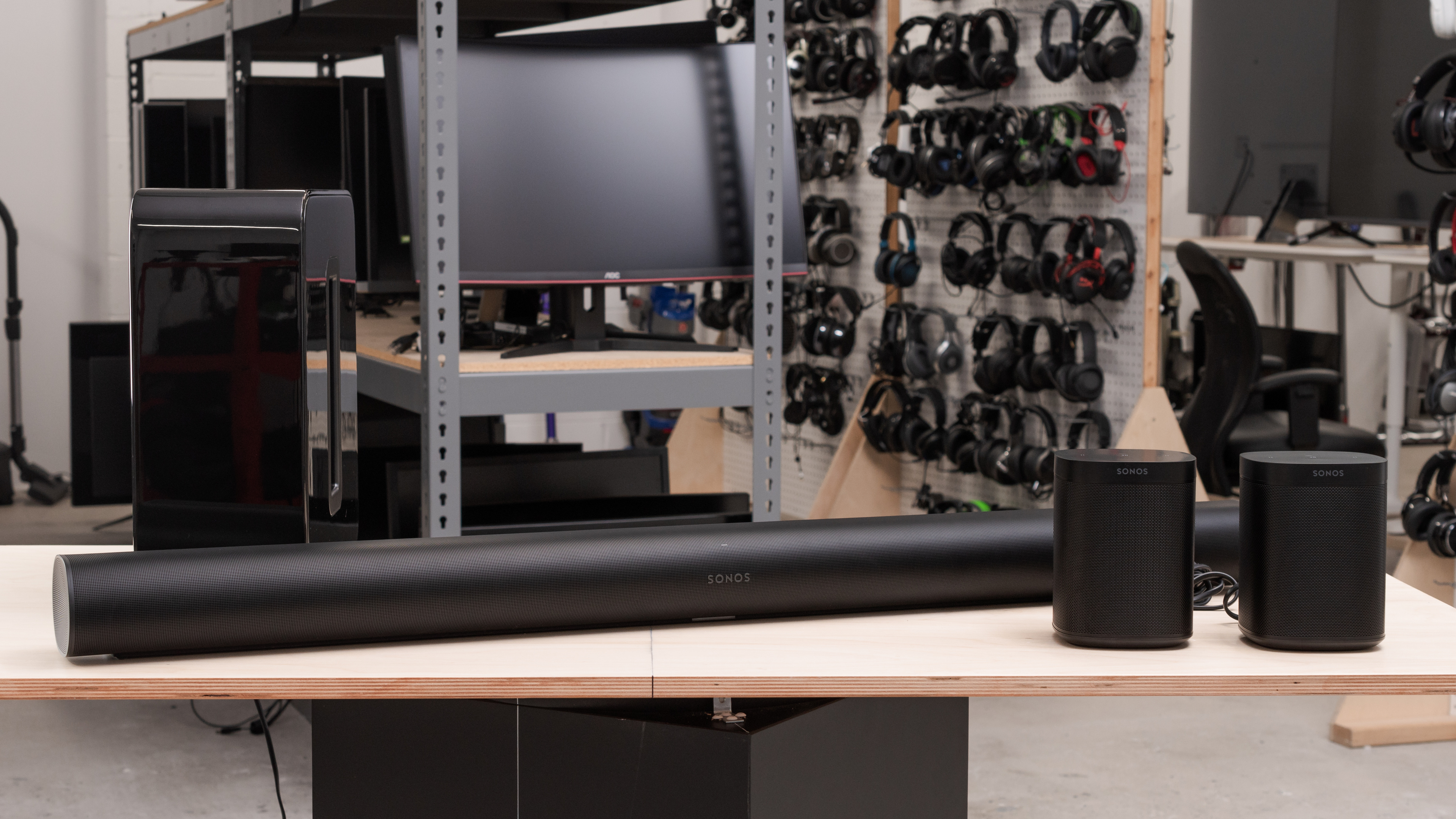
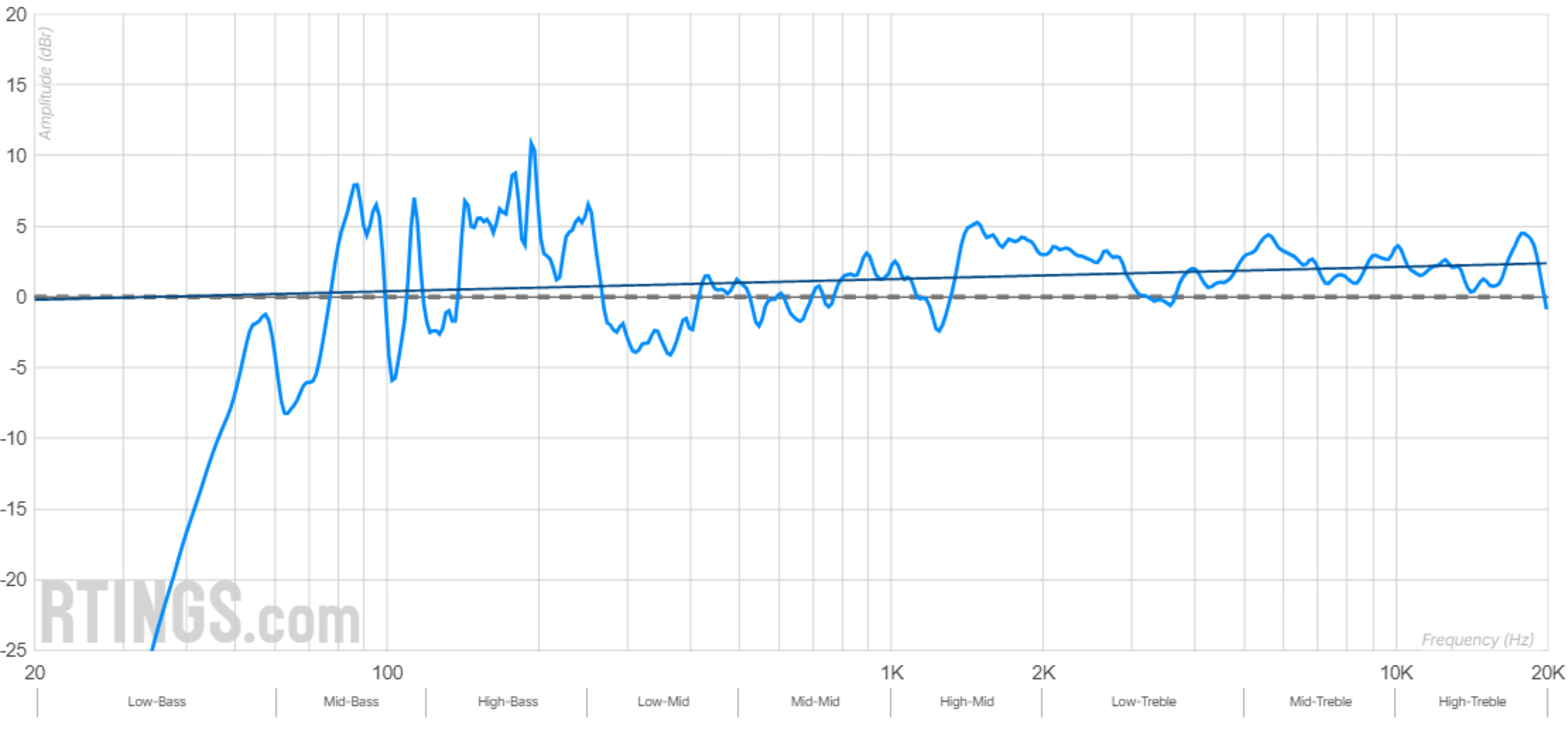
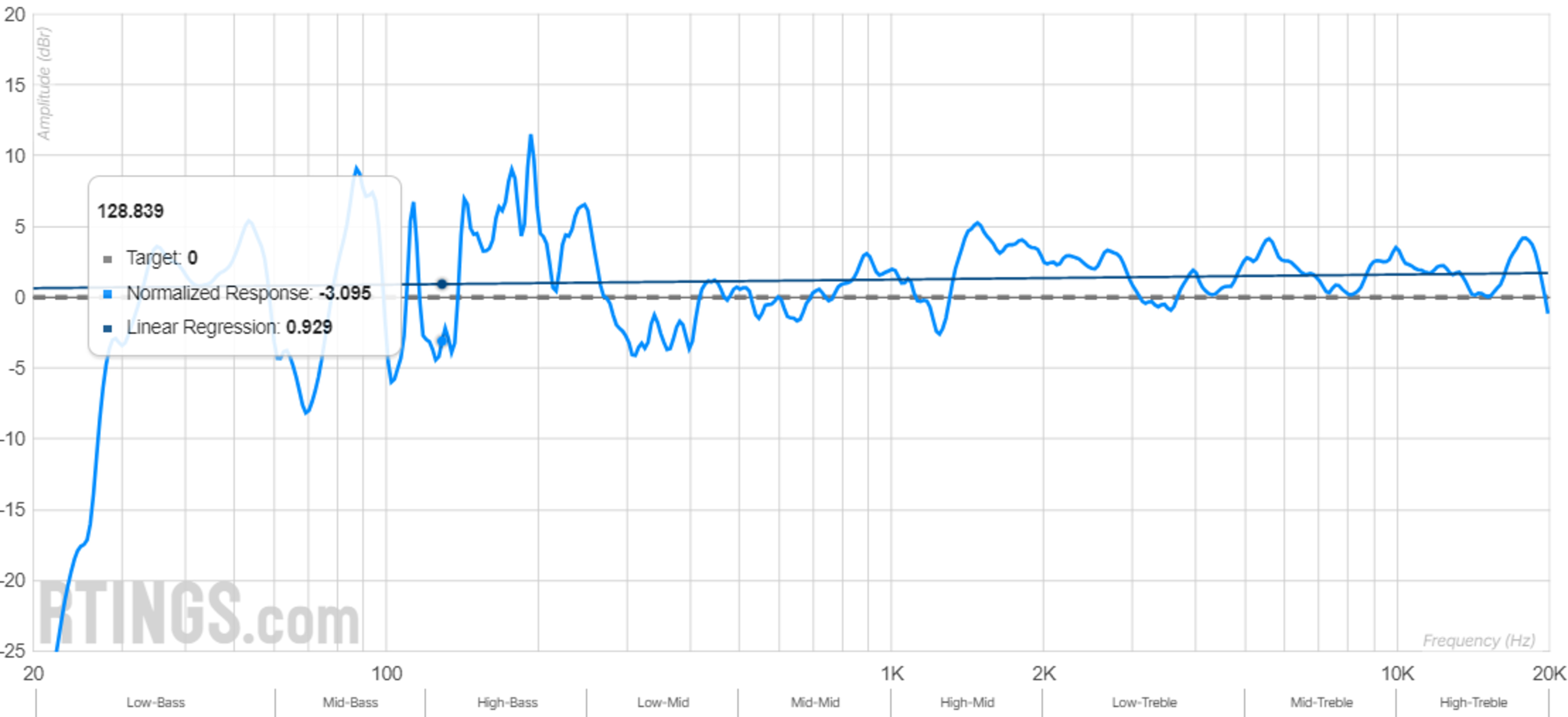
For example, the Sonos Arc's bass only extends down to about 51Hz. This means low-pitched movie effects or the bassiest notes in music can feel a bit thin. However, when the matching subwoofer is added to that same system (creating the Sonos Arc with Sub + One SL Speakers set), the low-frequency extension improves dramatically, down to about 28Hz. That means you hear more rumble in the mix, especially when playing bass-heavy genres like EDM and hip-hop.
 |
 |
 |
 |
You can also buy soundbars that have integrated subwoofers, like the Sennheiser AMBEO Soundbar MAX, but these are often quite large and don't tend to produce the low-bass impact of a dedicated unit. In general, a dedicated subwoofer lets a system deliver deeper, more powerful bass than a bar alone, helping you feel the low-frequency impact in your movies and music. By offloading the heavy lifting, a sub also frees up your main speakers to play the mid-range and treble more clearly. The result is a sound that feels richer and more balanced: vocals and instruments remain crisp, while the sub supplies the foundation that gives audio its weight and realism. If you want your audio to feel as rich, deep, and immersive as its creators intended, a subwoofer really helps.
How Does a Subwoofer Work?
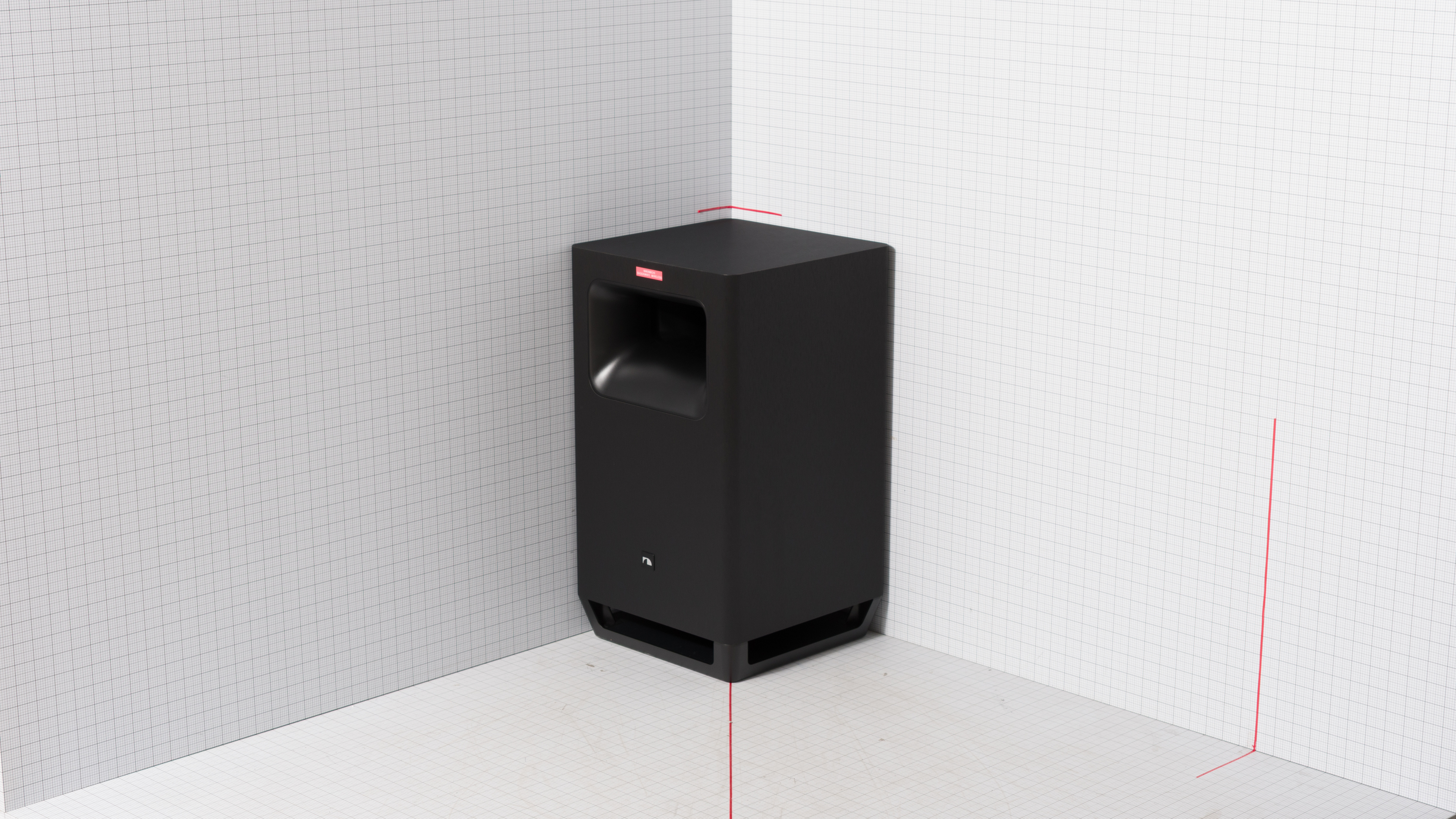
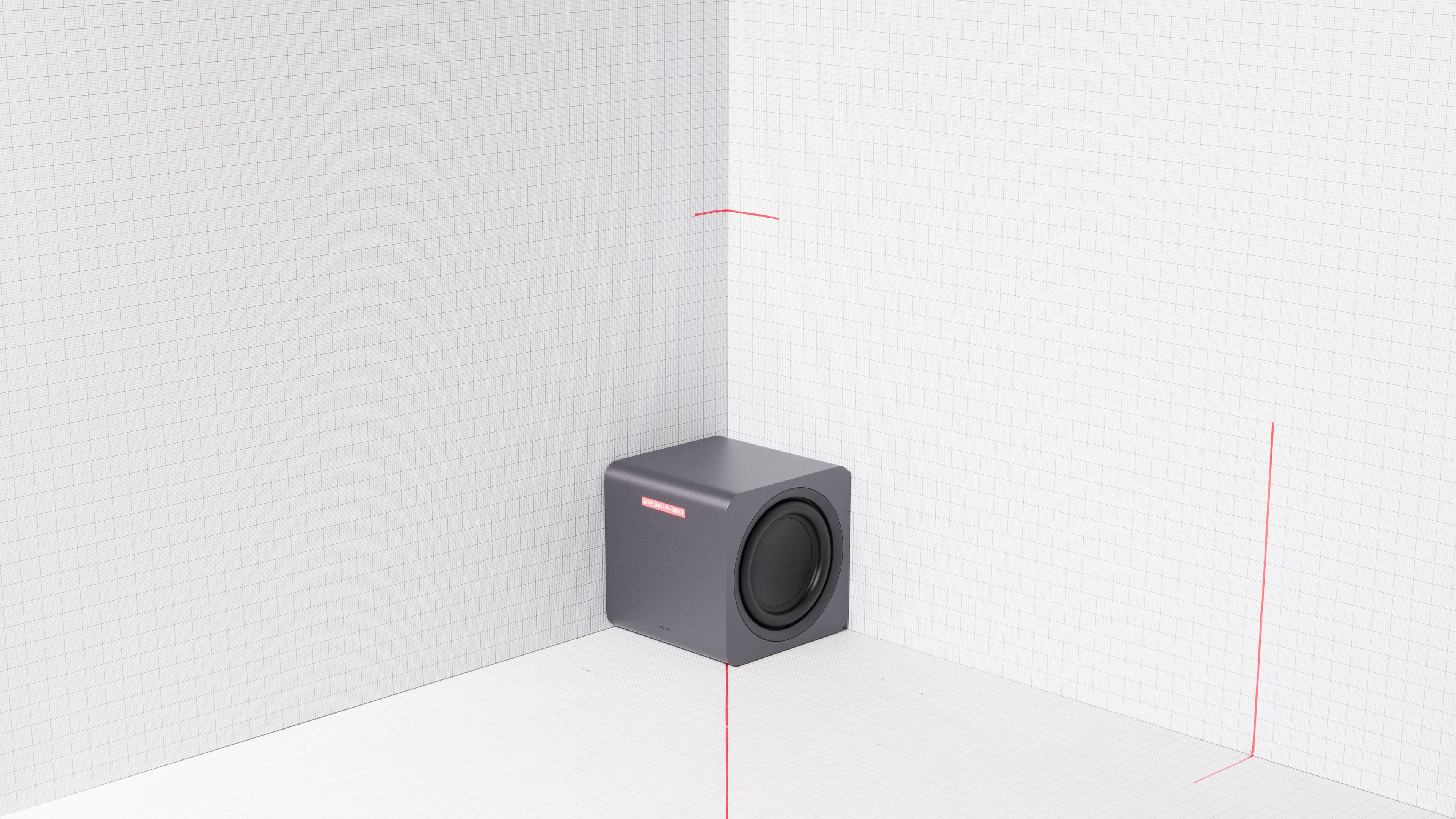
You may have noticed that subwoofers are often quite large, especially compared to soundbar satellites, which are often a lot smaller. In one sense, soundbars, satellites, and subwoofers are all just speakers, with drivers that oscillate to produce sound waves you hear. But since subwoofers are dedicated to the lowest frequencies, they tend to be somewhat large and heavy (although this isn't always true), and you have more freedom with how you place them. Why is that?
 |
 |
Moving A Lot Of Air: Why Producing Low Bass Tends To Require Larger Drivers
Bass is sound at its slowest and deepest. A 30Hz note has a wavelength of almost 38 feet, which means a speaker has to move a large volume of air back and forth in rhythm just to make it audible. It's like making ripples: to disturb a swimming pool, you need a bigger paddle than you'd use in a glass of water.
A larger driver cone (or diaphragm) has more surface area, so each push displaces more air. Combine that with excursion, which is how far the cone can travel forward and back, and you've got a measure of how much air the speaker can actually move. Subwoofers tend to be built with both big cones (8–12 inches or more) and long travel, plus larger enclosures (and often dedicated amplifiers), so they can generate deep tones without breaking a sweat.
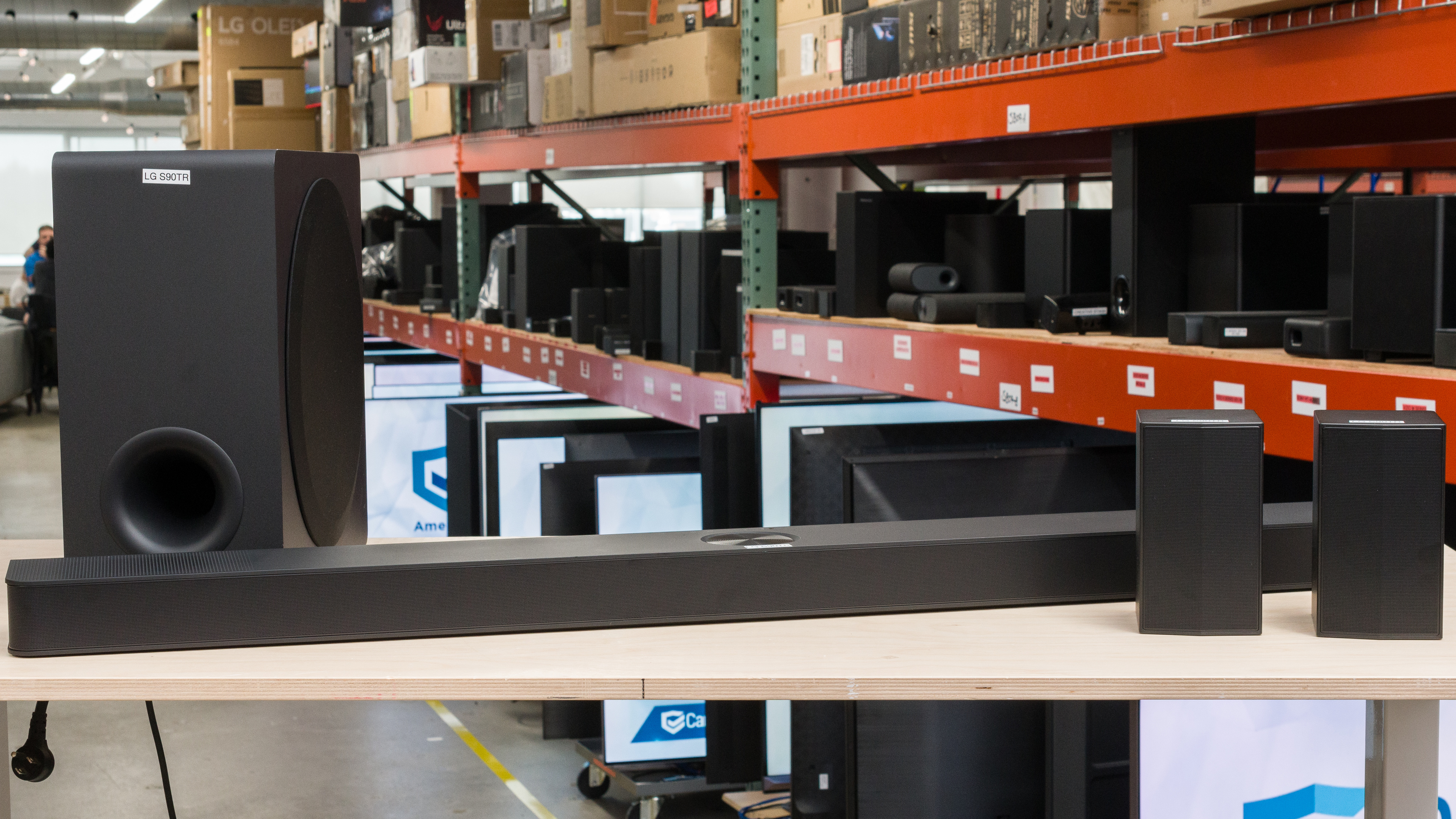
Small drivers, like those in TVs or slim soundbars, just don't have the size or travel to reproduce deep bass effectively. A 30Hz note is a very slow, long wave, but to make it loud enough, the speaker cone still has to move a lot of air each cycle. For a tiny driver with a limited surface area, the only way to do that is by moving an extreme distance back and forth at high speed. That kind of motion quickly pushes the driver past its comfort zone: the cone can start to flex instead of moving as a solid surface, the suspension parts can behave unpredictably, and the voice coil can overheat as it strains against the magnetic gap. The result is rising distortion and weak bass output.
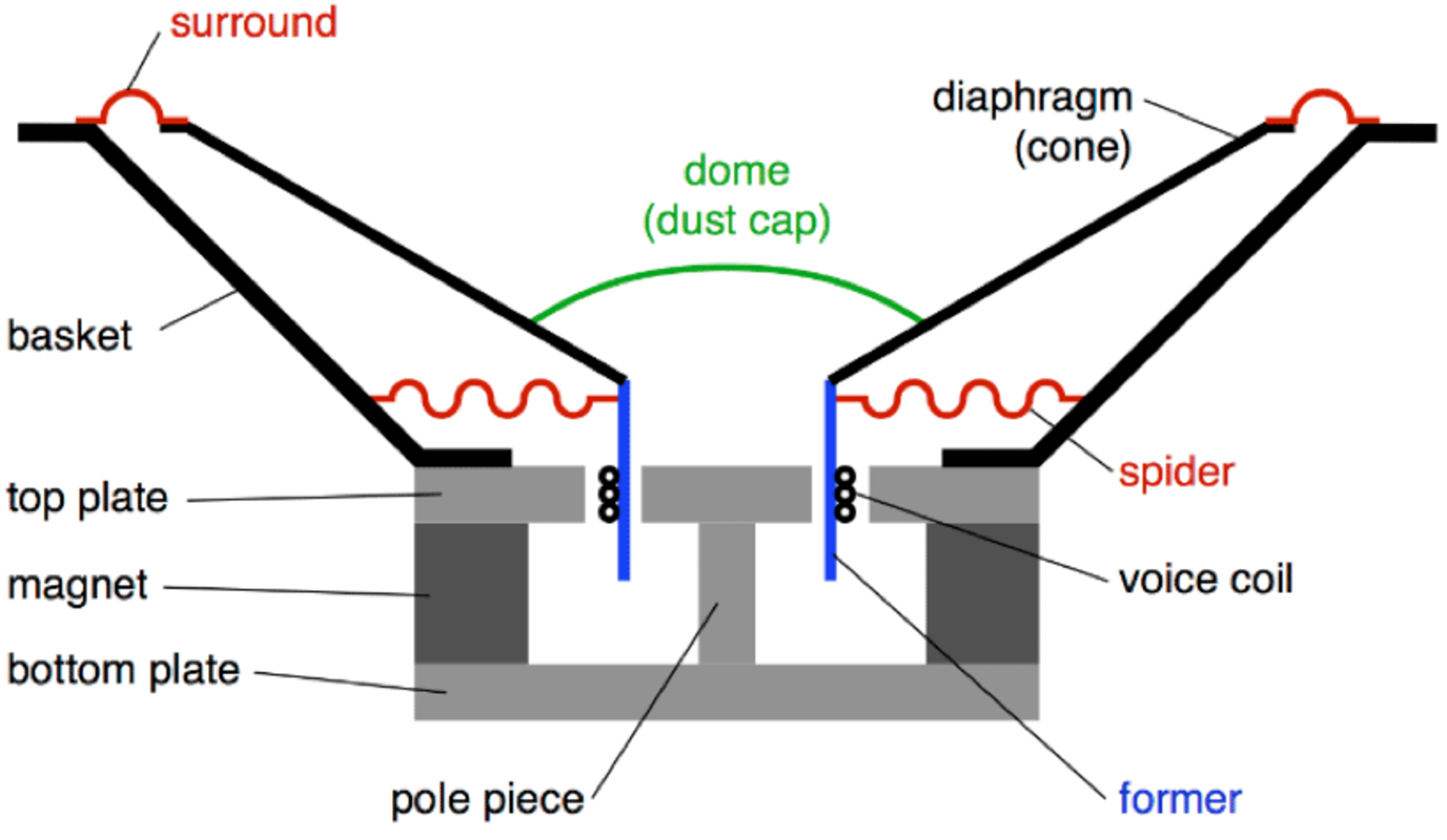
By handing off those lowest frequencies to a subwoofer, you free up the smaller drivers to focus on mids and highs, where they perform cleanly. A sub is purpose-built for the heavy lifting: it moves the big waves of air that create chest-thumping bass, while the soundbar or bookshelf speakers handle the detail. With a proper crossover (the frequency below which the subwoofer 'takes over' bass duties, often between 80 and 120Hz), you'll hear fuller, clearer, and more balanced audio.
Very Low Frequencies Are Non-Directional To Humans
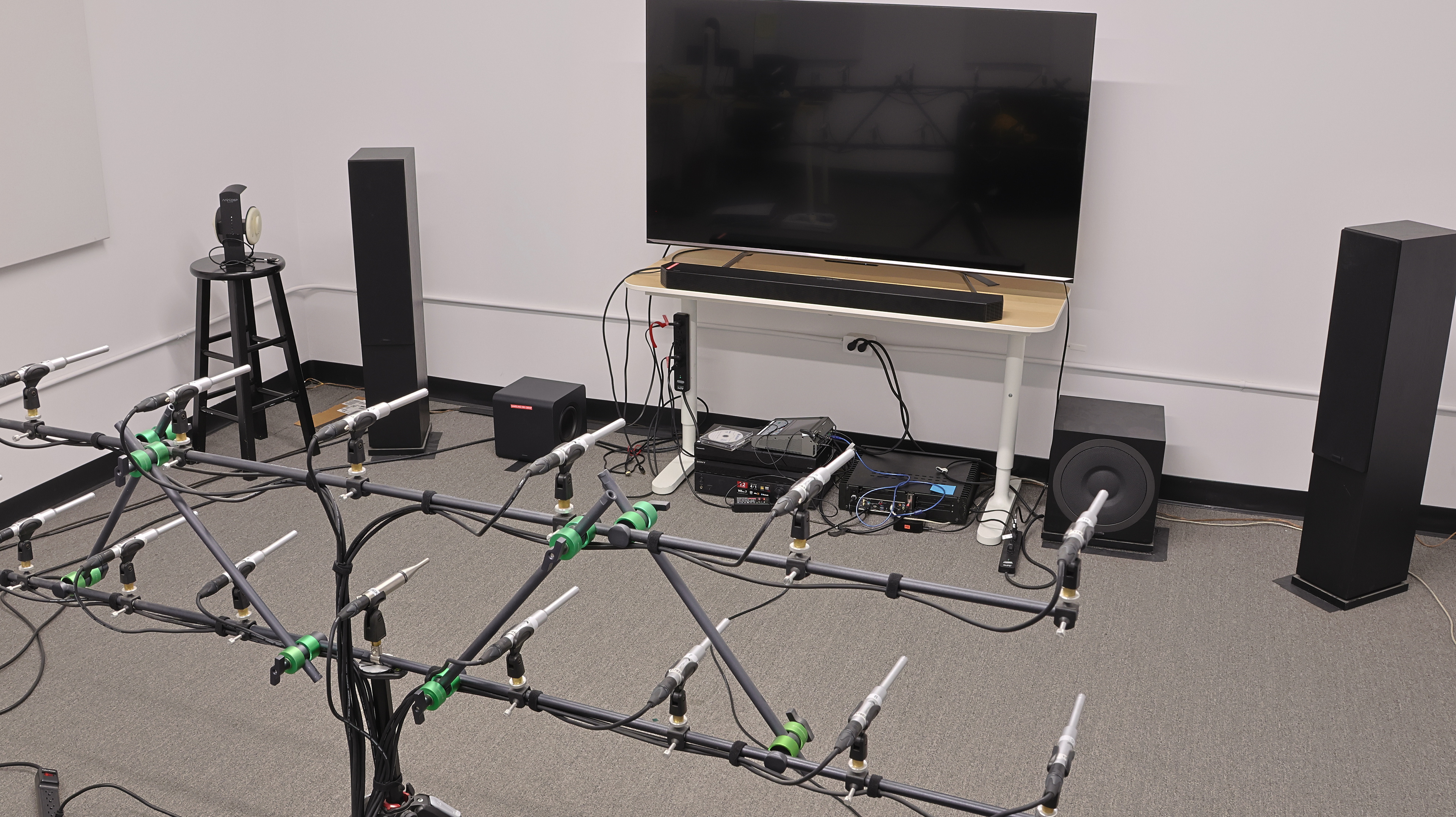
Our ears can easily tell where high-pitched sounds are coming from, but we don't localize very low frequencies in the same way. That means a single well-placed subwoofer can anchor the bass for an entire system, covering multiple channels and making music and movies more immersive. It also means subwoofers, which are usually large, heavy boxes, can often be tucked away out of sight in your listening space, which is handy. That said, placement affects how your subwoofer interacts with your listening space.
The main downside of these long, felt soundwaves is that they can easily pass through objects like walls and floors. That's why subwoofers are sometimes banned from rental apartments or multi-unit buildings. You should check out the specific bylaws in your building and municipality before purchasing a sub!
Common Subwoofer Myths
"Subs are only for explosions or rap."
This is one of the most common misconceptions. While subs are crucial for action movies and bass-heavy genres, they also add depth across all types of content. The deep notes of a pipe organ, the resonance of an upright bass, or even the natural ambience of a concert hall all live in the low-frequency range that small speakers can't reproduce. A sub fills in those missing notes, making everyday music and dialogue feel more natural and lifelike.
"Subs just make things boomy."
That can happen with a cheap or poorly tuned sub, but it isn't how they're meant to work. A properly integrated subwoofer blends seamlessly with the rest of your system. Instead of drawing attention to itself, it simply extends the bass so the overall sound feels fuller and more balanced.
"Bigger is always better."
In theory, larger drivers can dig deeper, but size alone doesn't guarantee good bass. The design of the sub, your room size, and where you place it matter just as much. The key is matching the sub to your space and system. Quality and setup almost always outweigh sheer size.
Conclusion
A subwoofer's job is simple but important: it takes care of the lowest sounds in your system, which smaller speakers and soundbars can't adequately reproduce on their own. By moving the big waves of air needed for deep bass, a sub adds impact and realism to music and movies. A sub can also help reduce the strain on the rest of your speakers, resulting in cleaner mids and highs. Whether you're after the subtle resonance of an acoustic bass or the chest-thumping rumble of a movie explosion, a well-integrated subwoofer completes the picture and makes your audio feel more lifelike and immersive.