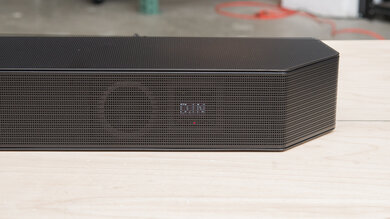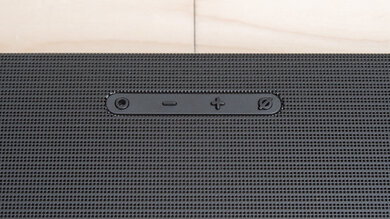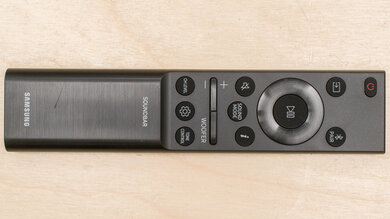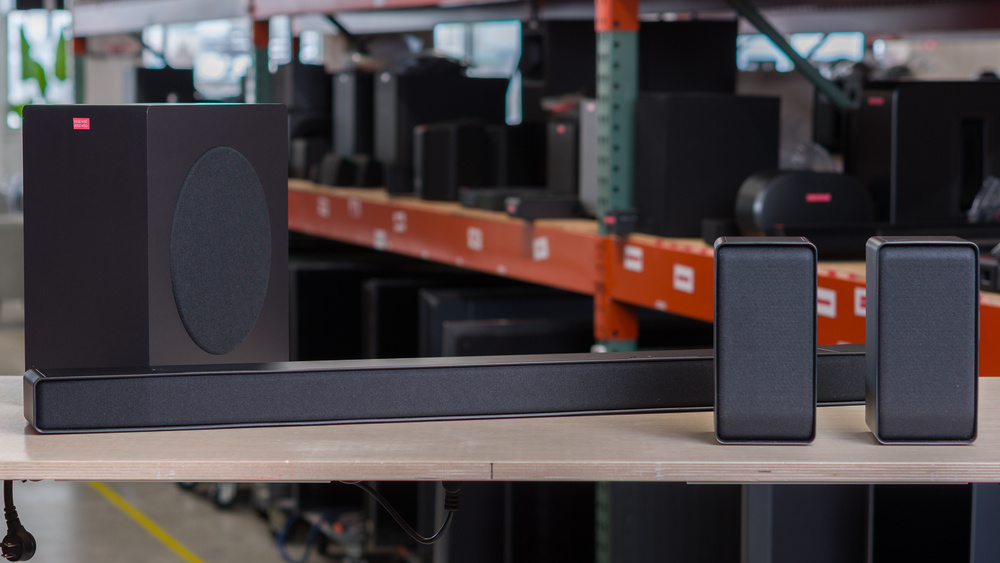
The Hisense AX5140Q is a 5.1.4-channel surround system with dedicated satellites. It offers two additional up-firing drivers (on its satellites) and enhanced sound configuration options compared to its predecessor, the Hisense AX5125H. It also features room correction, but only with supported Hisense TVs, and still suffers from limited wireless connectivity without support for services like Apple AirPlay.
Our Verdict
The Hisense AX5140Q is great for mixed usage. Its combination of discrete satellites and robust configuration options makes it an excellent one-size-fits-all solution, especially at this price bracket. Up-firing drivers help reproduce immersive height cues in games and movies that support height information, while a dedicated center reproduces dialogue in political thrillers with ease. The bar also supports most available formats, and features channel-specific level adjustment and a graphic EQ and presets.
Discrete center channel replicates dialogue clearly.
Supports all tested formats with each input.
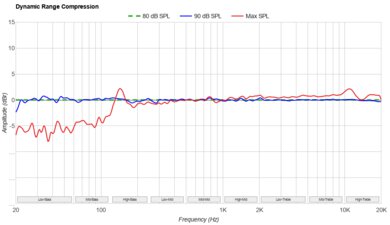
Gets plenty loud for large rooms without compression.
No 4k 120Hz video passthrough.
No room correction with non-Hisense TVs.
The Hisense AX5140Q is great for dialogue-heavy content and TV shows like old-school sitcoms and dramas. Thanks to its dedicated center channel, both high-pitched and deeper voices are rendered clearly and comprehensibly. If you find yourself struggling to understand dialogue due to poor content mixing, you can boost the center channel independently and activate the 'Voice' Sound mode using the remote (or app). If you're into more modern TV shows, the Movie score may better represent your experience, as newer shows can often feature just as much action and sound effects as a blockbuster release.
Discrete center channel replicates dialogue clearly.
Supports all tested formats with each input.
No room correction with non-Hisense TVs.
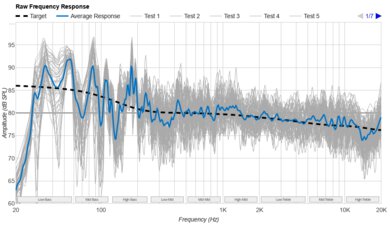
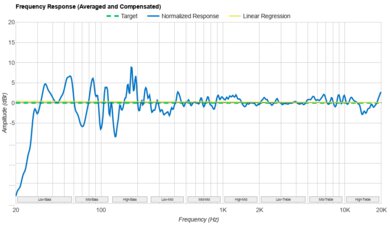
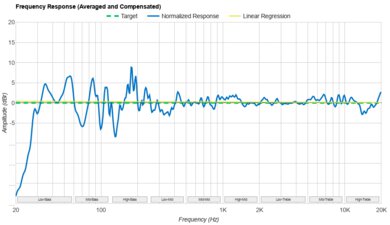
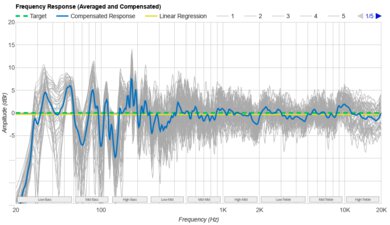
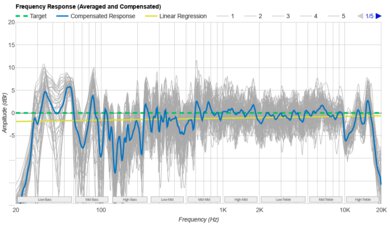
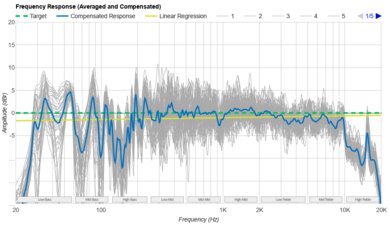
The Hisense AX5140Q is good for music. The soundbar's stereo frequency response lines up well with our in-room target, though its subwoofer reproduces audio with more high-bass than low-bass, which can rob the deepest 'wubs' in dubstep of some rumble. That said, the mids and treble are reproduced close to our target, rendering clear vocals and instruments in your favorite acoustic tracks. Stereo content is also reproduced with appropriate channel allocation, though you can choose to include the satellites by switching Surround modes from 'Off' to 'Pure' or 'Pro.' The bar doesn't work with brand-specific wireless audio playback like Apple AirPlay, so you're relegated to a standard Bluetooth connection (or the AUX port).
Gets plenty loud for large rooms without compression.
Doesn't automatically upmix stereo content.
No wireless playback except via Bluetooth.
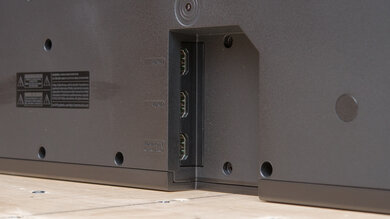
The Hisense AX5140Q is great for watching movies. Bolstered by its four up-firing drivers and dedicated satellites, the bar reproduces surround sound effects in a way that enhances immersion and the sensation of height. Though it lacks low-bass rumble, compared to soundbars with larger (or multiple) subwoofers, the Hisense still replicates explosions with plenty of punch. It works with HDMI In and eARC inputs for dedicated Blu-ray players and your TV's apps respectively, and even supports Optical if you're rocking an old school setup. You also have solid format support across each input, which covers you for object-based DTS:X and Dolby Atmos.
Supports all tested formats with each input.
Gets plenty loud for large rooms without compression.
No room correction with non-Hisense TVs.
Check Price
Differences Between Sizes And Variants
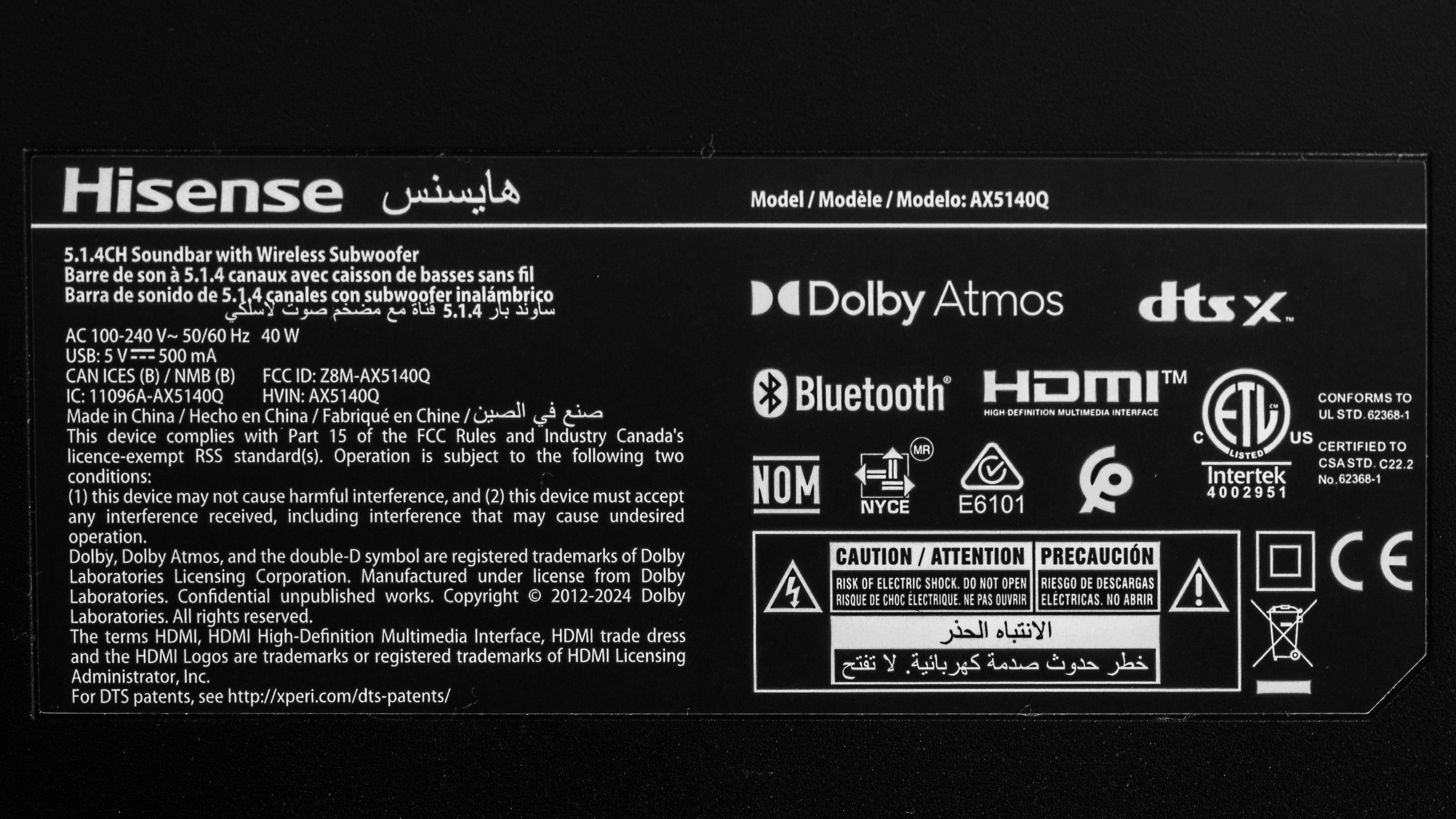
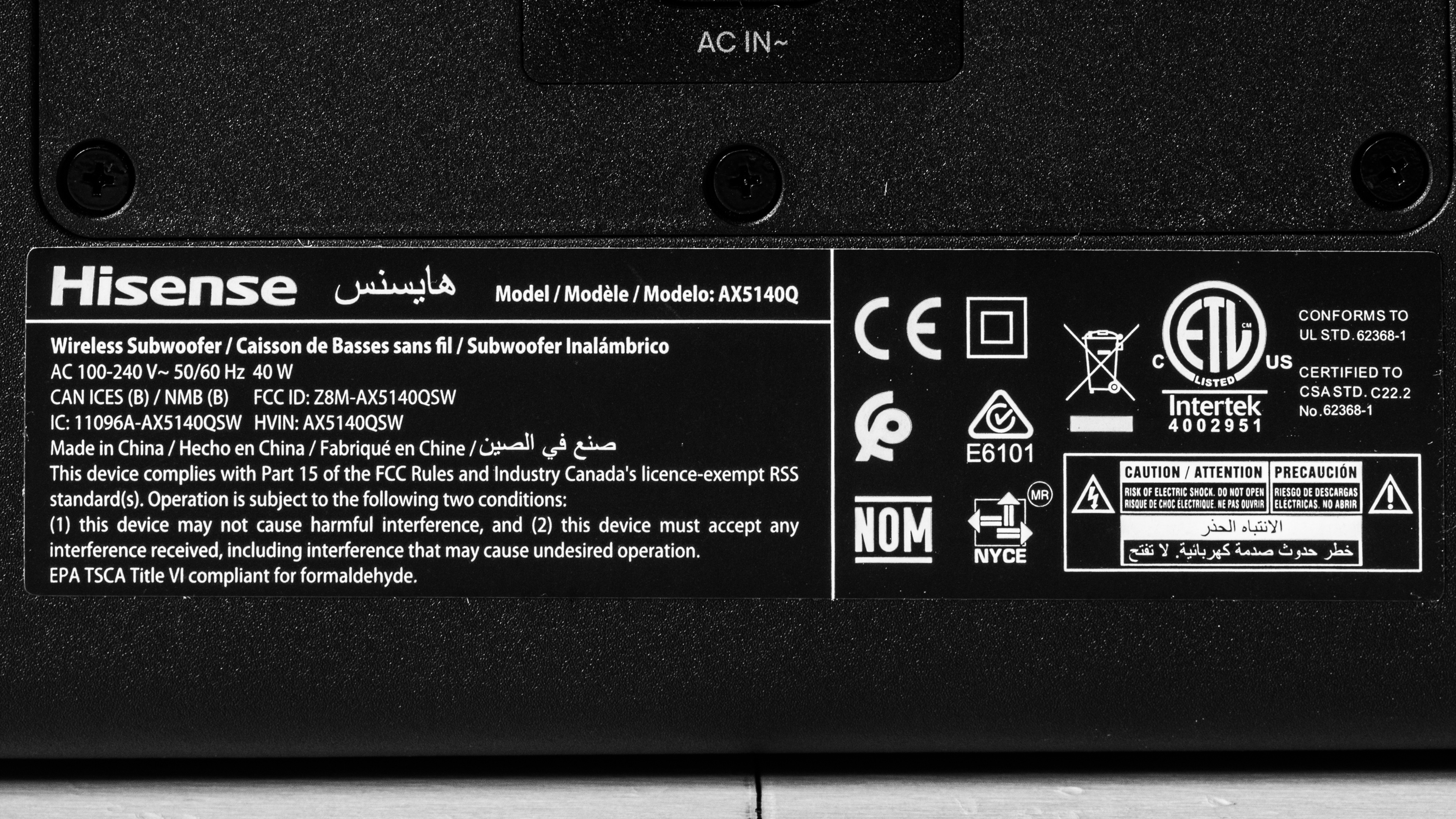
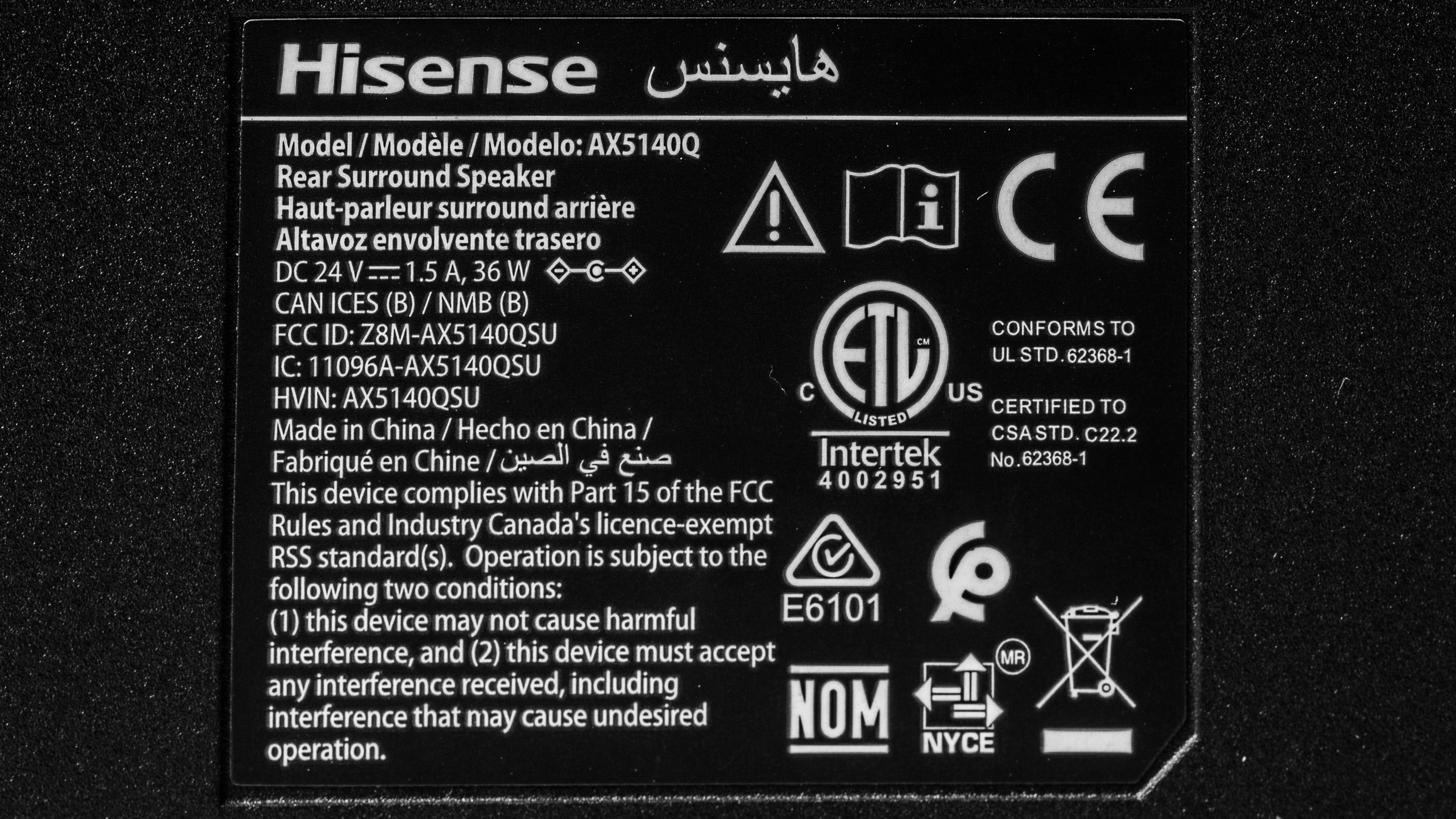
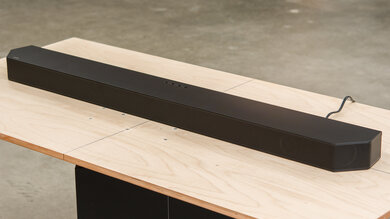
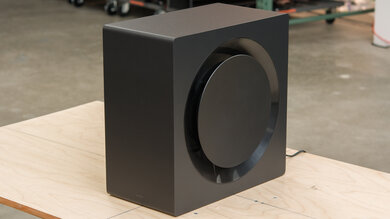
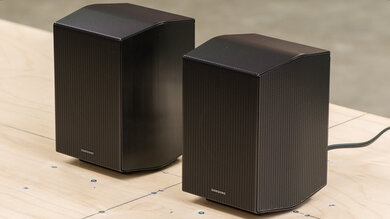
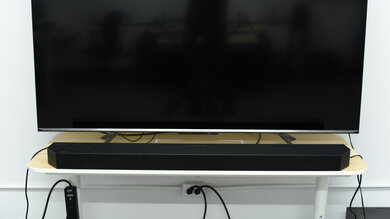
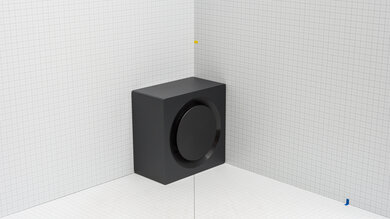
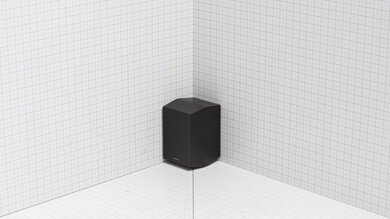
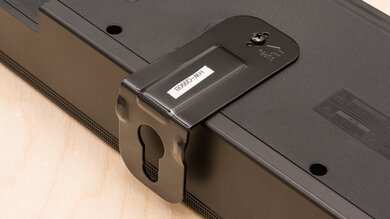
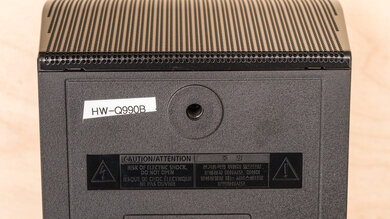
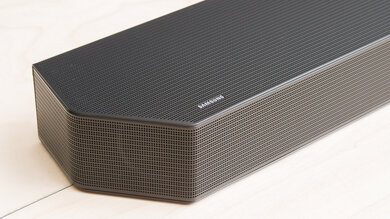
The Hisense AX5140Q only comes in one color, 'Black.' Here are the labels for the bar, subwoofer, and satellites (1, 2). Though we haven't tested it, there appears to be a vendor-specific (Costco) variant of the soundbar, the Hisense AX700, which lacks the Hisense TV-related features.
If you come across another variant, leave a comment below, and we'll update the review.
Popular Soundbar Comparisons
The Hisense AX5140Q is a welcome addition to the roster of lower mid-range soundbars and serves as a compelling 5.1.4 system with discrete satellites. There's a good deal of overlap in this price range with standalone bar and bar + subwoofer combos like the 5.1-channel Samsung HW-B750F. The Hisense outperforms the bar + sub archetype in most metrics like Atmos and Surround 5.1, in large part thanks to its discrete satellites and additional up-firing drivers. However, some bar and subwoofer combos with higher channel counts and better implementation of side-firing drivers, like the unreviewed Samsung HW-Q900F, may come close, albeit at a much higher price. Against more comparable setups with dedicated surrounds, like the Amazon Fire TV Soundbar Plus with Sub + Speakers and various Vizio entries, the Hisense outperforms with its higher up-firing driver count and expanded sound enhancement options. That said, it still falls short in the same ways as similarly priced bars; the Hisense doesn't support 4k 120Hz passthrough for next-gen gaming consoles, and lacks proprietary wireless playback integration like Chromecast or Apple AirPlay.
If AirPlay is something you'll miss, check out our recommendations for the best soundbars with AirPlay. And if you're an audio purist chasing the best possible movie-watching experience, have a look at our picks for the best Dolby Atmos soundbars and the best soundbars for movies.
The Sonos Arc Ultra and the Hisense AX5140Q are quite different products. For one, the Sonos is a standalone 5.1.2-channel bar that's expandable with other Sonos speakers, while the Hisense is a closed 5.1.4-channel system that includes a subwoofer and satellites. If you can't find space for the Hisense sub or satellites, the Sonos is the better option, since it uses side-firing drivers to create its surround sound effect. That said, the Hisense offers better value if you're heavily budget-constrained, coming in at around half the price of the Sonos.
The TCL Q85H and Hisense AX5140Q are both soundbar systems aimed at maximizing value, though they sit in slightly different price categories. The 7.1.4-channel TCL sits above the $500 mark, while the 5.1.4-channel Hisense sits below. If you aren't too concerned with the additional side-firing drivers on the TCL bar, there are a few reasons the Hisense may be the better option for tinkerers. It offers a graphic EQ and more robust channel adjustments, including the ability to independently adjust the front and rear height channel levels. That said, it doesn't come with room correction (unless you have a compatible Hisense TV), so users less inclined to tinker with settings may prefer the out-of-the-box room correction offered by the TCL.
The Hisense AX5140Q is an updated version of the Hisense AX5125H. The successor soundbar features two additional up-firing drivers, an aesthetic and functional redesign, and better sound performance across the board. Its expanded sound enhancement feature set gives the AX5140Q the edge even outside sonic characteristics, making it the better option. If you can find the AX5125H for significantly cheaper, it may be a worthwhile option, since the performance isn't that different, but the AX5140Q will be most people's go-to due to its still-competitive sub-$500 price.
The Hisense HT Saturn and Hisense AX5140Q are quite different products. The Saturn has a 'no-bar' configuration, instead opting for four 'satellites' and one subwoofer in a 4.1.2-channel setup. Meanwhile, the 5.1.4-channel AX5140Q has a more typical configuration with a bar, subwoofer, and satellites. In most sound tests, the AX5140Q performs better than the Saturn and is the better pick overall. Once you factor in price (the Saturn is around twice as expensive as the AX5140Q), most users should consider the Saturn only if they can't fit a bar in their setup or are specifically after the 'no-bar' configuration.
Test Results
for pictures & test results
for pictures & test results
for videos & test results

for videos & test results