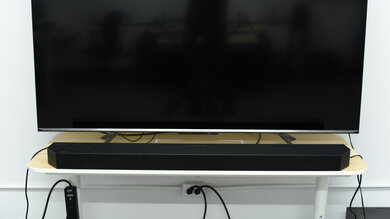
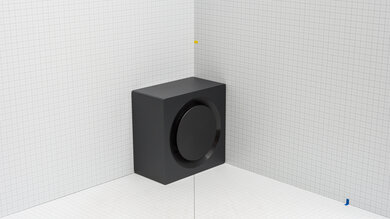
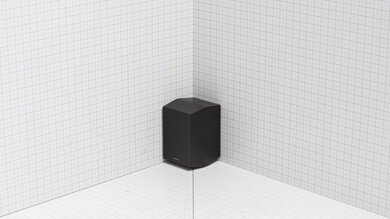
The Samsung HW-Q990D is the manufacturer's 2024 flagship soundbar. Replacing the previous year's Samsung HW-Q990C, this bar's standout feature is its HDMI 2.1 support, which allows for 4k at 120Hz passthrough, so it's ideal for playing video games on a newer console or connecting it to your PC if it has a recent graphics card. Like its predecessors, it also has a wide array of sound customization features, including the room correction feature SpaceFit Sound Pro, which optimizes sound to your room's unique acoustics. You can also expect an immersive listening experience thanks to its rear speakers.
Our Verdict
The Samsung Q990D is excellent for mixed usage. This bar can do it all. It has a very balanced and neutral sound, so it sounds versatile enough for movies, TV shows, and music. It delivers thumpy and punchy bass, too, thanks to its subwoofer, and you can even customize its sound thanks to its robust sound enhancement features. This bar supports a lot of different audio formats and can play Dolby Atmos content to give you a really immersive and dimensional audio experience.
- Gets loud.
- Supports Dolby Atmos.
- Lots of sound customization tools available.
- Supports major wireless connectivity options.
- Graphic EQ available only on Standard preset.
The Samsung Q990D is amazing for dialogue and TV shows. It has a dedicated center channel, which ensures that dialogue is clear and easy to follow. You can also access features like Active Voice Amplifier (AVA), which can make voices louder depending on the noise in your room. However, we didn't notice too much of a difference using it. This bar also has low latency, so you won't notice lip-sync errors over any of its connections.
- Gets loud.
- Low latency.
- Lots of sound customization tools available.
- Supports major wireless connectivity options.
- Graphic EQ available only on Standard preset.
The Samsung Q990D is excellent for music. It has a balanced sound that ensures vocals and instruments sound clear and natural in mixes. It also delivers enough bass for genres like EDM and hip-hop, which can benefit from added thump, punch, and boom. If you prefer a different sound, you're in luck because a wide range of sound customization features, like a graphic EQ, are available. This bar can also get loud enough to fill a large room.
- Gets loud.
- Lots of sound customization tools available.
- Supports major wireless connectivity options.
- Graphic EQ available only on Standard preset.
The Samsung Q990D is excellent for movies. Its balanced sound gives all the punch and boom you need to feel sound effects, like explosions with gusto, without drowning out dialogue, which also sounds clear and natural. It also supports many common audio formats, including those on streaming platforms and Blu-rays, like Dolby Digital and Dolby Atmos. Thanks to its satellite speakers, it can create a wide and dimensional soundstage with sound effects that stretch into your space.
- Gets loud.
- Supports Dolby Atmos.
- Lots of sound customization tools available.
- Supports major wireless connectivity options.
- Graphic EQ available only on Standard preset.
Changelog
-
Updated Apr 25, 2025:
The Compared to Other Soundbars and Dimensions - Subwoofer sections have been updated to mention the Samsung HW-Q990F.
-
Updated Mar 31, 2025:
We updated the Inputs/Outputs - Bar section of this review to explain that firmware update 1020.7 bricked this soundbar. If you encountered this issue, please contact Samsung for a free repair.
-
Updated Mar 04, 2025:
We've updated the Inputs/Outputs section after a retest confirmed that the soundbar can be pushed to 48 Gbps, but is set to 40 Gbps by default. The factory default speed is also noted in Video Passthrough to TV.
-
Updated Dec 13, 2024:
The Compared To Other Soundbars and Dimensions - Bar sections now make mention of the Samsung HW-Q930D.
Check Price
Differences Between Sizes And Variants
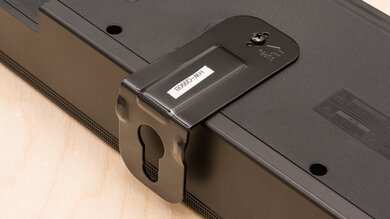
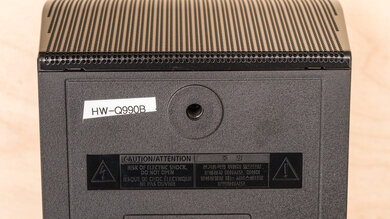
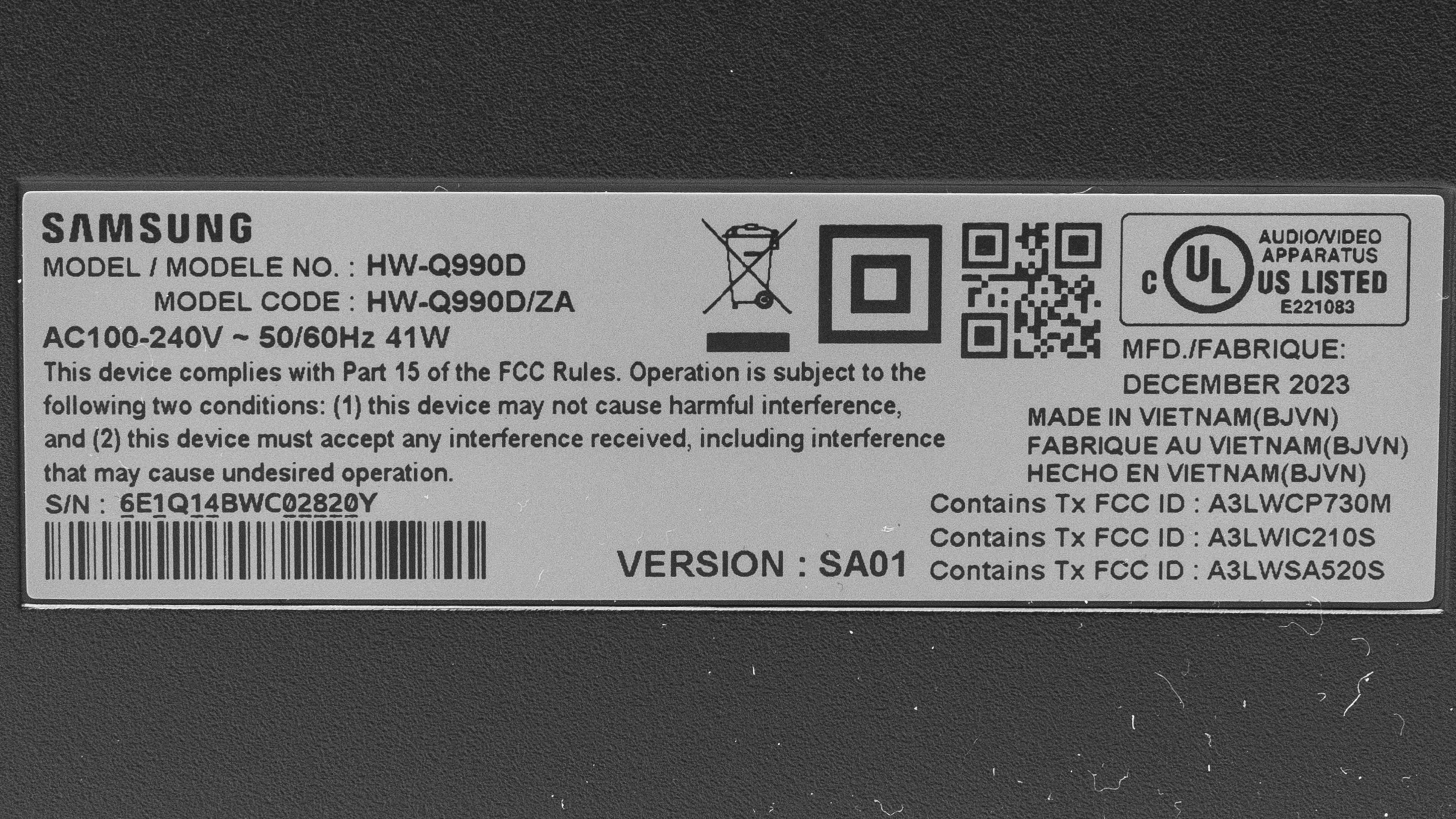
The Samsung Q990D comes in one color variant: Black. You can see our model's label here. If you come across another variant of this soundbar, let us know in the comments.
Popular Soundbar Comparisons
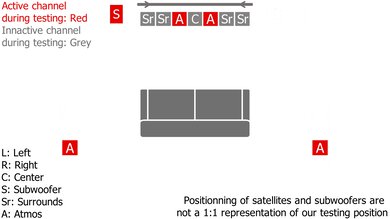
The Samsung Q990D is an 11.1.4 setup and 2024 flagship model. While it looks and performs largely similar to the previous year's model, the Samsung HW-Q990C, there's one notable change. This bar now supports HDMI 2.1 passthrough, which is great if you're into 4k 120Hz gaming or are using it with a PC. That said, if you're just watching movies and videos from common streaming platforms, you won't benefit from HDMI 2.1 since this kind of content can't take advantage of the technology. Additional features on this bar include a Private Listening mode, which sends all your audio to the rear speakers and minimizes the impact of sound on the rest of your surroundings, and Sound Grouping, which allows the rear speakers to play left and right channel audio, giving you a more stereo sound. It's pretty pricy, though, and you can get a similar sound performance (without HDMI 2.1) with the step-down Samsung HW-Q930D. While the Samsung HW-Q990D has been succeeded by the Samsung HW-Q990F, the differences in pure performance are rather subtle, and many differences can be compensated via EQ, though the Q990F has a new subwoofer design and supports Eclipsa Audio.
If you're looking for more soundbars, check out our recommendations for the best soundbars, the best Dolby Atmos soundbars, and the best soundbars for movies.
The Samsung HW-Q990F is the follow-up to the Samsung HW-Q990D. They're more alike than different with 11.1.4 configurations, similar tunings, features, and performance. The biggest difference is the Q990F has a redesigned sealed subwoofer that rattles less than the ported Q990D when playing back deep bass, but you may prefer the bass tuning of either more. The Q990D, on the other hand, compresses less in the bass at max volume. Otherwise, whichever is less expensive may be the deciding factor.
The Samsung HW-Q990D is a more complete soundbar setup than the Sonos Arc Ultra. The 11.1.4-channel Samsung system includes two discrete satellites and an external sub, as well as up-firing drivers in both satellites and the soundbar. As expected, the sub provides better coverage of the lower frequencies while the extra up-firing drivers enhance the verticality of the listening experience. The Samsung soundbar also has access to an EQ and virtual surround features, and supports HDMI In. That said, if you own other compatible Sonos devices, you can expand your surround sound experience by connecting them to the Sonos Arc Ultra.
The Samsung HW-Q990D and the LG S95TR are top-of-the-line soundbar models, but the Samsung has the edge. Its sound is a bit more balanced out of the box, and it has a better overall performance across all of its channels, including surround and height, which gives you an immersive, dimensional sound. It also supports 4k at 120Hz 10-bit compared to the LG's 4k at 120Hz 8-bit, so you can hook it up to your latest-gen console for crisp, vibrant gameplay on your TV. You may still enjoy the LG if you have an LG TV, thanks to features like WOWCAST Ready, allowing you to wirelessly pass audio from your TV to your bar.
The Samsung HW-Q990D and Samsung HW-Q930D are both 2024 soundbars, with the HW-Q990D sporting extra drivers and can get louder. That said, both soundbars support plenty of audio formats and include useful tools to sculpt the frequency response. For most people, which you should choose depends more on your budget and whether you need to fill out a large room.
Test Results

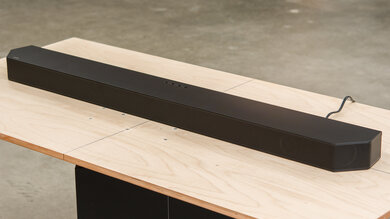
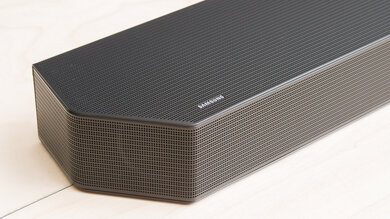
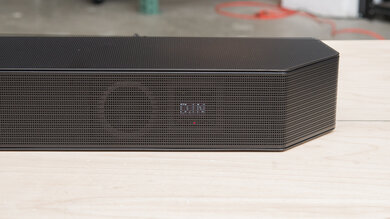
This high-end soundbar looks identical to last year's model, the Samsung HW-Q990C. It has angled sides and a metal grille to protect the drivers. Also, the right side of the bar has an LED display.
The Samsung Q990D is roughly the same size as its predecessor and is pretty large, so you may have trouble putting it between the legs of a 55-inch TV. It's not very tall, so it doesn't block your TV screen unless it's flush to the table. If you're tight on space, though, the Samsung HW-Q930D is a bit smaller.
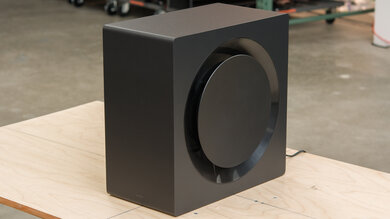
The sub is about the same size as a desktop computer. It connects to the bar wirelessly, so you can place it anywhere in your room. The successor, Samsung HW-Q990F, has a different, sealed subwoofer in a smaller casing, though they both have eight-inch drivers.
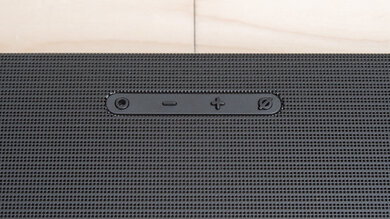
The Samsung Q990D has an excellent build quality. Thanks to their durable plastic and metal construction, this bar, its satellites, and its sub feel premium. There are sleek metal grilles to protect the drivers, while the buttons on the top of the bar have a nice click to them. Since there isn't any fabric in their build, you don't have to worry about something tearing in the frame.
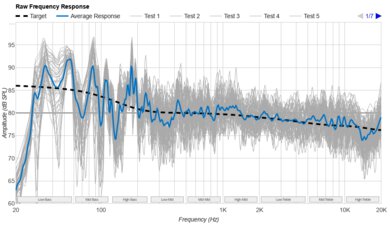
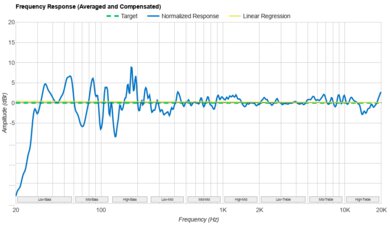
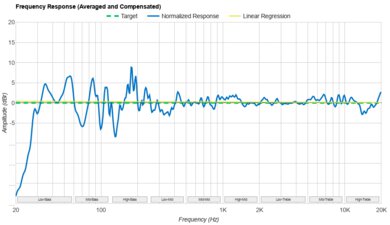
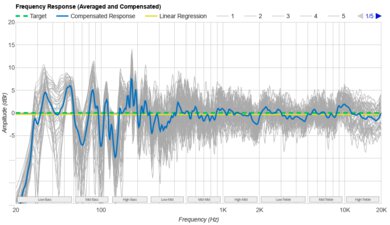
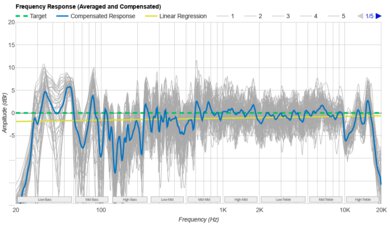
The Samsung Q990D has an excellent stereo frequency response, making it a versatile choice for whatever content you're into. This setup delivers satisfying thump and rumble to help emphasize sound effects like explosions in movies or basslines in your favorite songs. At the same time, the rest of the response is well-suited for vocal-centric content. Dialogue sounds crisp and clear, while instruments are present and detailed. While there's an Active Voice Amplifier (AVA) to make dialogue even easier to hear, we didn't notice much of an improvement when we used it.
If you're not into this sound, the bar has a wide array of sound customization features to help you make the most of it. There's even a room correction feature, which optimizes the bar's sound to your room's unique acoustics.
If you prefer a more balanced and neutral sound, you'll want to stick with the bar's default settings.
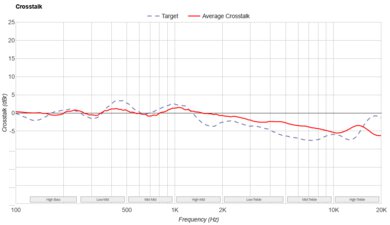
The Samsung Q990D has a good stereo soundstage. In Standard mode, the soundstage is perceived as about the size of the bar. However, if you switch to Adaptive Sound, it feels a bit wider, although also more hollow, which can seem less realistic. You may prefer one setting over another, depending on your preferences. The bar also has very good focus, so it's easy to pinpoint sound effects like voices in the space around you.
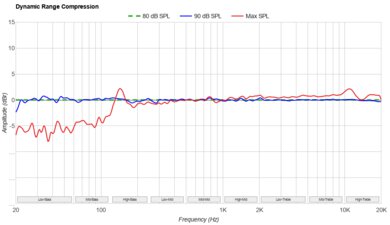
This bar has outstanding stereo dynamics. Like its predecessor, the Samsung HW-Q990C, it can get loud enough to fill large and open spaces. There are very low amounts of compression at high and max volumes, so your audio sounds clean and clear.
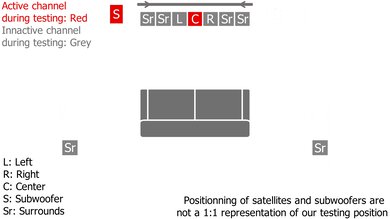
This setup has a discrete center channel, which helps improve vocal quality. Its frequency response is balanced, so dialogue sounds clear, detailed, and accurate.
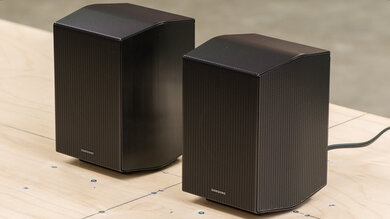
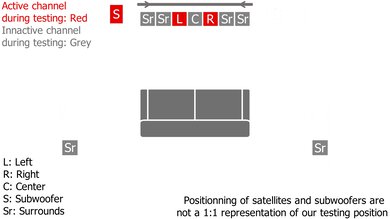
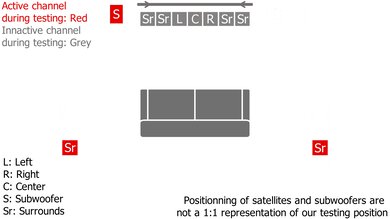
This bar has two discrete satellite speakers, which help reproduce 5.1 surround sound formats like Dolby Digital and DTS. Thanks to their balanced frequency response, sound effects like a car chase scene are clearly and accurately reproduced in the space around you. Sound also stretches all around you, so cars sound like they're racing from one direction to another, giving you a more dimensional sound, especially when compared to soundbars with phantom speakers like the Sony BRAVIA Theater Bar 9.
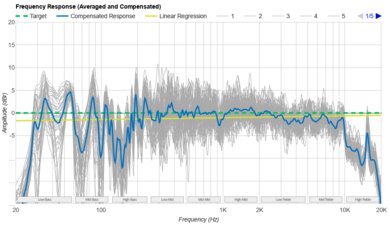
The Samsung Q990D has four up-firing drivers: there are two on the bar and an additional two on the satellites, which bounce sound off of your ceiling to create the impression of height with content like Dolby Atmos. The frequency response is also quite balanced, so sound effects are clear and detailed. Using Standard mode gives a bit more oomph to the bass range, but Adaptive Sound brings a touch more brightness to mixes, although it can sound more hollow overall.
We also evaluated this bar's subjective Atmos experience. It can create an immersive sound with clear sound effects that feel like they come from all around you. For example, a toppling tower in an action movie retains fine details like electrical wires snapping and plenty of rumble from collapsing concrete to your left and right. The bass doesn't muddy the rest of the sound, either. In another example, a helicopter traveling overhead really feels like it's there above you. Overall, the effect is better and more immersive than other top-of-the-line models with satellites like the LG S95TR.
This bar has a wide array of sound customization features that will please most people. For adjusting its sound, there's a 7-band graphic EQ (available when you're on Standard mode) and bass and treble adjustments if you're on any of the other preset modes like Surround, Adaptive Sound, or Game Pro. There's also a room correction feature called SpaceFit Sound, an active feature that automatically and dynamically adjusts the bar's sound based on your room's unique acoustics. You'll need to keep the microphone on since muting it will disable the feature.
Like the previous year's model, the bar supports Q-Symphony, which allows you to sync the bar with compatible Samsung TVs and its speakers to create a more immersive sound. However, a couple of features were added this time around. Private Listening is a feature that sends audio only to the satellite speakers, which creates a sound localized around the listener and can reduce the overall sound level in your room if you're looking to avoid disturbing others. Another feature is Sound Grouping, which lets the satellites play left and right-channel content to create a more stereo sound.
In addition to all of these features, there's Active Voice Amplifier (AVA), which, as the manufacturer advertises, makes dialogue clearer, depending on the noise levels in your room. In Standard mode, it didn't seem to have a noticeable impact on the quality of dialogue or vocals in music. That said, there was a little bit more of a difference when using Adaptive Sound, as the dialogue's level changed slightly in some scenes. It also pushed dialogue forward in the soundstage while helping to alleviate some of the hollowness created by the preset. Still, this feature isn't very impactful on your listening experience.
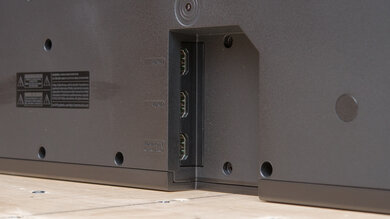
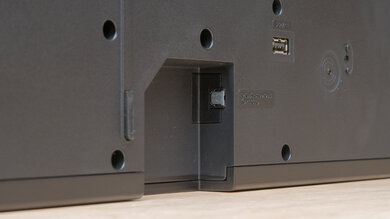
Unlike the previous year's model, the Samsung HW-Q990D supports HDMI 2.1 Class Bandwidth, which is great if you're using the bar as a hub between a source like a newer Xbox or PlayStation console and your TV, as you can passthrough higher bandwidth signals (like 4k 120Hz). In addition to this port, there are two HDMI In ports and Optical. There's a USB port, but it's only for servicing the bar.
The soundbar's HDMI In capabilities can be pushed to 48 gigabytes/second (Gbps) using the Custom Resolution Utility (CRU) tool. Generally, we advise against deviating from factory settings because it can lead to unstable performance. Out of the box, though, the maximum transfer speed is set at 40 Gbps.
It's important to note that firmware 1020.7 bricked this soundbar, but only if the bar was updated over the network (not via USB). Samsung has now pulled the firmware update, so you won't be affected if you haven't updated. However, if you did update and subsequently bricked your soundbar, please contact Samsung, who will repair your soundbar free of charge, regardless of your warranty status.
This soundbar can playback all common audio formats via ARC. It can also playback surround sound formats like Dolby Digital and Dolby Atmos, the latter of which is a lossless and object-based format.
Via HDMI In, the Samsung HW-Q990D supports many audio formats, like Dolby Digital and Dolby Atmos, that you'd commonly find on streaming platforms and Blu-rays.
Likewise, over Optical, this soundbar can playback common surround sound formats like Dolby Digital and DTS. Dolby Digital is more common, and many streaming platforms and Blu-rays use it. Conversely, DTS is often used as a fallback for the higher-quality DTS HD-MA format on some Blu-rays.
Audio latency is fantastic via ARC. Your audio and visual are synched up well, so you won't notice lip-sync errors. It's worth mentioning that some apps and TVs compensate for latency, but if you run into issues, you can use the AudioSync feature in the SmartThings app to manually compensate for the delay.
Like via ARC, this bar maintains outstanding audio latency levels, ensuring that your audio and visuals are in sync. Some apps and TVs compensate for latency, though.
This soundbar has a fantastic audio latency performance over Optical, too. While AV synchronization error is higher when listening to Dolby Digital content, you can manually compensate for this by using the Audio Sync feature in the companion app.
Unlike last year's model, the Samsung Q990D supports 4k @ 120Hz, which is great if you use the bar as a hub between your Xbox or PlayStation console and your TV. There's also Dolby Vision and HDR10+ passthrough, both of which enhance the picture quality on your TV and are becoming more common on streaming services like Apple TV and Blu-rays. This bar supports Game Mode VRR, too, which is a variable refresh rate, ensuring a tear-free gaming experience. We were able to verify that the HDMI 2.1 fixed rate link speed is set to 40 Gbps. While we could get 8k @ 60Hz to work, we could only get an image with 4:2:0 chroma subsampling, but it worked at 8- and 10-bit.
This bar supports a wide array of wireless options, so it's easy to connect to your mobile devices and stream audio. It also supports Tap to Play, so you can tap your phone to the bar to play audio if you're connected via Bluetooth. That said, depending on your region, your model may not support Chromecast, so you'll want to check your country's product page to see if it's supported.
There's a small display on the front right of the bar. It only shows four characters at a time and requires scrolling through longer messages. That said, it'll show your volume and current input. If you press the 'i' button on the remote, you'll also see your current content stream (whether you're in Atmos, DTS, etc.) and format.
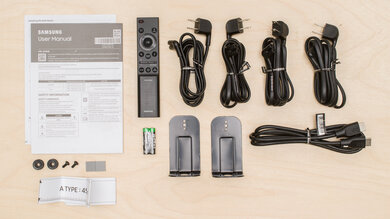
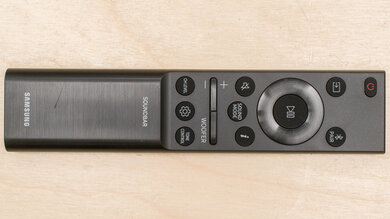
This bar has a remote, making it easy to access features and adjust performance without leaving your couch. There's also a companion app called SmartThings; it offers the entire suite of features at your fingertips and even acts as a hub for your Smart Home devices.
This bar has built-in Amazon Alexa support, so you can control it hands-free with just your voice. Some regions also support Google Assistant, but it's unavailable in the US. If you're looking for privacy from your voice assistant, you can mute the microphone via a button on the bar.