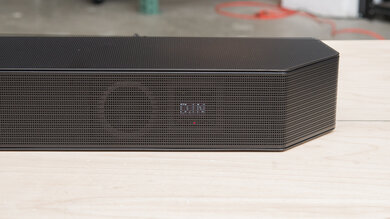
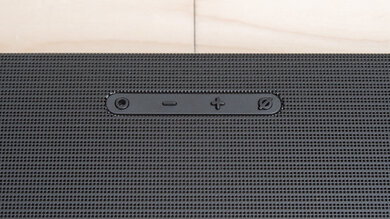
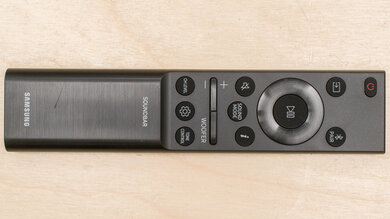
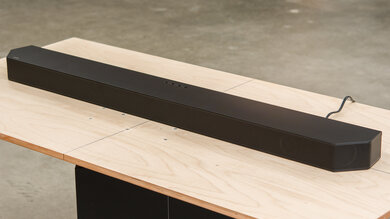
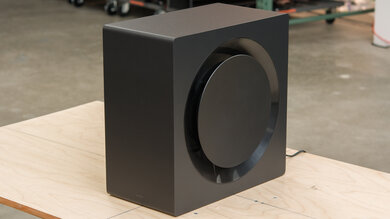
The Samsung HW-B750D is a 2024 soundbar and a step up from the Samsung HW-B650 in the B Series tier. Depending on your region, it's also known as the Samsung HW-B73CD-ZA. As a 5.1 soundbar, it boasts an outboard subwoofer and side-firing drivers to create a wider soundstage, but if you're seeking oodles of tech, there's no support for object-based audio formats like Dolby Atmos or a companion app. That said, for a straightforward experience without the hassle of apps, it's an interesting proposition.
Our Verdict
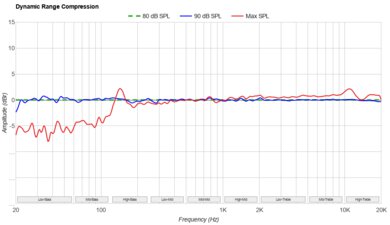
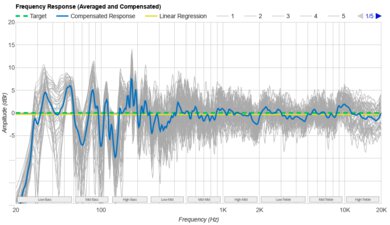
The Samsung HW-B750D is good for mixed usage. Out of the box in 'Standard' mode, it has a pleasing and fairly neutral frequency response with solid stereo soundstage width. There are plenty of tools on tap, such as an EQ, to tailor the sound. Voice enhancement and 'Night' mode (which compresses loud and quiet noises), alongside 'Sound Mode' presets make it flexible with different media. At max volume, it retains your audio's dynamics with minimal compression. It does have some stripped-back features, though: audio format support is limited to Dolby Digital, DTS, and PCM. For wireless playback, the bar is limited to Bluetooth. Plus, the absence of an app is worth noting, though the remote can still access all the features.
Graphic EQ and other sound enhancement tools.
Side-firing drivers widen the soundstage.
Balanced center channel.
Low latency playback.
Supports DTS and Dolby Digital.
No room correction.
Lacks Dolby Atmos support and up-firing drivers.
Lacks smart features and wireless connectivity is limited to Bluetooth.
No app and small interface display.
The Samsung HW-B750D soundbar is great for watching TV shows and listening to dialogue-heavy content. Its center channel reproduces voices so they sound true to life and articulate. The stereo frequency response offers a similarly neutral sound, though it's a bit light on the low-bass rumble, but this isn't too bothersome unless you primarily watch action-packed shows. Thanks to the soundbar's low latency performance, voices match up well with the visuals. You can also use the voice enhancement tool or the EQ to adjust the sound with poorly mixed audio. 'Night' mode also lets you watch shows without bothering your household by compressing quiet and loud sounds to similar output levels. The audio formats supported are somewhat limited compared to more premium bars: it can only playback DTS, Dolby Digital, and PCM.
Graphic EQ and other sound enhancement tools.
Side-firing drivers widen the soundstage.
Balanced center channel.
Low latency playback.
Supports DTS and Dolby Digital.
No room correction.
Bass extension lacks a bit of rumble.
No app and small interface display.
The Samsung HW-B750D is very good for listening to music. Its default settings sound rather balanced, with a good amount of width in the stereo soundstage field. It includes a graphic EQ, so you can tune the sound to your tastes, as well as a variety of preset listening modes, including a 'Night' mode, which evens out dynamics between quiet and loud sounds, so you can listen to music in the evenings. Even at max volume, the soundbar retains the dynamics of your music very well. That said, despite the outboard subwoofer, it doesn't have a very deep bass, and your wireless connectivity is limited to Bluetooth only. However, that may be fine if you use your TV or another HDMI-equipped device to play back music.
Graphic EQ and other sound enhancement tools.
Side-firing drivers widen the soundstage.
Balanced center channel.
Very good stereo dynamics.
No room correction.
Lacks smart features and wireless connectivity is limited to Bluetooth.
Bass extension lacks a bit of rumble.
The Samsung HW-B750D is satisfactory for watching movies. While the absence of support for object-based audio formats and a somewhat basic DTS and Dolby Digital is limiting, this still works well for older films and a lot of physical media. Still, it downmixes Atmos content. That said, the soundbar outputs a fairly wide stereo soundstage with a balanced frequency response out of the box, and you can tweak it using the EQ and sound modes. It's incapable of producing a fully immersive deep bass, but the sub still supplies a good amount of boom. Meanwhile, the center channel produces natural-sounding dialogue, and the low-latency performance ensures that the voices match the speakers' mouths.
Graphic EQ and other sound enhancement tools.
Side-firing drivers widen the soundstage.
Low latency playback.
Supports DTS and Dolby Digital.
No room correction.
Lacks Dolby Atmos support and up-firing drivers.
Bass extension lacks a bit of rumble.
No app and small interface display.
Changelog
-
Updated Aug 28, 2025:
The Sound Enhancements Features box was amended to include level adjustment, which changed the score. Stereo Soundstage has been updated to mention the Samsung HW-B750F.
-
Updated Feb 06, 2025:
The Differences section has been updated to specify Sound Modes can vary with regional variants.
- Updated Jan 14, 2025: Review published.
- Updated Dec 19, 2024: Early access published.
Check Price
Differences Between Sizes And Variants
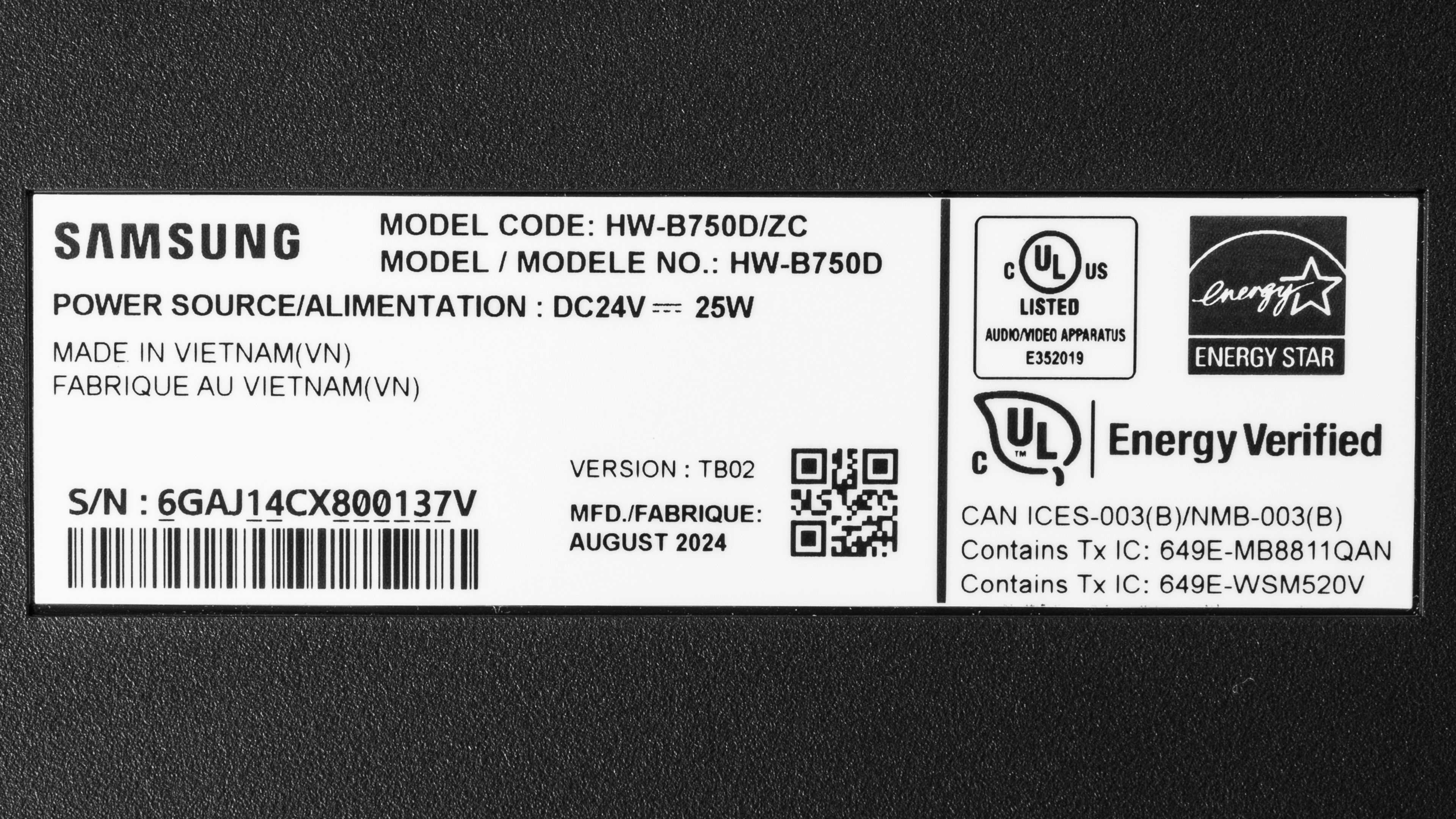
The Samsung HW-B750D comes in one 'Black' variant (see our unit's label). In some regions, its model name is the Samsung HW-B73CD, which we expect to perform similarly. However, there are reports that the HW-B73CD variant doesn't have identical sound mode presets and lacks the 'Bass Boost' mode. If you come across another variant of this soundbar, let us know in the comments, and we'll add it to the review.
Popular Soundbar Comparisons
Essentially, the 5.1 Samsung HW-B750D and its 3.1 sibling, the Samsung HW-B650, seem geared toward folks with an extensive Blu-ray and physical media collection. Unless you stretch the budget for the more premium Samsung HW-Q800D, at this price point, you're inevitably pushed to make compromises, with options like the Samsung HW-Q600C/Q60CC that have up-firing drivers and support a greater number of audio formats, such as Dolby Atmos. However, the HW-B750D's stereo soundstage and surrounds perform a bit better. The HW-Q600C/60CC can also prompt the question as to whether you want sub-par Dolby Atmos performance just to have it.
Because the Samsung HW-B750D lacks up-firing speakers and Dolby Atmos compatibility, the JBL Bar 500 is worth a look as another 5.1 bar. The JBL has a greater low-end extension than the Samsung. Although you can EQ both soundbars, the JBL comes with an app, too. Of the two, only the Samsung supports DTS, which is commonly found on Blu-rays. Still, both have trade-offs that depend on your habits, like the greater wireless connectivity on the JBL.
On the other hand, if you're in the market for a soundbar with a solid bass output, consider the best soundbars with a subwoofer, the best budget soundbars, and if you want a more immersive sound, the best Dolby Atmos soundbars.
The Samsung HW-B750F and Samsung HW-B750D are extremely similar 5.1 kits with side-firing drivers on the ends of the bar with outboard subwoofers, but no satellites. They share most of the same aesthetics and features, with the main point of differentiation being that the HW-B750F is tuned a little brighter out of the box with a bit more punch, while the HW-750D has a tamer treble response. However, EQ and Tone Control available on both offer you tools to change the sound to your tastes.
The Samsung HW-Q800D is better than the Samsung HW-B750D. The HW-800D is fitted with a more complete suite of audio format compatibility (such as Dolby Atmos, DTS-MA, and Dolby Digital Plus), unlike the HW-750D. You can use the HW-Q800D with a considerably greater selection of wireless connections like Wi-Fi, Bluetooth, Chromecast, AirPlay 2, and Spotify Connect, alongside using its companion app. It also has a deeper bass extension. However, the HW-750D is cheaper and still sounds good with a selection of sound enhancement tools like EQ accessible via the remote. Its stereo soundstage is a bit wider, too. Still, it only supports DTS, Dolby Digital, and PCM 2.0 audio, and Bluetooth is its sole wireless connection.
The main appeal of the Samsung HW-Q60C over the Samsung HW-B750D is its ability to playback a greater selection of audio formats. However, the HW-Q60C can't actually provide the dimension of height that's expected from Dolby Atmos content because the bar lacks up-firing drivers, and it necessarily downmixes multi-channel formats to stereo anyhow because it's a 3.1 design. Neither soundbar has an app, but their remotes provide a graphic EQ, so you can tweak either for a different sound. The side-firing drivers on the 5.1 HW-750D lend it a better stereo soundstage and a more immersive surround sound experience, but it's still limited to Dolby Digital, DTS, and PCM audio formats.
The Samsung HW-B750D is slightly better for most people than the Samsung HW-B650, but they're very alike. The HW-750D is a 5.1 soundbar that houses two side-firing drivers at each end, which creates a bit bigger stereo soundstage. Both soundbars have low latency across HDMI and Optical connections, but the HW-750D is a little better in that regard, and its surrounds performance is more immersive. It otherwise shares most of the same features and limitations as the HW-B650, which can get a bit louder with a bit less compression. Still, at safe listening levels, you won't detect a difference. That said, the HW-B650 downmixes surround audio because it's a 3.1 bar. Still, you can use either bar's EQ to alter the sound to your tastes as well.
Test Results
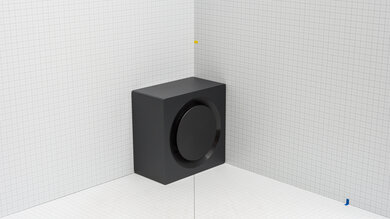
for pictures & test results
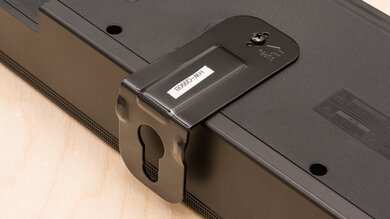
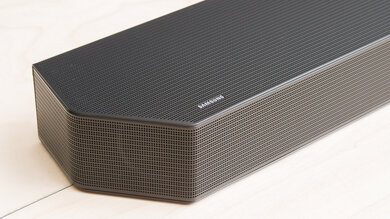
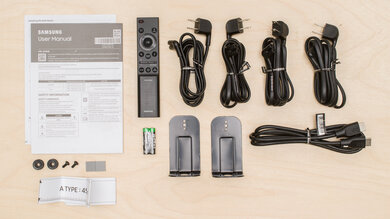
for pictures & test results
for videos & test results

for videos & test results