Samsung HW-Q800F  Soundbar Review

Reviewed Jul 30, 2025 at 03:22pm
Retest Dec 03, 2025 at 02:41pm
Tested using Methodology v1.3 
Samsung HW-Q800F
0.0
Mixed Usage 
0.0
Dialogue/TV Shows 
0.0
Music 
0.0
Movies 
 18
  1. Recommended in:
  2. Dialogue

The Samsung HW-Q800F is a 5.1.2-channel soundbar released as part of Samsung's 2025 Q-Series lineup, positioned just below the flagship Samsung HW-Q990F. The Q800F is a very incremental update to the Samsung HW-Q800D. The newer version has a redesigned subwoofer that is easier to stow in tight spaces than its predecessor's. But other than that, there's not a whole lot new here to get excited about.

Our Verdict

0.0
Mixed Usage 

The Samsung Q800F is a versatile soundbar that is a great choice for consuming a wide range of content. Though it lacks dedicated satellites, it offers Dolby Atmos support, making it equipped for immersive viewing whether you're watching movies, catching up on TV shows, or diving into a gaming session. Its dedicated subwoofer adds impactful low-end rumble to cinematic explosions while the discrete center channel ensures that voices remain clear and focused, no matter the chaos unfolding on-screen. Dialogue clarity can also be boosted with the built-in Active Voice Amplifier. With broad format support, including Dolby Digital, DTS, and 4k passthrough at 60Hz, this soundbar is well-suited for most home entertainment setups.

Pros
  • Deep low-end extension.

  • Gets plenty loud in Standard mode.

  • 4k HDMI passthrough at 60Hz.

Cons
  • Still no HDMI 2.1 support.

  • Unremarkable Atmos performance.

0.0
Dialogue/TV Shows 

The Samsung Q800F soundbar is a great choice for watching dialogue-rich content like TV shows. Its 5.1.2-channel configuration includes a dedicated center channel that keeps vocals clear and intelligible, even during scenes with lots of background activity. It delivers plenty of detail in the mid and treble ranges, making speech sound natural and well-articulated. Several sound enhancement features help tailor the experience further, including Active Voice Amplifier, which dynamically adjusts dialogue clarity based on real-time analysis, as well as more familiar tools like Voice Enhance and Night mode for late-night viewing.

Pros
  • Deep low-end extension.

  • Gets plenty loud in Standard mode.

  • 4k HDMI passthrough at 60Hz.

Cons
  • Unremarkable Atmos performance.

0.0
Music 

The Samsung Q800F is impressive for listening to music. It offers a generally balanced and engaging sound. There's plenty of warmth and punch in the low end, and sub-heavy sounds like 808s feel thumpy and exciting. The balanced mid and treble ranges ensure instruments and vocals alike are rendered accurately and with plenty of detail. With SpaceFit Sound, the bar automatically calibrates its output to suit your room's acoustics, ensuring consistent performance whether it's set up in a large living area or a smaller basement. If you push the bar to its maximum volume, a little compression kicks in. But unless your room is very large, you probably won't want to push the system that loud, as it can damage your hearing.

Pros
  • Deep low-end extension.

  • Gets plenty loud in Standard mode.

  • 4k HDMI passthrough at 60Hz.

Cons
  • A touch of compression at max volume.

0.0
Movies 

The Samsung Q800F soundbar delivers very good performance for movie watching. Its dedicated subwoofer adds deep, satisfying rumble to action-heavy scenes, while the bar's detailed mids and highs ensure that dialogue remains clear and well-positioned in the mix. In Standard mode, the bar reaches loud volumes with minimal compression, preserving audio quality even during intense moments. Since it lacks dedicated satellites, its soundstage and surround performance aren't the most expansive, but the up-firing drivers do add a subtle sense of height with Dolby Atmos content, though the effect lacks the overhead realism you'd get from more advanced setups. If you'd like a more immersive viewing experience, you can try out Surround mode, which does make your audio feel a bit wider, albeit at the cost of focus in the middle of the image.

Pros
  • Deep low-end extension.

  • Gets plenty loud in Standard mode.

  • 4k HDMI passthrough at 60Hz.

Cons
  • Unremarkable Atmos performance.

  • 0.0
    Mixed Usage
  • 0.0
    Dialogue/TV Shows
  • 0.0
    Music
  • 0.0
    Movies
  • Changelog

    1.  Updated Dec 03, 2025: 

      We updated the Height (Atmos) section with new measurements that better address noise floor issues in our test; there were no changes to the scores.

    2.  Updated Nov 20, 2025: 

      The Differences Between Sizes and Variants box was updated to add the Samsung HW-Q810F variant.

    3.  Updated Jul 30, 2025: Review published.
    4.  Updated Jul 24, 2025: Early access published.

    Check Price

    BlackHW-Q800F
    SEE PRICE
    BestBuy.com
    BlackHW-Q800F
    SEE PRICE
    Amazon.com
    BlackHW-Q800F
    SEE PRICE
    Samsung.com
    BlackHW-Q800F
    SEE PRICE
    Walmart.com
    BlackHW-Q800F
    SEE PRICE
    B&H

    Differences Between Sizes And Variants

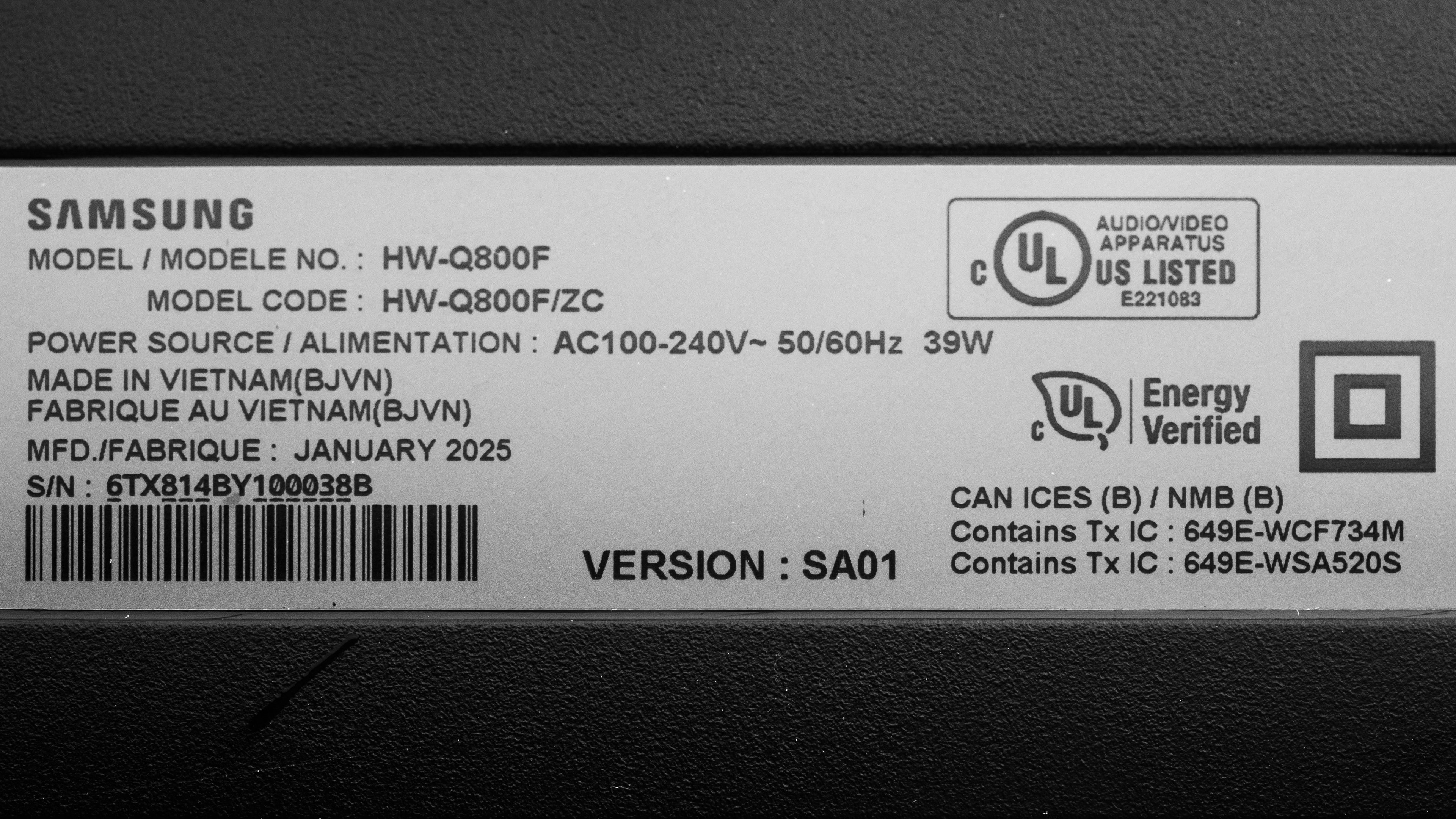
    The Samsung HW-Q800F comes in just one color variant: 'Black.' See our unit's label. The Samsung HW-Q810F is the European regional equivalent model, which we expect to perform similarly, though there may be small country-specific differences.

    If you encounter a different variant of this soundbar, please let us know in the comments, and we'll update our review.

    Popular Soundbar Comparisons

    The Samsung HW-Q800F is a 5.1.2-channel soundbar released in 2025, offering support for Dolby Atmos and aimed at users seeking immersive sound without a full surround setup. It succeeds the Samsung HW-Q800D, though its upgrades are relatively minor. The most significant change in the Q800F compared to its predecessor is the redesigned subwoofer. The new sub adopts a shorter, squarer cabinet design that should make it easier to position in your room. Otherwise, the overall feature set and performance of both generations are extremely similar, making this more of a refinement than a major overhaul.

    If you need G-SYNC or FreeSync passthrough, or 8k at 60Hz (instead of 30Hz) passthrough, the top-tier Samsung HW-Q990F is one possible upgrade here. You'll also gain dedicated satellites and a subwoofer with a slightly deeper low-frequency extension. Just note, the Q990F is considerably more expensive than the Q800F. The Samsung HW-Q930D offers something of a midpoint between the two: you get dedicated satellites as well as G-SYNC and FreeSync passthrough, but you only get 4k passthrough up to 60Hz, which might bother some gamers.

    Looking away from Samsung, the LG S80TR makes a compelling case for those looking to keep their expenditure well under that of the premium soundbars. Unlike the Q800F, the LG supports 4k @ 120Hz passthrough, but you also gain dedicated satellite speakers that lend your audio a more immersive quality. That said, the Q800F delivers superior Atmos performance, so you'll have to decide which tradeoffs you're willing to make.

    If you're looking for more soundbars, check out our recommendations for the best soundbars, the best Dolby Atmos soundbars, and the best 5.1 soundbars.

    Sonos Arc Ultra

    The Sonos Arc Ultra and the Samsung HW-Q800F are both 5.1.2 soundbars that forgo dedicated satellite speakers to enable a more compact home cinema setup. They use side-firing drivers to playback surround audio and up-firing drivers to play back high channels in formats like Dolby Atmos. That said, the Samsung offers a dedicated subwoofer and also provides more flexibility with a built-in 7-band EQ, compared to the Sonos' more limited bass and treble adjustments. On the other hand, the Sonos does offer a more immersive-feeling soundstage and is a better fit for those already invested in the Sonos ecosystem.

    Samsung HW-Q800D

    It's splitting hairs to choose between the Samsung HW-Q800F and the Samsung HW-Q800D. If you have the Q800D, it's probably not worth upgrading to the Q800F. Both are 5.1.2-channel soundbars that deliver immersive Dolby Atmos audio without requiring a full rear speaker setup. The Q800F offers a shorter, more compact subwoofer that's easier to place in tight spaces. The Q800F is also Roon Ready. Unless you need the updated features just listed, buy whichever bar you can find for cheaper. 

    Samsung HW-Q930D

    The Samsung HW-Q930D is a more premium offering from the brand than the Samsung HW-Q800F. Most significantly, the Q930D includes dedicated rear satellite speakers, which offer a more immersive surround experience than the Q800F's virtual surround approach. The Q930D also supports G-SYNC and FreeSync passthrough, which some gamers may appreciate. In terms of Atmos playback, both soundbars offer 5.1.2 configurations with up-firing drivers, though the added rear speakers on the Q930D lend more realism to spatial effects.

    LG S80TR

    The LG S80TR and the Samsung HW-Q800F have different strengths. The LG includes dedicated rear satellite speakers, which can enhance surround sound immersion. However, the Samsung holds the edge in Dolby Atmos performance, offering a more convincing sense of height. Both soundbars offer a fairly balanced sound, but the LG also provides 4k at 120Hz passthrough, where the Samsung tops out at 60Hz. Ultimately, your choice will come down to a combination of price in your region and which trade-offs matter more to you: deeper immersion via rear speakers, or stronger overhead effects and cleaner Atmos delivery.

    Show more 

    Video

    Test Results

    perceptual testing image
    Sort:
    RATINGS
    Category:
    All
    Design
    Style - Bar

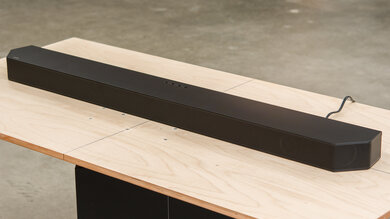
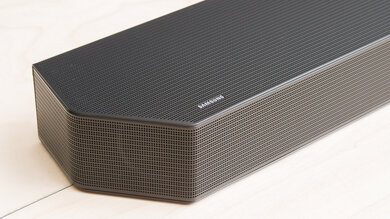
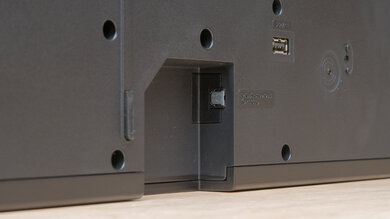
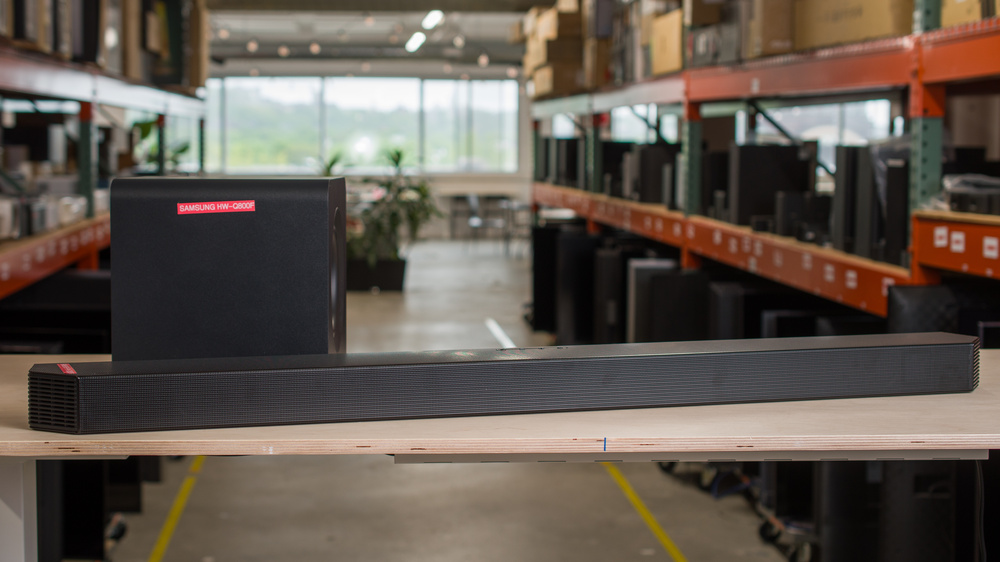
    The Samsung HW-Q800F soundbar has a similar look to its predecessor, the Samsung HW-Q800D. It's a slim, wide bar with a low profile and angled sides. The top and front of the bar are covered in a metal perforated grille, while the side panels feature durable plastic grooves that protect the angled side-firing drivers. The rear and underside of the soundbar are made of hard plastic, which feels robust but not overly thick. A small Samsung logo sits discreetly on the top-left corner, and the physical control buttons are placed on the top panel near the back edge for easy access. A USB port for servicing the soundbar is tucked underneath the unit.

    Style - Subwoofer
    Sub Wireless
    LockedLocked
    Enclosure
    LockedLocked

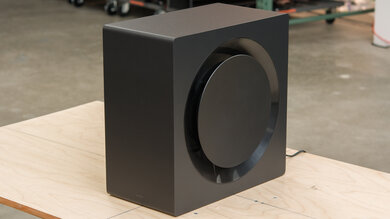
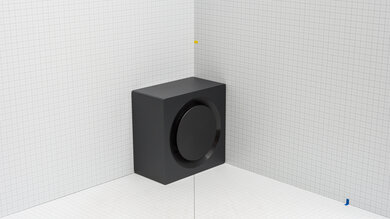
    The Samsung Q800F's subwoofer has a cube-shaped design, which more closely resembles the sub that comes with the Samsung HW-Q990F than the one included with the previous Samsung HW-Q800D. It features an exposed driver and passive radiator, giving it a fairly functional look. The enclosure has a solid build quality, and the all-black finish should help it blend in easily with most home setups.

    Style - Satellites
    Satellite Wireless
    LockedLocked

    The Samsung Q800F doesn't come with satellites.

    Dimensions - Bar
    WidthLockedLock" (Lock cm)
    HeightLockedLock" (Lock cm)
    DepthLockedLock" (Lock cm)

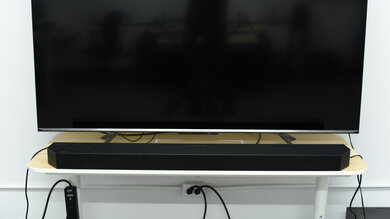
    The bar is a little too wide to fit between the legs of most 65-inch TVs. It can fit beneath some products with a wide and tall stand configuration, such as the Sony BRAVIA 9. That said, its profile is low enough that it won't disrupt your view if you can't fit the bar underneath your TV.

    Dimensions - Subwoofer
    WidthLockedLock" (Lock cm)
    HeightLockedLock" (Lock cm)
    DepthLockedLock" (Lock cm)

    The subwoofer has the same proportions as the one that comes with the Samsung HW-Q990F. It's a fairly compact cube that most people will probably find easier to stow somewhere than the tall rectangular sub that came with the Samsung HW-Q800D.

    Dimensions - Satellites
    WidthLockedN/A
    HeightLockedN/A
    DepthLockedN/A

    This soundbar doesn't come with dedicated satellites.

    Mounting
    Mountable Bar
    LockedLocked
    Bar Brackets Included
    LockedLocked
    Mountable Satellites
    LockedLocked
    Satellite Brackets Included
    LockedLocked

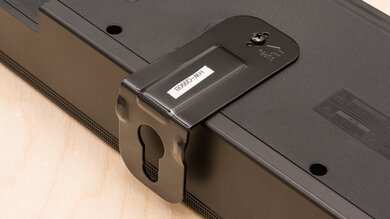
    The Samsung Q800F comes with mounting brackets to attach the soundbar to your wall.

    0.0
    Build Quality

    The Samsung HW-Q800F has an excellent build quality. The soundbar's front and top panels are covered in metal grilles, while the back and sides are made of sturdy plastic that feels durable and well-finished. The onboard control buttons feel solid and responsive, with a satisfying click when pressed. The subwoofer is built from a dense composite material with a matte black finish, and while it feels solid and well-constructed, its exposed active driver and passive radiator on opposite sides may be more susceptible to impact damage. The Q800F's design shares a similar build approach to the higher-end Samsung HW-Q990F, though the Q800F features a smaller bar and a lighter sub, and it comes in a mostly black color scheme compared to the Q990F's gray.

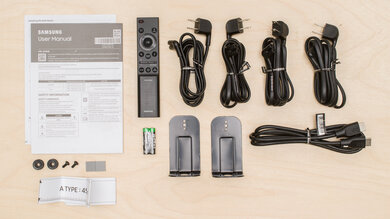
    In The Box

    • Remote with batteries (2x AAA)
    • HDMI cable (4.9 ft/1.5 m)
    • 2x power cord (4.9 ft/1.5 m)
    • 4x rubber feet
    • Wall mount template
    • 2x holder screws
    • 2x wall-mount template with bar brackets
    • 2x screws
    • User guide
    • Quick start guide
    • Roon card
    Sound
    0.0
    Stereo Frequency Response
    SAMPLE
    Create your free account for limited access to pictures & test results
    See details on graph tool
    SAMPLE
    Create your free account for limited access to pictures & test results
    See details on graph tool
    Channels
    5.1.2
    Tested Preset
    LockedLocked
    Slope
    LockedLock
    Standard Error
    LockedLock dB
    Low-Frequency Extension
    LockedLock Hz
    High-Frequency Extension
    LockedLock kHz

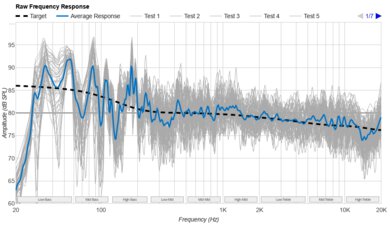
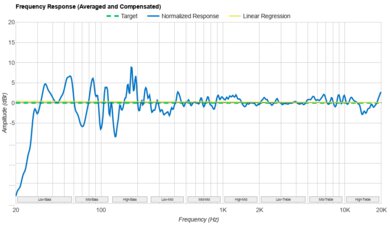
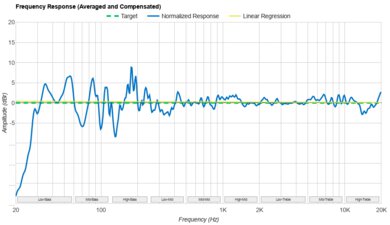
    This soundbar has a great stereo frequency response. We measured it in Standard mode with room calibration turned on. Compared to the previous Samsung HW-Q800D, this offering has a touch of extra warmth and punch in the bass region, but not so much that it overwhelms the mid or treble ranges, which are virtually flat. Vocals sound accurate and true-to-life, and there's no noticeable sibilance or harshness at typical volumes. Standard mode also offers a selection of EQ presets that alter the sound.

    The bar offers three additional listening modes, and you can see a graph of their measurements. In Surround mode, the soundbar upmixes stereo content to create a wider, more immersive soundstage by pushing audio out to the sides. However, this can come at the cost of focus in the center of the image. Adaptive mode also upmixes content but with boosted treble and bass, making it feel more energetic. That said, at higher volumes, this boost can lead to harsh treble and overwhelming bass. Game mode uses a similar upmixing strategy but skips the extra treble and bass boost, resulting in a less fatiguing sound with more controlled dynamics.

    0.0
    Stereo Frequency Response With Preliminary Calibration
    SAMPLE
    Create your free account for limited access to pictures & test results
    See details on graph tool
    Suggested Preset
    LockedLocked
    Suggested Bass Setting
    LockedLock
    Suggested Treble Setting
    LockedLock
    Slope
    LockedLock
    Standard Error
    LockedLock dB
    Low-Frequency Extension
    LockedLock Hz
    High-Frequency Extension
    LockedLock kHz

    This soundbar performed well in our testing room without the need for extra tuning. We left the soundbar in its default Standard mode with room correction running and didn't make any further adjustments. For those who want more control, Standard mode offers a 7-band EQ and a selection of EQ presets, while the other sound modes let you fine-tune the sound using bass and treble sliders.

    0.0
    Stereo Soundstage
    SAMPLE
    Create your free account for limited access to pictures & test results
    See details on graph tool
    Crosstalk Error
    LockedLock dB

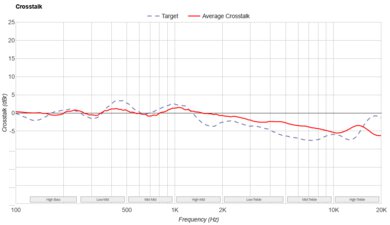
    The Samsung HW-Q800F offers a wide and well-defined soundstage, particularly in Standard mode. The sound comfortably extends a few inches beyond each side of the soundbar, reaching close to the edges of our testing table. It's noticeably wider than the Samsung HW-Q800D in the same mode, with a focused and coherent presentation that avoids any noticeable gaps in the stereo image. While Adaptive mode also creates a wide soundstage through upmixing, it doesn't feel quite as focused as Standard mode.

    0.0
    Stereo Dynamics
    SAMPLE
    Create your free account for limited access to pictures & test results
    See details on graph tool
    SPL @ Max Volume
    LockedLock dB SPL
    DRC @ 90dB
    LockedLock dB
    DRC @ Max Volume
    LockedLock dB

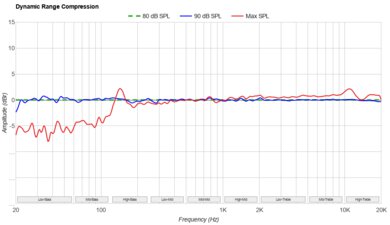
    This soundbar has impressive stereo dynamics performance using its Standard mode. It easily gets loud enough to fill larger rooms with sound, and there's only a little compression at max volume, so your audio will sound clean and pure unless listening at borderline unsafe levels.

    0.0
    Center
    SAMPLE
    Create your free account for limited access to pictures & test results
    See details on graph tool
    Localization
    LockedLocked
    Slope
    LockedLock
    Std. Err.
    LockedLock dB
    SPL @ Max Volume
    LockedLock dB SPL
    Weighted THD @ 80dB
    LockedLock
    Weighted THD @ Max Volume
    LockedLock

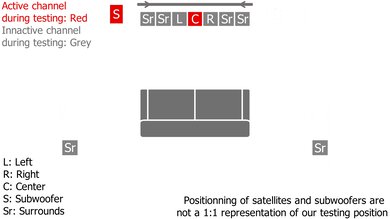
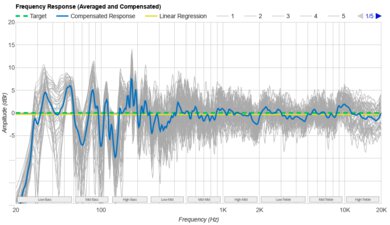
    This soundbar includes a dedicated center channel, which helps keep dialogue and vocals clear and present during action-packed scenes. This channel delivers a balanced and accurate response, especially through the mid-range frequencies where speech typically resides.

    0.0
    Surround 5.1
    SAMPLE
    Create your free account for limited access to pictures & test results
    See details on graph tool
    Localization
    LockedLocked
    Slope
    LockedLock
    Std. Err.
    LockedLock dB
    SPL @ Max Volume
    LockedLock dB SPL
    Weighted THD @ 80dB
    LockedLock
    Weighted THD @ Max Volume
    LockedLock
    7.1 Rears
    LockedLocked

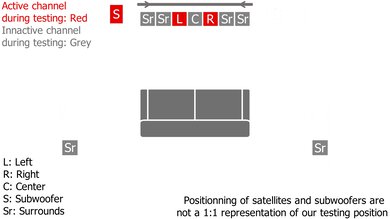
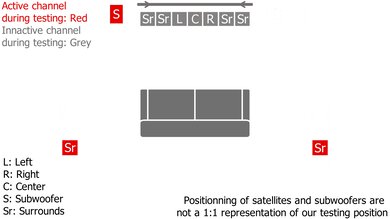
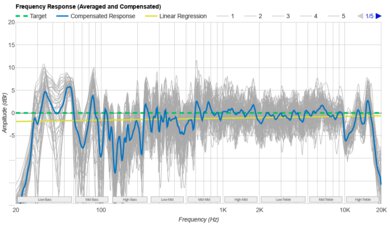
    Since it doesn't offer dedicated satellites, the Samsung HW-Q800F uses side-firing drivers positioned at each end of the bar to simulate surround sound. While this setup creates a wider and more immersive listening experience, the frequency response of the surround channels isn't entirely consistent. The bass is a little boomy, and a dip in the lower-mids can cause mid-range content like dialogue to feel slightly thin. That said, the treble is well-balanced, so sound effects and higher-pitched instruments like violins sound accurately placed within the stereo field.

    0.0
    Height (Atmos)
    SAMPLE
    Create your free account for limited access to pictures & test results
    See details on graph tool
    Localization
    LockedLocked
    Slope
    LockedLock
    Std. Err.
    LockedLock dB
    SPL @ Max Volume
    LockedLock dB SPL
    Weighted THD @ 80dB
    LockedLock
    Weighted THD @ Max Volume
    LockedLock

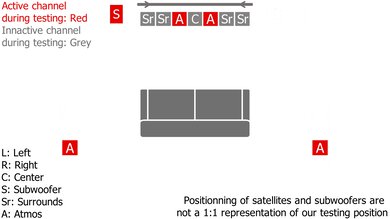
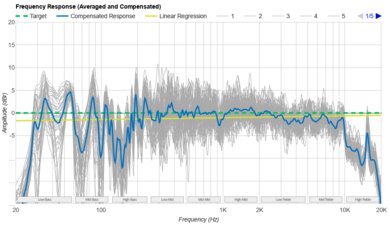
    This soundbar offers passable height performance. It uses two up-firing drivers to bounce sound off your ceiling. Like the Surround drivers, the height drivers have slightly recessed low-mids that can make voices feel a little thin. However, the rest of the mids are well-balanced, so dialogue still sounds clear, even in scenes full of complex sound effects. That said, while the height drivers add some sense of verticality to your audio, it's not enough to make you feel as though sound is coming from above your TV. Still, height cues like flying drones track smoothly across the screen, and the bass is punchy, if lacking a little in low-end rumble. We found Standard mode to sound the most balanced. Adaptive mode adds excitement with boosted bass and treble, which some may enjoy, but it can also make your audio feel a little harsh or boomy at louder levels.

    0.0
    Sound Enhancement Features
    Room Correction
    LockedLocked
    Dialogue Enhancement
    LockedLocked
    Auto-Volume/Night Mode
    LockedLocked
    Subwoofer Level Adjustment
    LockedLocked
    Bass Adjustment
    LockedLocked
    Treble Adjustment
    LockedLocked
    EQ
    LockedLocked
    Surround Level Adjustment
    LockedLocked
    Rear Level Adjustment
    LockedLocked
    Height Level Adjustment
    LockedLocked
    Virtual Surround
    LockedLocked

    The Samsung HW-Q800F offers a wide range of sound enhancement tools to tailor its performance to your preferences and room. It includes SpaceFit Sound Pro, which automatically calibrates audio based on your room's acoustics, and you can also cycle through several listening modes, including Standard, Adaptive Sound, Game, and Surround, each optimized for different content types. In Standard mode, a 7-band EQ is available (accessed by holding the Sound Control button), with additional EQ presets (Normal, Pop, Jazz, and Classical) to fine-tune the sound. Other modes provide Bass and Treble controls instead of the full EQ.

    Additional features include Night mode, which reduces bass and dynamic range for quieter late-night listening, and Voice Enhance, which lifts vocal clarity. There's also Active Voice Amplifier, which monitors external noise in real time and adjusts the center channel so dialogue stays audible. You can control channel levels independently, including Center, Side, and Front Top channels, and enable Moderate Bass, which plays low-end frequencies from the bar instead of the subwoofer, so you're a bit less likely to disturb your neighbors. The bar also supports Audio Sync adjustment to align sound with your display, as well as support for Samsung Q-Symphony, which works with compatible Samsung TV speakers, ostensibly offering you a more immersive listening experience.

    Connectivity
    Inputs/Outputs - Bar
    Optical Audio In
    LockedLocked
    HDMI Out
    LockedLocked
    HDMI 2.1 Class Bandwidth
    LockedLocked
    Full HDMI In
    LockedLocked
    Analog Audio In 3.5mm (Aux)
    LockedLocked
    RCA In
    LockedLocked
    USB for Files
    LockedLocked
    Ethernet
    LockedLocked
    Subwoofer Output
    LockedLocked

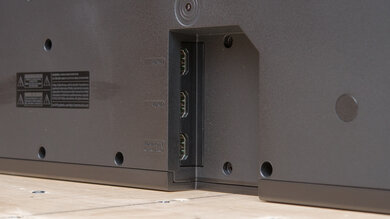
    The bar offers physical connections for eARC, Optical, and Full HDMI In. There's also a USB port for servicing the bar, but there's still no support for HDMI 2.1-class bandwidth and features from Samsung's mid-range offerings.

    0.0
    Audio Format Support: ARC/eARC
    Dolby Atmos
    LockedLocked
    Dolby Digital
    LockedLocked
    Dolby Digital Plus
    LockedLocked
    Dolby TrueHD
    LockedLocked
    DTS
    LockedLocked
    DTS:X
    LockedLocked
    DTS-HD MA
    LockedLocked
    PCM Channels
    LockedLocked

    This soundbar supports all common audio formats via eARC, including Dolby Digital, Dolby Atmos, DTS, and DTS:X.

    0.0
    Audio Format Support: HDMI In
    Dolby Atmos
    LockedLocked
    Dolby Digital
    LockedLocked
    Dolby Digital Plus
    LockedLocked
    Dolby TrueHD
    LockedLocked
    DTS
    LockedLocked
    DTS:X
    LockedLocked
    DTS-HD MA
    LockedLocked
    PCM Channels
    LockedLocked

    This bar's HMDI In port supports all the most common audio formats you'll find on streaming platforms and Blu-rays.

    0.0
    Audio Format Support: Optical
    Dolby Digital
    LockedLocked
    DTS
    LockedLocked
    PCM Channels
    LockedLocked

    This soundbar's Optical input supports Dolby Digital, DTS, and 2.0-channel PCM, making it a convenient option for connecting older gear or devices that don't have HDMI outputs. Just note you'll need to set the TV's output to Pass-Through to access this input format.

    0.0
    Audio Latency: ARC
    SAMPLE
    Create your free account for limited access to pictures & test results
    Samsung HW-Q800F ARC Latency Video Sample
    PCM-2.0 ch
    LockedLock ms
    PCM-5.1 ch
    LockedLock ms
    Dolby MAT (PCM) Atmos
    LockedLock ms
    Dolby Digital
    LockedLock ms
    Dolby Digital Plus
    LockedLock ms
    Dolby Digital Plus Atmos
    LockedLock ms

    The Samsung Q800F has outstandingly low latency over its eARC connection. Most audio formats play back with low enough latency that dialogue stays in sync with the visuals. You can always fine-tune A/V sync using the soundbar's companion app or remote if you run into any issues.

    0.0
    Audio Latency: HDMI In
    SAMPLE
    Create your free account for limited access to pictures & test results
    Samsung HW-Q800F HDMI Latency Video Sample
    PCM-2.0 ch
    LockedLock ms
    PCM-5.1 ch
    LockedLock ms
    Dolby MAT (PCM) Atmos
    LockedLock ms
    Dolby Digital
    LockedLock ms
    Dolby Digital Plus
    LockedLock ms
    Dolby Digital Plus Atmos
    LockedLock ms

    The HDMI In latency of the Samsung Q800F soundbar is superb, so you shouldn't run into lip-sync issues, regardless of the audio format you're using. If you do run into issues, you can use the Audio Sync feature to manually make any adjustments needed.

    0.0
    Audio Latency: Optical
    SAMPLE
    Create your free account for limited access to pictures & test results
    Samsung HW-Q800F Optical Latency Video Sample
    PCM-2.0 ch
    LockedLock ms
    Dolby Digital
    LockedLock ms

    The Optical audio latency is amazing. Audio latency over the Optical connection is slightly higher than over HDMI, which is expected. That said, latency for both PCM and Dolby Digital formats still falls within acceptable ranges.

    0.0
    Video Passthrough To TV
    1080p Max Refresh Rate
    LockedLocked
    1080p @ 4:4:4 Max Refresh Rate
    LockedLocked
    4k Max Refresh Rate
    LockedLocked
    4k @ 120Hz @ 10-Bit
    LockedLocked
    4k @ 4:4:4 Max Refresh Rate
    LockedLocked
    8k Max Refresh Rate
    LockedLocked
    HDR10 Passthrough
    LockedLocked
    HDR10+ Passthrough
    LockedLocked
    Dolby Vision Passthrough
    LockedLocked
    HDMI Forum VRR Passthrough
    LockedLocked
    FreeSync Passthrough
    LockedLocked
    G-SYNC Passthrough
    LockedLocked
    ALLM Passthrough
    LockedLocked

    The Samsung Q800F offers superb video passthrough performance. It supports 4k resolution at up to 60Hz. That said, it only supports chroma 4:4:4 sub-sampling at 4k up to 60Hz and doesn't support Variable Refresh Rate (VRR). It can also pass through 8k video at up to 30Hz. Finally, the soundbar also offers support for HDR and Dolby Vision passthrough.

    0.0
    Wireless Playback
    Bluetooth
    LockedLocked
    Wi-Fi Playback
    LockedLocked
    Chromecast built-in
    LockedLocked
    Apple AirPlay
    LockedLocked
    Spotify Connect
    LockedLocked

    The Samsung Q800F supports a wide array of wireless playback options, making it a versatile hub for streaming audio. It features support for Wi-Fi and Bluetooth playback, Spotify Connect, and Apple AirPlay, giving you plenty of ways to connect your devices. If you own a compatible Samsung TV (2022 or newer), you can also enjoy wireless Dolby Atmos playback over Wi-Fi, eliminating the need for an HDMI cable. Tap Sound lets you play music from your Samsung mobile phone (Android 8.1 or later) simply by tapping it on the left side of the soundbar. Finally, it's also Roon Ready, meaning it integrates with the third-party Roon platform (subscription required), which provides advanced music library management and playback tools. That said, we haven't tested Roon's performance directly.

    Additional Features
    Interface
    Display
    LockedLocked

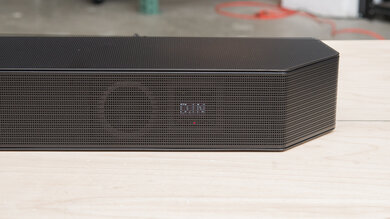
    The soundbar has a small display located on its right-hand side, protected by the front grille. The display can show up to four characters at a time, so it can provide basic feedback like volume level and input source when changes are made. Longer text scrolls across the four-digit screen. Pressing the 'i' button on the remote also reveals the current audio format.

    Bar Controls

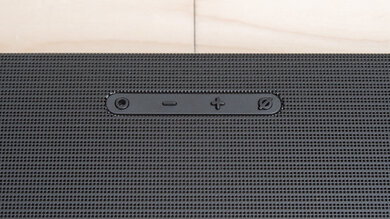
    The top of the bar features four physical buttons for quick access to basic controls. You can adjust the volume, mute or unmute the microphone, and use the multi-function buttons to switch between different input sources.

    Remote

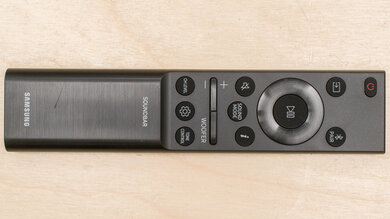
    The remote is virtually the same as the Samsung HW-Q990F's. You can use it to adjust most of the soundbar's functions, but there's an app you can use if you'd prefer, too.

    Voice Assistants Support
    Amazon Alexa
    LockedLocked
    Google Assistant
    LockedLocked
    Apple Siri
    LockedLocked
    Microphone Mute
    LockedLocked

    The Samsung Q800F offers built-in voice assistant support for Amazon Alexa. You can also use your phone's Google Assistant. That said, connecting the bar to Google Home can be a little tricky and requires the use of Samsung's SmartThings app. Google Home also offers fewer ways to control the bar than Samsung's app. Still, it's nice that you can control the bar with your voice, and even mute the mic completely, too.