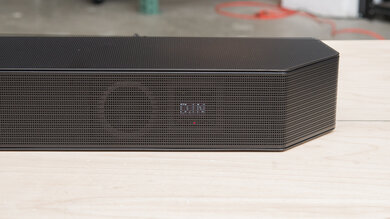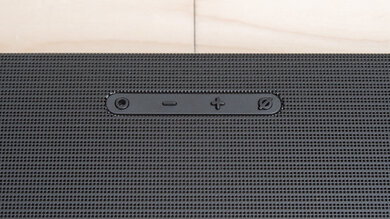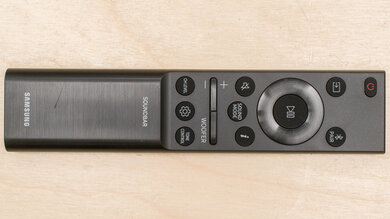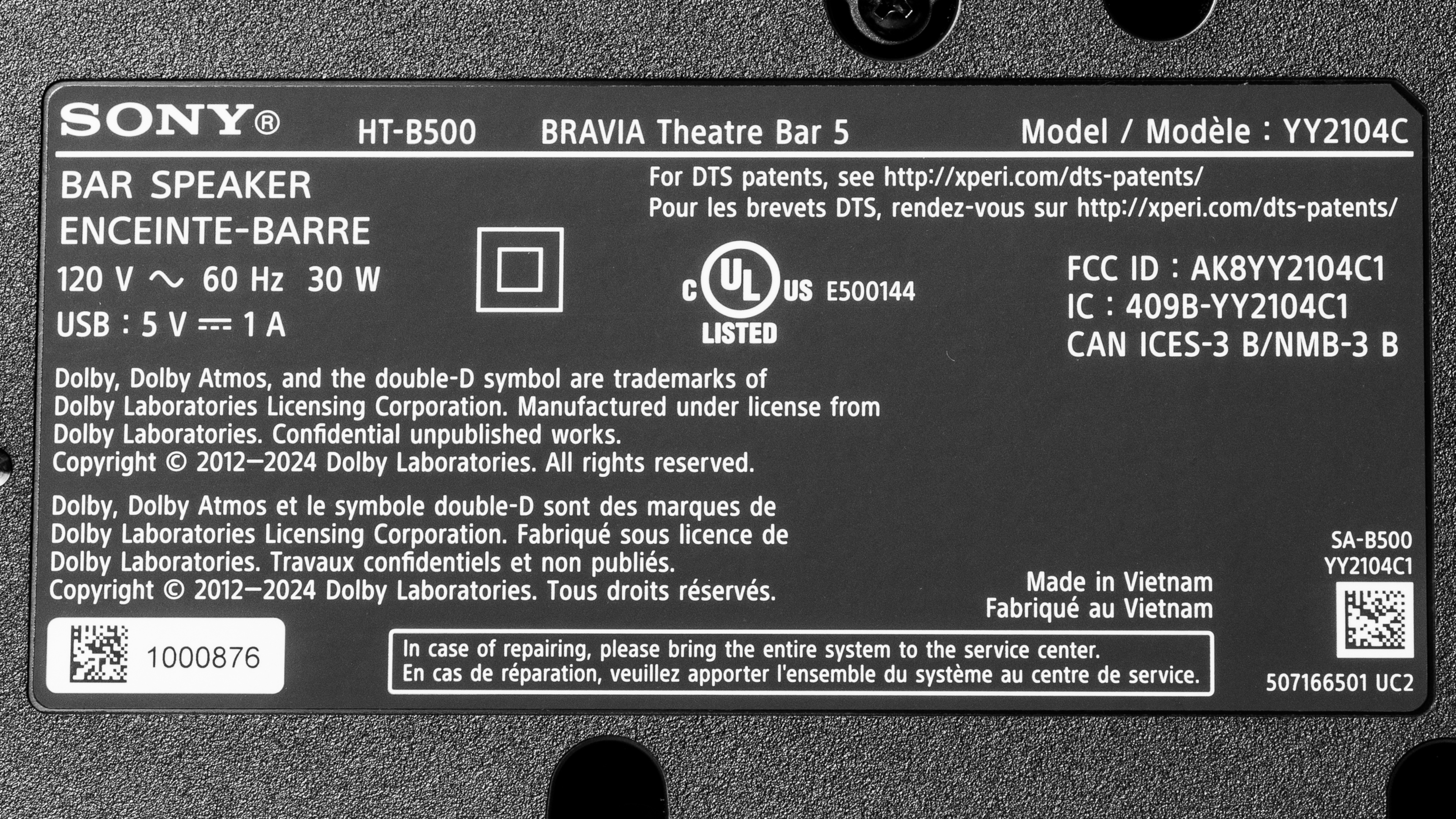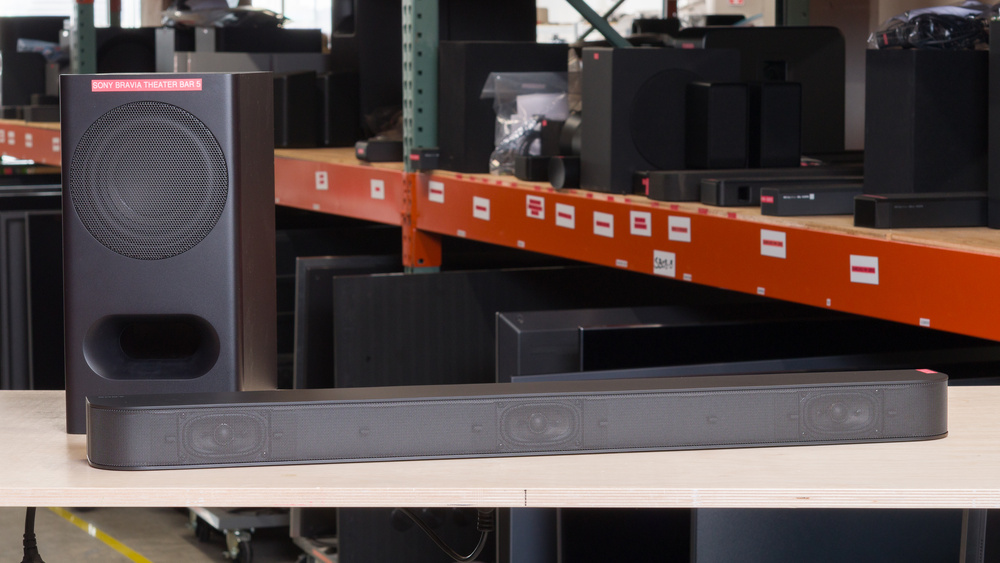
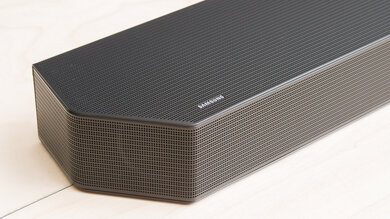
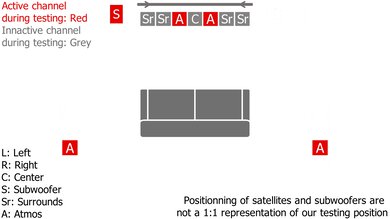
The Sony BRAVIA Theater Bar 5 is a 3.1-channel soundbar with a wireless subwoofer, positioned as a straightforward bar-and-sub upgrade for users who want better audio than their TV's speakers provide, without investing in a larger surround setup. It supports a wide range of Dolby and DTS:X formats, though it must downmix surround and height channels because the system lacks up-firing drivers and dedicated satellites.
Our Verdict
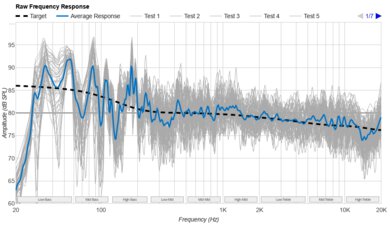
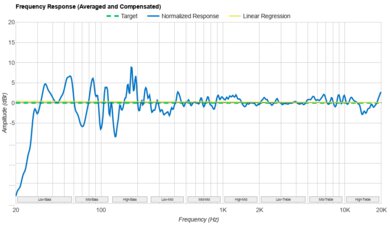
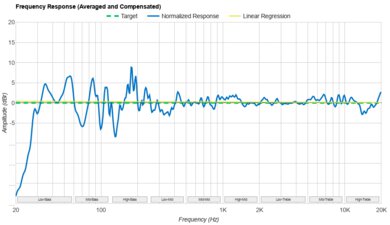
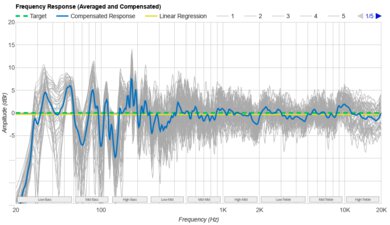
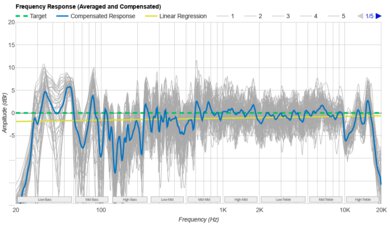
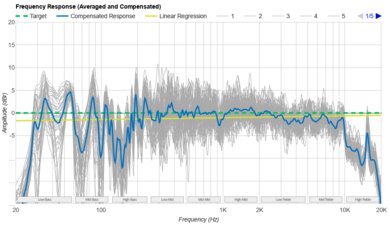
The Sony BRAVIA Theater Bar 5 is decent for mixed usage. It has a good stereo frequency response, accurately reproducing mid-range sounds like voices and instruments. There's also enough bass to ensure kick drums feel punchy, though the bass region isn't very well-defined, so rumbly explosions can feel a bit imprecise. The excellent center channel performance keeps voices front and center of busy mixes, meaning this bar is much better for everyday TV and dialogue-heavy content than immersive movie or music consumption. The system lacks satellites and up-firing drivers, so surround and Atmos content are downmixed and remain rather narrow. There are also only limited sound customization options: you can adjust the bass amount, but not the treble, and there's no proper EQ.
Clear, focused dialogue from its discrete center channel.
Gets loud enough for larger rooms with little compression at typical listening levels.
Supports a wide range of Dolby and DTS formats over eARC.
Relatively compact bar-and-sub setup.
No satellites or up-firing drivers, so surround and Atmos content aren't immersive.
Bass is boomy and imprecise.
Narrow soundstage with uneven tracking.
Limited sound customization, with no EQ, presets, or treble adjustment.
The Sony BRAVIA Theater Bar 5 is great for dialogue and TV shows. Its discrete center channel helps anchor voices to the screen so that dialogue sounds clear, focused, and easy to understand. The balanced mid-range also means voices sound fairly natural, and the bar gets loud without much compression at normal listening levels. You can also enable Voice Mode, Night Mode, and Advanced Auto Volume if you want more control over dialogue or volume changes. But, in general, you won't need to mess around with this bar much to get impressive dialogue audio from it.
Clear, focused dialogue from its discrete center channel.
Gets loud enough for larger rooms with little compression at typical listening levels.
Supports a wide range of Dolby and DTS formats over eARC.
Relatively compact bar-and-sub setup.
No satellites or up-firing drivers, so surround and Atmos content aren't immersive.
No HDMI In ports or video passthrough.
Limited sound customization, with no EQ, presets, or treble adjustment.
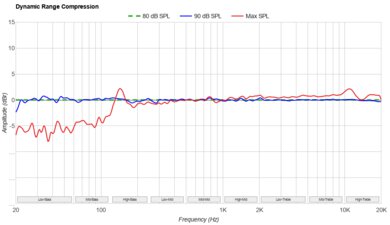
The Sony BRAVIA Theater Bar 5 is decent for music. Its stereo frequency response reproduces mid-range elements like instruments and vocals with plenty of detail, so instruments like strings sound true-to-life. However, its bass is a mixed bag. There's a lot of it for the bar's size, but it sounds boomy and somewhat one-note, and it can bleed into the low mid-range. The stereo soundstage is also narrow and congested, with uneven tracking across the front. That said, the system gets loud and only compresses a little at max volume, so it can handle louder listening levels without losing dynamics. You can reduce the bass level and adjust the subwoofer, but there's no treble adjustment, graphic EQ, or EQ presets on offer.
Clear, focused dialogue from its discrete center channel.
Gets loud enough for larger rooms with little compression at typical listening levels.
Supports a wide range of Dolby and DTS formats over eARC.
Relatively compact bar-and-sub setup.
No satellites or up-firing drivers, so surround and Atmos content aren't immersive.
Bass is boomy and imprecise.
Narrow soundstage with uneven tracking.
Limited sound customization, with no EQ, presets, or treble adjustment.
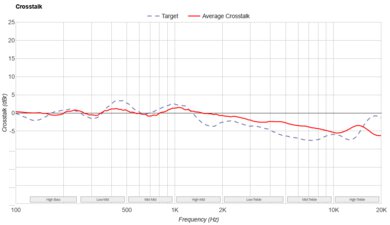
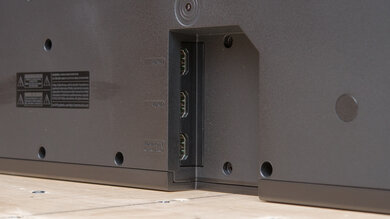
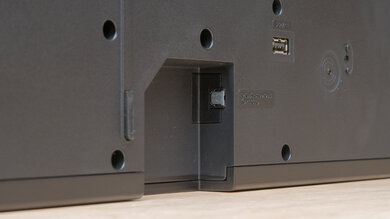
The Sony BRAVIA Theater Bar 5 is satisfactory for movies. It supports a very wide range of audio formats over eARC, including Dolby Atmos, DTS:X, Dolby TrueHD, and DTS-HD MA, and its excellent center channel keeps dialogue clear and focused during busy scenes. It also has great stereo dynamics, so it gets loud enough for movie playback without much compression at typical listening levels. However, it's limited by its 3.1 setup: it doesn't have satellite speakers or up-firing drivers, so 5.1 and Atmos formats are downmixed. That means audio remains in front of you and at bar level, and the bar doesn't create a convincing sense that you're in the middle of a busy action scene. Its subwoofer adds some punch, but it lacks deep rumble and can sound boomy. It's also worth noting that there are no HDMI In ports or video passthrough on offer, so your source devices need to connect to your TV.
Clear, focused dialogue from its discrete center channel.
Gets loud enough for larger rooms with little compression at typical listening levels.
Supports a wide range of Dolby and DTS formats over eARC.
Relatively compact bar-and-sub setup.
No satellites or up-firing drivers, so surround and Atmos content aren't immersive.
Bass is boomy and imprecise.
Narrow soundstage with uneven tracking.
No HDMI In ports or video passthrough.
Check Price
Popular Soundbar Comparisons
The Sony BRAVIA Theater Bar 5 is best understood as a compact, BRAVIA TV-friendly upgrade over your existing TV speakers, rather than as a true surround system. Compatible BRAVIA TVs add useful integration features like BRAVIA Sync, Quick Settings control, and Voice Zoom 3, which lets you adjust voice levels separately from the overall mix. Within Sony's own lineup, it sits below the more immersive BRAVIA Theater options, trading surround hardware for a simpler 3.1 setup with a wireless sub and broad Dolby and DTS support over eARC. It's a good fit if you mostly want deeper bass, clearer dialogue, and louder volume than your TV can provide, but it's not the best choice if you want convincing surround or Atmos effects.
Against the wider soundbar market, the Sony's biggest problem is that several similarly positioned bars offer more flexibility or immersion. The JBL Bar 500MK2 is the more complete bar-and-sub alternative, offering a more immersive soundstage, deeper, more controlled bass, and a more comprehensive set of audio adjustment tools, like a 7-band EQ. Similarly, while the Samsung HW-B750F also doesn't have satellites, its side-firing drivers deliver a greater sense of space and depth, though it can't match Sony's superb eARC support. If you have room for satellites, the Vizio SV510X-0806 and Hisense AX5140Q make more sense for movies, since they offer actual surround speakers; in fact, the Hisense goes further with up-firing drivers. Ultimately, the BRAVIA Theater Bar 5 is easiest to recommend to BRAVIA TV owners or anyone looking for a low-fuss TV speaker replacement with strong dialogue and decent bass. If you care more about surround immersion, sound customization, wireless streaming, or using the bar as an HDMI hub, there are better options in this price range.
Check out the best soundbars under $500, the best budget soundbars, and the best soundbars with a subwoofer.
The Samsung HW-B750F and the Sony BRAVIA Theater Bar 5 are both straightforward soundbar-and-subwoofer setups, but they have different strengths. The Samsung's side-firing drivers mean it delivers a more immersive sense of space, and can reproduce 5.1 audio without downmixing it to stereo, unlike the Sony. The Samsung also offers slightly deeper, better-controlled bass and comes with more sound customization options, including bass and treble controls, sound modes, and a 7-band EQ. It also has an HDMI In port, though its video passthrough and audio format support are limited compared to more premium bars. The Sony's main advantage lies in its broad format compatibility via ARC. The Sony supports Dolby Digital and Dolby Atmos, along with DTS and DTS:X, while the Samsung only supports Dolby Digital and DTS playback via eARC.
The Sony BRAVIA Theater Bar 5 and the Sonos Beam (Gen 2) are both compact soundbar systems, but they target slightly different buyers. The Sonos is a compact, premium all-in-one bar built around the Sonos ecosystem, with Wi-Fi streaming, Apple AirPlay, Spotify Connect, Trueplay room correction via iOS, and built-in Amazon Alexa and Google Assistant. It also creates a much wider stereo soundstage than the Sony, despite its small size. On the other hand, the Sony offers a dedicated subwoofer, so it offers more low-end punch for movies and TV. It also gets louder than the Sonos, making it a better fit for larger rooms. In general, the Sonos is the better pick if you're already invested in the Sonos ecosystem, while the Sony is best for those who're most interested in upgrading their TV speaker to a system with a stronger bass.
The Vizio SV510X-0806 and the Sony BRAVIA Theater Bar 5 are similarly compact, relatively affordable soundbar systems, but the Vizio is the better fit for surround content thanks to its dedicated satellite speakers. Those discrete satellites help create a more immersive surround presentation than the Sony. The Vizio also offers more sound adjustment options, including bass, treble, center, surround, height, and subwoofer controls, though it lacks a graphic EQ. On the other hand, the Sony comes with a dedicated remote, so you don't have to depend on a smartphone app for more detailed adjustments, and it also gets a bit louder than the Vizio. The choice probably comes down to space: if you've enough room for dedicated satellites, get the Vizio. If not, the Sony is a little easier to fit in small rooms.
The Sony BRAVIA Theater Bar 5 and the JBL Bar 500MK2 are both bar-and-sub systems without dedicated satellites or up-firing drivers, but the JBL is the more complete all-rounder. Its 5.1 configuration uses side-firing drivers to create a wider soundstage, and its larger subwoofer delivers deeper, more controlled low-end rumble than the Sony's boomier, imprecise bass. The JBL also has HDMI In, video passthrough, Wi-Fi streaming, room correction, and a 7-band EQ, all of which the Sony lacks. That said, the Sony still has excellent dialogue clarity, broad Dolby and DTS support over eARC, and simpler BRAVIA TV integration, so it's a solid pick if you mostly want a compact TV-speaker upgrade.
Test Results
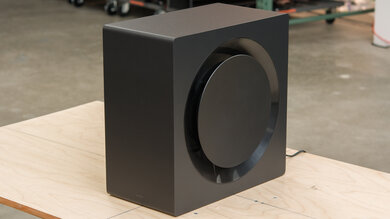
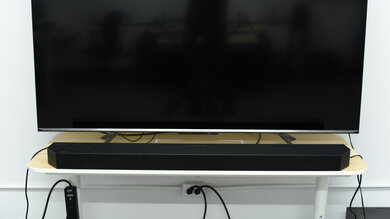
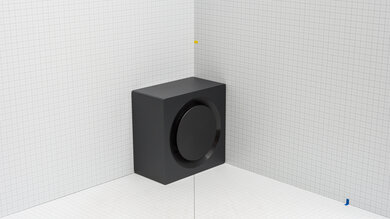
for pictures & test results
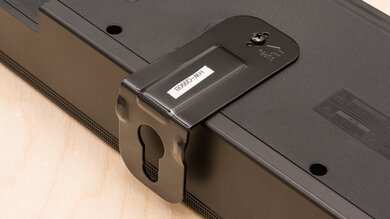
for pictures & test results
for videos & test results