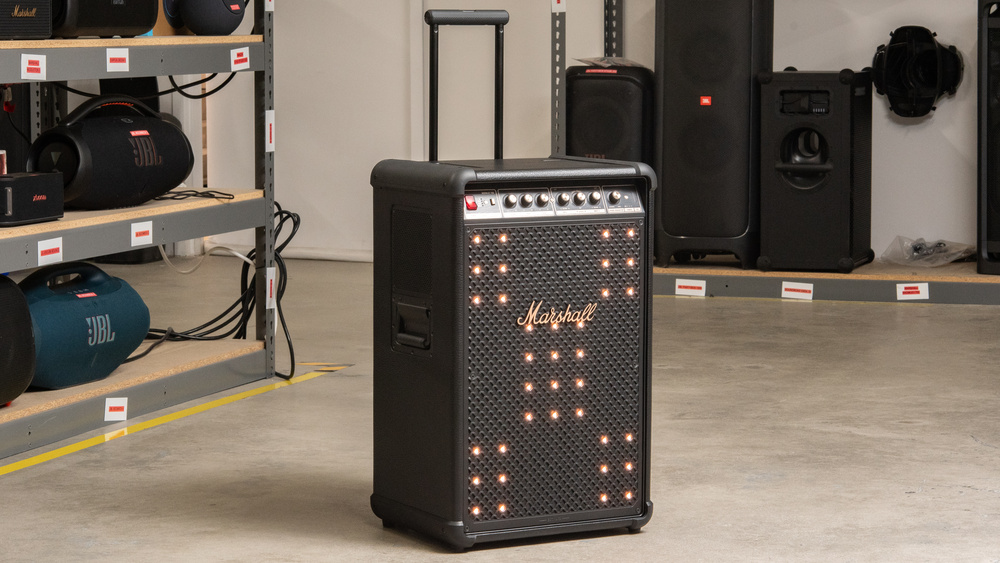
The Marshall Bromley 750 is a large, battery-powered party speaker designed to deliver extremely loud sound. Its design leans heavily on Marshall's signature guitar amplifier aesthetic. In addition to Bluetooth playback, it offers extensive wired connectivity, including XLR inputs and daisy chaining, making it more versatile than most consumer speakers. It's priced to compete at the top end of the party speaker category, competing with other large party speakers from the likes of JBL.
Our Verdict
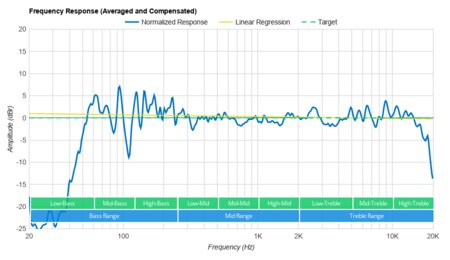
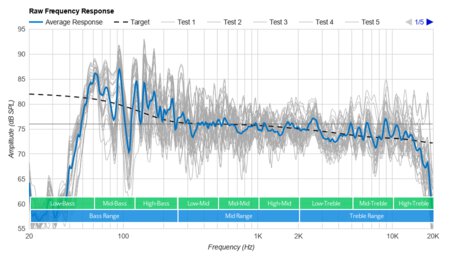
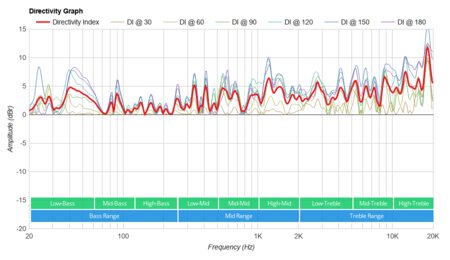
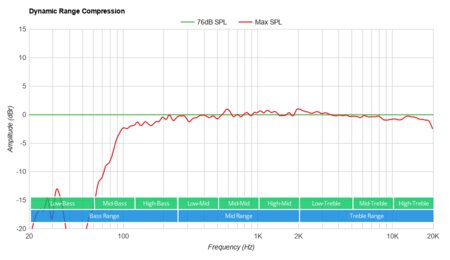
The Marshall Bromley 750 is decent for listening to music. This large, heavy speaker gets loud enough to fill large rooms with your favorite tunes, and even at full blast, it doesn't compress your audio too much. Kick drums come through with plenty of punch and boom, thanks to the massive bass-range emphasis. Voices can also sound a touch thin, though, as the mid-range is underemphasized relative to the exaggerated bass. The directivity is satisfactory for a party speaker, as it can reproduce audio quite consistently across different listening angles, save for some treble roll-off when you're positioned to the side.
Sounds similar regardless of your listening angle.
Gets loud enough to fill large rooms and open spaces with sound.
Very heavy and difficult to transport.
Voices can sound a bit thin.
The Marshall Bromley 750 speaker is okay for videos and movies. It has a massively over-emphasized bass range that lends excitement to chase sequences and explosions. That said, this can overwhelm dialogue and speech, especially in busier sequences. Still, the speaker gets loud enough to fill large spaces like garages with sound, and does so with little compression. It also sounds quite similar regardless of your listening angle, so you can place it wherever is most convenient in your space without worrying too much about sound quality taking a big hit. Latency is also fairly low with both iOS and Android, so you shouldn't run into many lip-sync issues, though different apps and devices compensate for latency in different ways.
Sounds similar regardless of your listening angle.
Gets loud enough to fill large rooms and open spaces with sound.
Very heavy and difficult to transport.
Voices can sound a bit thin.
The Marshall Bromley 750 is okay for listening to podcasts. It gets loud enough to fill even the largest living rooms with audio, so you'll always be able to hear your favorite host's voice. That is, unless you have to leave the room. This speaker is very heavy and impractical to carry from room to room. It's meant to soundtrack your party from a single location, not accompany you around your house as you tidy up before the big event. Still, since it supports multi-device pairing, you can easily switch between a couple of devices without an onerous Bluetooth re-pairing period.
Sounds similar regardless of your listening angle.
Gets loud enough to fill large rooms and open spaces with sound.
Very heavy and difficult to transport.
Voices can sound a bit thin.
The Marshall Bromley 750 does not have a built-in microphone, so it doesn't support your phone's voice assistant.
The Marshall Bromley 750 is good for outdoor use. It gets loud enough to fill an area like a garden with sound, making it a good choice for soundtracking a summer BBQ party. And it sounds quite similar from different listening angles, with only some minor treble roll-off if you're positioned to the side. Its bass-heavy sound will suit fans of hip-hop and techno, though you might find that vocals and lead instruments get eclipsed by the boosted bass.. It has an 18-hour battery life and an IP54 rating, so you can get a few splashes of water on it without issue, though you wouldn't want to leave it outside in a downpour. The main downside to outdoor use is this speaker's size: it's large and heavy. So while it's great for that garden party, you can't easily take this speaker to the park or on a hike.
IP54 rating means it can withstand splashes of water.
Very heavy and difficult to transport.
Changelog
-
Updated Sep 25, 2026:
We referenced the JBL PartyBox 330 in the Portability box.
- Updated Sep 22, 2026: This review has been updated to Test Bench 1.0.1. This includes the Test Bench 1.0 updates to all of our Sound tests: Frequency Response Accuracy, Raw Frequency Response, Directivity, and Loudness, as well as the revised Low-Frequency Extension calculation and related DRC updates introduced in Test Bench 1.0.1. There have also been text changes throughout the review, including to the usages and product comparisons, where applicable, to match these results. You can read more about these changes in our Test Bench 1.0 changelog and Test Bench 1.0.1 changelog.
-
Updated Sep 08, 2026:
We've retested this speaker's loudness, using the 'Loud' setting of the sound character knob, rather than the 'Dynamic' testing we used for the other sound tests. This yielded a much higher top volume.
- Updated Sep 03, 2026: This review has been updated to Test Bench 1.0, which includes new results for all of our Sound tests: Frequency Response Accuracy, Raw Frequency Response, Directivity, and Loudness. There have also been text changes made throughout the review, including to the usages and product comparisons, to match these results. You can read more about these changes in our changelog.
Check Price
Differences Between Sizes And Variants
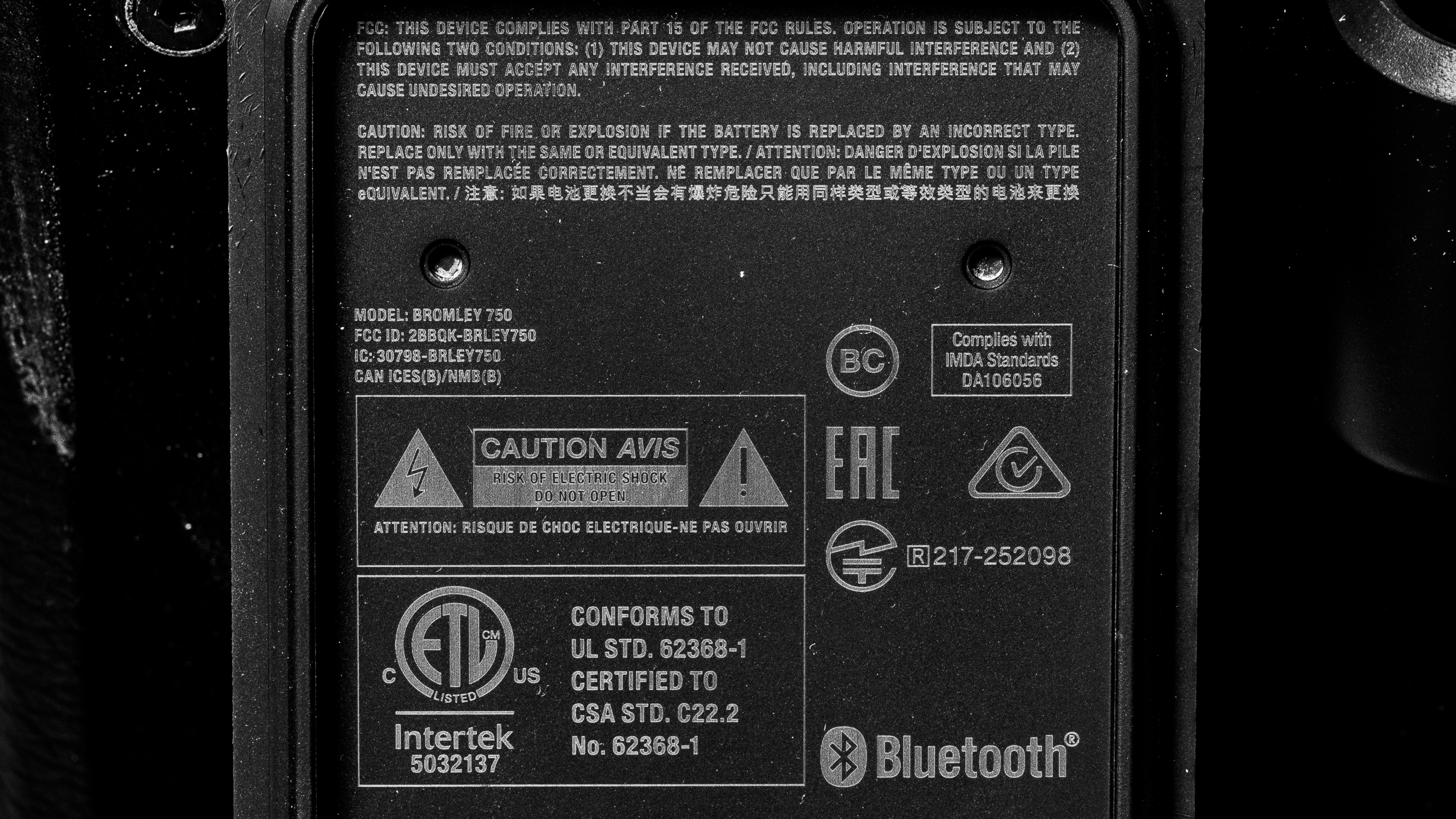
The Marshall Bromley 750 comes in one colorway: 'Black and Brass'. Here's a picture of our unit's label.
If you encounter another variant of this speaker, let us know in the comments, and we'll update our review.
Popular Speaker Comparisons
The Marshall Bromley 750 sits at the high end of the portable party speaker category, both in terms of size and price. It's noticeably heavier than similarly sized speakers like the popular JBL PartyBox Stage 320, but it offers higher output volume, longer advertised battery life, and more extensive wired connectivity, including combo XLR/instrument inputs. At the other end of the size and weight range, the battery-powered Marshall is easier to transport than the Sony ULT TOWER 9AC. But the Sony gets similarly loud and also delivers a bass-heavy sound, though it compresses your audio a fair bit at max volume. The Sony version we tested also runs only on AC power. In terms of size and weight, the Marshall's closest rival might be the similarly-sized JBL PartyBox 520. The PartyBox 520 has more low-bass, and its frequency response is more balanced overall, but it has a shorter battery life and worse directivity.
If you're looking for more options, check out the best speakers for parties, the best karaoke speakers, and the best Bluetooth speakers.
The Marshall Bromley 750 and Marshall Bromley 450 are very similar speakers. The 750 is larger and less portable, and trades in the 450's rubber handle for a telescoping handle and wheels. Both have the same wide wired connectivity, which includes XLR in, USB-C in, and AUX in and out ports. Both devices have similar battery lives and above average directivity, with consistent audio regardless of your listening angle. That said, the smaller 450 has better water resistance with an IP55 rating compared to the 750's IP54. The 750 can get quite a bit louder when used in 'Loud' mode though.
The JBL PartyBox 1000 and Marshall Bromley 750 are both heavy, expensive, party-oriented speakers with an array of mic and guitar inputs. However, they have different strengths. The much larger JBL produces more bass and can reach higher volumes than the Marshall. But the JBL is limited to AC power, whereas the Marshall can run for up to 18 hours on its built-in battery. The Marshall also plays back stereo audio without downmixing it to mono, and its sound doesn't change much with your listening angle. The JBL has forward-facing drivers, so your audio sounds muffled if you're behind it.
Though from the same brand, the Marshall Woburn III and Marshall Bromley 750 target different audiences. The Woburn III is much smaller and lighter. In theory, that makes it easier to transport, but it doesn't have a built-in battery, so that's only a boon come moving time. On the other hand, the Bromley 750 offers 18 hours of battery life and an array of wired ports, including combo XLR/instrument inputs. The Bromley has better directivity, though, so audio sounds fairly similar regardless of your listening angle, and it gets much louder.
Unlike the battery-powered Marshall Bromley 750, the JBL PartyBox 710 only runs on A/C power. The JBL is also the larger and heavier speaker. If those aren't dealbreakers, the reward is a much fuller-sounding speaker with plenty of rumbly, deep bass on offer. On the other hand, if you need a slightly more portable option, the Marshall still puts out decently punchy bass. It also has decent directivity, so your audio sounds quite similar regardless of your listening option. Both speakers have mic and instrument inputs, but only the Marshall has XLR inputs.
Test Results

for pictures & test results
for pictures & test results

for pictures & test results