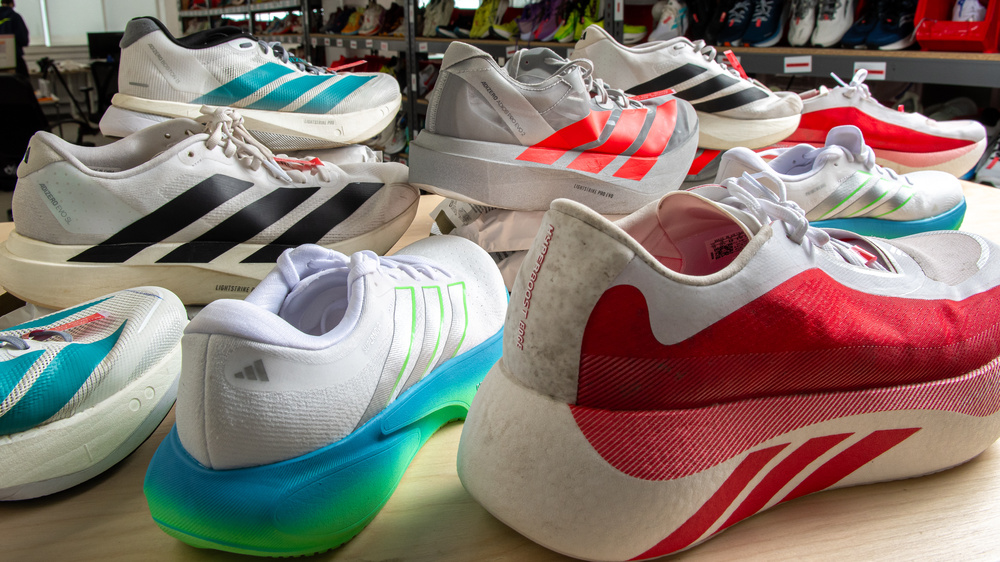
Adidas traces its running roots to Adi Dassler's early performance footwear, before the brand was officially founded in Germany in 1949. Since then, it has grown into one of the most influential names in running shoes, with a well-organized current lineup and few notable misses among its recent models. The brand covers everything from daily trainers to race-day shoes, plus versatile models that have redefined those categories. More recently, the Three Stripes have become synonymous with innovation, especially in midsole compounds through the use of lightweight, energetic TPEE-based foams like Lightstrike Pro.
We've tested over 245 running shoes; below are our recommendations for the best adidas running shoes you can buy. Whether you want a dependable shoe for daily mileage, a faster option for workouts, or a serious racing shoe, adidas has something for your needs. If you're just looking for the best shoe overall, check out our picks for the best running shoes.
Updates
- 09/22/2026 adidas Adizero Adios Pro 5 reviewed
- 09/18/2026 adidas Adizero Adios Pro Evo 3 reviewed
- 08/12/2026 adidas Questar 4 reviewed
- 08/12/2026 adidas Zenboost reviewed
- 08/05/2026 adidas Runfalcon 6 CLOUDFOAM reviewed
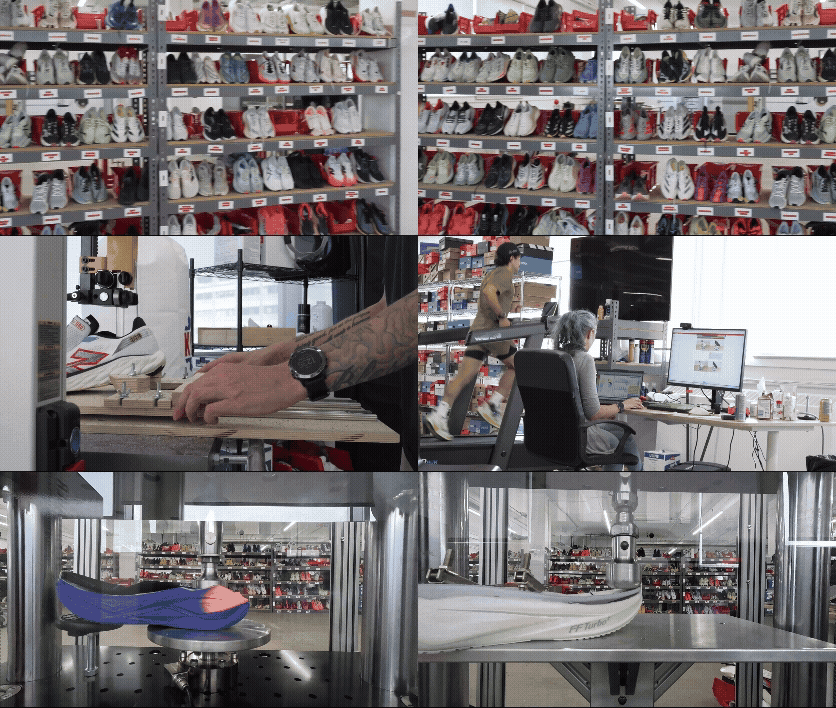
We've bought and tested more than 250 running shoes. Every pair purchased with our own money, never supplied or sponsored by brands. Our data-driven tests are designed to go beyond marketing claims, and since every shoe goes through the exact same methodology, you can directly compare results to find the right pair for your needs.
-
Best adidas Running Shoes
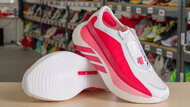
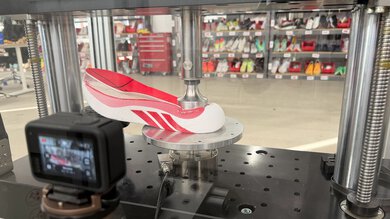
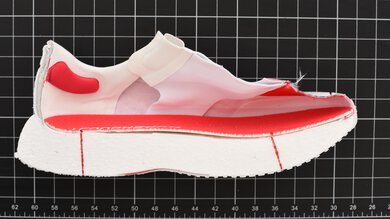
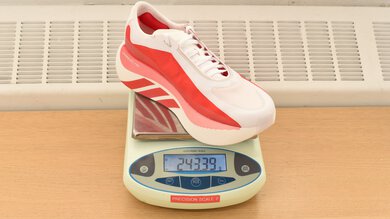
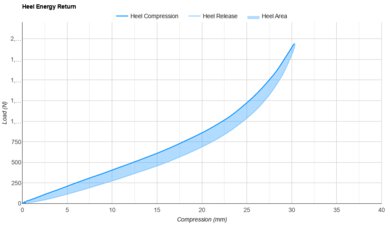
 Half/Full Marathon Racing7.95K/10K Racing6.6Long Run7.9Daily Training7.9Energy Return8.1Stability6.6Cushioning9.2Bounciness7.6Snappiness6.9Roll7.7True To Size8.9Weight:245.5 g (8.66 oz)Heel Stack Height:43.3 mmHeel-To-Toe Drop:7.5 mmSee all our test resultsPlate:None
The best adidas running shoes we've tested are the adidas Hyperboost Edge. This high-stack, unplated trainer is built for easy miles, recovery runs, and longer efforts. It's the brand's most complete comfort-focused trainer, with outstanding impact protection, a plush forefoot, and a lively ride that feels fun and consistently bouncy without the stiff, aggressive feel of a plated super trainer. It isn't the lightest or most aggressive shoe for faster workouts, and the upper sits fairly high around the ankle, which can be bothersome and could lead to rubbing depending on your foot shape. Still, this doesn't take away from its main appeal: it's a forgiving, energetic shoe with the deep cushioning and bounce needed for big-mileage weeks.
-
Most Versatile adidas Running Shoes

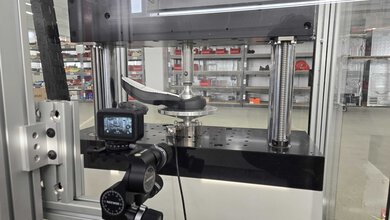
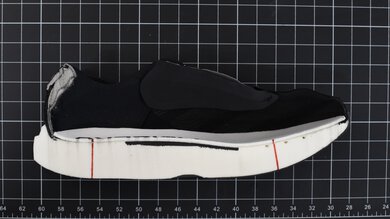
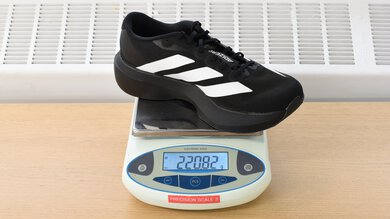
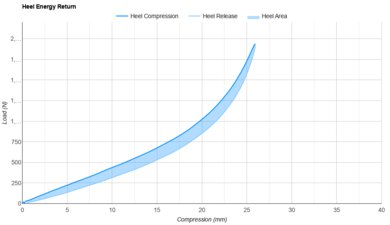 Half/Full Marathon Racing7.65K/10K Racing7.3Long Run7.3Daily Training7.4Energy Return8.3Stability6.6Cushioning8.0Bounciness7.0Snappiness7.0Roll6.7True To Size8.9Weight:220.0 g (7.76 oz)Heel Stack Height:36.9 mmHeel-To-Toe Drop:6.7 mmSee all our test resultsPlate:Plastic Shank
The adidas Adizero Evo SL redefined what runners could expect from a trainer, and it's the brand's most versatile shoe. Its lively platform can feel a bit chaotic at slower paces and less forgiving than the adidas Hyperboost Edge for recovery days, but its full Lightstrike Pro midsole still delivers a very energetic ride without the stiffness of a full carbon-plated super shoe. Upon release, it quickly became one of the most talked-about shoes on the market. By putting its premium Lightstrike Pro racing foam into a lightweight, unplated package, adidas created a lively, bouncy shoe with absurd versatility, capable of handling daily runs, uptempo work, intervals, and even some racing.
If you want a simpler, more traditional daily trainer, consider the adidas Supernova Rise 3. It isn't as lively or light as the Evo SL, but it feels calmer and more approachable for easy miles. Its broad, planted platform feels very stable and predictable underfoot, though its limited cushioning makes it better suited to shorter daily runs than outings much beyond 10K (6 miles).
If you're looking for a beginner shoe to get started, check out our picks for the best running shoes for beginners.
-
Best Budget adidas Running Shoes
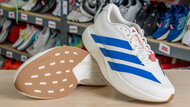
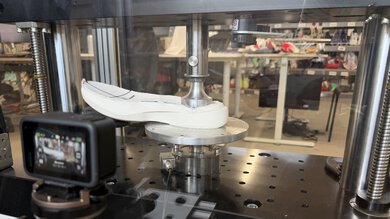
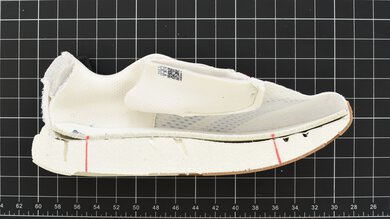
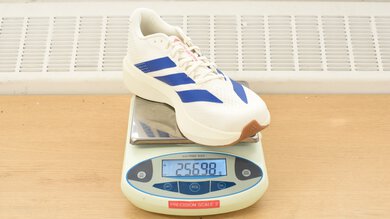
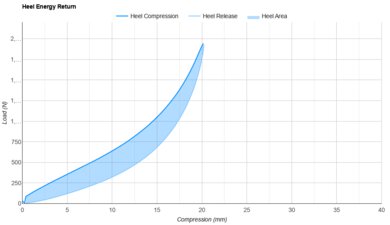 Half/Full Marathon Racing5.85K/10K Racing6.2Long Run6.4Daily Training7.2Energy Return1.2Stability7.7Cushioning6.5Bounciness3.1Snappiness4.9Roll6.5True To Size9.7Weight:255.0 g (8.99 oz)Heel Stack Height:36.7 mmHeel-To-Toe Drop:6.5 mmSee all our test resultsPlate:None
The best budget adidas running shoes we've tested are the adidas Adizero Pacer. It's a straightforward option for shorter, easy runs, with a firm midsole and broad forefoot that create a stable, controlled ride. The unplated design keeps things simple and predictable underfoot, and it offers adequate impact protection for lighter daily mileage. However, the cushioning feels harsh as the distance increases, and the flat, sluggish ride makes it poorly suited to faster workouts and long runs. The adidas Adizero Evo SL costs a bit more but is a much lighter, more cushioned, and more energetic option for runners who can stretch their budget.
For more budget-friendly options, check out our picks for the best cheap running shoes.
-
Best adidas Running Shoes For Stability
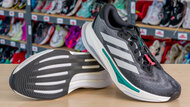
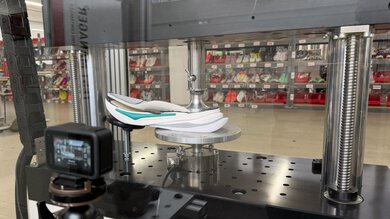
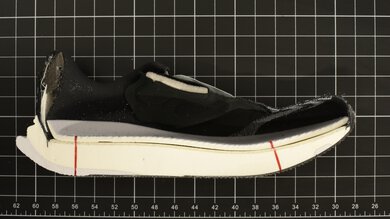
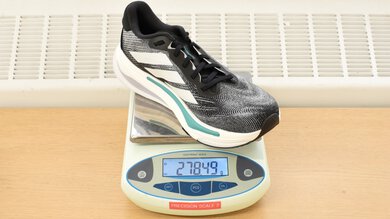
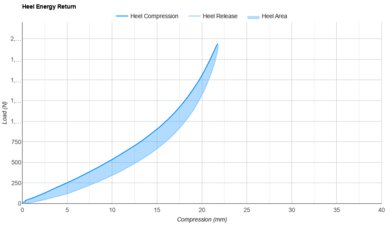 Marathon Racing6.35K/10K Racing6.3Energy Return7.0Cushioning6.7Lateral Stability8.0Weight:278.7 g (9.83 oz)Heel Stack Height:36.3 mmHeel-To-Toe Drop:7.6 mmSee all our test resultsPlate:None
If you need a stable shoe for your daily miles, the adidas Supernova Prima 2 is a dependable option. It keeps things predictable and pleasingly unfussy, with a broad platform that helps you feel planted and adequate impact protection for regular runs, while the light sense of bounce keeps it from feeling completely dull. It doesn't have the lively pop of the adidas Adizero Evo SL or the plush protection of the adidas Hyperboost Edge, and the ride is significantly firmer than both. Still, for runners who value a steady, dependable platform over fireworks underfoot, the Prima 2 makes plenty of sense for easy daily mileage.
-
Best adidas Running Shoes For Long Runs
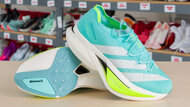
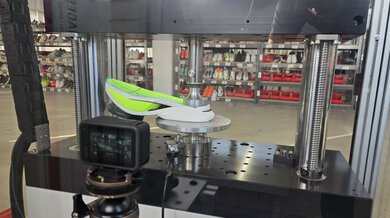
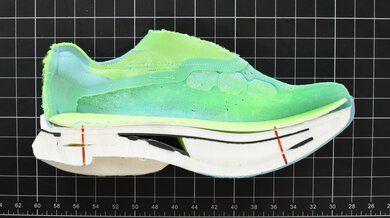
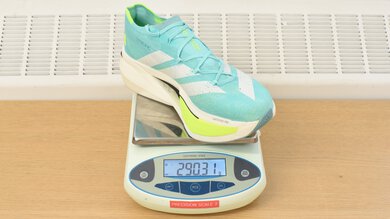
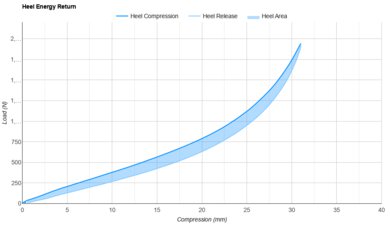 Half/Full Marathon Racing7.55K/10K Racing6.8Long Run7.9Daily Training6.3Energy Return8.6Stability6.1Cushioning9.2Responsiveness8.8True To Size7.7Weight:291.6 g (10.29 oz)Heel Stack Height:48.4 mmHeel-To-Toe Drop:10.3 mmSee all our test resultsPlate:Carbon Fiber
The adidas Adizero Prime X3 STRUNG is the shoe to get if you want adidas' most outrageous super trainer, and it’s our top pick from the brand for long runs. True to its looks, it's a supercar underfoot, pairing a colossal slab of Lightstrike Pro with a carbon plate and carbon-infused rods to create a hugely cushioned, exceptionally responsive ride. The trade-off is that it's quite heavy, tall, and not especially stable underfoot, so it isn't the shoe for slow, sleepy miles. The adidas Hyperboost Edge is the better choice for easy long runs, while the Prime X shines during faster long runs, progression runs, and marathon-pace efforts, particularly if you land toward the forefoot and can load the front of the shoe properly. It can also handle races, though it doesn't comply with World Athletics super shoe regulations, which won't matter for most runners. For those wanting the most tech adidas can cram beneath their toes, the Prime X3 STRUNG is the shoe for you.
For more shoes built to go the distance, check out our recommendations for the best long-distance running shoes.
-
Best adidas Running Shoes For Intervals

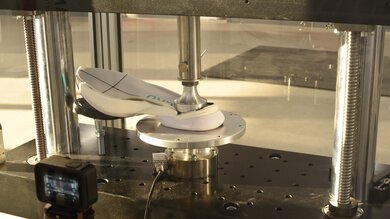
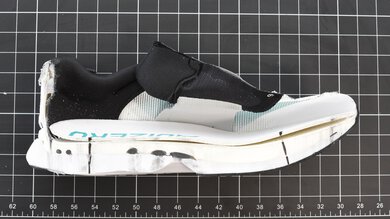
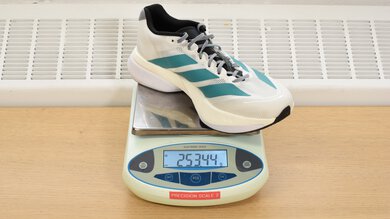
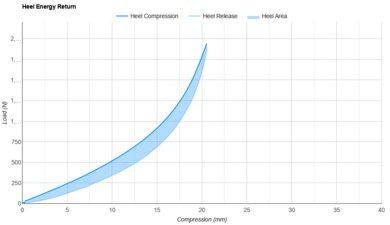 Half/Full Marathon Racing6.95K/10K Racing7.4Long Run6.8Daily Training5.9Energy Return7.6Stability7.6Cushioning6.3Responsiveness7.7True To Size9.1Weight:252.2 g (8.90 oz)Heel Stack Height:35.9 mmHeel-To-Toe Drop:6.8 mmSee all our test resultsPlate:Fiberglass Rods
The adidas Adizero Boston 13 is a plated super trainer and proof that, after thirteen iterations, the old dog still knows a few tricks. It's the best adidas running shoe we've tested for faster training sessions, sharing some elements of the adidas Adizero Prime X3 STRUNG, including Lightstrike Pro foam and adidas' ENERGYRODS. However, its firmer carrier foam and lower stack make it feel far more direct and connected to the road. It gives up a huge amount of cushioning and long-run comfort compared to both the adidas Adizero Prime X3 STRUNG and the adidas Hyperboost Edge, but it's lighter, more stable, and easier to handle when picking up the pace. For runners who prefer their speed delivered with a bit of old-school honesty rather than towering stacks of foam, the Boston 13 still has plenty to offer.
-
Best adidas Running Shoes For Racing

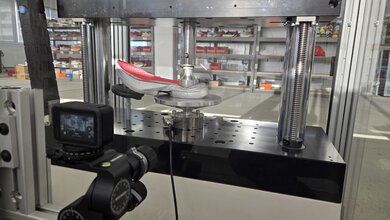
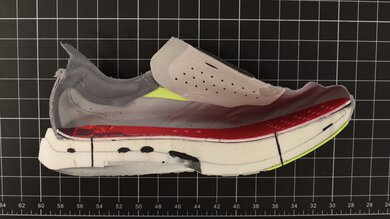
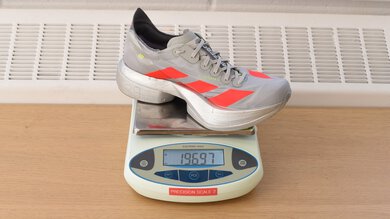
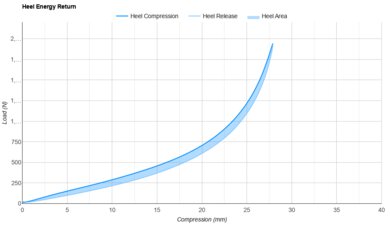 Half/Full Marathon Racing8.15K/10K Racing7.9Long Run7.2Daily Training6.0Energy Return8.8Stability5.5Cushioning7.9Bounciness7.7Snappiness7.8Roll8.0True To Size8.8Weight:197.5 g (6.97 oz)Heel Stack Height:39.5 mmHeel-To-Toe Drop:7.0 mmSee all our test resultsPlate:Carbon Fiber Rods
The adidas Adizero Adios Pro 4 is built to get you from the start line to the finish line as quickly as possible, and it's the best adidas running shoe for racing we've tested. Compared to the adidas Hyperboost Edge, it gives up a significant amount of cushioning and easy-run comfort in exchange for a lighter, more agile ride that's far more at home on race day. It uses adidas' premium Lightstrike Pro midsole alongside carbon-infused rods, and the cushioning remains excellent, the responsiveness impressive, and the platform suitable for a broad range of strike patterns, making it the safest super shoe recommendation in adidas' lineup. If the Hyperboost Edge is adidas at its most comfort-focused, the Adios Pro 4 is adidas at its most focused.
For an elite-focused racing option, check out the adidas Adizero Adios Pro Evo 2. It's adidas' top race-day shoe, designed primarily for elite runners who want the lightest, most efficient option possible. Its unbelievably low weight, pronounced rocker, and highly responsive ride make it one of the most advanced marathon racing shoes on the market. However, it's also highly impractical for most runners compared to the Adios Pro 4, as it's ultra-expensive and marketed as being durable for only a single marathon.
If you're interested in finding the best marathon shoe for you, check out our picks for the best marathon running shoes.
Compared To Other Brands
-
Strong Adizero performance lineup.
Adidas has one of the most complete performance ranges on the market. These shoes are generally lightweight and energetic, with models that cover everything from fast daily training to serious marathon racing. The lineup also offers multiple racing options depending on your goal and distance. Compared to many brands that reserve their best foams and technologies for only their top race-day shoes, adidas spreads a lot of that DNA across the line, making the range feel more cohesive and useful for runners who want performance without jumping straight to a flagship super shoe.
-
Advanced midsole compounds.
The German brand stands out for its use of lightweight, energetic foams, especially the TPEE-based Lightstrike Pro foam. This gives many performance shoes a lively ride while keeping weight impressively low, which is a major reason the Adizero lineup feels so efficient. The brand has also started using expanded PEBA in models like the Hyperboost Edge, showing that it isn't a one-trick pony. It's also a clear step forward from the older, lackluster Ultraboost formula and shows adidas is still pushing its foam tech forward. A
didas doesn't always fully disclose the exact formulation behind its newest compounds, like the Lightstrike Pro Evo in the Adizero Adios Pro Evo 3. Still, the results are hard to ignore: the shoe is the brand's first sub-100 g racing shoe and was worn for the first official sub-two-hour marathon.
-
Limited availability for hyped models.
Some of adidas' most exciting shoes can be frustratingly hard to buy. The brand often builds significant hype around major releases, but limited drops, fast sellouts, and uneven restocks mean the shoes people want most aren't always easy to find. This is also noticeable with its top racing shoes. World Athletics requires super shoes to be available to the public; when a shoe is ultra-expensive and released in very limited quantities, it raises questions about how available it really is.
-
Quality control issues.
Some adidas models can have fit or quality-control quirks, especially in high-demand shoes like the adidas Adizero Evo SL. Some runners have reported noticeable differences in fit and even slight differences in ride between pairs of the same size, which may partly come down to where each pair was manufactured. It doesn't affect every pair, but it can make the brand feel less predictable if you're replacing a favorite shoe or ordering online without trying it on first.
vs Nike
Nike and adidas are two of the biggest names in running, and while adidas has recently gained ground with a more consistent and well-rounded lineup, Nike still has a long-standing reputation as a trendsetter thanks to its major innovations. While the Adizero and Hyperboost range offers high-performing options with very few missteps, their daily trainers are good but not as well-organized or streamlined as Nike's. Nike's lineup is more mixed by comparison: its top-tier models stand out for technological innovation and race-day performance, but some of its lower-end options feel less cohesive or carefully developed. Both brands use their own premium foams to great effect. Adidas' Lightstrike Pro is TPEE-based and feels highly responsive while maintaining its bounce well over time, though it performs best after a short break-in period. Nike's ZoomX is PEBA-based and both very light and energetic, with a bouncy feel right out of the box.
vs PUMA
PUMA and adidas share a complicated origin story, with both brands emerging from the Dassler brothers' split in postwar Germany. PUMA was founded by Rudolf Dassler in 1948, while adidas was registered by Adi Dassler in 1949. Today, the comparison is less about that troubled shared history and more about two strong performance lineups with different strengths. PUMA has rebuilt its road-running credibility around fast, aggressive shoes with excellent grip, making it especially appealing if you want extra outsole confidence on wet roads, in corners, or in mixed conditions. It also has one of the most advanced foam platforms on the market, leaning into aliphatic TPU-based compounds in its top racing shoes. Adidas has the deeper and more complete road-running lineup overall, with more options for daily training, workouts, and racing. The brand's best shoes lean more on TPEE-based Lightstrike Pro, which gives the lineup a lightweight, energetic, and efficient feel.
Adidas is one of the strongest running shoe brands right now, especially if you want a performance-oriented rotation that still makes sense for regular training. For example, the adidas Adizero Evo SL brings the high-end Lightstrike Pro foam used in adidas' super shoes into a more practical, accessible training shoe. The brand's best shoes usually feel efficient and surprisingly versatile enough to cover more than a single use. That said, adidas currently puts less emphasis on everyday trainers than some competitors, offers fewer width options, and isn't the best brand if you don't care about performance. Some uppers, tongues, and laces also feel less polished than the midsoles, and the most hyped releases can be difficult to buy.
Lineup
Though adidas organizes its running shoes into a few families, in practice, those families can get a little confusing. The Adizero line alone contains everything from a no-nonsense daily trainer to rule-bending super trainers and elite race-day shoes, while some models blur the line between categories altogether. To make things simpler, we've grouped adidas' lineup by best use case, focusing on the role each shoe is designed to fill rather than the name printed on the side.
STABILITY SHOES
- Supernova Prima: A stable daily trainer designed for runners who want guidance without resorting to traditional stability features. Its broad base, passable cushioning, and predictable ride make it a reliable option for everyday training.
DAILY TRAINERS
- Adizero Pacer: A budget-friendly, no-frills daily trainer with a firm, stable ride. It works best for shorter, easy runs and runners who value a predictable platform for a mix of running and walking.
- Supernova Rise: Adidas' approachable daily trainer for newer runners or anyone who wants a simple, confidence-inspiring ride for easy miles, recovery runs, and regular everyday training.
- Adizero SL: A lightweight daily trainer with some performance DNA. It works well as an entry point into the Adizero lineup, mixing everyday comfort with a slightly faster, more energetic ride than a traditional daily trainer.
MAX CUSHION
- Hyperboost Edge: Adidas' max-cushion mammoth, built around Hyperboost Pro foam for runners who want plush protection without a plate. It brings a soft, bouncy, long-run-friendly ride to the lineup, sitting between everyday trainers and stiffer performance shoes.
TEMPO TRAINERS
- Adizero Evo SL: A lightweight performance trainer that pairs premium Lightstrike Pro foam with remarkable versatility. It can cover daily miles, workouts, intervals, and even race day in a pinch, delivering a lively, bouncy ride without the stiffness of a carbon-plated shoe.
- Adizero Adios: A modern racing flat built around full-length Lightstrike Pro foam. It's low, light, and direct, making it best for intervals, track work, strides, and shorter races.
- Adizero Takumi Sen: A lightweight racing shoe built around Lightstrike Pro foam and adidas' ENERGYRODS. Designed for shorter road races, it excels at 5K and 10K racing, as well as fast intervals and track sessions.
SUPER TRAINERS
- Adizero X Prime Strung: Adidas' maximalist super trainer, built around huge amounts of Lightstrike Pro foam, a carbon plate, and ENERGYRODS. It's designed for long runs and marathon-pace efforts, delivering a highly cushioned, highly responsive ride.
- Adizero Boston: Originally a lightweight training shoe, the Boston has gradually evolved into a modern super trainer. Combining Lightstrike Pro foam with adidas' ENERGYRODS, it's built for tempo runs, workouts, and faster mileage, offering a firmer and more traditional ride than most shoes in this category.
SUPER SHOES
- Adizero Adios Pro: Adidas' flagship marathon super shoe for most runners. It combines Lightstrike Pro foam with carbon-infused ENERGYRODS to deliver a soft, highly responsive, race-ready ride that is less aggressive than the Pro Evo.
- Adizero Adios Pro Evo: Adidas' most extreme marathon super shoe, built around radical weight savings and non-compression molded Lightstrike Pro foam. It's the world-record-breaking option for elite and sub-elite runners chasing every possible efficiency gain, but its short lifespan makes it wildly impractical for most runners.
Recent Updates
-
Jul 20, 2026 at 02:05 pm:
We reorganized the picks around specific use cases and added the adidas Adizero Pacer as our budget pick and to the lineup section.
-
Jun 15, 2026 at 12:32 pm:
We updated the article to compare each pick more clearly against our top overall pick. We also added a new lineup section that explains adidas' road running shoes.
Conclusion
Adidas has one of the deepest lineups in the running shoe world, with shoes that cover everything from stable daily training to elite race-day models. The brand stands out for its advanced midsole compounds, efficient Adizero range, and ability to bring serious performance tech into shoes that are still designed for regular training. It isn't the best brand if you're looking for multiple width options, and some of its most exciting models can be hard to find. Still, adidas is an excellent choice if you want a running shoe lineup built around responsiveness and foam innovation.
If there's an adidas model you want us to test, you can vote for it to help decide what we buy next. To learn more about each model, check our full list of the best adidas running shoes in the table below.