
Brooks is one of the oldest running shoe brands and is best known for comfortable, dependable shoes that don't change dramatically from one generation to the next, so you generally know what you're getting when you buy a new pair. The brand has also played an important role in running-shoe development, becoming an early adopter of running-specific support features for overpronation and the first to use an air-infused foam in a running shoe to make the midsole lighter and softer. Comfort and support still shape much of its lineup today, with long-running daily training series like the Ghost and Adrenaline remaining some of its most recognizable shoes. With so many models filling similar roles, though, choosing the right pair can be difficult. The best Brooks shoe for you depends on the kind of runner you are, what you need from your shoes, and how much you want to spend.
We've bought and tested over 25 Brooks models, and our picks below cover a range of runners and budgets to help you find the best Brooks running shoes for your needs.
Updates
- 08/24/2026 Brooks Hyperion Elite 6 reviewed
- 08/21/2026 Brooks Glycerin GTS 23 reviewed
- 08/07/2026 Brooks Revel 9 reviewed
- 08/06/2026 Brooks Ghost Max 4 reviewed
- 08/04/2026 Brooks Trace 4 reviewed
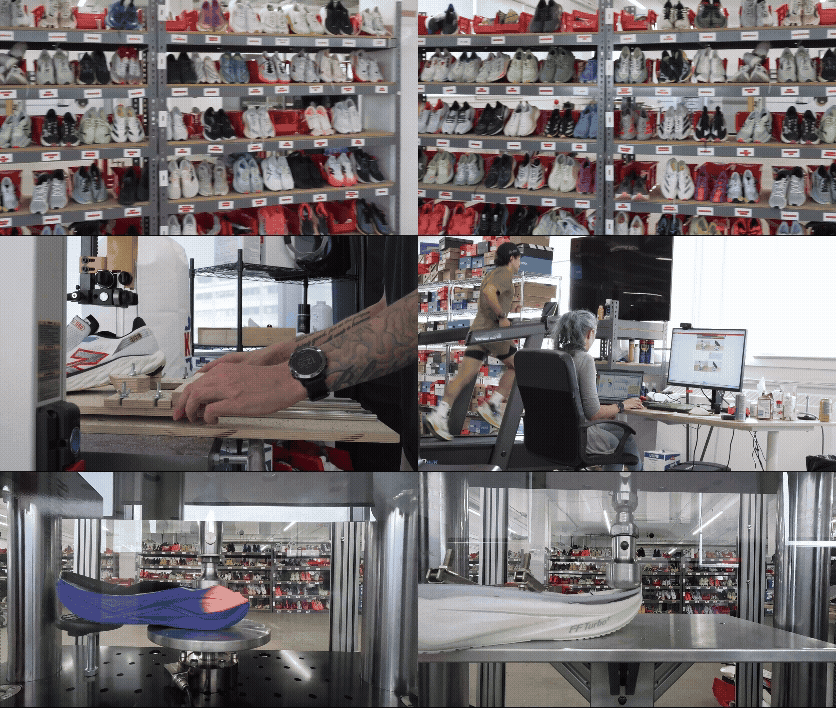
We've bought and tested more than 300 running shoes. Every pair purchased with our own money, never supplied or sponsored by brands. Our data-driven tests are designed to go beyond marketing claims, and since every shoe goes through the exact same methodology, you can directly compare results to find the right pair for your needs.
-
Best Brooks Running Shoes
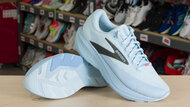


 Daily Training7.7Long Run7.05K/10K Racing6.6Half/Full Marathon Racing6.6Stability7.9Energy Return6.6Cushioning7.4True To Size9.5Weight:254.5 g (8.98 oz)See all our test resultsHeel Stack Height:36.1 mm
If you want one Brooks shoe to handle most of your weekly running, the Brooks Ghost Amp is the best Brooks running shoe we've tested. If you're a heavier runner, though, you'll be better served by our best cushioned pick further down the page. For everyone else, it strikes a good balance for daily miles. It's light enough that it never feels cumbersome, and it's not too tall, with very good stability, so it's approachable whether you're new to running or have been running for years. You also get an adequate amount of energy return, giving your legs a reasonable amount of help through each stride, even when you want to run a bit faster. The decent cushioning takes enough of the sting out of the road to keep your legs comfortable on routine runs. It's available in wide sizing and plenty of colorways across genders, so it's easy to find a version that suits your feet and tastes.
However, it's not a good option for heavier runners, especially if you land farther forward. While the heel provides a soft and plush experience across different weights, the forefoot becomes increasingly firm and harsh as more force is applied. It's also not the best pick if your runs regularly stretch beyond 20 km. In our simulated 50 km long-run test, the cushioning didn't do a good job of protecting your legs from impact over longer distances, so your legs will feel more beat up the farther you go.
-
Best Budget Brooks Running Shoes
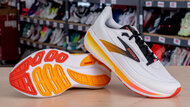
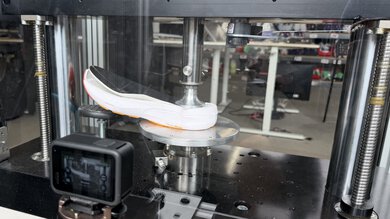
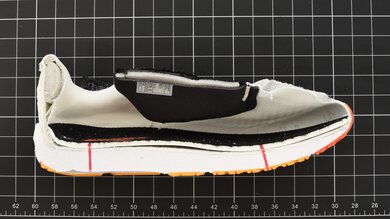
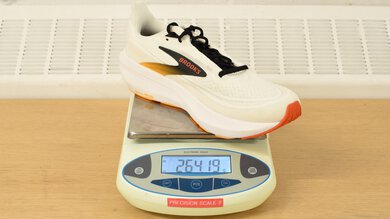
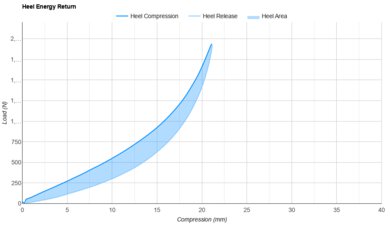 Daily Training7.2Long Run6.25K/10K Racing6.4Half/Full Marathon Racing5.0Stability8.3Energy Return4.0Cushioning5.9True To Size9.5Weight:263.8 g (9.31 oz)See all our test resultsHeel Stack Height:33.8 mm
If you want to keep the cost as low as possible and are only looking for a shoe for short runs, walk-run sessions, or warming up on the treadmill before the gym, the Brooks Revel 9 is the best budget option we've tested. It sacrifices a lot to keep costs down: its poor energy return gives you much less assistance through each stride than the pick above, so finding a rhythm takes more effort and holding the same pace will tire you out sooner. It's also significantly less cushioned, with a firm platform that does a sub-par job of softening road impact regardless of your weight or where you land. It's not up to the task for long runs either, doing a bad job of shielding your legs from impact as the miles build. The toe box is also quite shallow, so runners with taller toes may experience rubbing or chafing.
It's not all bad, though. The Revel 9 is impressively stable, so you get a secure platform you can trust for short runs if you're not looking to build serious mileage. It also comes in wide sizing for more room, and enough colorways to suit most people. That said, if you want to get as much performance as possible on a budget, check out our picks for the best cheap running shoes.
-
Best Brooks Running Shoes For Cushioning

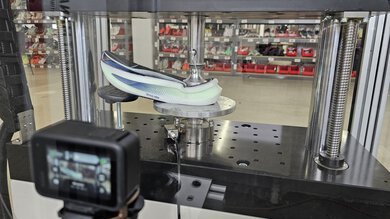
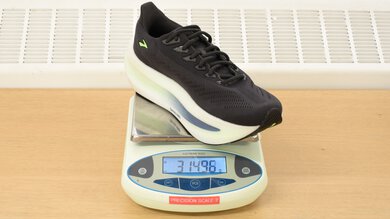
 Daily Training7.7Long Run7.55K/10K Racing5.6Half/Full Marathon Racing6.3Stability7.2Energy Return2.8Cushioning8.7True To Size9.7Weight:314.3 g (11.09 oz)See all our test resultsHeel Stack Height:47.9 mm
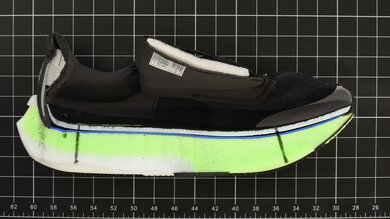
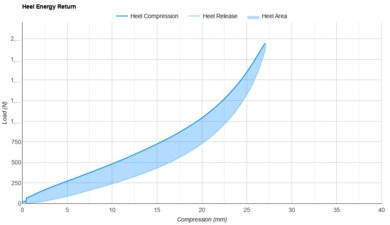
If you don't care about running fast and just want the most deeply cushioned Brooks shoe available, the Brooks Glycerin Max 2 can't be beaten. You give up a lot of training range compared to our top pick, the Brooks Ghost Amp. It's significantly heavier and gives you much less energy back through each stride, so it's very tiring to run quickly in. That said, if you're looking for a shoe for easy, relaxed running, its towering stack gives you an excellent amount of protection from road impact overall. It's especially well-suited to heavier runners, who get much deeper impact reduction than any other shoe on this list. It also continues to protect your legs impressively beyond 40km, and carries you more smoothly through each stride than any other shoe on this list except our racing pick below, so it still feels surprisingly smooth despite its considerable bulk.
You do sacrifice some stability compared to our top pick, although it's still decently secure for most runners on flat ground. It can feel a bit unsteady through tighter corners or if your regular run routes have potholes or uneven terrain, and its broad base and very high stack can take some getting used to if you're not accustomed to being so high off the ground. There's no wide sizing, either, though there are several colorways.
-
Best Brooks Running Shoes For Stability

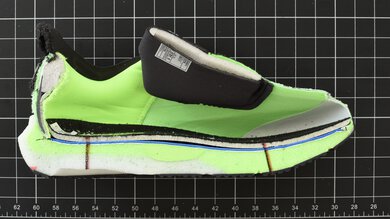
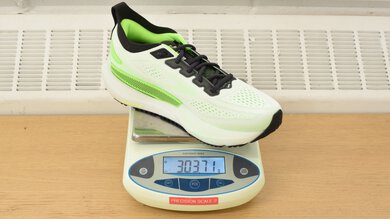
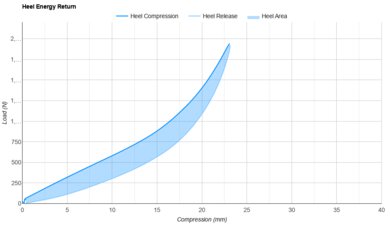 Daily Training7.4Long Run6.85K/10K Racing5.7Half/Full Marathon Racing6.0Stability8.4Energy Return3.5Cushioning7.3True To Size9.3Weight:303.4 g (10.70 oz)See all our test resultsHeel Stack Height:38.2 mm
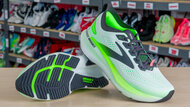
If you've been told by a licensed professional that your ankles roll inward excessively when you run and you need a stability shoe to help correct it, the Brooks Glycerin GTS 23 is the best stability shoe we've tested from the brand. It's in the same line as our best cushioned pick above, but it's a very different shoe. It's lower to the ground, with built-in support features that guide your foot back toward a neutral position. It's also not as cushioned as that shoe or even our top pick, the Brooks Ghost Amp, giving you a significantly firmer, harsher ride that doesn't shield your legs from the pounding of the pavement as well. However, it does feel more planted and trustworthy from landing to toe-off. There's still enough impact reduction for daily miles, though, and it holds up adequately when you're on your feet longer.
That said, you get less help through each stride than with our top pick, and its significantly heavier build makes it much less efficient when running faster. It's also not particularly smooth to run in, and the toe box sits fairly low, so if you have taller toes, you may notice some rubbing. It does come in wide and extra-wide sizing if you need more room, though the colorways are fairly neutral. Just bear in mind that if you don't actually need help controlling inward ankle movement, the support features can feel intrusive and push your foot away from its natural path. If you do need that kind of support and aren't set on Brooks, check out our picks for the best stability running shoes for more options.
-
Best Brooks Running Shoes For Racing
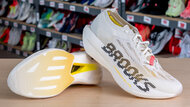
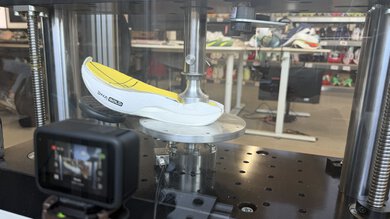
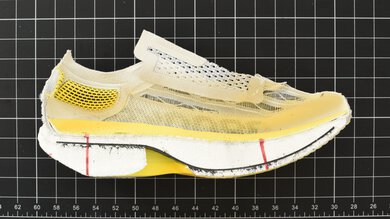
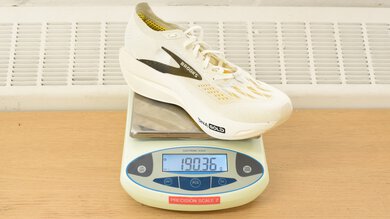
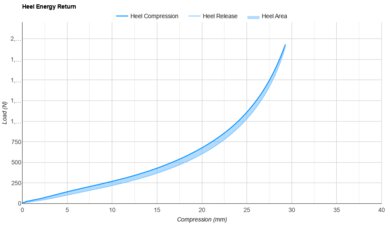 Daily Training6.1Long Run7.55K/10K Racing7.8Half/Full Marathon Racing8.3Stability5.5Energy Return9.1Cushioning8.4True To Size9.2Weight:191.7 g (6.76 oz)See all our test resultsHeel Stack Height:40.5 mm
If you want the fastest Brooks shoe for race day, the Brooks Hyperion Elite 6 is the best we've tested. Unlike the Brooks Ghost Amp, this shoe isn't for regular miles. It's an ultralight, aggressive carbon-plated racer for experienced runners chasing personal bests over half marathon and marathon distances. You get the most energy return of any shoe on this list, so when you're already running quickly, much more of the effort you put into each stride comes back to help you hold that pace. It's also exceptionally light, so you're carrying much less shoe, and it doesn't sacrifice cushioning either, with impressive impact protection overall that continues to do a good job of shielding your legs over the marathon distance.
You do need to be the right runner for it, though. It's much less stable than the Ghost Amp, leaving far less room for error when your form starts to break down late in a race. It's best suited to runners chasing sub-three-hour marathons, especially since the heel padding can rub uncomfortably when you're on your feet for longer. There's no wide sizing here either, and the toe box is fairly low. If you're targeting a slower time and aren't tied to Brooks, check out our picks for the best marathon running shoes, with options for a wider range of runners and goals.
Compared To Other Brands
-
Innovations focused on the middle of the pack.
While Brooks is certainly not on the cutting edge of super shoe development, it's still an innovative brand. Much of the research and development conducted in the Brooks Biomechanics Lab focuses on technological innovations to improve everyday running for average runners rather than just race-day performance for elites. Brooks was the first brand to use EVA foam in running shoes, starting in the 1970s, setting the industry standard for decades to come.
-
Great lateral stability.
Brooks was the first brand to introduce a stability trainer in the 1970s. The base version of most of Brooks' daily trainers has an inherently stable design featuring a solid platform that inspires confidence underfoot. Models with the suffix 'GTS' (short for Go-To Support) build further on this by adding guide rails to help correct overpronation, making them particularly popular among newer runners.
-
Reliable comfort.
From daily trainers to racing shoes, Brooks is known for the step-in comfort of its shoes. This comfort starts from the top with well-designed uppers that generally strike a good balance between structure and padding. The plush interiors of Brooks' running shoes sometimes give their trainers a more cushioned feel than just the midsole alone would suggest.
-
Trails behind industry trends.
Perhaps the biggest knock on many of Brooks' running shoes within the running community is that they're a bit boring. One example is PEBA, the first 'super foam' introduced by Nike in 2017, and quickly copied by other brands in racing shoes and speed trainers. However, Brooks didn't incorporate PEBA into any racing shoes until late 2024, with the Brooks Hyperion Elite 4 PB; by then, other brands had already started incorporating even more advanced foams.
-
Steep heel drop.
Brooks tends to lag behind industry trends, as seen in the high heel-to-toe drops of its flagship daily trainers. The Adrenaline GTS 25 has a 12 mm drop, one of the highest on the market. This shifts more load from the calves and Achilles tendons to the knees and quads, which can benefit heel strikers but feel less natural to runners who prefer a flatter platform. The Ghost series recently dropped from 12 to 10 mm, though that's still higher than many competitors. Brooks also offers max-cushioned models with lower drops, balancing ample heel cushioning with a flatter platform.
vs Nike
Brooks and Nike are both US-based manufacturers of some of the most popular running shoe models on the market. Because Nike is a much bigger brand, it's often a bit ahead of Brooks in innovation; some of the technology in the latest Brooks shoes was already in Nike's several years ago. Nike also devotes much more focus to elite-level performance, so you'll find more options for race-day shoes from Nike than from Brooks. A R&D budget also means Nike can take more risks with its running shoes, and some of the models it has released have been definite misses. So while Brooks's models might be a bit more boring, they're often more consistent and reliable. These two brands are among the few that still use a 10 mm heel-to-toe drop in their daily trainers, which is helpful if you're a heel striker but can be annoying if you're not.
vs ASICS
Brooks and ASICS both have strong reputations for comfortable, dependable running shoes, but they take different approaches. Brooks generally keeps things simpler, with familiar models that change gradually and clear options for runners who prioritize stability or traditional daily training. ASICS has a broader, more performance-focused range, with more options for faster training and racing, including several highly specialized shoes for different types of runners. That broader range gives ASICS more choice at the performance end, but it also creates more overlap between models and can make the lineup harder to navigate. Brooks' range is easier to understand, though it offers fewer options if you're looking for something highly specialized for speed or racing.
vs Saucony
Brooks and Saucony are two specialty brands that focus all their efforts on running shoes. Both brands have lineups that are comprehensive enough to cover everyone from beginners to elites, but with a much greater focus on everyday runners. And, both excel at making very stable running shoes. Brooks' lineup is a bit more straightforward: all models with the GTS suffix (for "Go-To Support") feature the same raised sidewalls to support runners with pronation issues. Saucony's stability lineup is a bit more complicated but offers more options: the Hurricane, Tempus, Omni, and Guide all feature varying degrees of support, with different configurations of stability features. Each brand groups its racing- and performance-oriented shoes under a single umbrella: for Brooks, that's the Hyperion family; for Saucony, the Endorphin family. Both brands stand out for their consistent sizing.
Brooks makes very comfortable, durable running shoes that fit a wide range of foot shapes. Their shoes are generally not the most hyped, which goes hand in hand with their reputation for being aesthetically unimaginative. But what they lack in excitement, Brooks' running shoes make up for in reliability. They tend to offer more options for heel strikers, owing both to their higher heel-to-toe drop and their unique process of crafting midsoles to be denser under the forefoot than the heel.
Lineup
Brooks' road-running lineup is built around comfort, support, and everyday dependability, with options covering stability, daily training, max-cushion cruisers, faster workouts, and race-day efforts as well. The brand is famous for secure fits and step-in comfort, with a much-deserved reputation for reliable shoes that get the job done. Compared to other brands, Brooks categorizes its shoes relatively simply, making it easy to differentiate between models once you know whether you want cushioning, support, or something faster.
Support Shoes
Brooks' support models use GTS ("Go-To Support"), with GuideRails that help with overpronation, keeping the foot centered for a more controlled ride.
Adrenaline GTS: The classic stability trainer. Think of it as the Ghost with support added: a dependable daily shoe with GuideRails, a broad platform, and a controlled feel.
Glycerin GTS: The premium cushioned stability option. It takes the comfort-first feel of the Glycerin and adds support, making it a better fit for runners who want more cushioning but still need structure underfoot.
Addiction GTS: The firmer, more traditional max-stability option. It's built for strong guidance, durability, and a rigid feel, making it best for runners who need all-out support and don't mind extra weight.
Beast GTS: The more modern max-stability running shoe. It still has a very structured ride, but with a softer step-in feel than the Addiction, plus a wide heel platform and extra rearfoot structure clips to help keep the foot locked in.
Ariel GTS: The women's version of the Beast GTS. A highly supportive shoe for women who need Brooks' strongest level of guidance.
Daily Trainers
These are the shoes that made Brooks its name, providing dependable comfort and stability for everyday running.
Ghost: The classic daily trainer in the lineup. It's a durable, stable workhorse with a familiar ride for easy runs and walking.
Glycerin: The premium daily trainer. It adds more stack and padding than the Ghost, giving it a softer, more cushioned ride.
Glycerin Flex: A more flexible take on the Glycerin. Its segmented midsole and deep flex grooves suit runners who want a more natural ride with less rocker.
Hyperion: Historically a more uptempo offering, the Hyperion is a shoe in transition. Sure, it's still lighter and more responsive than the Ghost or Glycerin, but less speed-focused than it once was.
Launch: The stripped-back daily trainer. It's slightly more responsive than Brooks' other daily trainers, and suits runners who miss the feel of the old Hyperion models.
Revel: The simple value option. It works best for short, easy runs or walking, especially for beginners who want a light, grounded ride.
Trace: The entry-level running shoe. It has enough durability for easy jogging or walking.
Anthem: The most basic no-nonsense trainer. It's built for casual running and general fitness rather than performance.
MAX-CUSHIONED SHOES
Brooks' Max models add more material underfoot for a bigger base and a more protective ride. Some are true max-cushion cruisers. Others are simpler high-stack shoes with a more casual brief.
Ghost Max: The higher-stack take on the Ghost. It keeps the familiar stable feel, but adds a wider platform with more protection underfoot, making it better for easy runs or slower daily mileage than faster efforts.
Glycerin Max: The comfiest member of the Glycerin family. Where the Glycerin Flex lets your foot move more freely, the Glycerin Max does more of the work for you, with deep cushioning plus a smooth rocker for long, easy runs.
Defyance Max: The firmer, more affordable Max option. It feels closer to the original Ghost Max than later models, with a stable platform that works well for walking or short, easy runs.
Revel Max: The casual Max option. It adds more cushion to the Revel formula and is best for walking or light jogging rather than serious training.
Super Trainer
Brooks' super trainer category is small, with one plated training shoe built for longer workouts where protection matters as much as pace.
Hyperion Max: Brooks' plated super trainer has a tall, cushioned midsole, giving it a more protective feel than the regular Hyperion. Protection is superb, and it holds up excellently on long runs, with good enough energy return for uptempo efforts as well.
Super Shoe
Brooks' single super shoe entry is built for race day, with less focus on comfort and durability than the rest of the lineup.
Hyperion Elite: Brooks' flagship racing shoe. It uses a responsive racing midsole with a carbon plate, giving it a lighter, faster ride than the Hyperion Max. Though the fit is stripped back, the step-in comfort Brooks is known for remains. The Hyperion Elite feels more stable underfoot than some more aggressive race shoes, making it a strong pick for runners who want speed without an overly chaotic ride.
Recent Updates
-
Oct 16, 2026 at 03:07 pm:
We've overhauled the article structure to better highlight Brooks' lineup and clarify why you should choose one shoe over another. The Ghost Amp is now our top pick for its training range; the Revel 9 is our budget pick for its price-to-performance ratio; the Glycerin GTS 23 is our pick for stability; and the recently released Hyperion Elite 6 is our pick for racing.
-
Jun 26, 2026 at 11:22 am:
We've updated the article to replace the price-based picks with usage-based picks, removing the Brooks Revel 8 and adding the Brooks Glycerin Max 2 and Brooks Adrenaline GTS 25.
-
May 25, 2026 at 11:23 am:
We've updated the article to add a new section breaking down the shoes in Brooks' lineup.
-
Apr 22, 2026 at 01:58 pm:
We've updated our recommendation for the 'Best Mid-Range Brooks Running Shoe' after testing the recently released Brooks Glycerin 23. We've also shifted the Brooks Ghost 17 to the 'Best Budget' shoe after its price dropped.
Conclusion
Brooks' lineup is neither as extensive nor as confusing as some other running shoe brands. And while Brooks focuses heavily on developing shoes for the middle of the pack, the company also offers shoes that can serve a wide variety of runners at different paces. If there's a Brooks model you want us to test, you can vote for it to help decide what we buy next. To learn more about each model, check our full list of the best Brooks running shoes in the table below.