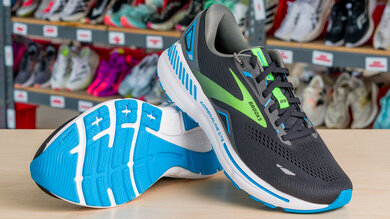
We've tested these running shoes to expand our database and allow users to compare results to help with their buying decisions. We don't expect to write a full review, but if you have any questions about this product, please let us know.
Changelog
- Updated Aug 26, 2026: We've converted this review to Test Bench 0.12, which fixes how we measure firmness, a component of the Stability and 5K/10K Racing usages. There may be inconsistencies between the text and the scores for these usages, but the scores should still be considered valid. We've also brought back the Energy Return score and added two new usages: Daily Training and Long Run. To read more about the changes, see the changelog.
- Updated Jun 30, 2026: We've converted this review to Test Bench 0.11, adding two new rocker measurements to the Design section, and three new responsiveness tests to the Performance section. The Energy Return usage score has been replaced with Responsiveness. Check out the details in our changelog.
- Updated Jun 17, 2026: We've converted this review to Test Bench 0.10, adding a new set of fit tests to the Design section and an overall fit performance usage. Check out the details in our changelog.
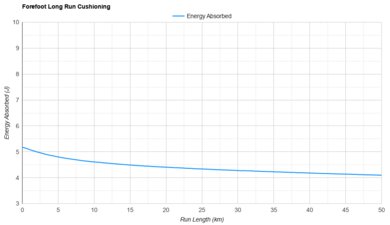
- Updated Apr 13, 2026: We've converted this review to Test Bench 0.9, which adds a Forefoot Long Run Cushioning test to our performance section. Read more in our changelog.
- Updated Dec 15, 2025: Review published.
- Updated Jul 10, 2025: Our testers have started testing this product.
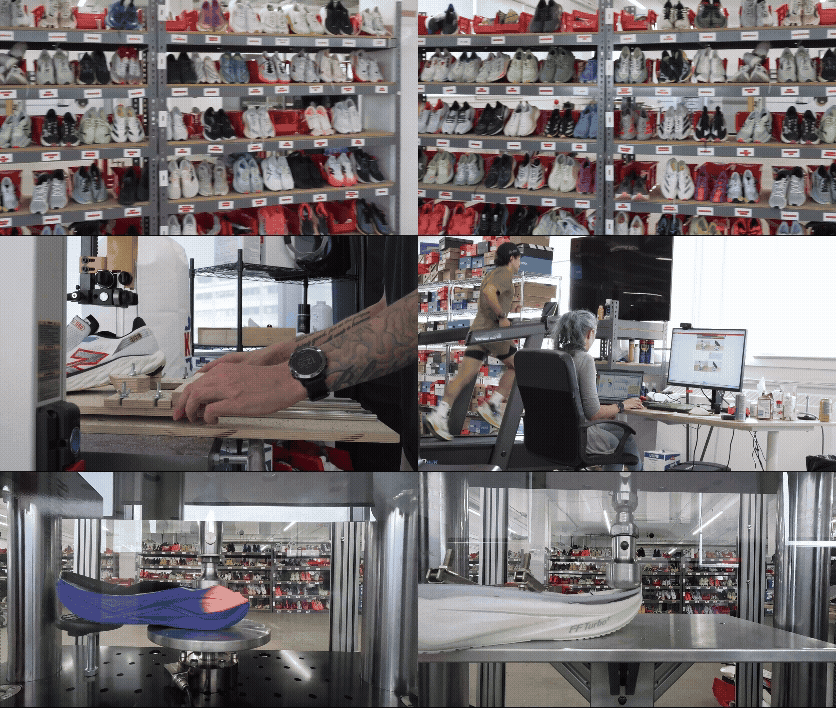
We've bought and tested more than 250 running shoes. Every pair purchased with our own money, never supplied or sponsored by brands. Our data-driven tests are designed to go beyond marketing claims, and since every shoe goes through the exact same methodology, you can directly compare results to find the right pair for your needs.
Test Results
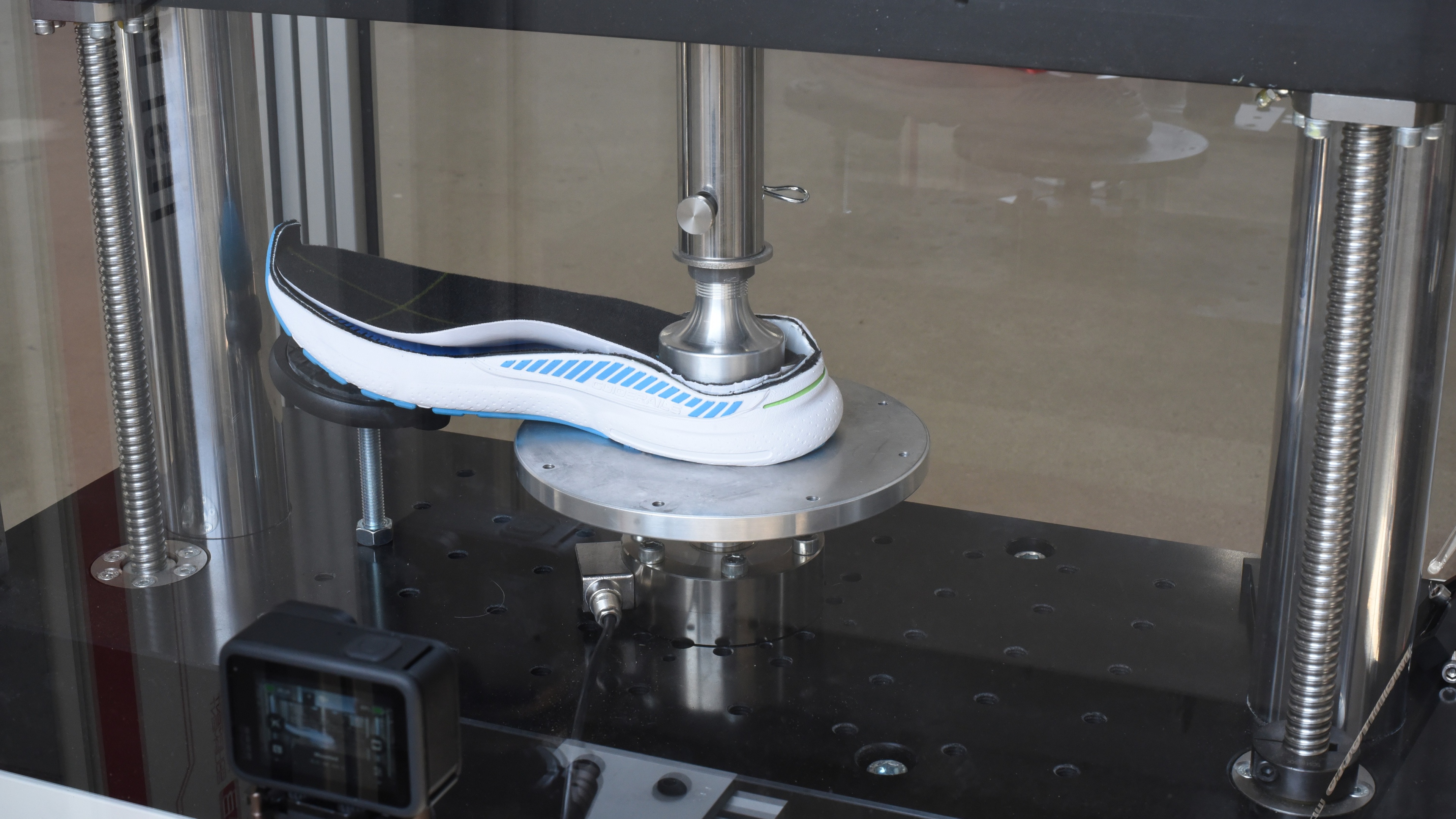
Energy Return


Stability


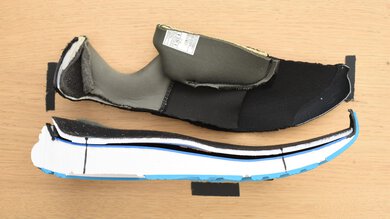
Cushioning
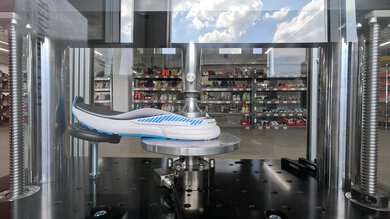

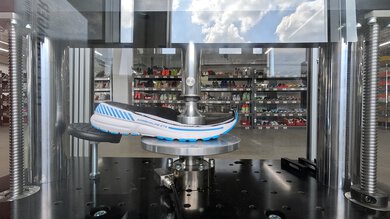

Responsiveness


True To Size


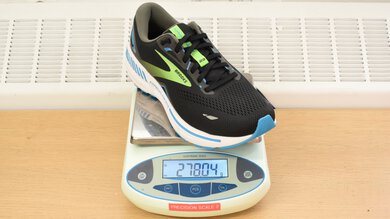

Popular Running Shoe Comparisons
The ASICS GEL-KAYANO 32 and the Brooks Adrenaline GTS 23 are both longstanding support trainers aimed at overpronators, but they offer very different ride experiences. The Adrenaline uses Brooks' GuideRails system for support, paired with a high-drop, traditional geometry that feels more structured through the heel but less adaptable overall. Its midsole is noticeably firmer and absorbs less impact, giving it a harsher feel. The ASICS, in contrast, delivers a softer and more protective ride with a smoother heel-to-toe transition thanks to its lower drop and added forefoot stack. It still offers plenty of support thanks to its 4D Guidance sidewalls.
The Mizuno Wave Horizon 9 and Brooks Glycerin GTS 23 are both premium stability trainers that cost the same, but they suit slightly different runners. The Horizon 9 is more stable and a touch better cushioned, while the Glycerin GTS 23 is a hair lighter and provides support in a less intrusive way. Neither is particularly lively, so the decision mostly comes down to support needs: get the Horizon 9 if you need the most secure ride possible; get the Glycerin GTS 23 if you want a more of a stability shoe with gentler support.