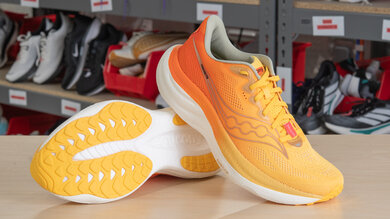
The Saucony Ride 19 is a stable, energetic shoe that handles easy runs and everyday training very well. Within Saucony's lineup, this shoe is the classic daily trainer, while the Triumph 24 offers a more cushioned alternative. Its broad platform suits runners who want a reliable, steady ride for regular mileage, and wide versions are available if you need more room. The midsole remains decently protective over longer runs, but it offers less cushioning as the miles add up. It also lacks the lightweight feel and snap of a dedicated racer, making it better for daily training than for race day.
| ✅ Buy If: | ❌ Skip If: |
|
|
Our Verdict
Although the Saucony Ride 19 isn't designed for racing, it can still get the job done for runners who want to tackle the marathon in a familiar, dependable daily trainer. Its balanced cushioning and bouncy midsole provide enough protection and comfort to hold up decently over long distances. That said, it doesn't have the light, efficient, supercharged feel that makes dedicated marathon shoes so effective when every bit of energy savings matters.
Good energy return from the midsole.
Protective cushioning for daily training.
Average weight limits efficiency.
Not the highest stack in the forefoot.
The Saucony Ride 19 isn't really meant for shorter races, though it can still work if you prefer a more forgiving, predictable shoe on race day. It has a surprisingly energetic ride for a classic daily trainer, but it doesn't feel snappy, lightweight, and aggressive enough to really excel when trying to hold a high cadence while running at very fast paces above threshold.
Good energy return from the midsole.
Not especially snappy for shorter races.
Average weight limits efficiency.
The Saucony Ride 19 is a good option for long runs at a relaxed pace. Its broad platform keeps the ride steady, while good cushioning and energy return provide a protective feel without making the shoe feel dull. The curved heel also helps smooth out landings if you land toward the back of your foot. Cushioning remains decent as the run progresses, though it gradually declines, and the modest forefoot stack leaves less protection in reserve for your longest outings. Its average weight also makes it less appealing for long runs that include extended faster sections.
Good energy return from the midsole.
Protective cushioning for daily training.
Broad platform helps keep landings steady.
Curved heel helps smooth out heel-first landings.
Average weight limits efficiency.
Not the highest stack in the forefoot.
Cushioning gradually declines over longer runs.
The Saucony Ride 19 is very good for daily training, particularly easy runs and steady mileage. Its broad base and good cushioning offer a reassuring mix of stability and protection, while the midsole returns enough energy to keep everyday miles from feeling flat. Heel strikers also get a smooth roll forward after landing. It isn't especially light or snappy, though, so runners who want one shoe for both relaxed mileage and demanding speed sessions may prefer something more versatile.
Good energy return from the midsole.
Protective cushioning for daily training.
Broad platform helps keep landings steady.
Curved heel helps smooth out heel-first landings.
Average weight limits efficiency.
Changelog
- Updated Oct 02, 2026: We've converted this review to Test Bench 0.15, which replaces Responsiveness with three specific performance usages: Bounciness, Snappiness, and Roll. To read more about the changes, see the changelog.
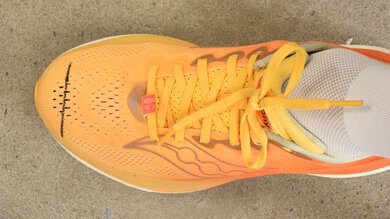
- Updated Sep 17, 2026: We've converted this review to Test Bench 0.14, which adds new lace-specific results. We've included a close-up photo of the laces, as well as details including lace type, width, thickness, and stretch. To read more about the changes, see the changelog.
-
Updated Jul 24, 2026:
We've added a new table in the intro to help you quickly determine if this shoe matches your needs.
-
Updated Jul 21, 2026:
We've updated the Popular Comparisons section to include a link to the newly reviewed Saucony Hurricane 26.
-
Updated Jul 15, 2026:
We've updated the Popular Comparisons section to include a link to the newly reviewed HOKA Clifton 11.
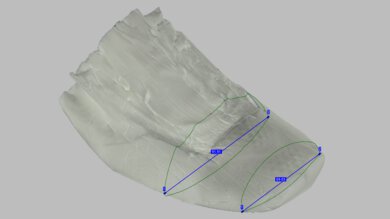
- Updated Jul 03, 2026: We've converted this review to Test Bench 0.13, which identifies the different foams used in the shoe's midsole. We've included a microscopic image of the foam cells to give you an idea of what the microstructure looks like. To read more about the changes, see the changelog.
-
Updated Jun 19, 2026:
We've updated the Popular Comparisons section to include a link to the newly reviewed ASICS GEL-CUMULUS 28.
- Updated Jun 17, 2026: We've converted this review to Test Bench 0.12, which fixes how we measure firmness, a component of the Stability and 5K/10K Racing usages. There may be inconsistencies between the text and the scores for these usages, but the scores should still be considered valid. We've also brought back the Energy Return score and added two new usages: Daily Training and Long Run. To read more about the changes, see the changelog.
-
Updated Jun 11, 2026:
We've updated the Popular Comparisons section to include a link to the newly reviewed Saucony Guide 19.
- Updated Apr 28, 2026: We've converted this review to Test Bench 0.11, adding two new rocker measurements to the Design section, and three new responsiveness tests to the Performance section. The Energy Return usage score has been replaced with Responsiveness. Check out the details in our changelog.
-
Updated Mar 11, 2026:
Following Test Bench 0.10, we wrote the full review with the most recent testing and results available.
- Updated Feb 20, 2026: We've converted this review to Test Bench 0.10, adding a new set of fit tests to the Design section and an overall fit performance usage. Check out the details in our changelog.
- Updated Feb 16, 2026: Review published.
- Updated Jan 20, 2026: Our testers have started testing this product.
- Updated Jan 09, 2026: The product has arrived in our lab, and our testers will start evaluating it soon.
- Updated Jan 06, 2026: We've purchased the product and are waiting for it to arrive in our lab.
We've bought and tested more than 250 running shoes. Every pair purchased with our own money, never supplied or sponsored by brands. Our data-driven tests are designed to go beyond marketing claims, and since every shoe goes through the exact same methodology, you can directly compare results to find the right pair for your needs.
Test Results
Energy Return
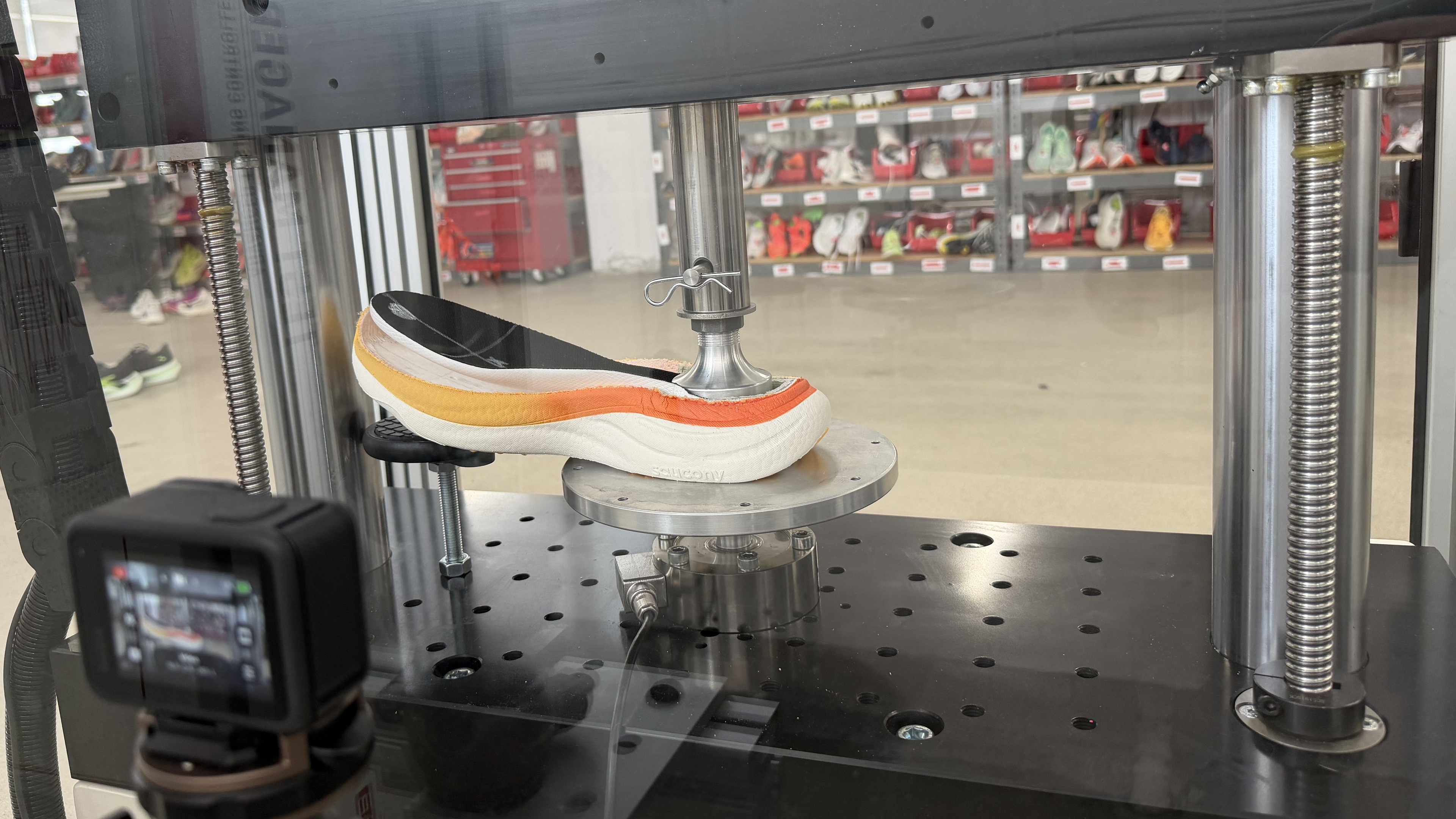
The Saucony Ride 19 delivers very good energy return overall, with a stronger rebound in the forefoot than the heel. The forefoot returns energy effectively as the midsole decompresses, adding liveliness during push-off that suits everyday training. The heel still returns a decent amount of energy, but the rebound is more restrained there. It's a good fit for runners who want an energetic everyday shoe, but that rebound isn't paired with the lightweight build and aggressive geometry of a shoe designed for very fast running. It's more of a fun bounce that adds liveliness to your regular miles.
Good energy return from the midsole.


Stability
The Saucony Ride 19 feels notably stable for a neutral daily trainer, with a broad, planted platform that inspires confidence through easy miles and steady cruising without actively correcting your gait. It isn't a true stability shoe, but it feels secure and predictable enough to work well for runners who want some confidence without a more intrusive support setup.
Broad platform helps keep landings steady.
Semi-gusseted tongue.
Heel can feel a bit soft.

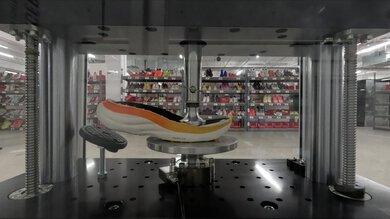
The Saucony Ride 19 has a moderately firm heel, which helps keep landings controlled without an especially hard feel. Resistance increases as more force is applied, although the heel remains softer than the forefoot.

Cushioning
The Saucony Ride 19 offers a very good amount of cushioning that feels protective enough for regular training. It strikes a nice middle ground for runners who want comfort underfoot but still prefer a more balanced, controlled ride. However, for longer runs over 20K, the midsole's absorption capabilities decline, and the shoe doesn't feel nearly as plush as initially, so it's best for shorter runs.
Protective cushioning for daily training.
Cushioning gradually declines over longer runs.


The Saucony Ride 19 provides very good heel cushioning and consistent performance across both lighter and heavier loads. Heel strikers get dependable impact absorption for everyday training, including when they put more force through their landings.


Bounciness
The Saucony Ride 19 delivers a pleasing amount of bounce for a classic daily trainer, which helps keep everyday miles from feeling dull or flat. The liveliness is most noticeable in the forefoot. That said, this rebound isn't paired with a performance-oriented geometry or a light enough build to make the shoe feel truly efficient. Also, the bouncy sensation tends to fade on longer runs.
Good energy return from the midsole.
Midsole doesn't compress that much.


Snappiness
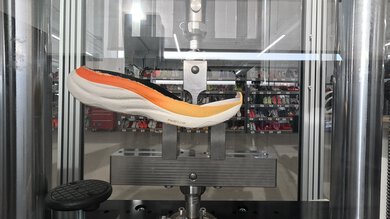
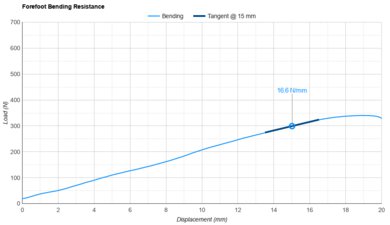
The Saucony Ride 19 has decent snappiness, helped by a firm forefoot and good resistance to bending, giving you a solid platform to push against. However, the forefoot only returns a moderate amount of energy as it springs back during push-off. The shallow rocker at the toes also provides less help moving you quickly into toe-off. These traits suit steady training better than faster workouts or races where you want a more pronounced snapping sensation.
Firm forefoot provides a solid base for push-off.
Forefoot resists bending well.
Not especially snappy for shorter races.
Modest energy return as the forefoot unbends.
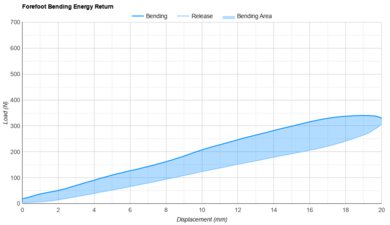
The forefoot returns a reasonable amount of energy when it springs back after bending. This contributes some snap during push-off, but the bending rebound isn't a particular strength.
Roll
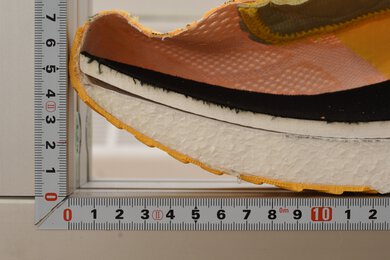
The Saucony Ride 19 provides a decent rolling transition. Its curved heel helps heel strikers move smoothly into their stride, while the relatively early forefoot curve and resistance to bending provide some guidance toward toe-off. However, the forefoot curve tends to flatten and lose its shape, reducing that rolling assistance. Its shallow angle and modest forefoot stack also limit how strongly it rolls you forward. It suits runners who prefer gentle rolling assistance for everyday miles, but it's less compelling if you want the shoe to carry you noticeably onto your toes.
Forefoot resists bending well.
Curved heel helps smooth out heel-first landings.
Not the highest stack in the forefoot.
Forefoot curve offers only modest resistance to flattening.
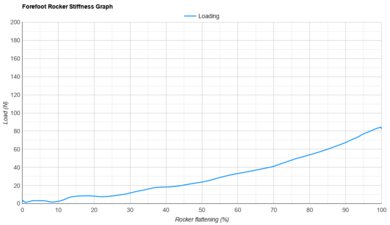
The forefoot curve is only moderately resistant to flattening under load. As that curve flattens, it provides less rolling assistance, so the transition feels less guided than in shoes that maintain their curved shape more firmly.
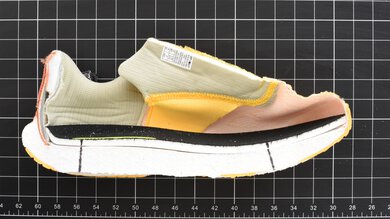
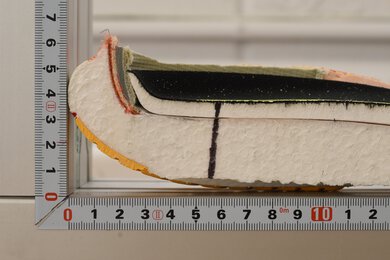
There's a generous amount of material beneath the heel, while the forefoot sits noticeably closer to the ground. This creates a fairly pronounced heel-to-toe drop, giving the shoe a heel-raised feel with less of a thick buffer under the ball of the foot. Our measured drop is also higher than Saucony advertises.
True To Size
The Saucony Ride 19 fits true to size, making it an easy, low-risk option for most runners who order their usual size. Lengthwise, it offers a good amount of room without feeling overly long, and its overall fit has enough volume while keeping the arch area from feeling restrictive.
Fits true to size in length and overall volume.
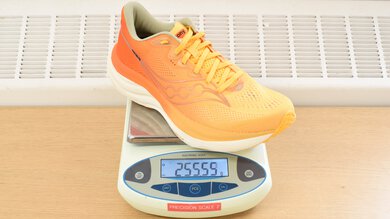
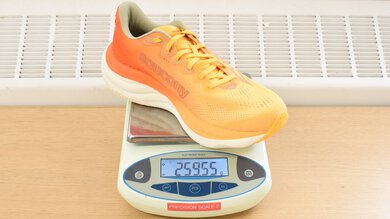
The Saucony Ride 19 isn't especially lightweight, though its weight is reasonable for everyday training. It suits relaxed mileage, but runners who prioritize a light, nimble feel for faster workouts may want something lighter.
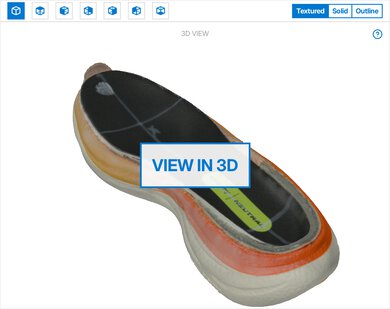

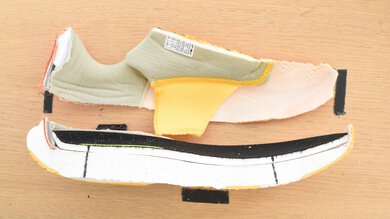
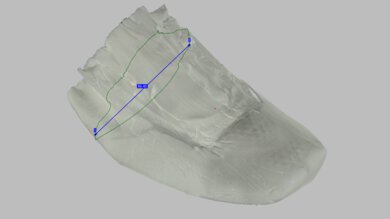
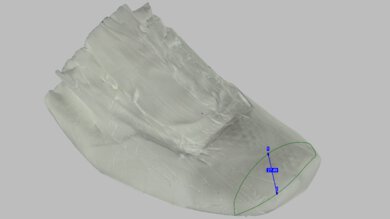
The midsole uses PWRRUN+, a TPU-based foam also found in the previous Saucony Ride 18. Saucony describes this shoe's version as reformulated, so the shared foam name doesn't mean the two shoes use an identical formulation or deliver the same feel.

Popular Running Shoe Comparisons
The Saucony Ride 19 is a classic daily trainer, but unlike many long-running legacy models that evolve very cautiously to avoid alienating longtime fans, this one feels like a meaningful modernization of the formula. It hasn't lost its core identity as a dependable workhorse, but it does the job with a more cushioned and noticeably more energetic ride than you'd usually expect from this category. This means the Ride will seriously outperform other classic daily trainers like the ASICS GEL-CUMULUS 28, the HOKA Clifton 11, or the New Balance Fresh Foam X 880 v15. In that sense, it also starts to brush up against modern trainers like the ASICS NOVABLAST 5 or the Mizuno Neo Zen, though those alternatives are lighter and feel a bit more fluid when you want to pick them up for strides. That also helps explain where the Ride 19 stops short. Even with its lively midsole, it doesn't really cross into versatile trainer or true do-it-all territory the way shoes like the ASICS MEGABLAST or the adidas Adizero Evo SL do, because those models combine cushioning and rebound with significantly lighter builds and geometries that roll you forward more naturally at faster speeds. As a result, the Ride 19 is best for runners seeking a comfortable, fun, and reliable daily trainer for easy runs.
Within Saucony's lineup, it sits as the classic daily trainer between the more premium, more cushioned Saucony Triumph 23 and the lighter, more stripped-back Saucony Kinvara 16. For runners who want added support, Saucony's stability-oriented options include the Saucony Guide 19 and the Saucony Hurricane 26, while the Endorphin line is the brand's performance family, covering everything from fast training to racing with more specialized, speed-oriented designs.
If you're looking for more options, check out our recommendations for the best running shoes, the best long-distance running shoes, and the best shoes for running a marathon.
The Saucony Triumph 23 is the brand's premium cushioned trainer, while the Saucony Ride 19 is the classic, simpler daily trainer. With the 19th iteration, the Ride 19 increases the stack and has the PWRRUN+ midsole compound, making it both more cushioned and noticeably bouncier than previous versions. As a result, the Ride now performs surprisingly close to the Triumph in terms of comfort and energy return for daily miles. The Triumph 23 still sits higher and delivers more overall cushioning, but it also weighs more. In practice, the Ride becomes the more balanced and versatile option for everyday training, while the Triumph remains the choice if your priority is more protection for relaxed runs.
The Saucony Guide 19 and Saucony Ride 19 may be sister shoes, but they're built for different runners. The Ride 19 is lighter, more cushioned, and more responsive, making it the better pick for runners with a neutral stride who want a more versatile daily trainer. The Guide 19 is heavier and less lively, but its CenterPath design adds more stability for runners who like the Ride's feel but need extra guidance.
The Saucony Endorphin Azura is a more versatile shoe than the Saucony Ride 19. It's lighter, more cushioned, and more protective over long distances, while its livelier ride gives it more range for faster training. The Ride 19 is more stable and grounded, making it the better option for runners who mainly want a straightforward daily trainer for relaxed mileage.
The Saucony Ride 19 and Saucony Ride 18 are two iterations of Saucony's classic daily trainer, and while they remain similar in weight and overall purpose, the newer version noticeably refines the ride. The 19 feels more cushioned, helped by a slight increase in stack height that adds a bit more protection underfoot without changing the shoe's familiar character. Stability between the two remains similarly great, but the 19 introduces a more pronounced rocker, which helps transitions feel smoother and a bit more fluid through the stride. Overall, the Ride 19 moves the series in the right direction and stands as a worthwhile upgrade for runners looking for a more cushioned take on this dependable daily trainer.
The Saucony Ride 19 and HOKA Clifton 10 are two classic daily trainers, but they follow different paths. The HOKA follows the path it helped popularize, using a higher stack to create a big, absorbent buffer between your legs and the ground, with the clear focus being protection and comfort. However, this protection is most noticeable on shorter runs, since the midsole tends to bottom out after a few kilometers. The Saucony takes a more moderate stack approach, but its midsole gives it a livelier feel, and it also comes in lighter, making it feel more versatile and less one-dimensional in daily training. The Saucony is also more stable overall, while the HOKA leans more fully into that soft, protective cruiser role.
The HOKA Clifton 11 and Saucony Ride 19 are both dependable daily trainers, but the Saucony is the livelier shoe. It's much more responsive, returns much more energy, and is more fun across all daily miles. The HOKA is the more cushioned option, with deeper impact protection, but it doesn't give much back when you pick up the pace. Go with the Saucony if you want a more modern, energetic shoe; go with the HOKA if cushioning and comfort are your top priorities.
The Saucony Ride 19 is a better shoe than the Saucony Cohesion 19. It has significantly better shock absorption, a livelier ride, and handles every type of run better. That said, it's much more expensive, so the Cohesion 19 is the better choice if you mainly want a lifestyle shoe you can run in from time to time.
The Saucony Ride 19 is a much better running shoe than the Diadora Nucleo 2. It's lighter, far more energetic, and better cushioned for daily training and long runs, while still being impressively stable. Get the Diadora if you prefer its styling or want the more stable ride; otherwise, the Ride 19 offers much better running performance for less.
Differences Between Sizes And Variants
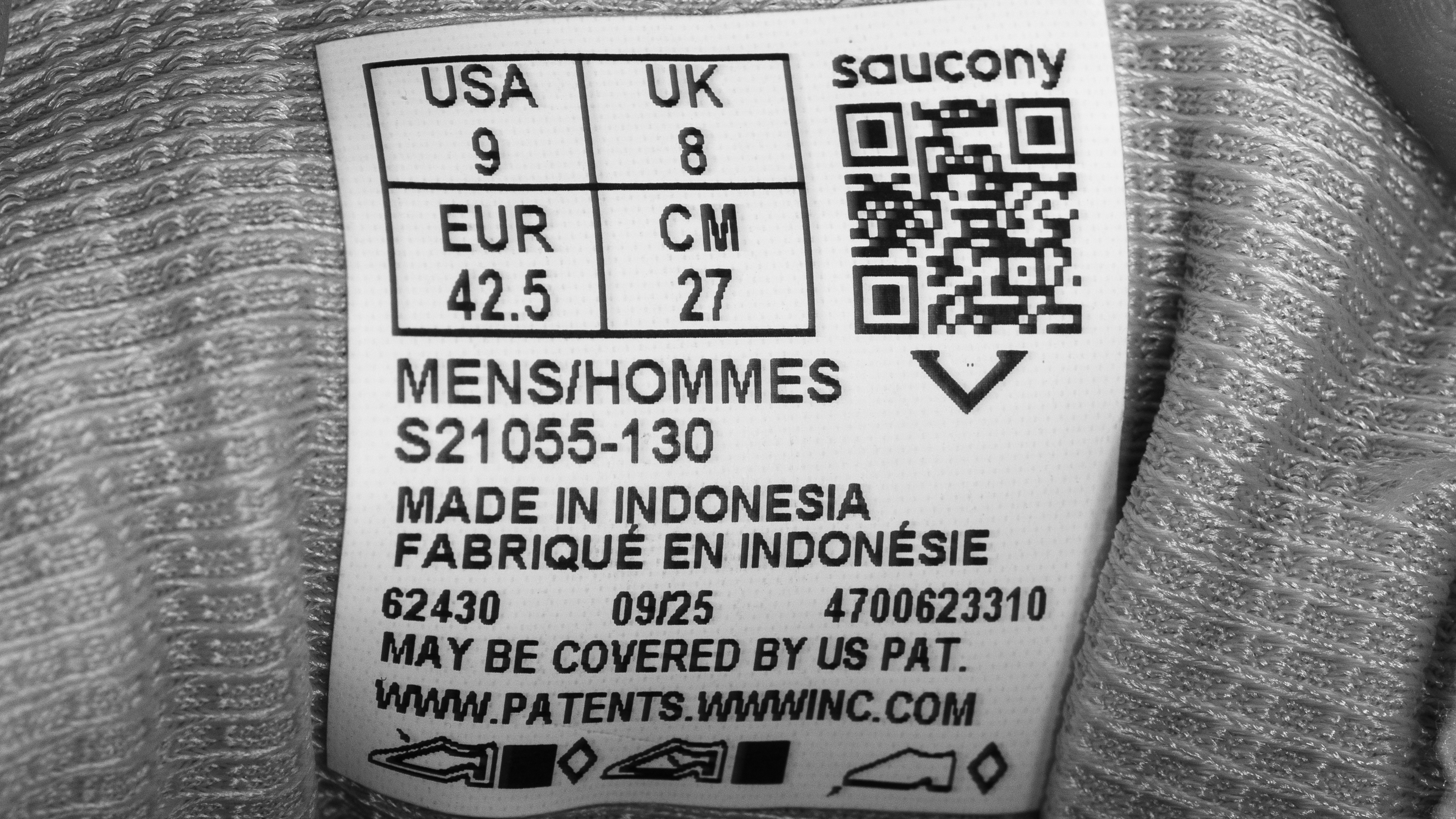
We bought and tested the Saucony Ride 19 in men's US size 9, as noted on the label for our pair. The pair we purchased is the Sunrise colorway, but you can also buy the shoe in a wide range of colors, depending on the region. This includes options like Black/White, Triple Black, Cobalt/Slime, and Mist/Cameo, among others. This model is available in wide versions for both men and women, with multiple color options, which is rare. Saucony also sells Trail and GORE-TEX versions of the Ride, but we haven't tested those, and performance results can vary. The design section applies only to the exact model we tested, but we expect other sizes and gender variants to perform similarly.