The Mizuno Neo Zen is a high-stack, modern daily trainer that marks a clear departure from Mizuno's traditional design language. Unlike the plated Mizuno Neo Vista and Mizuno Wave Rebellion, the Neo Zen strips away the classic Wave Plate entirely, allowing its supercritical ENERZY NXT foam to deliver a soft, bouncy, and unencumbered ride. Designed for comfort and mileage over speed, it pairs a high stack height with a surprisingly low weight, offering a compliant yet responsive experience that shines at easy to moderate paces. With a smooth rocker geometry and a sock-like upper, it's built to provide plush protection for long runs and recovery day, making it a standout option in the daily trainer game.
Our Verdict
The Mizuno Neo Zen is a viable option for marathon racing, especially for runners prioritizing comfort and protection. Its soft and bouncy midsole, combined with impressive cushioning, helps absorb shocks across long distances. While the lack of a plate limits stiffness compared to super shoes, the low weight for its category and natural rocker geometry make it a good option for runners who aren't concerned about elite performance.
Midsole is amazingly plush.
Very lightweight for its class.
No carbon plate.
The Mizuno Neo Zen isn't optimized for shorter races where other shoes with snappy toe-offs and firmer midsoles shine. While it's relatively light and delivers decent energy return, the forefoot is quite sloppy at high turnover paces and lacks the stiffness and precision needed to feel truly fast at these distances. It's best reserved for slower efforts in these distances or for runners seeking max comfort over peak performance.
Surprisingly bouncy midsole.
Very lightweight for its class.
Foam is overly soft.
No carbon plate.
Changelog
-
Updated Feb 16, 2026:
We updated the review to include text for the full set of new fit tests and the corresponding usage box, which were recently added to our test bench.
- Updated Feb 16, 2026: We've converted this review to Test Bench 0.10, adding a new set of fit tests to the Design section and an overall fit performance usage. Check out the details in our changelog.
- Updated Nov 20, 2025: We've converted this review to Test Bench 0.9, which adds a Forefoot Long Run Cushioning test to our performance section. Read more in our changelog.
-
Updated Oct 22, 2025:
We've adjusted this review's writing to align with the new test bench, including updates to all usage scores and test boxes for Cushioning, Firmness, and Energy Return.
- Updated Oct 20, 2025: We've converted this review to Test Bench 0.8.2, which updates our methodology for the impact force range used in our compression tests to improve their accuracy. This also affects all usage and performance usage boxes using those compression tests as score components.
-
Updated Aug 11, 2025:
We updated the Compared To Other Running Shoes box to include the Mizuno Neo Vista 2.
-
Updated Jul 30, 2025:
We revised the phrasing in the Marathon Racing and Forefoot Cushioning boxes to reflect the changes in the latest test bench.
- Updated Jul 30, 2025: We've converted this review to Test Bench 0.8.1, which mainly updates the score components for the Marathon Racing and Lateral Stability usage boxes to improve accuracy.
- Updated Apr 25, 2025: Review published.
- Updated Apr 23, 2025: Early access published.

We've bought and tested more than 250 running shoes. Every pair purchased with our own money, never supplied or sponsored by brands. Our data-driven tests are designed to go beyond marketing claims, and since every shoe goes through the exact same methodology, you can directly compare results to find the right pair for your needs.
Test Results
Energy Return
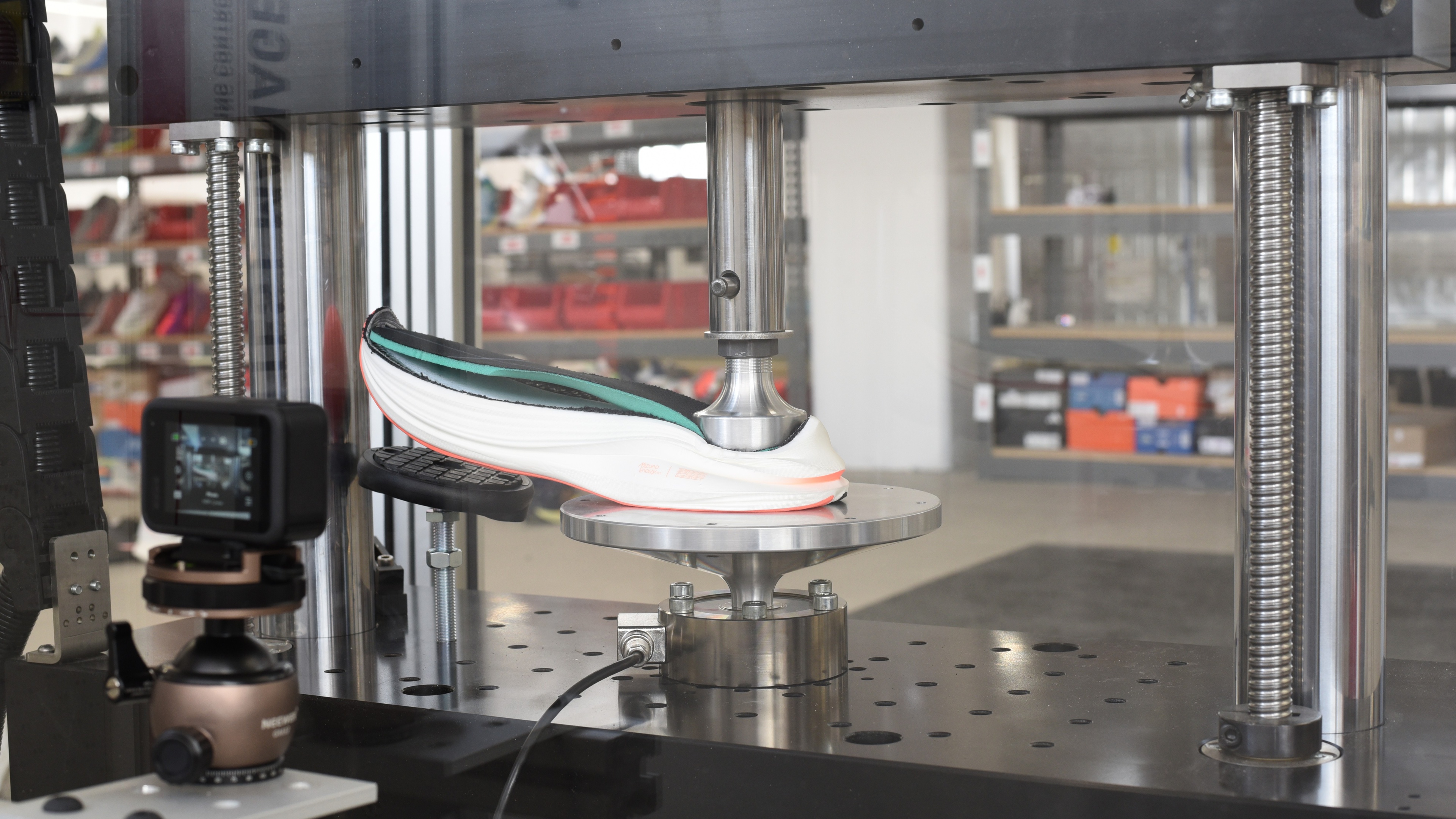
The Mizuno Neo Zen delivers satisfactory energy return, especially for a daily trainer. It's especially dynamic in the heel, where it feels more reactive. Runners who land further back will get the most out of this setup, while forefoot strikers may find it less engaging. Overall, this makes for a fun and bouncy ride for daily runs, but it's not energetic enough to truly pick up the pace.
Surprisingly bouncy midsole.
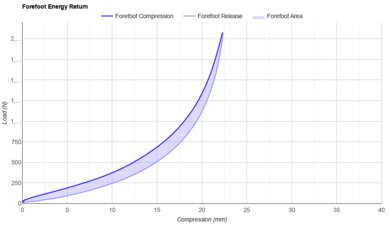
The energy return at the forefoot is satisfactory. While it works well for cruising, it's not ideal for speedwork or racing efforts that rely on more forefoot pop. The foam itself is decently bouncy, but not as much as alternatives like the ASICS NOVABLAST 5. Still, it delivers a smooth and pleasant ride that makes it a fun choice for relaxed daily runs.
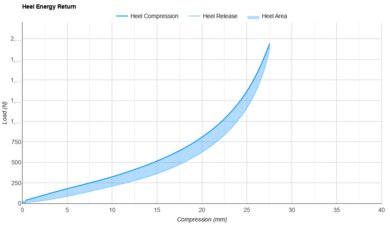
The shoe delivers a solid rebound at the heel, providing a lively sensation that adds to the shoe's enjoyable ride. It's not the most explosive feel out there, but there's enough bounce-back to make the shoe feel more dynamic than most daily trainers. While the midsole itself is energetic, the overall design isn't really optimized for picking up the pace, and the geometry favours flow over snap. That said, it remains a fun and engaging option for easy to moderate paces.
Cushioning
The Mizuno Neo Zen has great cushioning. It provides impressive underfoot protection in both the heel and forefoot, making it highly forgiving for most runners regardless of their strike pattern. Despite its plushness, the foam doesn't feel mushy or overly slow to rebound, offering a rare combination of comfort and liveliness in the modern trainer category.
Midsole is amazingly plush.
Balanced cushioning suits most strike patterns.
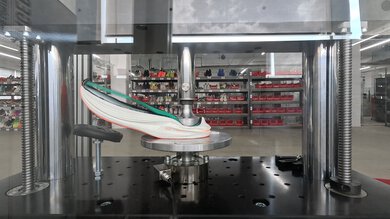
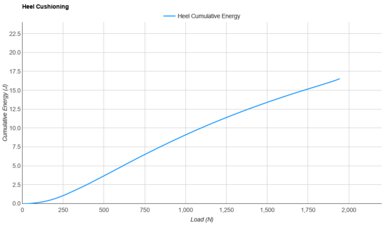
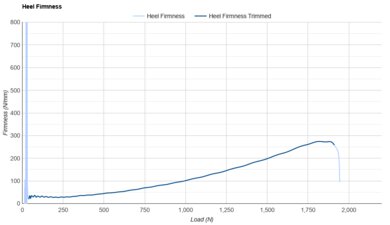
The heel cushioning is great. This model provides a plush and protective underfoot feel, absorbing high-impact landings with ease. Whether you're a heel striker logging recovery miles or just want a softer ride on longer runs, the heel offers great shock absorption without bottoming out. It's a highly forgiving platform that helps reduce cumulative fatigue over time.
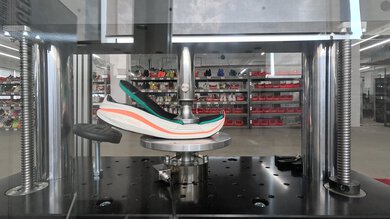
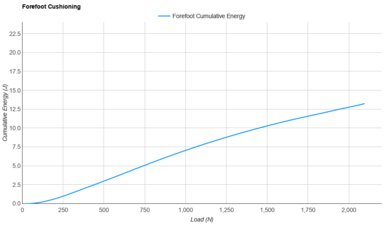
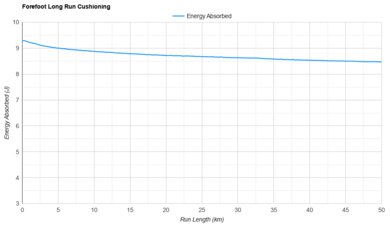
The forefoot also offers impressive cushioning, delivering solid protection and comfort for midfoot and forefoot strikers. The foam compresses more than in the Mizuno Neo Vista, likely due to the removal of the Wave Plate, a notable and welcome improvement that allows the ENERZY NXT foam to work more freely. The result is a more forgiving and enjoyable ride for daily mileage and longer runs.
Lateral Stability
Despite its tall stack and soft midsole, the Mizuno Neo Zen manages to deliver surprisingly decent lateral stability. The super wide outsole base helps keep things steady, though the soft heel and lack of plate may not be ideal for runners needing structured stability. Still, it holds up reasonably well for most people on most of their runs.
Very wide base.
Foam is overly soft.
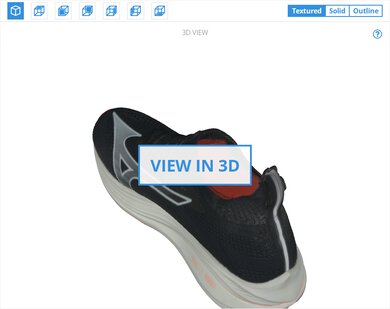
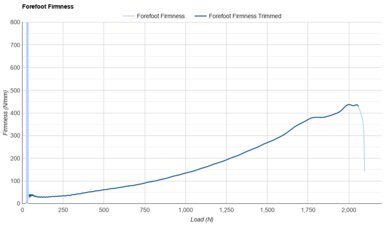
The forefoot is moderately firm. This added firmness up front helps balance out the plush feel of the rest of the shoe, giving it just enough bite to remain stable and predictable. It's not firm enough for truly aggressive efforts, but it does improve control during daily runs and longer efforts at steady paces.
True To Size
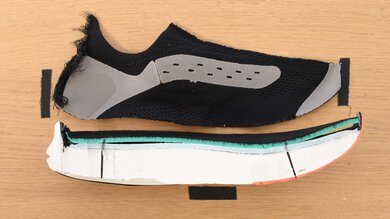
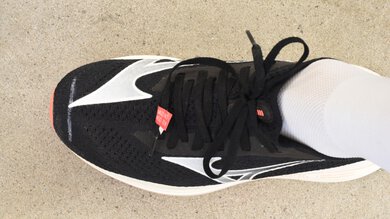
The Mizuno Neo Zen delivers a very true-to-size fit overall, with a particularly great length and a generously accommodating forefoot that should suit most foot shapes without feeling sloppy. The toebox has plenty of room to avoid that cramped sensation on longer runs. The main caveat is through the midfoot, where the sock-like upper keeps the arch area a bit more snug which can feel slightly restrictive if you have a higher-volume arch.
True-to-size length.
Enough room at the forefoot.
Snugger arch wrap due to the sock-like upper.
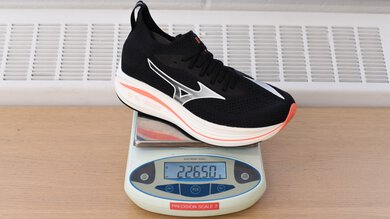
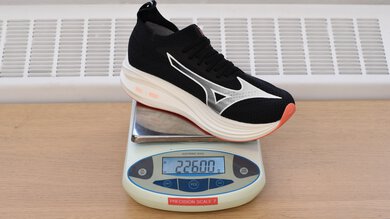
The Mizuno Neo Zen stands out for its surprisingly low weight given its maximalist design. It's lighter than many other max-cushioned trainers, including the plated Mizuno Neo Vista, which contributes to its smooth, nimble feel on foot. This weight reduction enhances efficiency over long distances and helps the shoe remain versatile despite its size.
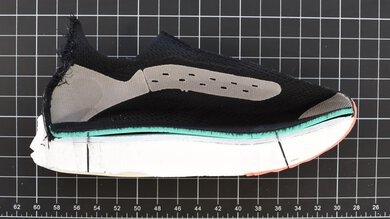
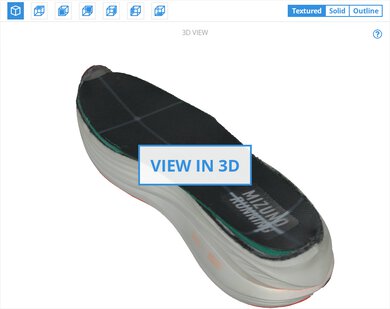
Popular Running Shoe Comparisons
The Mizuno Neo Zen is a modern daily trainer built with a high stack height and a supremely soft, reactive midsole that delivers a uniquely plush yet energetic ride. For easy days, daily miles, and recovery runs where protection and comfort are key, it stands out as a compelling choice. It offers a more cushioned and bouncy experience than most modern trainers in this category. In terms of intent and feel, it's closest to the ASICS NOVABLAST 5, though the Neo Zen is softer and lighter. Another comparable model is the Nike Vomero 18, which also uses an energetic foam (ZoomX), but feels firmer and less cushioned overall.
Within Mizuno's lineup, the Neo Zen marks a significant evolution. Since 1997, the Osaka-based brand has been a pioneer in the systematic use of Wave Plates, incorporating them into most of its shoes to help stabilize and structure softer foams. That approach still works in performance-oriented models like the Mizuno Wave Rebellion Pro 3, a super shoe, and the Mizuno Wave Rebellion Flash 2, a super trainer, where the plate adds a touch of stiffness that helps with pace pickup. However, this philosophy also boxed Mizuno in—something clearly seen in the Mizuno Neo Vista, which tried to position itself as a super trainer but fell short in practice. The inclusion of the plate felt out of place, clashing with the soft foam and ultimately resulting in a ride that was still too sluggish to handle faster paces. The updated Mizuno Neo Vista 2 still features a plate, but with a higher stack and more protective cushioning, it now works better as a premium option for recovery runs. The Neo Zen doesn't include any plate, allowing the foam to move freely and unlock a much more natural and bouncy experience for fun daily miles.
For more options, check out our recommendations for the best running shoes.
The Mizuno Neo Vista and the Mizuno Neo Zen may look similar at first glance, but they deliver very different experiences underfoot. The Neo Vista includes Mizuno's signature Wave Plate, which adds some structure but ultimately makes the ride feel sluggish and out of place for a shoe trying to act like a super trainer. Its large midsole cutout also gives it a somewhat suction cup-like feel. In contrast, the Neo Zen removes the plate entirely, allowing the soft foam to move more freely and deliver a significantly more natural ride while still preserving most of the cushioning. It's also notably lighter, which helps it feel more nimble and efficient on foot. While both are well-suited for easy or recovery runs, the Neo Zen improves on nearly every aspect, making it a smoother and more refined option for daily mileage.
The Mizuno Neo Zen 2 and Mizuno Neo Zen are two versions of the same model, and while both midsoles carry the Enerzy NXT branding, they aren't made from the same material. The original Neo Zen is the more exciting and more distinctive of the two, built around a supercritical TPU version of Mizuno Enerzy NXT that helps give it a bouncy, cushioned, lightweight ride. While the ride can be a bit chaotic, it definitely makes daily miles feel less monotonous. The Neo Zen 2 moves to a nitrogen-infused EVA-based Enerzy NXT foam, which tones that personality down in exchange for a more stable and controlled ride, helped further by a wider platform. It is still lightweight, but not quite as light-feeling or as wild underfoot as the original. The upper also changes meaningfully: the first Neo Zen uses a more sock-like knit upper, while the Neo Zen 2 shifts to a more conventional mesh construction layered over that knit-based concept, giving it a bit more structure, but it's not quite as roomy in the toe box.
The Mizuno Neo Zen and Mizuno Neo Vista 2 are both high-stack daily trainers from the Osaka-based company, but are tailored to very different needs. The Neo Zen is lighter, simpler, and more playful, being built around a single layer of foam with no plate, giving it a soft, bouncy ride that's ideal for everyday miles. The Neo Vista 2, on the other hand, is a much more protective and max-cushioned option. It has a much higher stack height and a plastic plate to stabilize the large midsole. The result is a more absorbing ride, especially during long runs and back-to-back mileage days, but it feels heavier and less energetic than the Neo Zen. However, the high-volume upper runs long and introduces lockdown issues that aren't present in the Zen.
The Mizuno Neo Zen and the ASICS NOVABLAST 5 are both modern, high-stack daily trainers built for comfort and bounce, but they differ in execution. The Mizuno is softer and more cushioned, offering a plush, highly protective ride that's ideal for easy and recovery runs. It also features a sock-like upper that helps save weight and contributes to the shoe's lighter overall build compared to the ASICS. However, this upper comes with a tradeoff—the lockdown isn't as secure, and it has a less accommodating fit that can feel more unstable during longer runs.
The adidas Adizero Evo SL and Mizuno Neo Zen are both popular trainers because they blend low weight with modern cushioning and a lively feel, but they are tuned differently. The adidas is the more responsiveness-first option, feeling a bit lighter and using a plastic shank to add stiffness, making it a better choice for picking up the pace and staying efficient during uptempo work. The Mizuno takes a more protective approach, sitting higher with more cushioning and a bouncy, modern midsole, but its geometry is optimized for smoother, easier miles rather than faster work.
The Mizuno Neo Zen and New Balance 1080v15 are two well-cushioned trainers that deliver a good amount of bounce per ounce. The Neo Zen is the lighter of the two, thanks to its thin, sock-like upper that hugs your foot. The New Balance shoe has a more structured upper with substantial padding. Both shoes have a similarly bouncy midsole, but the Neo Zen's higher stack and deeper cushioning make it a better choice for long runs.
The Mizuno Neo Zen and the On Cloudmonster 2 are both modern daily trainers, but they sit on opposite ends of the spectrum. The Cloudmonster is significantly firmer and more stable, offering a structured ride that feels controlled. On the other hand, the Neo Zen is much lighter, noticeably more energetic, and exceptionally squishy, delivering a soft, plush experience that prioritizes comfort and protection. While both are designed for daily training, the Cloudmonster 2 leans toward stability, whereas the Neo Zen excels in softness and easy-day comfort, making it a better pick for recovery runs or runners who enjoy a truly maximalist feel.
The R.A.D UFO and Mizuno Neo Zen are two high-stack trainers with lively foams, but they approach that energetic feel differently. The R.A.D UFO leans more toward cushioning and bounce, delivering a softer, more bouncy ride that feels especially plush underfoot. The Mizuno Neo Zen is the lighter option, offering a more agile feel, though it doesn't feel quite as deeply cushioned. Also, the Mizuno features a lower drop, resulting in a more effective stack in the forefoot. The uppers also contrast strongly: the R.A.D uses a more substantial construction with generous padding and a gusseted tongue that adds structure and comfort, while the Mizuno opts for a minimal mesh, sock-like upper that feels more minimal.
Differences Between Sizes And Variants
We tested the Mizuno Neo Zen in men's US size 9, as indicated on the label of our unit. The specific colorway shown here is Black/Raspberry. This model is available in multiple colorways, including White/Frontier Blue, Hint of Mint/India Ink, Black/White, and a Mystery Camo edition featuring a unique patterned design. Wide versions are not currently offered. Most of our review results are valid for all variants, though the design section applies only to the model we tested. We expect other size and gender variants to perform similarly.