
The Mizuno Wave Rebellion Pro 3 is an aggressive carbon-plated racing shoe built for runners chasing fast times over longer distances. It has a uniquely shaped midsole optimized for midfoot strikers and a shorter but steeper heel bevel than the previous version, so it can deliver an efficient transition, provided it matches your stride. The shoe pairs this with nitrogen-infused foam and a forward-tipping ride, so it feels soft yet propulsive. With its high stack and tapered base, Mizuno's experimental design won't suit everyone, but it stands out as a distinct alternative to more conventional super shoes.
Our Verdict
The Mizuno Wave Rebellion Pro 3 is well-suited for marathon racing, delivering a great balance of efficiency and comfort over long distances. Its lightweight build, high energy return, and plush cushioning make it easier to maintain momentum during fatigue-heavy segments. While its lateral stability isn't the best, the shoe still performs well as a long-distance racer for those with good form or at faster paces.
Great bounciness from the ENERZY XP foam.
Superb cushioning towards the heel.
Carbon fiber plate.
Unstable geometry for most runners.
Not the lightest super shoe.
While optimized for longer efforts, the Mizuno Wave Rebellion Pro 3 also holds its own in shorter distances. The snappy forefoot, integrated carbon plate, and efficient ride allow it to handle shorter races effectively. Its lower weight and firm forefoot make quick turnover feel natural, though the overall design makes for a ride that won't be as razor-sharp as some pure racing flats. Still, it's a versatile super shoe that adapts well to both fast and long efforts.
Carbon fiber plate.
Forefoot is quite firm.
Not the lightest super shoe.
Changelog
- Updated Mar 25, 2026: We've converted this review to Test Bench 0.10, adding a new set of fit tests to the Design section and an overall fit performance usage. Check out the details in our changelog.
-
Updated Feb 26, 2026:
We revamped the lineup section of the Popular Running Shoe Comparisons box to mention the newly released Hyperwarp line of super shoes
-
Updated Jan 22, 2026:
We've updated the Popular Comparisons section to include the recently released Mizuno Hyperwarp Pure.
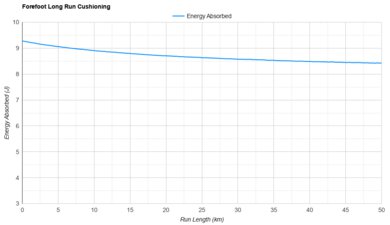
- Updated Nov 20, 2025: We've converted this review to Test Bench 0.9, which adds a Forefoot Long Run Cushioning test to our performance section. Read more in our changelog.
-
Updated Oct 28, 2025:
We updated the Pros & Cons, Cushioning, Heel Cushioning, Forefoot Cushioning, and Forefoot Firmness boxes to align with the latest test bench and revised the side-by-side comparisons to keep the review accurate.
- Updated Oct 24, 2025: We've converted this review to Test Bench 0.8.2, which updates our methodology for the impact force range used in our compression tests to improve their accuracy. This also affects all usage and performance usage boxes using those compression tests as score components.
-
Updated Aug 11, 2025:
We updated the Compared To Other Running Shoes box to include the Mizuno Neo Vista 2.
-
Updated Jul 30, 2025:
We revised the phrasing in the Forefoot Cushioning test box to better align with the latest test bench scores.
- Updated Jul 30, 2025: We've converted this review to Test Bench 0.8.1, which mainly updates the score components for the Marathon Racing and Lateral Stability usage boxes to improve accuracy.
-
Updated Apr 25, 2025:
We added the Mizuno Neo Zen to the brand's lineup in the Compared to Other Shoes box.
- Updated Apr 11, 2025: Review published.
- Updated Apr 07, 2025: Early access published.

We've bought and tested more than 250 running shoes. Every pair purchased with our own money, never supplied or sponsored by brands. Our data-driven tests are designed to go beyond marketing claims, and since every shoe goes through the exact same methodology, you can directly compare results to find the right pair for your needs.
Test Results

Energy Return
The Mizuno Wave Rebellion Pro 3 offers lively, responsive energy return, particularly when loading through the midfoot. The foam decompresses rapidly and provides a noticeable pop. Midfoot strikers will benefit most from its geometry, as the steep rocker creates a sweet spot in this area that rewards forceful strides.
Great bounciness from the ENERZY XP foam.
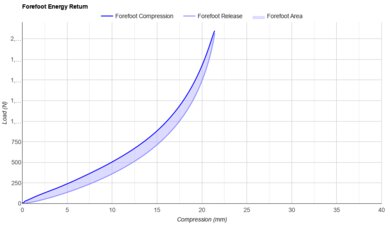
The forefoot energy return is very good, providing good energetic feedback. This translates to a strong, springy toe-off that's valuable for faster paces and racing. However, it'll feel more dynamic for midfoot strikers than pure forefoot strikers.
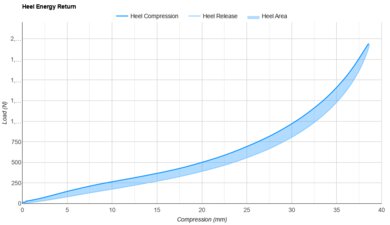
Due to the shoe's extreme heel bevel and unusual geometry, we had to adjust our standard testing approach. We couldn't compress the shoe at the typical 12% rearfoot point (it would shift or fall off the platform), so we had to move the point of compression forward to 30%, where ground contact is more realistically made. At this adjusted position, the heel foam delivered impressive rebound, clearly indicating this area as optimal for maximizing energy return.
Cushioning
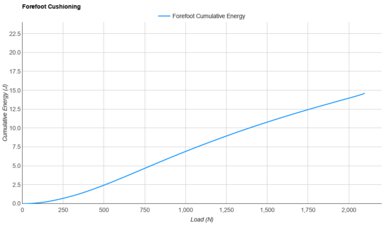
Cushioning is a clear strength of the Mizuno Wave Rebellion Pro 3. The shoe delivers superb impact protection, especially at the heel, thanks to its plush stack and nitrogen-infused midsole that absorbs impacts very well. The forefoot cushioning complements this setup by offering a less plush yet still very protective platform.
Superb cushioning towards the heel.
Great protection under forefoot.

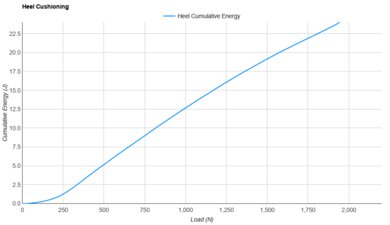
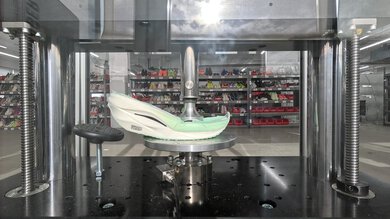
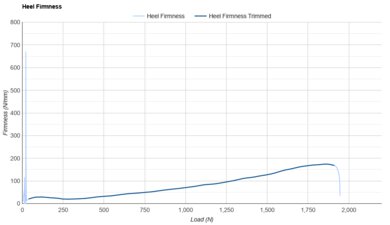
The Mizuno Wave Rebellion Pro 3 delivers exceptional cushioning. Because of the unique heel angle, we had to adapt our testing to be able to compress it, shifting the measurement to 30% of the shoe's length, to reflect where runners would realistically engage the foam. From this adjusted position, the heel absorbs an incredible amount of energy. That said, the geometry still discourages traditional true heel striking during actual runs, so this performance is best viewed as an indicator of protection rather than an invitation to land at the rearfoot.
Lateral Stability
Lateral stability is where the Mizuno Rebellion Pro 3 shows its limitations. With an extreme 61mm stack height at the midfoot and very soft foam towards the heel, the shoe feels wobbly, especially at slower paces and when fatigue sets in late in a run. The instability caused by the aggressive underfoot cutout becomes far less noticeable at faster paces or for runners with efficient mechanics. Like many super shoes, it's best suited for those who don't rely on added stability features to maintain form.
Carbon fiber plate.
Unstable geometry for most runners.
Soft and wobbly heel foam.
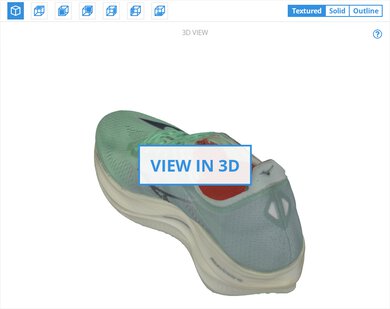
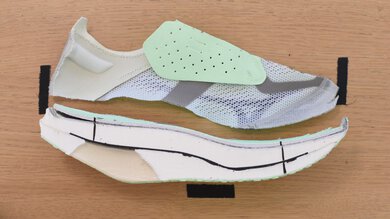
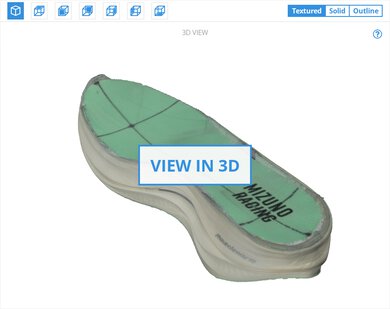
The shoe features a prominent cutout through the midsole, positioned centrally. Unlike the previous iteration, where the cutout extended through most of the length of the shoe, this version limits it to the rear section. Because of this placement, it doesn't directly impact our width measurements or the shoe's lateral stability score. However, it does affect how the shoe feels at slower paces, where ground contact may feel less consistent. This sensation fades as you pick up speed, which aligns with the shoe's design intent: delivering a fluid experience when running fast.
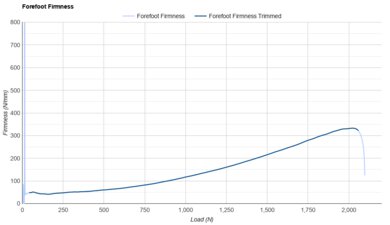
Unlike the heel, the forefoot offers a firmer and more stable platform, giving runners a secure base from which to push off. It strikes a good balance: firm enough to stay efficient under load yet not overly rigid. This behavior complements the shoe's early rocker and encourages a firm, aggressive toe-off.
True To Size
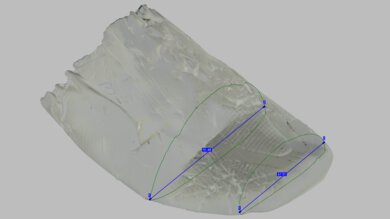
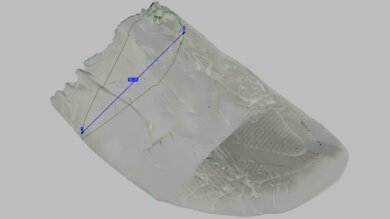
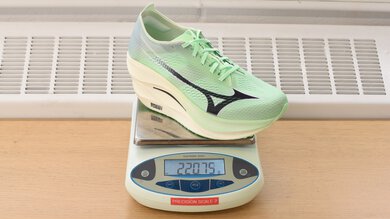
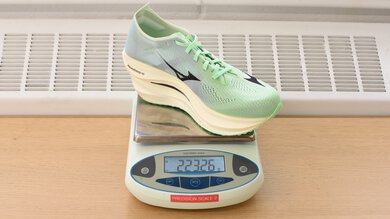
The Mizuno Wave Rebellion Pro 3 is lightweight by overall shoe standards but only moderately light among modern super shoes. Its radical design and geometry are clearly the focus over shaving off extra grams, but the overall weight is well-balanced.
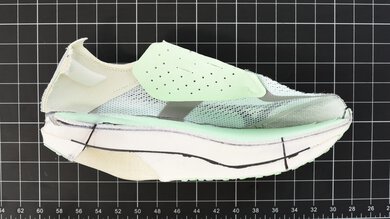
We measured the Mizuno Wave Rebellion Pro 3's stack height using the World Athletics guidelines. While it remains legal for competition under those standards, the shoe's sharply beveled heel means that the heel can reach up to 61mm. This geometry shifts the effective point of contact forward, encouraging a midfoot strike and making traditional heel striking less accessible. It's a design clearly intended for fast, efficient running.
Popular Running Shoe Comparisons
The Mizuno Wave Rebellion Pro 3 is the brand's top-tier carbon-plated racing shoe, built specifically for runners chasing peak performance over long distances. With its aggressive geometry, ultra-lightweight build, and responsive midsole, it targets the same segment of the pack as other elite supershoes like the Nike Alphafly 3 and adidas Adizero Adios Pro 4. Compared to these, it offers a distinctly snappy, rolling sensation underfoot that's truly optimized for midfoot strikers, aided by its heel bevel and aggressive rocker design. It's ideal for experienced racers who don't mind the extra weight and have the speed and stride to fully take advantage of the unique design. Another super shoe that shares a similar geometry with a high midfoot stack height, though less pronounced, is the HOKA Cielo X1 2.0.
Within Mizuno's lineup, the Wave Rebellion Pro 3 is the racing shoe with the most experimental design. The brand has now introduced a new trio of more conventional super shoes: the Mizuno Hyperwarp Pure for shorter distances, the Mizuno Hyperwarp Elite for long-distance racing, and the Mizuno Hyperwarp Pro as the more stability-focused option within the lineup. Also, the Mizuno Neo Zen serves as a fun and cushioned daily trainer for the bulk of your mileage. For a similarly protective ride but in a daily training package, check out the Mizuno Neo Vista 2.
For more options, check out our recommendations for the best running shoes to find the perfect pair.
The adidas Adizero Adios Pro 4 and Mizuno Wave Rebellion Pro 3 are both highly cushioned, forgiving carbon-plated marathon shoes, but they take different routes to performance. The adidas offers a more efficient racing performance for most runners thanks to its lower weight and more energetic Lightstrike Pro midsole, delivering a responsive and fast feel. The Mizuno, however, uses a unique, aggressive geometry with a prominent stack height in the midfoot area that creates a strong rolling sensation, especially effective for midfoot strikers, making it a great option if that rocker complements your stride.
The Nike Alphafly 3 and Mizuno Wave Rebellion Pro 3 are both super shoes designed for long-distance racing, but take very different approaches. The Nike features a more conventional geometry and slightly lower stack, making it feel more stable and controlled underfoot. It's also lighter and uses ZoomX foam with a forefoot Air Pod. The Mizuno, on the other hand, offers a softer, more cushioned ride with a more aggressive geometry, with an incredible 61mm stack height in the midfoot. It's ideal for midfoot strikers who prefer a plush, rolling sensation over firmer snappiness.
The Saucony Endorphin Elite 2 and the Mizuno Wave Rebellion Pro 3 are both long-distance super shoes that emphasize soft cushioning and energetic midsoles, but they differ notably in design and feel. The Saucony is lighter and more adaptable across a variety of footstrike patterns, making it a better fit for a wider range of runners. In contrast, the Mizuno features an aggressive rocker and dramatic heel bevel, which can create a strong rolling sensation but limits its practicality to midfoot strikers.
The Saucony Endorphin Pro 4 and Mizuno Wave Rebellion Pro 3 are both carbon-plated super shoes, but each caters to different racing scenarios. The Saucony is better suited for shorter distances thanks to its lighter weight and firmer forefoot. It's also surprisingly stable for a super shoe, and its midsole feels more energetic. The Mizuno, while slightly heavier and softer, delivers a more cushioned and protective ride, making it better suited for longer races like marathons, especially for midfoot strikers able to activate the midsole fully.
The On Cloudboom Strike and Mizuno Wave Rebellion Pro 3 are both carbon-plated super shoes built for long-distance racing but differ in execution. The On is lighter and more stripped-back, offering a responsive yet less energetic ride with slightly less cushioning, though still generous by racing standards. The Mizuno, in contrast, provides a softer, more cushioned feel and a more energetic midsole, resulting in a more pronounced rolling sensation.
The HOKA Cielo X1 2.0 and Mizuno Wave Rebellion Pro 3 both cater to runners seeking an aggressive, midfoot-oriented super shoe, but they achieve this through different implementations. The HOKA offers a soft, more rockered ride with a lightweight feel that encourages smooth forward roll when up on the toes. The Mizuno, on the other hand, takes the concept further with an extreme heel bevel and higher midfoot stack, making it even more suitable for midfoot landings. This gives it a more aggressive toe-off feel but limits its accessibility to various runners, as both forefoot and heel landings may miss out on the shoe's optimal propulsion zone. The Mizuno is also way heavier, limiting its appeal in terms of overall efficiency.
Differences Between Sizes And Variants
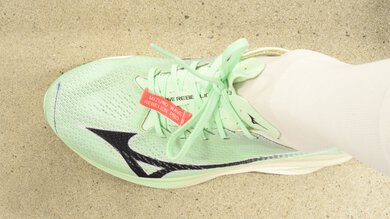
We bought and tested the Mizuno Wave Rebellion Pro 3 in unisex US size M9 / W10.5 in the Neo Mint/Black/Hint of Mint colorway. Here's the label for our pair. You can also buy the shoe in another color option under a different name: the Mizuno Wave Rebellion Pro Beta, which features a bold zebra-striped design. While the Beta version looks drastically different, it's functionally identical. This shoe comes in a unisex version, with corresponding size conversions for men and women provided by Mizuno.

The design section applies only to the exact model we tested, but we expect other sizes to perform similarly.