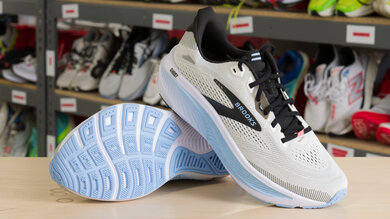
The Brooks Ghost 18 is a classic daily trainer for runners who want a dependable shoe for relaxed weekly mileage. Its impressively stable platform makes every stride secure, while the heel provides very good impact protection, making the shoe particularly well-suited to heel strikers. However, the forefoot provides sub-par protection, while the poor energy return leaves the ride flat when you want to run faster. Its significant weight further limits its versatility, making relaxed daily miles its clear sweet spot.
| ✅ Buy If: | ❌ Skip If: |
|
|
Our Verdict
The Brooks Ghost 18 is a poor choice for marathon racing. It's too heavy to handle the distance well, and the lack of a plate, plus poor energy return and inadequate long-run cushioning, mean runners looking to go the distance will be better served elsewhere.
Too heavy for racing.
Dull midsole returns very little energy.
The Brooks Ghost 18 is an unremarkable 5K/10K racer. Its firm forefoot gives it some structure for faster running, but its heavy build, lack of plate, and poor energy return make it mediocre for short-distance racing.
Firm forefoot adds stability.
Too heavy for racing.
Dull midsole returns very little energy.
The Brooks Ghost 18 is a passable long-run shoe. Its impressively stable platform remains trustworthy as fatigue builds, but it lacks the propulsion needed to keep legs ticking over effortlessly. The cushioning holds up poorly as miles build, too, leaving legs beat up afterward.
Impressively stable platform remains trustworthy as fatigue builds.
Poor underfoot protection makes longer efforts less forgiving.
The Brooks Ghost 18 is a decent daily trainer. Its impressively stable platform makes it dependable for regular mileage, though its significant heft and lack of propulsion mean it isn't suited to picking up the pace.
Impressively stable platform makes for a dependable ride.
Poor responsiveness make faster efforts harder.
Changelog
- Updated Sep 16, 2026: We've converted this review to Test Bench 0.15, which replaces Responsiveness with three specific performance usages: Bounciness, Snappiness, and Roll. To read more about the changes, see the changelog.
- Updated Sep 02, 2026: We've converted this review to Test Bench 0.14, which adds new lace-specific results. We've included a close-up photo of the laces, as well as details including lace type, width, thickness, and stretch. To read more about the changes, see the changelog.
-
Updated Aug 06, 2026:
We've updated the Popular Comparisons section to include a link to the newly reviewed Brooks Ghost Max 4, as well as added text to the usage boxes and Pros and Cons section after converting this shoe to the latest Test Bench.
-
Updated Jul 17, 2026:
We've updated the Popular Comparisons section to tweak the wording and add a link to the newly reviewed Brooks Ghost Amp.
-
Updated Jul 14, 2026:
We've updated the Popular Comparisons section to include a link to the newly reviewed Mizuno Wave Rider 30.
- Updated Jul 07, 2026: We've converted this review to Test Bench 0.13, which identifies the different foams used in the shoe's midsole. We've included a microscopic image of the foam cells to give you an idea of what the microstructure looks like. To read more about the changes, see the changelog.
- Updated Jun 30, 2026: We've converted this review to Test Bench 0.12, which fixes how we measure firmness, a component of the Stability and 5K/10K Racing usages. There may be inconsistencies between the text and the scores for these usages, but the scores should still be considered valid. We've also brought back the Energy Return score and added two new usages: Daily Training and Long Run. To read more about the changes, see the changelog.
- Updated Jun 22, 2026: Review published.
- Updated Jun 18, 2026: Early access published.
- Updated Jun 09, 2026: Our testers have started testing this product.
- Updated May 01, 2026: The product has arrived in our lab, and our testers will start evaluating it soon.
- Updated Apr 14, 2026: We've purchased the product and are waiting for it to arrive in our lab.
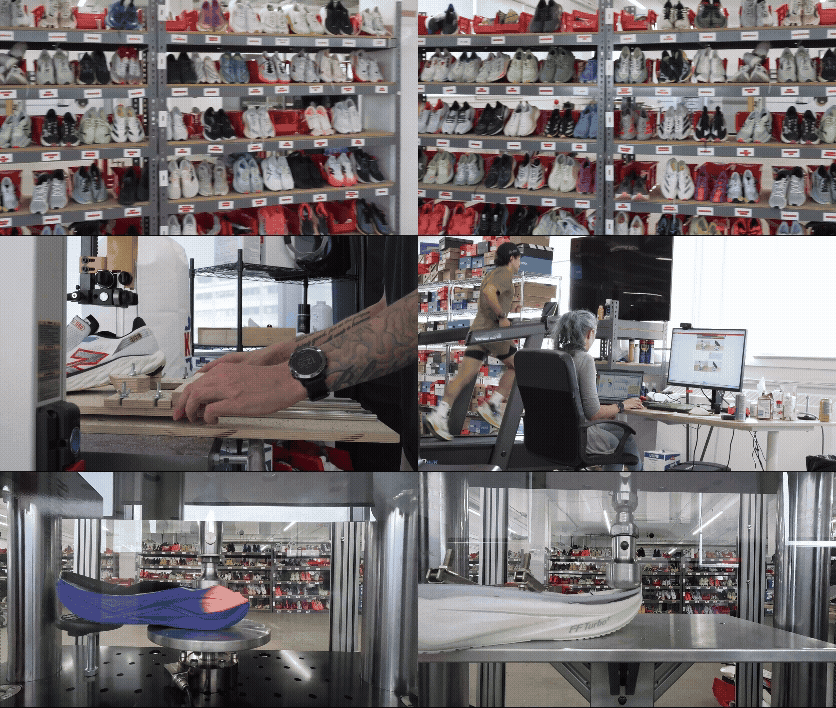
We've bought and tested more than 250 running shoes. Every pair purchased with our own money, never supplied or sponsored by brands. Our data-driven tests are designed to go beyond marketing claims, and since every shoe goes through the exact same methodology, you can directly compare results to find the right pair for your needs.
Test Results
Energy Return
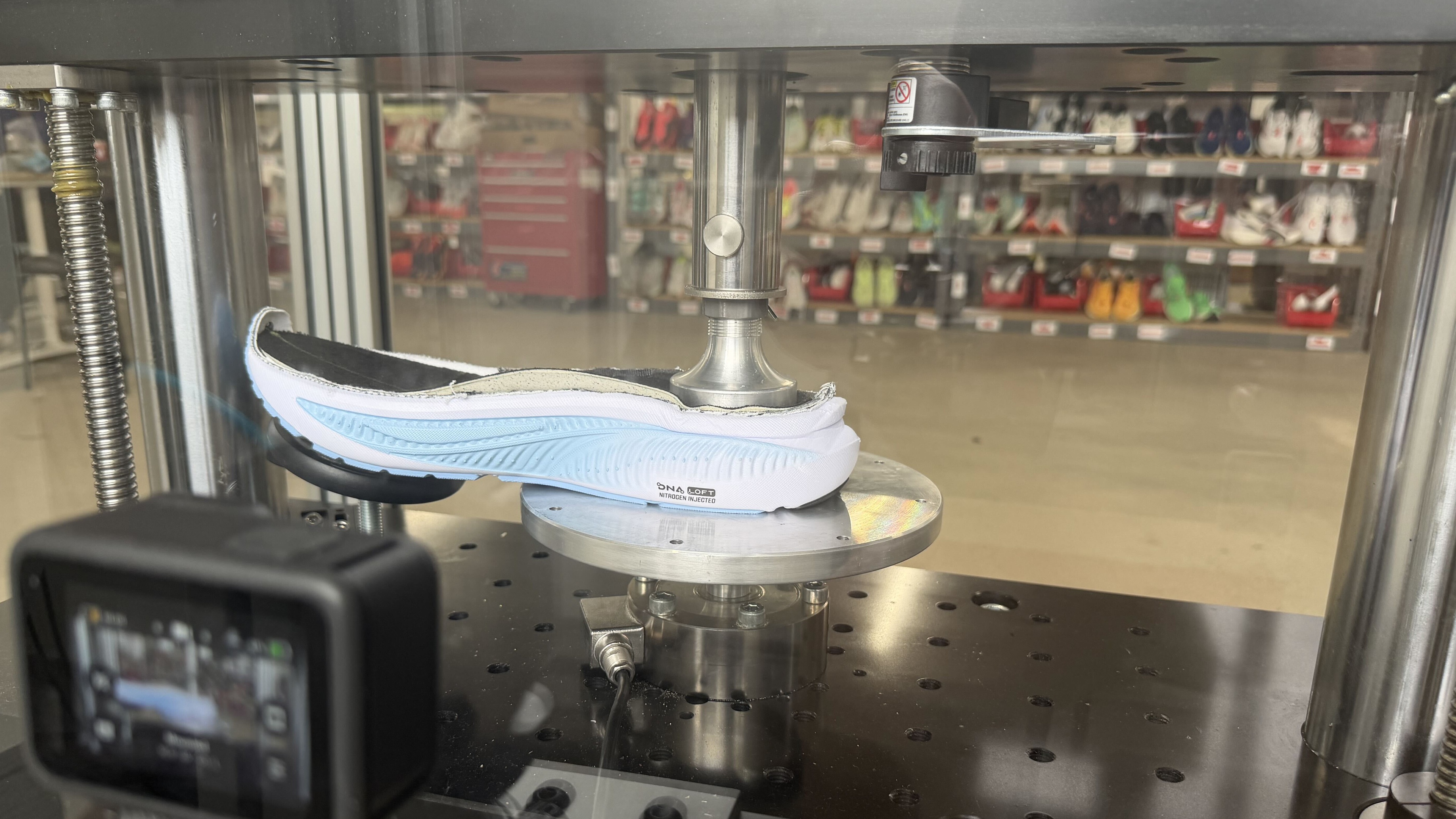
The Brooks Ghost 18 has poor energy return. Very little energy comes back through the heel, while the forefoot also returns little at toe-off, leaving the ride flat and inefficient.
Very flat ride across the whole midsole.


Stability
The Brooks Ghost 18 offers very good stability. Its wide platform and firm forefoot help keep the ride secure, while the broad base provides a planted ride.
Wide forefoot platform provides a planted ride.
Broad heel makes for steady landings.
Firm forefoot keeps toe-offs controlled.
Heel is noticeably softer than the forefoot.
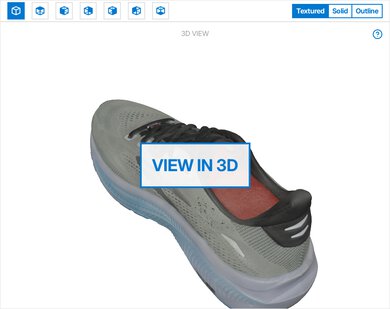

The heel is impressively firm across different force levels, giving heel strikers a secure base when landing.

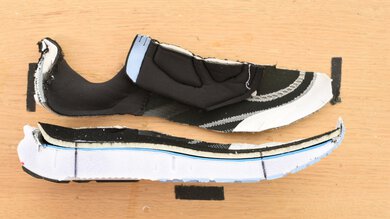
Cushioning
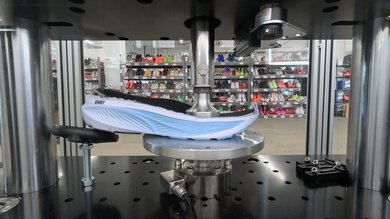
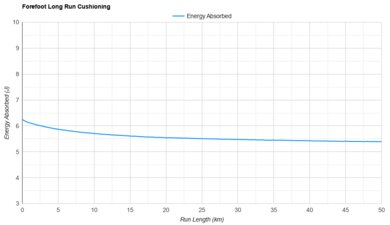
The Brooks Ghost 18 provides adequate cushioning overall. Its cushioning profile is heavily biased toward the heel, with very good protection in the rearfoot and sub-par in the forefoot, meaning it's best suited to heel strikers.
Very good heel protection for heel strikers.
Forefoot cushioning is sub-par.
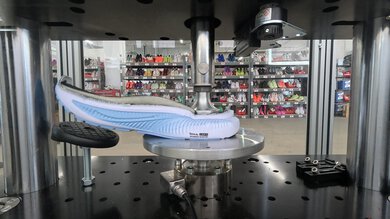

The heel cushioning improves as more force hits the shoe. Protection is decent at lighter loads and becomes very good under higher forces, making the Brooks Ghost 18 particularly well-suited to heel strikers.

Bounciness
The Brooks Ghost 18 has poor bounce. The heel compresses only moderately, while the forefoot stays especially shallow under load. Both ends also return little energy, so the shoe offers very little spring through the stride.
Low forefoot energy return.
Ride lacks propulsion.
Shallow forefoot compression limits spring at toe-off.
Poor rebound leaves the ride flat.


Snappiness
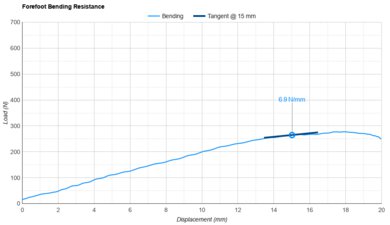
The Brooks Ghost 18 has okay snap. Its exceptionally firm forefoot provides a secure base to push from, but the forefoot itself bends too easily to offer much leverage. It also loses too much of the energy stored while bending, while the tame rocker angle provides little assistance through toe-off.
Exceptionally firm forefoot provides a secure base at toe-off.
Soft forefoot limits leverage through push-off.
Poor bending energy return limits efficiency at toe-off.
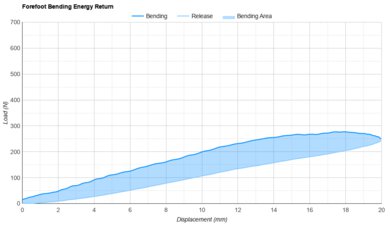
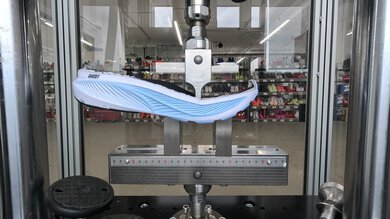
The forefoot has subpar bending energy return. It loses too much of the energy stored while bending, limiting efficiency as the shoe unbends through toe-off.
Roll
The Brooks Ghost 18 has sub-par roll. Its heel rocker provides some assistance into midstance, but the forefoot rocker offers little help through toe-off. The compliant rocker also flattens under load, while the very low forefoot stack further limits how smoothly the shoe carries you forward.
Forefoot rocker offers little assistance through toe-off.
Low forefoot stack flattens rather than rolling smoothly forward.
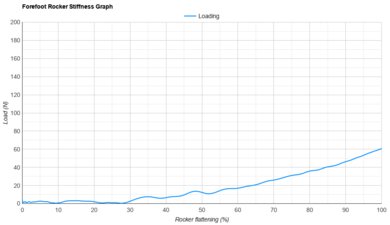
The rocker has sub-par stiffness and flattens too easily under load. That limits how much the shoe can carry you forward through the stride.
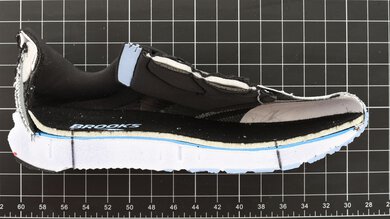
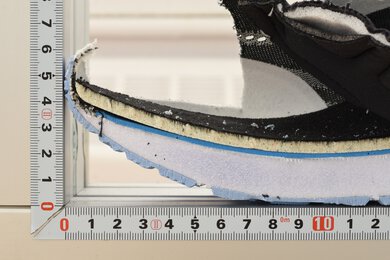
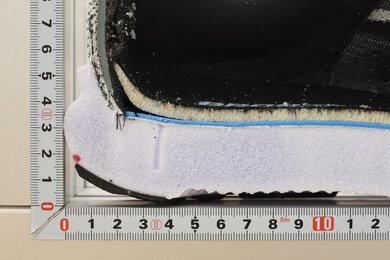
The Brooks Ghost 18 combines a moderate heel stack with a much lower forefoot, creating a high drop that particularly suits heel strikers. The very low forefoot stack leaves little material to maintain a rolling shape, so the front of the shoe tends to flatten through toe-off instead of carrying you smoothly forward.
True To Size
The Brooks Ghost 18 fits true to size overall. The length is spot on, while the forefoot has enough width for most foot shapes. However, the lower toebox may feel a bit shallow if you need extra room up top.
Spot-on length fit.
Accommodating forefoot width.
Toebox may feel a bit shallow for some.
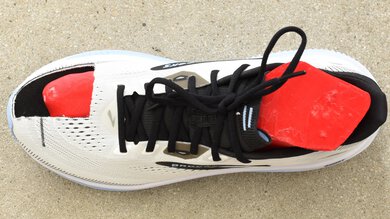
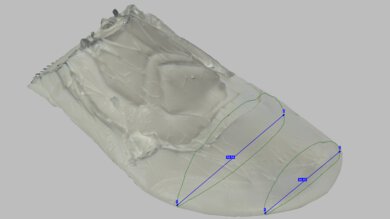
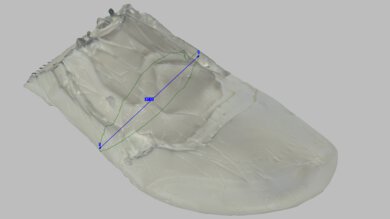
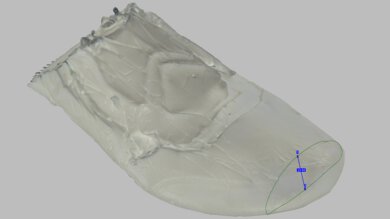
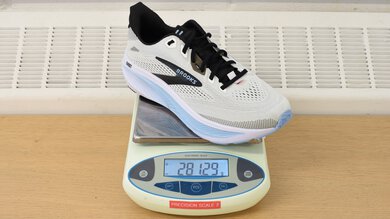
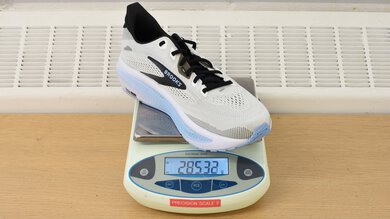
The Brooks Ghost 18 is heavy even for a daily trainer, sitting above average for the category. It weighs virtually the same as the Brooks Ghost 17.
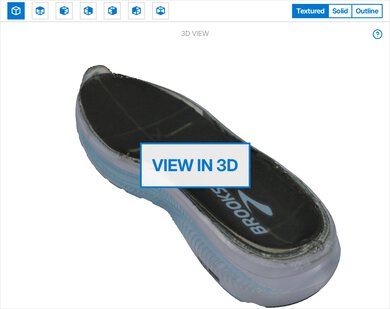
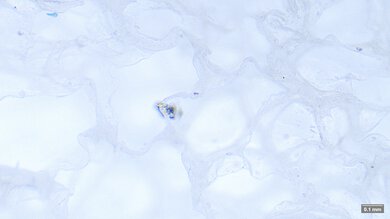
The Brooks Ghost 18 uses DNA LOFT v3, an EVA-based foam. This explains why the shoe offers little rebound and only adequate protection underfoot. It trails behind the livelier, performance-focused Ghost shoe, the Brooks Ghost Amp, which uses a more modern foam setup.

Popular Running Shoe Comparisons
The Brooks Ghost 18 is a classic daily trainer that belongs to the same school as stalwarts like the Nike Pegasus 42 and the ASICS GEL-CUMULUS 28. These long-standing shoes helped build their brands, offering reliable rides to soak up routine mileage rather than headline-grabbing invention. All three are similarly stable, though the ASICS comes in significantly lighter than both. The Nike shoe is the least protective and much firmer underfoot than the other two, though none will thrill runners chasing bounce or speed; however, that's never been the brief for these three. Runners looking for a plated, deeply protective daily workhorse should check out the Mizuno Wave Rider 30.
Within Brooks' lineup, the Ghost 18 sits above the entry-level Brooks Anthem 8 as the brand's classic neutral daily trainer. The Brooks Ghost Amp is the livelier younger brother, and the Brooks Adrenaline GTS 25 is the Ghost with dedicated support for overpronation added. The Brooks Ghost Max 4 offers a taller, more cushioned take on the beloved Ghost formula. The Brooks Glycerin 23 is the plusher premium daily trainer, and the Brooks Hyperion 3 is the lighter option for uptempo training.
For more from the brand, check out our recommendations for the best Brooks running shoes. For broader options, see our picks for the best running shoes, or our recommendations for the best beginner running shoes if you're just starting out.
The Brooks Ghost 18 follows so closely in the footsteps of the Brooks Ghost 17 that most runners will notice little difference between them. The Ghost 18 gains a bit of cushioning and responsiveness, while the Ghost 17 remains marginally more stable, but both are equally adept as workhorses intended to soak up daily miles. If the Ghost 17 is available at a good price, there's little reason to spend more on the Ghost 18.
The Brooks Ghost Amp is the more versatile younger sibling of the Brooks Ghost 18, and it's the better shoe for most runners. It's more cushioned, more energetic, and more fun underfoot across everything from easy runs to longer efforts. Though the Ghost 18 is slightly more stable overall, most runners won't notice the difference, and its heavier build and duller midsole mean it can't match the Amp's livelier ride or broader performance range.
The Brooks Ghost 18 and the Nike Pegasus 42 are classic daily trainers with more similarities than differences. Both are dependable workhorses that offer good stability and prioritize consistency over bounce. The Brooks offers better cushioning overall, while the Nike has a narrower toe box and delivers a firmer ride, especially through the heel. Neither shoe is particularly exciting underfoot, but both are reliable options for soaking up daily miles.
The HOKA Clifton 11 and Brooks Ghost 18 are both classic daily trainers, but they suit different preferences. The HOKA is much more cushioned and performs better over longer runs, making it the best pick if you want deeper protection underfoot. The Brooks is heavier and sits lower to the ground, but it’s the more stable shoe and offers more groundfeel underfoot. Neither shoe is especially lively, so this mostly comes down to what you want from a shoe: the taller and more deeply cushioned HOKA or the more stable and traditional ride of the Brooks.
The Brooks Ghost Max 4 is a better daily trainer than the Brooks Ghost 18. Its taller, more protective, and stable platform makes it the better choice for regular mileage and longer runs. The Ghost 18 sits closer to the road and suits runners who want less shoe underfoot, and its higher drop makes it a bit better suited for heel strikers.
The Brooks Ghost 18 and the ASICS GEL-CUMULUS 28 are classic daily trainers built around reliability rather than excitement. Both offer good stability and adequate cushioning for daily mileage. The ASICS is lighter and a bit more cushioned, while the Brooks is slightly more responsive, though neither is lively underfoot.
The Brooks Ghost 18 is a better running shoe than the Brooks Revel 9. Though heavier, its higher stack provides much better impact protection for daily miles, and while neither ride is particularly lively, the Ghost 18 is a bit bouncier underfoot. If you're mostly running to warm up before a gym session, though, the extra cost of the Ghost 18 isn't worth it, so the Revel 9 makes more sense.
The Mizuno Wave Rider 30 and Brooks Ghost 18 are both classic daily trainers built for routine mileage, but they take different routes to get there. The Mizuno is the more modern and protective shoe, with much more cushioning, better long-run performance, and a full-length plastic Wave Plate that stabilizes the taller stack and helps it feel more propulsive. The Brooks is the more traditional option, sitting lower to the ground with a firmer, less protective ride and more heft underfoot. Both shoes are very stable, and neither is especially lively, but the Mizuno gives you more cushioning and more range for longer runs.
The Brooks Anthem 8 and the Brooks Ghost 18 both belong to the same brand, but they're meant for different runners. The Ghost is the classic daily trainer, providing a more protective ride overall, and is more suited to heel strikers due to its very good cushioning in the rearfoot. The Anthem 8 is the budget option, and though more stable underfoot, it's not quite as balanced or propulsive as the Ghost overall. Both shoes can handle daily mileage, but the Ghost handles it better; however, it's significantly more expensive at full retail.
Differences Between Sizes And Variants
We tested the Brooks Ghost 18 in men's US size 9, as indicated on the label of our pair. The color featured on the shoe we tested is White/Black/Open Air, but you can also get it in other colors, depending on the region. This shoe is available in a variety of widths, ranging from Narrow, Medium, Wide, and Extra Wide. The design section applies only to the exact model we tested, but we expect other sizes to perform similarly.