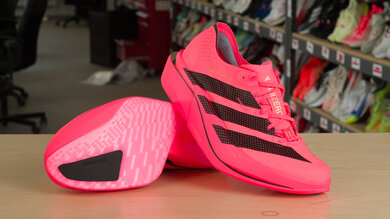
The adidas Adizero Adios Pro 5 is a lightweight racing shoe for runners targeting long-distance events. Its protective cushioning and energetic rebound suit sustained faster efforts, particularly in longer races, but also work well for shorter races and faster long runs. However, stability is limited even by racing shoe standards, and its aggressive, stiff construction makes it poorly suited to relaxed daily mileage.
| ✅ Buy If: | ❌ Skip If: |
|
|
Our Verdict
The adidas Adizero Adios Pro 5 is excellent for half-marathon and marathon racing. It combines low weight with protective cushioning that remains effective over longer efforts, while its energetic forefoot and rocker support sustained race paces. However, the narrow heel and soft midsole limit stability, which matters if you need a steadier platform as your form breaks down late in the race.
Very lightweight.
Cushioning remains protective over longer efforts.
Excellent energy return at the forefoot.
Pronounced forefoot rocker encourages rolling transitions.
Narrow heel limits stability when landing.
The adidas Adizero Adios Pro 5 is very good for 5K and 10K racing. Its low weight makes it well suited to fast efforts, while the stiff forefoot returns energy efficiently through toe-off. However, the soft forefoot foam limits how immediate the response feels, making it less appealing if you prefer a firm, direct racing ride.
Very lightweight.
Excellent energy return at the forefoot.
Forefoot springs back efficiently after bending.
Pronounced forefoot rocker encourages rolling transitions.
Soft forefoot limits support and direct toe-offs.
The adidas Adizero Adios Pro 5 can be a good choice for long runs, particularly those that include faster sections. Its excellent cushioning provides protection as the miles accumulate, while its low weight and energetic ride suit sustained efforts. However, it's an aggressive, unstable shoe, which can be a major drawback if you need more support to maintain a controlled stride as you tire.
Very lightweight.
Cushioning remains protective over longer efforts.
Excellent energy return at the forefoot.
Pronounced forefoot rocker encourages rolling transitions.
Narrow heel limits stability when landing.
Mild heel rocker provides limited assistance during rearfoot transitions.
The adidas Adizero Adios Pro 5 is mediocre for daily training. Its low weight and energetic feel make it efficient, but the narrow heel and soft platform provide limited stability. The stiff carbon plate and aggressive geometry also means it's less natural for relaxed mileage, so it's better suited to dedicated faster sessions.
Very lightweight.
Feels very protective underfoot.
Narrow heel limits stability when landing.
Aggressive, stiff construction isn't designed for easy mileage.
Changelog
- Updated Sep 22, 2026: Review published.
- Updated Sep 21, 2026: Early access published.
- Updated Sep 14, 2026: Our testers have started testing this product.
- Updated Sep 09, 2026: The product has arrived in our lab, and our testers will start evaluating it soon.
- Updated Sep 08, 2026: We've purchased the product and are waiting for it to arrive in our lab.

We've bought and tested more than 250 running shoes. Every pair purchased with our own money, never supplied or sponsored by brands. Our data-driven tests are designed to go beyond marketing claims, and since every shoe goes through the exact same methodology, you can directly compare results to find the right pair for your needs.
Test Results
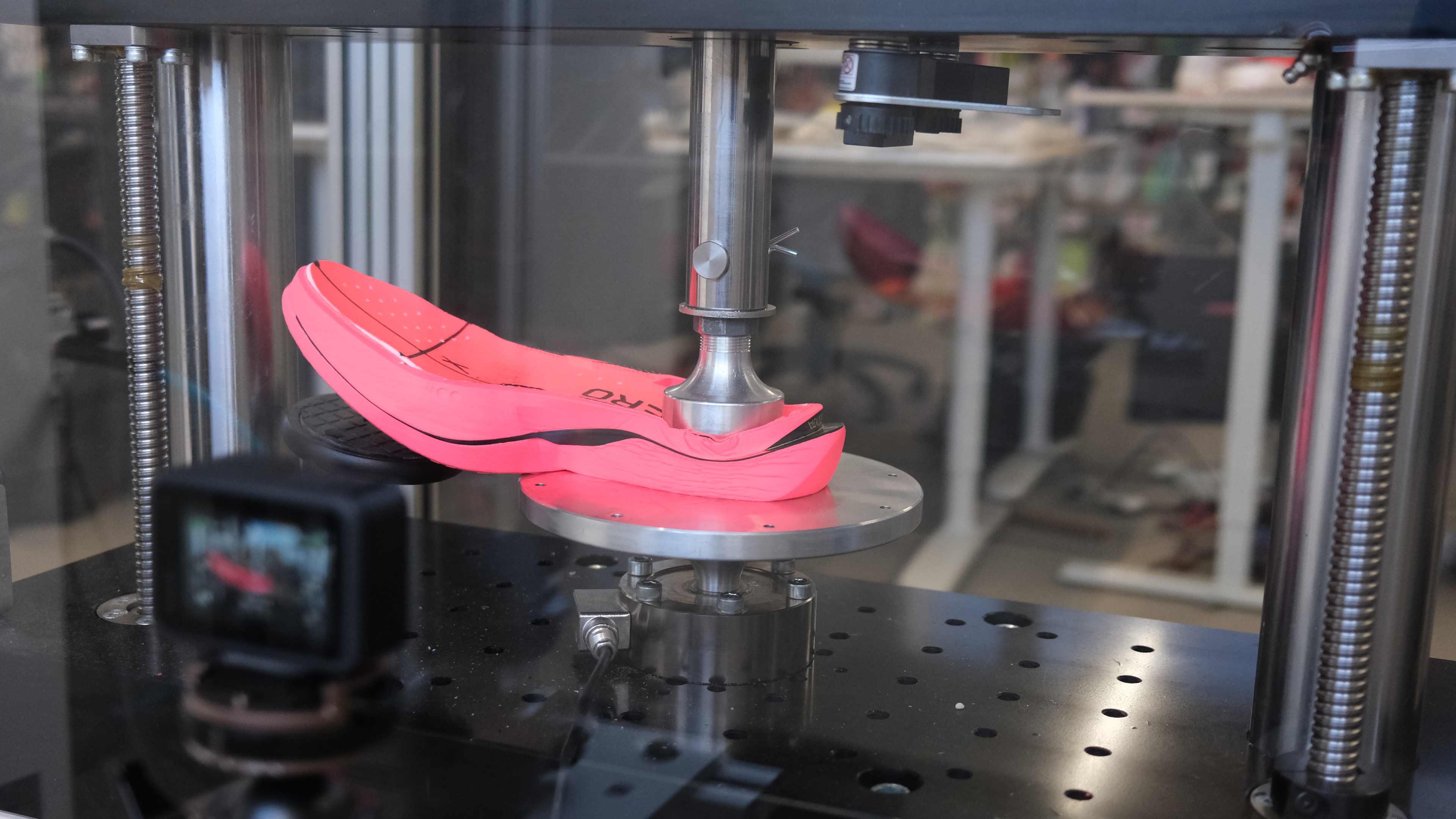
Energy Return
The adidas Adizero Adios Pro 5 has excellent energy return. Its midsole returns a high proportion of the energy put into it at both the heel and forefoot. This efficient rebound supports its energetic character, so it feels less draining to sustain fast paces.
Excellent energy return at the forefoot.
Strong energy return at the heel.

The forefoot provides excellent energy return, supporting an energetic rebound as you load the front of the shoe. Its return percentage is lower than that of the adidas Adizero Adios Pro 4, which feels like a step backward, but it's still a lively shoe that gives you a lot of response, which is great for racing scenarios.

Heel energy return is great, with the midsole returning a large share of the energy put into it during compression. This contributes to a lively rebound for runners who load the rearfoot. It's less efficient than the adidas Adizero Adios Pro 4, although it's still a very energetic shoe overall.
Stability
The adidas Adizero Adios Pro 5 has inadequate stability. Its narrow heel provides a small landing platform relative to its height, so it doesn't offer a steady platform to land on. The wider forefoot provides a more stable base up front, but it doesn't fully offset the softer foam in this area, which can lead to unwanted wobbling. Runners who need a consistently steady platform will find the ride more demanding for small stabilizing muscles.
Wide forefoot provides a substantial landing platform.
Narrow heel limits stability when landing.
Soft forefoot limits support and direct toe-offs.


The heel is relatively soft, allowing some give as you load the rearfoot. It's slightly firmer than the adidas Adizero Adios Pro 4 under lighter and moderate forces, while the difference becomes negligible under heavier loading. This modest increase in firmness doesn't fully offset the limited support from the narrow heel platform.

The adidas Adizero Adios Pro 5 has a soft forefoot that remains compliant across the tested force range. It's softer than the adidas Adizero Adios Pro 4 throughout. The trade-off is less support and a less immediate toe-off than a firmer racing platform can provide.

The adidas Adizero Adios Pro 5 replaces the individual carbon-fiber rods used in the adidas Adizero Adios Pro 4 with a rim that wraps around the outer edge of the midsole. Although it's not visible in this image, the rim is present and adds a bit of bending stiffness, helping limit side-to-side movement of the soft foam and providing some support during landings and toe-off. However, overall stability remains limited.
Cushioning
The adidas Adizero Adios Pro 5 has excellent cushioning. It absorbs impacts effectively at both the heel and forefoot, offering substantial protection whether you're a smaller runner or a very powerful one. Importantly, that cushioning also remains effective during prolonged loading, making it well-suited to longer races and sustained training efforts.
Feels very protective underfoot.
Cushioning remains protective over longer efforts.


The adidas Adizero Adios Pro 5 provides great heel cushioning, with particularly strong protection under lighter impacts. Cushioning remains very good under heavier loading, making the rearfoot protective for both lighter and heavier runners of all paces.


Forefoot cushioning is excellent, providing substantial protection when you land or load your weight toward the front of the shoe. It absorbs more energy than the adidas Adizero Adios Pro 4 across all tested forces, despite the lower stack. Protection is strongest under lighter loading but remains very good under heavier impacts.

Cushioning holds up well during our 50km simulated test, remaining protective as the distance increases. Most of the initial decline happens early, followed by a more gradual reduction. The adidas Adizero Adios Pro 5 retains more cushioning than the adidas Adizero Adios Pro 4 throughout the test, making it slightly better suited for long-distance racing.
Bounciness
The adidas Adizero Adios Pro 5 has good bounciness. Its foam rebounds efficiently, but it doesn't compress that much, which limits the depth of the spring underfoot. The result is a lively ride without an especially deep, trampoline-like sensation.
Excellent energy return at the forefoot.
Strong energy return at the heel.
Moderate compression limits the depth of the bounce.

The heel compresses a moderate amount, providing some underfoot give without an especially deep sinking sensation. It compresses less than more plush super shoes, such as the ASICS METASPEED RAY, so it feels less bouncy overall.

The forefoot offers a decent amount of compression and sinks more under load than the adidas Adizero Adios Pro 4. Paired with excellent energy return, that extra travel contributes to a springy sensation beneath the front of the foot. Compression is still moderate overall, so the bounce isn't especially deep or trampoline-like.
Snappiness
The adidas Adizero Adios Pro 5 has good snappiness. Its forefoot resists bending and returns energy efficiently as it springs back, providing a propulsive push through toe-off. However, the soft forefoot foam and the gentle rocker angle temper that response and make it feel a bit less aggressive.
Stiff forefoot supports toe-off and forward roll.
Forefoot springs back efficiently after bending.
Soft forefoot limits support and direct toe-offs.

Forefoot bending energy return is excellent. The shoe returns a high proportion of the energy stored when the forefoot bends, supporting an efficient spring-back through toe-off. That said, a few shoes like the PUMA Fast-R NITRO Elite 3 return more energy when they unbend, making for an even snappier feel.


The forefoot strongly resists bending, giving the adidas Adizero Adios Pro 5 a stiff platform for toe-off. Despite not having full carbon rods in the midsole like its predecessor, it's a bit harder to bend than the adidas Adizero Adios Pro 4, so it feels a bit less flexible underfoot.

The adidas Adizero Adios Pro 5 has a pronounced forefoot rocker that starts early, helping guide your foot toward toe-off. Compared with the previous adidas Adizero Adios Pro 4, the curve begins farther back but rises at a gentler angle. This creates a contrast with the brand's other racing shoe, the adidas Adizero Adios Pro Evo 3, which has a super steep and aggressive rocker that leaves it best reserved for elite runners with efficient form.
Roll
The adidas Adizero Adios Pro 5 has very good roll. Its pronounced forefoot rocker and stiff construction guide the foot toward toe-off, creating a rolling transition. The heel rocker is less pronounced, so the strongest assistance comes as you move onto the forefoot.
Stiff forefoot supports toe-off and forward roll.
Pronounced forefoot rocker encourages rolling transitions.
Mild heel rocker provides limited assistance during rearfoot transitions.

The rocker has decent resistance to flattening, helping preserve some of its curved shape as you load the forefoot. If you apply a lot of force when you land, it will still flatten quite a bit, so its rolling assistance can diminish.
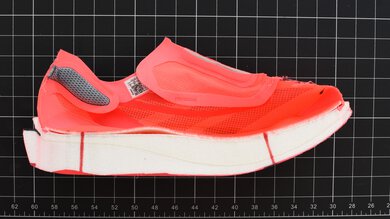
This model has a high stack, which places substantial foam beneath your feet and the ground. The platform sits slightly lower than the adidas Adizero Adios Pro 4, while the moderate heel-to-toe drop maintains a familiar feel. This might be a strategy to shave a few extra grams of weight. Despite the reduced height, cushioning remains very protective.

This shoe has a modest heel rocker that provides limited assistance when transitioning from heel strike to midstance. Compared with the adidas Adizero Adios Pro 4, the heel is less raised, and the rocker starts closer to the back of the shoe. Heel strikers, therefore, get less of an extended rolling transition.
True To Size
The adidas Adizero Adios Pro 5 fits true to size overall, with standard length and width around the forefoot. However, the narrow midfoot and shallow toe box create a snug, race-oriented fit. Your usual size is very likely to be the one you should pick, but don't expect this shoe to feel very roomy and accommodating.
Length fits true to size.
Enough width at the forefoot.
Narrow arch and shallow toe box restrict internal space.


Wet & Warm Weather
The adidas Adizero Adios Pro 5 performs very well in wet and warm weather overall, primarily because it absorbs little water and dries quickly. This helps limit retained moisture after wet runs. However, the shoe's upper doesn't breathe that well, so ventilation in hot conditions is less impressive than its overall score suggests.
Absorbs very little water.
Dries quickly after getting wet.
Mediocre breathability limits ventilation.


The adidas Adizero Adios Pro 5 has mediocre breathability. Air passes through the upper less easily than in more ventilated racing shoes like the PUMA Fast-R NITRO Elite 3, which can leave your feet feeling warmer during hard efforts or hot-weather runs.

This shoe dries exceptionally quickly in our test, helping reduce downtime after wet runs. It takes a little longer to shed moisture than the adidas Adizero Adios Pro 4, but drying remains a major strength. Actual drying time will depend on the surrounding temperature, humidity, and airflow.


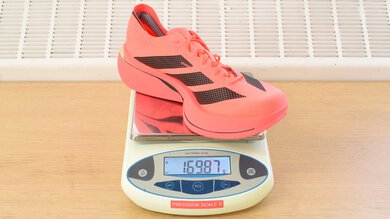
The adidas Adizero Adios Pro 5 is very lightweight, even by racing shoes' standards. It's noticeably lighter than the previous adidas Adizero Adios Pro 4, which makes it more efficient. The brand makes an even lighter shoe, the adidas Adizero Adios Pro Evo 3, but this comes at a much higher price.


The midsole uses Lightstrike Pro, adidas' premium TPEE-based foam, also found in the adidas Adizero Adios Pro 4. It combines protective cushioning with efficient rebound, helping keep the ride energetic without adding much weight. The exact formulation and tuning can vary between models, so the shared foam name doesn't guarantee an identical feel.

Sawtooth laces replace the flat laces used in the adidas Adizero Adios Pro 4. Their textured edges can help knots stay secure, while the limited stretch allows a firm adjustment.
Popular Running Shoe Comparisons
The adidas Adizero Adios Pro 5 is the brand's long-distance racing shoe for runners seeking serious performance. It's lighter and more cushioned than its predecessor, the adidas Adizero Adios Pro 4, though the older model's stronger energy return still makes it worth considering at a discount. Among competitors, the ASICS METASPEED RAY offers a much lighter alternative, but sacrifices even more stability. If you want the most energetic super shoe possible, check out the Brooks Hyperion Elite 6.
Within the brand's lineup, the adidas Adizero Adios Pro Evo 3 targets the small group of elite runners chasing marginal gains who are willing to accept limited durability and a much higher price in that process.
For more recommendations for marathon racing shoes, check out our article on the best shoes for running a marathon. For more options from the brand, see our picks for the best adidas running shoes.
The adidas Adizero Adios Pro 5 and adidas Adizero Adios Pro 4 are both capable long-distance racing shoes, but the newer model isn't an upgrade in every respect. Choose the Pro 5 for its lighter, more nimble build and softer forefoot cushioning that stays more protective over long efforts. The Pro 4 remains worth considering if you prefer stronger energy return and a firmer, snappier forefoot, especially if you find it discounted. Neither offers much stability, but the fifth version will be easier to trust for most runners because it gets rid of the medial cutout that made the Pro 4 feel notoriously wobbly.
The adidas Adizero Adios Pro 5 and Brooks Hyperion Elite 6 are both strong long-distance racing options. Choose the adidas if you prioritize lower weight and forefoot cushioning that remains more protective late in a race. The Brooks is heavier but delivers stronger energy return, particularly at the heel, making it more appealing if you prioritize an energetic rebound.
The adidas Adizero Adios Pro 5 and adidas Adizero Adios Pro Evo 3 are two super shoes from the same brand, both designed for long-distance racing but aimed at different buyers. The Pro 5 is the more practical choice for most runners seeking serious race-day performance. The Evo 3 is dramatically lighter, more deeply cushioned, and bouncier, making it compelling for elite runners chasing every marginal gain. However, its much higher price and limited durability make those advantages difficult to justify for most runners.
Differences Between Sizes And Variants
We tested the adidas Adizero Adios Pro 5 in men's U.S. size 9, as indicated on the label for our pair. The shoe pictured here is in the Solar Turbo / Core Black / Lucid Red colorway. Wide versions aren't available for this model. The design section applies only to the exact model we tested, but we expect other sizes to perform similarly.