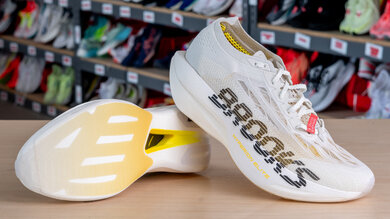
The Brooks Hyperion Elite 6 is the brand's most competitive racing shoe as of August 2026 and is a worthy super shoe for runners chasing a PB in the half or full marathon. It has all the elements that make for a great racing shoe: bouncy foam, an aggressive rocker, and a lightweight construction. But it also has the instability characteristic of super shoes, and its upper is a bit problematic, with an odd heel-padding configuration that can rub uncomfortably.
| ✅ Buy If: | ❌ Skip If: |
|
|
Our Verdict
The Brooks Hyperion Elite 6 is a great shoe for racing half and full marathons. It's lightweight and has top-class energy return, so it's very efficient for long-distance racing. The rockered geometry keeps you rolling forward even as you start to fatigue, and the cushioning is good enough to protect your legs over long distances. The shoe isn't stable at all, though, so if your form starts to break down late in the race, expect some wobbles from the soft, tall platform.
Outstanding energy return rewards faster paces.
Cushioning holds up well over long distances.
Aggressive rocker helps sustain momentum.
Heel padding could cause significant chafing over prolonged efforts.
Unstable platform demands a lot of work from stabiliser muscles.
The Brooks Hyperion Elite 6 is a good shoe for racing shorter distances. The best-in-class energy return rewards harder efforts, and the shoe's relatively light weight and impressive rolling geometry make sustaining faster paces much easier. The forefoot snaps back powerfully when it unbends, but feels a little too mushy on impact
Outstanding energy return rewards faster paces.
Forefoot springs back powerfully.
Aggressive rocker helps sustain momentum.
Soft forefoot can feel unstable when you push the pace.
The Brooks Hyperion Elite 6 is a good shoe for running long distances. The cushioning held up well in our simulated 50K lab test, and the rockered geometry makes it easy to sustain momentum. That said, the shoe isn't very stable, so it isn't a great choice for your normal weekly long run. The Hyperion Elite 6 works best as a racing shoe, but you can use it for long training runs in the build-up to race day.
Cushioning holds up well over long distances.
Aggressive rocker helps sustain momentum.
Heel padding could cause significant chafing over prolonged efforts.
Platform is too volatile for casual runs.
The Brooks Hyperion Elite 6 isn't a reasonable choice for a daily trainer. It's designed for race-day efficiency, not for everyday practicality, so it lacks the stability you need from a daily workhorse. The full-length carbon plate helps make the forefoot snap and the rocker roll, but it will likely feel a bit too harsh for easy runs.
Great cushioning.
Platform is too volatile for casual runs.
Changelog
-
Updated Sep 28, 2026:
We've updated the popular comparisons section to include a comparison with the recently reviewed ASICS YOGIRI SPEED.
-
Updated Sep 11, 2026:
We've updated this review to add a link to the newly reviewed 361 Flame 5 to the Other Features box.
- Updated Aug 24, 2026: Review published.
- Updated Aug 19, 2026: Early access published.
- Updated Aug 07, 2026: Our testers have started testing this product.
- Updated Aug 05, 2026: The product has arrived in our lab, and our testers will start evaluating it soon.
- Updated Jul 09, 2026: We've purchased the product and are waiting for it to arrive in our lab.

We've bought and tested more than 300 running shoes. Every pair purchased with our own money, never supplied or sponsored by brands. Our data-driven tests are designed to go beyond marketing claims, and since every shoe goes through the exact same methodology, you can directly compare results to find the right pair for your needs.
Test Results
Energy Return
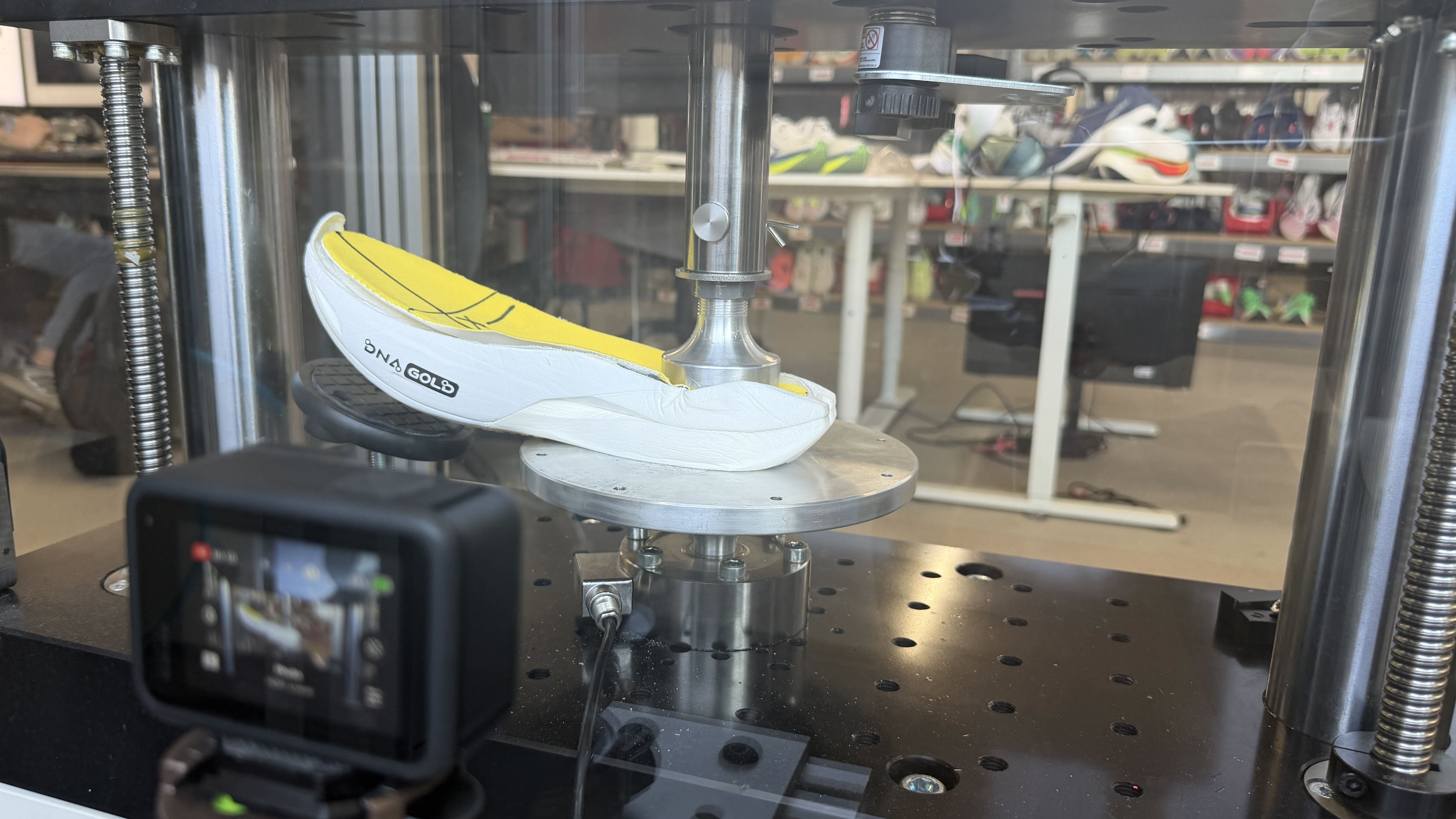
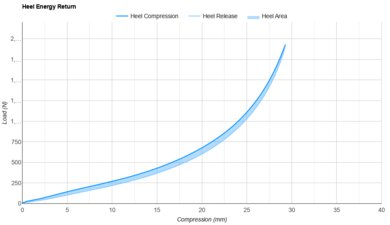
The Brooks Hyperion Elite 6 does an outstanding job of returning the energy you put into each stride. Both the forefoot and the heel have an incredible rebound that makes the shoe come alive when you up the tempo.
Outstanding energy return rewards faster paces.
Midsole is extremely efficient at storing and returning energy.
Forefoot and heel both rebound incredibly well.
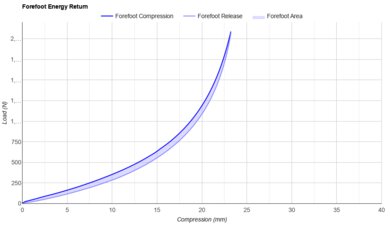
The Brooks Hyperion Elite 6 has overtaken the ASICS METASPEED RAY and ASICS METASPEED SKY TOKYO with the most energy-efficient forefoot we've tested as of August 2026.
Stability
The Brooks Hyperion Elite 6 has sub-par stability. The soft midsole might feel great on your legs, but the lack of firmness makes the ride less secure. The platform is narrow under the arch, so over-pronators will get no support.
Narrow platform, most notably under arch.
Foam isn't firm enough to prevent wobbling.
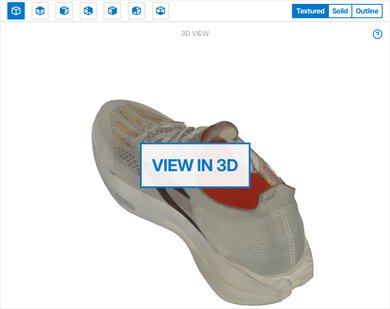
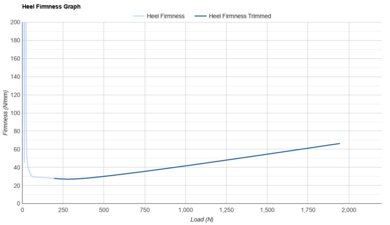
The heel of the Hyperion Elite 6 isn't very firm at all. It's significantly less firm than the Brooks Hyperion Elite 5, and is now closer to the super-soft Saucony Endorphin Elite 3.
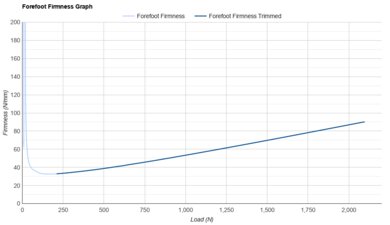
The forefoot is also far from firm. Compared to the Brooks Hyperion Elite 5, the 6th iteration is much softer but less stable, and favors runners who can maintain a higher cadence and lower ground contact time.
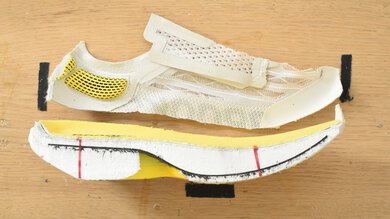
You can see the odd heel padding configuration in this image. Instead of one continuous pad wrapping around the heel, there are three separate pads. The seam between them can cause uncomfortable friction, similar to shoes like the 361 Flame 5.
Cushioning
The Brooks Hyperion Elite 6 has great cushioning overall. Both the heel and the forefoot are able to absorb impact well, although both feel less plush when the pace picks up.
Cushioning holds up well over long distances.
Good protection against heaviest impacts.
Cushioning is great for either forefoot or heel strikers.
Heel compresses well before bouncing back.
Less impressive shock absorption at faster paces.
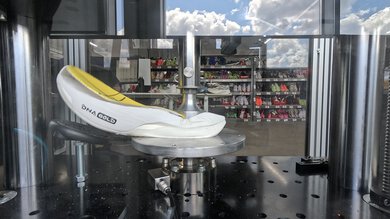
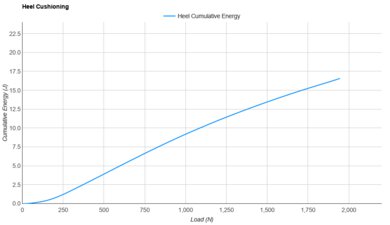
Heel strikers are well protected by the stack of DNA GOLD foam at the back. Overall, the shock absorption is great, although it doesn't increase proportionally to the force you apply. In practice, that means that more of the impact of landing shifts onto your legs as the intensity increases.
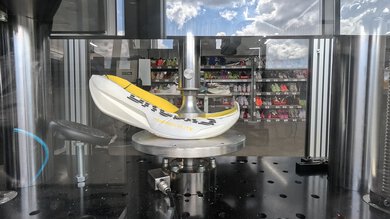
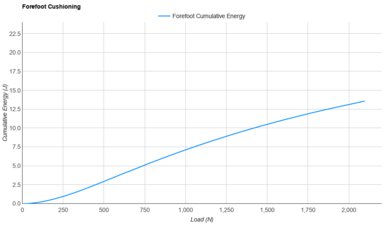
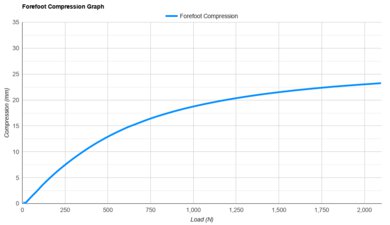
The forefoot cushioning behaves similarly to the heel, absorbing an incredible proportion of impact when you're lightly jogging. It continues to bear the brunt of each impact as the intensity increases, but requires your legs to absorb progressively more impact as well.
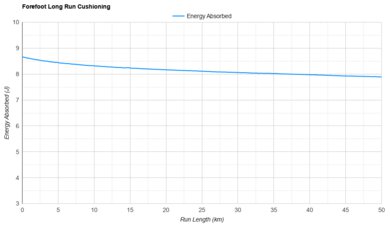
The cushioning in the Hyperion Elite 6 is good enough to keep your legs protected from impact over the marathon distance. There's a big drop in shock absorption after the first 10K, but it's more gradual after that, and the rest of the run is still well-cushioned, just not plush.
Bounciness
The Brooks Hyperion Elite 6 has an impressive bounce. The foam is lively and rebounds well, although the midsole doesn't compress as deeply in the front as in the back, so you won't feel as much bounce if you land on your forefoot.
Midsole rebounds exceptionally well.
Forefoot returns energy well, but doesn't feel as bouncy.
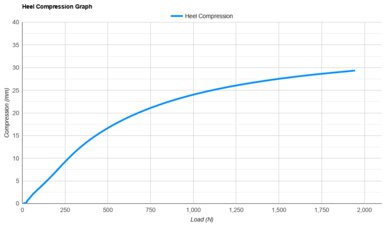
The heel compresses readily when you apply force, similar to the Saucony Endorphin Elite 3. This makes heel landings feel lively and bouncy.
Snappiness
The Brooks Hyperion Elite 6 has a snappy, race-ready feel. The forefoot returns an incredible amount of energy as it unbends, so it really does feel like it's snapping back at toe-off. The platform isn't that firm, though, so you won't feel as direct a connection with the ground.
Forefoot springs back powerfully.
Forefoot snaps back with incredible force after its bent.
Midsole is stiff, but not firm, so push-off phase can feel unstable.
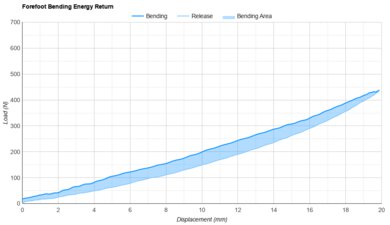
Very few shoes snap back as forcefully when they unbend as the Brooks Hyperion Elite 6. Indeed, of the hundreds of shoes we've tested so far, only the Saucony Endorphin Elite 3 and New Balance SuperComp Elite v6 returned more energy as they unbend. You can feel this springiness when you push off at high speed.
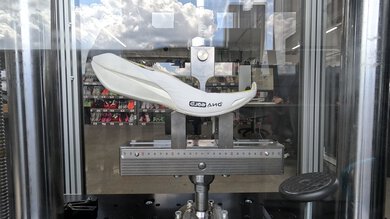
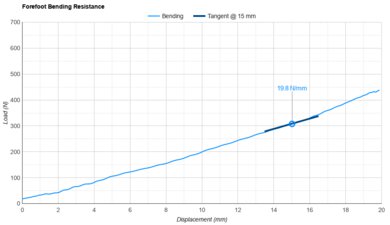
The forefoot stays impressively stiff, which gives it so much snap and leverage, but it will feel inflexible and unyielding compared to trainers like the Brooks Hyperion Max 4 or Brooks Ghost Amp. Still, it's not as rigid as some rival racing shoes, like the New Balance SuperComp Elite v6.
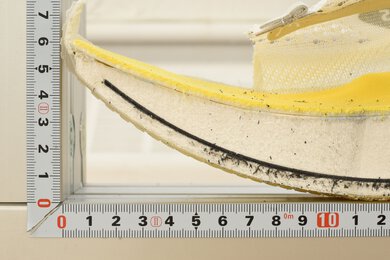
The forefoot has one of the earliest rockers we've ever measured, even earlier than the notorious adidas Adizero Adios Pro Evo 2, tilting you forward onto your toes almost immediately. The angle of the rocker is much steeper than that of the Brooks Hyperion Elite 5, and this 6th edition feels like it's pushing you much more aggressively.
Roll
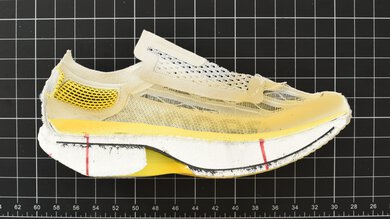
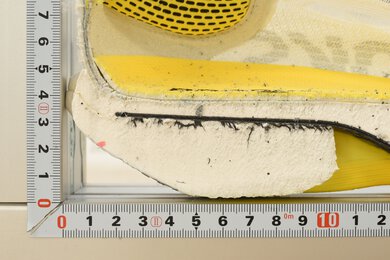
The Brooks Hyperion Elite 6 has a very noticeable rocker that delivers an impressive rolling ride. Because of the aggressive geometry, less than half of the outsole is actually in contact with the ground, so the shoe starts to roll forward almost immediately on contact with the ground.
Aggressive rocker helps sustain momentum.
Aggressive geometry immediately starts rolling your foot forward.
Rocker stays stiff and propulsive even under heavy force.
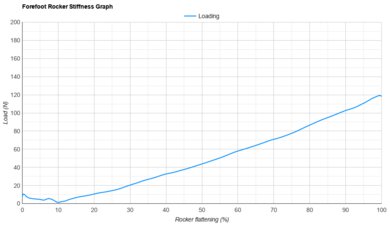
The carbon plate in the midsole helps the rocker maintain its shape very well under heavy force, so it continues rolling smoothly even at faster paces. The Brooks Hyperion Elite 6 is near the top of its class, with a sturdier rocker than the Nike Alphafly 3 or adidas Adizero Adios Pro 4. It's not quite as stiff as the ASICS METASPEED EDGE TOKYO, though.
True To Size
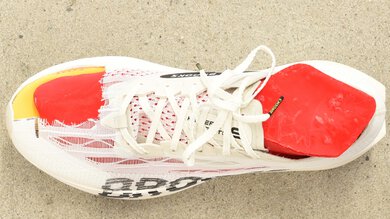
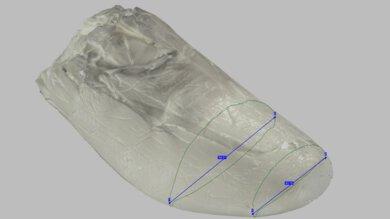
The Brooks Hyperion Elite 6 fits very close to true to size. The fit is snug, as befits a racing shoe, but the length matches our reference fit, so we recommend that runners stick with their usual size.
Length is spot-on.
Surprisingly roomy forefoot for a racing shoe.
Snug racing fit could be too tight over toes.
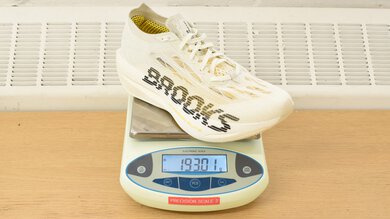
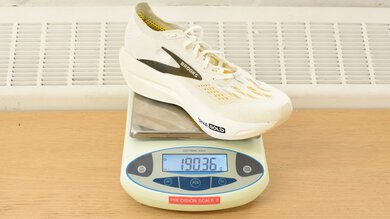
The Brooks Hyperion Elite 6 is almost 10 g lighter than its predecessor, the Brooks Hyperion Elite 5. It's still nowhere near the lightest super shoe on the market, but it's streamlined enough to feel efficient when pushing the pace.
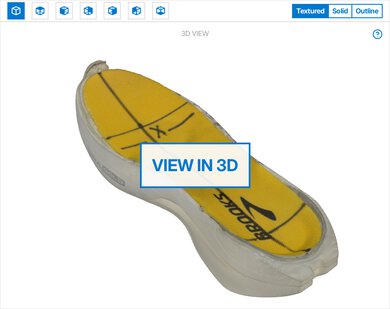

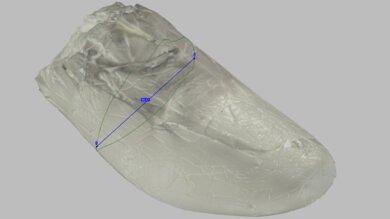
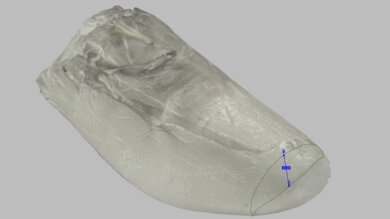
The midsole compound is still branded as DNA GOLD, like in the Brooks Hyperion Elite 5, but the foam looks much less dense under the microscope. This explains its lighter weight and superior shock absorption ability.
Popular Running Shoe Comparisons
The Brooks Hyperion Elite 6 is the most impressive marathon super shoe yet from the Seattle-based brand. While previous iterations of the Hyperion Elite series felt more middle-of-the-pack, the 6th edition has now moved into the front pack of leading super shoes, with a more aggressive geometry and a new DNA GOLD formula that has somehow leapfrogged over the competition in terms of energy return.
Nevertheless, it's still not the lightest or most streamlined super shoe on the market. Runners looking for an ultra-lightweight option that at least has the same level of stability as the Hyperion Elite 6 should check out the ASICS METASPEED SKY TOKYO. The Hyperion Elite 6 shines at marathon distance and still performs well in shorter races, but if your racing calendar includes more races between 5K and half-marathon distances, the Nike Vaporfly 4 is more finely tuned for this range. If you are looking for a shoe that's a bit more geared toward a 4-hour marathon, check out the ASICS YOGIRI SPEED.
For more recommendations for marathon racing shoes, check out our article on the best shoes for running a marathon. For more guidance on Brooks shoes, see our picks for the best running shoes from Brooks.
The adidas Adizero Adios Pro 5 and Brooks Hyperion Elite 6 are both strong long-distance racing options. Choose the adidas if you prioritize lower weight and forefoot cushioning that remains more protective late in a race. The Brooks is heavier but delivers stronger energy return, particularly at the heel, making it more appealing if you prioritize an energetic rebound.
The Brooks Hyperion Elite 6 is a better choice than the New Balance SuperComp Elite v6 if you want a bouncy, cushioned racing shoe, though its aggressive curved sole takes some getting used to. The New Balance is firmer and comes in multiple widths, making it the better pick for runners with wide feet.
The Brooks Hyperion Elite 6 has undergone several major changes that make it a very different shoe than the Brooks Hyperion Elite 5. The 6th edition is lighter, more aggressively rockered, bouncier, and more energetic. One potentially off-putting change is the heel padding, which consists of three separate pads in the 6, as opposed to the smoother, wrap-around padding on the heel collar of the 5. If you liked the 5 because it disappeared on foot and didn't get in the way of your normal biomechanics, you might not like the upgrade. If you're chasing a new PR and are willing to take some risks to squeeze out more advantage, the 6 is worth it.
The Nike Vaporfly 4 and Brooks Hyperion Elite 6 are two super shoes that have different optimal distances for racing. The Nike, with its ultra-lightweight build and lower stack height, is best suited to racing distances from the 5K up to the half-marathon; beyond that, the exceptionally firm forefoot starts to feel harsh and the cushioning inadequate. The Brooks is a better choice for longer distances, up to the marathon, thanks to a taller stack of softer, bouncier foam.
Differences Between Sizes And Variants
We bought and tested the Brooks Hyperion Elite 6 in men's US size 9/women's size 10.5, as noted on the label for our pair. The pair we purchased is the Vaporous Grey/Yellow/Black colorway, which was the only colorway available at the time. The shoe is only available in regular widths.
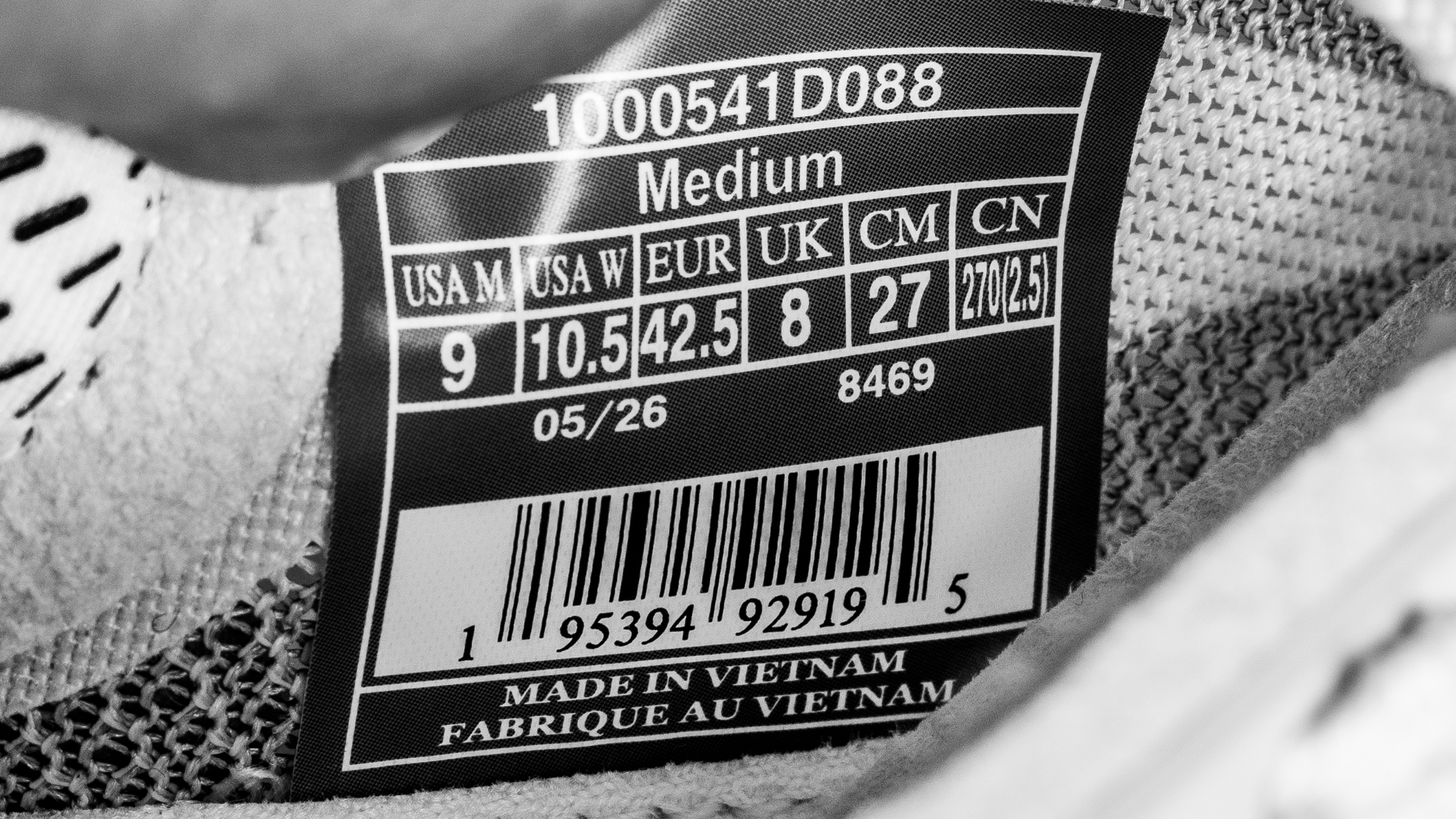
The design section applies only to the exact model we tested, but we expect other sizes to perform similarly.