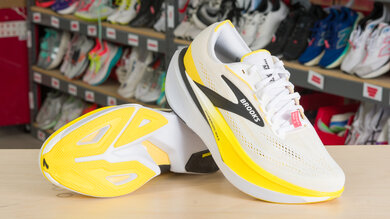
The Brooks Hyperion Max 4 is a plated super trainer with a massive amount of cushioning and a speed-focused geometry that makes it feel fun during faster efforts. The maximalist cushioning does a truly superb job of absorbing impact, but this isn't a comfort cruiser, as the relatively steep rocker wants to quickly push you forward onto your toes. For that reason, it's best suited to tempo workouts or long progression runs, although the very dynamic platform will test your stability over prolonged efforts. For runners who want a fun, fast shoe that makes no compromises on cushioning, the Brooks Hyperion Max 4 is an exciting, if sometimes chaotic option.
| ✅ Buy If: | ❌ Skip If: |
|
|
Our Verdict
The Brooks Hyperion Max 4 is much heavier than a proper racing shoe, but it's still a decent option for running longer races. Its highly responsive midsole rewards harder efforts, and the rockered geometry helps to keep your legs turning over quickly, even as fatigue sets in. The main point of caution is the shoe's instability. You should only use this shoe on race day if you're also using it in training and have developed the stabilizer muscles necessary to stay in control of the chaotic platform.
Cushioning holds up amazingly well over long distances.
Good energy return.
Aggressive rocker helps sustain faster paces.
Platform is very unstable.
Too heavy for competitive racing.
The Brooks Hyperion Max 4 is a passable short- and middle-distance racer. The lively midsole wants you to go fast, so you do feel a boost from the shoe at faster paces, but the shoe's overall construction makes it too heavy to sustain top-end speed.
Good energy return.
Aggressive rocker helps sustain faster paces.
Too heavy for competitive racing.
Forefoot feels too mushy for top-end speed.
The Brooks Hyperion Max 4 works decently as a long-run shoe. It has more than enough cushioning to keep your legs protected over longer distances, and the shoe's geometry makes it easy to sustain momentum. Unfortunately, the inherently unstable platform could make the shoe untenable for runners who can't maintain good running form over long distances.
Cushioning holds up amazingly well over long distances.
Rolling geometry helps keep tired legs turning over.
Platform is very unstable.
The Brooks Hyperion Max 4 could pass as a daily trainer, thanks to its incredible cushioning, although the aggressive midsole feels like overkill for everyday mileage. Stability is this shoe's biggest weakness, so runners who have any inconsistencies or imbalances in their stride will likely want a less chaotic shoe for logging most of their mileage.
Cushioning is incredible.
Platform is very unstable.
Feels overall too aggressive at easy paces.
Changelog
- Updated Jul 24, 2026: Review published.
- Updated Jul 22, 2026: Early access published.
- Updated Jul 10, 2026: Our testers have started testing this product.
- Updated Jul 06, 2026: The product has arrived in our lab, and our testers will start evaluating it soon.
- Updated Jun 22, 2026: We've purchased the product and are waiting for it to arrive in our lab.
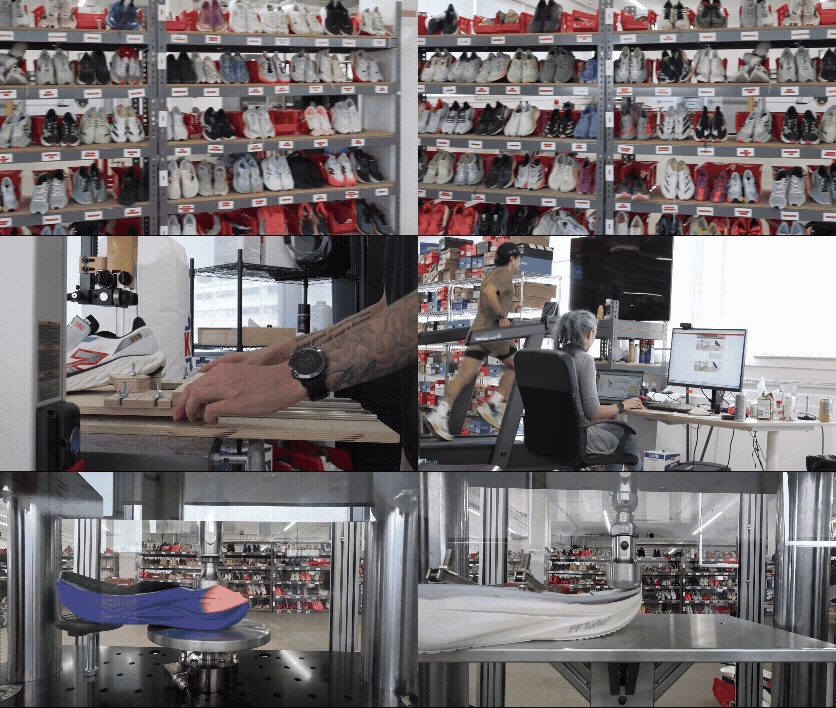
We've bought and tested more than 300 running shoes. Every pair purchased with our own money, never supplied or sponsored by brands. Our data-driven tests are designed to go beyond marketing claims, and since every shoe goes through the exact same methodology, you can directly compare results to find the right pair for your needs.
Test Results
Energy Return
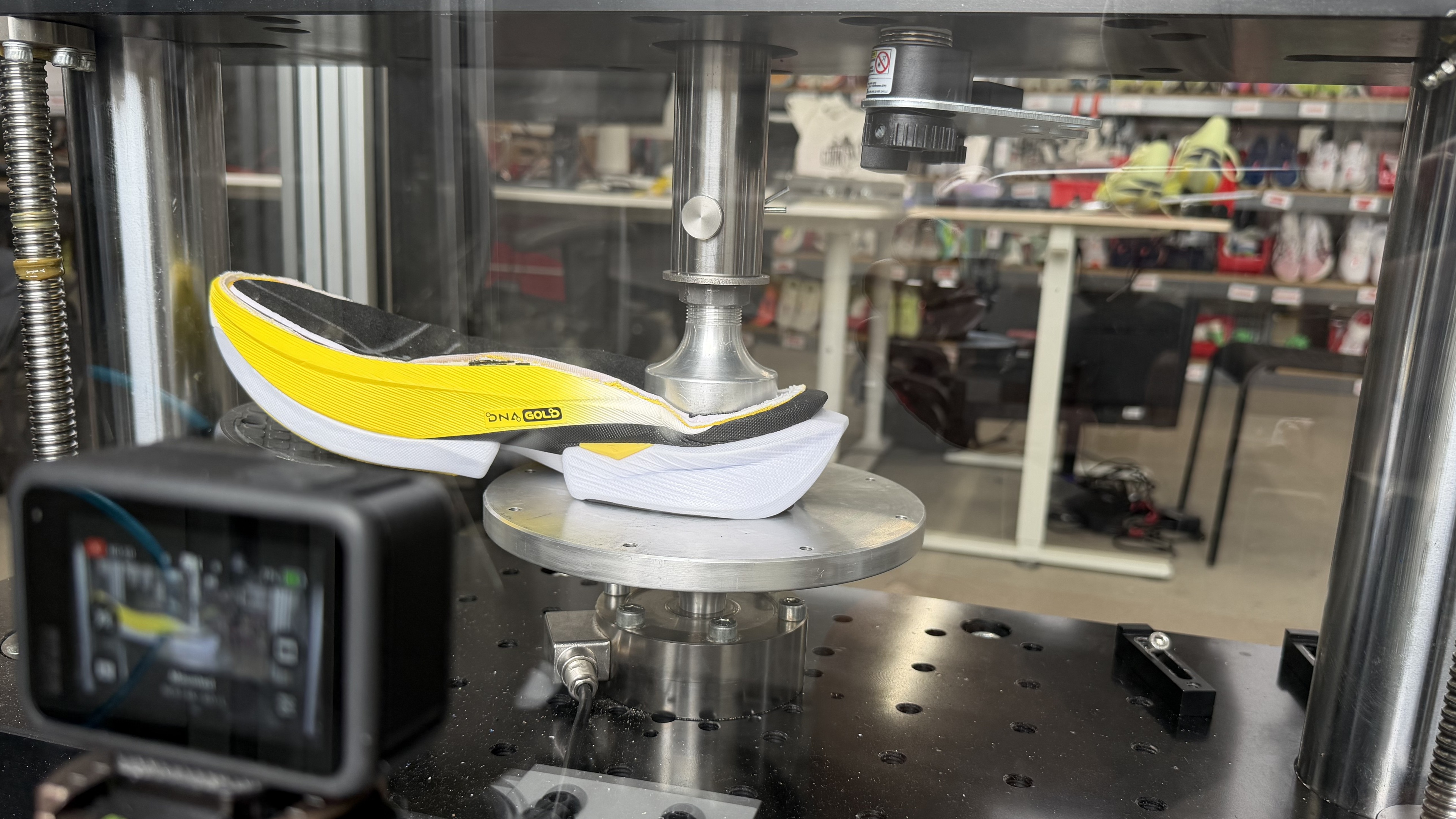
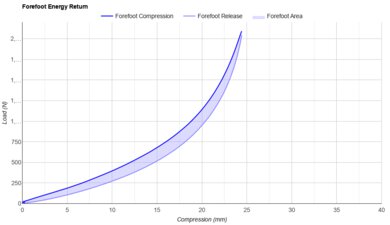
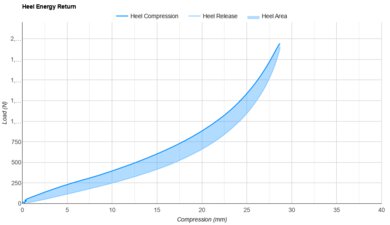
The Brooks Hyperion Max 4 does a good job of returning the energy you put into it. You feel the rebound more when you push off through the forefoot than you would if you land on the heel, as the midsole is designed to have a greater concentration of more dynamic foam in the front of the shoe.
PEBA-based DNA Gold foam in forefoot is very lively.
Denser, EVA-based foam in the heel feels relatively muted.
Stability
The Brooks Hyperion Max 4 isn't a stable shoe, full stop. The large midsole cutout on the medial side could exaggerate any overpronation in your stride and turn the ride increasingly chaotic as your form breaks down. The new, gusseted tongue does help improve lockdown of the upper, but there's still a lot of moving pieces underfoot.
Update tongue helps improve lockdown.
Midsole cutout leaves arch unsupported on the medial side
Midsole doesn't firm up enough to feel stable under more forceful impacts.
Towering stack height leaves your feet perched high off the ground.
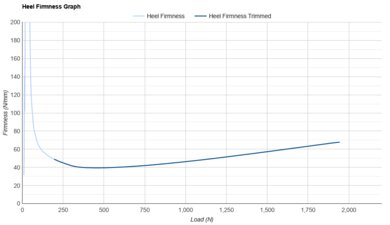
The heel of the Brooks Hyperion Max 4 doesn't firm up very much when force is applied, contributing to an unstable ride for fast heel strikers. It's not as malleable as the heel of the ASICS SUPERBLAST 3, but it doesn't exactly inspire confidence when you're rounding tight corners.
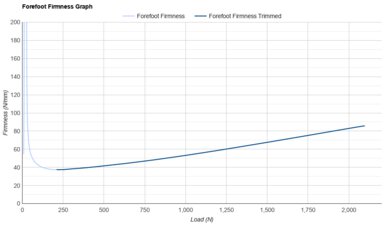
The forefoot of the Brooks Hyperion Max 4 isn't very firm at all, making it less stable at toe-off. The shoe is better suited to runners who have shorter ground contact time and don't push off with lots of force on each stride.
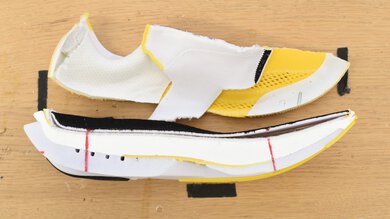
The Brooks Hyperion Max 4 has fixed some of the issues with occured in the upper of the Brooks Hyperion Max 3, most notably by adding more ventilation.
Cushioning
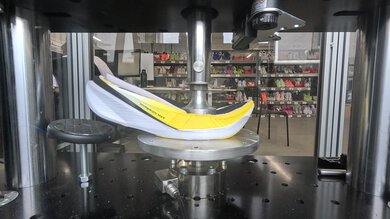
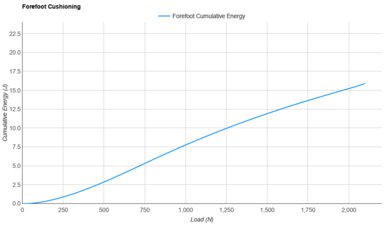
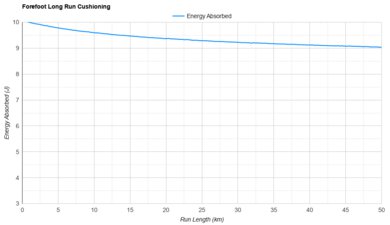
The Brooks Hyperion Max 4 is a remarkably well-cushioned shoe. The huge stack soaks up even the strongest of impacts, so this is an excellent shoe for heavy heel strikers or anyone who lands with a lot of force in the heel. Forefoot strikers will also get outstanding cushioning, although the front of the shoe doesn't feel plush if you put down more force.
Cushioning holds up amazingly well over long distances.
Heel cushioning is amazingly absorbent, even at higher force levels.
Great impact protection during harder workouts.
The midsole foam is resilient, but doesn't feel plush.
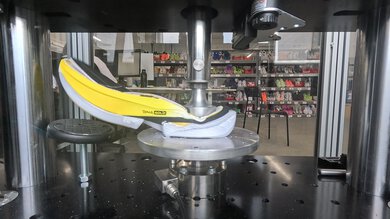
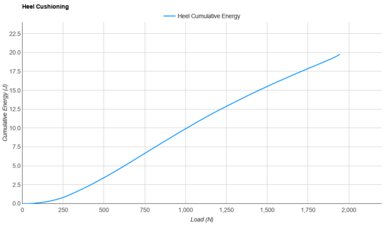
Heel strikers get an amazing amount of cushioning from the Brooks Hyperion Max 4, and even runners who land with heavy force will get excellent impact protection from the thick midsole.
Bounciness
The Brooks Hyperion Max 4 has some satisfying bounce, although it's not the main mechanism of propulsion. The dynamism of this comes primarily from its geometry rather than its bounciness.
Top layer of foam bounces back well.
Bottom layer of foam resists compression and mutes bounciness.
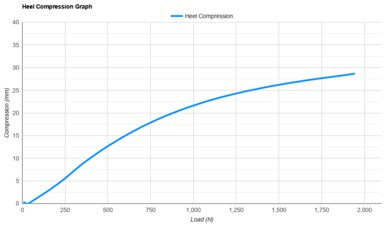
The dense, bottom layer of EVA-based foam is thicker under the heel and requires a lot of force to compress, limiting how much the midsole can bounce back.
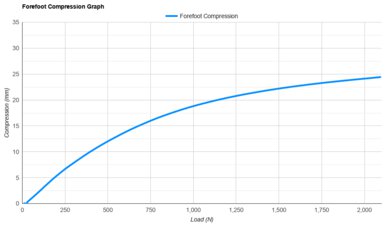
The top layer of PEBA-based foam is thicker under the forefoot, allowing it to compress enough when you land to give a satisfying bounce back. It's not nearly as noticeable as the bounce of the more dynamic foam of the ASICS SUPERBLAST 3.
Snappiness
The Brooks Hyperion Max 4 can feel a bit snappy, but not remarkably so. The forefoot returns an impressive amount of energy when bent, and the plastic plate in the midsole makes the front of the shoe stiff enough to act as a lever when you push off. Nevertheless, with all that cushioning underfoot, the shoe just isn't firm enough to give the direct snap of a racing shoe.
Forefoot springs back impressively when bent.
Midsole isn't firm enough to deliver quick snap.
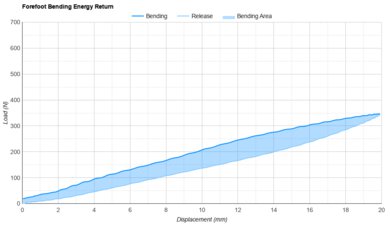
The forefoot snaps back strongly when bent, better than the Brooks Hyperion Max 3. While it doesn't have the same springiness as a race shoe, you can feel the energy return when pushing off.
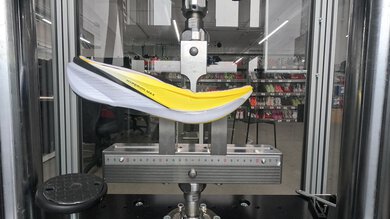
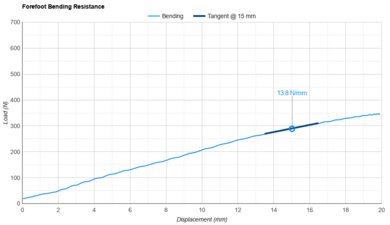
The forefoot in the Brooks Hyperion Max 4 doesn't resist bending as well as the Brooks Hyperion Max 3, which somewhat limits the leverage you get when transitioning onto your toes.
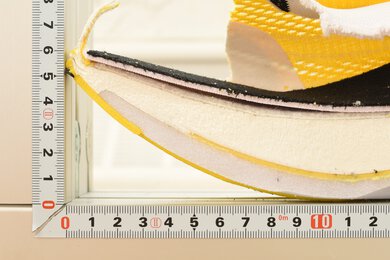
The early forefoot rocker is one of the most defining features of the Brooks Hyperion Max 4. It's more aggressive than racing shoes like the Brooks Hyperion Elite 5 or ASICS METASPEED RAY, and you can feel the Hyperion Max 4 pushing you onto your toes.
Roll
The Brooks Hyperion Max 4 has an impressive, rolling ride that makes it easier to sustain faster paces. The plastic plate helps the rockered midsole maintain its shape impressively well under load, so the ride never feels flat. The early rocker gets you forward onto your toes quickly, but the plate stops just shy of the toes, making the final roll before push-off less than crisp.
Rocker doesn't flatten easily.
Forefoot geometry encourages quick roll-through onto your toes.
Roll through becomes less crisp after plate stops under the forefoot.
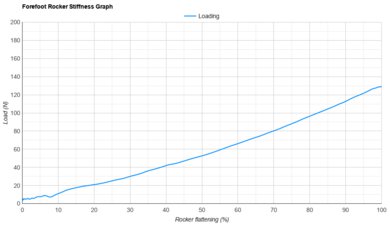
The plastic plate in the midsole helps the rocker hold its shape under heavy load, helping to keep the shoe rolling forward at faster paces.
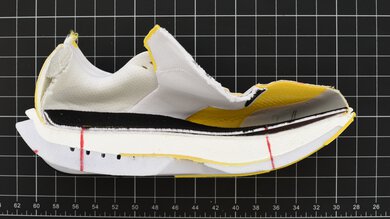
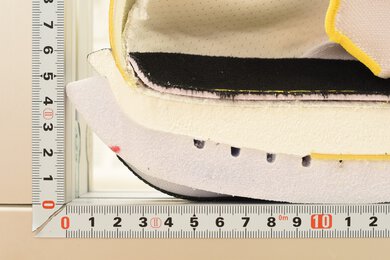
The Brooks Hyperion Max 4 is even taller than the Brooks Hyperion Max 3, although it's still not quite as high stacked as the Brooks Glycerin Max 2.
True To Size
The Brooks Hyperion Max 4 has a very snug upper, which feels like a necessity for a shoe that is meant to go this fast on such an unstable platform. For runners with wide arches or higher volume feet, the Hyperion Max could feel constricting. But if that doesn't affect you, the length is true to size, so you can go with your usual size.
Length is true to size
Snug fit suits faster efforts.
Low volume upper could leave some feeling cramped.
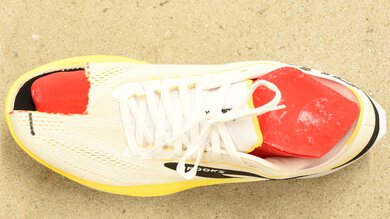
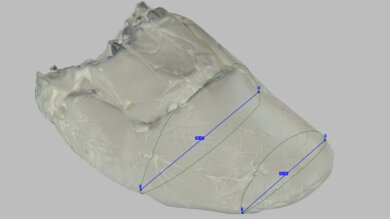
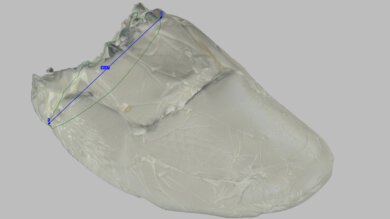
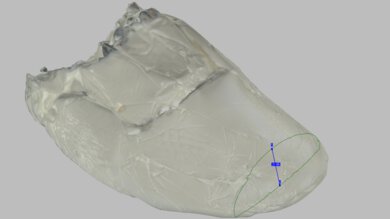
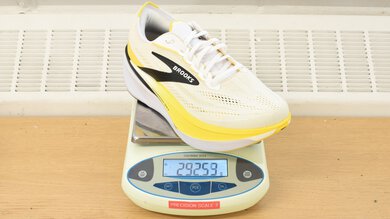
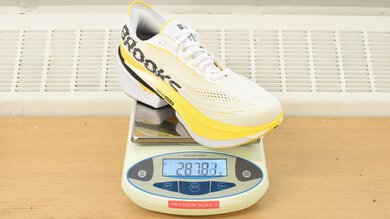
The Brooks Hyperion Max 4 is very similar in weight to the Brooks Hyperion Max 3, and it remains at the heavier end of the spectrum for super trainers.
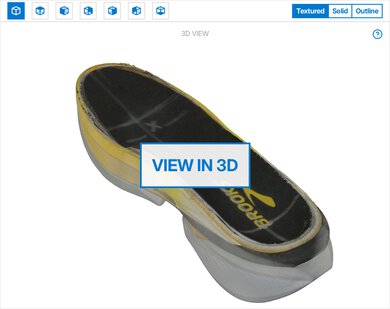


The top layer of PEBA-based foam is similar to the compound used in the Brooks Hyperion Elite 5 racing shoe, but it sits on top of a firmer EVA-based foam that acts as a carrier.
Popular Running Shoe Comparisons
The Brooks Hyperion Max 4 is the brand's most dynamic super trainer and will appeal to runners who do a variety of longer, faster workouts. Its propulsive geometry could feel too aggressive for long, slow-distance training, so the HOKA Skyward X 2 is a more relaxed and stable alternative for runners looking for excellent long-run cushioning. If you want a lighter super trainer that relies more on bouncy foam than an early rocker for propulsion, check out the ASICS SONICBLAST. If you want the versatility of the Hyperion Max 4, but don't like the firmer feel of a plated trainer, you might prefer the ASICS SUPERBLAST 3. But if you just want a max-cushioned shoe for easy cruising, the Brooks Glycerin Max 2 is the shoe for you.
For more options from the brand, check out our recommendations for the best Brooks running shoes. For more shoes that are great for long runs, check out our recommendations for the best long-distance running shoes.
The Brooks Hyperion Max 4 and ASICS SUPERBLAST 3 are super trainers, each with distinct strengths. The ASICS is lighter and bouncier, making it a better all-rounder for daily training and long runs. The Brooks has a more aggressive rocker, so it's the better option if you prefer a more guided ride for faster efforts.
The Brooks Glycerin 23 and Brooks Hyperion Max 4 serve different purposes within a running shoe rotation. The Glycerin 23 is the much more stable, relaxed shoe, which makes it good for daily training and casual wear. The Hyperion Max 4 is a speedy shoe that makes sense for faster workouts, but is too unstable for more relaxed runs.
Differences Between Sizes And Variants
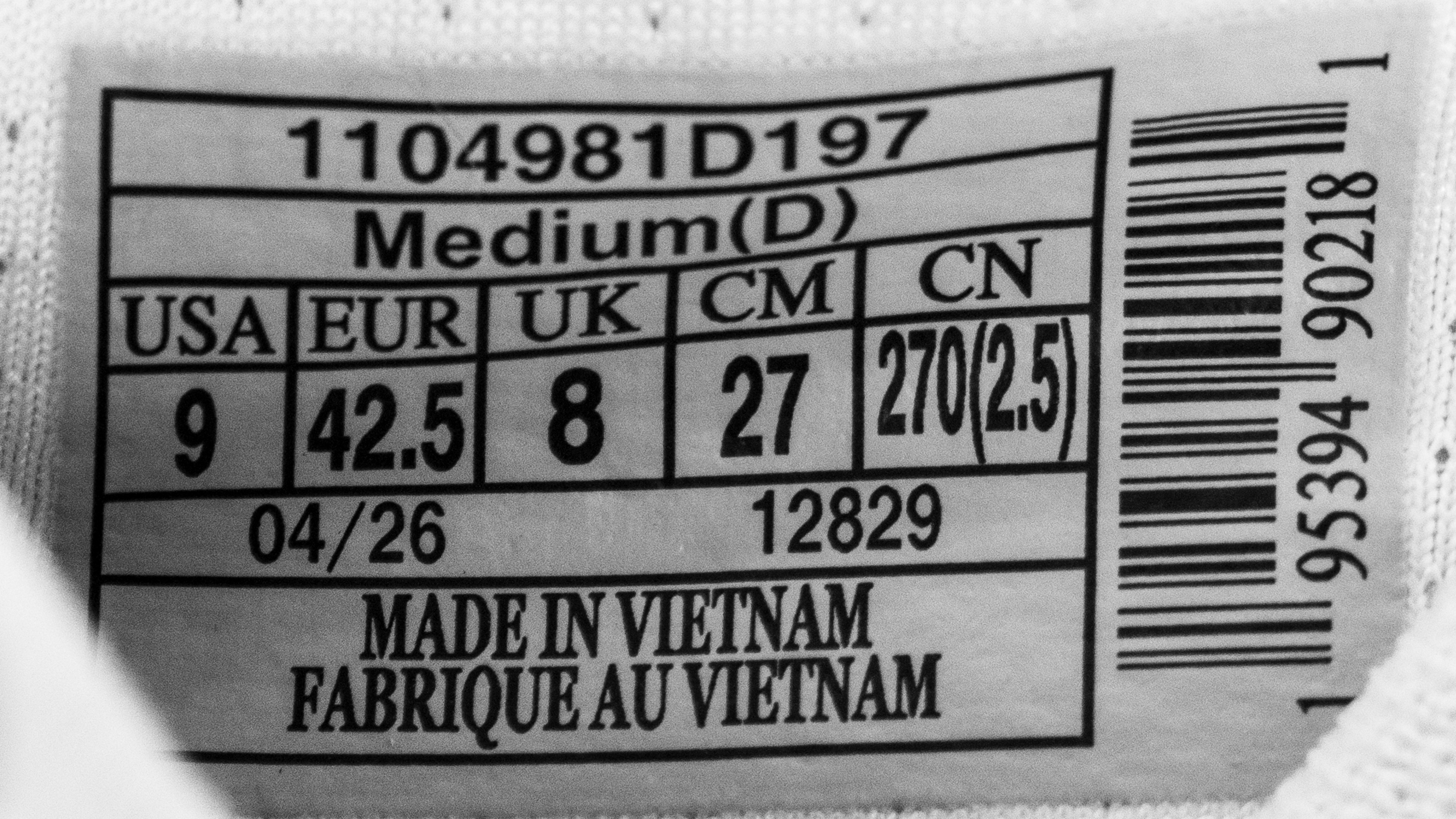
We bought and tested the Brooks Hyperion Max 4 in men's US size 9, as noted on the label for our pair. The pair we purchased is the White/Cyber Yellow/Black colorway, and the shoe is available in several other colorways, depending on your region. The shoe is currently only available in Regular widths. The design section applies only to the exact model we tested, but we expect other sizes to perform similarly.