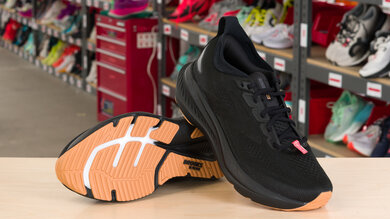
The Brooks Glycerin 23 is a premium daily trainer for neutral runners who want a dependable shoe for relaxed weekly miles. Its tall stack and decently cushioned midsole give heel strikers good impact protection, while the broad platform keeps the ride impressively stable without dedicated support features. However, the shoe is very heavy and returns little energy, so it suits easy paces better than progressive efforts or racing.
| ✅ Buy If: | ❌ Skip If: |
|
|
Our Verdict
The Brooks Glycerin 23 is a passable marathon companion if your goal is to finish rather than compete. The very good stability keeps the ride secure as fatigue builds, while the tall stack plus decent cushioning provides some buffer from the road. However, the shoe is far too heavy for racing, and the cushioning gets harsher as the miles build. Poor energy return leaves little help for sustaining pace, either, making the Glycerin 23 better suited to plodding through the distance than chasing a fast time.
Very good stability keeps the ride secure as fatigue builds.
Heavy construction makes the shoe feel sluggish.
Minimal energy return from midsole makes running inefficient.
The Brooks Glycerin 23 isn't built for racing, and its limitations are particularly obvious in short or middle-distance races. The shoe is much better at absorbing energy than bouncing it back, and its construction is too heavy for serious competition.
Heavy construction makes the shoe feel sluggish.
Minimal energy return from midsole makes running inefficient.
The Brooks Glycerin 23 isn't a bad choice for long runs. Its impressive stability keeps the ride secure as fatigue builds, while the cushioning provides just enough protection without bottoming out. However, it's not the most luxurious pick at the back end of long runs, and the shoe is very heavy. Its mediocre responsiveness and rocker geometry also make it harder to settle into an efficient rhythm and cruise.
Impressive stability keeps the ride secure when fatigued.
Midsole doesn't bottom out.
Heavy construction makes the shoe feel sluggish.
Minimal energy return from midsole makes running inefficient.
The Brooks Glycerin 23 is a good daily trainer. Its firm platform provides an impressively stable ride, and its midsole delivers a decently protective experience for regular training, especially for heel strikers. Make no mistake, though, this is a heavy, slow shoe, performing best when the task is to lace up and get the job done comfortably.
Impressive stability makes shoe easy to trust.
Decently cushioned for regular mileage.
Shoe is heavy and can't handle faster training.
Changelog
- Updated Sep 16, 2026: We've converted this review to Test Bench 0.15, which replaces Responsiveness with three specific performance usages: Bounciness, Snappiness, and Roll. To read more about the changes, see the changelog.
- Updated Sep 02, 2026: We've converted this review to Test Bench 0.14, which adds new lace-specific results. We've included a close-up photo of the laces, as well as details including lace type, width, thickness, and stretch. To read more about the changes, see the changelog.
- Updated Sep 02, 2026: We've converted this review to Test Bench 0.13, which identifies the different foams used in the shoe's midsole. We've included a microscopic image of the foam cells to give you an idea of what the microstructure looks like. To read more about the changes, see the changelog.
-
Updated Aug 21, 2026:
We’ve updated this review to tweak the intro and add text to the new usage boxes after updating the Test Bench of the shoe.
-
Updated Jul 02, 2026:
We've updated the Popular Comparisons section to include a link to the newly reviewed Saucony Triumph 24.
- Updated Jun 17, 2026: We've converted this review to Test Bench 0.12, which fixes how we measure firmness, a component of the Stability and 5K/10K Racing usages. There may be inconsistencies between the text and the scores for these usages, but the scores should still be considered valid. We've also brought back the Energy Return score and added two new usages: Daily Training and Long Run. To read more about the changes, see the changelog.
-
Updated Jun 09, 2026:
We modified the writing due to the new test bench. We've updated the Responsiveness box text to reflect the new scores.
- Updated May 26, 2026: We've converted this review to Test Bench 0.11, adding two new rocker measurements to the Design section, and three new responsiveness tests to the Performance section. The Energy Return usage score has been replaced with Responsiveness. Check out the details in our changelog.
- Updated Apr 08, 2026: Review published.
- Updated Apr 03, 2026: Early access published.
- Updated Mar 02, 2026: Our testers have started testing this product.
- Updated Jan 28, 2026: The product has arrived in our lab, and our testers will start evaluating it soon.
- Updated Jan 23, 2026: We've purchased the product and are waiting for it to arrive in our lab.

We've bought and tested more than 300 running shoes. Every pair purchased with our own money, never supplied or sponsored by brands. Our data-driven tests are designed to go beyond marketing claims, and since every shoe goes through the exact same methodology, you can directly compare results to find the right pair for your needs.
Test Results
Energy Return
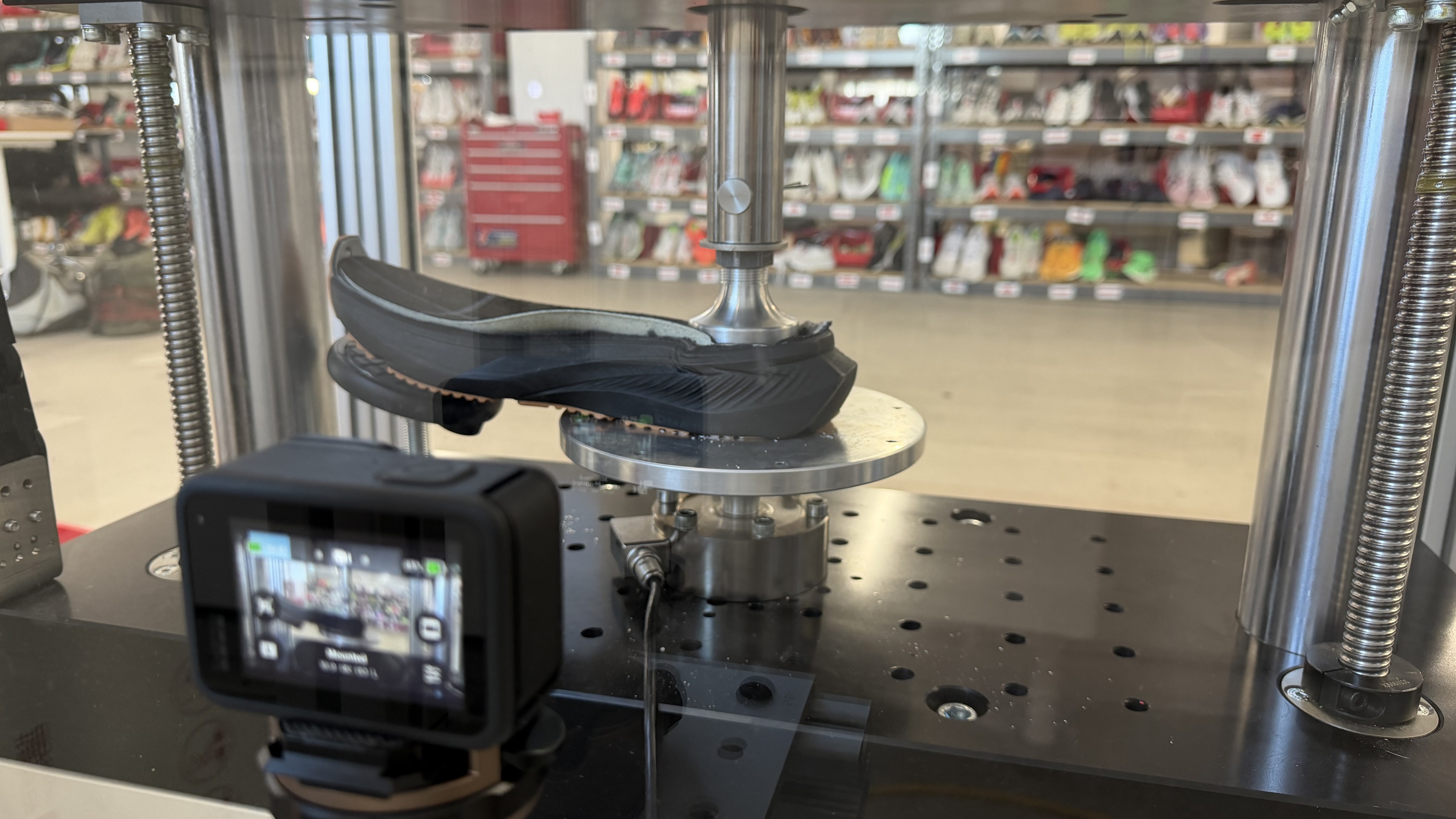
The Brooks Glycerin 23 has poor energy return overall. No matter where you land, the ride is flat, lacking rebound to keep legs ticking over efficiently. However, that's not the purpose of this shoe; it's intended as a daily mile soaker and not a lively pace-pusher.
Midsole rebounds poorly.


Stability
The Brooks Glycerin 23 has very good stability. Its firm heel keeps rearfoot landings controlled, while the very firm forefoot provides a secure base at toe-off. The broad platform also gives the shoe plenty of support across the stride, making relaxed mileage easy to trust.
Broad platform keeps the ride secure across the stride.
Firm heel keeps rearfoot landings controlled.
Very firm forefoot provides a secure base at toe-off.


Cushioning
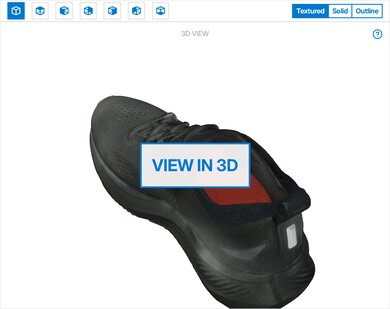
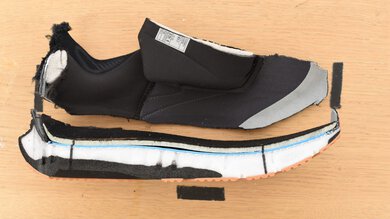
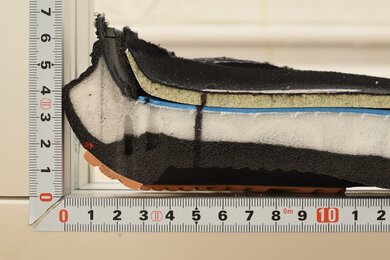
The Brooks Glycerin 23 has decent cushioning and is especially suited to heel strikers. The foam is tuned to be plusher and more absorbent under the heel, and it soaks up impact with ease, even from heavier heel strikers. The forefoot cushioning is tuned to be denser, and thus less absorbent, making it uncomfortable over longer distances.
Heel provides good protection for heel strikers.
Forefoot strikers will find ride harsher.


The heel cushioning gets better as more force hits the shoe, following a similar philosophy to the Brooks Ghost 18. Protection is alright under lighter loads before becoming very good under heavier forces, making the Glycerin 23 particularly well-suited to heel strikers.
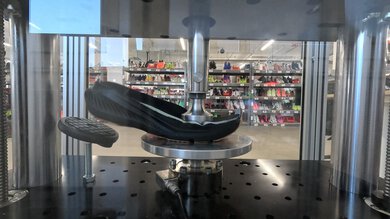

The forefoot cushioning is decent overall, but protection drops as more force hits the shoe. Heavier runners or those loading the forefoot harder get less protection.
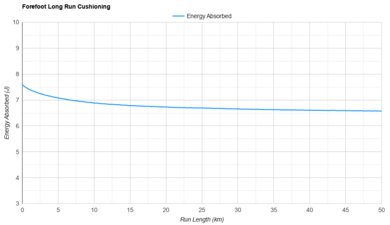
The forefoot cushioning holds up acceptably over longer efforts without bottoming out completely. It handles longer distances better than the Brooks Ghost 18, though the Brooks Glycerin Max 2 offers much deeper protection.
Bounciness
The Brooks Glycerin 23 has poor bounce. Neither the heel nor forefoot compresses deeply underfoot, so the midsole produces little spring through the stride. The heel returns especially little energy after landing, while the forefoot also lacks enough rebound to make toe-off lively.
Shallow compression limits spring underfoot.
Poor rebound leaves the ride flat.


Snappiness
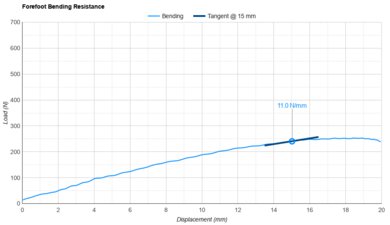
The Brooks Glycerin 23 has okay snap. Its very firm forefoot provides a secure base at toe-off, while the forefoot has enough stiffness to provide some leverage as you push forward. However, it loses too much of the energy stored while bending, and the tame rocker angle provides little assistance onto the toes.
Very firm forefoot provides a secure base at toe-off.
Mediocre bending energy return limits efficiency at toe-off.
Tame rocker angle provides little assistance onto the toes.
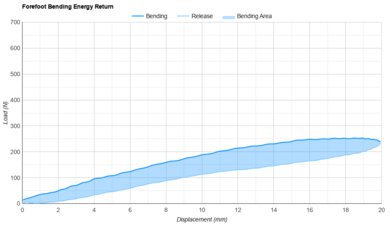
The forefoot has mediocre bending energy return. It gives some stored energy back through toe-off, but loses too much to make push-off particularly efficient.
Roll
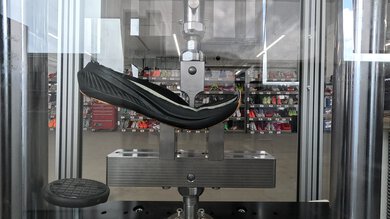
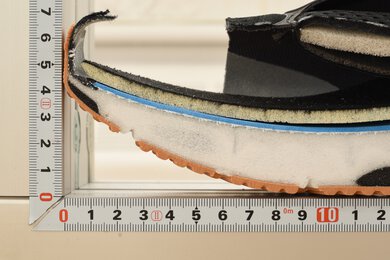
The Brooks Glycerin 23 has mediocre roll. Its tall forefoot gives the rocker plenty to work with, but the rocker flattens too easily under load to carry you forward smoothly. The heel plus forefoot rocker geometry also provides limited assistance, keeping transitions gradual rather than fluid.
Forefoot stiffness provides some leverage through push-off.
Tall forefoot gives the shoe enough structure to roll through late stance without flattening.
Compliant rocker reduces assistance through the stride.
Tame rocker geometry makes transitions less fluid.
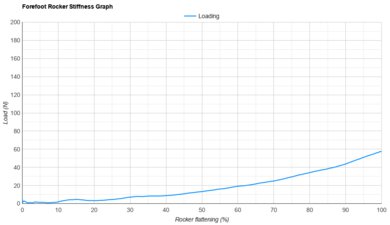
The rocker has sub-par stiffness and flattens too easily under load, reducing assistance through the stride.
True To Size
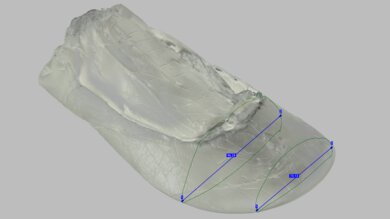
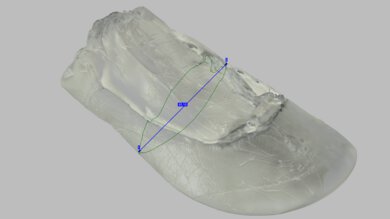
The Brooks Glycerin 23 has a good fit, with true-to-size length and good volume through the forefoot. The arch is a bit narrow, so runners with wider feet should consider the Wide or Extra Wide versions of the shoe. Otherwise, most runners can safely buy their regular size.
Appropriate length.
Good internal volume in the forefoot.
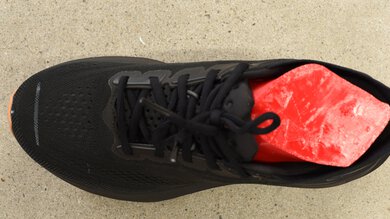
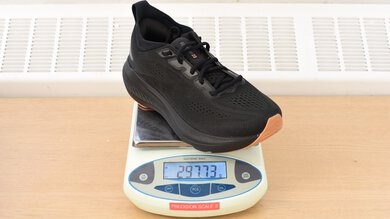
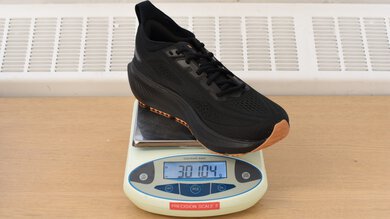
The Brooks Glycerin 23 is very heavy, even for a daily trainer, and has gained weight over the Brooks Glycerin 22.
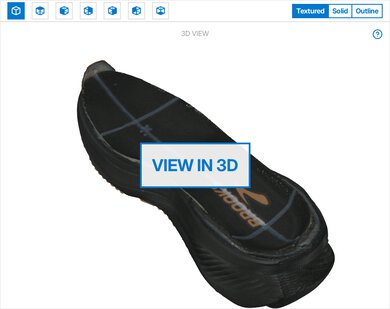

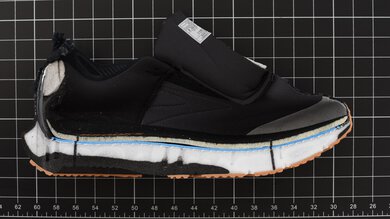
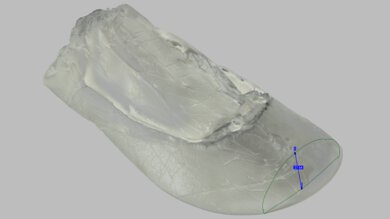
The Brooks Glycerin 23 uses DNA Tuned, the same foam found in the Brooks Glycerin Max 2. Brooks tunes this version to stay softer under the heel with a denser forefoot, though the Glycerin 23 provides much less impact protection compared to the Glycerin Max 2.

Popular Running Shoe Comparisons
The Brooks Glycerin 23 is a comfort-focused daily trainer that continues both the Glycerin series' legacy of plush cushioning and Brooks' slow and steady approach to tweaking their models. That gradual iterative approach makes the Glycerin 23 a solid, dependable choice of daily trainer, but it does lag behind more ambitious competitors in some key areas. Runners who want a comfortable daily trainer with more stack height and cushioning should consider the ASICS GEL-NIMBUS 28 or the Nike Vomero 18. Runners who want a good level of cushioning in a daily trainer without sacrificing energy return might prefer the Saucony Triumph 24 or the Saucony Ride 19.
Within Brooks' lineup, the Glycerin 23 sits at the center of a rapidly expanding Glycerin universe. There is now a Brooks Glycerin Flex, which has the same DNA Tuned foam, but segmented into multiple pods that allow the foot more freedom of movement. There's the Brooks Glycerin Max 2, which goes the opposite direction, packing more foam underfoot into a towering platform of cushioning. Finally, there's the Brooks Glycerin GTS 23, which has a similar geometry and fit to the Glycerin 23, but adds raised sidewalls to correct overpronation.
For more options from the brand, check out our recommendations for the best running shoes from Brooks. If you want to explore other brands, check out our picks for the best running shoes. If you're looking to increase your mileage and want a shoe that's better suited to go the distance, check out our recommendations for the best long-distance running shoes.
The Brooks Glycerin 23 is a better choice than the Brooks Glycerin GTS 23 unless you overpronate. It's slightly lighter, still impressively stable, and better suited to runners who land on their heels. The GTS 23 adds raised sides and support features, making it more stable, though its guidance is more heavy-handed.
The Brooks Glycerin 23 and Brooks Glycerin Flex share a name and the same DNA Tuned foam, but have very different ride profiles. The Glycerin 23 is a rather orthodox cushioned daily trainer with a smooth and predictable ride. The Glycerin Flex has a deep groove in its midsole and articulated foam pods that allow the foot more freedom of movement. The lower stack height of the Glycerin Flex does help keep it more stable than the Glycerin 23, but it also means less cushioning, which is especially noticeable in the forefoot.
The Brooks Glycerin 23 is a better running shoe than the Brooks Ghost Max 3. It has much better heel cushioning and energy return, and a slimmer shape that feels more nimble. The Ghost Max 3 has more cushioning up front and is better suited to walking.
The HOKA Bondi 9 and Brooks Glycerin 23 are both comfort-focused daily trainers, but they take very different approaches. The HOKA is the lighter, higher-stack option, with much better cushioning and noticeably more rebound under both the heel and forefoot. It feels more protective and more capable across daily miles, longer runs, and recovery efforts. The Brooks, meanwhile, is the more traditional workhorse: firmer, less cushioned, and far less energetic, but with a familiar ride that suits runners who want something predictable for easy runs or walking.
The Brooks Glycerin Max 2 and Brooks Glycerin 23 may both be Glycerin by name, but they're noticeably different by nature. The Glycerin Max 2 is the max-cushion option, a colossal cruiser best suited for runners who want maximum comfort and protection on easy, long, and recovery runs. The Glycerin 23, on the other hand, is the more classic daily trainer, with decent cushioning and stability; it's more suited to runners who want a traditional, stable workhorse that can soak up weekly volume without the extra stack height.
The ASICS GEL-NIMBUS 28 and Brooks Glycerin 23 are two premium daily trainers with slightly different philosophies. The ASICS is the lighter, more versatile, and more protective shoe overall, with better cushioning underfoot, and it holds up impressively across everything from short, easy efforts to longer runs. The Brooks is the more traditional option: a workhorse with a smaller stack, it can handle most daily mileage, but it's better suited to heel strikers who still want a decent amount of cushioning, just with a bit more ground feel.
The HOKA Clifton 10 is a better choice than the Brooks Glycerin 23 for most runners. It's lighter, softer, and more cushioned at step-in, making it great for shorter, relaxed runs. The Brooks is heavier, with a more traditional feel and slightly better forefoot protection on longer runs, so it suits runners who prefer a classic Brooks trainer.
The Brooks Glycerin 23 and Brooks Ghost 17 are two of the Seattle-based brand's most popular daily trainers, and both cater primarily to heel strikers. The Ghost is the firmer shoe, offering less cushioning but better stability. The Glycerin is softer and more plush, but the extra cushioning makes the shoe heavier. Runners who want a more traditional ride, with some ground feel, will likely prefer the Ghost 17. For runners who prioritize comfort, the Glycerin 23 is the better choice.
The Brooks Glycerin 23 features a few important updates to the Brooks Glycerin 22. The 23 iteration has reduced the heel-to-toe drop, and there's more cushioning under the forefoot. Both shoes still primarily cater to heel strikers, but the Glycerin 23's forefoot holds up better over long distances and doesn't bottom out as quickly as the Glycerin 22. Another significant change is the triple jacquard mesh upper of the Glycerin 23, which gives a more flexible and secure fit, but is quite thick and could make the shoe hotter in the summer months.
The Brooks Glycerin 23 and Brooks Hyperion Max 4 serve different purposes within a running shoe rotation. The Glycerin 23 is the much more stable, relaxed shoe, which makes it good for daily training and casual wear. The Hyperion Max 4 is a speedy shoe that makes sense for faster workouts, but is too unstable for more relaxed runs.
Differences Between Sizes And Variants
We purchased and tested this shoe in a men's US size 9, as shown here on the label of our pair. The pair we bought is in the Black/Ebony/Biscuit colorway, and the shoe is available in a variety of other colorways depending on your region. The shoe is available in Wide and Extra Wide in both men's and women's versions. The design section applies only to the exact model we tested, but we expect other sizes to perform similarly.