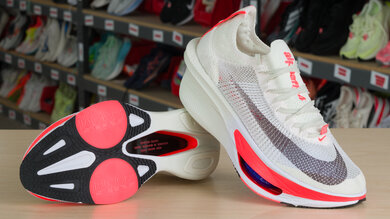
The Nike Alphafly 4 is a lightweight, carbon-plated racer designed for longer distances. It sits alongside the Vaporfly for shorter races, with the Nike Zoom Fly serving as the training companion to both. Its excellent cushioning and energy return make it a great option for long-distance racing, though its tall, soft platform lacks stability. It also suits long training runs at race pace, but its racing-focused design is less practical for everyday mileage.
| ✅ Buy If: | ❌ Skip If: |
|
|
Our Verdict
The Nike Alphafly 4 is great for long-distance racing. Its low weight, excellent cushioning, and lively rebound suit sustained race efforts, while the forefoot maintains strong impact protection as the distance increases. The stiff forefoot also springs back when you push off, helping you move into the next stride. However, sub-par stability makes it less reassuring if you need a planted feel, especially as fatigue affects your stride later in the race.
Lightweight design makes holding fast paces easier.
Excellent cushioning, especially under the forefoot.
Cushioning holds up well over long distances.
Excellent energy return at both heel and forefoot.
Stiff forefoot springs back effectively during push-off.
Tall, soft platform offers limited stability.
Rocker provides only modest resistance to flattening.
The Nike Alphafly 4 is good for short-distance racing. Its low weight helps you maintain a quick turnover, while the plated forefoot springs back at push-off. However, the soft cushioning gives beneath your foot, making that push-off feel less direct and immediate. The rocker also flattens somewhat under pressure, limiting how effectively it carries you toward toe-off.
Lightweight design makes holding fast paces easier.
Excellent energy return at both heel and forefoot.
Stiff forefoot springs back effectively during push-off.
Soft forefoot lacks a firm base for fast push-offs.
Rocker provides only modest resistance to flattening.
The Nike Alphafly 4 is good for long runs. Excellent overall cushioning protects your landings, and the forefoot retains most of its impact protection as distance builds. Its low weight and excellent energy return also make it appealing for longer sessions at race pace. However, sub-par stability is a significant limitation for runners who need a planted feel, particularly if their stride becomes less controlled as they tire. Its rocker also loses some of its shape under load, limiting how consistently it helps you roll forward.
Lightweight design makes holding fast paces easier.
Excellent cushioning, especially under the forefoot.
Cushioning holds up well over long distances.
Excellent energy return at both heel and forefoot.
Stiff forefoot springs back effectively during push-off.
Tall, soft platform offers limited stability.
Rocker provides only modest resistance to flattening.
Limited help rolling forward from heel contact.
The Nike Alphafly 4 is mediocre for daily training. Its low weight makes it feel agile, but it isn't stable enough to feel reassuring for routine mileage. Its carbon plate is a bit overkill for everyday training, with a stiff, aggressive feel at easy paces. The limited heel rocker also offers little help with rolling forward from heel contact.
Lightweight design makes holding fast paces easier.
Excellent cushioning, especially under the forefoot.
Stiff forefoot springs back effectively during push-off.
Tall, soft platform offers limited stability.
Limited help rolling forward from heel contact.
Carbon-plated design is less suited to everyday mileage.
Changelog
- Updated Oct 16, 2026: Review published.
- Updated Oct 15, 2026: Early access published.
- Updated Oct 13, 2026: Our testers have started testing this product.
- Updated Oct 07, 2026: The product has arrived in our lab, and our testers will start evaluating it soon.
- Updated Oct 02, 2026: We've purchased the product and are waiting for it to arrive in our lab.
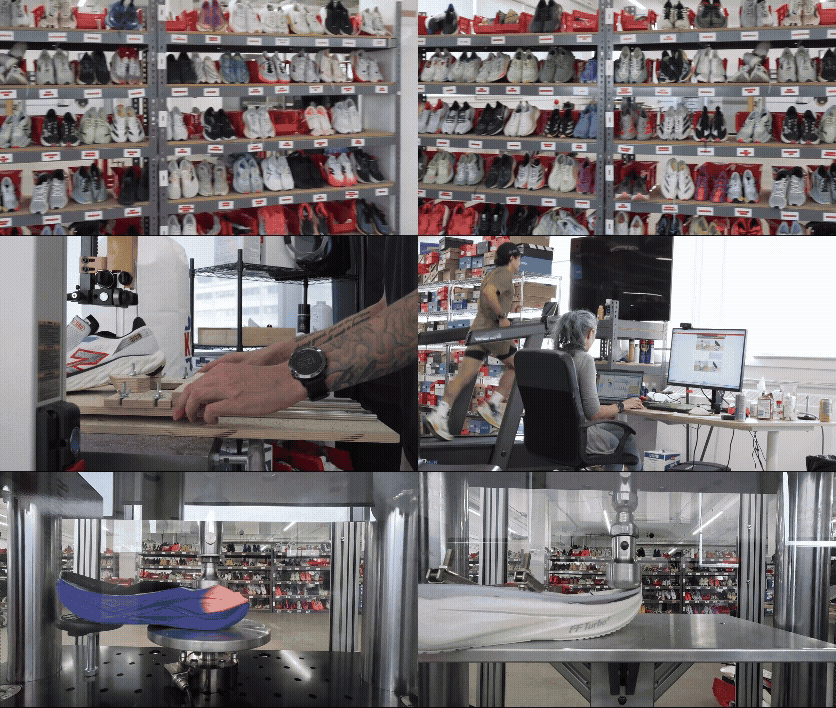
We've bought and tested more than 300 running shoes. Every pair purchased with our own money, never supplied or sponsored by brands. Our data-driven tests are designed to go beyond marketing claims, and since every shoe goes through the exact same methodology, you can directly compare results to find the right pair for your needs.
Test Results
Design


The Nike Alphafly 4 is lightweight despite its tall midsole and substantial cushioning. It sheds about 14 g per shoe compared with the Nike Alphafly 3 in our men's size 9, a noticeable weight reduction. This makes it less cumbersome when you pick up the pace and helps reduce the effort needed to sustain fast running.


Energy Return
The Nike Alphafly 4 has excellent energy return at both the heel and forefoot. Its foam gives back a high proportion of the energy put into it during compression, helping you sustain fast paces at a lower effort.
Excellent energy return at both heel and forefoot.

The forefoot foam has excellent energy return, springing back efficiently as you push off. This can help you sustain fast paces with less effort, making it a strength for racing. It returns a similar amount of energy to other mainstream racing shoes such as the adidas Adizero Adios Pro 5.

The heel foam provides excellent energy return, giving back a high proportion of the energy put into it during compression. That efficient rebound can help make sustained fast running feel less demanding for heel strikers. The heel is very energetic, but not quite as much as alternatives like the Li-Ning Feidian 6 Elite.
Stability
The Nike Alphafly 4 has sub-par stability, as is typical of racing shoes. Its broad forefoot adds some stability, but it doesn't fully compensate for the tall, soft cushioning. The narrower heel also offers a less substantial base at rearfoot contact. As the midsole compresses, the platform can feel less planted, making it a less forgiving choice if you need help maintaining a controlled stride. That's particularly relevant if fatigue makes your foot placement less consistent during longer efforts.
Tall, soft platform offers limited stability.


The heel remains soft across light and strong landings, giving it a plush, yielding feel. That softness is appealing if you enjoy sinking into the foam, but it also contributes to the shoe's limited stability.

The forefoot is very soft and much softer than the Nike Alphafly 3, whether you land lightly or apply more force. This creates a plush feel beneath the front of your foot, but provides less support and a less direct push-off than a firmer midsole.

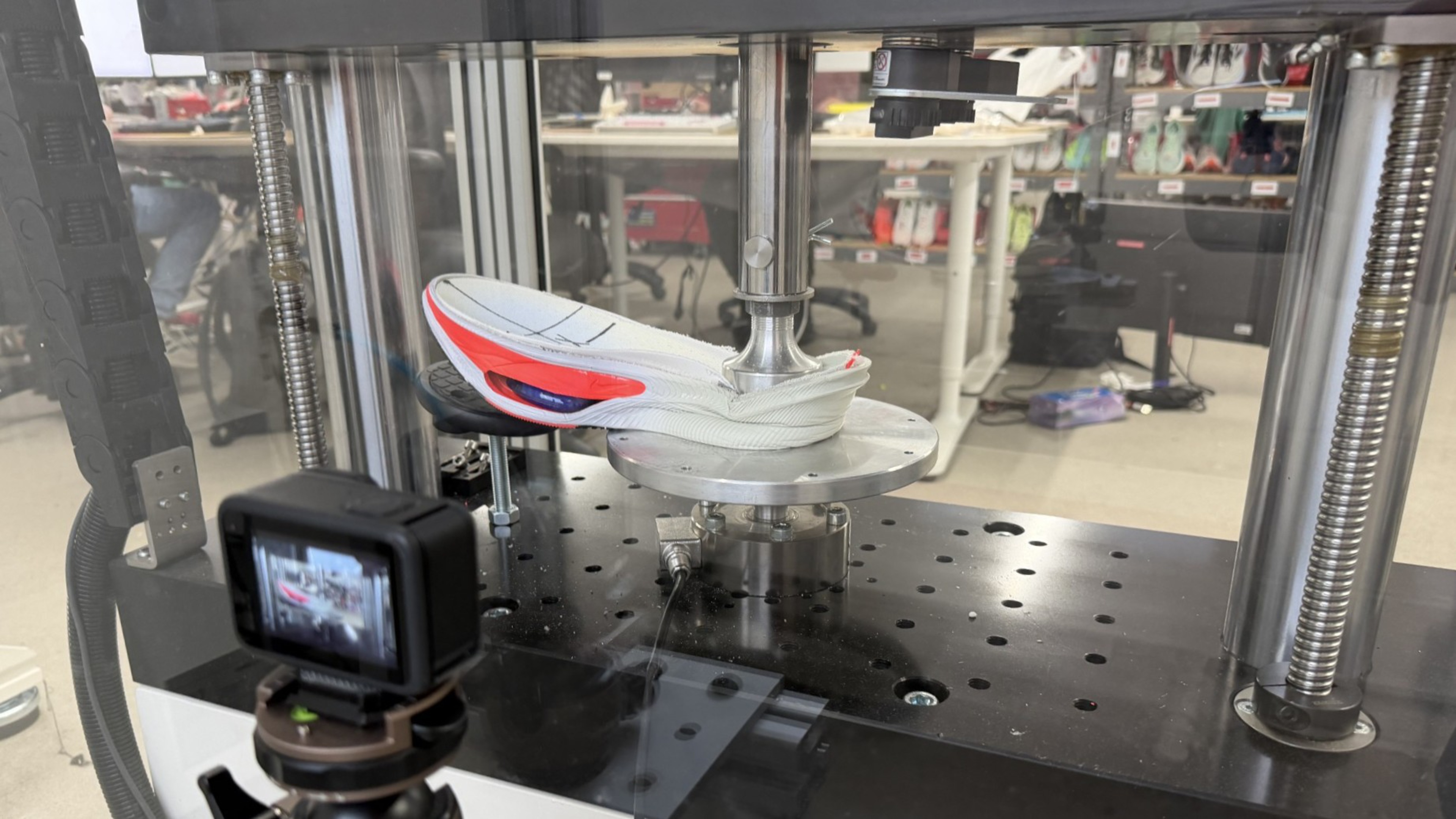
The carbon-fiber plate adds bending stiffness and helps stabilize the soft foam. Two Air Zoom pods beneath the forefoot are marketed by Nike as improving energy return and adding propulsion, but our tests don't isolate their contribution, so their actual effect isn't confirmed. There's no separate tongue; rather, the upper is continuous.
Cushioning
The Nike Alphafly 4 provides excellent cushioning. The forefoot offers outstanding protection, while the heel also delivers great protection, making it suitable for different foot-strike patterns. The foam also remains protective under stronger impacts, so it suits heavier and/or faster runners. Forefoot cushioning holds up well as the distance increases.
Excellent cushioning, especially under the forefoot.


The Nike Alphafly 4 provides great heel cushioning, absorbing substantial impact energy across the tested forces. This gives heel strikers strong protection, including under the heavier impacts associated with greater body weight and/or faster running.


Forefoot cushioning is outstanding, absorbing plenty of impact energy across the tested forces. It remains protective under stronger impacts, including those from heavier and/or faster runners.

Forefoot cushioning remains excellent in our simulated 50 km long-run test, with only a small decline across the reported checkpoints. If you're using it for a marathon, which is what it's designed for, that sustained cushioning should keep it feeling protective even through the final miles.
Wet & Warm Weather
The Nike Alphafly 4 is excellent for wet and warm weather. Its upper provides good breathability, while very low water absorption limits the extra weight it picks up in the rain. It also dries in less than a day in our test, making it convenient to use again the following day after a soaking.
Low water absorption and fast drying.


The upper provides good breathability, allowing air to pass through during warm-weather running.


Bounciness
The Nike Alphafly 4 delivers very good bounciness. Its midsole compresses noticeably under both the heel and forefoot, letting you sink into the cushioning before it rebounds. This gives each stride a soft, springy sensation underfoot, though you may prefer a firmer midsole if you want a lighter feel with less sinking.
Very good bounce underfoot.

The heel lets you sink noticeably into the foam before it rebounds, with deeper compression than the Nike Vaporfly 4. You feel more of that sinking and rebounding motion underfoot, while the Vaporfly feels more direct.

Snappiness
The Nike Alphafly 4 has decent snappiness at toe-off. Its stiff forefoot springs back effectively as you push off, helping you move into the next stride. However, the soft foam gives beneath your foot, and the moderate rocker angle provides a gentler tipping motion, making toe-off feel less direct and immediate. That makes it better suited to longer efforts than short races at very high intensity.
Stiff forefoot springs back effectively during push-off.
Soft forefoot lacks a firm base for fast push-offs.

The forefoot has great bending energy return, springing back effectively as it straightens during push-off. This adds a snappy sensation as you move into the next stride.


The forefoot strongly resists bending, giving push-off a stiff, structured feel. However, it's less rigid than the Nike Alphafly 3, so it takes less force to bend.

The forefoot rocker geometry is decent, with an upward curve that helps guide you toward toe-off. However, it's less pronounced than the adidas Adizero Adios Pro 5's, which starts farther back and lifts the toes higher for a more noticeable rolling sensation.
Roll
The Nike Alphafly 4 provides a decent rolling transition toward toe-off. The upward curve at the front helps guide you forward, but it offers only adequate resistance to flattening under load. This limits how well the shoe can maintain that rolling motion when you land with more force, rather than consistently holding its curved shape throughout the transition.
Decent assistance rolling forward toward toe-off.
Rocker provides only modest resistance to flattening.

The rocker offers adequate resistance to flattening but loses some of its curved shape when you apply a lot of pressure. Heavier and/or faster runners may therefore experience less of its rolling effect.


True To Size
The Nike Alphafly 4 offers a snug racing fit, with limited room through the arch and above the toes. Width around the ball of the foot is close to the expected fit, but the tapered toe box leaves little extra space. The shoe measures short, so consider trying a half-size up for longer races to allow for foot swelling. Your usual size should be fine for shorter races, especially if you prefer a snug fit.
Width around the ball closely matches the expected fit.
Short, tapered fit with limited room through the arch and above the toes.

The fit is short, and the tapered front leaves limited space for your toes. Your usual size should be fine for shorter races if you prefer a snug fit, but consider going half a size up for a marathon to allow for foot swelling.


Popular Running Shoe Comparisons
The Nike Alphafly 4 is the brand's option for longer races, while the Nike Vaporfly 4 is geared toward shorter distances. Its appeal is low weight, excellent energy return, and cushioning that stays protective deep into a marathon. It competes with mainstream premium racers such as the ASICS METASPEED EDGE TOKYO. At similar prices, the ASICS is the best option thanks to its lighter build.
Some Chinese alternatives such as the Qiaodan Feiying Plaid 3.0 offer nearly comparable cushioning and energy return for less, although the Qiaodan is slightly heavier and less stable. After making runners wait nearly three years, Nike delivers clear improvements over the Alphafly 3 in weight, cushioning, and energy return, but this is an evolution rather than a revolution. A discounted Alphafly 3 remains worth considering, especially if you prefer its more stable feel.
If you're looking for more shoes from the brand, take a look at our recommendations for the best Nike running shoes. For more race day options, check out our recommendations for the best marathon running shoes to find the perfect pair.
The Nike Alphafly 4 is the better choice for marathon racing than the Nike Alphafly 3. It's lighter, softer, and more protective, with stronger energy return to help you maintain your pace as the race goes on. However, the Alphafly 3 is firmer, more stable, and feels more immediate when you push off, making it a better fit for shorter races or runners who dislike a soft ride. For those reasons, a discounted Alphafly 3 remains a good buy.
The Nike Alphafly 4 is a better choice for longer races than the Nike Vaporfly 4, which is better suited to shorter distances. The Alphafly offers substantially more protection and a softer, deeper bounce, helping keep your feet comfortable late in a marathon. The trade-off is extra weight and a less immediate response when you push off. The Vaporfly feels lighter, firmer, and quicker underfoot, making it the stronger option for fast 5K and 10K races.
The ASICS METASPEED SKY TOKYO is the better overall racing shoe than the Nike Alphafly 4. It's noticeably lighter, returns more energy, and feels quicker when you push off, making it a strong choice across shorter and longer races. The Nike has a softer feel and more protection under the forefoot, particularly late in a marathon. At similar prices, choose the ASICS if you prioritize low weight and a quicker response; choose the Nike only if you prefer extra protection over long distances.
The adidas Adizero Adios Pro 5 is the better overall racing choice than the Nike Alphafly 4. It's lighter, making it a strong option across shorter and longer races. Both return plenty of energy, but the Nike offers a softer feel and more protection under the front of your foot. That gives it an advantage if comfort late in a marathon is your priority.
The adidas Adizero Adios Pro Evo 3 is the better marathon racer than the Nike Alphafly 4 if cost is no concern. It's dramatically lighter while offering even more energy return and protection, giving you a soft, bouncy ride. However, its very high price and limited durability make it difficult to justify for repeated training and racing. The Alphafly 4 is heavier, but it remains highly protective and energetic at a much lower price. Choose the adidas for a single-target marathon; choose the Nike for better value across repeated races.
Differences Between Sizes And Variants
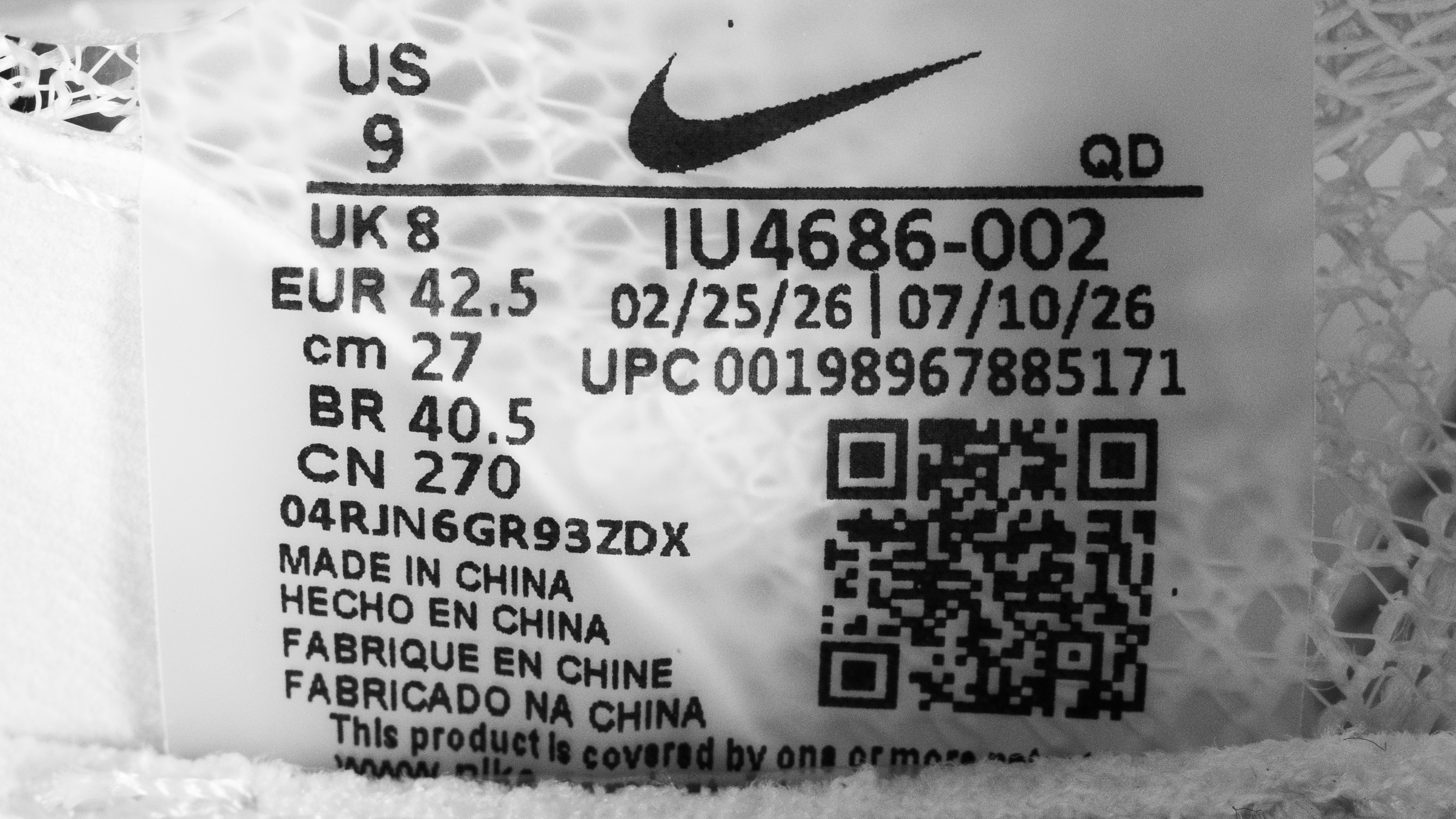
We tested the Nike Alphafly 4 in men's U.S. size 9, as indicated on the label for our pair. The color shown here is Sea Glass/Laser Crimson/Phantom/Burgundy Ash. At the time of writing, this is the only official colorway available, but more are expected to be released. Wide versions aren't available for this shoe. Most of our review results are valid for all variants, though the design section applies only to the model we tested. We expect other size and gender variants to perform similarly.