The On Cloudmonster 2 is a cushioned, maximalist running shoe designed to blend stability with cushioning, perfect for daily runs. It features a high stack and a nylon 'Speedboard' plate, with an updated midsole that features a second layer of denser foam above the plate to enhance stability and impact absorption. Runners looking for a stable shoe for daily training and long, steady miles will appreciate the Cloudmonster 2. However, the roomy fit and firmer cushioning may not suit those who prefer a snug, ultra-soft feel.
Our Verdict
The On Cloudmonster 2 isn't the best choice for marathon racing. Its terrible energy return and heavier build limit efficiency over long distances, making it less ideal for sustained speed. While the cushioning provides decent protection and the plate adds some structure, the shoe lacks the responsiveness needed for competitive long runs. Its lateral stability is a strong point, ensuring a steady ride, but overall, better options exist for marathon racing.
Speedboard adds stiffness.
Bulky.
Foam isn't bouncy.
For shorter races, the On Cloudmonster 2 is a mixed bag. Its firm forefoot helps, but the weight and lack of energy return hinder overall performance. The shoe doesn't deliver the snappy, efficient ride needed for high-speed efforts.
Speedboard adds stiffness.
Foam is quite firm, especially at the forefoot.
Bulky.
Foam isn't bouncy.
Changelog
-
Updated Jun 23, 2026:
We've updated the Popular Comparisons section to include a link to the newly reviewed On Cloudboom Volt.
- Updated Jun 17, 2026: We've converted this review to Test Bench 0.12, which fixes how we measure firmness, a component of the Stability and 5K/10K Racing usages. There may be inconsistencies between the text and the scores for these usages, but the scores should still be considered valid. We've also brought back the Energy Return score and added two new usages: Daily Training and Long Run. To read more about the changes, see the changelog.
-
Updated Jun 09, 2026:
We modified the writing due to the new test bench. We've updated the Responsiveness box text to reflect the new scores and added text to the True to Size box.
- Updated May 26, 2026: We've converted this review to Test Bench 0.11, adding two new rocker measurements to the Design section, and three new responsiveness tests to the Performance section. The Energy Return usage score has been replaced with Responsiveness. Check out the details in our changelog.
-
Updated Apr 22, 2026:
We mentioned the On Cloudrunner 3 in the Popular Running Shoe Comparisons section of the review.
-
Updated Apr 17, 2026:
We mentioned the latest iteration of the On Cloudmonster Hyper as a point of reference in the Popular Running Shoe Comparisons section of the review.
- Updated Mar 25, 2026: We've converted this review to Test Bench 0.10, adding a new set of fit tests to the Design section and an overall fit performance usage. Check out the details in our changelog.
- Updated Feb 09, 2026: We've converted this review to Test Bench 0.9, which adds a Forefoot Long Run Cushioning test to our performance section. Read more in our changelog.
-
Updated Oct 22, 2025:
We've adjusted this review's writing to align with the new test bench, including updates to all usage scores and test boxes for Cushioning, Firmness, and Energy Return. We've updated the side-by-side comparisons with other shoes accordingly.
- Updated Oct 20, 2025: We've converted this review to Test Bench 0.8.2, which updates our methodology for the impact force range used in our compression tests to improve their accuracy. This also affects all usage and performance usage boxes using those compression tests as score components.
-
Updated Jul 30, 2025:
We revised the phrasing in the Cushioning, Heel Cushioning and Compared to Other Running Shoes box to reflect the changes in the latest test bench.
- Updated Jul 30, 2025: We've converted this review to Test Bench 0.8.1, which mainly updates the score components for the Marathon Racing and Lateral Stability usage boxes to improve accuracy.
-
Updated Jun 12, 2025:
We added a comparison to the On Cloudsurfer 2 in the Compared To Other Running Shoes box.
- Updated Apr 02, 2025: Converted to Test Bench 0.8.
- Updated Apr 02, 2025: Review published.
We've bought and tested more than 250 running shoes. Every pair purchased with our own money, never supplied or sponsored by brands. Our data-driven tests are designed to go beyond marketing claims, and since every shoe goes through the exact same methodology, you can directly compare results to find the right pair for your needs.
Test Results
Energy Return
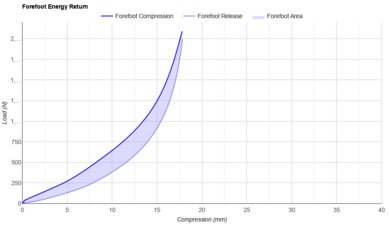
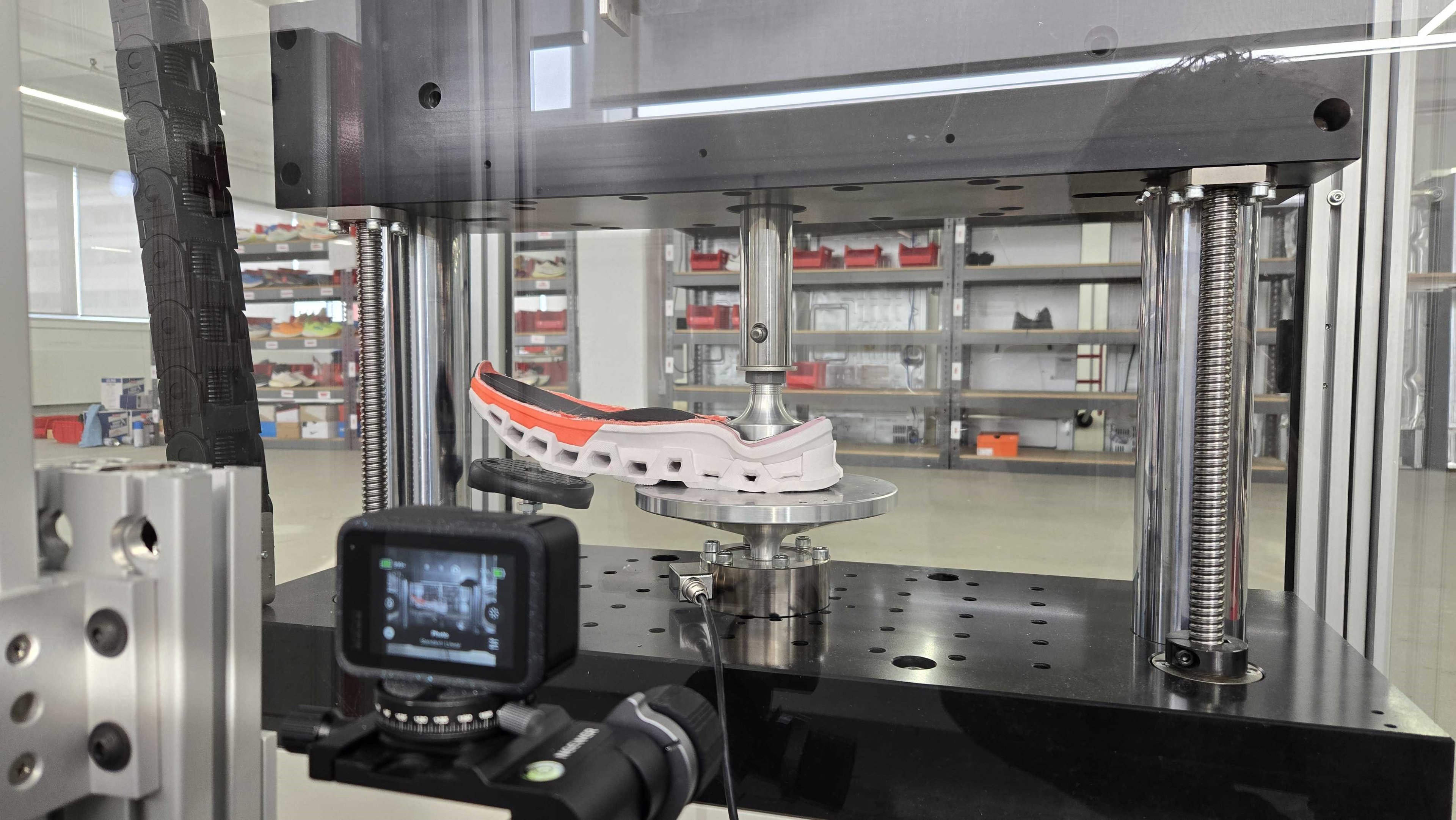
The forefoot energy return is slightly better than the heel but still falls short of delivering a truly responsive ride. The midsole struggles to recycle energy effectively, resulting in a ride that feels dull. Runners who prioritize a snappy toe-off will find the shoe lacking in spring.
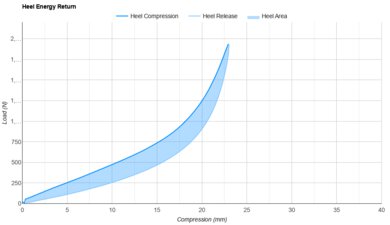
The heel energy return in the On Cloudmonster 2 is bad. It lacks the responsiveness needed to propel runners forward efficiently, making landings feel boring rather than bouncy. This can contribute to a less dynamic ride, particularly for heel strikers who rely on a lively rebound for smoother transitions.
Stability
The strongest aspect of the On Cloudmonster 2 is its lateral stability. The wide outsole, firm structure, and secure design provide a steady feel, making it a good choice for those who prioritize balance. This stability can help runners maintain form, especially during longer efforts when fatigue sets in.
Speedboard adds stiffness.
Foam is quite firm, especially at the forefoot.
Wide base.
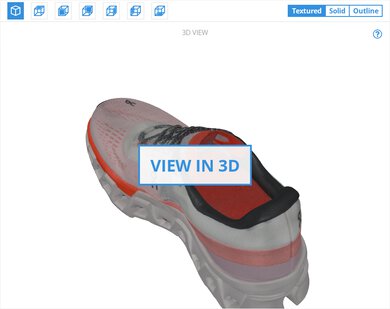
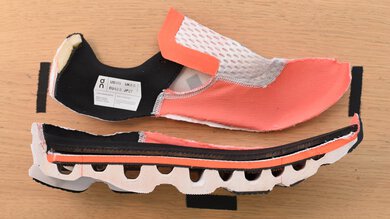
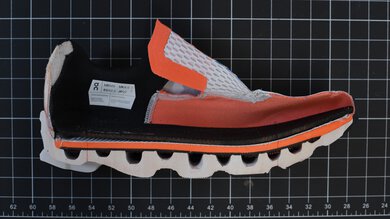
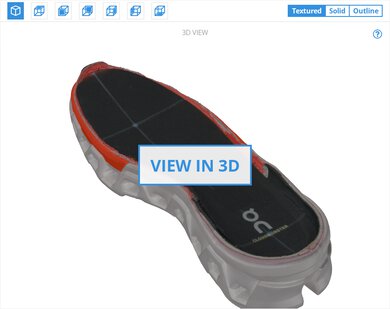
Runners familiar with the original Cloudmonster will notice a subtle change in the second iteration: the outsole redesign. The previous version had a small cutout exposing the nylon Speedboard, which had an annoying tendency to trap rocks and debris. This cutout has now been filled, making the shoe more practical.
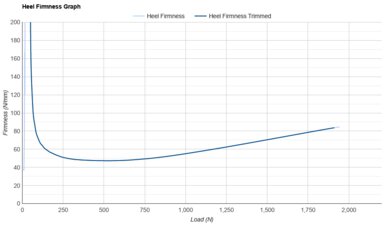
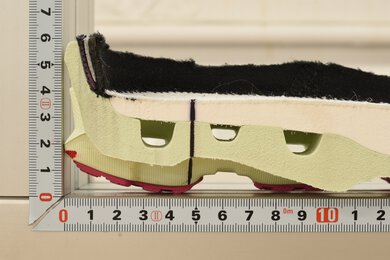
The heel of the shoe is moderately firm, offering a structured and stable landing. While not excessively stiff, it lacks the plushness of softer trainers like the Mizuno Neo Vista. This firmness aids in stability but may not suit runners seeking a more forgiving heel strike.
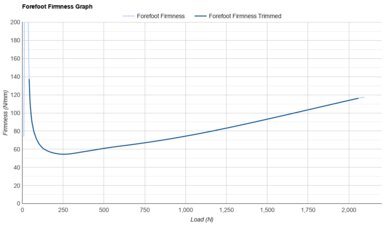
The forefoot is noticeably firm, contributing to the shoe's stable feel. This stiffness is partly due to the Speedboard, which holds the foam together and adds structure. While this design improves stability and control, it also reduces the natural flexibility that some runners may prefer for a smoother, more adaptive ride.
Cushioning
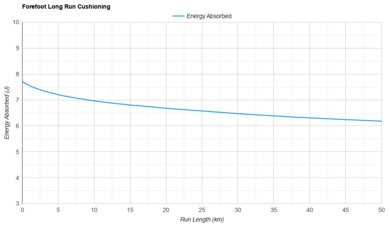
The On Cloudmonster 2 is decently cushioned but not exceptionally so. The heel provides a satisfactory level of protection, helping to soften rearfoot landings, while the forefoot feels notably less plush. This setup makes it comfortable for moderate distances but not the most protective choice for long-haul runs.
Decent heel cushioning.
Forefoot is lacking some protection.
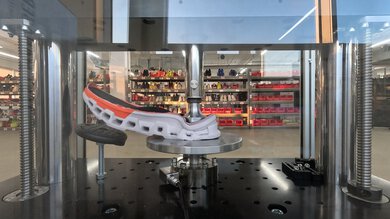
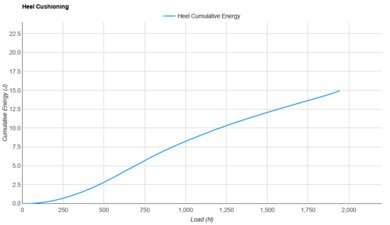
The heel cushioning in the On Cloudmonster 2 is well-balanced, offering a decent level of shock absorption. It effectively softens landings, making it a solid option for those who prefer a bit of extra protection underfoot. However, while satisfactory, it doesn't reach the plushness of max-cushioned trainers like the Mizuno Neo Vista.
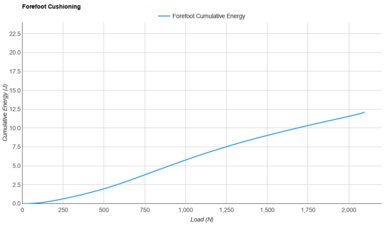
Responsiveness
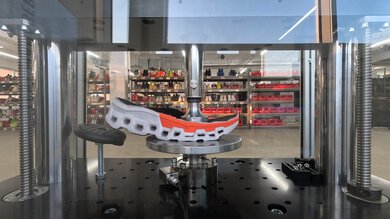
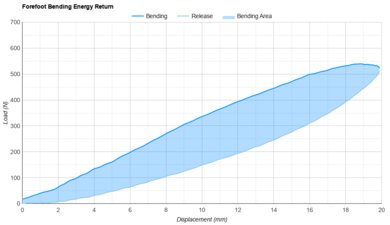
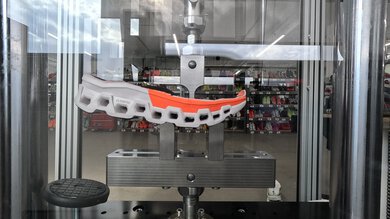
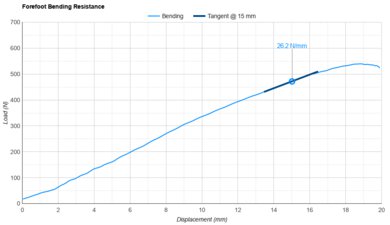
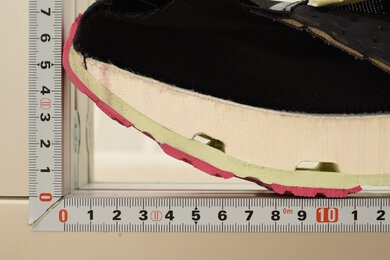
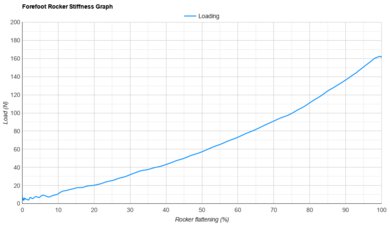
The responsiveness of the On Cloudmonster 2 is sub-par. The midsole struggles to return energy efficiently, making the ride feel dull. The forefoot is somewhat rockered and stays firm through toe-off, so runners who push off with a lot of force will get some leverage out of the shoe, but it is far from lively.
Foam isn't bouncy.
True To Size
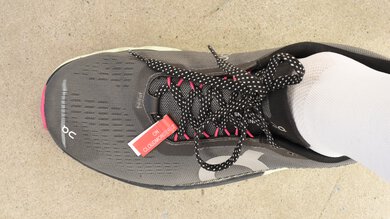
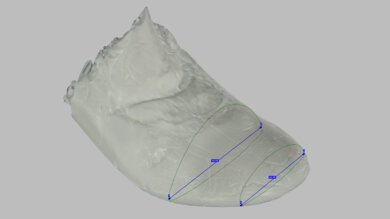
The upper of the On Cloudmonster 2 is well proportioned, and most runners can stick to their normal size. The length is spot on, and the width is accommodating without being sloppy.
Length is true to size.
Ample width through arch and forefoot.
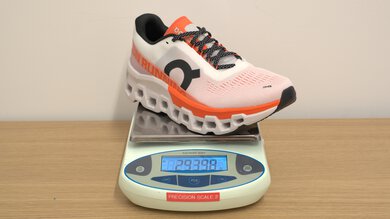
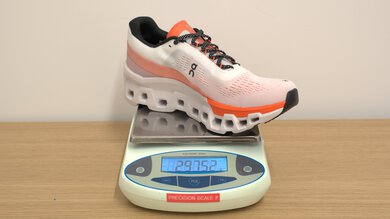
The On Cloudmonster 2 is on the heavier side, which impacts its overall efficiency, particularly for speed-focused runs. This extra weight makes it feel less agile compared to lightweight trainers like the adidas Adizero Evo SL. It does not feel overly cumbersome, but those looking for a featherlight experience will find it sluggish.
Popular Running Shoe Comparisons
The On Cloudmonster 2 stands out primarily due to its stability, offering runners who appreciate the distinctive Swiss brand's fit and design a solid daily trainer option. However, while stable, its firmer and somewhat less cushioned ride means it's not the most versatile or comfortable option for most runners, especially compared to softer, more dynamic alternatives like the Nike Invincible 3 or the ASICS NOVABLAST 5. If a firmer ride is your preference, the Cloudmonster 2 is appealing, but most runners should consider the New Balance FuelCell Rebel v4, which provides similar stability but with a lighter, more responsive feel.
Within On's lineup, the Cloudmonster 2 sits as a stable, cushioned daily trainer. The On Cloudrunner 3 leans further into stability as the brand's support trainer. Meanwhile, the On Cloudsurfer 2 is another daily trainer that offers a more traditional, grounded ride experience. There is also a higher stacked version of that shoe, the On Cloudsurfer Max. The Swiss brand also offers performance-oriented options like the carbon-plated On Cloudboom Strike and On Cloudboom Volt, as well as super trainers like the On Cloudmonster 3 Hyper, which is lighter and has a more premium midsole.
For more options, check out our recommendations for the best running shoes.
The On Cloudmonster 2 and On Cloudsurfer Max are both daily trainers by the same Swiss brand, but pretty different. The Cloudsurfer Max leans into a smoother, firmer, more controlled ride, with its CloudTec Phase design emphasizing a steady roll-through rather than noticeable rebound. The Cloudmonster 2, on the other hand, feels more cushioned and a bit more lively underfoot, and its Speedboard plastic plate gives the shoe more structure and a more driven transition. If you want a smooth, predictable cruiser for everyday miles, the Cloudsurfer Max fits better, but if you want a more cushioned daily trainer with a bit more pop, the Cloudmonster 2 is the stronger pick.
The On Cloudmonster 3 has several notable updates that set it apart from the On Cloudmonster 2. The upper of the third version has been reworked, and now has a bit more structure, so the fit is more snug and less baggy than the 2nd version. Underfoot, the two shoes have a similar configuration, with a plastic 'Speedboard' and pockmarked Helion foam, but the 3rd version is less firm and absorbs impact better.
The On Cloudmonster 2 and the On Cloudmonster Hyper share the same family but target different segments. The Cloudmonster 2 is a daily trainer built for your short and easy sessions. It uses On's firmer Helion foam throughout, giving it a relatively muted ride that favors protection over speed. In contrast, the Cloudmonster Hyper adds a PEBA-based Helion HF slab in the forefoot and trims weight, aiming to serve as a more versatile, premium trainer. In practice, the Hyper feels lighter and slightly more responsive, with better turnover and a touch more liveliness up front, though it stops short of the bounce you'd get from true super trainers. The trade-off is slightly less stability, whereas the Cloudmonster 2 is a bit more stable laterally across the platform. Fit is similar in both with roomy toe boxes, though the Hyper's premium upper feels a bit more refined.
The On Cloudsurfer 2 and the On Cloudmonster 2 offer two distinct experiences within On's daily training lineup. The Cloudsurfer 2 is a classic daily trainer, with a moderate stack height, lighter weight, and an early-stage rocker that promotes smooth transitions at easier paces. Its firm underfoot emphasizes ground feel and control over plushness or bounce. The Cloudmonster 2, on the other hand, is On's maximalist option: higher stacked, more cushioned, and noticeably more energetic thanks to a more responsive midsole. While both shoes are on the firmer side overall, the Cloudmonster 2 feels slightly softer and more forgiving.
The Nike Invincible 3 and On Cloudmonster 2 are both popular daily trainers but offer distinct experiences. The Nike shoe provides a noticeably bouncier ride and better stability, making it more versatile and suited to different types of runs. On the other hand, the On is more cushioned, appealing to runners who seek more protection underfoot, especially over longer miles.
The HOKA Clifton 9 and On Cloudmonster 2 are popular daily trainers that are perfect if you mostly run for Strava kudos. The On is more stable, while the HOKA is lighter and better cushioned, offering a smooth ride on casual daily runs. Neither is particularly bouncy, but the HOKA has the edge in responsiveness.
The New Balance FuelCell Rebel v4 and On Cloudmonster 2 are both daily trainers, but each appeal to different tastes. The Rebel v4 offers a lighter, firmer, and closer to the ground experience. In contrast, the Cloudmonster 2 provides more substantial cushioning, making it a better choice if you prioritize protection on slower runs.
The Mizuno Neo Zen and the On Cloudmonster 2 are both modern daily trainers, but they sit on opposite ends of the spectrum. The Cloudmonster is significantly firmer and more stable, offering a structured ride that feels controlled. On the other hand, the Neo Zen is much lighter, noticeably more energetic, and exceptionally squishy, delivering a soft, plush experience that prioritizes comfort and protection. While both are designed for daily training, the Cloudmonster 2 leans toward stability, whereas the Neo Zen excels in softness and easy-day comfort, making it a better pick for recovery runs or runners who enjoy a truly maximalist feel.
Differences Between Sizes And Variants
We tested the On Cloudmonster 2 in men's US size 9, as indicated on our product's label. The color shown here is White | Flame, and the shoe is available in ten other colorways, including Asphalt | Iron, White | Frost, and Undyed | Zest. Additionally, a limited-edition collaboration with French running retailer DISTANCE is available, featuring a unique colorway and signature sockliner print. Wide versions are not offered for this model.